Feeds:
Posts
Comments

Posts Tagged ‘toxic’

Photo: Loren Biser/Unsplash.
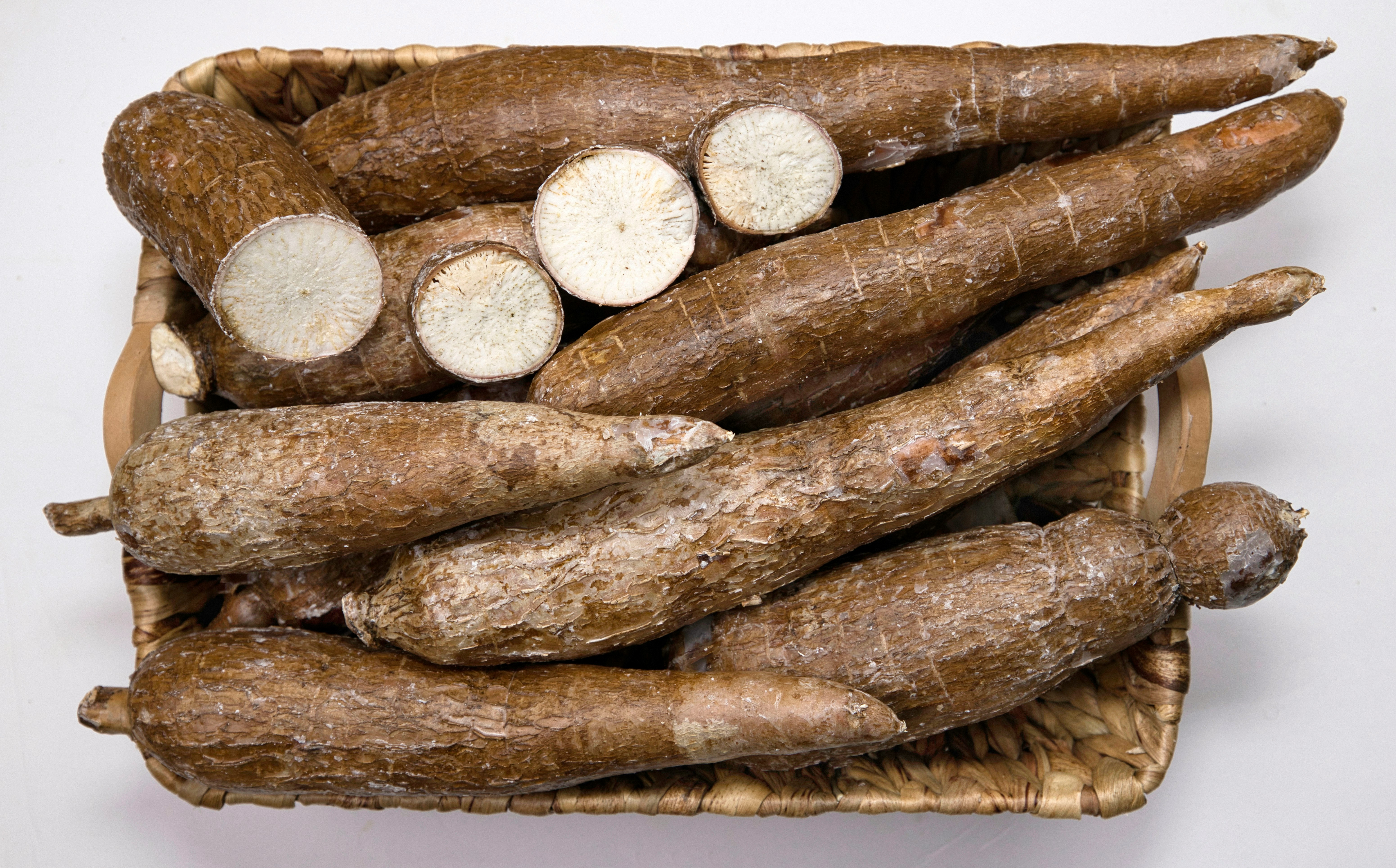
Cassava’s humble appearance belies an impressive combination of productivity, toughness and diversity,” says the Washington Post. But it has to be detoxified.

As Planet Earth keeps adding more people, many of the crops to feed them are suffering from climate change. What is the answer? Are there foods that are both nourishing and relatively easy to produce?

Stephen Wooding, an assistant professor of anthropology and heritage studies at the University of California at Merced, writes at the Washington Post about a food that is both. It just has a little toxicity problem.

“The three staple crops dominating modern diets — corn, rice and wheat — are familiar to Americans. However, another top crop is something of a dark horse: cassava.

“While nearly unknown in temperate climates, cassava is a key source of nutrition in the Southern Hemisphere. It was domesticated 10,000 years ago, on the southern margin of the Amazon basin in Brazil, and spread from there throughout the region. … There’s just one problem, however: Cassava is also highly poisonous.

“So, how can cassava be toxic, yet still dominate diets in Amazonia? It’s all down to Indigenous ingenuity. For the past 10 years, my collaborator, César Rubén Peña, who is of Cucuna heritage and grew up on the rivers of Amazonia, and I have been studying cassava gardens on the Amazon River and its myriad tributaries in Peru. We have discovered scores of cassava varieties, growers using sophisticated breeding strategies to manage its toxicity and elaborate methods for processing its dangerous yet nutritious products. …

“A little more than 10,000 years ago, [hunter-gatherers] cleared the hurdle with one of the most transformative innovations in history: plant and animal domestication. … Today, almost every rural family across the Amazon has a garden. Visit any household and you will find cassava roasting on the fire, being toasted into a chewy flatbread called casabe, fermenting into the beer called masato, and steaming in soups and stews. Before adopting cassava in these roles, though, people had to figure out how to deal with its toxicity.

“One of cassava’s most important strengths, its pest resistance, is provided by a powerful defense system. The system relies on two chemicals produced by the plant, linamarin and linamarase. These defensive chemicals are found inside cells throughout the cassava plant’s leaves, stem and tubers, where they usually sit idle. However, when cassava’s cells are damaged, by chewing or crushing, for instance, the linamarin and linamarase react, releasing a burst of noxious chemicals.

“One of them [is] cyanide gas. The burst contains other nasty substances as well, including compounds called nitriles and cyanohydrins. Large doses of them are lethal, and chronic exposures permanently damage the nervous system. …

“Ancient Amazonians devised a complex, multistep process of detoxification that transforms cassava from inedible to delicious. It begins with grinding cassava’s starchy roots on shredding boards studded with fish teeth, chips of rock or, most often today, a rough sheet of tin. Shredding mimics the chewing of pests, causing the release of the root’s cyanide and cyanohydrins. …

“Next, the shredded cassava is placed in baskets where it is rinsed, squeezed by hand and drained repeatedly. The action of the water releases more cyanide, nitriles and cyanohydrins, and squeezing rinses them away. Finally, the resulting pulp can be dried — which detoxifies it even further — or cooked, which finishes the process using heat. …

“The Amazonians pushed their efforts even further, taming it into a true domesticated crop. In addition to inventing new methods for processing cassava, they began keeping track and selectively growing varieties with desirable characteristics, gradually producing a constellation of types used for different purposes.

“In our travels, we have found more than 70 distinct cassava varieties that are highly diverse, physically and nutritionally. They include types ranging in toxicity, some of which need laborious shredding and rinsing and others that can be cooked as is, though none can be eaten raw. …

“While cassava has been ensconced in South and Central America for millennia, its story is far from over. In the age of climate change and mounting efforts toward sustainability, cassava is emerging as a possible world crop.

“Its durability and resilience make it easy to grow in variable environments, even when soils are poor, and its natural pest resistance reduces the need to protect it with industrial pesticides. …

“While cassava isn’t a familiar name in the United States just yet, it’s well on its way. It has long flown under the radar in the form of tapioca, a cassava starch used in pudding and boba tea. It’s also hitting the shelves in the snack aisle in the form of cassava chips and the baking aisle in naturally gluten-free flour. Raw cassava is an emerging presence, too, showing up under the names ‘yuca’ and ‘manioc’ in stores catering to Latin American, African and Asian populations. Track some down and give it a try. Supermarket cassava is perfectly safe, and recipes abound.”

More at the Post, here.
Read Full Post »

Photo: D.I.R.T. Studio.
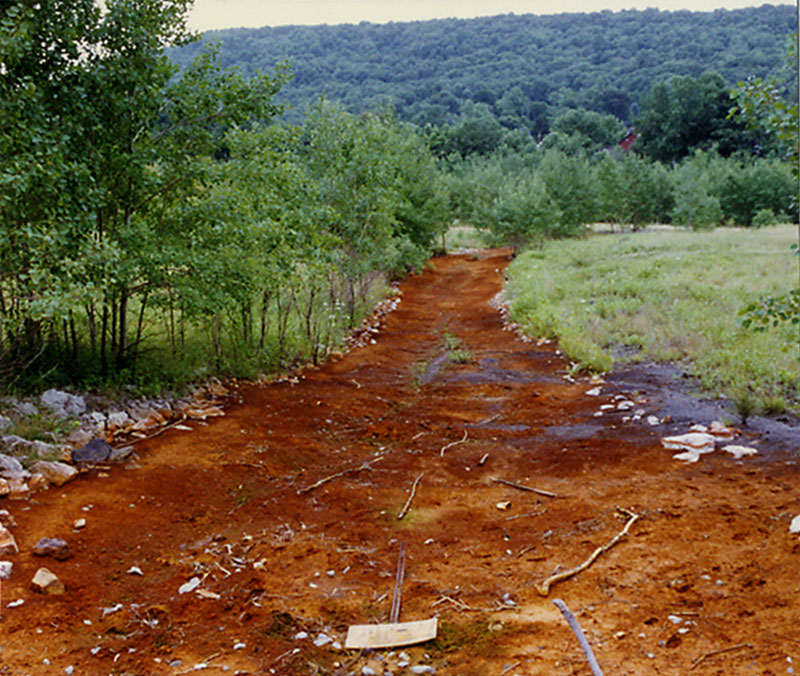
Vintondale Reclamation Park, Vintondale, Pennsylvania. Landscape architect Julie Bargmann’s “work to revitalize toxic sites and reconnect them to their communities has earned her the nicknames ‘Toxic Avenger’ and ‘Queen of Slag,’ ” says the
Times.

Have you ever looked at a polluting site, maybe fire from a smokestack or rusting steam engines, and seen a kind of artistic beauty — that is, something that would be beautiful if the poisonous fangs were removed?

Today’s story is about a landscape architect with that way of seeing and the skills to reclaim what had been lost.

Tanya Mohn reports at the New York Times, “For more than 30 years, Julie Bargmann, a landscape architect and founder of D.I.R.T. Studio (Dump It Right There) in Charlottesville, Va., has focused on contaminated and forgotten urban and postindustrial sites, dedicating her practice to addressing social and environmental justice. …

Her projects include an abandoned pump house and reservoirs in Dallas transformed into an art-filled residential garden; the derelict parking lot of a 19th-century fire station in Detroit converted into an urban woodland; historic shipyards that became welcome centers and corporate campuses; and former coal mines, quarries and foundries recast as community parks and public spaces.

In an essay titled ‘Justice from the Ground Up,‘ Ms. Bargmann wrote that there is a disturbing overlap between maps showing where poor people and ethnic minorities live and where contaminated soils exist in the United States. …

“In October 2021 she was named the inaugural winner of the Cornelia Hahn Oberlander International Landscape Architecture Prize, created to celebrate prominent living landscape architects.

“ ‘Being a fierce public advocate is part of the practice of landscape architecture,’ said Charles A. Birnbaum, president and chief executive of the Cultural Landscape Foundation, the nonprofit that awarded the prize. … ‘Bargmann’s legacy is much bigger than the built work,’ Mr. Birnbaum said. ‘It’s valuing the landscape and the cultural life associated with it.’ This interview has been edited for clarity and length. …

“NYT: Did your early years impact your career focus?

“Julie Bargmann: My own little industrial history started riding in my family station wagon on the New Jersey Turnpike. I was living in a really nice postwar neighborhood with big old trees, but when we would see all of the refineries and factories I thought, ‘Wow.’ I remember looking beyond them at all the modest workers’ houses. I went to college in Pittsburgh, a city with those same working neighborhoods stacked up on the hillsides and those belching steel mills down in the valley. I loved the steel mills. They’re so raw, they’re so tough. Everybody sees the bridges, but in the mills you’re seeing and feeling the heat, your jaw drops at the faces blackened by smoke. …

“Three decades ago no landscape designer was looking at the vast manufacturing and mined landscapes, landfills and every type of degraded landscape. When I thought about the number of acres, it was astonishing. That set me off. Folks might think I’m a bit crazy, but I’m going to go find the landscapes that I want to work on, not more or less already perfect landscapes. …

Was there a turning point in your approach to landscape design?

“During my first teaching job, I got some funding, and I took off on the road and looked at mined landscapes around the country, including restricted areas. It was fascinating, but when I learned what environmental engineers were doing, it infuriated me. They were doing very quick fixes. They took no account of the social or cultural implications of the landscapes; environmentally, they were squeaking by to meet the regulations. That completely negates any of that human agency. They’re throwing meaning out, robbing it from the community. That’s really when I launched into a holistic approach to my work.

Do most prospective clients understand your approach?

“When I talk to a corporate leader or an E.P.A. representative who are skeptical, I don’t go on defending the sexy rust. I tell them stories. And I work really hard to pose alternatives. Degraded sites, toxic sites, a lot of times are not 100 percent contaminated. I always use the word ‘regenerate,’ to create anew. I became fascinated with biologically-based remediation technologies. That science has totally propelled what we can do.

How did you learn about those technologies?

“I go out into the field. I call up a scientist. The whole mining world was a total crash course on the different types of reclamation law.

I always tell my students, do your homework, and do it in the world. Engage real people with the design process.

Vintondale Reclamation Park, a 35-acre site in coal country near Pittsburgh, completed in 2002, was pivotal. Why?

“It was a perfect, multidisciplinary team of engineers, hydrogeologists, architects, artists, historians and landscape architects. We learned everything about acid mine drainage treatment to design a natural filtration system that addressed years of pollution from mine runoff. Excavators resculpted 19th-century beehive ovens used to convert coal to coke to make steel. We brought them out from behind those chain-link fences and made the science visible, beautiful. Now it’s a neighborhood park alongside a historic bike trail. I mean, boom. It all came together. People started paying attention. There really weren’t any models at that time in the U.S. From then on I could point to something in rural Pennsylvania and say, ‘This is totally possible.’ ”

More at the Times, here.

Read Full Post »

new20reef201

Photo: Valeria Pizarro
The Varadero reef has survived in Colombia’s Cartagena Bay despite toxicity from heavy shipping. The corals grow twice as fast as similar corals elsewhere, but their skeletons are less dense, which may have something to do with their success.

The news about coral reefs has not been good for a long time. Rising temperatures and too much carbon dioxide have been killing off these delicate creatures worldwide, with dire consequences for the marine life that depends on their intricate communities.

But what is going on in Cartagena Bay? Elizabeth Svoboda has a fascinating story at the Christian Science Monitor.

“For the coastal communities that have harvested its bounty for centuries, and for the scientists who officially discovered it five years ago, there is no reef like Varadero. Locals call it ‘the improbable reef,’ and for good reason: It has persevered in the midst of intensive coastal development, streams of toxic runoff from the nearby Canal del Dique (Dike Canal), and waters so warm they’d turn many reefs into lifeless skeletons.

“Scientists like Lizcano-Sandoval and Pennsylvania State University’s Mónica Medina are working to uncover the secrets of Varadero’s striking resilience – secrets they can use to help other threatened reefs around the world.

“But just as Varadero begins to yield its tantalizing scientific bounty, it’s looking as if the reef may be damaged or even destroyed. A group of government officials, port authorities, and businesspeople is planning to dredge a channel so Cartagena’s harbor can accommodate more container ships – a move they say will boost the nation’s economy. However, the researchers who study Varadero, along with local environmental activists, are hoping to stall the dredging project so the reef’s storied legacy can continue – and perhaps contribute to the rescue of other endangered underwater Edens. …

” ‘Corals in Varadero have a very distinct growth pattern,’ says biologist Roberto Iglesias-Prieto, Dr. Medina’s colleague at Pennsylvania State University. Specifically, the corals grow about twice as fast as similar corals elsewhere, but their skeletons are less dense; it’s possible that these traits give them an advantage over their slower-growing coral counterparts.

“Medina thinks certain elements in runoff from the Canal del Dique may be benefiting the corals in surprising ways. ‘Part of the day, [the corals] get these nutrient-rich waters where they’re eating and photosynthesizing,’ Medina says. She notes that fairly recent changes in coral growth coincide with a period when more sediment was being dumped into the bay. …

“Varadero’s corals might also benefit from their location right at the mouth of Cartagena Bay. “They have constant communication with the sea,” [Dr. Valeria Pizarro, who discovered the reef,] says. The fresh inflow of ocean water might lessen the impact of toxic mercury, cadmium, and copper that runs off into the bay from nearby industrial facilities.

“Medina and her colleagues are trying to figure out if other aspects of the reef’s biology contribute to its success – aspects that could ultimately be replicated in reefs elsewhere. … Samples of microbes from Varadero’s corals – the onboard collection of bacteria, viruses, and algae that perform critical metabolic tasks – have revealed that they are totally distinct from those found on other reefs, Medina says. Her lab is conducting a detailed analysis to find out whether the microbes might be performing important functions, such as fighting disease, that help the corals to survive even in less-than-ideal conditions.

“In the future, if conservationists can transport Varadero’s hardy corals to other endangered reefs around the world, or even seed threatened reefs with whatever microbial cocktail helps Varadero’s corals thrive, those reefs might have a better chance of surviving despite ocean warming and pollution. Many of the world’s reefs now hang in a liminal zone between death and survival. By putting Varadero corals’ survival tactics to work on other threatened reefs, scientists like Medina, Lizcano-Sandoval, and Pizarro hope to tilt those reefs a little bit closer to the side of life.”

More at the Christian Science Monitor, here.

Read Full Post »