Feeds:
Posts
Comments

Posts Tagged ‘transatlantic’

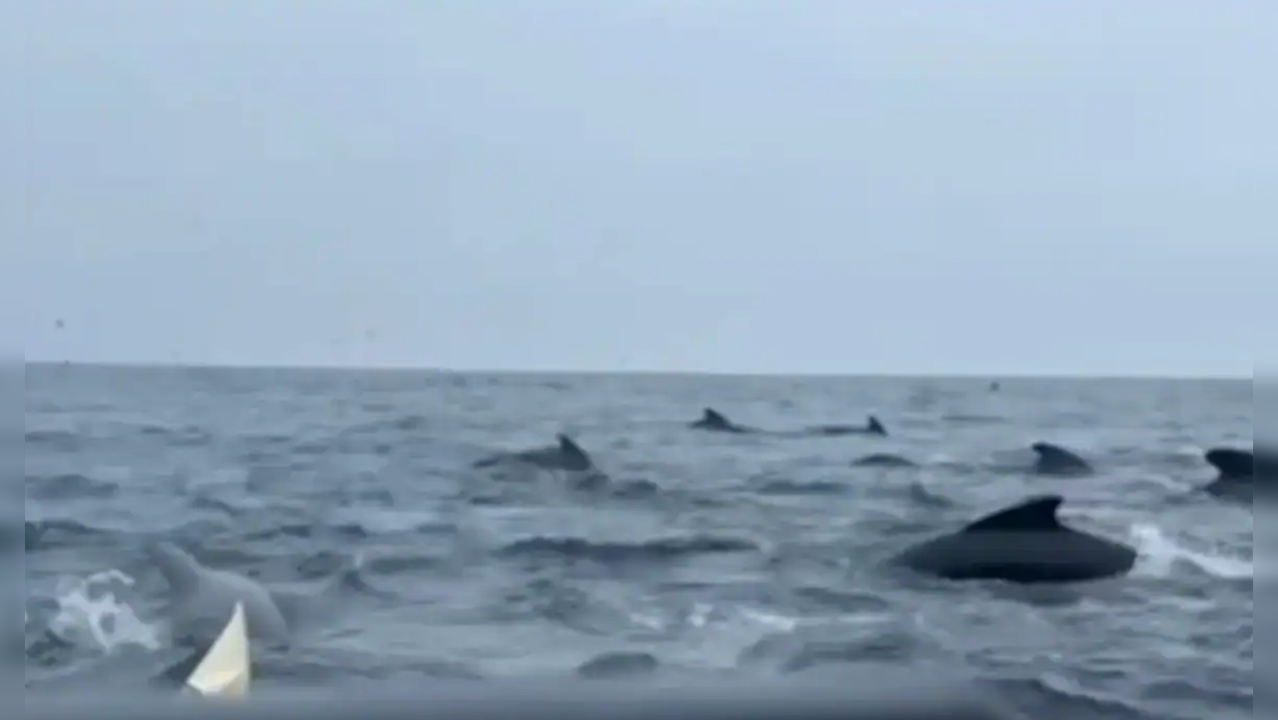
Photo: Tom Waddington via Times Now.
Tom Waddington was surrounded by pilot whales as he rowed solo from Newfoundland to England.

I’ve been on a couple whale watches with family members, and I think there are few things more exciting than seeing whales in their natural environment. In today’s story, a man who sought excitement by rowing from Newfoundland to England may have gotten a little too much from some curious pilot whales.

Bill Chappell reports at NPR, “Tom Waddington is on a quest to row across the Atlantic Ocean all by himself — but [in July], he found plenty of company at sea, when a pod of pilot whales thronged around him. They followed him for hours, growing from a few playful animals to hundreds of large creatures. …

“The whales popped their heads above the surface and seemed to play together — a gam of whales, gadding about — as Waddington, who is rowing some 2,000 nautical miles from the Newfoundland coast to Penzance, in the United Kingdom, watched in amazement.

“ ‘This is so cool,’ Waddington said as he took a video of the whales’ antics. With a laugh, he added, ‘I love it, but I’m scared they’re gonna hit my rudder.’

“Waddington emerged unscathed — but a little shaken by the risks mammals weighing thousands of pounds can pose to his boat and equipment on an unsupported solo trip.

“ ‘They were just playing and going under the boat and I was taking videos,’ he said on Facebook and Instagram, describing hundreds of whales around him. Then one of the whales slammed into the side of his light boat.

“ ‘And I was like, Oh my God. And suddenly it turned from David Attenborough into Moby Dick. And I was really scared.’

“Waddington’s team on land believes the playful mammals are long-finned pilot whales, which the National Oceanic and Atmospheric Administration says are known to live in the North Atlantic and ‘are very social, living in large schools of hundreds of animals separated into close-knit pods of 10 to 20 individuals.’ …

“When it came time to take leave of his visitors, Waddington says he wasn’t sure how to do that. He tried shouting a bit, and splashed his oars. He veered north — but the whales followed, and for more than two hours, it seemed more whales kept showing up.

“Waddington, who works as a ski instructor, is rowing across the ocean for a fundraiser benefiting Mind, the British mental health charity led by the actor Stephen Fry. Waddington estimates that more than 1,000 whales swam with him. For advice, he called his coach, Charlie Pitcher (who has himself rowed across the Atlantic).

“ ‘He was like, the best thing to do is, be quiet and still — which is exactly the opposite of what I did’ earlier, he said.”

Check out the map of Waddington’s transatlantic journey at NPR, here.
Read Full Post »

skynews-students-yacht-atlantic_4977292

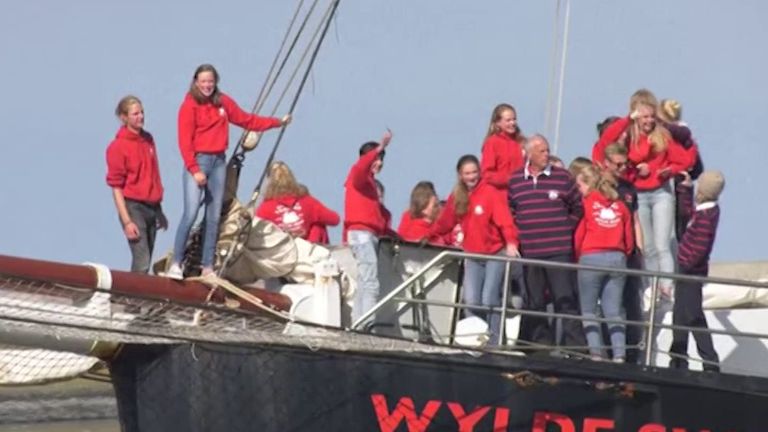
Photo: Sky News
Dutch students sail across the Atlantic to get home after coronavirus blocks their flight.

Of all the nutty adaptations caused by Covid-19, this is one of the most unusual. A group of Dutch students who were on an educational sailing trip in the Caribbean were unable to fly home. So they sailed all the way back over the Atlantic Ocean.

Aleksandar Furtula (with contributions from Associated Press writer Mike Corder in The Hague) reports at the Washington Post, “A group of 25 Dutch high school students with very little sailing experience ended a trans-Atlantic voyage Sunday that was forced on them by coronavirus restrictions.

“The children, ages 14 to 17, watched over by 12 experienced crew members and three teachers, were on an educational cruise of the Caribbean when the pandemic forced them to radically change their plans for returning home in March.

“That gave one of the young sailors, 17-year-old Floor Hurkmans, one of the biggest lessons of her impromptu adventure. …

“ ‘The arrival time changed like 100 times. Being flexible is really important.’

Instead of flying back from Cuba as originally planned, the crew and students stocked up on supplies and warm clothes and set sail for the northern Dutch port of Harlingen, a five-week voyage of nearly 7,000 kilometers (4,350 miles), on board the 60-meter (200-foot) top sail schooner Wylde Swan. …

“The teens hugged and chanted each other’s names as they walked off the ship and into the arms of their families, who drove their cars alongside the yacht one by one to adhere to social distancing rules imposed to rein in the spread of the virus that forced the students into their long trip home.

“For Hurkmans, the impossibility of any kind of social distancing took some getting used to. … Her mother, Renee Scholtemeijer, said she expects her daughter to miss life on the open sea once she encounters coronavirus containment measures in the Netherlands.

“ ‘I think that after two days she’ll want to go back on the boat, because life is very boring back at home,” she said. ‘There’s nothing to do, she can’t visit friends, so it’s very boring.’ …

Masterskip, the company that organized the cruise, runs five educational voyages for about 150 students in all each year. Crossing the Atlantic is nothing new for the Wylde Swan, which has made the trip about 20 times.

“The company’s director, Christophe Meijer, said the students were monitored for the coronavirus in March to ensure nobody was infected. He said he was pleased the students had adapted to life on board and kept up their education on the long voyage.

“ ‘The children learned a lot about adaptivity, also about media attention, but also their normal school work,’ he said. ‘So they are actually far ahead now of their Dutch school colleagues. They have made us very proud.’

More at the Washington Post, here. A Reuters article with other details is here.


Read Full Post »

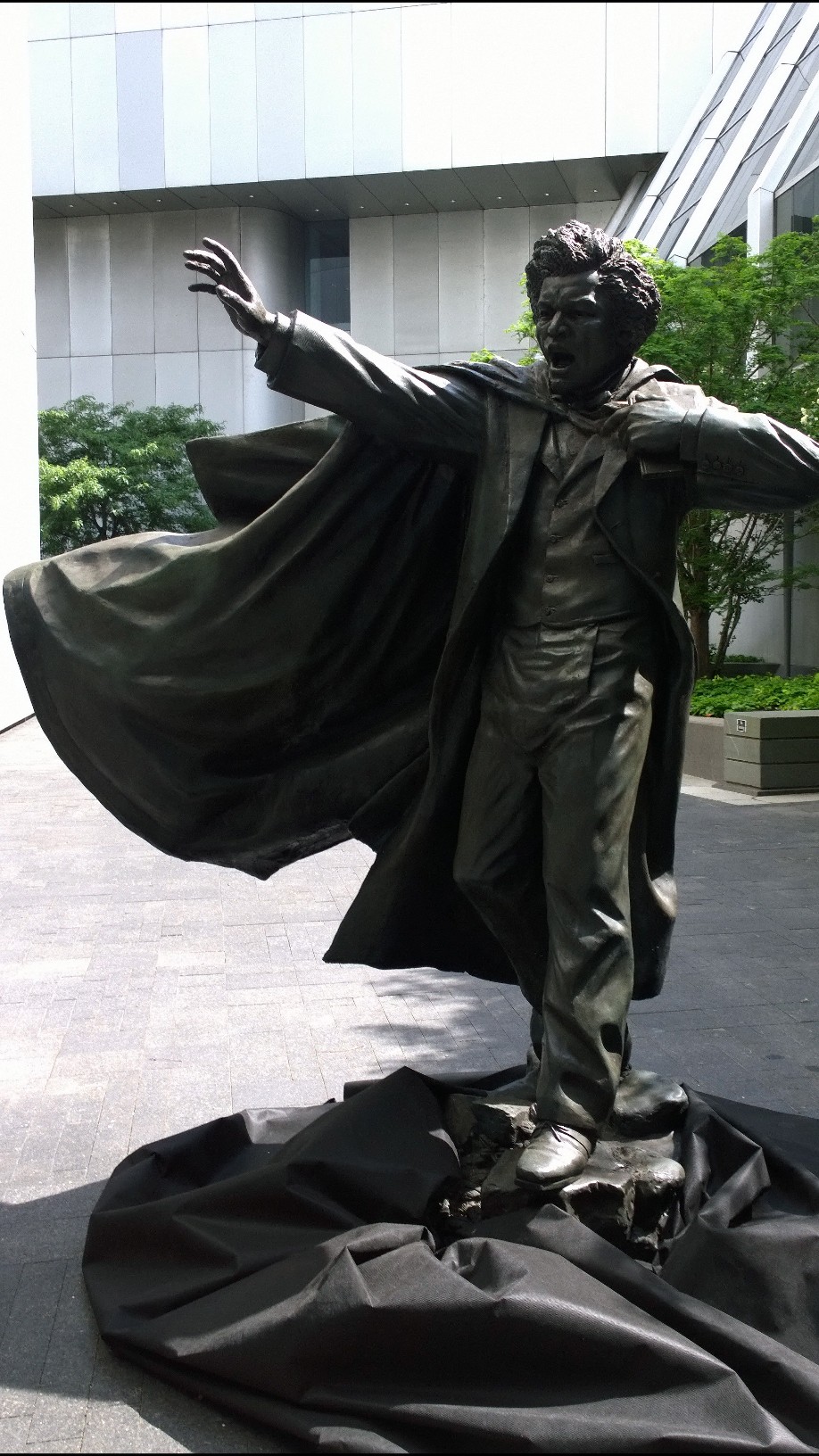
Irish-statue-Frederick-Douglass

I probably wouldn’t have known that Frederick Douglass spent time in Ireland if I hadn’t read the Colum McCann novel TransAtlantic. McCann likes to take historical events of different time periods and imagine the parts we can’t really know. In TransAtlantic, he wove together a historic 1919 flight from Canada to Ireland, the Douglass lecture tour of Ireland and his horrified witness to the famine there, a servant girl’s emigration to the United States and her role in the Civil War, and the rather thrilling negotiations to bring resolution to the Troubles between Protestants in Northern Ireland and Catholics.

According to an initiative called the Douglass/O’Connell Project, “Douglass was greeted in Dublin, Belfast, and Cork by enthusiastic crowds and formed many friendships on his trip, most significantly with Daniel O’Connell, a figure still revered in Ireland today for his role in Catholic emancipation and his fierce opposition to slavery. O’Connell and Douglass shared the stage just once, in September 1845 at a rally in Dublin, but retained a mutual respect and affection until O’Connell’s death less than two years later — and Douglass acknowledged O’Connell’s influence on his philosophy and worldview for the rest of his life.

“The Frederick Douglass/Daniel O’Connell Project is a living legacy to the leadership of these two men and the causes they championed by strengthening the bonds of friendship between Ireland and the United States, encouraging greater understanding between the diasporas of Africa and Ireland in America, and fighting injustice and human rights abuses throughout the world.”

Which brings me to how I happened to be able to take a photo of the Irish statue of Douglass today. The Center for Race Amity in Boston is partnering with the Douglass/O’Connell Project on a celebration this weekend, before the statue goes on tour. Isn’t it magnificent? Andrew Edwards is the sculptor.

There will be a preview of the public television film Douglass and O’Connell Saturday at the Museum of African American History at 7 pm, followed by a lecture by Don Mullen, the author of Bloody Sunday. On Sunday there will be festivities in the Greenway from 1 pm to 5 pm.

Read Full Post »