Feeds:
Posts
Comments

Posts Tagged ‘translate’

Photo: R.L. Easton, K. Knox, and W. Christens-Barry/Propietario del Palimpsesto de Arquímedes.
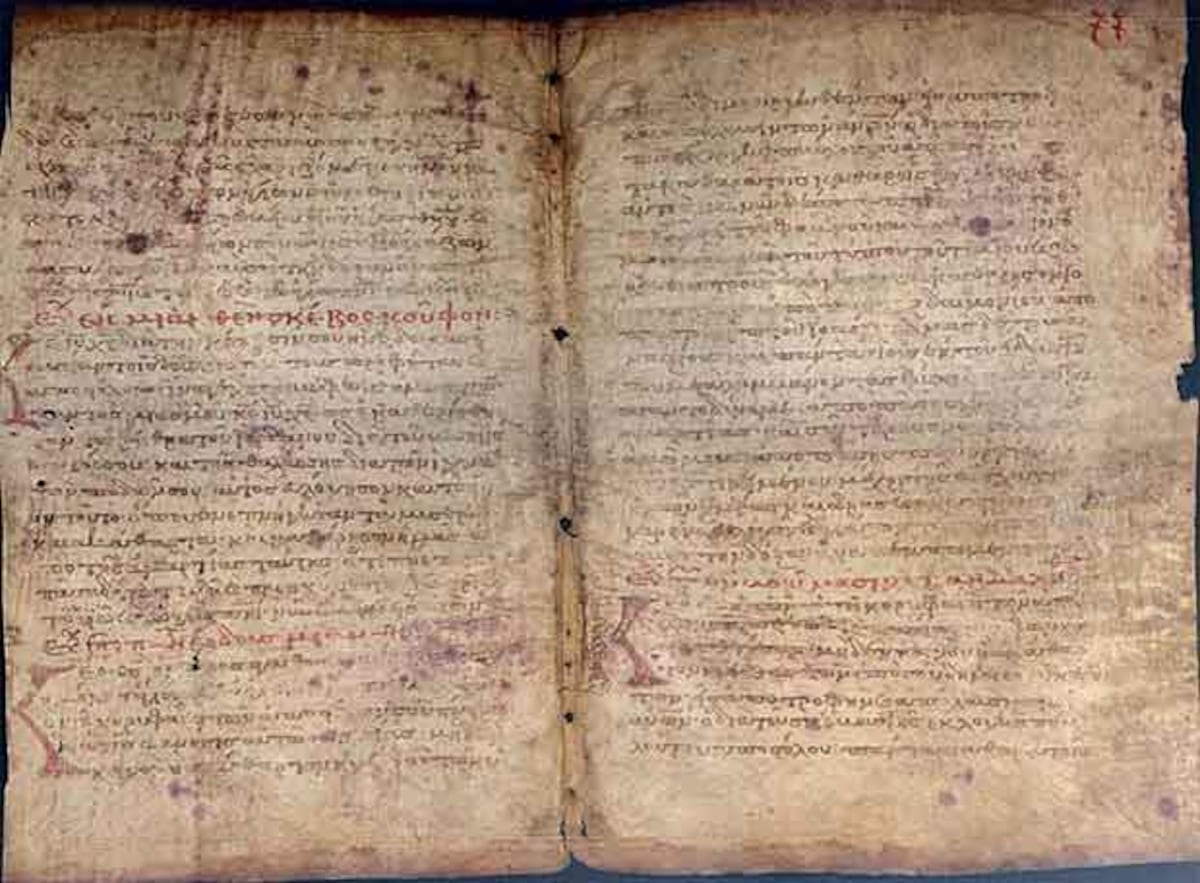
AI was used to translate this palimpsest with texts by Archimedes.

In general, I am wary of artificial intelligence, which one of its first developers has warned is dangerous. I use it to ask Google questions, but it’s a real nuisance in the English as a Second Language classes where I volunteer. Some students are tempted by the ease of using AI to do the homework, but of course, they learn nothing if they do that.

There’s another kind of translation, however, that AI seems good for: otherwise unreadable ancient texts.

Raúl Limón writes at El País, “In 1229, the priest Johannes Myronas found no better medium for writing his prayers than a 300-year-old parchment filled with Greek texts and formulations that meant nothing to him. At the time, any writing material was a luxury. He erased the content — which had been written by an anonymous scribe in present-day Istanbul — trimmed the pages, folded them in half and added them to other parchments to write down his prayers.

“In the year 2000, a team of more than 80 experts from the Walters Art Museum in Baltimore set out to decipher what was originally inscribed on this palimpsest — an ancient manuscript with traces of writing that have been erased. And, after five years of effort, they revealed a copy of Archimedes’ treatises, including The Method of Mechanical Theorems, which is fundamental to classical and modern mathematics.

“A Spanish study — now published in the peer-reviewed journal Mathematics — provides a formula for reading altered original manuscripts by using artificial intelligence. …

“Science hasn’t been the only other field to experience the effects of this practice. The Vatican Library houses a text by a Christian theologian who erased biblical fragments — which were more than 1,500-years-old — just to express his thoughts. Several Greek medical treatises have been deciphered behind the letters of a Byzantine liturgy. The list is extensive, but could be extended if the process of recovering these originals wasn’t so complex.

“According to the authors of the research published in Mathematics — José Luis Salmerón and Eva Fernández Palop — the primary texts within the palimpsests exhibit mechanical, chemical and optical alterations. These require sophisticated techniques — such as multispectral imaging, computational analysis, X-ray fluorescence and tomography — so that the original writing can be recovered. But even these expensive techniques yield partial and limited results. …

“The researchers’ model allows for the generation of synthetic data to accurately model key degradation processes and overcome the scarcity of information contained in the cultural object. It also yields better results than traditional models, based on multispectral images, while enabling research with conventional digital images.

“Salmerón — a professor of AI at CUNEF University in Madrid, a researcher at the Autonomous University of Chile and director of Stealth AI Startup — explains that this research arose from a proposal by Eva Fernández Palop, who was working on a thesis about palimpsests. At the time, the researcher was considering the possibility of applying new computational techniques to manuscripts of this sort.

“ ‘The advantage of our system is that we can control every aspect [of it], such as the level of degradation, colors, languages… and this allows us to generate a tailored database, with all the possibilities [considered],’ Salmerón explains.

“The team has worked with texts in Syriac, Caucasic, Albanian and Latin, achieving results that are superior to those produced by classical systems. The findings also include the development of the algorithm, so that it can be used by any researcher.

“This development isn’t limited to historical documents. ‘This dual-network framework is especially well-suited for tasks involving [cluttered], partially visible, or overlapping data patterns,’ the researcher clarifies. These conditions are found in medical imaging, remote sensing, biological microscopy and industrial inspection systems, as well as in the forensic investigation of images and documents. …

“The researchers themselves admit that there are limitations to their proposed method for examining palimpsests: ‘The approach shows degraded performance when processing extremely faded texts with contrast levels below 5%, where essential stroke information becomes indistinguishable from crumbling parchment. Additionally, the model’s effectiveness depends on careful script balancing during the training phase, as unequal representation of writing systems can make the deep-learning features biased toward more frequent scripts.’ ”

More at El País, here. What is your view of AI? All good? Dangerous? OK sometimes? I can’t stop thinking about the warning from Geoffrey Hinton, the ‘godfather of AI,’ that it could wipe out humanity altogether. 
Read Full Post »

Photo: Yehor Milohrodskyi via unsplash.
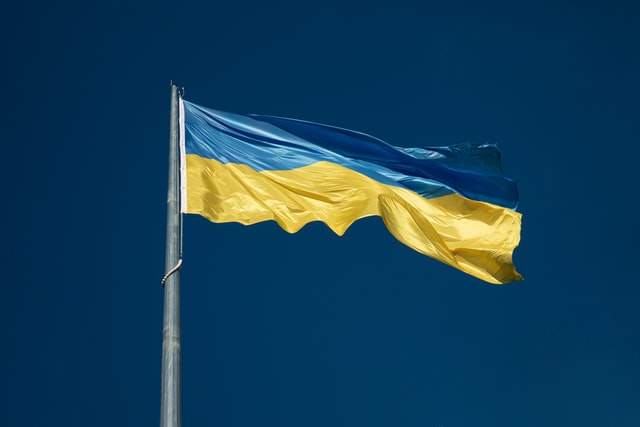
The flag of Ukraine.

This will be a short post. I want to tell you about something inspiring I got involved with that ended yesterday.

Full-blown war in Ukraine started February 24 when Russia invaded the sovereign nation, but Russia had been attacking and nibbling away at Ukrainian territory for years, and Ukraine was ready to defend itself.

Shortly thereafter, a Ukrainian journalist called Igor Nalyvaiko, alarmed at the Russian disinformation he was seeing all over social media, especially English-language social media, set up a counter-effort.

Working with Ukrainian media people who spoke English, and reaching out to editor types like blogger Asakiyume and me who are native English speakers, he launched a noble experiment that lasted until July 11, when the media company backing him shut down. In the process, he built a team of new friends — Ukrainian and American — who feel invested in one another’s lives because we were interacting 24/7 across a seven-hour time difference.

If you have ever been devastated by an injustice in the world and learned that in addition to donating money, you could contribute a skill you happened to have, you will understand what a gift this was to the volunteer “proofreaders.”

I will quote from an explanation of the initiative that Igor wrote for the new proofreaders who kept signing on.

“Ukraine: Battling Disinformation In the Fight for Existence – A Voice From Ukraine 25 March 2022

“Hi Guys, 

“I was requested to shortly outline the principles of this translation initiative and its purpose for the new coming proofreaders. 

“U24 World is a 24/7 news outlet covering the current situation in Ukraine following the Russian invasion. Its aim is delivery of truthful information to fight Russian propaganda worldwide. The initiative was urged by a group of enthusiasts and workers of the national TV Channel Ukraine and volunteers who were able to join in the fight on the information frontline.

“Being assigned as a translator and a coordinator of the translators’ team (In my past life I used to be a host and a journalist but had to join the ‘international battalion’ and really think that can do much more here at the moment), I started to look for native speakers (English) proofreaders who could help in adaptation of the news for the western audiences (making the information readable), refining the word flow and delivery ,since we are working non-stop to cover every event that might be useful and can shed light onto the actual state of affairs taking place here in Ukraine.

“The work is arranged as follows: as we work 24/7 for optimization reasons we operate in 4-hour shifts. However the times are quite hard and not each one can afford 4 hours to devote to the project, so I am coordinating the group to make the process as comfortable as possible to the realistic extent under warfare conditions.

“There are editors who send Ukrainian news in the group chat, a translator (who is on the shift) picks up the news and sends a translation back into the chat tagging a native speaker who is on the shift. the English proofreader checks the translation and refines it so that it looks readable for English-speaking audience and then tags a Ukrainian proofreader (who is on the shift). The latter one checks if the information is not distorted in the final proofread adaptation compared to the initial Ukrainian news and tags an editor, which means that the editor can pick it up and post the news on one of these three platforms: Facebook, Twitter, and TikTok. …

“Thank you for your assistance and support. Yours,  Igor.” 

I think it’s safe to say, that grateful as we are to have been part of the collaboration, it also meant something special to our Ukrainian partners running to bomb shelters that strangers across the world were donating hours of their time, expecting nothing in return — just wanting to say, “You are not alone.”

My team may never know why this noble experiment shut down so suddenly, but we will cherish the experience and will, of course, continue to support Ukraine in other ways.

If interested, check out an audio summary at Happiness Quotient, here.

Read Full Post »

Photo: CNN
In Japan, wearing a mask was common even before the pandemic.

I’m told that in Sweden, it’s been hard to get people to start wearing masks now that the authorities have changed their approach to the pandemic. In Japan, where mask wearing on subways and elsewhere is normal to protect health, dialing up usage has not been a problem.

That has created an opportunity for a robotics company with an idea about putting a multipurpose mask over your Covid-19 mask.

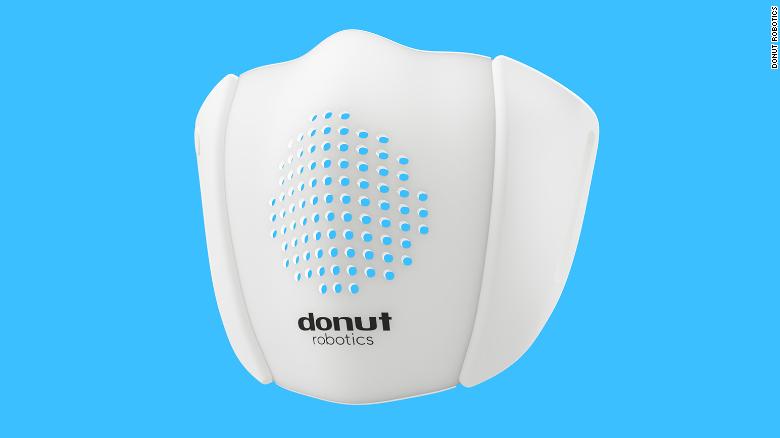
As Rebecca Cairns reported at CNN Business last November, “When the Covid-19 pandemic made face masks an everyday essential, Japanese startup Donut Robotics spotted an opportunity. They created a smart mask — a high-tech upgrade to standard face coverings, designed to make communication and social distancing easier.

“In conjunction with an app, the C-Face Smart mask can transcribe dictation, amplify the wearer’s voice, and translate speech into eight different languages.

“The cutouts on the front are vital for breathability, so the smart mask doesn’t offer protection against the coronavirus. Instead, it is designed to be worn over a standard face mask, explains Donut Robotics CEO Taisuke Ono. Made of white plastic and silicone, it has an embedded microphone that connects to the wearer’s smartphone via Bluetooth. The system can translate between Japanese and Chinese, Korean, Vietnamese, Indonesian, English, Spanish and French.

Donut Robotics first developed the translation software for a robot called Cinnamon — but when the pandemic hit, the robot project was put on hold. That’s when the team’s engineers came up with the idea to use their software in a face mask.

“Donut Robotics started life in a garage in Kitakyushu City, in Fukuoka prefecture, in 2014. … With venture capital investment, [Ono and cofounder engineer Takafumi Okabe] applied to Haneda Robotics Lab — an initiative that sought robots to provide services for visitors at Tokyo’s Haneda Airport. …

“Donut Robotics’ Cinnamon robot — designed to provide tourists with useful information and help them to navigate the airport — was one of four translation robot prototypes selected by the project in 2016. Haneda Robotics Lab says Cinnamon beat the competition because of its appealing aesthetics and user-friendly design, and because the translation software performed well in noisy environments. …

“The team started testing a prototype at Haneda Airport in 2017 and continued developing the technology. But earlier this year, Covid-19 hit Asia and the airport project ground to a halt. ‘We were running short of money and wondering how to keep the company going,’ says Ono. The team sought a solution and came up with the idea to adapt its software for a product that would sell well in a pandemic. …

“Donut Robotics launched a fundraiser on Japanese crowdfunding platform Fundinno in June. They raised 28 million yen ($265,000) in 37 minutes, says Ono. ‘It was very surprising,’ he says. …

“A second round of crowdfunding on Fundinno in July raised a further 56.6 million yen ($539,000), which Ono plans to use to develop translation software for the international market. … Ono says the first wave of distribution is expected to take place in Japan, with 5,000 to 10,000 masks available by December [2020]. They will be priced at $40 to $50, he says, with an extra subscription for the app. Donut Robotics will not expand overseas until April 2021 at the earliest. …

“The mask’s Bluetooth chip can connect to smartphones up to 32 feet (10 meters) away, says Ono. He hopes the mask will make new social distancing norms in locations including hospitals and offices easier, by enabling good communication.”

Photo: Donut Robotics

More at CNN, here.

As I write this, the English language class where I volunteer is about to start. At the risk of throwing a wet blanket over this robotics story, I can’t help mentioning that translation devices really slow language acquisition.

But I do think the Donut software’s ability to clarify your words and make social distancing work better is great. I’m constantly misunderstanding muffled words spoken through a mask — which gave a granddaughter a really good laugh the other day.

Read Full Post »

Here’s a new idea. A couple of young entrepreneurs have found a way to convert sign language into audible speech with their prize-winning electronic gloves.

National Public Radio has the story.

“For years, inventors have been trying to convert some sign language words and letters into text and speech. Now a pair of University of Washington undergraduates have created gloves called SignAloud. Sensors attached to the gloves measure hand position and movement, and data is sent to a computer via Bluetooth and is then converted into spoken word and text.

“Theirs is one of seven inventions recently awarded a Lemelson-MIT Student Prize, with awards ranging from $10,000 to $15,000.

“Inventors Navid Azodi and Thomas Pryor, both college sophomores, say the gloves will help create a communication bridge between deaf and hearing communities. The gloves, they say, will help deaf people better communicate with the rest of the world without changing the way they already interact with each other.

“However, the invention has been met with criticism that the bridge they want to create goes only one way — and it’s not necessarily one the deaf community has been clamoring for. …

“Azodi says he and Pryor are moving beyond their prototype and are working closer with those who use American Sign Language to develop new versions. They’re also working on better understanding ASL, which is more than just hand movements; it also uses facial expressions and body language to convey meaning.” Read more.

I don’t know much about the culture of the deaf community, but I do remember reading about resistance to cochlear implants a few years ago. It’s hard for people who can hear to understand that some people really don’t mind deafness and prefer their own ways of dealing with the world. But kudos to all inventors anyway, especially young ones open to continuous revision!

Photo: Conrado Tapado/Univ of Washington, CoMotion
SignAloud gloves translate sign language into text and speech.

Read Full Post »

Here’s a follow-up to a 2013 post about words and phrases that don’t have an equivalent in other languages. (“In Sweden, mangata is the word for the roadlike reflection the moon casts on the water. In Finland there’s a word for the distance reindeer can travel comfortably before taking a break: poronkusema.”)

Now Maria Popova at Brain Pickings has posted about a book that offers more on the subject. It’s Lost in Translation: An Illustrated Catalog of Beautiful Untranslatable Words from Around the World.  It’s by Ella Frances Sanders, the artist who did the illustrations that were in my original post.

“Beautifully elusive words is what writer and illustrator Ella Frances Sanders, a self-described ‘intentional’ global nomad, explores in Lost in Translation,” reports Popova. …

“From the Japanese for leaving a book unread after buying it to the … Italian for being moved to tears by a story to the Welsh for a sarcastic smile, the words Sanders illustrates dance along the entire spectrum of human experience, gently reminding us that language is what made us human.

“In addition to the charming illustrations and sheer linguistic delight, the project is also a subtle antidote to our age of rapid communication that flattens nuanced emotional expression into textual shorthand and tyrannical clichés. These words, instead, represent not only curiosities of the global lexicon but also a rich array of sentiments, emotions, moods, and cultural priorities from a diverse range of heritage.”

I’m remembering that a while back, Erik explained a few Swedish idioms to me (something about an owl in the moss?), and I tried them out on his parents when they visited. I could tell at once from their blank looks that the phrases were indeed untranslatable!

Art: Ella Frances Sanders
An illustration of an untranslatable Norwegian word.

Read Full Post »