Feeds:
Posts
Comments

Posts Tagged ‘translator’

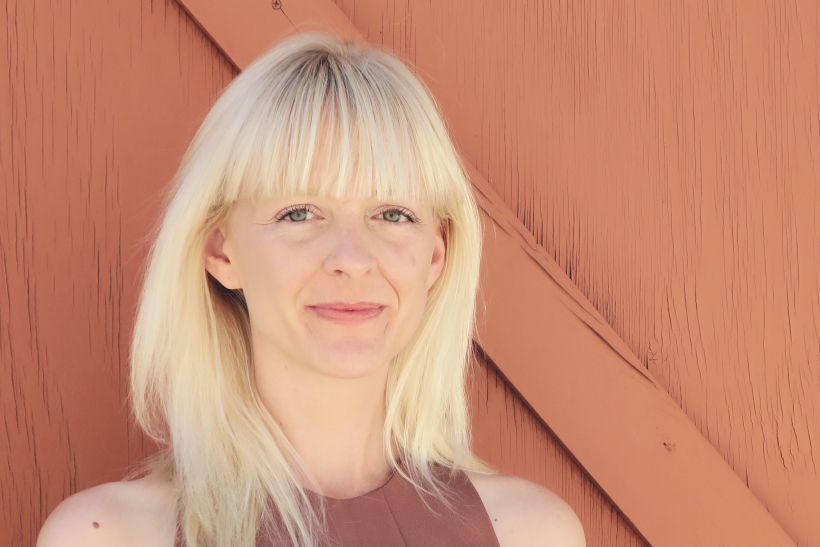
Photo: Jennifer Croft via the First News.
The translator Jennifer Croft will no longer work with publishers who don’t put her name on the cover.

There’s a book by French-to-English translator Kate Briggs called This Little Art. Briggs and others have been opening my eyes lately to the notion that translators are almost on the level of the author they translate. They write a new version of the book. It’s an art.

Alexandra Alter wrote an interesting story at the New York Times about another translator, Jennifer Croft. She knows her worth.

“When Jennifer Croft talks about translating the Polish novelist Olga Tokarczuk’s novel Flights, she sometimes affectionately refers to the book as ‘our love child.’

“ ‘It’s Olga’s, but also it has all of these elements that are mine, these stylistic elements and these decisions that I made,’ she said in a recent interview.

Flights was a labor of love for Croft, who spent a decade trying to find a publisher for it. It was finally released by Fitzcarraldo Editions in Britain in 2017 and Riverhead in the United States in 2018, and was celebrated as a masterpiece. The novel won the International Booker Prize and became a finalist for the National Book Award for translated literature, helping Tokarczuk, who was later awarded the Nobel Prize, gain a much larger global audience.

“But Croft also felt a twinge of disappointment that after devoting years to the project, her name wasn’t on the book’s cover. Last summer, she decided to make a bold demand:

“ ‘I’m not translating any more books without my name on the cover,’ she wrote on Twitter. ‘Not only is it disrespectful to me, but it is also a disservice to the reader, who should know who chose the words they’re going to read.’

“Her statement drew wide support in the literary world. Croft published an open letter with the novelist Mark Haddon, calling on publishers to credit translators on covers. The letter has drawn nearly 2,600 signatures. … Her campaign prompted some publishers, among them Pan Macmillan in Britain and the independent European press Lolli Editions, to begin naming all translators on book covers.

“Croft’s latest published translation is Tokarczuk’s The Books of Jacob, a 900-plus page historical novel about an 18th-century Eastern European cult leader named Jacob Frank, whose story unfolds through diary entries, poetry, letters and prophecies. …

“This time, Croft’s name appears on the cover. Riverhead added her after she and Tokarczuk requested it. Croft is also being paid royalties for The Books of Jacob, which she didn’t receive for Flights. (Translators, who typically receive a flat, one-time translation fee, don’t automatically get a share of royalties from most publishers.) …

“ ‘She is incredibly linguistically gifted,’ Tokarczuk said in an email. ‘Jenny does not focus on language at all, but on what is underneath the language and what the language is trying to express. So she explains the author’s intention, not just the words standing in a row one by one.’ …

“For Croft, the campaign to bring greater recognition to translators isn’t just a plea for attention and credit, though it’s partly that. Croft also believes that highlighting translators’ names will bring more transparency to the process and help readers evaluate their work, the same way they might assess an audiobook narration for not just the content but for the performance.

“Translation isn’t just a technical skill, but a creative act, she argues. ‘We should receive credit, but also have to take responsibility for the work we have done,’ she said. …

“That work often entails much more than rendering sentences and syntax from one language to another. Translators also find themselves in the role of literary scout, agent and publicist. Many are constantly reading in the languages they’re fluent in to find new authors and books, then pitch them to publishers. When English-language versions come out, translators are often called upon to facilitate interviews and join authors on book tours and manage their social media accounts in English.

“Translated literature accounts for just a fraction of titles published in the United States. Despite the success of books by international stars like Elena Ferrante, Haruki Murakami and Karl Ove Knausgaard, many publishers still worry that American readers are put off by translations. …

That belief has become something of a self-fulfilling prophecy. Since 2010, fewer than 9,000 English-language translations of fiction and poetry have been published, and in 2021, just 413 translations were released, according to a database of English-language translations that is compiled and maintained by Chad W. Post, the publisher of Open Letter Books, and is available on Publishers Weekly’s website. …

“An even smaller number of titles feature translators on the cover. Less than half of the English-language translations released in 2021 had translators’ names on the covers, Publishers Weekly reported last fall.”

More at the Times, here.
Read Full Post »

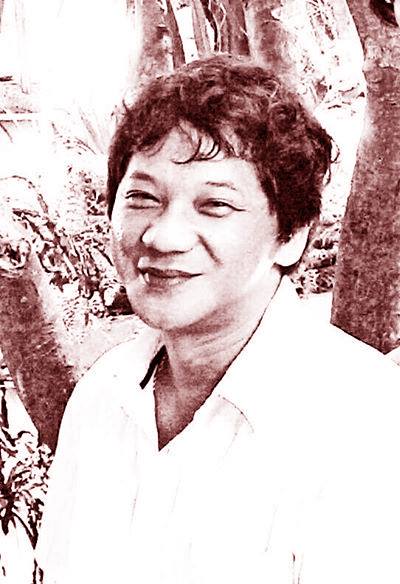
Photo: via Songngutaitram,
Vietnamese poet Lê Vĩnh Tài.


Blogger Nguyễn Thị Phương Trâm got a couple of us hooked on Vietnamese poetry with her translation of a long and moving epic by the poet pictured above, Lê Vĩnh Tài.

At the AJAR Press, where Lê Vĩnh Tài’s work is published, Nguyễn Trọng Tạo provides background on the poet, “Lê Vĩnh Tài was born in 1966 in Ban Me Thuot, Daklak. He graduated from Tay Nguyen Medical School but later pursued a career in business and making poetry. Le Vinh Tai’s poetry is rich in intellect but also carries much of tenderness and trembling. He is like a ‘balanced renovator.’ ”

A small sample of his more playful poetry comes from Nguyễn Thị Phương Trâm’s blog, Songngutaitram:

“I want to write a poem

“because the poem will
“because the poem be

“the poem
“will throw itself upon the pages
“with the vigour of a child learning how to talk

“the poem
“the lyrics you’ve forgotten

“I want to turn us into a poem.”

Nguyễn Thị Phương Trâm, herself a poet as well as a translator, reports that she was “born 1971 in Phu Nhuan, Saigon, Vietnam. The pharmacist currently lives and works in Western Sydney, Australia.”

A word on the Vietnamese press called AJAR: “AJAR is dedicated to the discovery of poetry and art in both ordinary and hidden places, providing a space for these works to be exhibited, loved, and challenged. As a bilingual journal and independent small press based in Hanoi, AJAR provides an opening for questions, imaginings, and poetic (im)possibility to be shared across borders, inhabiting language as it moves between worlds and words. In bringing fresh and critical voices of Vietnamese literature and art into English, and welcoming those voices from everywhere into Vietnamese, we focus on quality translations and envision books as artifacts of artistic collaboration. Alongside single author poetry collections, AJAR publishes a bilingual journal of poetry, short fiction, essay, and artwork that revolves around a specific word of choice for each issue. 

“While accepting donations from individuals, AJAR is self-funded and unaffiliated with any outside or inside organization. To be a part of keeping AJAR alive, please buy books or contact us at shop@ajarpress.com.”

To learn more about translation in general, check out This Little Art, by Kate Briggs. Briggs brings up many fascinating points about the decisions that translators must make — points you may never have thought about — and opines that, in fact, the translator is also the author. At least, the author in the second language.

Read Full Post »

Rohingya-in-Bangladesh-ARC-photo

Photo: @coryt
American Refugee Committee, a nonprofit with Charity Navigator‘s highest rating, is one of a few organizations helping Myanmar’s persecuted Rohingya Muslims in Bangladesh camps.

With so many languages still in use, I have sometimes wondered how aid workers in refugee camps find people to translate languages that are rare.

Malaka Gharib reports about some of the challenges at National Public Radio (NPR).

“Imagine an aid worker in Bangladesh. Her mother tongue is Chittagonian. She’s trying to help a Rohingya refugee, whose language is similar to hers — but not 100 percent. The refugee tells her gaa-lamani biaram, ‘my body is falling apart.’ Would she know that phrase meant the refugee had diarrhea?

“That’s why a new glossary is being developed. And one of the 180 entries is that Rohingya phrase, indicating that a person is suffering from diarrhea.

“In June, a nonprofit group called Translators Without Borders, in partnership with Oxfam and UNICEF, created a special online glossary for humanitarians working in Rohingya camps in Bangladesh. The app, which aid workers can download on their mobile phones, includes terms with translations in five languages spoken in the camps: English, Bangla, Rohingya, Chittagonian and Burmese. …

“A November 2017 study from Internews, a nonprofit group that helps people in low-income settings access news and information, reported that almost two-thirds of the 570 Rohingya refugees surveyed at Cox’s Bazar [a Bangladesh camp] were unable to communicate with aid providers.

“That can be particularly dangerous when it comes to health care, says [Irene Scott, the program director for Translators Without Borders in Bangladesh]. … To create the glossary, Translators Without Borders assembled a focus group of aid workers and refugees to come up with ‘a dictionary list of terms they use at the camps every day and terms that field workers are having trouble trying to communicate,’ says Scott. Then they worked with members of the community and a staff sociolinguist to translate the words into the four languages. …

“Most of the words in this first iteration of the Bangladesh glossary focus on water, sanitation and hygiene. Over the past few months, the camps have faced acute water shortages, putting people at risk of waterborne diseases like cholera, bloody diarrhea, typhoid and hepatitis E. …

” ‘Chlorine tablet’ is an important word for aid workers to clearly translate, says Scott, because they’re asking refugees to put a foreign substance into their drinking water to make it safe to consume. ‘It’s hard to tell a traumatized community to put that tablet in water and drink it.’ …

There are a few unexpected words in the glossary — like ‘poem.’ Rohingya aid volunteers in the camps specifically asked for this word to be added.

” ‘Since Rohingya is an oral language, written communications like fliers or pamphlets [to convey important health information] may not be effective given the lack of a standardized script,’ says Krissy Welle, senior communications officer for Translators Without Borders.

“Rhyming conventions are a key way to transfer knowledge and historical facts in Rohingya culture, explains Eva Niederberger, Oxfam’s community engagement adviser in Cox’s Bazar, in a statement to NPR. So an aid worker might say something like, ‘Here’s a poem that will teach you how to protect yourself from certain diseases. …

” ‘When we talk about language with Rohingya women and men, they’re happy that someone is paying attention to something so crucially important to their cultural identity. For so long they’ve had their rights denied to them. It’s all about respect at the end of the day.’ ”

More at NPR, here.

Read Full Post »