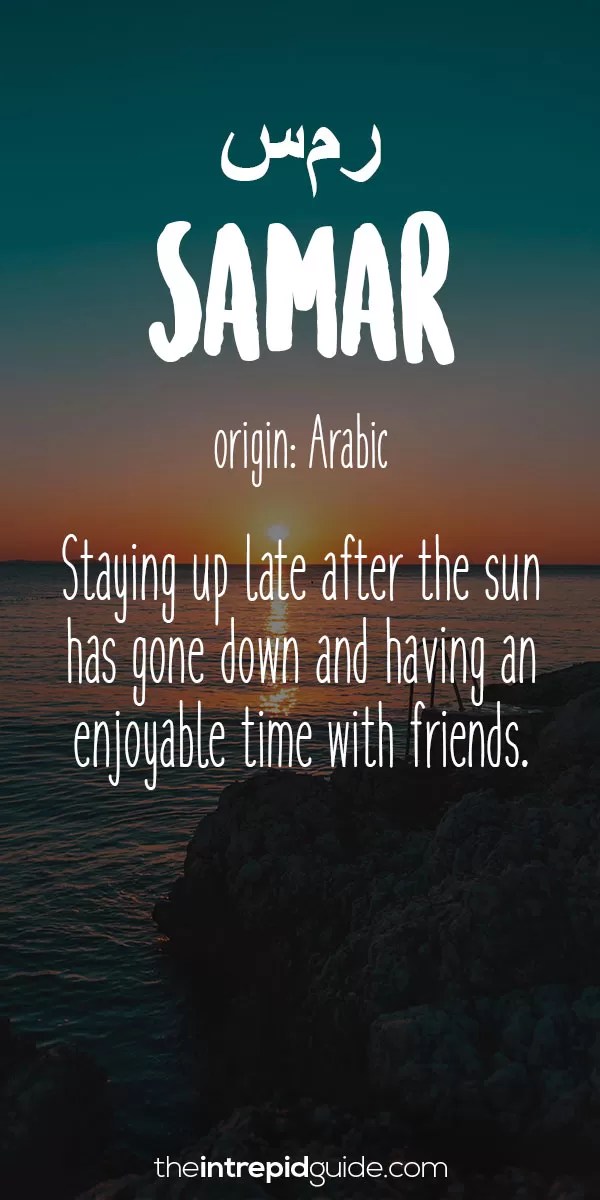
Don’t you love the way quirky idioms reflect a whole culture? I’ve written about this a few times before. Today I’m sharing what the Intrepid Guide has to say on the subject.
Michelle, the founder, writes, “If you’ve ever tried to learn a language, then you’ll know that translating is not always an easy task. There are over 7,000 languages in the world and just as many words and ideas that get ‘lost in translation’ due to differences in grammar and semantics, or even linguistic complications. When a language fails to convey the essence of a word during translation, the word is considered to be ‘untranslatable.’
“There are many terms that … can give us a glimpse into different cultures and belief systems that help us to understand the people who speak these marvelous languages.
“English is no stranger to borrowing words from other languages and even inventing new ones like hangry, a combination of anger and hunger because you need something to eat asap. Then there is nomophobia, an irrational fear or sense of panic felt when you’ve lost your phone or are unable to use it. … New words have entered English dictionaries at a fast pace, keeping up with the diversity of the English-speaking world.
“In spite of this, the English language can’t explain everything so succinctly, and yet there are many other languages that have, in just one word. This comprehensive list looks at some of the most beautiful words in different languages that are simply untranslatable into English. …
“From Afrikaans to Zulu, here are 203 of the most beautiful untranslatable words from other languages.
“Afrikaans: Loskop – Used to describe someone who is forgetful, absent-minded and a bit air-headed. It’s literally means, ‘loose (los) head (kop).’
“Albanian: Besa – An Albanian verb and pledge of honor that means to keep a promise by honoring your word. It’s usually translated as ‘faith”’ or ‘oath.’ …
“Arabic: Taarradhin (تراض) – Taarradhin is the act of coming to a happy compromise where everyone wins. It’s a way of reconciling without anyone losing face. …
“Bengali: Ghodar-dim (ঘোড়ার ডিম) – Pronounced [gho-rar-deem], this Bengali word is a sarcastic term for ‘nothing’ or false hope. It literally means ‘horse’s egg,’ therefore representing something that doesn’t exist. …
“Malay: pisan zapra – the time it takes to eat a banana. …
“Spanish: Vacinlando – Vacilando is a beautiful Spanish word which describes the journey or experience of travelling, is more important than reaching the specific destination.”
There’s a very long list of untranslatable Swedish. Here’s the first: “Badkruka – A person who feels somewhat hesitant or doesn’t like to swim in an open body of water due to its low temperature. …
“Tagalog (Philippines): Gigil – Gigil is the overwhelming feeling that comes over you when you see something unbearably cute that you want to squeeze or pinch it. Kind of like when your grandma wanted to pinch your cheeks when you were a child. …
“Wagiman (Australia): Murr-ma – This beautiful word comes from Wagiman, an almost extinct Australian Aboriginal language spoken in Australia’s Northern Territory. It describes feeling around in water with your feet to find something. …
“Yaghan (Southern Argentina): Mamihlapinatapei – The word mamihlapinatapai (sometimes also spelled mamihlapinatapei) comes from the Yaghan language of Tierra del Fuego in Southern Argentina. Mamihlapinatapai is listed in the Guinness Book of World Records as the ‘most succinct word’ and is considered extremely difficult to translate. Mamihlapinatapai is a meaningful, but wordless, exchange between two people, who both desire to initiate something but are hesitant to act on it. It also can refer to a private but non-verbal exchange shared by two people, one where each knows that the other understands and agrees what is being expressed. …
“Yiddish: Trepverter – Literally, ‘staircase words,’ trepverter is a witty comeback you think of only after it’s too late.
“Zulu: Ubuntu – The act of being kind to others because of one’s common humanity. Ubuntu is frequently translated as ‘I am because we are,’ or ‘humanity towards others.’ “
More at the Intrepid Guide, here. The selections are pretty amazing. Dip in anywhere. A couple of my previous posts on the topic are here and here.


 Suzanne's Mom's Blog