Feeds:
Posts
Comments

Posts Tagged ‘venue’

Photo: Lou Foglia for WBEZ.
Seth Boustead of the nonprofit Access Contemporary Music in Chicago describes the location they chose for their concerts: “The door dings when you walk in, like a 7-Eleven — we left that.”

I love stories about the successful repurposing of eyesore buildings. In today’s article, WBEZ’s Graham Meyer gives an inspiring example from Chicago.

“Not everyone looks at the long-vacant husk of a former convenience store and gets visions of string quartets and piano recitals. But that’s exactly how it happened for Seth Boustead, the head of Access Contemporary Music.

“In February 2023, in a cab traveling on North Clark Street, Boustead saw the familiar sight of the empty store at 4116, once a 7-Eleven, before that a White Hen Pantry. This time, the window had a ‘for rent’ sign. After the cab ride, Boustead zipped back on his bicycle and peered in the dark windows.

“ ‘This would be an amazing chamber music venue,’ he remembers thinking. …

“ ‘It’s pretty unrecognizable [now],’ Boustead said. ‘The door dings when you walk in, like a 7-Eleven — we left that. Behind the bar, there’s still, where the grease trap used to be, a door that goes down into the floor where they used to dump grease. I found a training poster for their employees, and we’re planning to frame it and put it in the bathroom.’

“ACM, now 21 years old, has always done many different things simultaneously. It gives music lessons, has a composer collective and presents concerts, such as the annual Sound of Silent Film Festival, where it commissions and live-performs scores for modern silent films. And once a year, it throws a classical music street festival called Thirsty Ears.

“The CheckOut [aims] to put on two or three chamber concerts a week, mostly self-produced. There are incipient plans for a jazz night on Thursday and for cabaret shows to fill the void left when Davenport’s abruptly canceled all its cabarets in April. …

“Unsurprisingly, a project of this magnitude had obstacles, money chief among them. Boustead said the rent for the CheckOut is close to the three music schools’ combined. And it quickly became clear that in addition to the renovations necessary to convert the space to a music venue, they would have to make up for upkeep that 7-Eleven had inconveniently deferred. …

“Then there were the administrative hurdles. The property was zoned for single-family houses, and the area had a liquor license moratorium. Both the odd zoning and the moratorium had the effect of funneling ACM through 46th Ward Ald. Angela Clay’s office, so that she and the community could weigh in before the project began. Boustead made a presentation to the Graceland West Area Community Association about lessons, rehearsals and concerts for 60 to 100 audience members filling the empty shell.

“ ‘Folks were excited about having this kind of small cultural institution in the neighborhood, but there’s a lot of red tape the city puts up,’ said Jesse Orr, director of infrastructure and development in Clay’s office.

“Boustead started checking boxes. With some hand-holding from Clay’s office, they hacked through the permits, inspections, zoning and other city tasks. And he worked on money. ACM landed a Community Development Grant through the city’s Department of Planning and Development for $250,000. They started a capital campaign, offering naming rights for the stage and chairs. …

“[In August] Boustead assembled a preview crowd and noted the irony that 7-Elevens play classical music to prevent people from loitering. This time, the 7-Eleven left, and the classical music stayed around.

“The Palomar Trio, part of ACM’s long-standing house ensemble, played piano-violin-cello music ranging chronologically from modern Dmitri Shostakovich to the of-the-minute 42-year-old Reena Esmail. With acoustical work still to be done, the room echoed more than would be ideal, and how to manage the sound of the air conditioning against the temperature of the room hasn’t been settled. But the music filled the space nicely, the louds excitingly loud and soft effects detectable. You’d never guess it had once been slinging slushies.” More at WBEZ, here.

If you are interested, Dylan Weinert at New City Music has a review of the opening, here.
Read Full Post »

Photo: Brooke Holder/The Christian Science Monitor.
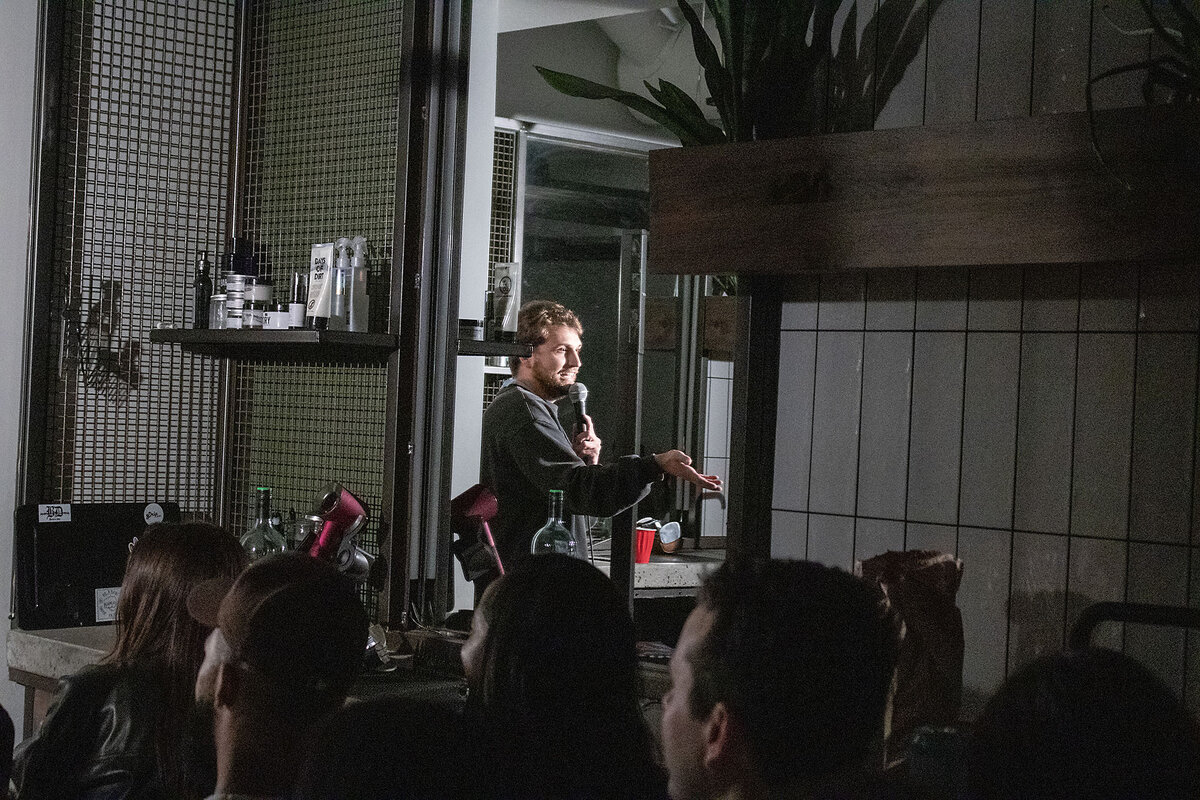
Eddie Lorah performs at Barber’s Den in Somerville, Massachusetts, Sept. 14, 2024. Every Don’t Tell Comedy show is located at an unconventional venue. 

People often say, “I have to laugh so I don’t cry.” And goodness knows, we all need laughter. In fact, a doctor I met when I was working for Minnesota Physician actually taught people how to make themselves laugh. Because it boosts endorphins that are good for you. He called himself the Laugh Doctor.

Now I’m learning that there’s such a thirst for comedy these days that live clubs are popping up everywhere. Including in barbershops.

Stephen Humphries writes at the Christian Science Monitor, “Of all the options for a night out in Boston, an immigration lawyer’s office probably doesn’t rank high on many lists. Yet that’s where Hayley Licata and Renee Tracy found themselves last fall. The two recent college grads had such a blast that they’ve opted to repeat the experience.

“Tonight, they’ve arrived at a barbershop. This location was a secret – just as the law office had been. A man at the door checks that they’re on the guest list. Then he welcomes them to Don’t Tell Comedy.

“Every weekend, in over 200 cities around the world, Don’t Tell Comedy hosts secret shows by stand-up comedians. Venues range from boxing gyms to boats. For one night only, this dimly lit salon in Somerville, Massachusetts, has been transformed into a pop-up comedy club. In one corner, a microphone stand basks in the flat halo of a spotlight. Forty folding chairs have been set up between work stations sporting arrays of electric razors. …

“Founded in 2017, Don’t Tell Comedy has had a success that reflects the remarkable boom of live comedy since the pandemic. In large part, the demand for stand-up has been fueled by filmed specials on streaming platforms and funny clips on TikTok and YouTube. But, paradoxically, it’s also a reaction to those media. Events such as Don’t Tell Comedy are inspiring people to get off their couches, because online entertainment is no substitute for participating in intimate, in-person events.

“ ‘It feels a little bit like magic,’ says Brendan Eyre, the headliner among the five performers at the barbershop. … ‘You’re sharing an experience with strangers. You’re laughing at the same thing. They’re laughing at the same thing, which brings people together. You feel a sense of community.’ …

“In an era when many people can’t seem to watch television without constantly checking their phones, the audiences for both sets at the barbershop are fully unplugged for more than 70 minutes. Attendees may even become part of the show. For instance, one comedian cracked a joke about first-timers Gilbert Paredes and Kelly Emmons.

“ ‘If you sit at the front, they might give you attention,’ says Ms. Emmons. ‘But that’s part of the fun. If you wanted something that was one-way, you would stay at home and watch your TV.’ …

“For her, part of the appeal of the inexpensive Don’t Tell Comedy event is discovering talents she hasn’t heard of before. The lineups are a secret prior to each show. (Very occasionally, big-name acts such as Jeff Garlin and Michael Che will drop by to road test new material.)

“Tonight, audiences are especially enamored with comic Janet McNamara. She tells the audience about her audition for Season 9 of ‘American Idol.’

“ ‘You know how they have “bad people”? I was one of the bad people,’ Ms. McNamara tells the room, which erupts with laughter. ‘I went on as, like, a goof to make my friends laugh. But then it didn’t occur to me that it would be on TV.’

“Ms. McNamara, who mercifully didn’t sing during her set, performed at the first-ever Don’t Tell Comedy show. It was staged in a backyard in Los Angeles in 2017. She says fringe stand-up venues aren’t a novel concept – shows in laundromats predate Don’t Tell Comedy – but what the company does especially well is showcase fast-rising stars on its YouTube channel.

Case in point: Susan Rice, a septuagenarian comic from Portland, Oregon.

“ ‘Her set really just did well,’ says Don’t Tell Comedy’s chief operating officer, Brett Kushner. ‘It’s over a million [viewers] now. She’s now taping her special down in LA from that momentum.’ “

More at the Monitor, here. No firewall.

Read Full Post »

Photo: Lorne Thomson/Redferns.
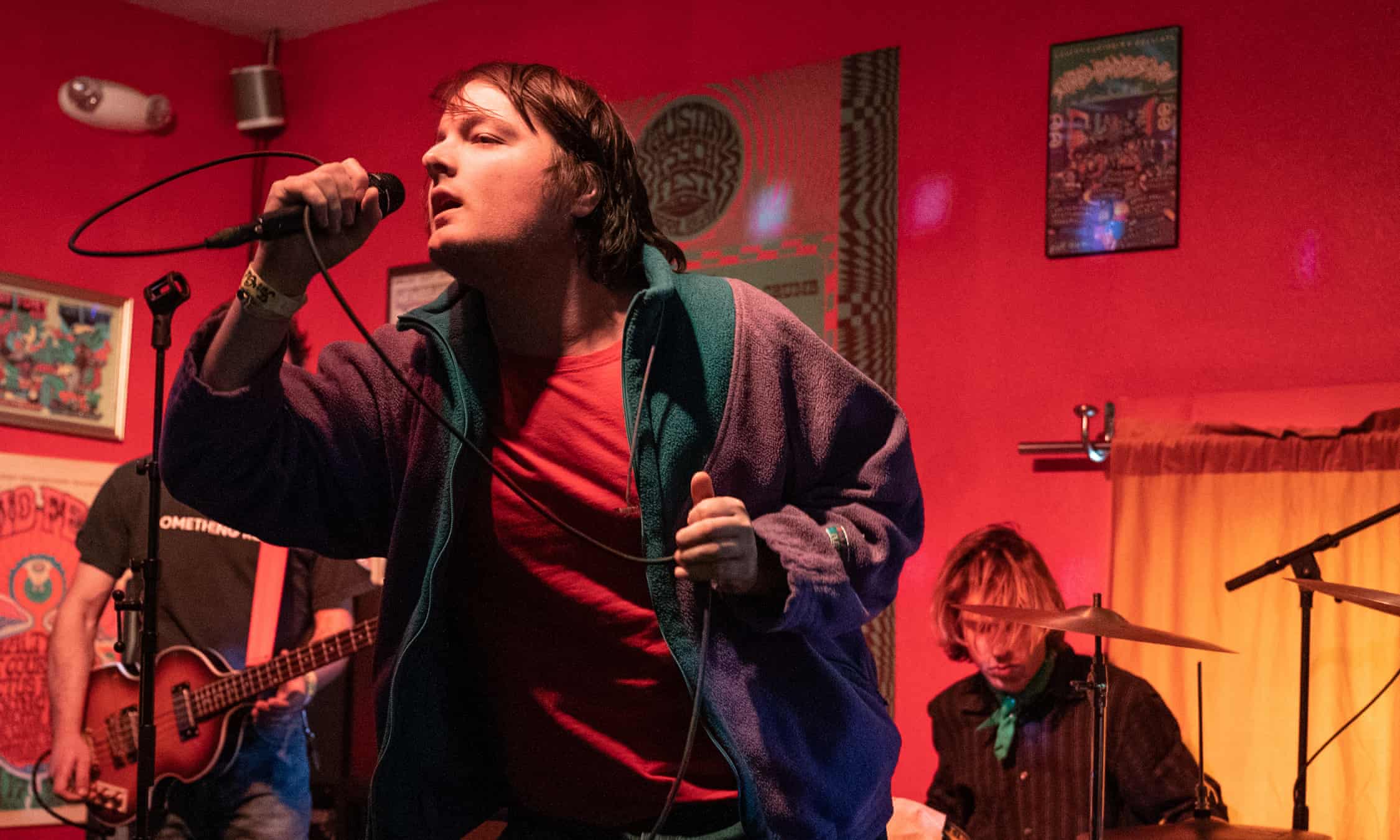
A group called Personal Trainer performs in an Austin, Texas, record shop (above). Like NPR’s Tiny Desk Concerts, record shops provide a welcome venue for performers.

In the record industry, apparently, as long as performances feel a little different and surprising, it’s good for business. But how long do things stay surprising? Today’s article traces the rise of band performances in record shops and leads me to wonder, After record shops, what’s next?

Michael Hann writes at the Guardian, “At one end of Banquet Records in Kingston upon Thames the Dutch indie band Personal Trainer are performing a short set next to the album racks. … Afterwards, the band will sign the albums the fans have bought and everyone will depart a little happier: the fans with memories of an intimate show and signed records; the band a few quid richer, a few more sales made, maybe a few more fans won. And Banquet will have sold a few hundred quid’s worth of stock.

“It’s early August and the start of an intensive week for Personal Trainer – as well as Banquet, they will play record shops in London, Brighton, Portsmouth, Totnes, Bristol, Liverpool, Leeds and Nottingham. There will be festival shows, too, but only one conventional gig, an undersell in a tiny pub. This campaign is not launching with touring, at least not in the old-fashioned sense. …

“Artists have always gone to record shops to sign albums. And there have long been one-off promo shows in shops. But the idea of the in-store performance as a key part of an album launch dates back a decade or so, partly because physical sales of music were so low that the extra sales from a handful of appearances could dramatically affect chart position for bands with a loyal fanbase (physical sales still carry a greater chart weighting than streams or digital downloads).

“But also it’s because it’s one of the few routes left to promote a new album, says Tara Richardson, who managed the Last Dinner Party when they reached No 1 in the album charts earlier this year with their debut. ‘There’s no TV any more for bands,’ she says. ‘There’s only a Radio X session and a Live Lounge recording. So in the week of release you either put in shows, or you put in in-stores, and they’re the perfect thing to keep everyone busy in the week of release.’

“Labels favor in-stores, she says, not just for the chart position, but because it keeps the decks clear for a proper tour later in the campaign. Meanwhile in-stores tend to favor indie-ish bands, not least because independent record shops are now far more of a driving force in retail than the megastores. The Rough Trade chain, for example, hosts scores of shows. …

“With the right act and enough advance notice, in-stores can make a huge difference to sales and set the tone of an album campaign. ‘In the UK, the in-store has become part of the process of building a week-one launchpad for the campaign and building a chart position, because physical sales still leapfrog the streaming economy,’ says James Sandom, who works as a manager with bands including the Vaccines and Interpol. Sandom says the charts actually measure nothing of meaning any longer, but they still have use, because a high chart position will allow booking agents to demand higher fees, and get bands better spots on festival bills. …

“Simon Raymonde of Bella Union – Personal Trainer’s label – says it’s about building community. ‘I really like it when the shops are fully involved and they will be far more supportive of the record.’ …

“But for Rupert Morrison of Drift Records in Totnes, which staged one of Personal Trainer’s shows, in-stores becoming an institutionalized part of an album campaign risks losing what was once special about them. ‘Originally it was an American thing,’ he says. ‘Culturally outlying stores like Other Music in New York were melting people’s minds: the people there would talk about Laurie Anderson playing and Lou Reed cheering her on and helping with her pedals. They were these incredible, intimate, mind-blowing experiences, where you got completely different access to people. …

“ ‘I worry that like everything, once people see that something is a thing, it gets hammered and hammered.’ …

“Nevertheless, the results, for certain artists, can’t be argued with. Shed Seven had their first No 1 album earlier this year thanks to sales made at their in-store appearances in January. ‘You’re in a van, you’ve got one crew member to help, and you’re in Brighton at midday, then Southampton at teatime, Bristol the next lunchtime. And then you’re in Glasgow,’ says singer Rick Witter. ‘It’s intense.’

“But that No 1 changed perceptions of the band, Witter says. No longer were they a Britpop punchline, but a band with a No 1 album.”

More at the Guardian, here.

Read Full Post »

On the other hand, your living room could be a perfectly good performance venue. In fact, the Guardian calls your living room the “hottest new arts venue.”

The newspaper’s Darryn King writes, “On a recent Friday night in Manhattan, around 20 people and one terrier gathered in the living room of an Upper East Side apartment to listen to a string quartet perform Beethoven, Ravel and Tchaikovsky.

“The guests sampled cheese and wine – several had brought bottles to share – and asked strangers: ‘Is this your first time?’ …

“There are similar events to this performance, organised by Boston-based chamber music concert community Groupmuse, happening in New York, San Francisco and four other cities every week: intimate shows taking place in living rooms of all shapes, sizes and levels of cleanliness, a paradoxically homely and exciting alternative to traditional theatres, concert venues and comedy clubs.

“And it isn’t limited to classical music. Thanks to a range of organisations putting on events in the home, there’s a good chance that, if you were so inclined, you could enjoy standup comedy, live theatre and rock gigs in the comfort of someone else’s residence tonight. Welcome to the latest and greatest nontraditional venue invigorating the city’s live performance scene: the humble living room.

“A lot of folks seek out live music to feel like they are actively contributing to and sharing in something larger than themselves – not just standing by, observing the experience,” says Groupmuse founder Sam Bodkin. “Living rooms are just the best way to do that.”…

“The New Place Players, a troupe of Shakespearean performers-for-hire, have also been busy immersing audiences. The group has staged their productions of Twelfth Night and A Midsummer Night’s Dream in homes all over the city, while also putting on regular supper-and-show performances in the sumptuous living room of the historic Casa Duse residence in Park Slope, Brooklyn.

“The productions are a harmonious blend of music, lighting, theatre, food and drink, amounting to a communal atmosphere that harks back to the experience of catching a theatre performance in Elizabethan times.” More here.

Photo: Groupmuse
A Groupmuse gig.

Read Full Post »

Looking for an affordable venue for your chamber music group, your living-room theatrical production, your poetry group’s public readings? Need a performance space with a cat to give your book promotion that certain je ne sais quoi?

Nidhi Subbaraman has a nice piece at the Boston Globe‘s betaboston site on a tool that can help you find the perfect space.

“Gregorian Oriental Rugs opens at 10 a.m. every weekday, and with wood floors and high ceilings, this converted paper mill in Newton is an airy showroom for antique Turkish flat-weaves, Ikats from India, and countless other intricate, handmade imports from the Far East and Middle East. Some evenings, however, the expensive carpets and rugs are folded, stacked, and put aside, and the store is transformed into an intimate performance venue for local artists. …

“Most people hear about this unusual event space from friends. But to reach community art groups, Gregorian recently listed his venue on SpaceFinder Mass, a kind of Airbnb for the performance world that came to Massachusetts in January. The service connects artists hunting for budget performance or rehearsal space with unusual, informal, and affordable venues.

“ ‘We talk about SpaceFinder being a discovery tool,’ said Lisa Niedermeyer, its program director. Venues can share their calendar for availability, and artists can search by square footage, rates, and timing. The website also handles payments for the bookings.

“Started in New York three years ago, SpaceFinder was developed by Fractured Atlas, a nonprofit group that supports artists. SpaceFinder lists more than 6,600 spaces in 11 cities in the United States, plus Toronto, where you can rent a pirate ship. In Philadelphia, artists can rent a mosaic sculpture garden. …

“SpaceFinder was launched in Massachusetts in partnership with the Arts and Business Council of Boston, and more than 200 venues in the state are listed, most of which are themselves in the arts business — small museums and theaters, for example, dance studios and art galleries.

“In addition to Gregorian, other outliers include a fitness club in Dorchester and a winery in Southampton. …

“To connect with active art communities in far-flung corners of the state, Fractured Atlas reached out to Seth Lepore, an independent artist in Easthampton, to spread the word about the service among artists and to enlist venues.

“ ‘Space is a huge issue here in Western Massachusetts,’ said Lepore, who helped connect SpaceFinder with local studios.” More here.

Photo: Jessica Renaldi/Globe staff
Gregorian Oriental Rugs on a regular work day.

Read Full Post »