Feeds:
Posts
Comments

Posts Tagged ‘vision’

Photo: Hannah Goeke/Christian Science Monitor.
One of the National Braille Press’s braille machines operating in Boston’s Fenway neighborhood.

As I read today’s article about braille services losing funding, I am struck particularly by an activist’s comment on the importance to blind children of meeting other blind children in the braille libraries. I remember my own insensitivity to disability as a child. Children sense difference sand sometimes they are not kind. Being with others who share an issue like blindness would be huge.

But opportunities like that are now threatened — at both federal and state levels.

Hannah Goeke writes at the Christian Science Monitor, “Marci Carpenter reconnected with her love of reading through her fingertips. When her vision became more limited, learning braille gave her a new way to experience the world. She still remembers how the words of Robert Frost’s poems came alive again through soft bumps embossed on thick paper.

“But it was the Washington Talking Book & Braille Library in Seattle that gave her a place to connect.

“ ‘That was the first time I had ever experienced being around shelves and shelves of braille books. It was this really liberating experience,’ recalls Ms. Carpenter. Over the next five decades, she returned again and again to browse through the Major League Baseball schedule, check out the Constitution – and science fiction – and discover new volumes.

“Today, Ms. Carpenter, who now serves as president of the National Federation of the Blind of Washington, is facing a new urgent need.

“On July 1, the doors to the Washington Talking Book & Braille Library swung shut to the public for in-person exploration and gathering due to a lack of state funding. As needs increase and revenue growth slows, the state of Washington is facing a budget deficit. Ms. Carpenter, who was among those working with legislators to secure funding for libraries, came up empty-handed. …

“The Seattle library is one of nearly 100 libraries and outreach centers nationwide that form the network of the National Library Service for the Blind and Print Disabled, which provides free braille and audio materials through the Library of Congress.

“A small staff is determined to keep the library running. Since July 1, it has offered services by appointment only. ‘We are getting about our normal number of calls,’ writes Danielle Miller, the library’s director, in an email. ‘We have had to turn away people who wanted to come in and use the library.’ …

“Patrons say they are most saddened by that loss. Through in-person workshops and programming, the library provides a sense of belonging and community. Preserving free access to braille materials and encouraging braille literacy – especially for children – is imperative, according to experts and educators. …

“The vast majority of the 26% of employed blind people are braille readers, according to the National Braille Press in Boston. However, despite reading’s link to higher education and employment in the United States, only 12% of school-age blind children in the U.S. can read braille, the NBP estimates.

“While tape recorders and synthesized speech are useful tools, they do not teach the ability to read, write, and spell, says Kim Charlson, the executive director of the Perkins Library in Watertown, Massachusetts. …

“Braille opens the door to independence, not only on a large scale but also in small ways. What is habitual to sighted people becomes a significant hindrance for blind people, says Ms. Charlson. For example, being able to jot down a telephone number, take a note, or create labels to find the warranty for your new stove.

“Ms. Charlson shares a lesson she learned about the everyday importance of using braille after adding an unconventional ingredient to her chili recipe.

“ ‘I just opened it and tossed it in. I added my tomato sauce,’ she says with a laugh. ‘My husband [who is also blind] took a bite and he said, “This is kind of interesting.” And I said, “What do you mean? It’s chili.” And he goes, “Well, it’s got fruit cocktail in it.” ‘ Ms. Charlson now adds braille labels to her kitchen jars and cans.

“While funding uncertainty has braille libraries on edge, at the National Braille Press, President Brian Mac Donald says the demand for braille books remains high. He expects that to continue. …

“Says Mr. Mac Donald, ‘We have parents that have written testimonials saying, “I wish you could have seen the excitement of my son when he read his first book with us … in braille.” ‘

“On a recent weekday, the NBP presses are humming, business as usual, in a brownstone building in Boston’s Fenway neighborhood. In the basement, Elizabeth Bouvier binds books together with practiced precision as the rhythmic clatter of machines pressing dots into thick paper echoes off concrete walls.

“Ms. Bouvier is blind. So are many of her colleagues at the NBP, where a small staff produces millions of braille pages each year, including children’s books.

“The closure of the Seattle library means the shuttering of its children’s room. It also means the end of introductory braille workshops and story times with children’s books featuring braille pages added that allow blind and sighted kids to read together. …

“Like many, Ms. Carpenter was the only blind child in her public school. The closing of the children’s room ‘is a loss of community,’ she says. ‘It is important for blind children to meet other blind children.’

“Ms. Miller’s and Ms. Carpenter’s inboxes have been flooded with inquiries about how people can help. Ms. Carpenter is telling them to wait for the right moment. When funding talks for the next state budget cycle start in 2026, she has no doubt that the blind community will turn up in big numbers to explain why access to the library’s services is essential to them.

“ ‘You know the most impactful action people have is their story,’ she says. ‘Anyone can request to speak with a legislator.’ ”

More at the Monitor, here.
Read Full Post »

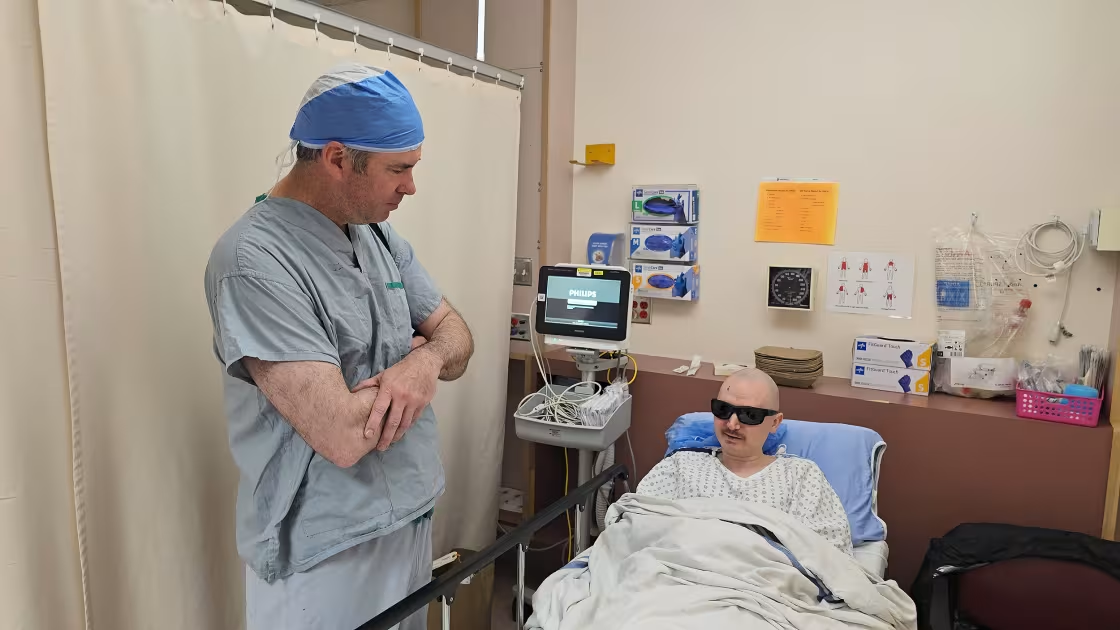
Photo: Phil Chapman.
Dr. Greg Moloney, left, and Brent Chapman talk before the second stage of Chapman’s tooth-in-eye surgery.

Today’s story is about a fascinating kind of surgery for a very specific kind of eye problem. It came about because surgeons needed a hard material that patients’ immune systems wouldn’t reject. Surprisingly, it’s been used since the 1960s.

A. Pawlowski reports the story at Today.

“Brent Chapman can see again,” she writes, “after doctors pulled out one of his teeth, flattened it, drilled a hole in it, placed a lens inside and implanted the tooth in one of his eyes. It seems bizarre, but the complex operation — informally known as tooth-in-eye surgery — can help restore vision in patients with the most severe forms of corneal blindness.

” ‘It kind of sounded a little science fictiony. I was like, “Who thought of this?” Like this is so crazy,’ Chapman, 34, who lives in North Vancouver, British Columbia, tells TODAY.com about his first impression of the concept.

“ ‘Usually, the reaction is shock and surprise and frank disbelief that it even exists,’ says Dr. Greg Moloney, his eye surgeon and an ophthalmologist at Providence Health Care’s Mount Saint Joseph Hospital in Vancouver. The technique was developed in the 1960s, and Moloney estimates several hundred people around the world have undergone the procedure.

“It’s for patients who have a healthy back of the eye, but have suffered severe damage to the front of the eye — the cornea — from a chemical burn, a fire or explosion, or an autoimmune reaction where the immune system attacks the eye.

“In those cases, doctors need a way to restore a clear window to the back of the eye — like changing a severely damaged windshield in a car, Moloney says.

“It turns out a tooth with a lens implanted in the eye is the solution.

“Chapman was 13 years old when he lost his vision. He was playing in a high school basketball tournament, felt a little ill and took a couple of ibuprofen pain relievers. Healthy until then, Chapman had a life-threatening skin reaction to the medication known as Stevens-Johnson syndrome.

“In a coma for 27 days, Chapman recovered, but his eyes were forever impacted. His left eye is irreversibly blind, while his right eye suffered severe damage to the cornea. He spent the next 20 years traveling the world trying different procedures to preserve any vision he had left, including 10 cornea transplants. But they worked only for a short period of time. …

“Humans have been trying for hundreds of years to figure out how to put an artificial cornea on the front of an eyeball — the biggest issue is getting it to stay in place so that the body doesn’t reject it, Moloney notes. A patient’s own tooth solves that problem.

It’s a hard structure that can survive in this harsh environment, and the body understands it as part of itself, allowing it to grow into place, the doctor explains. …

“The ideal candidate for tooth-in-eye surgery — officially known as osteo-odonto-keratoprosthesis — is blind in both eyes from a disease that has affected the surface of the eye, but still has a healthy optic nerve and retina.

“The first stage of the two-step operation took place in February when Chapman had one of his teeth pulled. It had to be a healthy tooth that’s ‘bigger and then quite robust in order to hold the lens,’ Dr. Ben Kang, his oral surgeon, tells TODAY.com.

“He extracted one of Chapman’s upper canine teeth, then shaped and flattened it down with a drill so that it became rectangular. A hole drilled in the middle of the structure allowed the lens to be installed inside. …

“The tooth was then put back into Chapman’s cheek and implanted in a fat pocket underneath his eye for three months so that the body could grow tissue around it. Moloney would use it to stitch and anchor the structure to the front of his patient’s right eye.

“That second stage of the surgery took place in June. After waking up, Chapman could see hand motions right away, but it took a couple of months for his eye to heal after the surgery and for his vision to sharpen.

“ ‘We tried some glasses and I had this moment where I was like, wow, OK, I’m really seeing well now,’ Chapman recalls. ‘Dr. Maloney and I made eye contact, and it was quite emotional. I hadn’t really made eye contact in 20 years.’ “

Read more at Today, here, and still more at Wikipedia, here.

Read Full Post »

Art: Jonathan Lyndon Chase.
“Calm Touches” (2021), acrylic paint, oil stick, and marker on canvas, 20 x 20 inches. One of the pieces that students chose for the art collection at Wake Forest University.

I’ve been reading Just Kids, Patti Smith’s memoir about her life with artist Robert Mapplethorpe, and I’ve been thinking about how young artists carve out new ways, how they realize they have a different vision and develop the confidence to stick with it.

So it was with interest that I read at Hyperallergic about a university tapping youthful insights about art to form a very special collection.

John Yau reports from Winston-Salem, North Carolina, “Wake Forest University is one of the few American institutions of higher education to establish a collection of student-acquired art.

“Once every four years, a small group of students, along with faculty advisors, travels to New York City to buy art for the Mark H. Reece Collection of Student-Acquired Contemporary Art. This collection was started in 1963, at the beginning of a convulsive era in American history.

“Mark Reece, the dean of students and college union advisor, decided the school should establish a collection of contemporary art chosen by an acquisitions committee composed solely of students. In June of that year, Reece, Dean Ed Wilson, Professor J. Allen Easeley, and two students, David Forsyth and Theodore Meredith, drove to New York to visit contemporary art galleries. Working within a budget that Reece had cobbled together from unused funds, Forsyth and Meredith chose 18 works by 17 artists. 

“Earlier this year, Wake Forest University celebrated the 60th year of this program — and the 16 trips that have taken place since the program’s inception — with a selection of works obtained by previous generations of students. The exhibition, Of the Times: Sixty Years of Student-Acquired Art at Wake Forest University at the Charlotte & Phillip Hanes Art Gallery, was curated by Jennifer Finkel, who also contributed to the catalog, along with Leigh Ann Hallberg and J. D. Wilson. 

“The collection comprises more than 130 works, including, paintings, sculptures, drawings, photographs, and prints. Unsurprisingly, given that the acquisitions committee changes every four years, no style, movement, or material dominates. The one constant holding the collection together, though in no obvious way, is the mandate that Reece gave the first two students, which has been followed ever since: the art they buy must be ‘a reflection of the times.’ 

“During my time on campus, I was invited to sit on Professor John J. Curley’s class, titled Slow Looking. The small group of students, seated in a semicircle, faced Ida Applebroog’s ‘Promise I Won’t Die?’ (1987), a work on paper combining lithography, linocut, and watercolor that the acquisition group elected to buy in 1993. …

“By asking students to research an artist and carefully scrutinize a particular work of art, Curley encouraged them to go down a rabbit hole, where they can consider what they are looking at and how it communicates with them. This level of engagement is hard to achieve without being in the presence of a physical artwork. That it was chosen by a group of students 30 years ago underscores this collection’s ongoing vitality and relevance. 

“On campus, I also met some of the students who participated in the most recent New York buying trip. All were genuinely excited. They talked about how they prepared for the trip, beginning with Reece’s original mandate. They began compiling the initial list of 300 artists once they had been accepted into Contemporary Arts and Criticism. Throughout the semester the list expanded and contracted until it was down to 20 names. The students met in and outside of class. Each week, they presented a short list to their two professors, Finkel and Curley. 

“The students discussed what they thought art reflecting the times would look like, and who might make it, resulting in a racially diverse group. Before the trip, they made appointments with the artists’ galleries. Some dealers, I learned, were arrogant to them, treating them as if they didn’t know what they were doing. Others were warm and welcoming. At least one gallerist kept looking to the professors who accompanied them, convinced it was they who would make the final decision. …

“This immersive art-buying experience … mirrors this country’s changing demographics. For the first decades, the artists on the list were all or nearly all White. In 1989, the students bought Robert Colescott’s painting ‘Famous Last Words: The Death of a Poet’ (1988). … Four years later, the students bought ‘Untitled (Four Etchings)’ (1992) by Glenn Ligon and ‘Untitled (from the Empty Clothing series)’ (1991) by Whitfield Lovell. In 2001, they added South Korean artist Do-Ho Suh and Pakistani-American artist Shahzia Sikander to the collection. They confronted controversial subjects, such as Congolese child soldiers, photographed by Richard Mosse, and Pakistani artist Salman Toor’s paintings of queer Brown men. 

“This year, the eight students chose the work of eight artists: Tunji Adeniyi-Jones, Jonathan Lydon Chase, Melissa Cody, Adebunmi Gbadebo, Emilie Gossiaux, Melvin L. Nesbitt Jr., Willa Wasserman, and Zhang Xiaoli.

“My only criticism,” Yau writes, “is that the university has no building dedicated to this collection, and it really should. Yet the diversity of artists, mediums, and practices is to be applauded. Taking their cues from Reece’s mandate, Wake Forest’s students have assembled an impressive gathering of art.”

I love how the university recognizes that young people have different sensibilities and how it honors that. More at Hyperallergic, here. No paywall. Subscriptions encouraged.

Read Full Post »

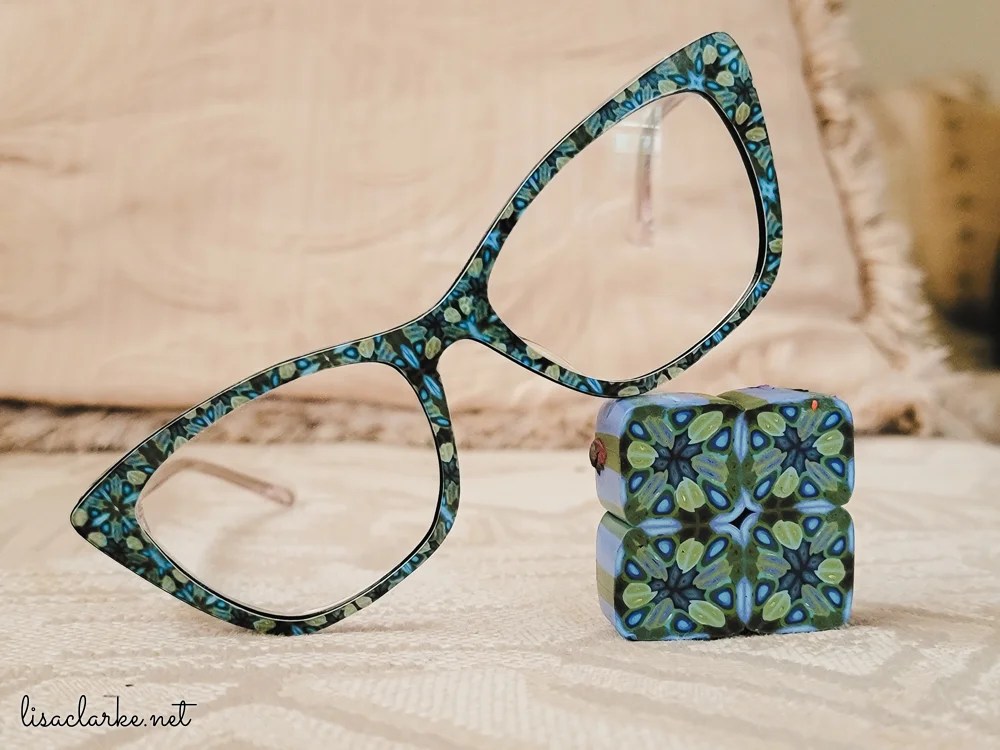
Photo: Lisa Clarke.
Magnetic topper for Pair eyewear.

I was in elementary school when I got my first pair of glasses. At that time, people would say, “You look like Private Secretary,” a character in a television show of the same name. My wiseacre dad, however, couldn’t resist saying, “Men seldom make passes at girls who wear glasses.”

Nowadays, we know that glasses not only correct vision but make a fashion statement. And as Gabrielle Emanuel reports at National Public Radio (NPR), there’s even research about the connection between glasses and income.

She writes, “Jasmin Atker calls her reading glasses her best friend – and a companion she does not take for granted. But her spectacles do something most best friends don’t do: They help her make a lot more money.

“Atker, 42, is a grandmother who lives in Manikganj, Bangladesh, on a small family farm. It started as a cattle farm producing milk. After she got glasses through the nonprofit groups VisionSpring and BRAC in 2022, Atker says, her improved vision enabled her to set up a vegetable patch. She even learned how to grow mushrooms. She now sells mushrooms as well as pumpkins, watermelon and spinach at the market. Atker estimates that her monthly income has jumped from 9,000 to 10,000 Bangladeshi taka to closer to 15,000 to 17,000 taka – the equivalent of about $150.

” ‘Before, when I tried to cut vegetables and wanted to see if there were any insects or not, I couldn’t see properly,’ Atker says, speaking through an interpreter. ‘After [I got] the glasses, the average time that I take for each task has reduced significantly. And I can do more work … [and] I have this sense of independence.’

“There’s now data that suggests Atker’s story is common. For the first time, researchers have directly linked glasses and income. The study – published April 3 in PLOS ONE – found a dramatic increase in earnings with a very low-cost change: a new pair of reading glasses.

“The researchers went to 56 villages in Bangladesh and found more than 800 adults ages 35 to 65 who are farsighted – that is, they could not see well up close. Half were randomly selected to get glasses; the other half got glasses after eight months. In that time, the researchers found that income grew by 33% for those with glasses – from a median monthly income of $35 to $47 – and that people who were not in the workforce were able to start jobs after getting reading glasses. …

” ‘In a lot of low- and middle-income countries, glasses are still tightly regulated,’ says Dr. Nathan Congdon, a co-author of the study and chair of Global Eye Health at Queen’s University Belfast. People often have to get a prescription from a vision specialist before they can purchase glasses, even reading glasses. This proves to be a huge hurdle for those living in poverty and those in remote areas, he says.

“The study did more than quantify the income gains from glasses. The researchers also taught community health workers in just a few hours how to help people pick the right reading glasses. …

” ‘It’s a little bit like buying a pair of trousers where you’ve got small, medium, large, extra large – four or five, six different sizes,’ says Congdon. This makes reading glasses easier and cheaper to produce.

” ‘The glasses themselves cost maybe $3-4. And using village health workers, we can make the cost of delivery very inexpensive as well,’ said Congdon. ‘So the whole thing can really just be a handful of dollars to deliver something that’s potentially quite life changing.’

“This study’s findings fit with past studies that link glasses to productivity. For example, Congdon was involved in a study, in India, where tea pickers given glasses were more productive. Similarly, cataract surgery has been shown to increase economically valuable activities by 40% to 50%.

“The villagers in the study worked in a wide range of professions: shopkeepers, farmers, craftspeople and weavers, for example. Only about a third of them were literate. So the reading glasses weren’t for reading as much as for other daily tasks, like threading a needle, quickly figuring out change at a cash register or weeding and sorting grain on a family farm.

“What the participants had in common is they had presbyopia – as do over a billion people today. This condition happens naturally as people age. …

“Congdon would like to see regulations loosen to improve access to reading glasses. He says the regulations, the cost and a general lack of awareness have meant many people who need glasses go without. When searching for participants, his team met almost nobody in the Bangladeshi villages with glasses.

“Congdon, who is an ophthalmologist himself, largely blames his own profession. ‘Ophthalmologists and optometrists may be advising the government that they should tightly regulate access to these products [to] strengthen their professions. They may see themselves as gatekeepers of quality,’ he says. ‘I wouldn’t be recommending that we just hand out distance glasses, but I do think that for near [vision] glasses that’s a reasonable thing to do.’

“He says some for-profit companies and countries have successfully experimented with providing people with glasses. ‘Dozens of companies in coffee, tea, chocolate, textiles and other visually intensive sectors – they started to offer these programs, all across India and in many African countries,’ Congdon says.” More at NPR, here. No firewall.

I work with an ESL teacher who sees to it that students who need glasses take advantage of special programs. You have to jump through some hoops, but glasses make a huge difference in their lives.

Read Full Post »

I have to say, I found this new research fascinating as I had been experiencing something similar to the contrast sensitivity described. And I was delighted to see you could train your eyes to counteract the perceptions that can cause a stumble.

Jan Hoffman writes at the NY Times, “As adults age, vision deteriorates. One common type of decline is in contrast sensitivity, the ability to distinguish gradations of light to dark, making it possible to discern where one object ends and another begins.

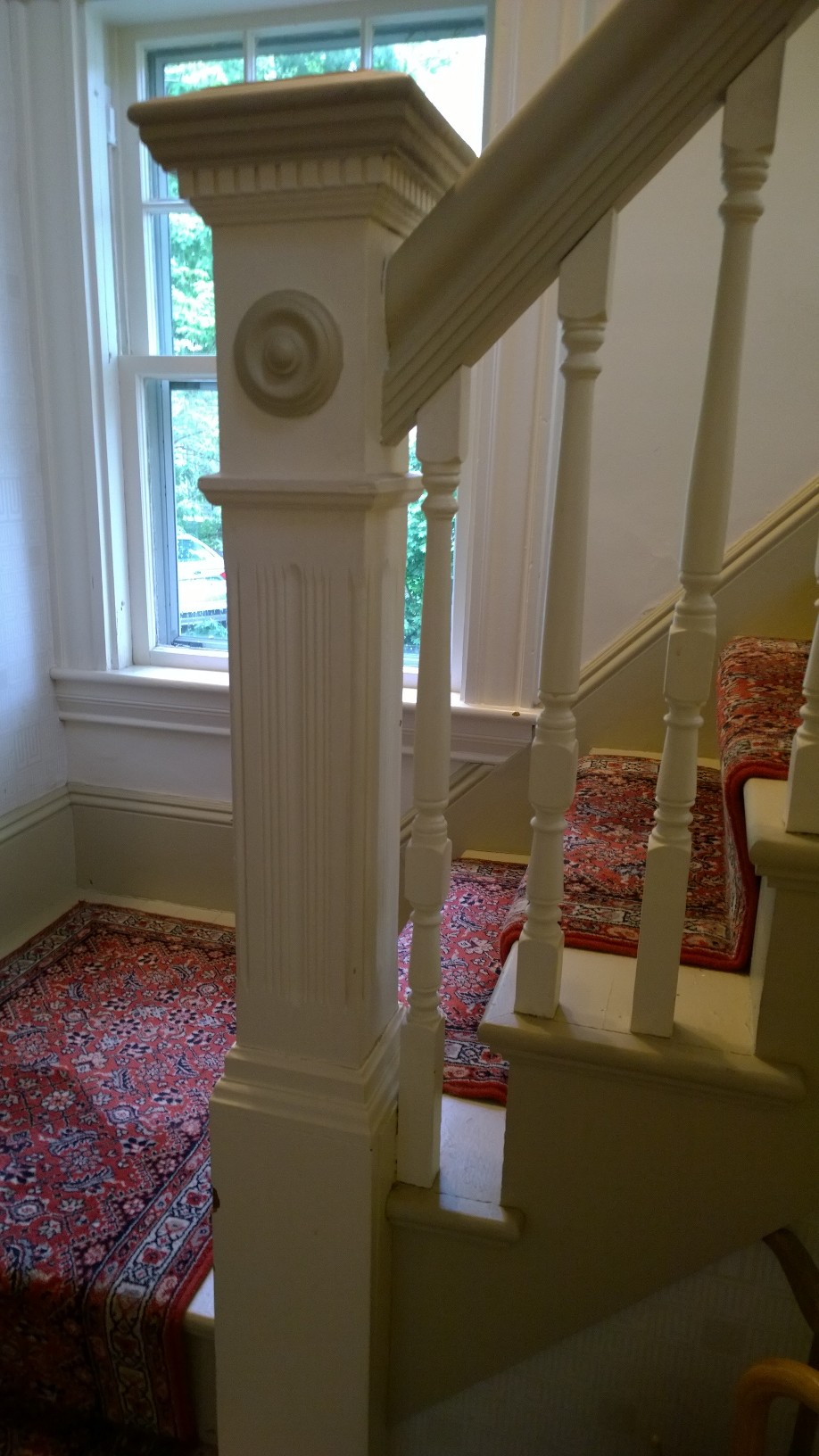
“When an older adult descends a flight of stairs, for example, she may not tell the edge of one step from the next, so she stumbles. At night, an older driver may squint to see the edge of white road stripes on blacktop. Caught in the glare of headlights, he swerves.

“But new research suggests that contrast sensitivity can be improved with brain-training exercises. In a study published [in March] in Psychological Science, researchers at the University of California, Riverside, and Brown University showed that after just five sessions of behavioral exercises, the vision of 16 people in their 60s and 70s significantly improved.”

Read more at the NY Times, here, or go straight to “Improving Vision Among Older Adults: Behavioral Training to Improve Sight,” here. Authors Denton J. DeLoss and George J. Andersen are from the University of California, and Takeo Watanabe is at Brown.

stairs

Read Full Post »

At Global Envision, Seth Heller blogged about an organization that provides inexpensive eyeglasses to poor people in the developing world.

“We often take clear vision for granted,” writes Heller, “but Peter Eliassen knows that eyeglasses can be the difference between financial security and poverty for many in the developing world. As the chief operating officer of VisionSpring, Eliassen travels the globe making reasonably priced eyewear available for people who cannot otherwise afford them. …

“VisionSpring estimates more than 703 million people around the world need eyeglasses. Without vision correction, people are unable to secure employment during their prime working years, and supporting a family becomes almost impossible. …

“VisionSpring’s eyeglasses are priced around $4 and typically boost the wearer’s wage by an average of $108 per year – a significant amount in many developing nations. …

“However, a worker’s clear vision can be life-changing to many people outside their family. …

“The correlation between good public health and economic growth in developing nations is strong. If developing nations can reduce unemployment by solving ongoing public health problems such as impaired vision, the socioeconomic benefits can improve the lives of a nation’s entire population.” More here.

The story came to me by way of the Christian Science Monitor‘s Change Agent listserv.

Photo: Thatcher Cook/Mercy Corps
Eyeglasses from VisionSpring.

Read Full Post »