Feeds:
Posts
Comments

Posts Tagged ‘walrus and carpenter’

Photo: Bob Plain

I do love the inventiveness of entrepreneurs. A friend of Suzanne and Erik’s is an inventive entrepreneur — an oyster entrepreneur, to be specific. Since oysters are a seasonal crop, he looked for something that might become his winter crop.

Bob Plain’s Narragansett Bay Blog has the story on Jules Opton-Himmel, RI’s first kelp farmer.

“Kelp, you may or may not have heard, is the next super food. It’s nutritious, sustainable and ecologically beneficial,” writes Plain.

He continues with a quote from a recent New Yorker article by Dana Goodyear: ” ‘Seaweed, which requires neither fresh water nor fertilizer, is one of the world’s most sustainable and nutritious crops. It absorbs dissolved nitrogen, phosphorous, and carbon dioxide directly from the sea — its footprint is negative — and proliferates at a terrific rate.’ …

“Coincidentally – and quite auspiciously – just as the blockbuster New Yorker article hit the newsstands, Opton-Himmel was gearing up to introduce kelp farming to Rhode Island. …

“Farm-raised kelp is grown on a longline – a submersible thick rope, held in place by anchors and buoys, that is used to hold in place seafood harvesting equipment. A thin string of kelp spores is wrapped around the longline, and the kelp grows toward the bottom. Opton-Himmel, with the help of Scott Lindell and David Bailey from the Marine Biological Laboratory in Woods Hole, Mass, planted 1,000 feet. …

“Unlike oysters, which grow in the warmer months, kelp only grows when it’s cold. That means it could prove an off-season bumper crop for otherwise summertime-only seafood harvesters. Walrus and Carpenter downsizes from 7 to 3 employees in the winter, Opton-Himmel said, and kelp could help him keep the other four on the payroll all year long.

“ ‘I’d love to keep all 6 on year-round,’ Opton-Himmel said.”

More here.
Read Full Post »

What a good idea for economic development in Rhode Island! Rhode Island is where Johnson & Wales has been building a strong gastronomic culture for decades. And the school is not alone. You have your oysters and your Point Judith fishing industry, of course — and I’m leaving out nearly everyone.

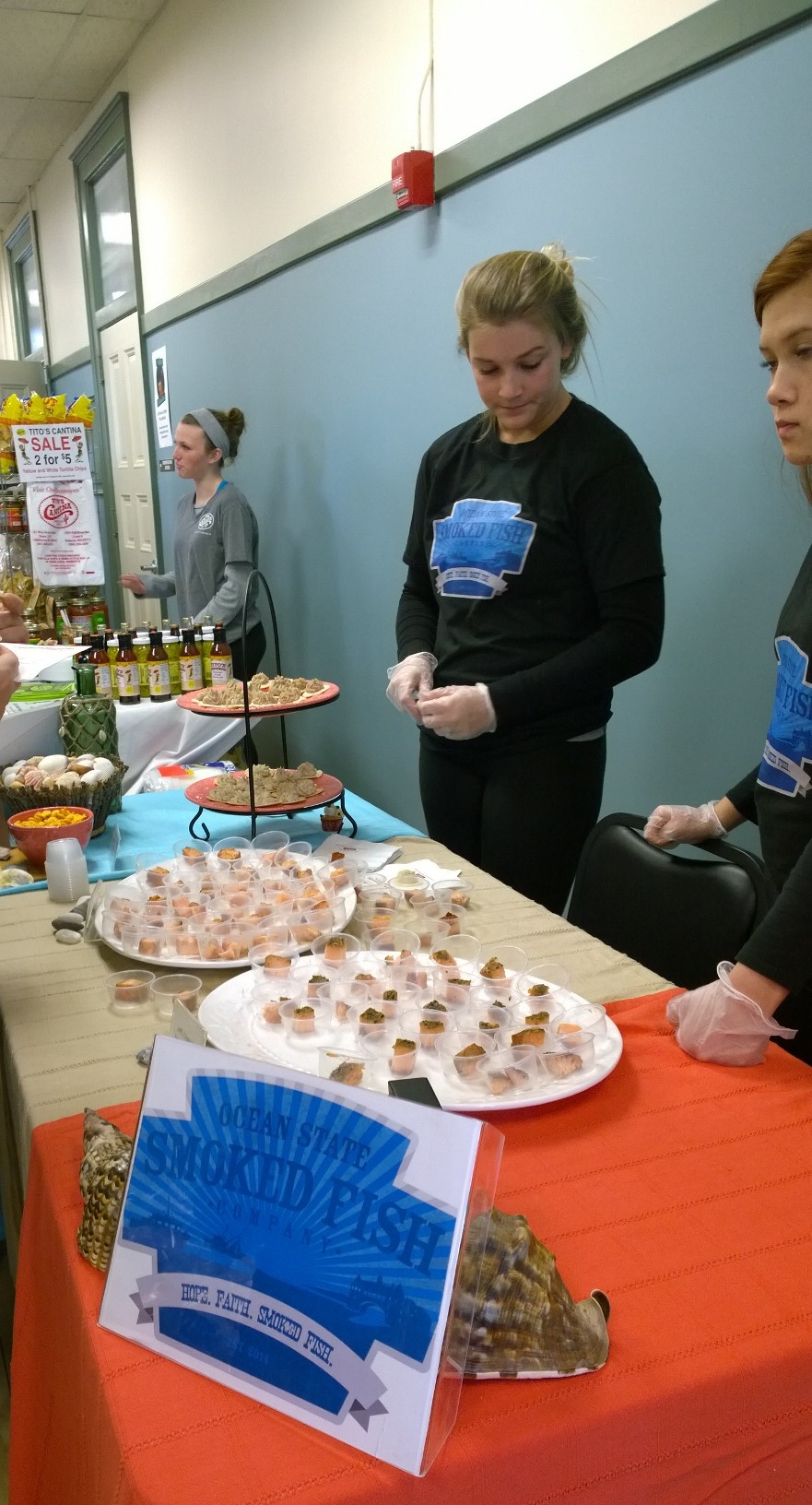
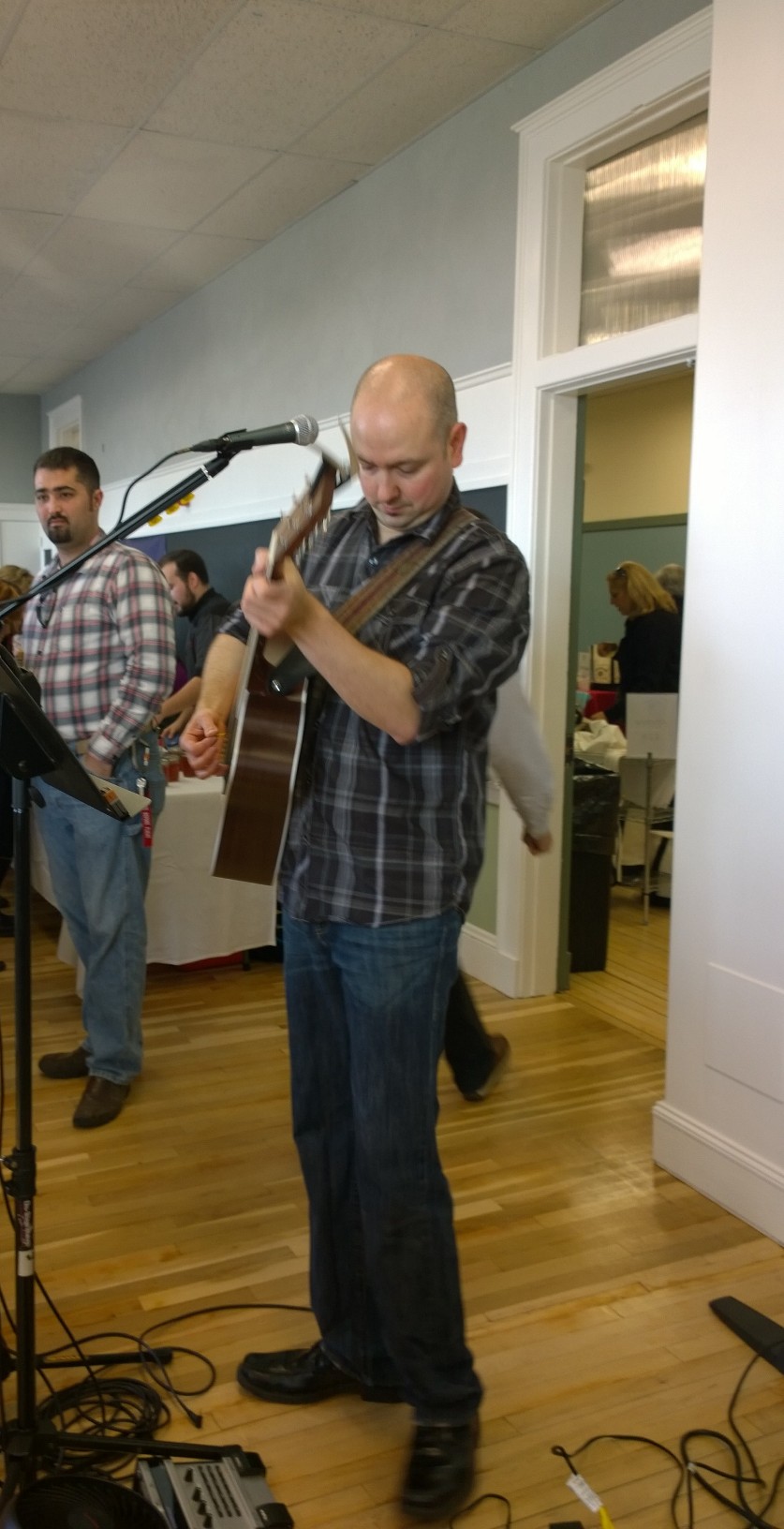
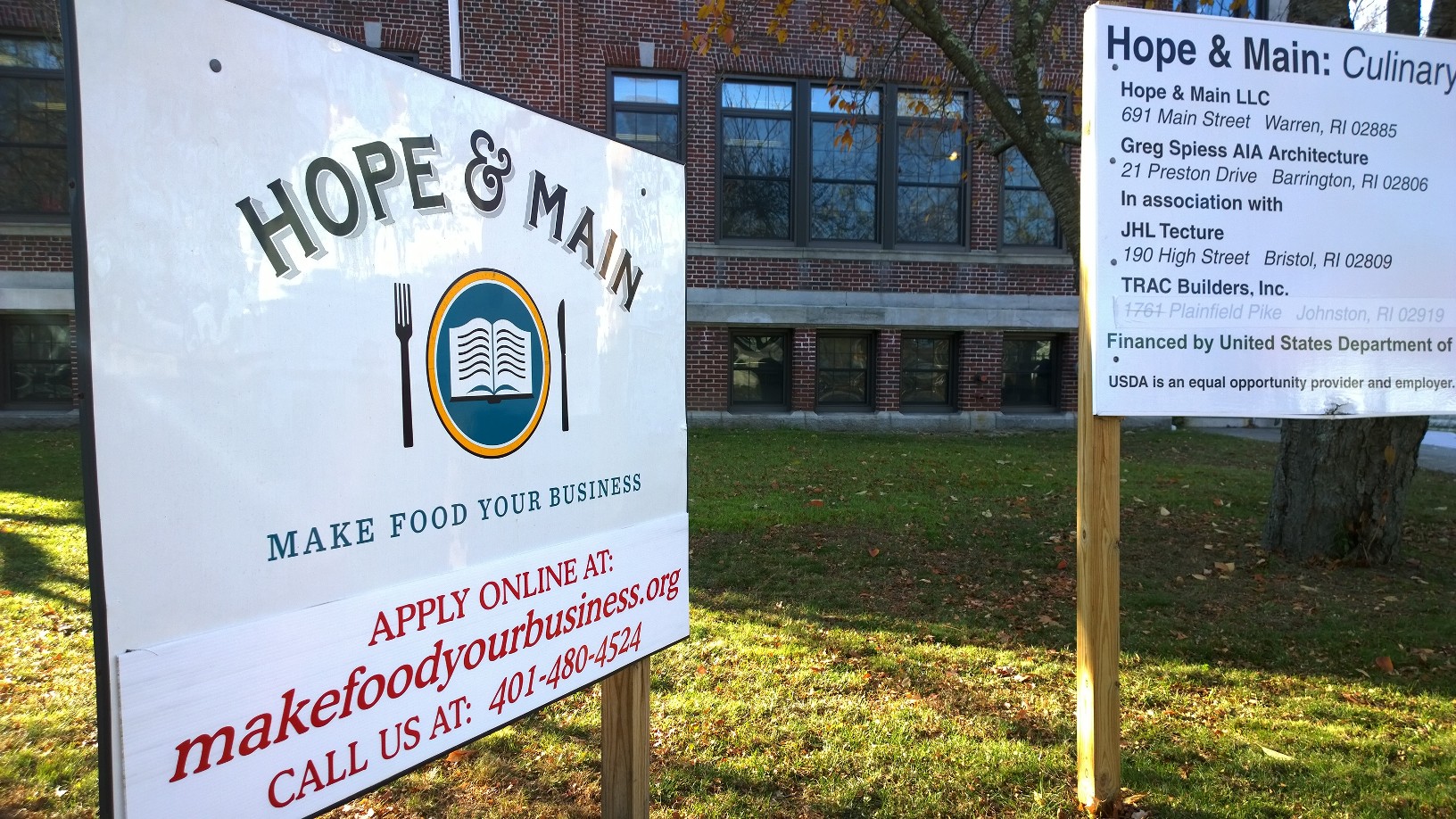
Yesterday, my husband and I checked out the state’s first food-business incubator, Hope & Main, at a festive event in the nonprofit’s new, permanent location. The story was posted in October on their website.

“Hope & Main today celebrated the opening of its 17,500-square-foot culinary business incubator facility in Warren, Rhode Island. U.S. Senators Jack Reed and Sheldon Whitehouse spoke at the ribbon-cutting ceremony, as well as other honored guests including USDA Director of Community Programs Daniel R. Beaudette, Warren Town Council President Christopher W. Stanley, and Founder and President of Hope & Main, Lisa J. Raiola, MPH.

“ ‘Hope & Main is about helping food entrepreneurs get started in a licensed kitchen. …  It’s also a place where people can congregate and collaborate, take a class or develop and test new recipes. I am proud to be part of this effort to support start-up food entrepreneurs and help them launch their own food businesses,’ said Senator Reed. ‘This is a great example of what’s possible when federal, state, and local officials collaborate with the private sector to support innovation. …’

“Housed in the historic Main Street School building, located at 691 Main Street in Warren, the renovation project transformed the 100-year-old structure into a state-of-the-art workspace for the region’s food entrepreneurs. [The] building’s highlights include three code-compliant, shared-use commercial kitchens, including a gluten-free kitchen and artisanal bakery, over 6,000-square-feet of production space, cold and dry storage, and a range of commercial equipment to support small-scale operations for baking, food processing and catering. Designed to facilitate collaboration and community involvement in the local food economy, the rehab also features a demonstration kitchen, co-working and meeting spaces, and a 2,000-square-foot community event space. A weekly market will be located on the grounds to give Hope & Main member companies and other local producers direct access to local consumers. …

“The Hope & Main project is funded in large part by a $2.9 million U.S. Department of Agriculture (USDA) Rural Development Community Facilities Loan.” More at MakeFoodYourBusiness.org, here.

My husband and I left with several business cards and goodies, including a a tomato jam with a great slogan: “To boldly go where no tomato has gone before.” I had a big smile on my face.

hope-and-main-RI-food-biz-incubator

hope-and-main-food-incubator


salmon-at-RI-food-incubator

112314-Hope-and-Main-entertainment

Read Full Post »