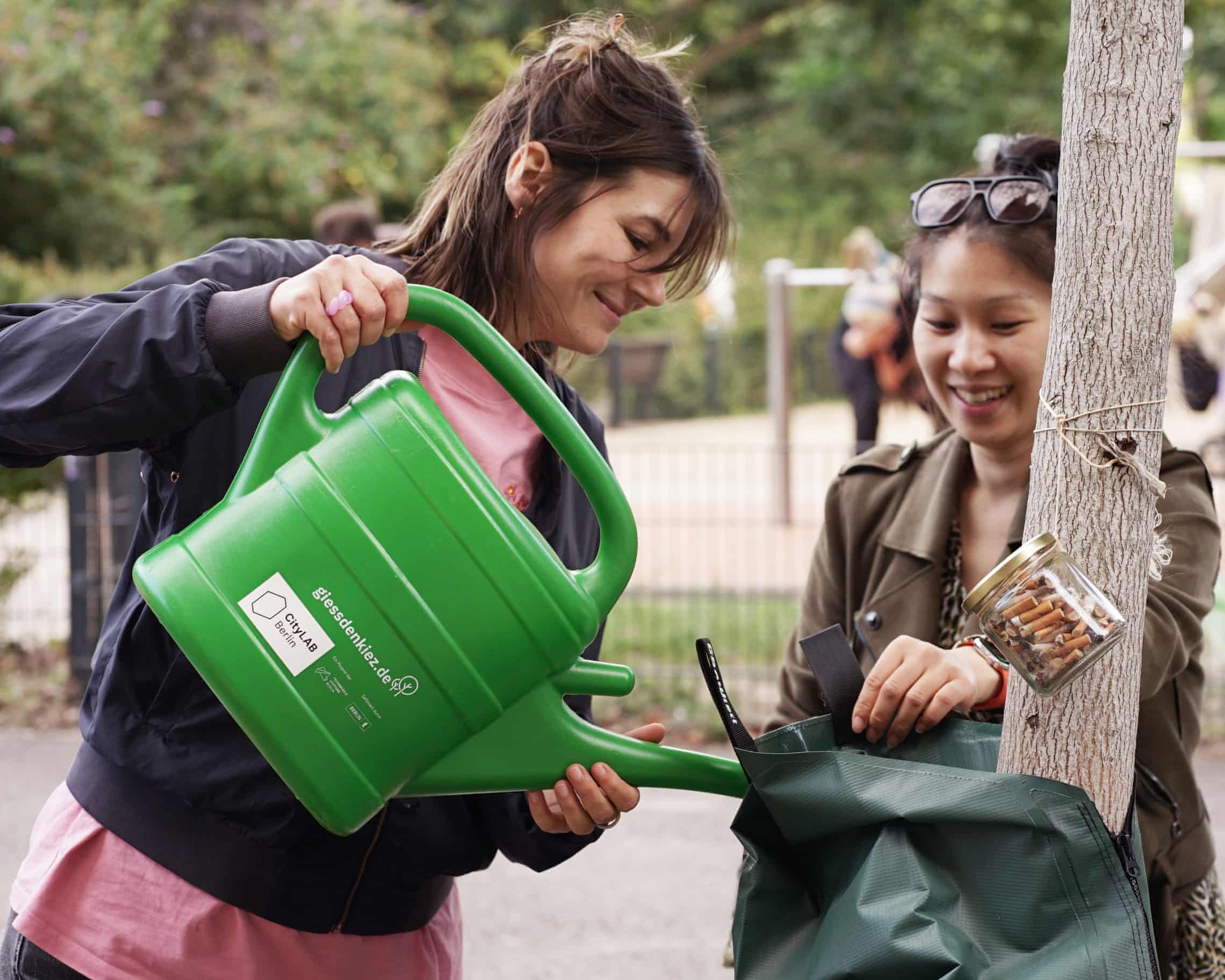
Photo: Thanh Thu Nguyen/ CityLAB Berlin.
Using an urban street tree app, you can see the last time a tree was watered and log a watering. The app helps individuals counter the effects of climate change–and make new friends.
Today’s story is another good example of a maxim I associate with folk singer Pete Seeger: “two and two and 50 make a million.” The idea being that if everyone pitches in a little bit, wonders can be achieved.
Emma Snaith reported at the Guardian in October, “Amanda Gläser-Bligh sometimes attracts puzzled looks when she goes to water the eight-year-old street tree she has adopted outside her door in Charlottenburg, Berlin.
“ ‘I named her Linda the linden,’ she says. ‘Berliners are not always known for being super friendly but most people react really positively when they find out what I’m doing.’
“As summer heatwaves intensify across the city, Gläser-Bligh carries about 20 liters of water to Linda once a week during the hotter months. It takes a couple of trips up and down stairs with a watering can to finish the job, but she has noticed the tree is no longer wilting in the summer heat. Linden trees are a hallmark of Berlin, even lending their name to Unter den Linden boulevard. Their mature, dense canopies offer essential street cooling, while their blooms provide vital nectar for local bees.
“Gläser-Bligh adopted the tree through CityLAB Berlin’s Gieß den Kiez project, which translates to ‘water your neighborhood.’ An interactive map tracks more than 900,000 trees across Berlin and calculates the water needs of each one based on its age, species and local rainfall. This real-time watering data is what separates the Gieß den Kiez project from other tree maps around the world and allows volunteers to coordinate on a city-wide level. …
” ‘It feels very fun, almost like a video game,’ Gläser-Bligh says. ‘I think many people may want to water the trees, but they might feel weird about doing it or they’re not sure if it’s their responsibility. But, if you have this app encouraging you, you know it’s the right thing to do.’
“The Gieß den Kiez project has been running since 2020 and currently 12,000 registered volunteers are using the platform. Their efforts complement those of the district street and green space authorities, which are already watering thousands of trees but cannot always keep up during Berlin’s increasingly hot summers.
” ‘I was really surprised at just how deeply people care about trees – for many people it’s almost like caring for a pet,’ says Anna Mehrländer, who has been leading the Gieß den Kiez project for more than a year. ‘Climate change is happening on our doorsteps. But watering a tree is a small action that helps your neighborhood cope as summers get hotter.’ …
“The biggest annual peak in tree waterings when nearly half a million liters were poured came just after the platform was launched in 2020 at the start of the Covid pandemic. Anna believes this was because watering trees gave people a reason to get back outside and connect with people and nature again. Seasonally, the waterings tend to rise during heatwaves. …
“There is a growing body of evidence showing the myriad benefits of street trees to counter the effects of the climate crisis. Studies show trees cool the air and break up urban heat islands during heatwaves, while reducing the risk of flooding during downpours. They also increase biodiversity, reduce air pollution and can improve mental health.
“Urban forestry expert Dr Cecil Konijnendijk [says] every citizen should be able to see at least three trees from their home, have 30% tree-canopy cover in their neighborhood, and not live more than 300 meters from a park or green space. …
“He supports citizen initiatives like Gieß den Kiez that complement city efforts to care for trees. Aside from watering, Konijnendijk also highlights the importance of soil volume and underground space to ensure trees can grow a healthy root system. …
“Cecil says that AI and new technologies could help us monitor and maintain the health of city trees better than ever before. He points to increased use of soil sensors and city-wide scanning of tree canopies using lidar, with cities like Malmo and Singapore at the forefront of innovative urban forestry.
“The open-source nature of Gieß den Kiez means the map can be adopted by any city in the world. Already residents in Potsdam, Leipzig, Magdeburg, and the 17th arrondissement of Paris have launched their own versions of the platform to coordinate tree watering.”
More at the Guardian, here.


