Feeds:
Posts
Comments

Posts Tagged ‘wine’

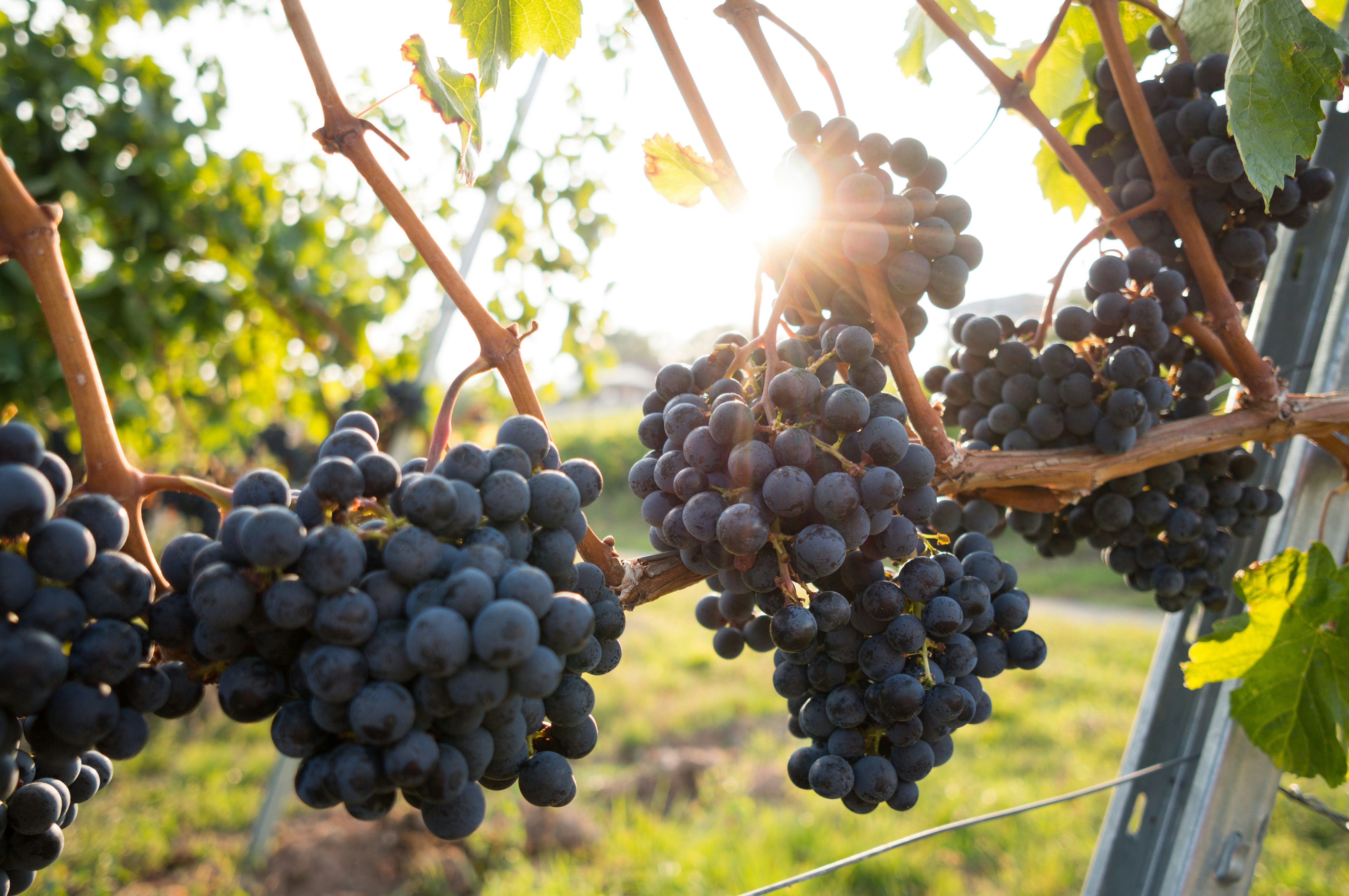
Photo: David Kohler via Unsplash.
Vintners are discovering the importance of bringing back earthworms.

In many parts of the world, growers who have relied on herbicides and pesticides are learning about the benefits of healthier soil, and so they’re getting rid of soil-damaging practices.

In today’s story, we have an example of vintners in the UK who have caught up with recent bio-friendly practices in France. They have not made their changes out of kindness to the planet, although that’s a side effect. They’ve done it to produce a better grape.

Helena Horton writes at the Guardian, “Vineyards are generally the most inhospitable of landscapes for the humble earthworm; the soil beneath vines is usually kept bare and compacted by machinery.

“But scientists and winemakers have been exploring ways to turn vineyards into havens for worms. The bare soil is problematic because worms need vegetation to be broken down by the microorganisms they eat. Pesticides are also highly harmful to the invertebrate, as is the practice of compacting the earth: worms need the soil to be porous so they can move through it.

“Earthworms … aerate soil, and they pull fallen leaves and other organic matter into the earth and recycle them. But their populations have declined by a third in the UK over the past 25 years due to pesticide use and over-tilling of soil.

“Marc-André Selosse, a professor at the National Museum of Natural History in Paris, has been urging vineyards to increase grass and plant cover on their soil, and reduce the amount they till, to save the worms.

“Selosse said: ‘In France, the vineyards are 3% of the agricultural area, and they are using 20% of the chemicals. In vineyards, for the soil there is a lot of treatments, so there’s a lot of compaction, and there is a lot of pesticides used.’ …

“Worms had not yet vanished from the most intensively farmed vineyards, he said, but they did need to be supported with more regenerative practices.

“ ‘I think the worms are at a low level,’ he said. ‘They are just surviving, but they are still there, which means that no one is thinking of buying earthworms for the soil, because they are there. It’s like Sleeping Beauty; they are there at very low level, and we have to wake them. But once again, in soil, we have resilience. It’s one part of biodiversity where they are so numerous that we were not able to kill all of them.’ …

“Selosse said the main thing vineyards could do for worms was to stop tilling the soil – breaking it up and turning it over – even if that means that herbicides such as glyphosate are used instead to remove weeds. … ‘In the future, sooner or later, we’ll have to stop glyphosate also but for now, tilling is the first cause of worm problems.’

“Now some vineyards in the UK are making worm-friendly wine. When Jules and Lucie Phillips, co-owners of Ham Street Wines in Kent, started their vineyard, they were advised to grow conventionally by tilling and using pesticides, but were horrified by the results.

“Jules said: ‘After we did that, we went out and we dug a soil pit immediately after planting, and then also later in the season, and we realized the soil was just dead.’ There were no worms. It was smelling not particularly interesting at all, and the structure was poor.’ …

“The pair had a revelation. ‘We just thought, this is completely the wrong way of farming and we need to do something different. We want life in our soils. And so we began the conversion to organic in that same year, and we’re now certified biodynamic.’

“Rather than using pesticides, they applied herbal teas to the vines to promote plant health, Jules said: ‘For example, horsetail tea has a real high silica content, and that improves the leaf cell wall and means that it’s more resilient.’

“The couple run a no-till system under the vine: ‘We’ve let the cover crop grow really long, and we typically let it grow right up into the canopy up until about flowering, and then we’ll mow it back. And the benefits of that are huge. The cover crop is really growing and really establishing that root structure and getting it to its maximum point. And finally, we put a big mulch on top of the soil that’s going to feed those worms and feed that soil life.’

“This has hugely helped their worm population: ‘We’ve seen our worm counts increase massively from basically none to around 20 or 30 in a spade full. So extrapolate that up to a square metre, and it’s a very decent volume.’

“Rob Poyser, a viticulturist at the regenerative wine consultancy firm Vinescapes, said that growing wildflowers in the vineyards they consult on had also brought great results. ‘We think in between three and five years we can take a bare soil and bring it back to life, into a thriving ecosystem,’ he said. ‘We’ve used things like cover crops to bring this vineyard to life, to build the fertility into this system, and organic matter. We’re bringing life back to these soils we’re using. We’re letting nature do it.’

“Poyser said they allowed wildflowers to grow all over the vineyards, and clients were delighted when clover, for example, sprung up because ‘clovers are great companion plants under the vine for grapevines; they’re also loved by earthworms.’ “

More at the Guardian, here. No paywall.
Read Full Post »

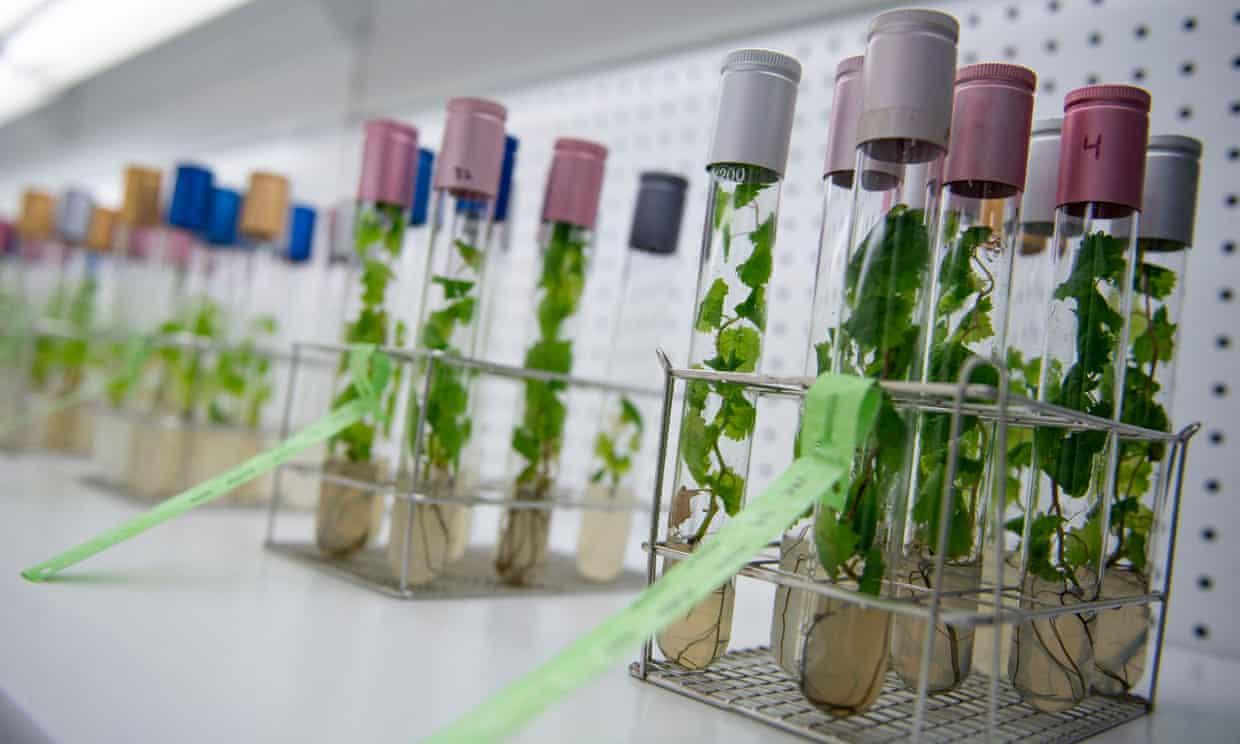
Photo: Josep Lago/AFP/Getty Images.
Ancient grape varieties in the laboratory at the Familia Torres vineyard near Barcelona. 

Here we go, Humans! More adapting.

Today’s story is about pragmatic grape growers adapting to climate change by seeking out grapes that can handle more heat. Too bad they have to do this, but what they learn may help other growers — and all of us.

Ashifa Kassam covers the topic for the Guardian: “The ads – tucked in the corners of local newspapers and directed at winemakers – began turning up across Catalonia in the 1980s. ‘If you know where to find any uncommon grape varieties, please get in touch,’ they read.

“Dozens of tips came pouring in, shepherding Miguel A Torres in his search for long-forgotten wine grapes. But it wouldn’t be until a decade later, as the climate crisis began wreaking havoc on vines, that the fourth-generation winemaker realized his foray into the past could play a key role in tackling what lies ahead.

“ ‘I simply wanted to recover the heritage – the ancient traditions and vines – left to us by our ancestors,’ said Torres, the president of Familia Torres winery.

‘And then we realized that some of these varieties take longer to ripen, meaning they might be able to help us in a warming world.’

“It was a glimmer of hope as the wine industry grapples with a changing climate. Extreme weather, drought and steadily rising temperatures have laid bare a crop that is extremely sensitive to change. In Spain, rising temperatures have meant grapes ripening more quickly, leaving winemakers rushing to harvest in hopes of protecting the carefully concocted balance between the fruit’s sugars and acidity.

“ ‘Climate change is the worst threat the sector has ever faced,’ said Torres. …

“In California, vintners are embracing grapes such as mourtaou, a nearly extinct variety from south-western France, to create peppery reds, while some in France’s Cognac region are toppling more than a century of tradition to trial climate-resistant grapes. In Bordeaux, concerns about the climate crisis recently helped to secure the approval of six new grape varieties, including castets, a disease-resistant variety that had been on the brink of disappearing.

“The reasons these grapes fell into disuse varies widely, said José Miguel Martínez Zapater, the director of the Institute of Grapevine and Wine Sciences in La Rioja. Some were abandoned in the late 19th century as the phylloxera plague forced European grape growers to chase efficiency, while others were discarded as winemakers sought to comply with strictly defined appellations or consumer preferences for certain grapes.

“Martínez Zapater’s publicly funded institute is one of several across Spain that have been peering into the past to bolster wine grape diversity – a years-long process that involves identifying the varieties, testing out their characteristics and seeking official approval for their use. … ‘People are finding varieties in different areas that they consider interesting.’

“In Spain – home to a €5bn-a-year wine production industry [$5,390,000,000] whose production outpaced all other EU countries in 2021 – much is on the line. Last year, the country experienced its hottest year since record-keeping began; since 2015 the country has sweltered through four of its hottest years on record.

“At the Agrarian Technological Institute of Castilla y Leon, known as ITACyL in Spanish, two decades of research have led to the recovery of more than a dozen varieties of grapes. The list includes estaladiña, a grape whose last recorded reference stretches back to 1914, and cenicienta, a grape close to extinction before it was revived to make fruity reds.

“ ‘The wines they make are very distinct and interesting,’ said José Antonio Rubio Cano, who heads the viticulture and woody crop department at the institute. … He stressed, however, that the embrace of these long-overlooked varieties is just part of the broader efforts needed as the industry adapts to a changing climate. ‘There’s no one solution,’ said Rubio Cano. ‘It has to be a set of things; we have to pay more attention to the vines, be more aware of how their fruits are ripening and we need to develop a deeper understanding of the vineyard and the different varieties.’ …

“The Caserío de Dueñas vineyard is taking the institute’s research to the next level, planting hectares of eight of the recovered varieties to test out how the grapes behave in a real-world scenario.

“ ‘I find it super-interesting,’ said Almudena Alberca [who in 2018 became Spain’s first female master of wine and is] the technical director for Entrecanales Domecq, the vineyard’s owner. ‘The possibilities are endless.’ …

“Four decades after Torres placed his first ad seeking forgotten grapes, Familia Torres has begun releasing small quantities of wines made from the fruits of his quest, such as forcada and pirene. The wines tell a story that is both steeped in the past and nods at the enormous challenge that lies ahead as the climate crisis tightens its grip, said Torres.

“ ‘I’ve always said that the wine sector is the canary in the coal mine,’ he added. ‘The consequences that vineyards are living through right now should make everyone take notice.’ ”

More at the Guardian, here. No firewall; donations encouraged.

Read Full Post »