Feeds:
Posts
Comments

Posts Tagged ‘work-life balance’

Photo: Magalí Druscovich.
Manuel Firmani, center left, is a professional tango dancer who leads the Parkinson’s tango workshops in Argentina, along with Veronica Litvak, center right.

Where I live now, a few residents have Parkinson’s Disease. It’s a rough diagnosis, but there is lots of physical therapy available from trained professionals. I’m going to check if they have ever used tango. As today’s article suggests, tango can work wonders with patients.

Pam Belluck writes at the New York Times, “Tango is the national dance of Argentina, known for its passion, precision and heart. In a hospital in Buenos Aires, it has another purpose: as a therapy for patients with Parkinson’s disease. Once a week, about a dozen patients come to Ramos Mejía Hospital to dance — a session that uses the movements of tango to help address issues of balance, stiffness and coordination. The goal is to give them approaches to movement that they can use in their daily lives, as well as a social and emotional boost from moving to music.

“The program began about 15 years ago, inspired by a patient who had danced tango since childhood and found it offered strategies that improved her mobility and gait problems, said Dr. Nélida Garretto, a neurologist who helped spearhead the sessions.

“Dr. Tomoko Arakaki, another neurologist leading the program, said Parkinson’s patients can struggle with the stop-and-start motions of walking and can benefit from practicing the slow, short steps’ and pauses of tango. Dr. Garretto said that because tango involves ‘multitasking with motor stimuli, visual stimuli and auditory stimuli,’ it can help patients execute the series of small movements in everyday activities.

“First, warm-up exercises, usually in a circle, ‘try to tune everyone in, to prepare the body, to awaken the body,’ said Manuel Firmani, a professional tango dancer leading the workshops. Some are done standing, some seated, depending on ‘the state people are in,’ he said. …

“After exercises focusing on posture, balance and other skills, dancing begins. Each patient is paired with a partner who doesn’t have Parkinson’s, often friends, relatives or volunteers.

“Dance therapy is used for other medical conditions, including multiple sclerosis and Alzheimer’s. Débora Rabinovich, a psychologist and researcher who helped create the Argentine program, said her research has found that ‘tango uses the same kind of movements that people with Parkinson’s disease tend to lose.’ …

“Some tango steps seem especially helpful. The sanguchito, or ‘sandwich,’ a classic move in which one dancer’s foot slides between the partner’s feet and pauses, offers Parkinson’s patients clear cues to guide their bodies, Dr. Rabinovich said.

“ ‘Another fundamental tango element is shifting weight from one foot to the other’ said Mr. Firmani, who encourages patients to use that move for activities like stepping up on curbs or entering doorways. He said that the sidestep in tango could help with opening a refrigerator, and that ‘torso rotation’ could apply to pivoting while washing dishes. …

“Sometimes, patients who came to class using canes gain such confidence that they leave without their canes.

“Liliana Garay, 59, was diagnosed with Parkinson’s two decades ago and started the program in 2011, with no tango-dancing experience. She said it has helped her stiffness and with weakness she feels when her medication’s effect ebbs. At home, when symptoms arise, she practices an eight-step tango movement, pivoting her feet to trace ‘the number eight on the floor, like the infinity symbol.’

“When she freezes and gets stuck while bending to pick up something, she will breathe and move her leg backward, sideways and forward, as they do in tango class. ‘That helps the stiffness pass, and I can walk again,’ she said. …

“There are other tango therapy programs for Parkinson’s patients, including in the United States. The Buenos Aires program, which has served about 100 patients, draws on the social and cultural significance of tango in Argentina, focusing on classic moves and music that resonates with the patients, Dr. Rabinovich said.

“That connection gives participants an emotional boost. ‘For people who have a sense that their bodies are kind of betraying them, it gives you the possibility to feel your body in a completely different way,’ she said. ‘You can be barely moving, but you feel like you danced.’

“For Ms. Garay, who travels a long distance on public transportation to get to the workshop, its benefits are so powerful that she has started tango parties, or milongas, in her town, Ciudadela. …

“The experience is transformative, she finds. ‘People come in wheelchairs, with crutches, and we all dance, and an amazing atmosphere is created,’ she said. When the class ends, she feels different.

“ ‘Tango, for me,’ she said, ‘is health.’ ”

More at the Times, here.
Read Full Post »

Photo: Sunphol Sorakul/Moment via Getty Images.
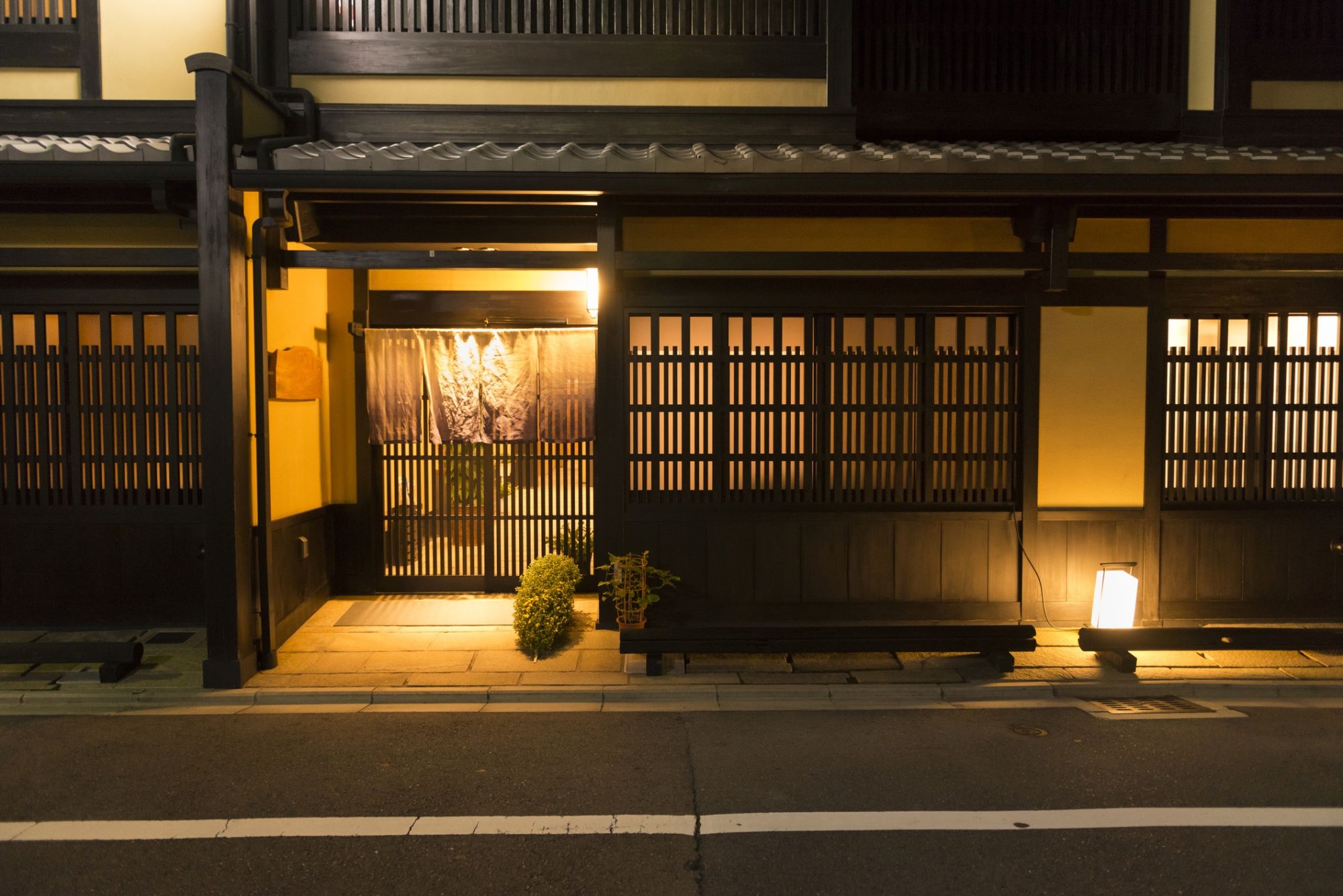
Some of Kyoto’s machiya homes that mix work and living space took on a new life during the pandemic, Bloomberg reports.

The places where people worked and the places where they slept merged during the pandemic. In Japan, that change gave an ancient style of architecture renewed prominence.

As Max Zimmerman wrote at Bloomberg CityLab in May, “While the pandemic has turned many kitchens and bedrooms into makeshift home offices around the world, there’s one style of housing in Japan that’s been mixing business and living space for centuries.

“The city of Kyoto is known for its stock of unique historical structures called Machiya, which get their name from two Japanese characters: machi — which in this context can mean a neighborhood, market or group of workshops — and ya, meaning dwelling. These beautiful wooden townhouses, which mingle residences with storefronts and workshops, offer a rare window into traditional Japanese life and architecture. Their design also raises an important contemporary question: How can aging homes created for a bygone lifestyle be incorporated into a modern city?

“Despite economic and cultural headwinds, machiya have proven capable of adapting to the present — and even influencing homes in the future.  An influx of tourists before Covid-19 saw many machiya find renewed purpose as restaurants or vacation rentals, while their mixed-use design provides lessons for people adjusting their lifestyles to working at home during the pandemic. 

Kyoto’s machiya reached their maturity as an urban form as early as the 17th century when, during a tumultuous period that still preoccupies Japanese culture today, the Tokugawa Shogunate ended more than a century of political violence.

“As the city rebuilt, massive demand for housing led to a standardization of designs, materials, measurements and fittings that allowed them to be erected quickly and inexpensively throughout the city. 

“It was during this time that machiya emerged as not just homes and businesses but also the basic building blocks for the city’s wider administrative structure. In times of conflict, communities within Kyoto banded together to defend themselves, even building stockades around their neighborhoods to protect themselves from the violence. When peace was restored, the Shogunate made these groups a permanent part of the city’s administration as semi-autonomous units with the power to establish local bylaws.

“Chief among their concerns was the uniformity of each machiya, whose size and design were crucial for fostering equality and harmony among its members. These neighborhood groups regulated the width of plots, forbidding the creation of larger parcels or combining homes, and imposed strict rules on various design elements. This ensured a relatively even distribution of taxes, light, ventilation and safety — as well as a pleasing aesthetic.

“These plots became known as unagi no nedoko, or ‘eels’ beds,’ for their long and narrow proportions. These ‘beds typically started at the street with a shop unit, fronted not with walls or glass but wooden lattices that provided some visibility from the inside and privacy from the outside. The typical unit was covered in a sloping roof, clad in lines of curved tiles producing a characteristic wave-patterned surface.

“Behind the shop was the residence, composed of multipurpose rooms with tatami mat floors and sliding doors. The deepest room was reserved for the head of house and important guests, with a small courtyard garden for light and ventilation. The spine of the house was a broad corridor with a packed earth floor running down one side of the house, connecting the commercial and residential portions. This hallway was where daily functions like cooking were performed, with a toilet and bathing space at the end. While the earliest machiya were single-storied, most later examples have an upper floor used as storage or sleeping space with slitted apertures to let in light. …

“For more than 250 years, machiya were the economic, political and social glue of Kyoto — as small businesses powering the economy, as households organizing community events such as festivals, and as administrative units by which local affairs were managed. 

“They began to change in the mid-19th century, when reform-minded revolutionaries overthrew the shogunate, destroying much of Kyoto and ushering in Japan’s modern era. In its rebuilding process, the city embarked on a period of modernization by incorporating western technologies and culture. …

“Although Kyoto was spared from destruction in World War II, its aftermath endangered machiya more than any other conflict. Japan’s postwar recovery redoubled modernization efforts that produced major housing changes. In their heyday, the machiyas’ use of gardens for natural light and ventilation would have made them relatively comfortable dwellings. By new standards, however, they were cold in the winter, lacked novel necessities like modern kitchens, had poor lighting and were expensive to maintain. …

“Many owners demolished or sold their machiya to make way for western-style housing like danchi apartments. Those that held on refurbished them with modern appliances, materials and layouts. New laws also made it impossible to build machiya with traditional construction techniques, leading to a decline in their number and skilled workers who can build them. There were 40,146 surviving machiya in Kyoto as of March 2017, down from 47,735 in 2011, according to a city survey. …

“Since the early 2000s, many machiya have found new life as restaurants, cafes, and museums thanks to a nostalgic aesthetic popular among young people and tourists. Some people still use their machiya to make traditional crafts like sake and textiles, while others have been preserved as cultural landmarks. …

Garden Lab, a co-working space and residence built out of two machiya that were uninhabited for four decades, is one such example of reuse. It forms part of a restored machiya cluster that includes a coffee shop and roastery, which makes use of the machiya’s capacity to accommodate machinery. Garden Lab’s founder, Drew Wallin, says that neighbors have noted the renovation’s positive impacts on the area after their long-term abandonment. 

“Wallin founded Garden Lab, however, to demonstrate how machiya can help balance private and professional life, a struggle for many still working from home as the pandemic endures. He found that machiya’s incorporation of natural light and outside air fostered healthier routines in ways that artificially lit, climate-controlled  homes fall short. Their reliance on the sun for light and warmth, for example, can help residents detach from work in the evenings and improve sleep habits as night set in. “

More at Bloomberg, here. Great photos. No firewall.

Read Full Post »