Feeds:
Posts
Comments

Posts Tagged ‘writers’

I’ve been meaning for some time to post about writer friends, and I’ve hesitated only out of fear I’m leaving someone out.

Laurie Graves is someone I met through this blog. I’ve ordered one of her books and although think I’ll like it as much as I like her blog, I haven’t read it yet.

Speaking of bloggers, there are a couple others whose style I admire. In addition to the inimitable KerryCan, I find the writing of APiermanSister and ABereavedDad frequently amazing.

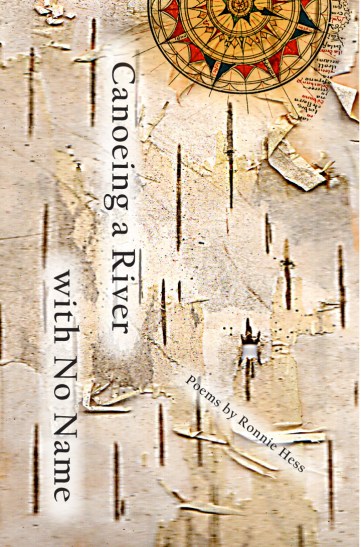
I also want to highlight writers I know personally. You can read about poet Kate Colby, here; about poet Nancy Greenaway, here; and poet Ronnie Hess, here. And check out the gifted interstitial storyteller Francesca Forrest here, at GoodReads.

Providence-based Colby has numerous books to her credit, often about New England. She has taught in Gloucester, Mass., and co-led art-and-poetry tours at the deCordova Museum in Lincoln. She and her husband were enormously helpful in providing a pied-à-terre to Suzanne and Erik when those sneaky characters were looking at houses in Providence without telling family members they were leaving New York. (We were over the moon when we finally heard.)

Nancy Greenaway is the muse of New Shoreham, R.I. She only just retired from a long and inspired career of teaching English at the island school and engaging students in poetry. I visited her classroom for her recent going-away party and was impressed with all the sources of imagination activation on her walls and tables. A happy place.

Ronnie Hess is someone I met in childhood on a different island. When I think of her, I think of so many shared experiences — the way we wrote and directed our first Ocean Beach teenage play, for example, and the way I envied her dancing the Slop with Stuey Shaw. Her poems about her Fire Island childhood are wonderfully evocative, as are those about about her husband’s family escaping the Holocaust and about Wisconsin, where she lives. She has a special gift for describing nature.

Francesca is a cherished friend I first met when we were copy editors at the Harvard Business Review in 1995. We have continued to work together off and on and to share a wide range of interests. She taught me a lot about blogging. I once created a haiku for Francesca about a dream she’d described one lunchtime. I wrote that in her dream “the moon was trending downward,” adopting some of the business jargon from our workplace. We still chuckle about that.

I apologize if I’ve left out any good friends. I blame age. In fact, lately I’ve startled myself with weird forgetfulness. Like sending graduation checks twice to the Anderson sisters or wondering why the world was blurry that day I forgot I still wear glasses despite cataract surgery. I don’t think it’s going to get better.
canoeingcoversmall

Read Full Post »

blackorpheus01

I’ve always been interested in other countries and cultures and have tried to read books from afar if they are written in English or translated into English. Years ago, the works of Africa writers Chinua Achebe and Wole Soyinka were among my favorites. I have continued to read other African writers, but none have interested me as much as those two.

Recently I learned that some new authors have complained that African literary magazines — often the place to launch a writing career — have not been open to younger voices.

An article in Okay Africa provides an overview of the magazines that publish African literature and explains why the number of outlets has been increasing.

Tadiwa Madenga writes, “African literary magazines and journals don’t just shape literary culture, they offer the most rebellious responses to political and social movements. They not only respond to the cultures they’re in, these magazines also create distinct cultures of their own that reflect the personalities of their editors.

“Some are experimental and bold, some are satirical and polemic, some can also be aesthetically conservative, but they all find beautiful ways to confront the most pressing issues in society. Magazines archive stories that might not always gain the attention that books will, but are sometimes the most thrilling work in a writer’s career. Here are five of the most notable literary magazines that have shaped contemporary African literature.

“Based in Nigeria, Black Orpheus was groundbreaking as the first African literary periodical on the continent publishing works in English. It was founded in 1957 by German editor Ulli Beier, and was later edited by Wole Soyinka, Es’kia Mphahlele, and Abiola Irele. The magazine stopped printing in 1975.

“At a time when African writers needed spaces where they could simply gather and enjoy each other’s works, the magazine was started to promote African literature, publishing the works of literary giants like Chinua Achebe, Ama ata Aidoo, and Christopher Okigbo in their early career. The best part of the magazine was that it introduced literature from French, Spanish, and Portuguese speaking regions to an English speaking audience …

Transition was founded [in 1961] by Rajat Neogy in Kampala when Uganda, like other African nations, was gaining its independence. Like Black Orpheus, the magazine published notable writers like Achebe, Ngugi wa Thiong’o, Nadine Gordimer, and Taban lo Liyong when they were new writers.

Transition … has had fearless takes on politics that eventually forced it to be transferred to Nigeria when Soyinka was editor, and later to the U.S. Transition is now housed at Harvard University and is still producing provocative work …

Kwani? began after a group of Kenyan writers, artists, and journalists became frustrated with the slow publishing scene in the country that mostly accommodated earlier writers like Ngugi from the Transition and Black Orpheus generation. A new publication was created in 2003 for emerging writers that has led to the incredible literature we enjoy today from Kenya. The journal has published works by writer like Yvonne Owuor, Parselelo Kantai, Andia Kisia, Uwem Akpan and Billy Kahora.

“Edjabe is a Cameroonian journalist and a DJ who engages literature, music, and politics with a rebel spirit [in the magazine Chimurenga]. Edjabe founded Chimurenga in 2002 in Cape Town at a time where South Africans were having lively discussions about life during and after political and social revolutions. What makes Chimurenga unique is not only the amazing writing that they publish, but the ways the platform evokes other mediums with literature. …

“While the other literary magazines and journals where mostly print magazines, JALADA represents the digital moment where African literature is thriving on online platforms like Saraba, Enkare, and Brittle Paper. JALADA began after a group of writers from various African countries published their work on their own website which became so popular they began receiving submissions from other writers.”

Read more here.

600x600


Read Full Post »