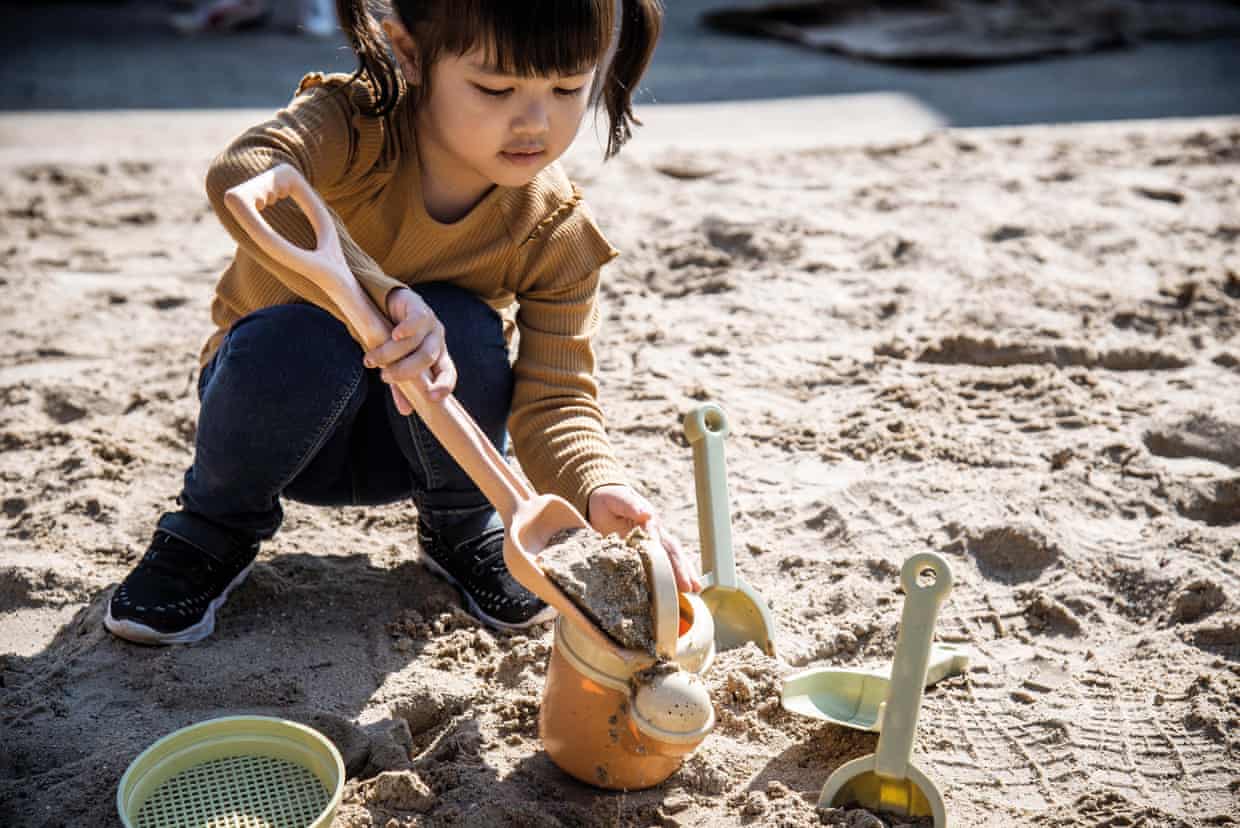
Photo: Mikkel Rolighed.
A bucket set made from sugarcane is an improvement on bioplastics, though the ocean won’t thank you if this is lost at sea – it won’t safely biodegrade (ditto recycled plastic toys).
Now that we know that plastics have been found in the human brain, are we motivated to fight harder or are we despairing? Michelle O, you know, exhorts us to “do something” and not give in to despair, so here’s a place to start: the beach.
Fleur Britten at the Guardian has put together an impressive list of plastic substitutes you might take to the beach.
She writes, “Pre-1950, we just didn’t take plastic to the beach. Now it’s virtually impossible not to, even if it’s just you and your swimmers.
” ‘If you’re looking for plastic-free nirvana, you may never find it,’ says Anne-Marie Soulsby, aka the Sustainable Lifecoach. Matters are improving – though there’s usually a premium to pay if you want to minus cheap plastic from the mix. So why not borrow the plastic that already exists from friends, family or your local Library of Things. And don’t forget your reusable cutlery and containers for eating and drinking à la plage. If you can’t track down beach essentials from these sources, these are the other best ways to avoid seaside plastic pollution.
“ ‘The most sustainable swimwear is what you already own,’ says Soulsby. If you’re in need of new togs, they’ll most likely contain plastic. However, some brands are minimizing that: Italian label Isole & Vulcani’s swimwear for women and kids uses 93% GOTS-certified organic cotton jersey, with 7% elastane (which is fossil fuel-derived). …
“Inflatables and body boards: ‘Inflatables are a nightmare,’ says Lucy Johnson, founder of the Green Salon consultancy. ‘There isn’t a solution.’ According to one study, UK holidaymakers abandoned around 3 million [pool floats] in 2018. Even the genius Inflatable Amnesty is at capacity and can’t accept any more broken pool toys (though you can still buy its upcycled accessories). So borrow, or look after what you have. …
“If you do need new toys, she advises silicon: ‘You can squish it into your bag and it doesn’t go brittle or rust’ (Johnson recommends Liewood’s silicon beach set from Kidly). Bioplastic toys are an improvement on regular plastic – for example, Dantoy’s bucket set made from sugarcane.”
As for sun screens, “ ‘There is no perfect solution,’ says Jen Gale, author of The Sustainable(ish) Living Guide. If you want to be absolutely plastic-free – including those pervasive nano-plastics – then your safest option is a zinc oxide-based formulation. …
“It is actually possible to find plastic-free eyewear, provided that you are one very careful person, because we’re talking glass lenses. The Marylebone-based brand Monc’s sunglasses feature wire and bio-acetate frames (made from wood pulp) and mineral glass lenses. …
“Flipflop pollution is real. Hardly surprising, given that about 3 billion are produced annually. According to the charity Ocean Sole, 90 tonnes of flipflops wash up annually on East Africa’s beaches alone. One alternative, suggests [Wendy Graham of the blog Moral Fibres], is Waves Flipflops, made from FSC-certified natural rubber. They also take back old Waves flipflops for recycling into, for example, children’s playground matting, and offer a free TerraCycle recycling programme for plastic flipflops from any brand.”
There’s lots more, including information on dry robes and wetsuits, at the Guardian, here. No paywall. Donations encouraged.

 Suzanne's Mom's Blog
Excellent advice!
LikeLiked by 1 person