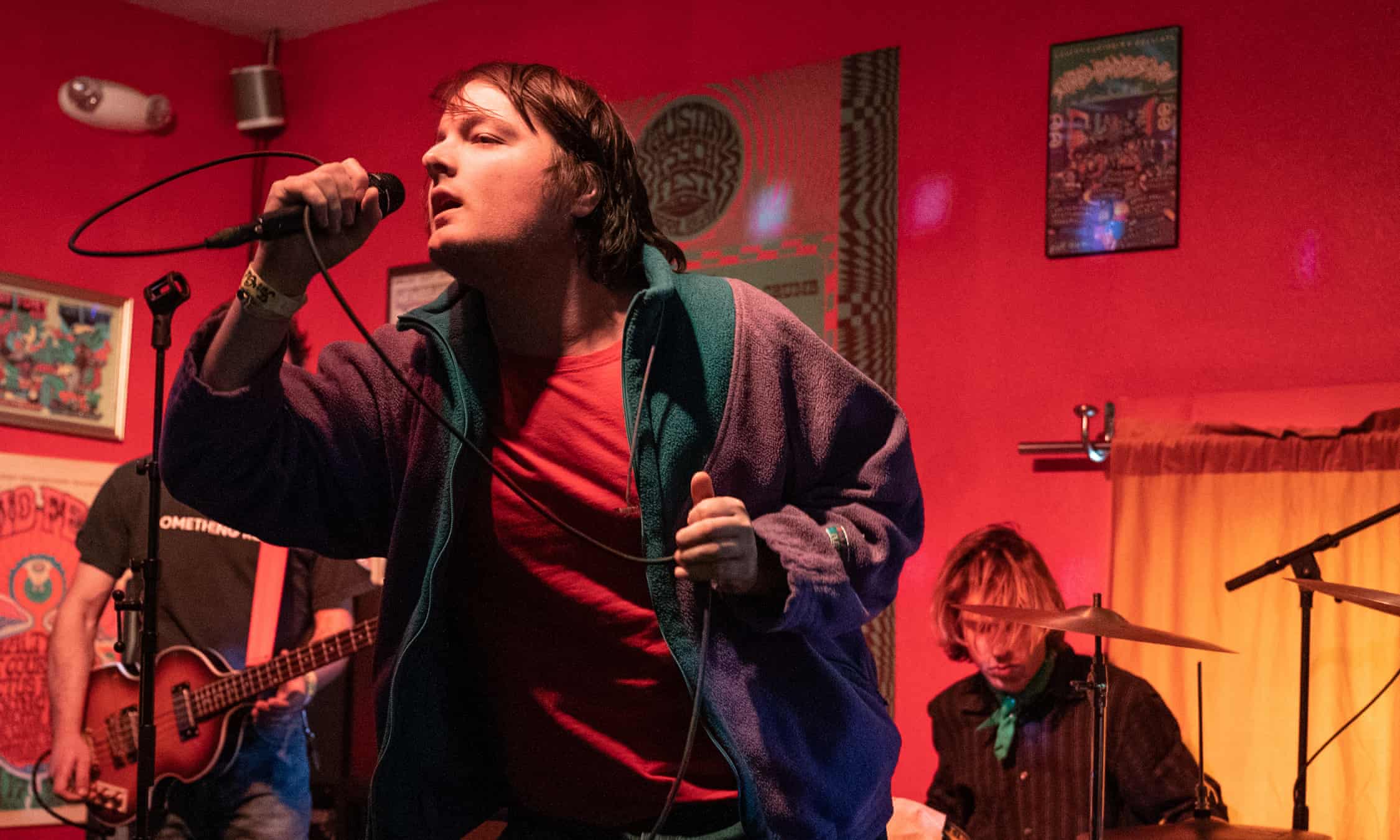
Photo: Lorne Thomson/Redferns.
A group called Personal Trainer performs in an Austin, Texas, record shop (above). Like NPR’s Tiny Desk Concerts, record shops provide a welcome venue for performers.
In the record industry, apparently, as long as performances feel a little different and surprising, it’s good for business. But how long do things stay surprising? Today’s article traces the rise of band performances in record shops and leads me to wonder, After record shops, what’s next?
Michael Hann writes at the Guardian, “At one end of Banquet Records in Kingston upon Thames the Dutch indie band Personal Trainer are performing a short set next to the album racks. … Afterwards, the band will sign the albums the fans have bought and everyone will depart a little happier: the fans with memories of an intimate show and signed records; the band a few quid richer, a few more sales made, maybe a few more fans won. And Banquet will have sold a few hundred quid’s worth of stock.
“It’s early August and the start of an intensive week for Personal Trainer – as well as Banquet, they will play record shops in London, Brighton, Portsmouth, Totnes, Bristol, Liverpool, Leeds and Nottingham. There will be festival shows, too, but only one conventional gig, an undersell in a tiny pub. This campaign is not launching with touring, at least not in the old-fashioned sense. …
“Artists have always gone to record shops to sign albums. And there have long been one-off promo shows in shops. But the idea of the in-store performance as a key part of an album launch dates back a decade or so, partly because physical sales of music were so low that the extra sales from a handful of appearances could dramatically affect chart position for bands with a loyal fanbase (physical sales still carry a greater chart weighting than streams or digital downloads).
“But also it’s because it’s one of the few routes left to promote a new album, says Tara Richardson, who managed the Last Dinner Party when they reached No 1 in the album charts earlier this year with their debut. ‘There’s no TV any more for bands,’ she says. ‘There’s only a Radio X session and a Live Lounge recording. So in the week of release you either put in shows, or you put in in-stores, and they’re the perfect thing to keep everyone busy in the week of release.’
“Labels favor in-stores, she says, not just for the chart position, but because it keeps the decks clear for a proper tour later in the campaign. Meanwhile in-stores tend to favor indie-ish bands, not least because independent record shops are now far more of a driving force in retail than the megastores. The Rough Trade chain, for example, hosts scores of shows. …
“With the right act and enough advance notice, in-stores can make a huge difference to sales and set the tone of an album campaign. ‘In the UK, the in-store has become part of the process of building a week-one launchpad for the campaign and building a chart position, because physical sales still leapfrog the streaming economy,’ says James Sandom, who works as a manager with bands including the Vaccines and Interpol. Sandom says the charts actually measure nothing of meaning any longer, but they still have use, because a high chart position will allow booking agents to demand higher fees, and get bands better spots on festival bills. …
“Simon Raymonde of Bella Union – Personal Trainer’s label – says it’s about building community. ‘I really like it when the shops are fully involved and they will be far more supportive of the record.’ …
“But for Rupert Morrison of Drift Records in Totnes, which staged one of Personal Trainer’s shows, in-stores becoming an institutionalized part of an album campaign risks losing what was once special about them. ‘Originally it was an American thing,’ he says. ‘Culturally outlying stores like Other Music in New York were melting people’s minds: the people there would talk about Laurie Anderson playing and Lou Reed cheering her on and helping with her pedals. They were these incredible, intimate, mind-blowing experiences, where you got completely different access to people. …
“ ‘I worry that like everything, once people see that something is a thing, it gets hammered and hammered.’ …
“Nevertheless, the results, for certain artists, can’t be argued with. Shed Seven had their first No 1 album earlier this year thanks to sales made at their in-store appearances in January. ‘You’re in a van, you’ve got one crew member to help, and you’re in Brighton at midday, then Southampton at teatime, Bristol the next lunchtime. And then you’re in Glasgow,’ says singer Rick Witter. ‘It’s intense.’
“But that No 1 changed perceptions of the band, Witter says. No longer were they a Britpop punchline, but a band with a No 1 album.”
More at the Guardian, here.

 Suzanne's Mom's Blog
Seems like a natural place for a band to play, but perhaps also uncomfortable because the space was not designed with performance in mind.
LikeLiked by 1 person