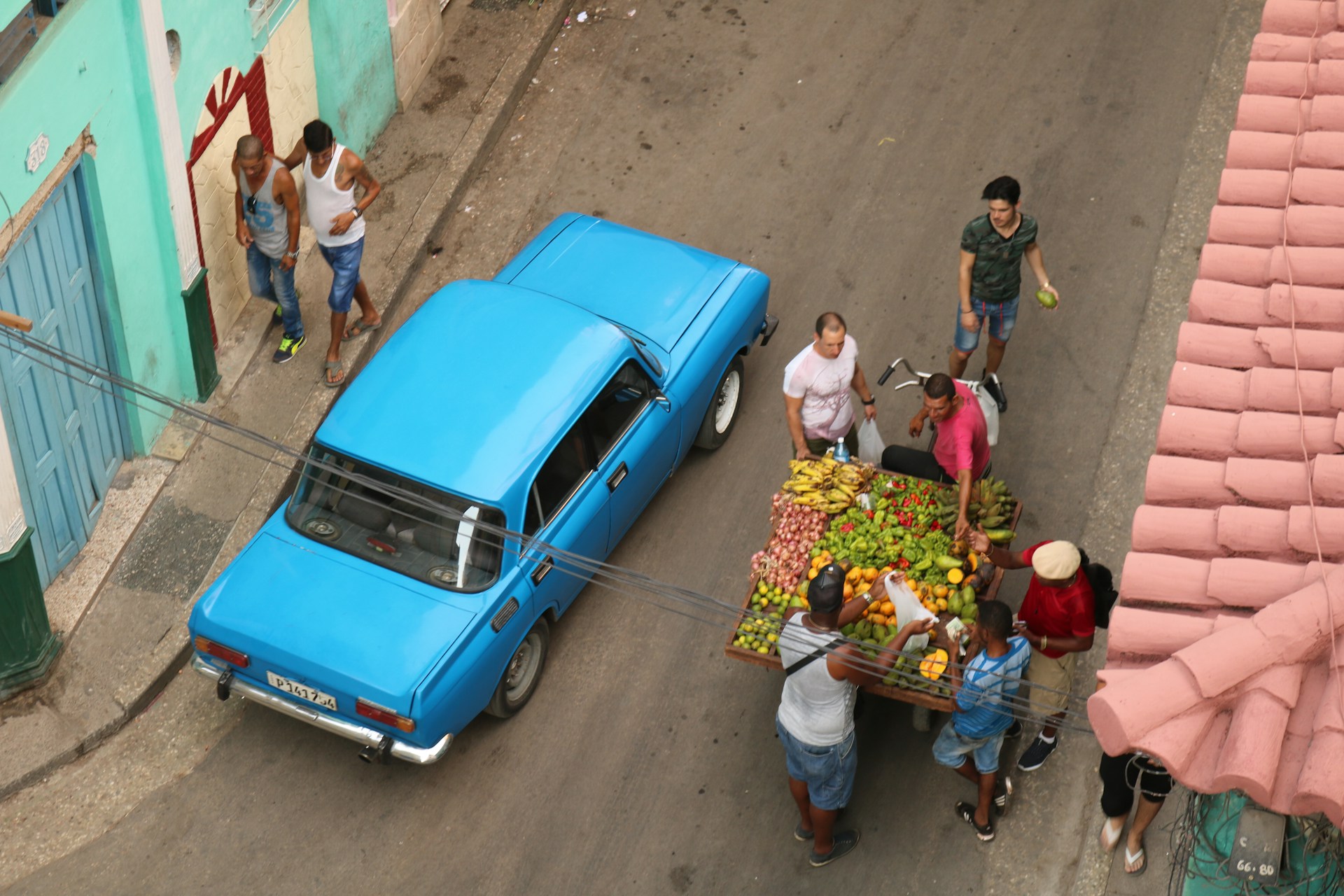
Photo: Joris Visser via Unsplash.
With the cost of fossil fuel in their country out of sight, creative Cubans use bicycles, rickshaws, and whatever they can find to get around.
When I think of rickshaws in unexpected places, I think of a terrifying ride my husband and I took in New York on a bicycle taxi, weaving in and out of rush-hour traffic. By the time we met up with blog reader Stuga4 and her husband, I, a nondrinker, was ready for a drink!
But in Cuba, apparently a country of practical people, all kinds of rickshaws are taking over travel needs in the absence of fuel. You do what you have to do.
Sam Sifton reports at the New York Times, “Jack Nicas, who covers the Caribbean, Central America and Mexico for the Times, recently traveled to Cuba to report on the state of the island. …
“As our journalists discovered, even amid Cuba’s worst ever energy crisis, with mass blackouts plaguing the electrical grid, the Cuban government — and the Cuban people — are still standing. ‘After a week on the ground,’ they write, ‘we found that while Cubans are clearly suffering, they are also doing what perhaps they do best: adapting.’
“[What’s out]: those gas-guzzling Chevys they’ve kept running since the Communist revolution. In: electric rickshaws from China. Cubans are importing big lithium batteries to run appliances during blackouts and installing solar panels on roofs to charge them. Amateur mechanics all over the country are jury-rigging generators to run on more accessible natural gas.
“One farmer even devised a tiny backyard refinery to make gasoline out of shredded plastic, fuel for his motorcycle and cook stove. ‘Cubans thrive amid crisis,’ he told Jack.
“Yesterday, I reached out to Jack to ask him a couple of questions about his reporting and the team’s experience on the ground. Stories and videos from their trip to Cuba appear on our website today [July 28], and tomorrow and Thursday as well.
Sam
“I want to ask you about that farmer you met, the one making his own gasoline. Did you see a lot of that kind of ingenuity in Cuba?
Jack
“One of the most important words in the Cuban lexicon is ‘resolver.’ It literally means ‘to solve,’ but in Cuba, after decades of a U.S. trade embargo, it really means ‘to figure things out by any means necessary.’
“It explains how Cubans put Soviet engines into 1950s American cars to keep them running or ate breaded grapefruit rinds to imitate meat during their economic crisis following the fall of the Soviet Union.
“And now they’re resolviendo again. We saw a lot of creativity during our trip across Cuba. People drilled solar panels to the tops of electric rickshaws. They are using lithium batteries to power concerts. There are even stories of people powering their cars with charcoal and cooking oil.
“As a result, the country is still functioning, despite the hardship.
Sam
“What was your reception in the country like? It’s been a long time since the Cuban government has allowed Times journalists to report there.
Jack
“Everywhere we turned there were stories, and the Cuban people were eager to tell them. We spoke to dozens of people in Havana and beyond who wanted to express their frustration and exhaustion with the status quo. It was a mixed bag on whom they blamed. Some saw the Cuban government at fault for failed economic policies and political repression, while others believed Trump was making them suffer for his own personal gain. Many blamed both.
Sam:
“How hard was it to get your visa? Did government minders follow you around?
Jack
“It took a lot of convincing to get. I met with top Cuban diplomats in Mexico City, Havana, Washington and New York over six months, and sent many letters, to persuade them that we would tell this story fairly. Once we got to Havana to report, we met with Cuban officials a few times, but they otherwise didn’t bother us. We traveled around freely, decided our story targets and chose whom we interviewed.
“Read the team’s first dispatch here.”
More at the Times, here. I often wonder if I could be resourceful like that in a disaster. I’m impressed with the people in this story and the way they cope. But I hope they get relief before much longer. It makes no sense to me why we keep near neighbors is this state of anxiety. How about you?


Yes, needs must! I completely agree with your assessment in the last paragraph. Big old bully rides again
LikeLike
And wants to just take over.
LikeLike