Photo: Kayla Bartkowski/Los Angeles Times/Getty Images.
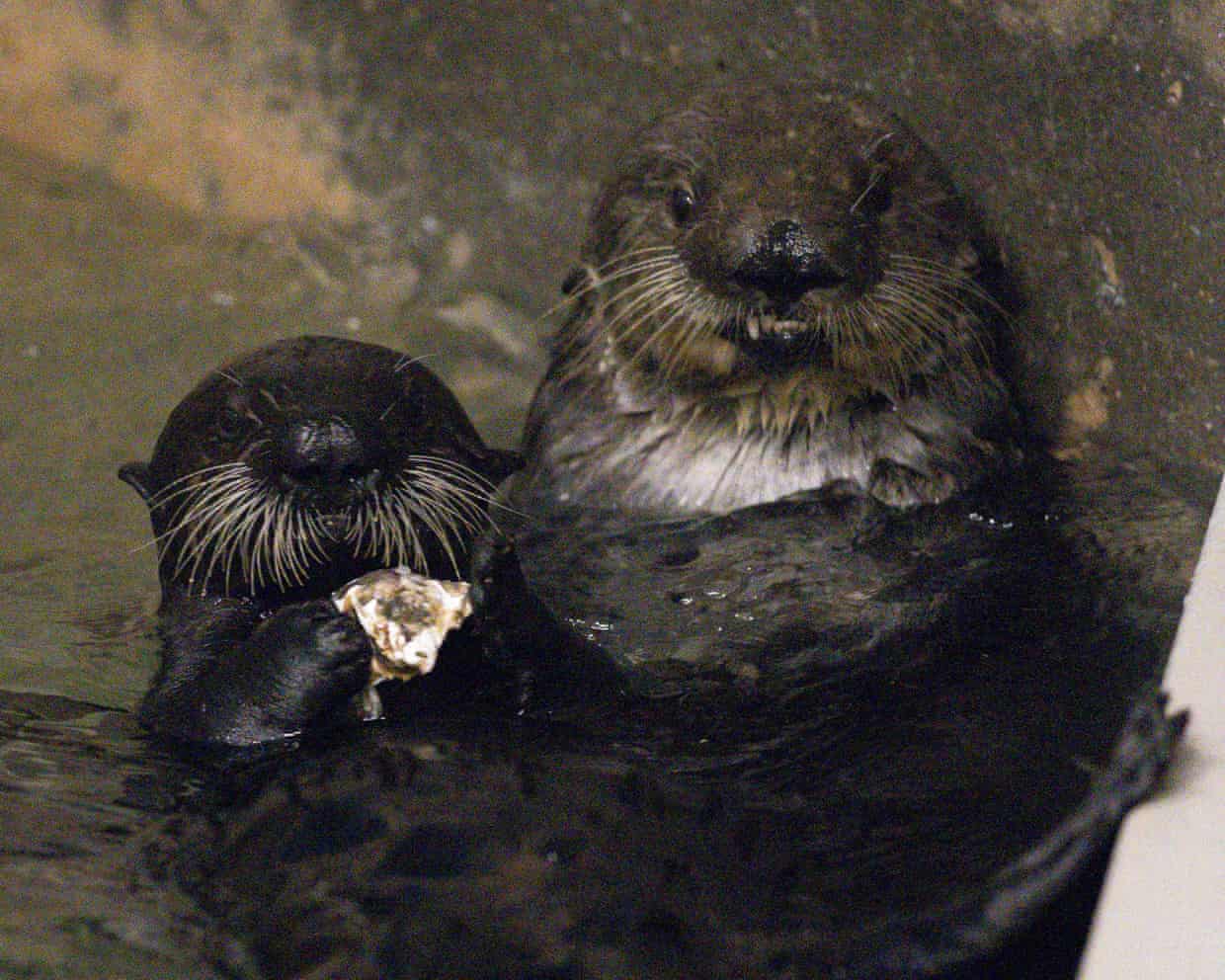
Baby sea otter Sunny, left, and Rey, her adoptive mother, eat at the Aquarium of the Pacific in Long Beach, California.
I was very near the site of today’s story in late April but didn’t know about it at the time. In any case, my trip to California was short and focused on my brother and his health.
In other circumstance, I know I would have enjoyed meeting the sea otters in today’s article, an orphaned pup called Sunny and her adoptive mother, Rey.
Happy Mother’s Day, Rey!
“Before last month, a young southern sea otter named Rey would never have imagined she would be a mother. That changed when she met Sunny, a pup – about two weeks old – found orphaned and alone on Asilomar state beach on the central coast of California in February. The pairing went off without a hitch.
“The two otters now live as mother and daughter at the Aquarium of the Pacific. They arrived at the facility last month, paired together as part of the facility’s surrogacy program that it runs alongside the Monterey Bay Aquarium. The program, created by the Monterey Bay Aquarium in the 1990s, was launched in Long Beach in 2024. It pairs maternal-age female otters with young, motherless pups who would otherwise not survive on their own in the wild. …
“The aquarium can handle 11 otters at a time, with up to seven in the main tank with rehabilitation pools that can each house two otters. The facility currently has five otters, including two other females that are preparing for surrogate motherhood.
“But Sunny and Rey cannot be released into the wild. Experts say both are already too used to being around people and lack the survival instincts to make it on their own in the ocean. … For Rey, Sunny will be the first pup she raises into adulthood. It’s a full-circle moment for her: about two and a half years old, Rey herself was found stranded. She spent a couple of years at another facility before moving to Long Beach.
“ ‘Ray has far surpassed my expectations of what I thought was gonna happen,’ [Megan Smylie, the sea otter program manager] said. … As a surrogate mom, she is teaching her adopted baby everything she needs to know to fend for herself, regardless of her inability to return to the wild.
“The two were seen manipulating an imitation crab shell and foraging for food. Young otters, because of the thickness and buoyancy of their fur, don’t have the strength to get their furry bodies to the bottom of the water tank. Otters have the thickest coat of any mammal, with as many as a million hairs per square inch. The hairs trap air, which acts as insulation and helps keep the otters buoyant.
“In time, she may teach the pup how to use tools. Sea otters are known to be crafty creatures, able to use rocks to crack clamshells, take nuts off bolts and open doors on their own.
“When it’s time to calm down, she will groom the pup, and when it’s time for a nap, Rey will pull Sunny to her chest and roll on to her back. … Experts say this quick-forming connection, between that of surrogate-raised otters and their wild-born offspring, has played a significant role in growing the population found along California’s central coast.
“The animals, which once boasted a population of more than 300,000 along the northern Pacific Rim from Japan to Baja California, were prized for their fur and hunted down to about 2,000 by the early 19th century. Officials say they were thought to have been exterminated until a colony of otters was discovered nearly a decade later.
“Now a federally threatened species, California’s southern sea otter population has rebounded to about 3,000. Despite efforts to aid their comeback, the species faces a low survival rate for pups and constant threats of parasites, shark attacks and human-caused catastrophes.
“This makes the work of every mothering otter like Rey all the more important, as she is tasked with not only providing pups the childhood she never had but ensuring the preservation of her species. And while Sunny may never see the ocean again, aquarium staff hope she can grow into a mom herself, giving the next generation of young pups another shot at life.”
More at AP via the Guardian, here.

 Suzanne's Mom's Blog