Feeds:
Posts
Comments

Posts Tagged ‘aquarium’

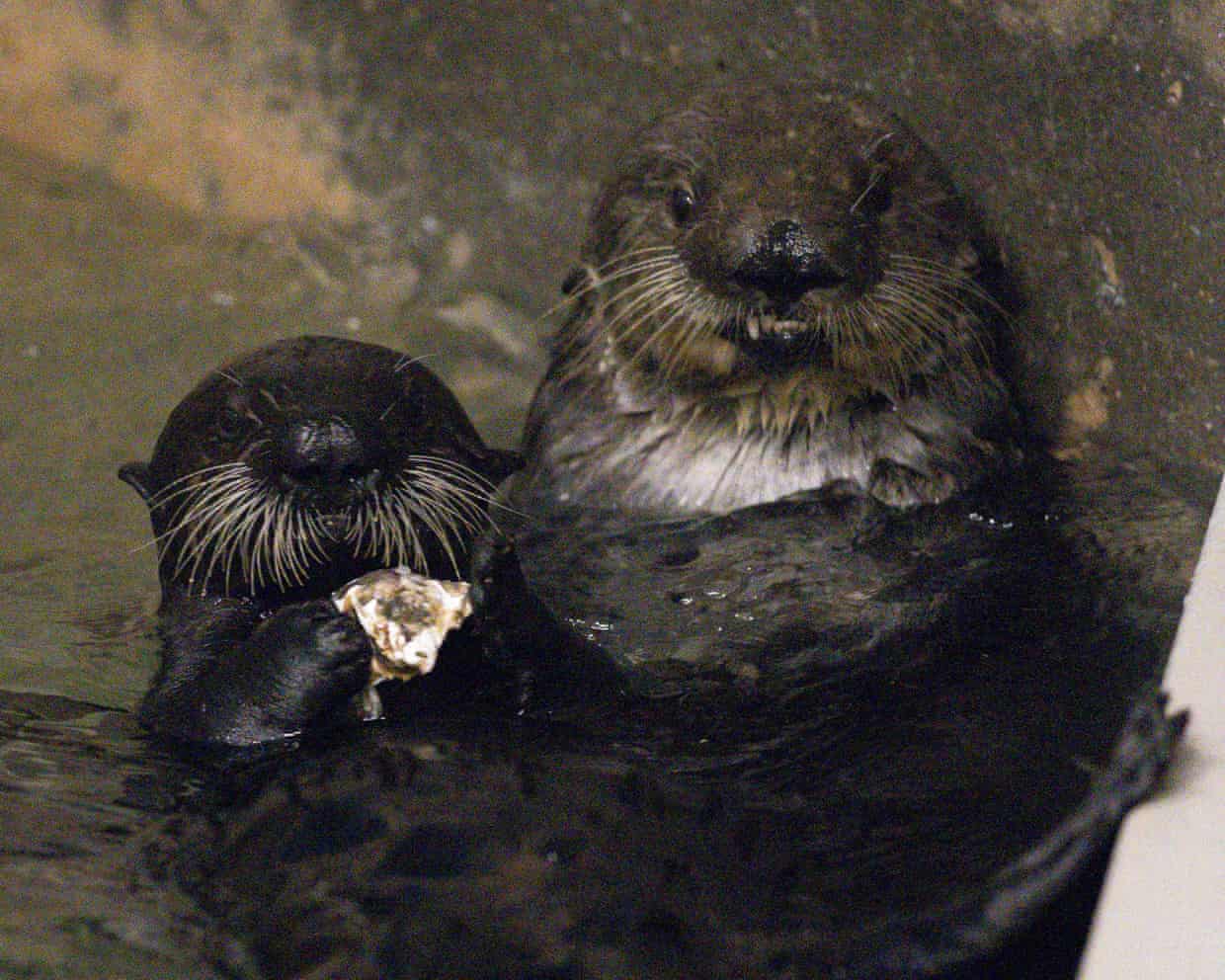
Photo: Kayla Bartkowski/Los Angeles Times/Getty Images.
Baby sea otter Sunny, left, and Rey, her adoptive mother, eat at the Aquarium of the Pacific in Long Beach, California. 

I was very near the site of today’s story in late April but didn’t know about it at the time. In any case, my trip to California was short and focused on my brother and his health.

In other circumstance, I know I would have enjoyed meeting the sea otters in today’s article, an orphaned pup called Sunny and her adoptive mother, Rey.

Happy Mother’s Day, Rey!

“Before last month, a young southern sea otter named Rey would never have imagined she would be a mother. That changed when she met Sunny, a pup – about two weeks old – found orphaned and alone on Asilomar state beach on the central coast of California in February. The pairing went off without a hitch.

“The two otters now live as mother and daughter at the Aquarium of the Pacific. They arrived at the facility last month, paired together as part of the facility’s surrogacy program that it runs alongside the Monterey Bay Aquarium. The program, created by the Monterey Bay Aquarium in the 1990s, was launched in Long Beach in 2024. It pairs maternal-age female otters with young, motherless pups who would otherwise not survive on their own in the wild. …

“The aquarium can handle 11 otters at a time, with up to seven in the main tank with rehabilitation pools that can each house two otters. The facility currently has five otters, including two other females that are preparing for surrogate motherhood.

“But Sunny and Rey cannot be released into the wild. Experts say both are already too used to being around people and lack the survival instincts to make it on their own in the ocean. … For Rey, Sunny will be the first pup she raises into adulthood. It’s a full-circle moment for her: about two and a half years old, Rey herself was found stranded. She spent a couple of years at another facility before moving to Long Beach.

“ ‘Ray has far surpassed my expectations of what I thought was gonna happen,’ [Megan Smylie, the sea otter program manager] said. … As a surrogate mom, she is teaching her adopted baby everything she needs to know to fend for herself, regardless of her inability to return to the wild.

“The two were seen manipulating an imitation crab shell and foraging for food. Young otters, because of the thickness and buoyancy of their fur, don’t have the strength to get their furry bodies to the bottom of the water tank. Otters have the thickest coat of any mammal, with as many as a million hairs per square inch. The hairs trap air, which acts as insulation and helps keep the otters buoyant.

“In time, she may teach the pup how to use tools. Sea otters are known to be crafty creatures, able to use rocks to crack clamshells, take nuts off bolts and open doors on their own.

“When it’s time to calm down, she will groom the pup, and when it’s time for a nap, Rey will pull Sunny to her chest and roll on to her back. … Experts say this quick-forming connection, between that of surrogate-raised otters and their wild-born offspring, has played a significant role in growing the population found along California’s central coast.

“The animals, which once boasted a population of more than 300,000 along the northern Pacific Rim from Japan to Baja California, were prized for their fur and hunted down to about 2,000 by the early 19th century. Officials say they were thought to have been exterminated until a colony of otters was discovered nearly a decade later.

“Now a federally threatened species, California’s southern sea otter population has rebounded to about 3,000. Despite efforts to aid their comeback, the species faces a low survival rate for pups and constant threats of parasites, shark attacks and human-caused catastrophes.

“This makes the work of every mothering otter like Rey all the more important, as she is tasked with not only providing pups the childhood she never had but ensuring the preservation of her species. And while Sunny may never see the ocean again, aquarium staff hope she can grow into a mom herself, giving the next generation of young pups another shot at life.”

More at AP via the Guardian, here.
Read Full Post »

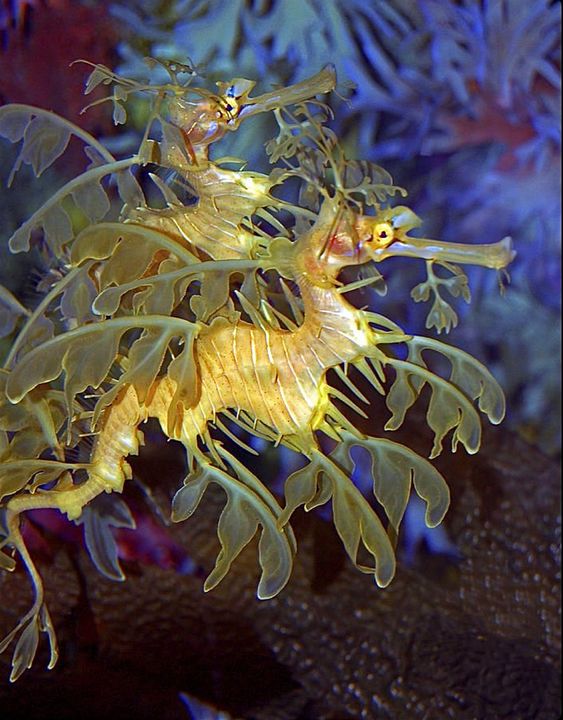
Photo: Pinterest.
Seadragon, an elusive marine animal found in the waters around Australia.

Everyone in my family loves the ocean and the creatures that live in the ocean. Yesterday my oldest grandson was regaling me with stories of stripers swimming near where he surfs, crabs nibbling his toes, and a too-close-for-comfort encounter with a seal. His sister told me about last weekend’s visit to Mystic Aquarium in Connecticut and her subsequent internet research on sand sharks. She was relieved to learn that Rhode Island has very few shark attacks.

Australia seems to harbor some of the most exotic sea creatures, and today’s story is about another aquarium breeding one of them — the seadragon.

Remy Tumin reports at the New York Times, “For more than a decade, researchers at the New England Aquarium in Boston have been trying to breed some of the most elusive and enchanting fish under the sea. Lacy and delicate, sea dragons live only in the waters along Australia’s southern coast, and their small habitat and limited range make them an ideal candidate for in-captivity breeding.

“Since 2008, the aquarists have tried to replicate the sea dragons’ natural habitat. They have changed the temperature of the sea dragon tank to match the seasons of the southern hemisphere. They have adjusted the amount of light in the exhibit. They got a taller tank. None of it worked.

“ ‘I had kind of given up and thought it’s never going to happen,’ said Jeremy Brodt, an aquarist and galleries manager at the New England Aquarium. And then, ‘out of the blue,’ Mr. Brodt said, ‘it happened.’

“Last May, aquarium staff members discovered that a male weedy sea dragon was successfully carrying his mate’s eggs. … The eggs had hatched in mid-July, and [aquarists] have been raising 18 baby dragons since then. …

“Aquarists hope that breeding these fickle creatures in captivity will lead to fewer sea dragons being collected from their native sea grass habitat, which is under increasing stress from climate change and runoff from storms. Sea dragons, which are primarily of the leafy or weedy varieties, are not currently threatened, but the Australian government has strict regulations that allow only a limited number of them to be collected for public display in aquariums. Still, scientists are worried that the animals’ already limited habitat may be contracting.

“ ‘They’re a great, phenomenal animal, they get people’s attention,’ Mr. Brodt said. ‘It’s a way to get that message across and talk about these unique animals and the issues that they’re facing.’ …

“Like their sea horse cousins, male sea dragons are responsible for carrying the species’s eggs to term and can have more than 150 eggs attached to their tails. Their elaborate mating ritual involves male and female sea dragons mirroring each other, moving together as they spin upward through the water. During their dance, the female sea dragon transfers her eggs to a patch on the underside of her partner’s tail, where he fertilizes and carries them. If the transfer is interrupted somehow — by competing love interests, for example, or even clumsiness — the eggs may drop or end up unfertilized.

“No one has ever seen a leafy sea dragon mate in the wild, said Greg Rouse, a marine biologist at Scripps who was not involved in the New England Aquarium’s project. … To protect the male sea dragon from bumping the eggs off his tail, aquarists at the New England Aquarium moved him to his own smaller holding tank to be monitored. Once the eggs hatched, the team gently removed the baby sea dragons and placed them in a tank stocked with highly nutritious food. …

“ ‘They’re pretty impressive specimens when they’re adults,’ Mr. Brodt said. ‘That first year, it’s crazy. They’re about two centimeters when they hatch and look like floating grape stems. They grow about one centimeter a week for several months.’

“So what made this a successful pregnancy? The researchers were considering moving some of the adult sea dragons out of their display and into a larger tank to give them more space to float when they discovered the egg transfer had already occurred in the existing exhibit. Two developments may have helped the breeding effort, Mr. Brodt said: The aquarium had a surplus of live food to dole out (adult sea dragons are primarily fed frozen food with some live supplements), and because of natural population fluctuations, there were fewer sea dragons in the tank at the time. …

“Dr. Rouse, the Scripps marine biologist, said both food and space were likely factors in the success. Because sea dragons ‘bond up as pairs in the wild and they don’t hang around in big groups, maybe they get a little bit disturbed if there’s too many in a tank with them,’ Dr. Rouse said. … Even so, the hormonal ‘synchronization’ between a male and a female has to line up perfectly. Moon phase and water temperatures also probably play a role in their reproduction.”

More at the Times, here. Wouldn’t you love to be able to say to someone who asks you about your work, “Lately I’ve been raising ’18 baby dragons’ “?

Read Full Post »

Cate McQuaid, my favorite Boston Globe art critic, who usually covers more esoteric subjects, explains some large artsy globes seen around Boston in recent days.

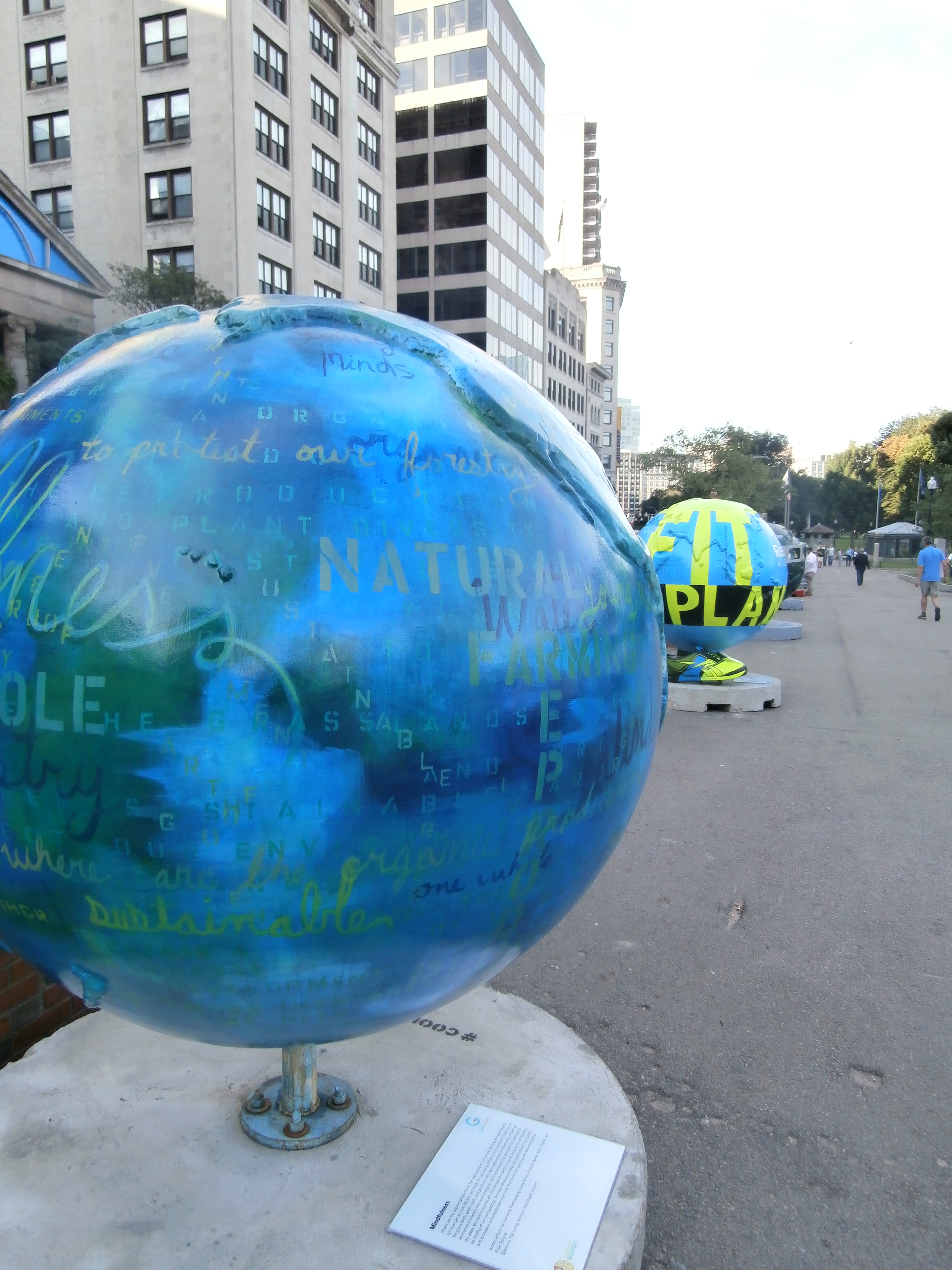
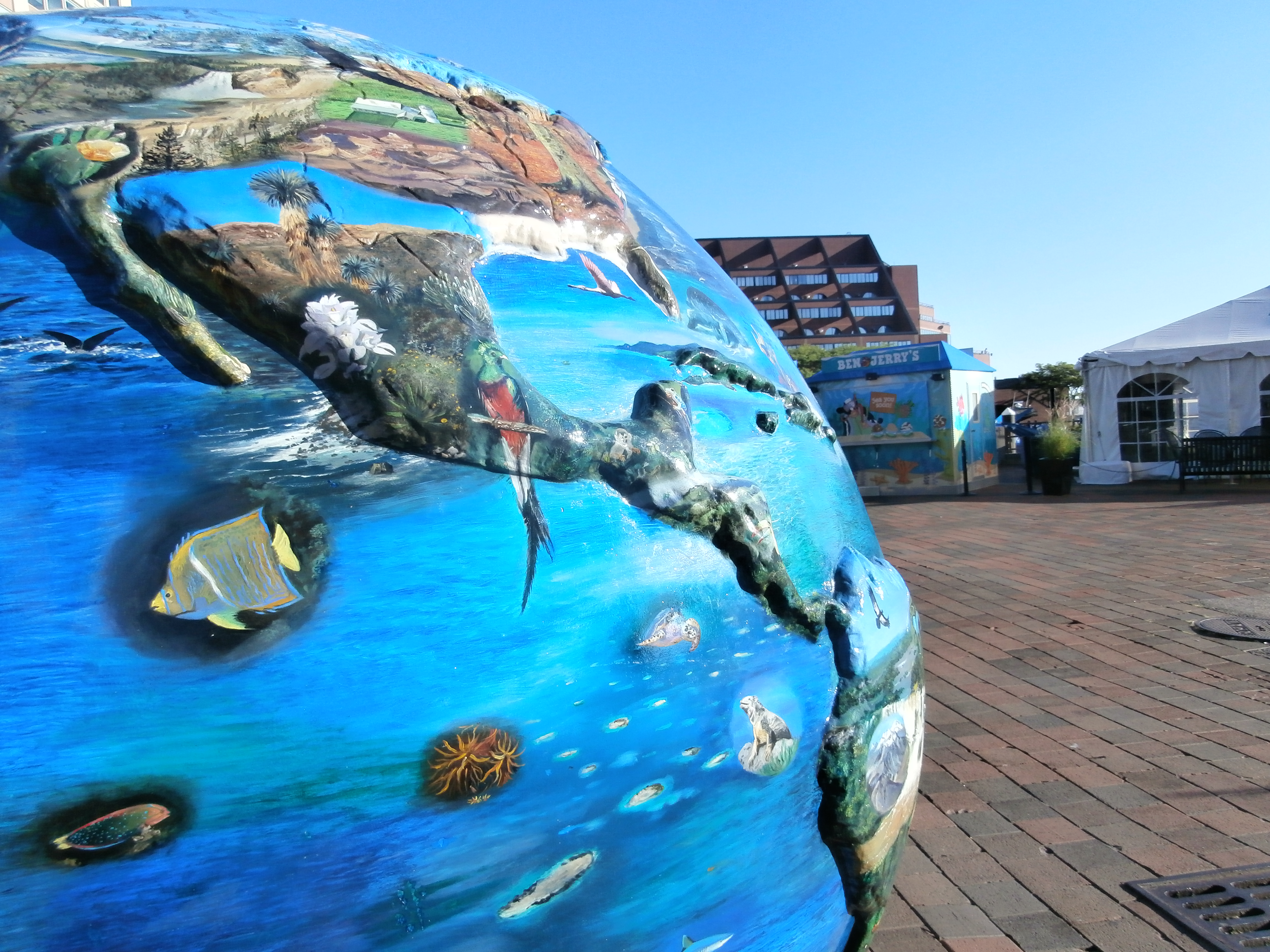
“Huge, colorful orbs line up in a row down the Tremont Street side of Boston Common. It looks like a giant might be marshaling his marbles. Get up close, and you’ll see that the spheres, each 5 feet in diameter, are globes, fancifully decorated and proffering solutions to climate change.

“ ‘Cool Globes: Hot Ideas for a Cooler Planet’ has landed in Boston. The public art project, for which artists designed globes with green strategies to contend with environmental issues, originated in Chicago in 2007 and has traveled the world.”

Environmental activist Wendy Abrams, says McQuaid, is the initiative’s founder.

“Abrams cites two inspirations for the project, the wrecked cars that Mothers Against Drunk Driving pointedly deploy in their Crash Car Program, and the painted cow sculptures that showed up in the streets of Chicago in 1999 — a public art project that prompted Boston to follow suit with painted cod.”

Read about individual artists’ Cool Globe themes, the outreach to students, and more, here.

The first two photos below are near the Park Street subway station. The third is in front of the aquarium, and I am not sure if it is part of the traveling series.

cool-globes-boston

globes-for-a-coller-planet

globe-at-aquarium

Read Full Post »