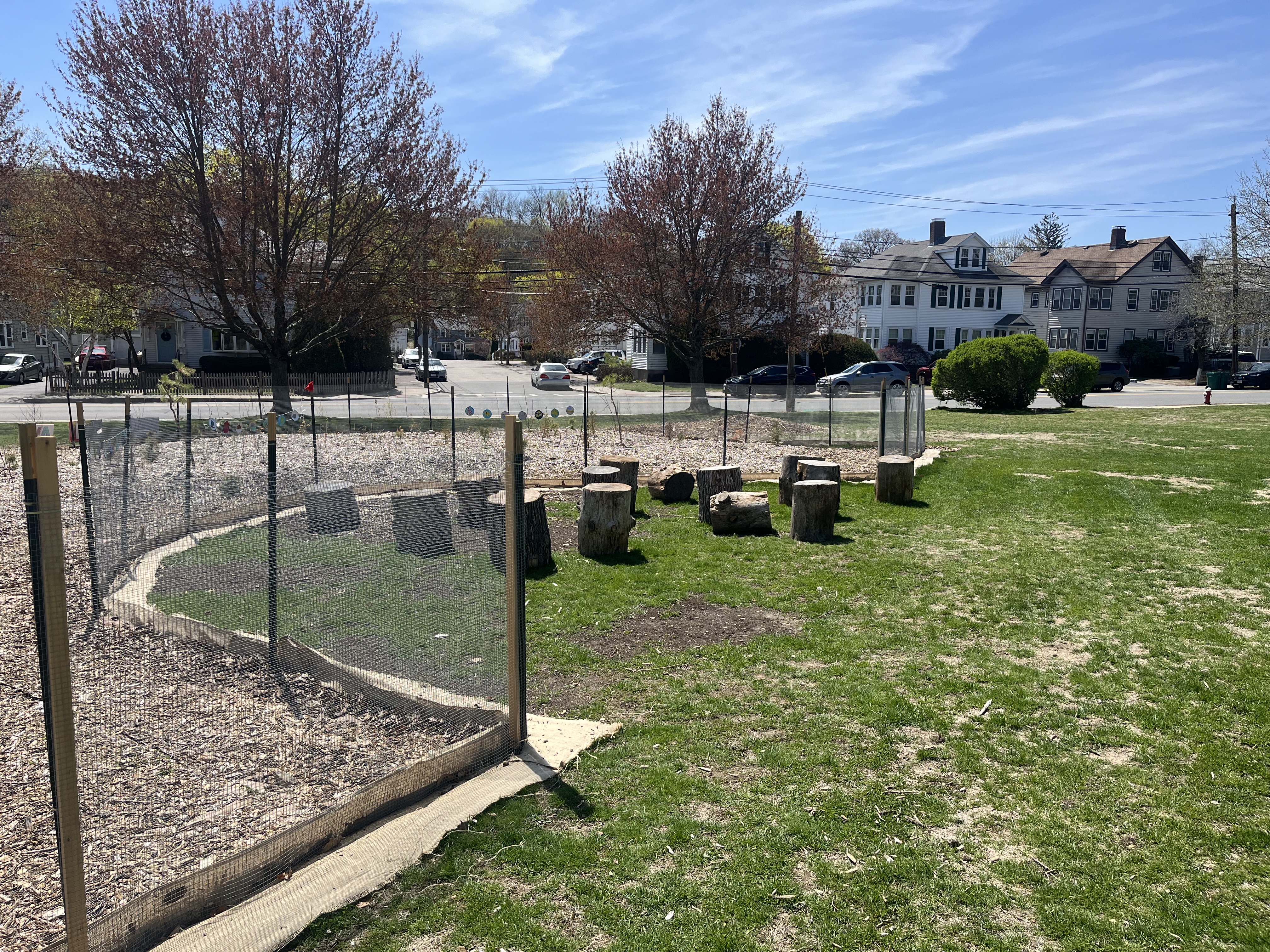
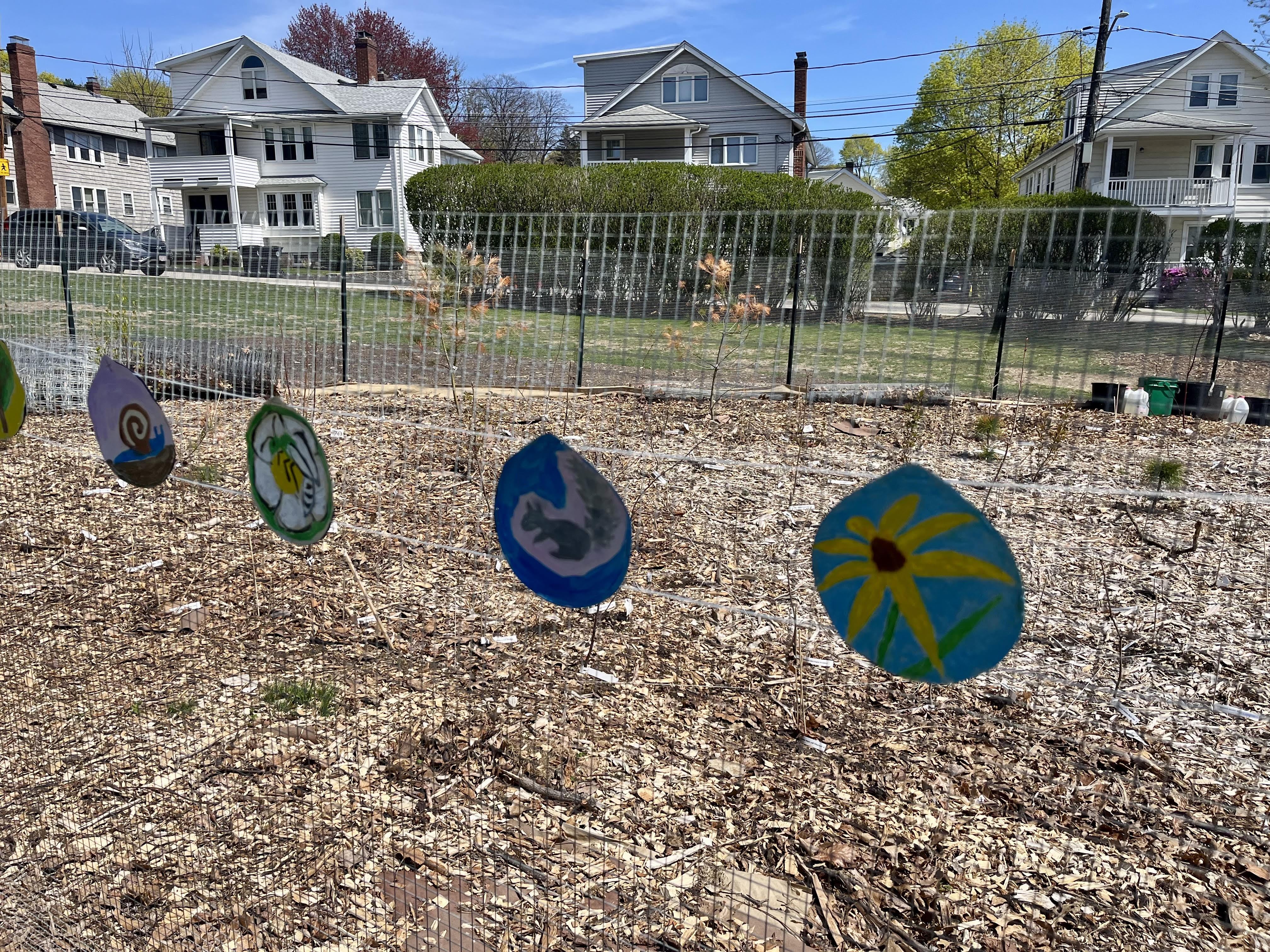
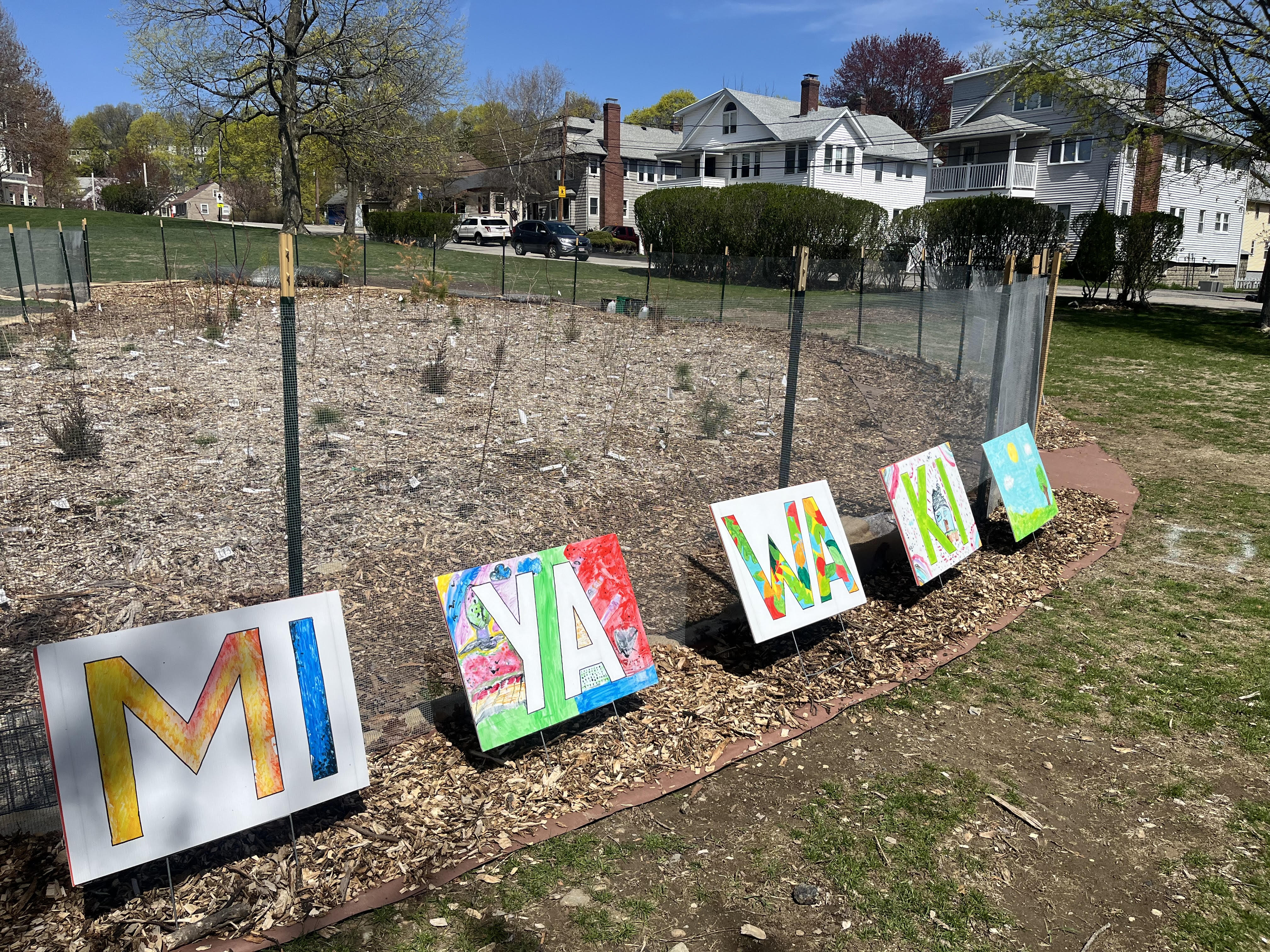
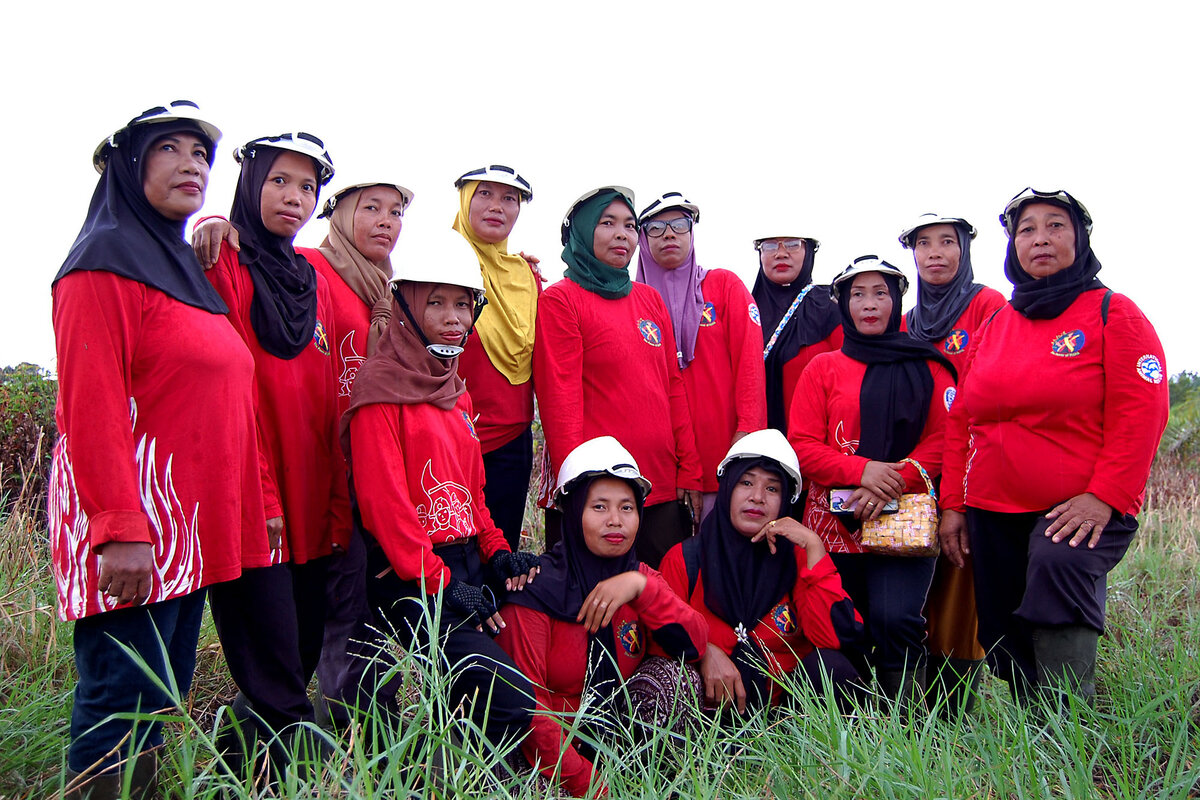
Photos: Suzanne and John’s Mom.
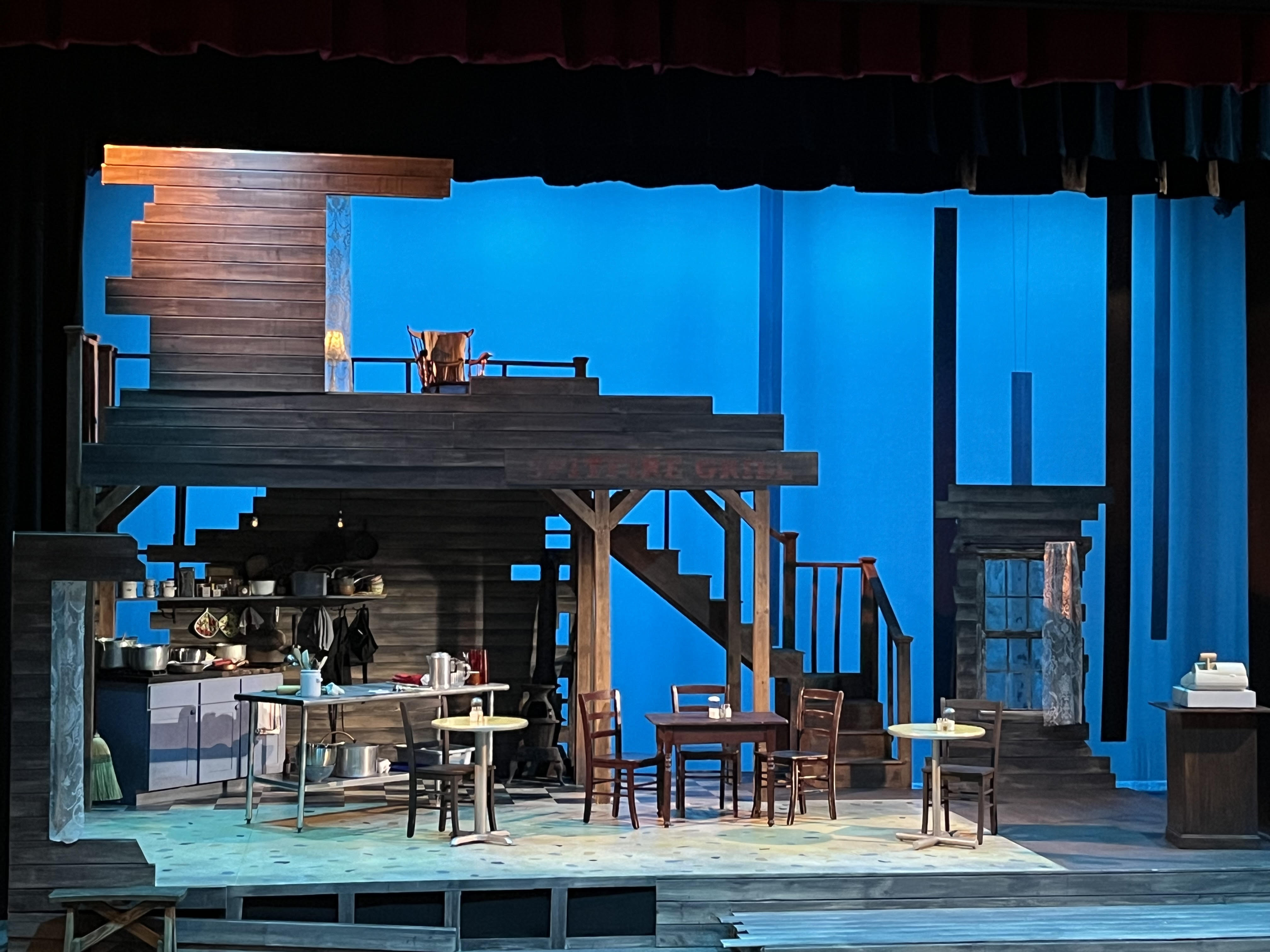
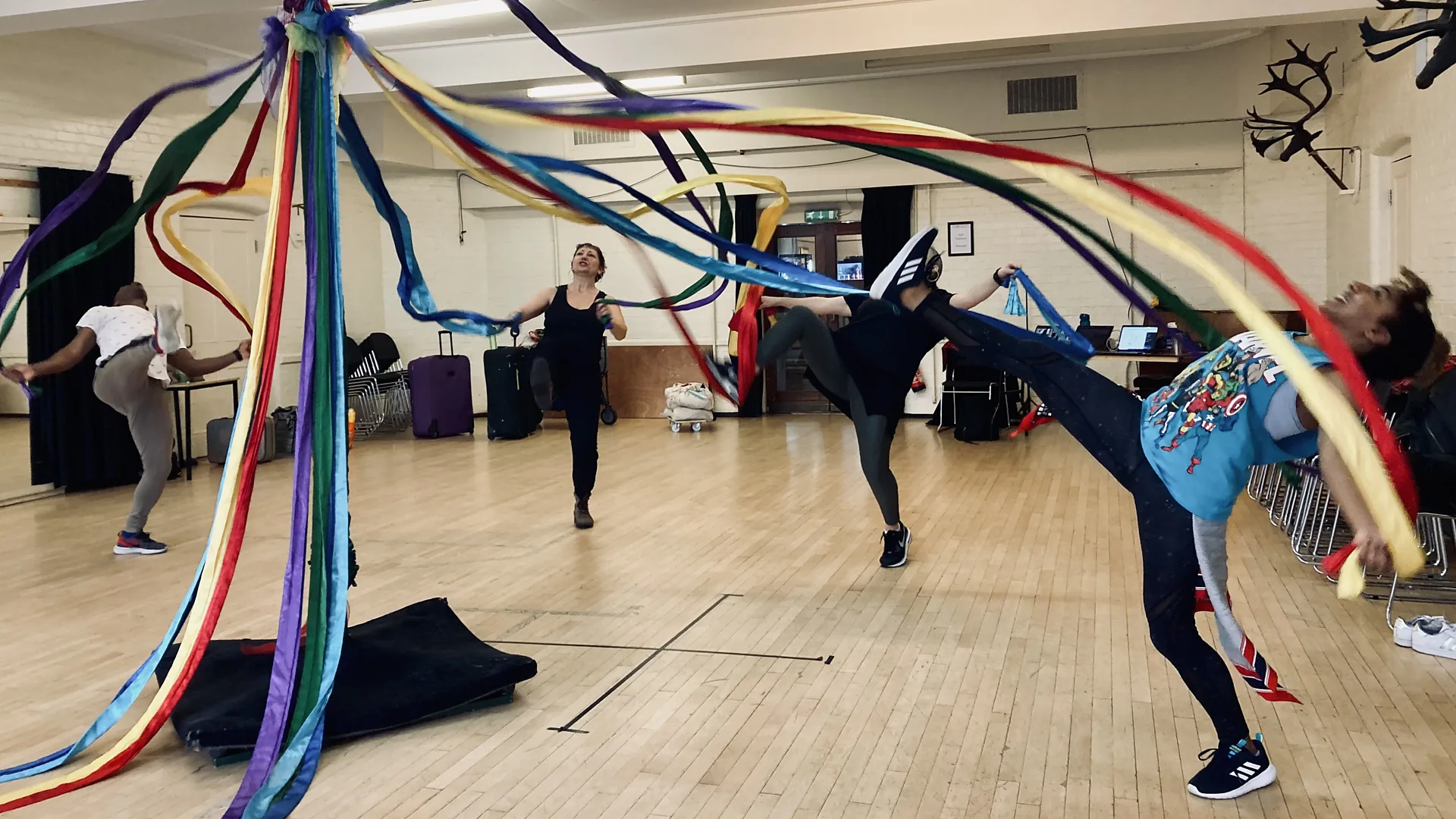
People are celebrating Passover and Easter in my retirement community.

Posted in Uncategorized, tagged Easter, passover, photo, seder on April 20, 2025| 2 Comments »
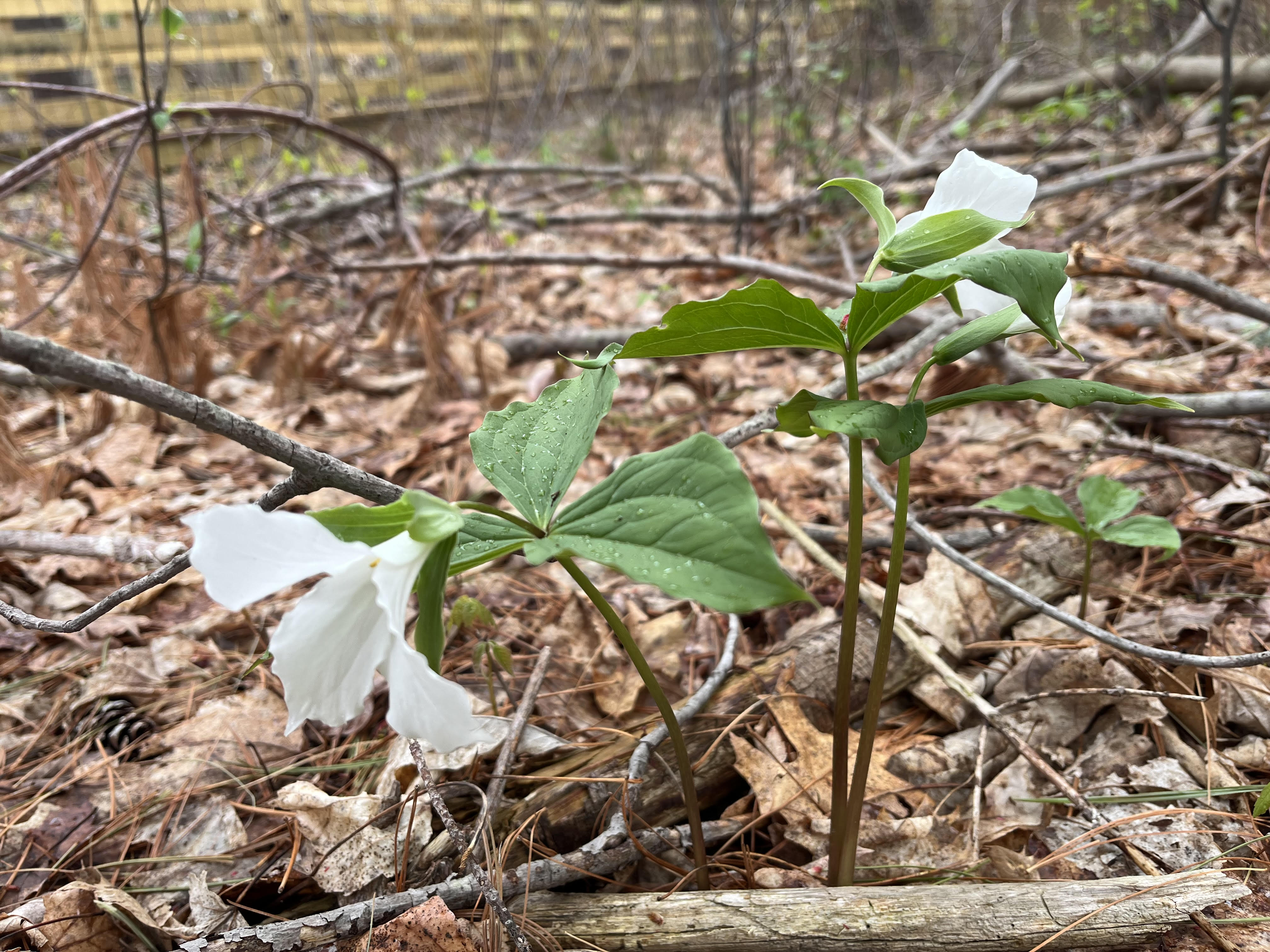
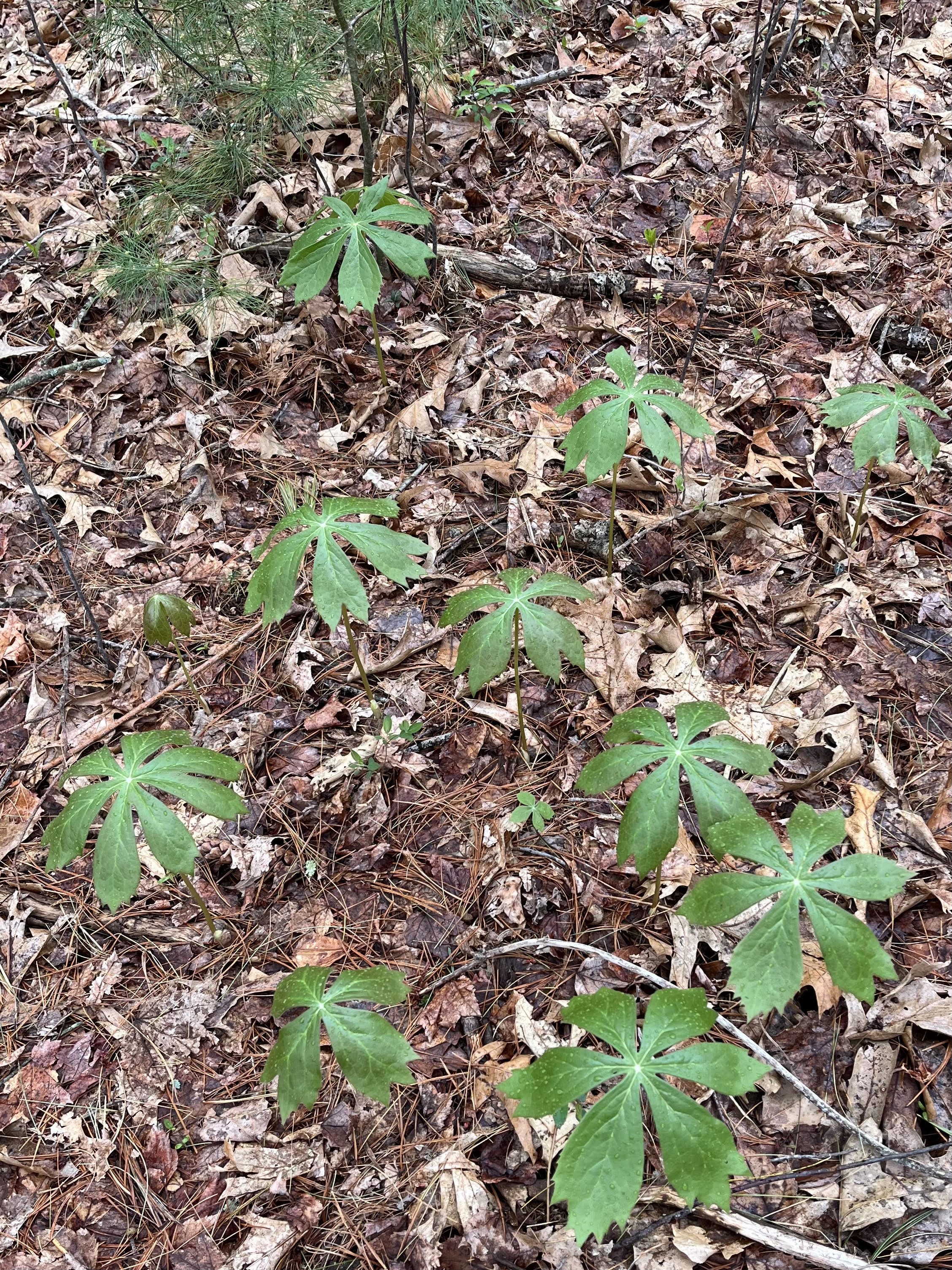
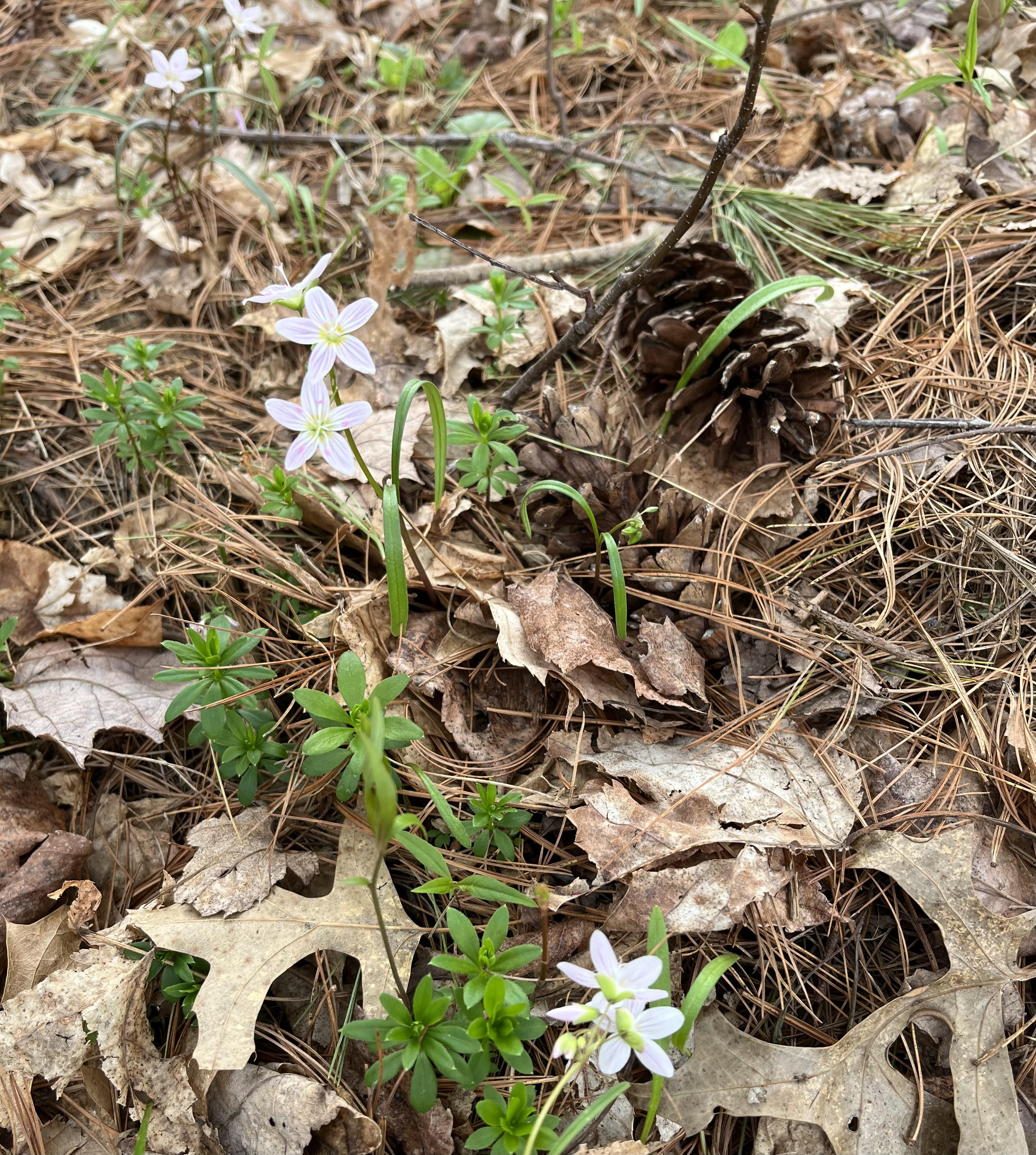
Posted in Uncategorized, tagged bloodroot, Dutchman's breeches, massachusetts, spring ephemerals, trillium, trout lily, wildflower on April 20, 2025| 6 Comments »

Photos: Suzanne and John’s Mom.
Trout lilies in Massachusetts.
I always look eagerly for the early spring wildflowers to emerge. I even planted several kinds when we had a house. You are not supposed to transplant them, because most require very special woodland conditions, but there are vendors who grow them from scratch, like Grow Native Massachusetts and Garden in the Woods, and their flowers are safe.
It was only this year I learned that these beloved wildflowers are called spring ephemerals.
The Massachusetts government website says, “Early flowering plants that produce leaves, bloom, and set seed quickly after the snow melts in the spring are referred to as spring ephemerals. … They represent the seasons changing. Spring ephemeral flowers also provide the much-needed first nectar and pollen of the season for over-wintering pollinators, including bumblebee queens, mining bees, halictid or sweat bees, early butterflies, beetles, flies, and gnats. In return, these insects transfer pollen from one plant to another.
“Spring ephemerals are found in deciduous forests dominated by sugar maple, ash, black cherry, and hop hornbeam trees. Before the trees have their leaves, these wildflowers show up early to take advantage of the unobscured access to sunlight. While the trees are still dormant, spring ephemerals are in a race against time. They take advantage of the above-average nutrient levels in the soil (from decomposing fall leaves) to photosynthesize quickly. This provides the energy they need for flowering, setting seed, and storing carbohydrates for the following year all before the tree canopy blocks sunlight from the forest floor.
“The forest trees pull large amounts of water out of the soil when they start to grow leaves. The amount of water being absorbed by the trees is so great that it causes groundwater levels to drop. Before this happens, spring ephemerals use the higher moisture levels in the soil to carry out their life cycle. The dampness also helps them tolerate low temperatures they often face in early spring.
“Please keep in mind that the survival of a plant population depends on each plant’s ability to produce seed for the following year. If you find a location with these beautiful plants, enjoy them in place and do not pick them. Other people who follow in your path will appreciate what you have admired and left untouched, as will the many native pollinator insects that depend on spring ephemerals for their survival.”
If you are interested in more, Wikipedia gets wonky with scientific explanations of not just spring ephemerals but desert, mud flat, and weedy ephemerals. Here’s what is says about the spring ones.
“Spring ephemerals are woodland wildflowers which develop aerial parts (i.e. stems, leaves, and flowers) of the plant early each spring and then quickly bloom, and produce seed. The leaves often wither leaving only underground structures (i.e. roots, rhizomes, and bulbs) for the remainder of the year. This strategy is very common in herbaceous communities of deciduous forests as it allows small herbaceous plants to take advantage of the high levels of sunlight reaching the forest floor prior to the formation of a canopy by woody plants. Examples include: spring beauties, trilliums, harbinger of spring and the genus of Dicentra particularly D. cucullaria, Dutchman’s breeches and D. canadensis, squirrel corn.”
More at Wikipedia, here. Mass.gov, here, has some great photos.
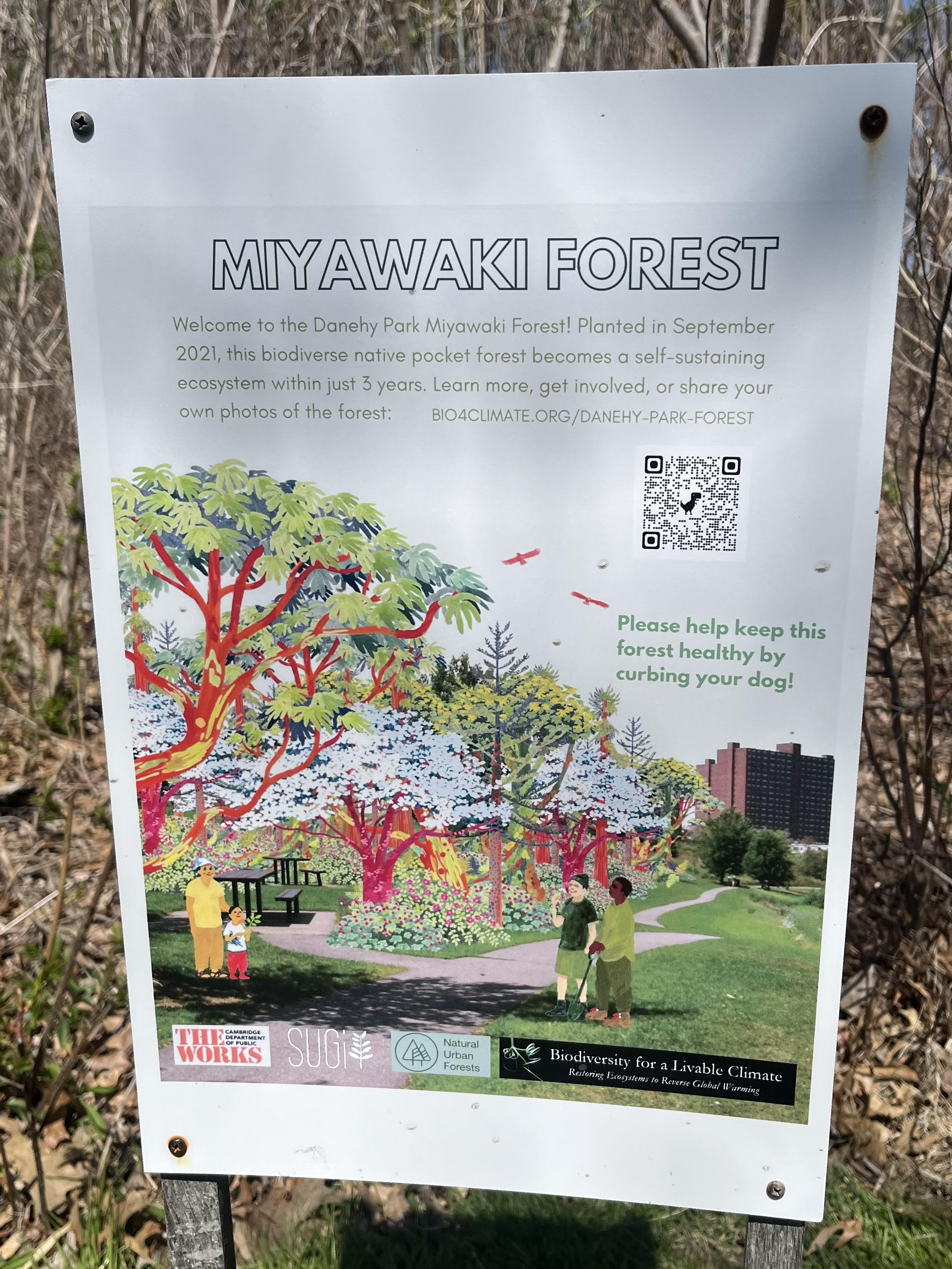
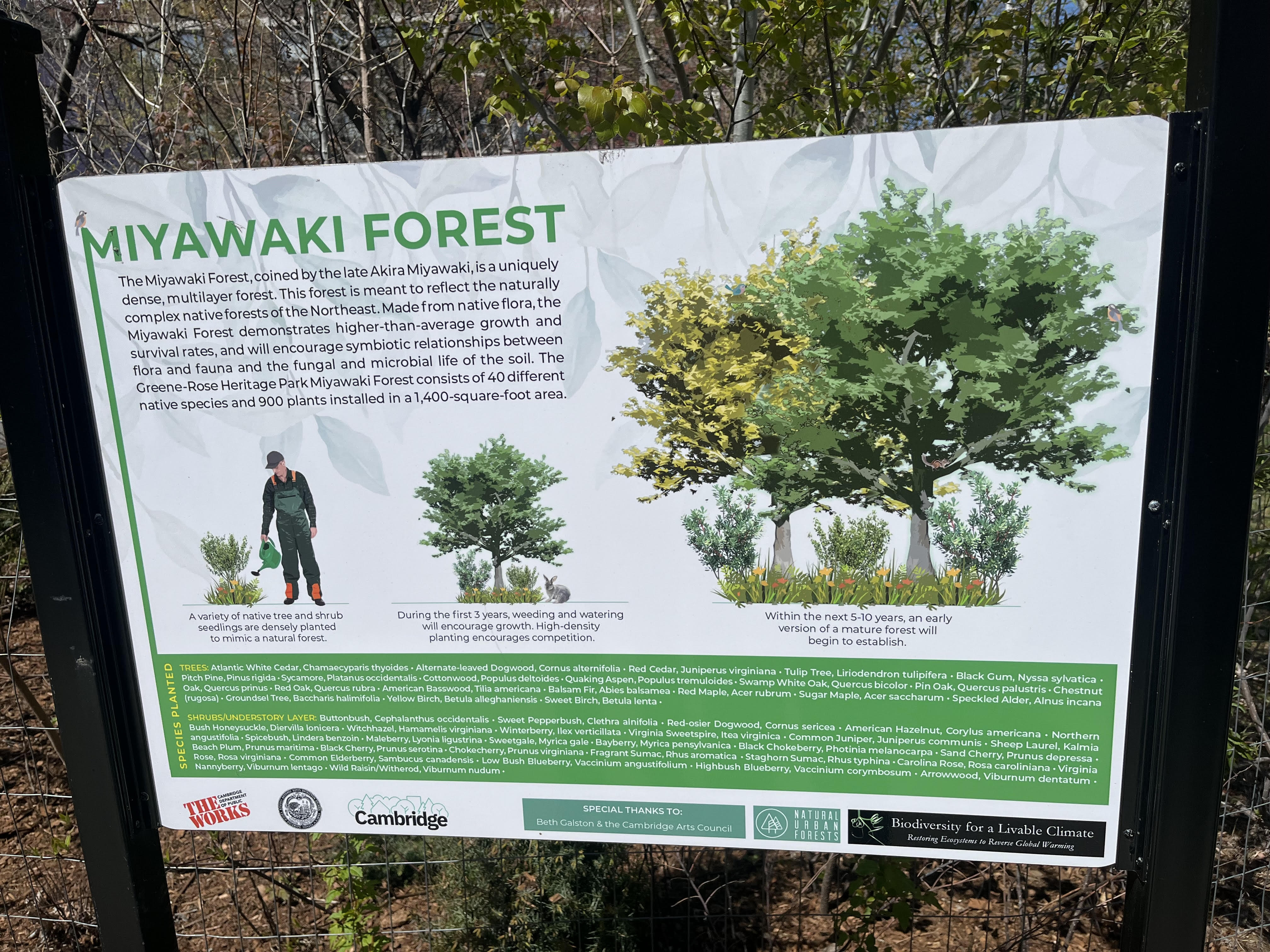
An early spring flower called bloodroot, planted by a committee at my retirement community.

Posted in Uncategorized, tagged 250th, anniversary, april 19, concord, massachusetts, Minutemen, musket, reeanactment on April 19, 2025| 4 Comments »

Pottery: Sue Brewster.
My retirement community has prepared for the country’s 250th anniversary — counting from April 19, 1775, when “the shot heard ’round the world” was fired at the North Bridge — in charateristic ways. In the pottery workshop, for example.
You will be pleased to know that the American experiment in democracy lasted nearly 250 years. It’s nothing like geologic time, but it’s pretty good depending on your frame of reference.
There will be celebrations all around New England to recognize the key events of 1775. In our town, the day will include an extra long parade and a visiting dignitary whose name the planners withheld until the last minute.
Back in 1975, the 200th anniversary of Patriots Day, the visiting dignitary was Gerald Ford. Protesters camped out on the hill above the North Bridge, by the Buttrick Mansion. They are said to have been rowdy, and Emerson Hospital had to treat several of them. This time, extensive preparations were made to handle rowdiness.
To give you a taste of the day’s activities at just one of many locales, here is what the museum posted:
“Celebrate the 250th Anniversary of April 19, 1775, with a free community celebration at the Concord Museum. … Free admission (9:00 am – 5:00 pm), including access to the immersive April 19, 1775 galleries to see the original lantern from Paul Revere’s famous midnight ride and the new special exhibition Whose Revolution.
“A family-friendly encampment of Revolutionary Living History (10:00 am – 5:00 pm). Billerica Colonial Minutemen will drill with muskets, cook over an open firepit, and demonstrate colonial crafts.
“Family drop-in activities (9:00 am – 4:00 pm) inspired by the American Revolution and the new Barefoot Books publication Rise Up!
“A Forum with Doris Kearns Goodwin (6:00 – 7:00 pm) on the American Revolutionand its legacy. In-person attendance is at capacity. Join a stand-by line or register for virtual attendance.
“An outdoor concert with the Goodwin Band (7:30 – 8:30 pm), finishing with a view of a town-wide drone show.
“Food trucks, an ice cream truck, and a wine and beer truck all day and evening.”
Speaking of food trucks, you should know that they were a big bone of contention a few years ago at Town Meeting, when planning was getting underway. Not historically accurate, you know.
I have no idea where you can park, but if you can get here early, our tourist site notes, “church bells at 1st Parish toll at 5:45 a.m. to sound the alarm [and] Dr. Prescott arrives at the North Bridge after riding across the fields calling out the warning to towns and villages that the [British] Regulars were on the march and that their destination was Concord. The Concord Minutemen fire salutes and the Concord Independent Battery fire several volleys from the field at the Old Manse.”
I have heard the Independent Battery fire historically accurate volleys several times over the years, and my advice to you is to wear earplugs.
For other information, check the town website, here.
Posted in Uncategorized, tagged artificial light, darkness, Isle of Rum, night sky, scotland, stars on April 18, 2025| 3 Comments »

Photo: Nicholas J.R. White.
A night sky above a copse of trees on Guirdil Bay on the Isle of Rum in Scotland.
In the summer, when we are staying in New Shoreham, we can see the stars at night, including the Perseid meteor showers. But the rest of the year, newspaper alerts about cool things happening in the night sky are wasted on us. I would love to see, at least for a little while, what the residents of the Isle of Rum can see.
Kat Hill writes at the New York Times, “Rum, a diamond-shaped island off the western coast of Scotland, is home to 40 people. Most of the island — 40 square miles of mountains, peatland and heath — is a national nature reserve, with residents mainly nestled around Kinloch Bay to the east. What the Isle of Rum lacks is artificial illumination. There are no streetlights, light-flooded sports fields, neon signs, industrial sites or anything else casting a glow against the night sky.
“On a cold January day, the sun sets early and rises late, yielding to a blackness that envelopes the island, a blackness so deep that the light of stars manifests suddenly at dusk and the glow of the moon is bright enough to navigate by.
‘For this reason, Rum was recently named Europe’s newest dark-sky sanctuary, a status that DarkSky International, a nonprofit organization focused on reducing light pollution, has granted to only 22 other places in the world. With the ever-increasing use of artificial lighting at night, places where people can gaze at the deep, ancient light of the universe are increasingly rare.
“Rum’s designation is the result of a long, meticulous bid by the Isle of Rum Community Trust. The effort was led by Alex Mumford, the island’s former tourism manager, and Lesley Watt, Rum’s reserve officer, with the support of Steven Gray and James Green, two astronomers who started Cosmos Planetarium, a mobile theater offering immersive virtual tours of the night sky. Rum ‘stands for something greater,’ Mr. Mumford said, and aspires to be ‘a haven for others to experience the darkness and the Milky Way.’
“A seven-mile walk from Kinloch through the wild and empty heart of the island leads to a Greek-style mausoleum, built in the 19th century, above Harris Bay on the west side of Rum. Locals regard it as the best spot on the island to take in the night sky; on a cloudy night with no moon, one resident said, ‘you can’t even see your hand in front of your face.’ But this night was clear, and stars and meteors wheeled spectacularly overhead as the Milky Way drew a glistening smudge above the brooding mountains, Askival and Hallival. Venus, Saturn and Jupiter stood in a line above the mausoleum’s sandstone pillars.
“Plans are in motion to renovate an abandoned lodge nearby into a place where tourists could stay in their quest for celestial splendor. ‘What you are seeing is not just a 2-D map, but the four dimensions of space and time,’ Dr. Green said. ‘You are looking back into the past.’ …
“On Rum, human life is lived in the small pools of light that spill from windows or glow from headlamps. One key to attaining dark-sky sanctuary status has been to help residents adapt to and embrace the darkness. Porch lights are recessed into doorways and point down; the pier has LED lights, also pointing downward, that provide just enough illumination for marine safety; a shop’s outdoor motion-sensor lights come on only for a few minutes when needed. When the community trust started its sanctuary application in 2022, roughly 15 percent of homes and shops followed the lighting recommendations outlined by the initiative; compliance is now at 95 percent.
“The blackness of night provides more than a cosmic spectacle for humans to enjoy; it is also essential for the environment. ‘Low light levels are important for nocturnal species,’ Ms. Watt said. ‘And artificial lighting can influence the feeding, breeding and migration behavior of many wild animals.’ …
“Education — of adults and children, locals and tourists — is central to dark-sky awareness. Andy McCallum, a teacher on Rum, showed off the models and maps of stars and planets that his handful of students had designed.
“ ‘For our pupils, it’s a powerful reminder that although we live on a small island, we’re part of a vast and interconnected universe,’ he said. It made them proud, he added, to help preserve a unique environment for future generations.”
More at the Times, here. Wonderful photos.
Posted in Uncategorized, tagged cam, farm, Farm Stay UK, lambs, live stream, uk, vacation on April 17, 2025| 5 Comments »

Photo: Handout via the Guardian.
You can take hikes with goats. Why not enjoy time with lambs, too?
I’ve been saving an article from the Boston Globe for some future birthday, when I’ll talk my family into joining me in a hike with goats. It’s a service that a goatherd here in Massachusetts offers, and I think it might be fun.
But now I’m learning about spending a weekend with lambs. Maybe that would be even more fun. But I would have to fly to England, and I’m down on air travel.
Sally Howard writes at the Guardian, “In a shed in the Malvern Hills, lambs struggle clumsily to their feet as holiday-making couples look on.
“Clare John, the third generation in her family to farm these 50 acres of Worcestershire pasture, began offering lambing-themed breaks two years ago in response to a surge of customer requests. Rowley Farm’s holiday cottages are block-booked for the 2025 spring lambing season, which traditionally peaks around Easter.
“ ‘For farmers like me it’s a bit strange to treat sheep like pets,’ John said. Self-catering guests arrive at Rowley Farm from February to May to feed hay to her pregnant ewes, and to bottle-feed orphan lambs who have been abandoned by their mothers or are the thirds in triplets (which ewes can struggle to feed).
“ ‘Mostly the guests want to touch and cuddle the lambs rather than do the mucking out,’ she said. …
“Farm Stay UK, a co-operative for farmers in hospitality, said that 90 of its 400 members now offer ‘lamb watch’ holidays. A number of farms are expanding their lambing offerings for 2025. … Church Farm in Lancing, West Sussex, offers evenings with the ‘shepherdess team’ where visitors can feed lambs and watch out for live births.
“Some put this popularity down to the effect of TV shows … or the growth of live-stream lambing cams such as lambwatch.co.uk and Walby Farm Park’s Lamb Cam Live.
“Farmer Helen Hearn introduced lambing-shed slots for visitors in 2023 after demand began to outstrip capacity at 450-acre Penhein Farm in Monmouthshire. Guests accompany Hearn – checking the sheds for births, ensuring lambs in the field are paired up with their mothers and bottle feeding the lambs – at a charge of £45 [~$60] for up to eight people a shed. ‘We charge for lambing as it takes four times as long to do our farming rounds when the public is involved.’ …
“She thinks lambing breaks answer a human need for connection to nature. ‘In previous generations most British people would have an aunt or cousin who worked on a farm and would be around farm animals that way,’ she said. ‘That’s all gone now.’
“Hearn said she wouldn’t install a lamb cam for the public to witness live births, however. ‘Often I’ll get a delivery that’s tricky … and the vet needs to come for a caesarean or the lamb comes out dead,’ she said.
“TikToker and amateur lambing enthusiast Melissa Arnold, AKA @melissalovessheep, refers to herself as ‘a crazy sheep lady.’ The graphic designer has volunteered for lambing season at her local farm, Readstock in Bagber, Dorset, since 2022. With no prior farming experience, Arnold has now delivered and raised more than 90 lambs. …
“ ‘I discovered lambing when I was going through a tricky period in my life and it’s total escapism for me,’ she said. However, she points out the hobby isn’t all gamboling newborns. ‘It’s an everyday soap opera in the lambing shed. Lambs and ewes die regularly, and you have to learn to handle that.’
“In Hampshire, farmers Fran and John Drake have had to take on additional staff, including veterinary students, to cope with surging demand for lambing stays at Michelmersh Manor Farm, a family-run mixed arable, dairy and sheep farm where 140 lambs are expected this April. ‘We have one London family coming back for their fourth lambing season,’ Fran Drake said. …
“Michael Gibbs, who has farmed at Mill Farm in Middle Tysoe, Warwickshire, for 50 years, welcomes local schoolchildren into his lambing sheds but is unconvinced about turning it into a spectator sport. Farming is a business, after all. ‘The French have a taste for British lamb at the moment and prices are up 30% on 2022,’ the 73-year-old said, passing a trailer of hoggets (sheep between one and two years old) off to market. ‘That’s what the job is at the end of the day. It’s not all cuddles.’ ”
More at the Guardian, here. No paywall at the Guardian, but please consider donating something to support their journalism.
Posted in Uncategorized, tagged copper, environment, Imperial College, mining, research, sustainable, uk on April 16, 2025| 1 Comment »

Photo via the Guardian.
Imperial College researchers Franklin Keck, left, and Ion Ioannou are seeking a biological approach to mining copper with less danger to the environment.
Can mining be made greener? I know it sounds implausible, but you have to love people who will tackle questions like that. Especially as the modern world is demanding more and more metals.
Robin McKie writes at the Guardian that copper “faces an uncertain future as manufacturers prepare to expand its use to make the electric cars, renewable power plants and other devices that will help the planet move towards net zero. Unrestricted extraction could cause widespread ecological devastation, scientists have warned.
“The issue is to be the prime focus for the new Rio Tinto Centre for Future Materials, based at Imperial College London in partnership with several international university groups. …
“ ‘The world needs to electrify its energy systems, and success will absolutely depend on copper,’ materials scientist and Imperial vice-provost Prof Mary Ryan, one of the centre’s founders, told the Observer last week. ‘The metal is going to be the biggest bottleneck in this process. So, in setting up the centre, we decided copper would be the first challenge that we dealt with.’ …
“Copper has become essential for powering devices ranging from smartphones to electric vehicles because it transmits electricity with minimal loss of power and is resistant to corrosion. Around 22m tons of copper were mined in 2023, a 30% increase from 2010, and annual demand will reach around 50m tons by 2050, say analysts.
“Such an output will have enormous environmental consequences because copper mining uses acids that poison rivers, contaminate soil and pollute the air. Producers such as Peru, Chile and the Democratic Republic of the Congo have seen natural habitats destroyed, wildlife populations wiped out and human health damaged near mines. Deep-sea mining has been proposed, but the idea horrifies marine biologists, who say such enterprises would devastate sea life.
“The aim of the new centre is to find ways round these problems and help provide the materials the world will need to reach net zero. It is funded by the mining group Rio Tinto and hosted by Imperial College London in partnership with the University of British Columbia in Vancouver, the University of California, Berkeley, the Australian National University and the University of the Witwatersrand, Johannesburg.
“One key project is seeking new ways to mine copper. ‘We typically extract it from minerals that have crystallized out of very saline, copper-rich brines,’ said Professor Matthew Jackson, chair in geological fluid dynamics at Imperial College. ‘However, this process requires huge amounts of energy to break open the rocks and bring them to the surface and also generates a lot of waste as we extract copper from its source ores.’
“To get round this issue, Jackson, working with international partners, has been searching for underground sites where copper-rich brines are still in liquid form. These brines are created by volcanic systems which can, crucially, provide geothermal energy for extraction.
“ ‘That means we can extract the copper by pumping the brines to the surface via boreholes – which is relatively easy – and also use local energy to power the mine itself and possibly provide excess energy for nearby communities,’ Jackson said. ‘Essentially, we are seeking to build self-powered mines and have already pinpointed promising sites in New Zealand, and there is potential to explore conventionally barren areas such as Japan.’
“A different approach is being followed by another Imperial project where a company, RemePhy, has been started by Imperial PhD students Franklin Keck and Ion Ioannou.
“They have used GM technology to develop plant-bacterial systems that have an enhanced ability to extract metal from the soil. ‘Essentially, you will be able to grow these crops on land contaminated by waste left over from the mining of metals such as copper, and they will extract that metal,’ said Keck.
“The importance of these techniques was stressed by Ryan. ‘The world will need more copper in the next 10 years than has been mined in the whole of the last century. [We] need to both reduce our demand for copper and work out how to extract it in the most sustainable way possible.’ “
More at the Guardian, here. No firewall. Donations support reliable journalism.
Posted in Uncategorized, tagged 250th, concord, massachusetts, photos, pictures, spring, winter on April 14, 2025| 4 Comments »

Photo: John.
Our older granddaughter skiing in Maine. I’m told it was cold.
Today’s photo roundup covers some winter and some spring. The weird thing is that just as we were beginning to enjoy spring in Massachusetts, we got a snowfall on April 12th, followed by a warm and sunny day today. That makes us wonder what April 19th will be like — a big deal here. It’s the 250th anniversary of what we think of as the beginning of the American Revolution, the confrontation at the North Bridge. (Amazing to think of how long democracy has lasted among erring mortals!)
Getting back to the photos, there was fresh snow on the boardwalk in February, making it eminently skiable. But after a few days of people walking there, it was all ice.
Next photo shows Erik’s Squirrel Buster birdfeeder with a visiting cardinal.
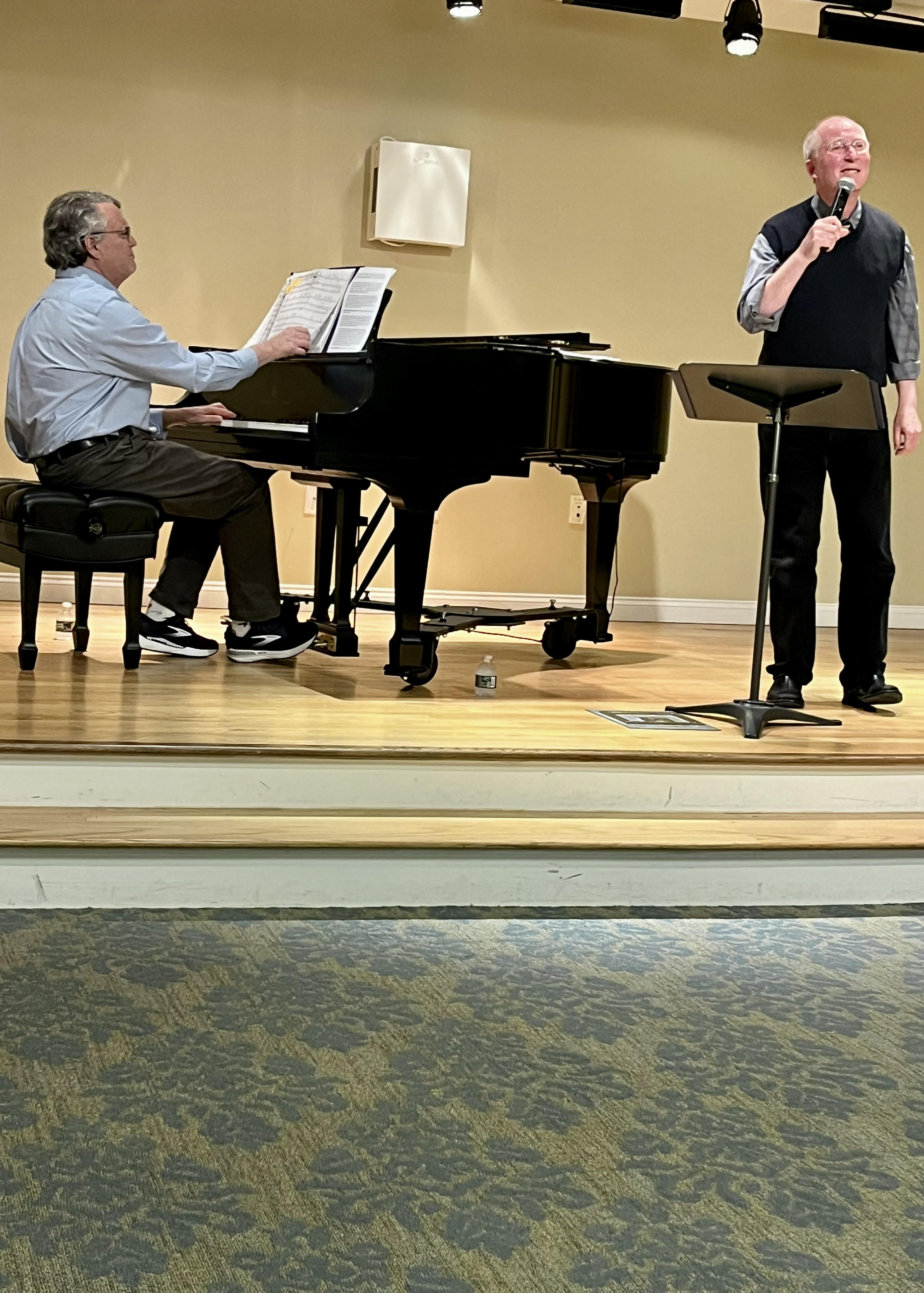
Keeping warm indoors at our retirement place, we enjoyed Joe Reid’s latest trio, with guest vocalist Mikayla Shirley from Berklee College of Music.
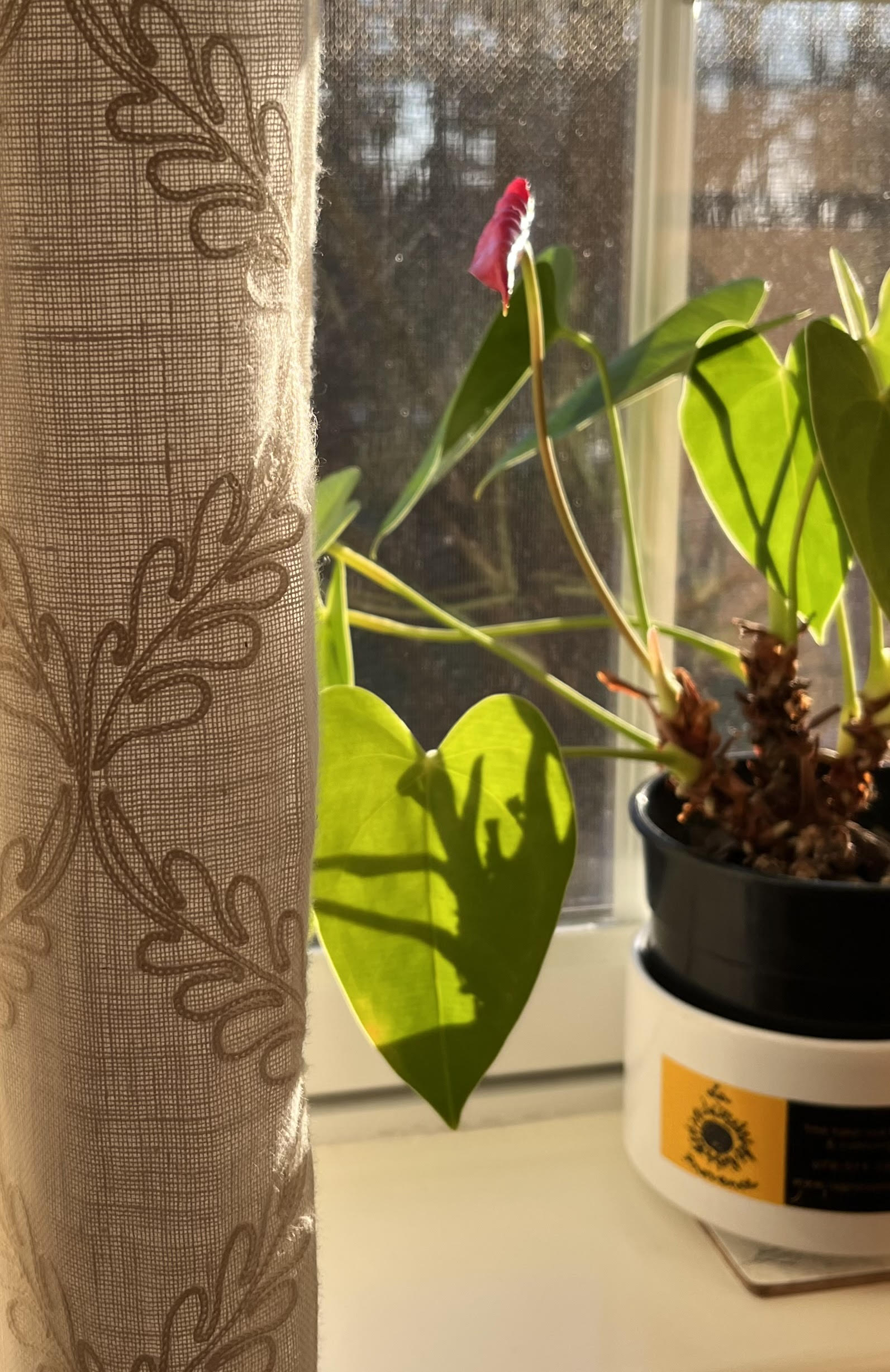
My anthurium in the sun is next.
The rest of the photos are from several local art displays.
They include an outsize but otherwise lifelike banana peel by Mary Kenny, a marble bird by Stephen Wetzel, and “Pollen,” a piece of fabric art by Rebecca V. Mann expressing her preoccupation with the fragility of nature. These are followed by Felix Beaudry’s woven head. Resting.
The last photos are part of an extensive sidewalk exhibit in which works by artists of all ages were somehow laminated and glued down so people could walk on them. You can see my shoes. The first, of trees, is by Jack Confrey, a young guy you’ll meet meet if you go to the website, here.
Then there’s a child’s art and a QR code for anyone interested.


Posted in Uncategorized, tagged drink, endangered, greece, roots, sahlep, salep, Turkey, wild orchid on April 13, 2025| 4 Comments »

Photo: Kalliopi Stara.
Powdered orchid bulbs are the main ingredient of the popular Middle Eastern drink called salep, or sahlep. But the orchids are endangered.
One of my sources for this blog is the international radio show called The World. It posts recordings of episodes and sometimes transcripts. I like to have a transcript, and if there isn’t one, I try to see if I can find the story elsewhere. Durrie Bouscaren at The World got me interested in today’s topic on some endangered orchids, and then I was able to find a 2023 Atlas Obscura piece to use as text.
Here is Vittoria Traverso writing about the Turkish beverage called salep at Atlas Obscura.
“For Kerem Özcan, a data scientist based in Amsterdam, winters in his home country of Turkey would not have been the same without salep, a hot drink made of crushed orchid roots, milk, and sugar. On ski trips to the mountains of Uludağ, ‘we’d always end the cold and tiring day with a salep,’ he says. Özcan, who left Turkey in 2013, is one of the many Turkish people living abroad who thirsts for salep. ‘I tried to quench it with eggnog a couple times, but it didn’t cut it for me,’ he says.
“Much like eggnog, salep is a staple winter drink, and it is enjoyed throughout Turkey, Greece, and parts of the Middle East. Part comfort food and part medicine, it is a popular folk remedy for everything from stomachache to impotence.
“In recent years, increased interest towards plant-based drinks and traditional foods has fueled a surge in demand for salep. But the craze is taking a toll on the drink’s key ingredient.
It can take as many as 13 orchid bulbs to make one cup.
“Currently, wild orchids are considered endangered in many parts of Greece and Turkey due to overharvesting, drought, and habitat degradation.
“It’s hard to say when and where salep originated but historical evidence suggests ancient Greeks and Romans consumed a similar beverage. Özge Samanci, head of the Gastronomy and Culinary Arts Department at Özyeğin University in Istanbul, explains that the Greek doctor Dioscorides described the medical properties of orchid roots in his first-century treatise De materia medica. Roman doctors also used bulbs to prepare a beverage called satyrion, a Latin word for orchid, as an aphrodisiac.
“During the Ottoman Empire, salep was a medicinal staple. ‘There is evidence that salep was consumed in palaces of the Ottoman Empire as early as the 15th century,’ Samanci explains. …
A journal entry by Jane Austen in 1826 describes the taste of salop as ‘nectar.’
“ ‘Tea is great, coffee greater; chocolate, properly made, is for epicures; but these are thin and characterless compared with the salop swallowed in 1826,’ Austen wrote.
“While salep is no longer a part of English daily life, it is still considered a winter must in Turkey. … Until recent times, salep was considered a special treat. ‘Drinking salep is usually a moment of luxury,’ Samenci says. ‘It’s not something you drink four times a day like coffee.’ …
“Interest in traditional and more wholesome foods is putting pressure on salep’s key ingredient. Orchid powder is made from the bulbs from the Orchis, Ophrys, and Dactylorhiza which include about 109 species of orchids mostly native to North Africa and Eurasia. In order to make salep powder, also known as ‘white gold’ for its market value, foragers dig orchid plants out of the soil with small shovels. Then, the round roots of each plant are harvested, cleaned, boiled, dried, and crushed into powder. This orchid powder can sell for up to 80 US dollars per pound.
“A few farms do cultivate orchids for salep, but it’s a difficult and expensive endeavor. The vast majority are still foraged in the wild. Most wild orchids used to make salep are listed as protected species under the Convention on International Trade in Endangered Species (CITES) which regulates the trade of endangered animals and plants. In theory, protected orchid plants should be traded across national borders only with documentation certifying that they have been harvested or cultivated sustainably. However, orchids are one of the most sought-after species on online platforms that sell illegally sourced wildlife. …
“Susanne Masters, an ethnobotanist at Naturalis Biodiversity Center in the Netherlands [advises] people to avoid consuming salep at all to avoid further endangering wild orchids. ‘To consume salep sustainably you would need to be growing your own, or personally know and trust a person who is a custodian of a landscape in which the orchids used for salep are growing.’ ”
The long, fascinating article is at Atlas Obscura, here.
Durrie Bouscaren first got me interested with her update at Public Radio International’s The World. You can listen to her story here. No paywall for either site.
Posted in Uncategorized, tagged controversy, museum of failure, san francisco on April 12, 2025| 4 Comments »

Photo: Matt Stromberg/Hyperallergic.
Ford Edsel at the original Museum of Failure in 2018.
Years ago, my husband and I went to see a Harvard student performance of a rarely performed Cole Porter musical, Nymph Errant. The thing we remember most is that the director was outside handing out flyers disavowing his participation. Someone else had made decisions about the final production, and he wanted the audience to know he disagreed — violently!
I’m reminded of that incident by the current kerflufle over something called the Museum of Failure. The .com version, supposedly the original, is at war with a .net version and its recent exhibition.
Lily Janiak at the San Francisco Chroniclewrites, “Will the real Museum of Failure please stand up?
“Earlier this month, Time Out reported that a popup exhibition of some of history’s most spectacular bad ideas [would] tour next month, with a San Francisco stint at the space formerly occupied by Madame Tussauds in Fisherman’s Wharf.
“The website museumoffailure.net likewise teased the exhibition. But a different website called museumoffailure.com — which had the same logo and branding and much of the same content — made no mention of it.
“Turns out the discrepancy isn’t a marketing blunder. It’s an international copyright dispute.
“When the Chronicle contacted Samuel West, the proprietor of museumoffailure.com and the creator of the museum’s concept, he disavowed the San Francisco stop.
“ ‘This is a surprise to me,’ he wrote via email. … He later claimed on a video call that it was ‘fraudulent.’
“David Perry, a spokesperson for SEE Global Entertainment Inc., which is producing the Fisherman’s Wharf event, rebutted West’s claims.
“ ‘SEE Global owns the international trademark for and all the assets in the Museum of Failure: period end stop,’ Perry wrote via email. ‘In years past, we have welcomed him to all iterations of the Museum of Failure as a valued cheerleader with all due credit given.’
“West, who’s based in Malaga, Spain, and has a Ph.D. in organizational psychology, studied play in the workplace, including how improv theater can improve a team’s creativity. He was interested in destigmatizing failure but thought, ‘It’s too interesting to be a TED Talk. I need a new form.’
“That new form, the Museum of Failure, premiered in 2017 in Sweden, where he was living at the time. A hit, it went on to tour to Taiwan, France, Canada and beyond. …
“For an item on the Fyre Festival, West made a replica of the real-life ‘Fyre Festival luxury lunch — a pathetic-looking cheese sandwich in a Styrofoam box — out of plastic. For a piece on Theranos, he made replicas of ‘little tiny vials’ of blood, putting them next to test tubes for scale. (The blood was ‘Halloween vampire blood,’ he said.)
“One of the museum’s fans was Martin Biallas, CEO of SEE Global Entertainment Inc., whose previous exhibition credits include the Disgusting Food Museum — which West also co-created. …
“In 2017, Biallas and West signed an agreement under California jurisdiction that granted SEE ‘exclusive license’ to the museum’s ‘assets, artifacts, memorabilia, content and exhibit and merchandising items and the descriptions thereof’ for a period of five years, with two options to renew. West could continue to stage his own popup exhibitions so long as they were either more than 200 miles or more than 12 months away from Biallas’. The agreement also ensured West would receive 20% of all gross revenues.
“But on Tuesday, Feb. 25 [this year], West told the Chronicle that not only has Biallas not renewed the license; Biallas hasn’t given him his 20%. …
“In 2023, West hired a lawyer to inform Biallas he was in breach of contract and demand payment. The letter goes on to note that Biallas successfully applied to the U.S. Patent and Trademark Office for the word mark ‘Museum of Failure.’ Perry supplied the Chronicle with proof of trademark ownership.
“ ‘At the time of the application, your client knew that it did not own the rights to Museum of Failure,’ the letter states.
“Biallas’ lawyer responded by alleging that West knew about the trademark application. The letter also asserts that because West had been embroiled in a prior Museum of Failure ownership dispute, with Niklas and Jenny Madsen of Swedish design company Superlab, West might not have legal standing. …
“Biallas has also been involved in other legal disputes about exhibition copyright. He was a plaintiff in a lawsuit alleging that two of his former employees stole imagery from his ‘Michelangelo’s Sistine Chapel: The Exhibition’ and toured it in an exhibition called ‘Michelangelo: A Different View’ under the auspices of German company Exhibition 4 You. That lawsuit was settled in 2021.
“In 2022, the Louvre sued Biallas’ SEE Global, alleging ‘misappropriation of the Louvre’s reputation and intellectual property through a venture called ‘ “Louvre Fantastique.” ‘ … That lawsuit was settled.
“Last year, SEE Global sued the patent attorney it had hired to secure Louvre permissions, alleging negligence. In a response and counterclaim, attorney David D’Zurilla and his firm Schwegman Lundberg & Woessner, P.A. wrote that they ‘were retained specifically to prosecute a trademark and they successfully obtained the trademark.’ That case will head to trial in July if a settlement isn’t reached.”
More at the San Francisco Chronicle via MSN, here. The art magazine Hyperallergic wrote a review of an exhibit by the .com version of the Museum of Failure, here. Sounds like there’s more than enough failure to go around.
Posted in Uncategorized, tagged Brit, community, craft, hobbyist, magazine, model trains, war games on April 11, 2025| 6 Comments »

Photo: Autodesk Instructables.
Building a ship in a bottle. “Hobbies are about doing things: planning, painting, building, contributing an article to your favorite magazine,” writes Alexander Poots at UnHerd.
Niche print magazines seem to survive even after everyone else has gone online. According to an article at UnHerd, that’s especially true of magazines about hobbies.
Alexander Poots writes, “Phil Parker is the editor of Garden Rail magazine. He’s a passionate man — especially on the subject of steam engines. ‘The steam engine is the nearest anybody has come to building a living thing,’ he says. … He talks about the joy of seeing them in action. The smells, the hiss and chuff, the weight of them on the line. It’s a joy that many people want to recreate at home. …
“Layouts in back gardens across Britain range from tiny loops of track to colossal, intricate landscapes. Parker knows a guy whose line crosses Lilliputian bridges and snakes through mountains 10 feet tall. Layouts are much more than models, he says. They really are railways, albeit on a smaller scale than usual. A keen sense of ownership is important: ‘these are their railway lines.’
“Ardent hobbyists are often viewed as eccentric. I think they might be the only normal people left. As a rule, they are active and engaged. They are more interested in making than consuming. They dream and they do. A passive appreciation for steam engines or military history or orchids isn’t enough. Hobbyists want to take part.
“ ‘I grew up fascinated by history, and wargaming helps you make that interest interactive,’ says Daniel Faulconbridge, editor of Wargames Illustrated. ‘It’s not good enough for me that I just read about the Battle of Hastings, I want to collect the figures that represent the troops that fought in the battle, and then paint them and play a game with them.’ …
“Magazines like Garden Rail and Wargames Illustrated are at the heart of the hobby world. The variety is extraordinary. Hornby Magazine, Airfix Model World, The Orchid Review, Lute News. Monthly publications dedicated to remote control aircraft and koi keeping. Some hobbies have broader appeal than others — the UK has enough carp fishermen to support both Total Carp and CARPology. But even the more niche titles have a readership large enough to keep them viable in a brutal publishing environment. …
“The physical hobby magazine has in fact proved surprisingly durable. Both Faulconbridge and Parker acknowledge that their readers tend to be older, and prefer print media because it’s what they grew up with. There’s also a practical aspect: if you’re following a guide to painting a model Landsknecht, it’s easier to have a paper copy open on the table than faff about with a phone or tablet. …
“Again and again when talking to Parker and Faulconbridge, I am struck by the emphasis on the physical. Hobbies are about doing things: planning, painting, building, contributing an article to your favorite magazine. ‘You come into a hobby and you’re not being encouraged to binge-watch something on the tele — which is a very, very passive activity — you’re being encouraged to have a go at something,’ Parker observes. …
“Hanging out with like-minded people is the best way to have a go. Community is a word that comes up a lot in my chats with the editors. … Parker emphasizes that railway modeling exhibitions are as much social gatherings as they are celebrations of the hobby. As anyone who has worked an allotment knows, shared enthusiasms have a way of collapsing social barriers. Parker remembers one exhibition where he sat around a pub table with ‘a physics professor, a guy who ran his own bus company, a Liberal Democrat councillor, a theatre manager, a bishop and two lawyers. Our common interest was model railways. You find yourself meeting a really wide variety of people.’
“Still, it’s a mistake to think that these groups are purely focused on the hobby itself. Wargames and model railways are often the starting point for other things. Friendships are made, money is raised for charity, and support networks are formed. ‘Men are particularly bad at chatting,’ says Parker. ‘But they will chat about steam engines and they will chat about garden railways, and that chat can then move on to more valuable topics. We run the largest model railway forum in the world, and tucked away on it is a prostate cancer discussion group.’ …
“Hobby magazines survive because they are outgrowths of these communities. Most articles are written by hobbyists, in what Faulconbridge describes as ‘a fanzine approach.’ Neither the editors nor the contributors are in it for the money. They just love it. In a recent thread on X, Stone Age Herbalist observed that the continued success of the hobby magazine can be attributed to a particularly British — and more broadly Northern European — genius for voluntary association. Whether centered around giant vegetables or antique fountain pens, little communities bubble up everywhere. …
“A link between hobbies and productive industry can also be found in the world of railway modeling. Parker tells me that, ‘I’ve just reviewed a loco from a company based in Doncaster, Roundhouse Engineering. You’d be amazed, we do still build steam locomotives in this country! It’s a proper Rolls Royce engine model, beautifully constructed. They do pretty much everything in-house.’ This pride and attention to detail is at the root of what all hobbyists are up to. …
“Hobby magazines are heartening advertisements for that reward. Planning, making, getting things wrong, having a laugh about it.”
More at UnHerd, here.
Are bloggers hobbyists? We seem to check a lot of the boxes in the definition.
Posted in Uncategorized, tagged african american, Altadena, artist community, black, california, legacy, wildfire on April 10, 2025| 6 Comments »

Photo: Magdalena Wosinska for the New York Times.
Ian White, an artist, against a burned house across from the park named for his celebrated father, the painter Charles White.
The outside world never knew much about the generations of Black artists enriching life in Altadena — not until after the town burned down.
As Sam Lubell wrote in February at the New York Times, “Before the Eaton fire raced across Altadena, destroying more than 9,000 of its buildings, many, even in nearby Los Angeles, barely knew of the place’s existence. This sleepy 42,000-person hamlet hugging the glowing foothills of the San Gabriel Mountains is not part of that city but an unincorporated community of Los Angeles County, and just far enough off the beaten track to blissfully avoid notice.
“Once typified by its bucolic quirkiness, tight-knit neighborhoods and generations-old churches and businesses, Altadena now consists of row after row of twisted, charred building remains, scorched car chassis, blinking or broken stoplights and the occasional khaki National Guard Humvee. The future, for now, is filled with toxic cleanup, insurance adjustments and conflicting visions for rebuilding.
“Yet the past has gained newfound prominence. With so much gone, Altadena’s histories are being unearthed, by residents, scholars and preservationists who say they may hold a key to making this a special place once again, and provide anchors for those weighing whether to stay.
“One of the most profound of Altadena’s legacies — its spectacular story of Black creative culture — had been buried not only under its seclusion, but also under layers of racial and institutional apathy, the loose accounting of informal memory, and the absence of formal plaques and other preservation markers. The fire has spurred calls for a more rigorous approach to remembrance.
“ ‘Sometimes it takes a tragedy for people to mark history,’ said Brandon Lamar, president of the N.A.A.C.P.’s Pasadena branch, whose own home was destroyed, as was his school, his grandparents’ home and their church. But that destruction, he noted, ‘does not mean that we can’t create public memories in spaces now, so that people can remember this information for generations to come.’
“Starting in the 1950s and ’60s, the west side of Altadena (and parts of neighboring northwest Pasadena not bulldozed for the 210 and 134 Freeways) drew middle-class Black families eager to buy homes.
“Many came because the redlining — discriminatory lending by banks — was less severe here, and some of the schools had been integrated comparatively early. The area became a magnet not just for Black teachers and social workers but also for Black artists from around the country, drawn to its affordability, inventive vibe, gorgeous mountain backdrop and general spirit of permissiveness.
“ ‘It had this energy of bohemian California,’ said Solomon Salim Moore, assistant curator of collections at the Benton Museum of Art at Pomona College. ‘You could have a little less scrutiny and a little more room to do your projects.’
“On Feb. 22, as part the Frieze Los Angeles art fair, a discussion called ‘Land Memories’ will feature artists’ recollections of this unique legacy. The talk will be co-hosted by the Black Trustee Alliance for Art Museums, which will also share oral histories recorded from Altadena artists and residents, and collect new histories.
“Moore, who is also an artist, grew up in Altadena and said that its nonconformist spirit has endured to the present, even as prices have climbed and the Black population has fallen, according to the U.C.L.A. Bunche Center for African American Studies, to about 18 percent from 43 percent in 1980. Artists here, he said, loved that they could set up informal studios or even family compounds, or that they could enjoy little freedoms like hosting parties without friends worrying about permit parking.
“Sometimes creative people need to step away because you need to get out of the light to see,” said Ian White, an artist, teacher and the son of Charles White, the renowned painter and printmaker whose haunting depictions of African Americans, their struggles and dignity, inspired generations of artists. He spent the last 20 years of his life in Altadena and is buried at the community’s Mountain View Cemetery. Ian lives in a house next to his father’s modest home (which he also owns) in the Meadows, a district along Altadena’s west edge that in the 1950s and ’60s became one of the first here to integrate. Virtually all of the Meadows survived the fire.
“Also living west of Lake Avenue (then the unofficial dividing line between white Altadena and Black Altadena) was John Outterbridge, the noted assemblage artist and longtime director of the Watts Towers Arts Center. His home on Fair Oaks Avenue was destroyed, along with much of his archive and family memorabilia, according to his daughter, Tami. The famed enamel artist Curtis Tann lived within walking distance, while the prolific sculptor Nathaniel Bustion, known as Sonny, lived near White in the Meadows. Betye Saar, 98, known for repurposing everyday objects into mystical collages, grew up in a home on northwest Pasadena’s Pepper Street, just blocks from Altadena’s west side.
Sidney Poitier, a good friend of White’s from New York, and the first Black actor to win an Academy Award, rented a home in west Altadena before moving to Beverly Hills.
“Ivan Dixon, the actor and trailblazing director, lived on Marengo Avenue, and the science fiction writer Octavia Butler on Morada Place.
“Later generations of Black artists continued to thrive here, including Mark Steven Greenfield, Yvonne Cole Meo, Senga Nengudi and Michael Chukes, and dozens of others holding down day jobs and creating whenever they could in this secret Eden.
“Charles White, already an established figure when he moved from New York in 1959 for health reasons — he had respiratory problems and was advised to live in a milder climate — would become the glue holding this arts community together. His home and studio, still standing, was a gathering place, with many artists competing for the honor of driving White to or from one place or another. (He didn’t drive.)
“Ian still refers to Dixon, Poitier and Charles’s good friend Harry Belafonte as his ‘fictive uncles.’ He recalled how his father set up the sculptor Richmond Barthé, a cornerstone of the Harlem Renaissance, with an apartment, and how his mother, a social worker named Frances Barrett, was his caregiver until the end.”
More at the Times, here.
Posted in Uncategorized, tagged books, cia, Cold War, communism, literature, Poland, reading, smuggle on April 9, 2025| 2 Comments »

Illustration: Eleanor Shakespeare/Bridgeman Images/The Guardian.
Of course, it couldn’t happen here, right? As we children always said during the time of the Cold War when someone opposed us, “It’s a free country!” And if we had applied that to reading material, we would have known we could read whatever we wanted. No need to smuggle anything in.
Well, what would that be like? In an edited extract from Charlie English’s book about Poland, The Best Kept Secret of the Cold War, the Guardian gives us an idea.
“The volume’s glossy dust jacket shows a 1970s computer room, where high priests of the information age, dressed in kipper ties and flares, tap instructions into the terminals of some ancient mainframe. The only words on the front read ‘Master Operating Station,’ ‘Subsidiary Operating Station’ and ‘Free Standing Display.’ Is any publication less appetizing than an out-of-date technical manual?
“Turn inside, however, and the book reveals a secret. It isn’t a computer manual at all, but a Polish language edition of Nineteen Eighty-Four, George Orwell’s famous anti-totalitarian novel, which was banned for decades by communist censors in the eastern bloc.
“This copy lives now in the library of Warsaw University, but for much of the cold war it belonged to the Polish writer and dissident Teresa Bogucka. It was Teresa’s father, the art critic Janusz Bogucki, who first brought it to Poland. In 1957, during a window of liberalization that opened after Stalin’s death, Janusz picked up the Orwell translation from a Polish bookshop in Paris, smuggled it back through the border and gave it to his daughter. Teresa was only 10 or 11 years old then, but she was a precocious reader, and recognized the ways in which communist Poland mirrored Orwell’s fictional dystopian state. …
“Years later, in 1976, when Bogucka joined the emerging Polish opposition movement, she decided to create a library of books that had bypassed the state censor, and donated her own small collection, including this Nineteen Eighty-Four. The SB security service, Poland’s KGB, kept continual watch on her, eavesdropping on her conversations, arresting her and searching her apartment, so she asked neighbors to store the forbidden books. Much of the time, though, they would be circulating among readers, since this would be a ‘Flying Library,’ which rarely touched the ground.
“Bogucka’s system of covert lending ran through a network of coordinators, each of whom was responsible for their own tight group of readers. She sorted the books into categories – politics, economics, history, literature – and divided them into packages of 10, before allocating each coordinator a particular day to pick up their parcel, which they carried away in a rucksack. The coordinator would drop the books back the following month at a different address, before picking up a new set.
“The demand for Bogucka’s books was such that soon she needed more, and these could only come from the west. Activist friends passed word to London, where émigré publishers arranged shipments of 30 or 40 volumes at a time, smuggling them through the iron curtain aboard the sleeper trains that shuttled back and forth between Paris and Moscow, stopping in Poland along the way. By 1978, Teresa Bogucka’s Flying Library had a stock of 500 prohibited titles.
“How many people read her copy of Orwell’s book in those crucial cold war years? Hundreds, probably thousands. And this was just one of millions of titles that arrived illegally in Poland at that time. As well as via trains, books arrived by every possible conveyance: aboard yachts; in secret compartments built into vans and trucks; by balloon; in the post. Mini-editions were slipped into the sheet music of touring musicians, or packed into food tins or Tampax boxes. In one instance, a copy of Aleksandr Solzhenitsyn’s The Gulag Archipelago was carried on a flight to Warsaw hidden in a baby’s nappy.
“What some in the east suspected, but very few knew for sure, was that the uncensored literature flooding the country wasn’t reaching Poles by chance. It was sent as part of a decades-long US intelligence operation, known in Washington as the ‘CIA book program,’ designed, in the words of the program’s leader, George Minden, to assault the eastern bloc with an ‘offensive of free, honest thinking.’ Minden believed that ‘truth is contagious,’ and if they could only deliver it to the oppressed peoples of the Soviet zone, it was certain to have an effect.
“From today’s vantage point, when disinformation threatens western liberal democracy as never before, and censorship and book bans are once again turning schools and libraries into ideological battlegrounds, the CIA literary programs appear almost quaint.
Although they had political goals, they must rank among the most highbrow of psychological warfare operations.
“Along with copies of the Manchester Guardian Weekly and the New York Review of Books, the CIA sent works by blacklisted authors such as Boris Pasternak, Czesław Miłosz and Joseph Brodsky, anti-totalitarian writings by Hannah Arendt and Albert Camus, literary fiction from Philip Roth and Kurt Vonnegut, writing advice from Virginia Woolf, the plays of Václav Havel and Bertolt Brecht, and the spy thrillers of John le Carré.
“Later, as well as smuggling books, the CIA would fund and ship presses and printing equipment into Poland, so that the banned titles could be reproduced in huge quantities by underground printers in situ. Few individuals were more central to these latter operations than the dissident publisher Mirosław Chojecki, known to the CIA by the cryptonym QRGUIDE.
“On a Tuesday evening in March 1980, the police came to arrest Chojecki for the 43rd time.”
Exciting stuff! Read more at the Guardian, here. No firewall.

Posted in Uncategorized, tagged altarpiece, El Greco, marzipan, monastery, nuns, Prado, reunite, spain on April 8, 2025| 3 Comments »

Photo: Museo Nacional del Prado, “El Greco. Santo Domingo el Antiguo.”
El Greco’s iconic altarpieces are reunited for the first time in nearly 200 years.
It’s impressive that museums not only preserve the wonders of the past but keep finding pieces of the past and reintroducing them. Consider how the Prado in Spain is currently uniting dispersed panels of El Greco’s first major commission.
Adam Schrader writes at Artnet that an exhibit at Spain’s Prado Museum “brings together the works the Greek painter Doménikos Theotokópoulos, better known as El Greco, completed for the Monastery of Santo Domingo el Antiguo in his first major commission.
“The exhibit reunites works that El Greco, a master of the Spanish Renaissance, made for the church, and marks the first time they have been brought together since their dispersion, thanks to to the loan of the main altarpiece, ‘The Assumption,’ by the Art Institute of Chicago which has owned it since 1906.
“In ‘The Assumption,’ the Virgin Mary ascends to heaven on a crescent moon over Jesus’s open tomb while aided by a group of angels. It has a companion, made for the attic of the altarpiece, titled ‘The Trinity,’ that visually connects above it. …
“In the main altarpiece, ‘The Assumption’ is flanked by four other canvases which depict John the Baptist and St. Bernard on the left side and John the Evangelist and St. Benedict on the right side, which were meant to act as intermediaries between the earthly realm and the divine. Those works are housed at the monastery and in private collections.
“Other works El Greco made for the altarpieces include a depiction of the ‘Adoration of the Shepherds,’ a scene from the nativity; the ‘Resurrection’; and ‘The Holy Face,’ an iconographic depiction of [a legend] in which a woman obtained the ‘true image’ of Jesus from a cloth he had wiped his face on. …
“For the works that are housed at the monastery, a team from the Prado Museum had to convince the nuns to let them borrow the paintings.
” ‘It was difficult,’ Leticia Ruiz, the head of the Prado’s Spanish Renaissance painting collection, told the newspaper. She added that the monastery also lives off of its visitors and from the sale of ‘delicious marzipans’ that they make. So, the museum agreed to restore one of its pieces by the painter Eugenio Cajés in exchange for the loan.
“Funnily, the Prado Museum’s exhibit comes several years after France’s Louvre Museum tried, and failed, to borrow three works by El Greco from them. …
“El Greco was first documented in Spain in June 1577 and quickly received the commission for the new monastery, which was designed and jointly paid for by a powerful dean of the cathedral named Diego de Castilla and a Portuguese woman named Doña María de Silva. According to the museum, the two benefactors were buried at the monastery. The Greek artist was appointed to make the altarpieces at the suggestion of Diego’s son Luis de Castilla, who had met him in Rome a few years earlier. He completed it in 1579.
“ ‘The result could not have been more dazzling. He revealed himself as a perfectly developed artist, with a creative maturity that linked him to some of the best painters of the Italian Renaissance,’ the Prado Museum said on its website.
“ ‘El Greco. Santo Domingo el Antiguo‘ is on view at Museo Nacional del Prado, Madrid, through June 15, 2025.”
Some of El Greco’s works look strikingly modern, and I’m always suprised that they were painted in the 16th century — and especially that patrons back then could appreciate them.
Here’s more from Wikipedia: “El Greco was born in the Kingdom of Candia (modern Crete), which was at that time part of the Republic of Venice, Italy, and the center of Post-Byzantine art. He trained and became a master within that tradition before traveling at age 26 to Venice, as other Greek artists had done.
“In 1570, he moved to Rome, where he opened a workshop and executed a series of works. During his stay in Italy, El Greco enriched his style with elements of Mannerism and of the Venetian Renaissance taken from a number of great artists of the time, notably Tintoretto and Titian.
“In 1577, he moved to Toledo, Spain, where he lived and worked until his death. In Toledo, El Greco received several major commissions and produced his best-known paintings, such as View of Toledo and Opening of the Fifth Seal. El Greco’s dramatic and expressionistic style was met with puzzlement by his contemporaries but found appreciation by the 20th century.”
More at Artnet, here.
Posted in Uncategorized, tagged efficient, japan, railway, Tokyo, transit, transportation on April 7, 2025| 2 Comments »

Photo: Jeremy Siegel/The World.
A Tokyo Metro train during rush hour.
Tokyo seems to have found better ways to get around than by car. Public transit can get crowded, of course — it would have to in a city of that size — but many thoughtful touches make it all run smoothly, with less stress for the traveler. And the travelers contribute with good transit behavior.
As Jeremy Siegel reports at Public Radio International’s The World, “At Tokyo’s Ebisu train station, the first thing passengers hear upon arrival is the theme music from the 1940s noir film, The Third Man.
“Every train stop in the city has distinctive jingles, subtly and efficiently letting people know where they are and when to get off.
“In Tokyo, every little way you can make things run more smoothly counts, according to Tomohiko Taniguchi, a former rail executive and adviser to former Prime Minister Shinzo Abe.
“It includes individual station songs; having train employees literally stuff passengers into train cars during rush hour; and enforcing a unique set of unspoken rules for how passengers should act.
“ ‘One of the first things you might have noticed is that people are dead silent in busy trains and crowded trains,’ he said. ‘It is to make [as little] annoyance as possible.’
“Despite a population of 37 million, there’s relatively little congestion and pollution here since the majority of its residents rely on public transit rather than cars. But while Tokyo’s mass transportation system may serve as a global success story, it may not be replicable, because its organic growth over the decades has fostered a unique culture of transit.
“Taniguchi said that he has been taking the train his whole life. After decades of observing Tokyo’s system, he said, he’s come to the conclusion that in many ways, life in this city revolves around trains. …
“The busiest train station of all, with 3.5 million people passing through every day, is Shinjuku station where Hari — who only provided her first name — met a friend on a recent Tuesday evening. Hari said that she [loves] Japanese transit. Despite the fact that she can drive, she hasn’t since moving to Tokyo.
“ ‘The train is just more convenient,’ she said. …
“Japan’s culture of transit can be traced back to the late 1800s, according to Fumihiro Araki, deputy director of The Railway Museum, which houses dozens of old trolleys, rail cars and bullet trains.
“ ‘When Japan moved from a shogun government [with leaders who were emperor-appointed] to a democratic government in the late 19th century, it was decided that railways were absolutely necessary,’ he said.
“The idea was to keep up with Western countries, many of which were growing — and railways played a big part. But after World War II, the US and European countries began throwing money at highways. Japan, which was rebuilding from the war’s destruction, doubled down on trains.
“The country made massive investments in transit, which coincided with a population boom in Tokyo that allowed the train system to grow organically alongside the city. Additionally, they felt it was easier to build railways because of the mountainous terrain, and because the country itself isn’t as spread out as, say, the US. …
“ ‘In other countries, a railway is just a railway. It’s just a place to ride on the train,’ said Shunzo Miyake, who heads up international affairs at the country’s largest railway company, JR East.
“Miyake, who has visited 40 different countries, said that he believes that the difference has to do with how Tokyo rail operators compete for passengers. They even develop real estate around stations to turn them into economic hubs — places where people want to stay after they get off the train.
“In fact, busy stations like Shinjuku and Shibuya feel like city centers in and of themselves. People can spend an entire day finding hundreds of restaurants to dine at, places to shop at and bars to drink at, virtually without ever having to leave the station. …
“Miyake said that developing Tokyo’s system, and ingraining transit into the city’s culture, has taken time and money. But for companies like JR East — and the many residents who don’t have to contend with traffic — it’s paid off.”
More at The World, here. I highly recommend this show, which I listen to online at GBH.org. It offers voices from around the world that you rarely hear on US media — and often a more positive perspective.