Feeds:
Posts
Comments

Posts Tagged ‘abolition’

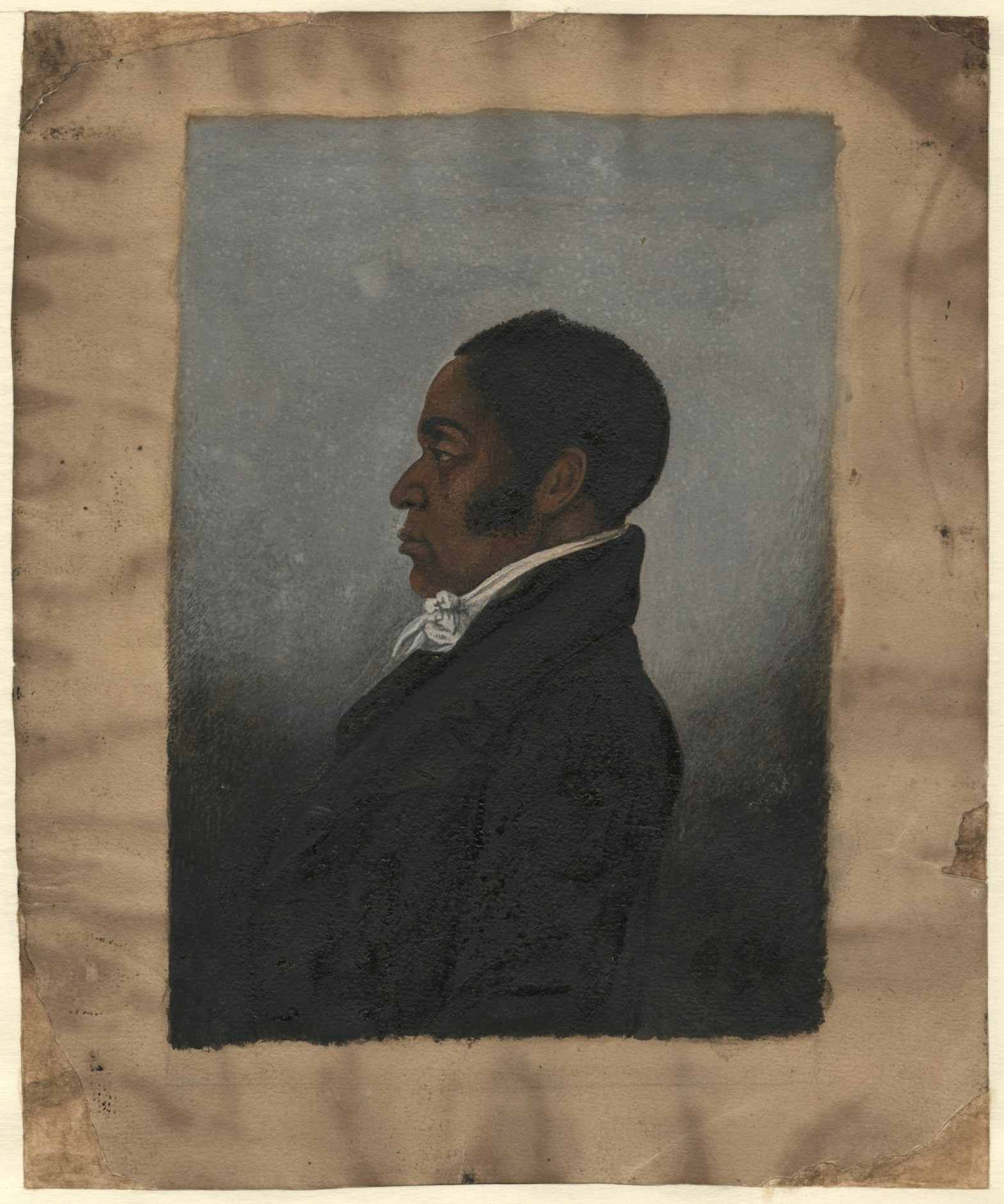
Photo: Artist unknown/Historical Society of Pennsylvania.
Portrait of James Forten (c. 1834), oil on paper, from the Leon Gardiner collection of American Negro Historical Society records.

The US likes to designate a month for neglected groups to be honored, which is OK, I guess, but accomplished women are interesting even when it isn’t Women’s History Month, as are people who identify as Latino/a when it isn’t National Hispanic Heritage Month or African Americans when it isn’t Black History Month in February. I like to post the stories year round. So it’s August, and here’s a bit of Black history.

At Hyperallergic, Xenobia Bailey offers research on 19th century fiber craftsman James Forten.

Bailey begins, “That I, a quiet, radical, African-American fiber artist, raised in a nautical lakeshore Black community in the Pacific Northwest, would find the book A Gentleman of Color: The Life of James Forten by Julie Winch, about a free-born, quiet, radical, elite African-American fiber craftsman, living in North America from 1766 to 1842 — the most prosperous and philanthropic sailmaker, born in Philadelphia during the turbulent period of the Revolutionary War — was truly a cosmic alignment. … I saw this book steps from the Schomburg Center for Research in Black Culture in Harlem, on the table of a street vendor and book dealer, Brother Mustafa. …

“James Forten’s miraculous life, and its role in shaping a prominent African-American history, is one of my greatest inspirations. Unknown to me, I opened my fiber arts studio in Philadelphia blocks away from where Forten’s sailmaking loft was located at Penn’s Landing on the Delaware River. It was my research into Forten’s life that bridged my wild, aquatic childhood, along Seattle’s Lake Washington, with my present fiber arts practice, which focuses on the evolution of African-American domestic textiles before and after emancipation.

“Looking back, it was fulfilling growing up in a lakeside ‘redlined’ Black community in Seattle’s Central District, with a pack of rambunctious children from the neighborhood. We played in the ponds and wooded area around our homes, venturing through Washington Park’s Arboretum to a now gentrified and forgotten area of natural bodies of shifting sand and clay mounds. They would emerge and disappear with the tides that created patches of land we claimed and named as our islands.

“We’d play pirate captains, patterning ourselves on the rowdy Seafair Pirates who opened the citywide Seafair summer festival of parades, hydroplane boat races, and carnivals every year. We built three-walled log cabins with open roofs and gathered floating logs for rafts from the fallen trunks, broken roots, branches, mud, and stones, and as our furniture we used the beautiful, organically sculpted driftwood that was scattered along the edge of the lake.

“Like James Forten’s community, ours was an unfamiliar story of the African-American experience. Our playground was the shoreline, with a backdrop of flying sea hawks, seagulls, rowboats, motorboats, and houseboats. And, like Forten, we were mesmerized by the majestic sails on the sailboats. …

“As with young James Forten in the mid-1700s, we too had the inquisitiveness and freedom of imagination of childhood — characteristics that continue to serve us as adults. We were aware of the community activism, cultural revolutions, and Black Power Movement happenings of the 1960s. In our imaginations, this was our private utopia. We’d make believe whatever we wanted. …

“James Forten and my siblings and I also share the experience of having a father who was an intuitive and knowledgeable maker. The senior Forten was a master sailmaker who repaired worn sails and prepared raw materials for sewing the strong textiles into tents for surveyors and sails for large-sail ships. …

“My father was a self-taught manipulator of electrical wiring. He purchased an abandoned van for about $100 and a broken floor buffer for $25 from a local junkyard and rewired them, which allowed him to start our family’s janitorial business.  This upcycling practice was common in our underserved yet sustainable community in an otherwise booming industrial Seattle. 

“Mrs. Forten, a ‘fierce’ homemaking mother, refused to give birth to children until she was able to buy her freedom at age 42; this was followed by her birthing two free, healthy children whom she groomed into outstanding adults. One of my fierce homemaking mother’s many gifts was enriching our home with vintage crocheted Afghans and quilts that she would purchase from the Goodwill Store and then elegantly drape and tuck the handmade textiles over our secondhand furniture.

“Forten was an abolitionist. His benevolent service to both free and enslaved Black people during the unsettling times of the Fugitive Slave Acts (passed by the US Congress in 1793 and 1850), the American Revolution, and the state of affairs before Emancipation is deeply admirable. 

“Forten learned his discipline starting at the age of seven, from going to work with his father when an apprentice was absent, at the sailmaking loft near their home. This is the same loft young Forten would buy for his future successful sailmaking business, from Robert Bridges, the man who employed his father.

“At his prestigious sailmaking loft, Forten employed Black, White, and Indigenous men who were supported by his engineering a unique suite of sails and a device I am currently researching allowed his commissioned ships to outpace British war ships during battles and sea pirate ships searching for booty.”

Read about Forten’s connection to Paul Cuffe and the Back to Africa movement at Hyperallergic, here. No firewall.

Read Full Post »

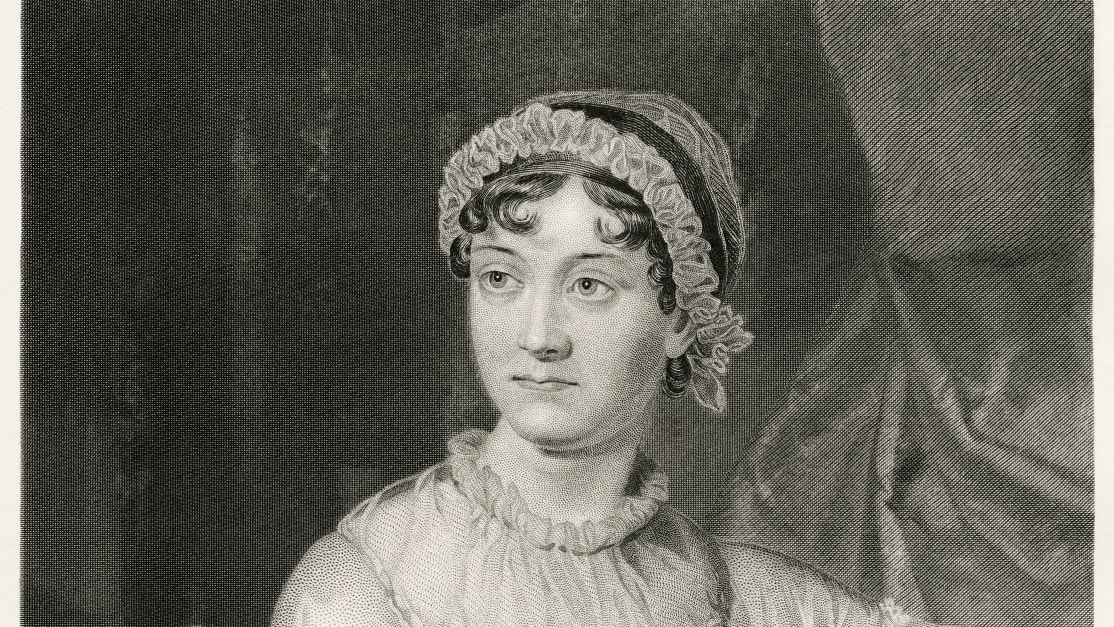
Photo: Glasshouse Vintage/Getty.
Although Jane Austen’s family had ties to an Antigua property that used slaves, new research hints that the 19th century novelist may have held abolitionist views like her favorite brother.

Just when you think there’s nothing new to be learned about the life of a famous author, someone decides to try a different kind of search. In today’s article, a scholar who already knew quite a bit about Jane Austen’s brother Henry searched for “the Rev H.T. Austen,” the name he used after her death.

Scottie Andrew writes at CNN, “Austen’s personal values — namely, whether she supported slavery — have been debated by literary enthusiasts and experts who read her work like a cipher. A new discovery adds a new wrinkle to the Pride and Prejudice author’s personal lore: Her dear brother Henry was sent as a delegate to the World Anti-Slavery Convention in 1840.

“While it’s common knowledge among ‘Janeites’ — the nickname for Austen’s proudest and most passionate readers — that the author’s brothers privately held abolitionist views, Henry is the first of her six brothers to ‘have participated publicly in anti-slavery activism,’ said Devoney Looser, a preeminent Austen scholar and professor at Arizona State University, who uncovered the record of Henry’s attendance.

“It’s further evidence, she said, that Austen herself might have believed in the abolition of slavery. Looser shared her findings in the Times Literary Supplement, a UK literary review. However, the discovery does not apply to the entire Austen family’s views, Looser says. Austen’s father had ties to a family that ran an Antiguan sugar plantation, and Austen herself never publicly expressed abolitionist views, as far as researchers know. …

‘We’ve wanted to slot her family, and her, as one or the other,’ Looser told CNN of the debate over the Austen family’s attitudes toward and participation in slavery. ‘The uncomfortable truth that my research confirms is that, over the course of 80 years, her family was both.’ …

“Just 161 of her letters exist today, Looser said, but one of them mentions her love of the work of Thomas Clarkson, an abolitionist author. …

“Based on her findings, which Looser said she uncovered in digitized newspapers and church records, Henry was selected as one of two delegates from his town. Looser said it indicates that ‘he would have been a known supporter of, and even a local leader, in favor of abolition.’ The point of the convention, attended by 500 leaders in abolition, was to create a platform for anti-slavery measures around the world and support formerly enslaved Black people who’d been recently freed in the British colonies, Looser said.

“As a delegate, Henry would have debated anti-slavery policies with his peers, most of whom were White men (a handful of Black men served as delegates, and the eight women present weren’t allowed to sit with the men, Looser said). His broader history of activism remains unknown, as none of his letters seem to have survived, but Looser said he was a pastor known for being an ‘excellent public speaker.’

“Henry’s attendance is the first example of public support for abolition among the family, Looser said, and contrasts with his father’s ties to slavery. The Rev. George Austen was close to a man whose family ran a sugar plantation in Antigua and was named a co-trustee for the man’s fortune, Looser said. While her research does not support claims that the senior Austen was directly involved in managing the plantation, he did have a hand in managing the wealth of a man who owed his fortune to enslaved people.

“Though Austen’s work is central to the Western literary canon, for much of the 20th century, experts believed her novels were devoid of politics and nods to controversial subject matter like race and slavery, said Nicole Wright, an associate professor of English at the University of Colorado, Boulder, and an expert in themes of social justice in British literature from Austen’s era. But Austen’s novels aren’t just about fancy balls and complicated courtships.

“More recent scholarship suggests that her novels made subtle references to the evils of slavery. Take the ‘silence’ that inspired many an academic work: A moment in Mansfield Park when heroine Fanny Price questions her uncle about the slave trade and is met with ‘dead silence.’ For many years, that moment was viewed by some critics as complicity. Some Austen scholars today think it might have been a criticism of English society’s discomfort in discussing slavery, Wright said.” More at CNN, here.

You might also be interested in an April New York Times article that reports, “As part of the discussion over racism that followed the police killing of George Floyd in Minneapolis last year, museums have asserted solidarity with the Black Lives Matter movement and begun to rethink and recast how they portray history. Among them is a museum dedicated to the writer Jane Austen in the English village of Chawton.”

Read Full Post »