Feeds:
Posts
Comments

Posts Tagged ‘Aborigine’

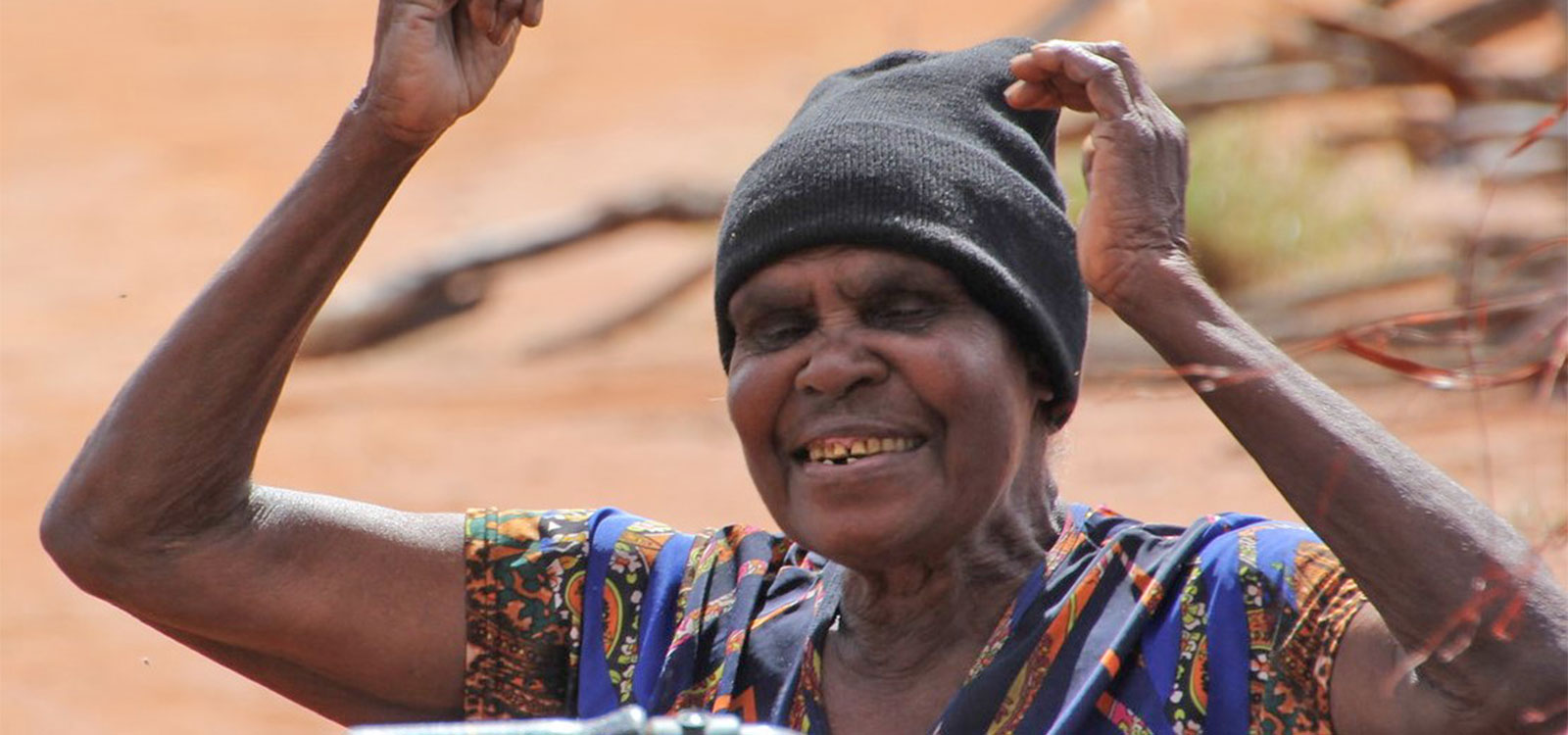
Photo: NPY Women’s Council.
To combat coronavirus in Australia, “For the first time, Aboriginal health workers were given contact-tracing powers usually reserved for state health authorities.”

Recognizing that plagues of the past had wiped out whole indigenous communities, Australian authorities took action to get ahead of the coronavirus plague — with a particular focus on protecting elders.

At the Washington Post, Rachel Pannett reported on where their results stood in early April.

“From Alaska to the Amazon, Indigenous people are more likely to get sick with or die of covid-19, as the pandemic magnifies deep-rooted health and socioeconomic inequities. That is not the case in Australia.

“Not only have Indigenous Australians recorded far fewer infections per capita than their global counterparts, they are six times less likely than the wider Australian population to contract the coronavirus, government data shows.

“There have been no cases in remote communities, and not a single Aboriginal elder has died. Of the 149 cases involving Indigenous people since the start of the pandemic nationwide, few were serious enough to require hospitalization. …

“The vaccine rollout is also proceeding more smoothly in many Indigenous communities than elsewhere in Australia, where some clinics are complaining of empty vaccine fridges. Aboriginal people and Torres Strait Islanders are being prioritized for vaccinations because of their higher risk of developing serious illness if infected.

“On the first day of the vaccine rollout in Sydney, one Aboriginal clinic booked all of its appointments in an hour, according to Aboriginal health officials. In the remote Australian-controlled islands of the Torres Strait — near Papua New Guinea, which is battling an outbreak — over 80 percent of adults have been vaccinated, officials said.

‘This is a most amazing response to the pandemic from a community that is so marginalized,’ said Fiona Stanley, an Australian epidemiologist specializing in public health. ‘This is probably the best evidence we have that if you put Aboriginal people in charge, then you get better outcomes.’

“First-nation people globally have a painful legacy of disease and its impact on elders, those most responsible for the survival of Indigenous culture. Europeans introduced smallpox and other diseases to the New World starting from around 1500, wiping out much of the Indigenous population. The 1918 flu pandemic destroyed entire villages. …

“The first case of the coronavirus in Australia, in January 2020 — a man from Wuhan, China, who arrived in Melbourne — was a wake-up call for the country, but especially for Australia’s Indigenous leaders. The new virus was striking older people, particularly those with chronic conditions. And being highly contagious, it was likely to spread like wildfire through remote Indigenous communities where overcrowding is common. …

“Pat Turner, chief executive of the National Aboriginal Community Controlled Health Organization, wrote to state and federal leaders in March 2020, asking them to use their powers to order the closure of remote communities to stop visitors from entering. Accordingly, the communities were sealed off.

“Lawyer Teela Reid kicked off efforts to protect elders in Gilgandra, a rural town 270 miles northwest of Sydney. ‘I could clearly see how catastrophic it could get in the country, if we got one case in our town of 3,000, because we don’t have the health resources,’ Reid said.

“The local municipality compiled a list of elders and made sure they did not need to leave their homes for food or medicines. Reid’s grandmother Stella, the town matriarch who presides over traditional ceremonies, went against her natural instincts and padlocked her gate.

” ‘It was hard for us,’ Reid said. ‘Our grandparents are often the people who raise children. But they also hold our story lines. They’re passed down orally. If you lose that, it’s gone.’ She added, ‘The ways in which many communities acted was through the natural instinct to be a survivor and to protect elders.’

“Before the pandemic, Aboriginal health organizations had been talking with government officials about plans to address a syphilis outbreak using local Indigenous health services. Australia’s chief medical officer at the time, Brendan Murphy, supported the approach, an endorsement that [Dawn Casey, who co-chairs a government task force established to develop a virus plan for Indigenous communities], says helped smooth the way for a community-led approach to the coronavirus.

“On Facebook, TikTok and Vimeo, Aboriginal health agencies launched coronavirus messages — including instructions on cough etiquette and hand hygiene — and interviews with trusted health officials, translated into local languages.”

More here.

Read Full Post »

Photo: Rainer Jensen/picture-alliance/dpa/AP Images.
A visitor walks through the exhibition of Aboriginal artist John Mawurndjul at the Sprengel Museum in Germany.

As much as we have appreciated seeing the art of indigenous people around the world, it can’t be right for museums and collectors just to help themselves. In the US, many items now being returned have religious significance for tribes or were raided from burial sites.

Perhaps as art gets repatriated, native communities will show some of the works in their own way. In any case, one country has big plans to get Aboriginal art back from overseas. Tessa Solomon writes at the Art Newspaper that Australia is putting serious money behind repatriation of artifacts.

“The Australian government has pledged A$10.1 million (about $7.2 million) in additional funds over four years toward the return Indigenous cultural heritage objects held in collections overseas. The pilot program was launched in 2018 with a A$2 million ($1.4 million) budget by the Australian Institute of Aboriginal and Torres Strait Islander Studies (AIATSIS), a national institution that supports the cultural resurgence of Australia’s native peoples.

” ‘We wanted to help the nation understand that there was an Indigenous perspective on this history,’ Lyndall Ley, the executive director of the institution’s Return of Cultural Heritage project, told the Art Newspaper.

“The project’s first two years were focused on artifacts held in public collections overseas and will now expand to facilitate the return of objects held in private collections. According to Ley, a U.K.-based collector made the first private repatriation, retuning eight secular artifacts of the Australia’s Yindjibarndi community. …

“A report released in September by AIATSIS under the title Return of Cultural Heritage 2018-20 identified 199 overseas institutions with Aboriginal and Torres Strait Islander cultural heritage collections — collectively containing around 100,000 secular and ceremonial Indigenous objects. Some 33 percent of these objects are held in U.K. collections.

Of the 199 institutions identified by the report, 44 expressed enthusiasm at the prospect of returning Indigenous artifacts to their respective communities.

“The project’s second phase kicks off amid renewed interest. … In March, Arts Council England asked the Institute of Art and Law to develop guidance for U.K. museums on restitution, including advice on ‘dealing with claims and making decisions on the potential return of objects.’

“France voted this earlier this year to pass a bill to return 27 artifacts from French museums to Benin and Senegal. The vote followed a 2018 report on the repatriation of African artifacts commissioned by President Macron from the French historian Bénédicte Savoy and Senegalese economist Felwine Sarr, which recommended the restitution by French museums of works in their collections taken ‘without consent’ unless the institutions can prove the objects where acquired legitimately from former African colonies. Macron pledged in a speech in Burkina Faso that his government would facilitate ‘the temporary or definitive restitution of African heritage to Africa’ within five years.”

More at the Art Newspaper, here

Read Full Post »

500-year-old-rock-art-may-have-been-made-with-beeswax

Photo: Archaeologists Liam M. Brady, John J. Bradley, Amanda Kearney, Daryl Wesley
Was this ancient rock art created using beeswax stencils?

Here’s a tip for making detailed art that lasts. I’m talking about 500 years and counting. A team of archaeologists now believes the secret of certain cave paintings is beeswax.

Sarah Cascone writes at Artnet News, “Archaeologists in Australia believe they have identified a previously undocumented beeswax stenciling technique used by ancient artists to create cave paintings.

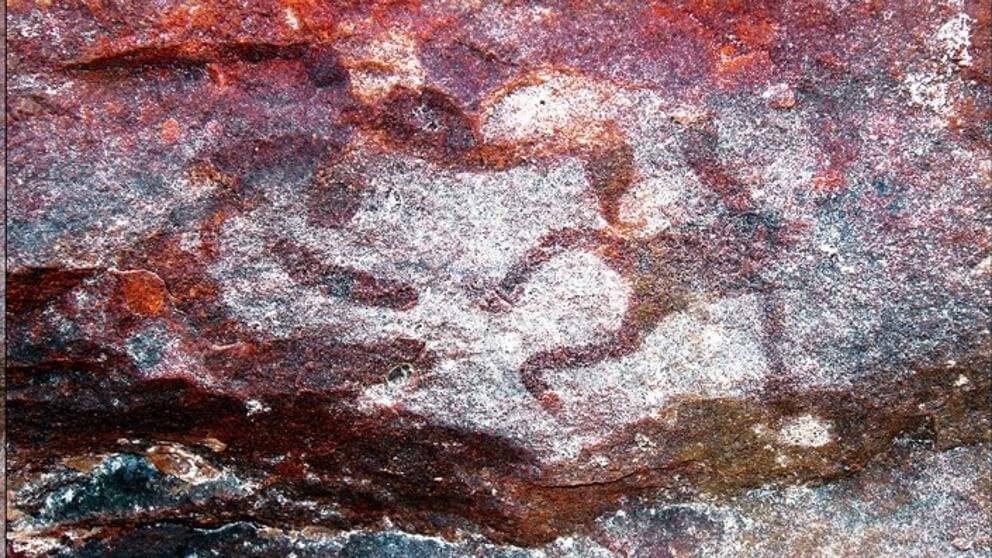
“Most rock art stencils are large in scale. Artists would place their hand or other objects on the wall and spray liquid pigment, creating a full-size negative image. But the artworks at a Limmen National Park site called Yilbilinji, in the Gulf of Carpentaria region of northern Australia, are much smaller. There are 17 tiny stenciled paintings at the site, some depicting human figures and animals, such as kangaroos and turtles, others of boomerangs and geometric designs.

“Studying the 500-year-old rock art there, a team from Australia’s Flinders University and Monash University, have come up with a new theory about how Aboriginal artists created the miniature and small-scale stenciled motifs.

“The team was able to replicate the mysterious miniature art using tiny models sculpted from beeswax, publishing their findings last month in the journal Antiquity. Representatives of the local Indigenous Marra people assisted with the experiment, which only used materials that are native to the region.

“The researchers believe that the Yilbilinji artwork may have served a spiritual purpose in religious rituals. On the other hand, the artwork is placed low to the ground, suggesting it may have been made by children.” More at Artnet, here.

Don’t you wonder how future archaeologists will interpret artifacts dug up from our own culture? Will their theories be as far apart as “It’s for a solemn religious ceremony,” “No, it’s for a child’s game”?

Read Full Post »