Feeds:
Posts
Comments

Posts Tagged ‘aid’

Photo: Francine Kiefer/The Christian Science Monitor.
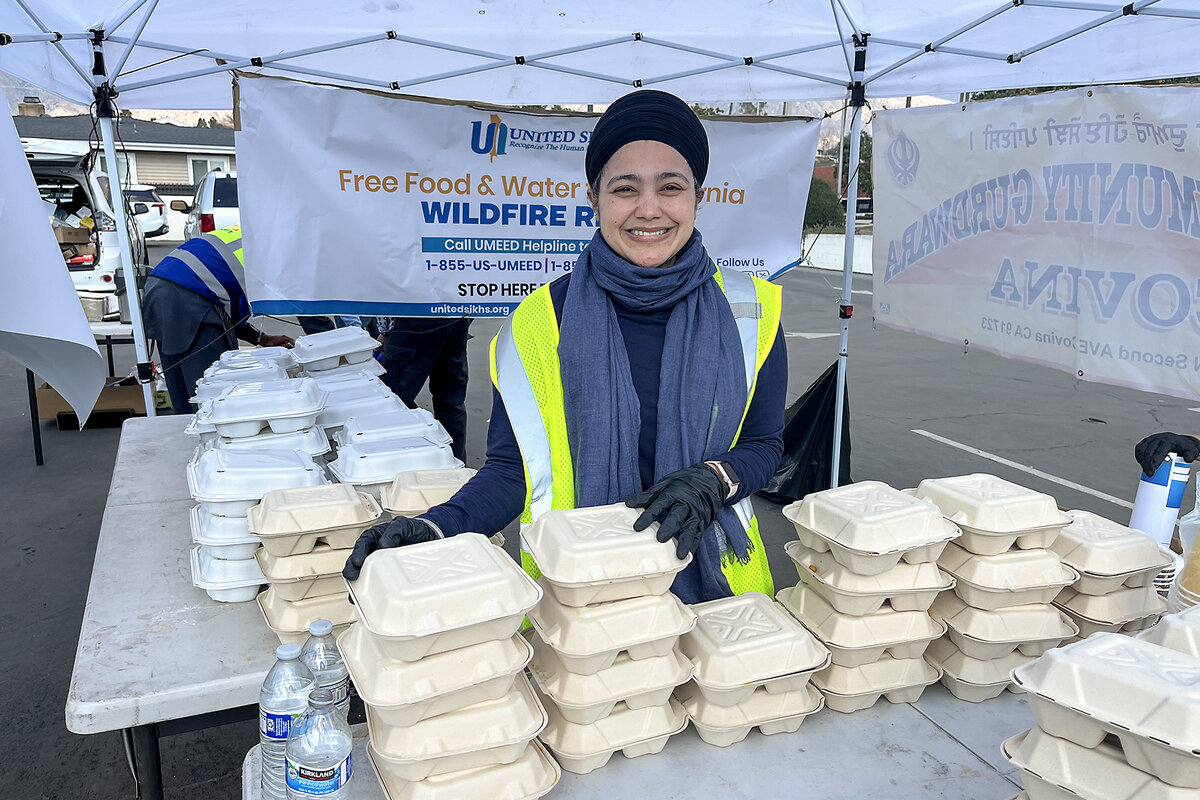
Meetan Kaur, of United Sikhs, stands with hot meals of basmati rice and chickpea curry for fire evacuees at the Pasadena Church East Campus donation center, Jan. 17, 2025.

Despite the loss of many houses of worship in the recent Southern California fires, faith communities are rising up to help others. And helping others others is helping the volunteers themselves begin to feel hopeful. (Scientologists? Why not? We are all human beings in a disaster.)

Francine Kiefer and Sophie Hills write at the Christian Science Monitor, “Cars pull into the Pasadena Church parking lot, waved forward by a couple of Scientologists. Christian volunteers hand out groceries and diapers. Orange, yellow, and black turbans dot the crowded lot, as Sikh volunteers dish out hot chickpea curry and basmati rice and cups of steaming chai.

“The line of cars stretches around the lot. Volunteers pass meals through car windows and load back seats with pet food, toiletries, and paper goods. Some Sikhs traveled from as far as New York and Canada to cook and serve meals to people displaced by the wildfires. The chai, especially, gets five-star reviews from volunteers and evacuees alike.

“ ‘That’s what we’re really hoping to do here – it’s really offering solace, offering comfort, in this absolutely crazy time,’ says Meetan Kaur, an organizer with United Sikhs, an international aid organization.

“The Eaton Fire destroyed thousands of homes, schools, restaurants, and businesses. Houses of worship burned, too. But their congregations are still here, gathering to pray in borrowed spaces and distributing food and clothing. …

“Organized religion provides space for worship and spiritual study, but it can be especially helpful when disasters strike because there’s already ‘a built-in system of caring,’ says Cynthia Eriksson, a dean at Fuller Theological Seminary, who specializes in the intersection of faith and mental health. …

“At the Pasadena Church, Chanel Jackson is loading up SUV after SUV with free groceries. She attends the Faithful Central Bible Church in Inglewood, clear across Los Angeles. But she’s driven to this donation and distribution center by both her faith and her roots.

“Ms. Jackson grew up in Altadena, so like several other volunteers, she says this is personal. Two of her schools burned. She knows some of the people in line. Sporting a ‘Dena’ T-shirt – that’s what folks call the Altadena-Pasadena area – she talks about the imperative from Scriptures to help the poor.

“ ‘A lot of people – their faith is shaken,’ she says. ‘They’re questioning God – “Why me?” – which I completely understand and empathize with. But God is in the people; God is in the angels. God is in the people that are here at this relief center, trying to help families in need.’ …

“The tragedies and hardship calls on a core aspect of faith: community. ‘It’s about the connection to something bigger than ourselves,’ says Rabbi Joshua Levine Grater, the director of Friends in Deed, a local interfaith nonprofit. His family lost its house in the Eaton Fire, as well as its synagogue, where he was once head rabbi and is now a congregant. …

“But leaders rescued 13 Torah scrolls before the building burned. When the fire died, one wall remained, etched with a mural that members didn’t know was hiding behind drywall. It depicts people and animals in the desert, beneath a single palm tree. …

“Founded 130 years ago, Friends in Deed focuses on the most needy people, operating a food pantry and providing housing assistance and case management. Since the fires, the requests for help have only increased. But so have the donations and volunteers.

“Despite the uncertainty his family and so many others face, there’s only one choice, says Rabbi Grater. ‘We have to find the courage to rebuild a step at a time.’ … The teachings and stories of the Torah are there as ‘reminders that there’s still an immense amount of love in the world.’

“In Altadena, at least five different places of worship succumbed to the wildfire. … First Church of Christ, Scientist, Altadena, whose edifice was spared, says it plans to share its space with nearby congregations once it’s safe to return. …

“For some, that generosity is central to their faith. A gurdwara is not just a place of worship, but also a place to coordinate and supply aid, says Gurvinder Singh, international humanitarian aid director for United Sikhs.

Seva, which translates to ‘selfless service,’ is a call to action, says Mr. Singh. That goes hand-in-hand with the tradition of langar, a community meal.

“ ‘It’s really the basis of humanity,’ says Ms. Kaur at the Pasadena Church. ‘It’s bonding through food.’ ”

More at the Monitor, here. Also, see how LA libraries are helping, here. No paywall.

Read Full Post »

Photo: AP/Amr Nabil.
Sudanese Camirata troupe founder Dafallah el-Hag at the Russian cultural center in Cairo, Egypt, this past September.

There is too much war going on.

I struggle to think what alternative Ukraine had after an invasion, but I wish there had been some less lethal way to kick the invader out. In the Middle East, the fighting has gone on beyond anything the world at large can condone. And there are endless ethnic wars in places like Myanmar and Sudan that pain me to think about.

Today’s little story about cheering up Sudanese refugees through art will seem like a feeble attempt to find something positive, but to those who have been touched by the music of kindness, even a tearful, grateful moment can be valuable.

Fatma Khaled wrote recently for the Associated Press (AP), “As the performers took the stage and the traditional drum beat gained momentum, Sudanese refugees sitting in the audience were moved to tears. Hadia Moussa said the melody reminded her of the country’s Nuba Mountains, her family’s ancestral home.

“ ‘Performances like this help people mentally affected by the war. It reminds us of the Sudanese folklore and our culture,’ she said.

Sudan has been engulfed by violence since April 2023, when war between the Sudanese military and the paramilitary Rapid Support Forces broke out across the country. The conflict has turned the capital, Khartoum, into an urban battlefield and displaced 4.6 million people, according to the U.N. migration agency, including more than 419,000 people who fled to Egypt.”

[Think about that, a flight to Egypt.]

“A band with 12 Sudanese members now lives with thousands of refugees in Egypt. The troupe, called ‘Camirata,’ includes researchers, singers and poets who are determined to preserve the knowledge of traditional Sudanese folk music and dance to keep it from being lost in the ruinous war.

“Founded in 1997, the band rose to popularity in Khartoum before it began traveling to different states, enlisting diverse musicians, dancers and styles. They sing in 25 different Sudanese languages. Founder Dafallah el-Hag said the band’s members started relocating to Egypt … as Sudan struggled through a difficult economic and political transition after a 2019 popular uprising unseated longtime ruler Omar al-Bashir. …

“The band uses a variety of local musical instruments on stage. El-Hag says audiences are often surprised to see instruments such as the tanbour, a stringed instrument, being played with the nuggara drums, combined with tunes of the banimbo, a wooden xylophone. …

“Kawthar Osman, a native of Madani city who has been singing with the band since 1997, feels nostalgic when she sings about the Nile River, which forms in Sudan from two upper branches, the Blue and White Nile.

“ ‘It reminds me of what makes Sudan the way it is,’ she said, adding that the war only ‘pushed the band to sing more for peace.’

“Over 2 million Sudanese fled the country, mostly to neighboring Egypt and Chad, where the Global Hunger Index has reported a ‘serious’ level of hunger. …

“Living conditions for those who stayed in Sudan have worsened as the war spread beyond Khartoum. Many made hard decisions early in the war either to flee across frontlines or risk being caught in the middle of fighting. In Darfur, the war turned particularly brutal and created famine conditions. …

“Armed robberies, lootings and the seizure of homes for bases were some of the challenges faced by Sudanese who stayed in the country’s urban areas. Others struggled to secure food and water, find sources for electricity and obtain medical treatment since hospitals have been raided by fighters or hit by airstrikes. Communications networks are often barely functional.

“The performers say they struggle to speak with family and friends still in the country, much less think about returning. ‘We don’t know if we’ll return to Sudan again or will see Sudan again or walk in the same streets,’ Farid said.” More at AP, here.

During this tragic war, very little aid has gotten through, although nonprofits like Alight, one of my favorites, are always poised to help. Rachel Savage at the Guardian wrote that on Christmas, the first successful shipment since the war started a year and a half ago finally got through.

She wrote, “An aid convoy has reached a besieged area of Khartoum for the first time since Sudan’s civil war broke out in April 2023, bringing food and medicines in a country where half of the people are at risk of starvation.

“The 28 trucks arrived in southern Khartoum on 25 December, according to the World Food Program (WFP), which provided 22 trucks loaded with 750 tons of food.

“Unicef sent five trucks with medicines and malnutrition kits for children, while Médecins Sans Frontières (MSF) [Doctors Without Borders] contributed one truck of medical supplies, according to the Khartoum State Emergency Response Room (ERR), a grassroots aid group that is helping to coordinate the distribution.

“Sheldon Yett, Unicef’s Sudan representative, said: ‘Access to the area has been essentially cut off due the conflict dynamics. It took three months of often daily negotiations with government authorities at all levels and with other parties who controlled the access.’ ” More at the Guardian, here.

Read Full Post »

Congress provided $25 million in aid to the Kennedy Center in Washington, DC, and that institution turned right around and coldbloodedly furloughed people on its staff.

Meanwhile, the compassionate director of a different arts organization just wanted to figure out how to save her employees’ jobs.

Sarah Cascone reports at Artnet News that “by redeploying her staff in some ingenious new ways, the director of Texas’s Blanton Museum has managed to avoid job cuts. …

“As museums shuttered throughout the US, many were forced to cut staff through layoffs and furloughs … But thanks to some creative strategizing, the Blanton Museum of Art at the University of Texas at Austin has managed to keep its entire staff on the payroll since the school shut down operations on March 13.

“Museum director Simone Wicha, who recently published an op-ed about her approach in the Wall Street Journal, began thinking about ways to redeploy staffers who were unable to work during a prolonged shutdown. …

“ ‘From the beginning, I realized my team would likely be idle for at least four to six months and we needed to reinvent,’ Wicha told Artnet News in an email. ‘What also was clear was that social distancing would be needed for a much longer time frame, so budgeting would be different for a very long time.

‘I was distraught about what [the shutdown] might mean for our team, and started realigning the budget immediately to prevent layoffs,’ she added. ‘Beyond the financial challenges, I was especially mindful that losing our sense of purpose as a team or having individuals whose job was suddenly obsolete would create tremendous anxiety — and that’s not healthy.’

“With that in mind, Wicha asked the museum’s department heads to identify potential projects to work on during the lockdown — things that normally would be pushed to the bottom of the to-do list by more pressing day-to-day needs. Then she drafted a questionnaire for staffers, asking them to evaluate their skills in areas not necessarily related to their regular job responsibilities — were they a Photoshop whiz? A great writer?

“Wicha then matched the 32 employees whose jobs were most at risk to 30 new lockdown projects. …

The maintenance man stopped worrying about paint touchups and HVAC repair and started assisting the development department by drafting thank you notes for donors, making use of his beautiful handwriting.

“Security guards were redeployed to add ‘alt text,’ or descriptions for the visually impaired, to images on the museum website. Art handlers and event planners have been doing collection research about the museum’s lesser-known artists.

“More than just busy work, these tasks will help the museum long-term as it looks to bounce back from the extended closure. And not only are they keeping staff on the payroll, these new responsibilities have been good for morale.

“ ‘I’ve heard directly from various staff members about how they’ve enjoyed interacting with others not usually involved in their workday routine, and how they’re proud of advancing the museum’s mission for our community,’ said Wicha. …

“Although these measures have been a success, the Blanton’s finances are still shaky, and will likely remain so even after reopening.

“The Blanton’s annual operating budget is an average of $7.7 million, and the university provides about 18 percent of that, making admissions from visitors and fundraising its primary sources of income. With the doors closed, that money would no longer be coming in, but some 40 percent of the museum’s expenses went toward programming and departmental needs — installation costs, advertising, summer programming — which Wicha could cut. The rest represented salaries and benefits for the staff of 70. …

“Wicha said. ‘We’ll have to continue to be thoughtful and creative about our program in order to avoid layoffs in the future.’ The Blanton will remained closed through at least the end of June, when the University of Texas plans to announce its reopening plans.

“ ‘We won’t be going back to the same museum we left on March 13,’ said Wicha. ‘It will be a whole new experience for us and for our visitors. But I believe that sharing beautiful experiences around works of art will bring us — and keep us — together.’ More.

Photo: Kate Russell/ Blanton Museum of Art
Says Artnet News,Museum director Simone Wicha has found new projects for staff most at risk of losing their jobs during the shutdown.”

Blanton Museum's Simone Wicha inside the Ellsworth Kelly installation, Austin.

Read Full Post »

ysm20stock20201920220019

I see a lot of discussion on social media about whether this company or that school is doing the moral thing in the pandemic, and I think it’s reasonable to criticize wealthy institutions when they lay off employees with little severance or health-care coverage or when they fail to help college students with housing if they can’t go home. But some organizations use their ample resources more ethically. Consider Yale University’s School of Music.

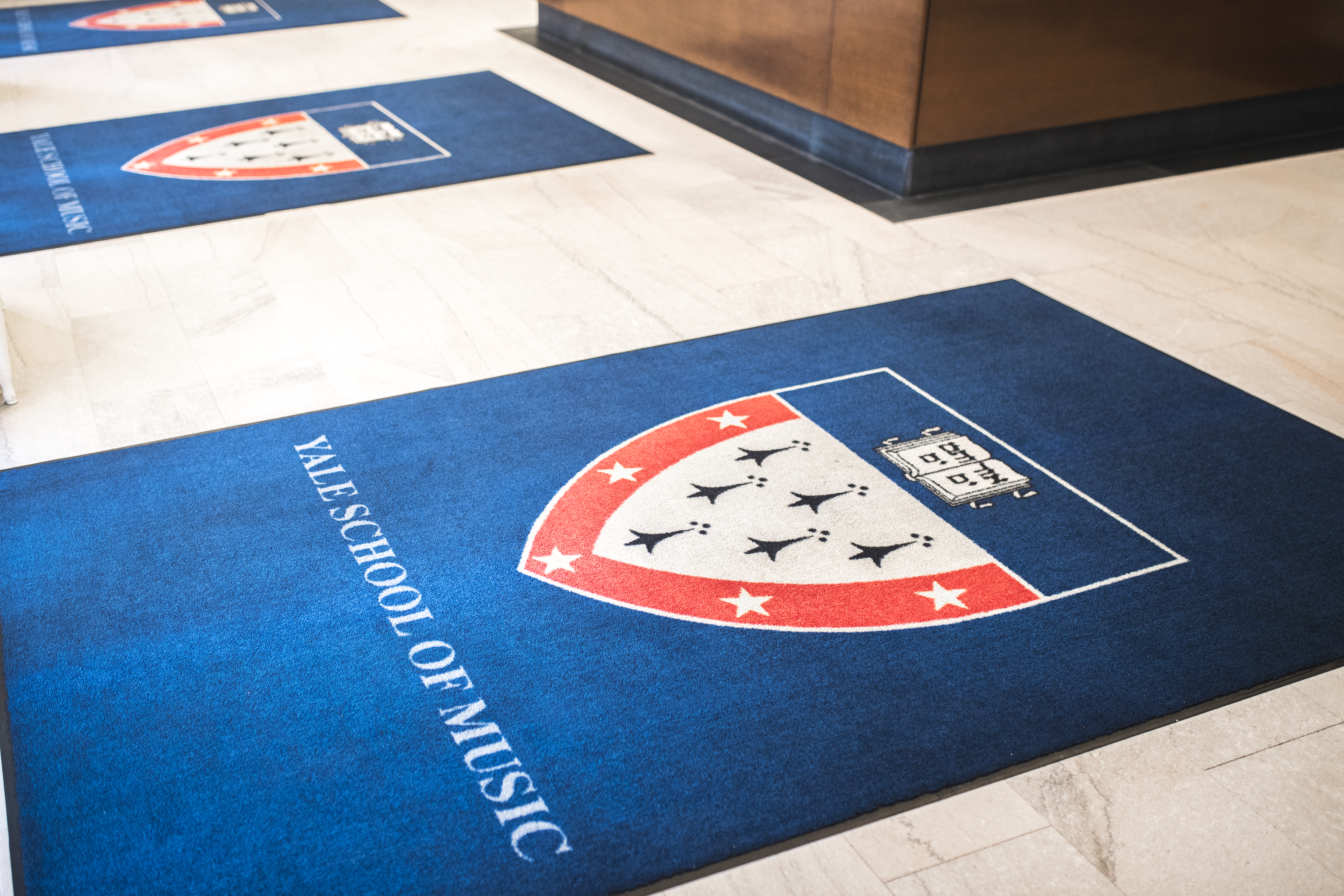
Zach Finkelstein writes at Middle Class Artist about a massive stimulus package for music students that earlier this month, the Yale University School of Music “offered its students, over 200 young musicians — a relief package on a sweeping, unprecedented scale.

“In a March 31st letter to alumni, Dean Robert Blocker outlined an ambitious plan to provide aid, including ‘a one-time stipend of $500’ to all students to assist with travel and expenses; full pay, despite social distancing, for all student employees through May 1st, 2020; and relocation of all international students who could not return home to University housing.

“For the remainder of the semester, Blocker announced that all classes and degree recitals have moved online. …

adams20center2001

Photo: Matt Fried

“The Yale School of Music is in a rarefied position among its peers to provide aid. Under the leadership of Dean Blocker, the school has grown its endowment from $29 million to over $400 million, in part due to a ‘transformative $100 million gift.’ Since 2005, thanks to this generous donation all students admitted receive a full tuition award and fellowship.’ …

“Alumni interviewed were deeply moved by the School’s actions on behalf of students: ‘I am proud to know that my alma mater, the Yale School of Music, is taking proactive, compassionate steps to aid its students during the unprecedented COVID-19 crisis. … By putting its considerable resources to good use – such as housing students, disbursing emergency funds, or paying student employees for cancelled work — the YSM is taking a lead role among its peers in finding a helpful, humane response. This is a wildly scary time for many musicians around the world, and it is heartwarming to see a world-class educational institution stand up and support its artists.’

“Another alumni also stated their pride in Yale, and that the email ‘showed the generosity possible from heavily-endowed institutions as well as a level of interpersonal caring that has not been exemplified across the board, in the university or professional settings. Our student colleagues are some of the most vulnerable and impressionable amongst us, and Yale’s willingness to help with issues of housing and travel, as well as extending a generous financial donation to each student, sets a great example to the community at large.’ ”

You might say, Well, look what a wealthy institution it is! But there is no end of examples of wealthy institutions that are not doing much of anything. The Kennedy Center in Washington, DC, for example, received $25 million from Congress as part of a coronavirus relief package and promptly furloughed workers, saying it was running out of money. And while Amazon’s Jeff Bezos gives millions to Covid-19 relief, he is making extra billions for himself and not protecting his workers.

So I have to applaud whoever does the right thing for people who are in their care.

More at Middle Class Artist, here.

Read Full Post »

In a recent Wired article, Sarah Zhang calls the humble tarp “an aid worker’s secret weapon.” I had no idea the amount of work that went into developing a reasonably priced tarpaulin that won’t fray or get too hot.

“Ask an aid worker,” writes Zhang, “and the paeans to tarpaulin come pouring out. Cheap, lightweight, and waterproof, ‘tarpaulin is the most common shelter material,’ says Joseph Ashmore, shelter consultant for the International Organization for Migration. Responders and survivors can use tarpaulin for roofs, fences, and flooring—but don’t limit your imagination to shelter. ‘I’ve seen people dry rice on it, in latrines, as bags, as trousers, as umbrellas,’ Ashmore adds.

“Not all tarpaulin is created equal, though. The Red Cross catalog’s tarpaulin is the crème de la crème of plastic sheeting. … These obsessively engineered 4×6 meter plastic sheets last years, and it all goes back to one French … .

“Patrick Oger was a purchasing officer for Doctors Without Borders when he first got the tarpaulin assignment in 1993. …

“Working mostly alone — while still doing his job as a purchasing officer — Oger completed the specifications for tarpaulins in three years. Since 1996, the Red Cross, UNHCR, Doctors Without Borders, UNICEF, and Oxfam have given out millions of tarps manufactured to those specs. Factories in China, Korea, Vietnam, India, Pakistan, and Kenya churn out the tarpaulin to use all over the world. And they’re cheap, at just $15 a pop in the Red Cross’s catalog. ‘We’ve really made a good product. It is saving money. It is saving lives,’ says Oger.”

Read here how Oger befriended and learned from an engineer at the Danish company where tarps were previously sourced (a company that charged a high price because it had patented the eyelets) and how he kept making technical improvements and testing them.

I like that Oger is still inventing. I’ll never make a blanket judgment about purchasing officers again.

Photo: Reuters/Corbis
Tarps are unloaded for distribution for internally displaced people in Mubimbi, South Kivu, DRC, on March 4, 2013. 

Read Full Post »

This extra post is just to give you suggestions for where you can send donations. Send love through your thoughts. Send donations to Doctors without Borders or one of these other relief organizations, here. You can specify which disaster you want your aid to go to. I personally do unspecified in case other disasters follow and the money is needed for them.

Thank you, Asakiyume, for the list.

Photo: NBCNews

Read Full Post »