Feeds:
Posts
Comments

Posts Tagged ‘at-risk’


Photo: Los Angeles Times
Jackie DesRosier conducts a YOLA at HOLA (Youth Orchestra Los Angeles at Heart of Los Angeles) youth orchestra spring concert.

The arts have a mysterious capacity to touch people in ways that nothing else does. It’s as if most of what we do or even think about every day is on the surface of things, involving the small part of our brains that is conscious. The arts, however, can reach into the unconscious part and make hidden flowers bloom.

Read how, in Los Angeles, an arts program is helping students flourish.

Jessica Gelt writes at the Los Angeles Times, “It is one of the most densely populated areas west of the Mississippi. The poverty rate is over 35%, and more than a quarter of all households earns less than $15,000 per year. At least 30 gangs roam the streets, recruiting children as young as 9. The high school graduation rate is around 50%.

“That’s the state of affairs in Westlake, Pico Union and Koreatown, according to the organization Heart of Los Angeles. The group reaches more than 2,000 kids in those neighborhoods every year through after-school arts and athletics programs, but its crowning achievement is its partnership with the Los Angeles Philharmonic: Youth Orchestra Los Angeles at Heart of Los Angeles, or YOLA at HOLA. …

“The program provides intensive orchestral instruction, including classes on music creativity, singing and ensemble rehearsals, to 250 students in 1st through 12th grades. Classes take place daily. An hour of academic tutoring is thrown in each afternoon for good measure. …

“More than 350 families land on the waiting list for programs at HOLA every quarter, so Brown said HOLA wants to build a recreation center to serve more people. The statistics coming out of the HOLA’s academic enrichment, visual arts and music programs speak to why demand is so high.

“Of the 63 students in those programs who were high school seniors in 2015, 100% of them graduated, and 97% went on to college. …

“[HOLA Executive Director Tony] Brown and his staff are aggressive in preventing kids from falling between the cracks. They sometimes attend parent-teacher conferences to find out what support a child needs, and when a student disappears from their programs, a staff member might make a house call to help bring that student back. …

“Brown likes to tell the success story of a boy named Raymond who came through the program as a troubled middle-school student. His grandmother brought him to YOLA at HOLA because he was failing in school and in danger of joining a gang.

“ ‘This young man started playing the clarinet, and he played the heck out of it. Next thing you know he’s earned his way to playing in London with YOLA at HOLA and Dudamel,’ Brown said, referring to the youth orchestra’s 2013 trip overseas. Raymond is now attending UC Santa Cruz.”

Read why National Endowment for the Arts is crucial to this program, here.
Read Full Post »


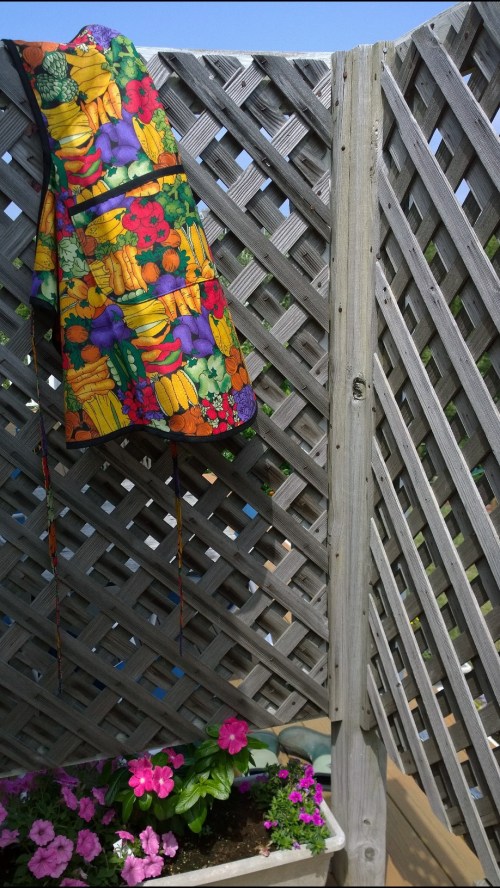
080616-vision-of-hope-zambia-apron

The first booth I encountered at the Art and Artisan fair Saturday was promoting a charity called Vision of Hope Zambia.

Co-founder Meg O’Brien had been a student at Berklee College of Music when a missionary friend in Zambia asked her to lend her musical talent to uplifting girls who lived on the streets.

When she visited Africa, Meg must have been shocked by what she saw: young girls, often orphaned, often HIV positive, who had no place to get a meal or even take a shower. She flew into action, co-founding Vision of Hope Zambia with Chitalu Chishimba.

Meg’s mother and aunt also flew into action, creating a craft initiative that donates 100 percent of proceeds to the cause.

The two artisans not only sew with skill — baby bibs, changing blankets, aprons and the like — they also are good at selling, promoting Meg’s charity while highlighting various features of their products.

Meg’s aunt saw me talking to my grandchildren and immediately pointed out the colorful array of child-size aprons. In the end, though, I bought an adult-sized apron for myself.

From humble beginnings in 2009 (“weekly meetings in the backyard of the Girl Scouts building underneath a tree”), the organization is now able to provide housing and education for many girls as it continues to grow.

Photo: Vision of Hope Zambia
Girls at Vision of Hope proudly show off their hard work in rug making.


Read Full Post »

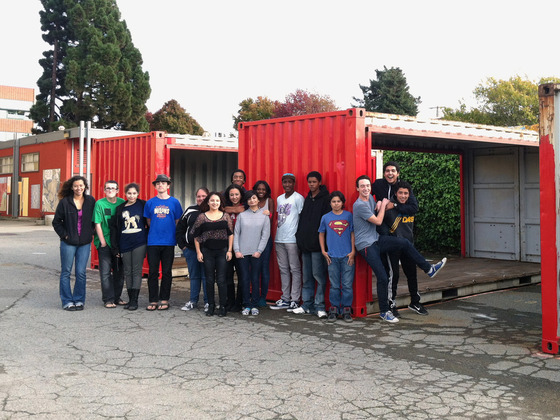
I’m not sure where I first read about Studio H, but I think you will be interested in this high school that engages students in hands-on construction from design to delivery.

The website explains: “Studio H is a public high school design/build curriculum that sparks community development through real-world, built projects. Originally launched in rural Bertie County, North Carolina, Studio H is now based at REALM Charter School in Berkeley, CA.

“By learning through a design sensibility, applied core subjects, and industry-relevant construction skills, students develop the creative capital, critical thinking, and citizenship necessary for their own success and for the future of their communities.

“Over the course of one semester, students earn high school credit and have the opportunity to design, prototype, and build a full-scale community project. Our students have designed and built some crazy chicken coops for families in need, and a 2,000-square-foot farmers market pavilion.”

More here.

Photographs: http://www.studio-h.org

Read Full Post »

I was interested in an article in today’s NY Times about a school that gives chronically failing students another chance. It succeeds against all odds, but success is a slow process. New York’s mayor is not a fan, because many kids take six years to graduate.

Aniah McAllister, once a lost and wandering soul, has one of the happier stories. Reporter Michael Powell writes that she seems amazed to have earned 46 credits and to be headed to college.

“ ‘This school made realize,’ she says, ‘that I am much better than I thought I was.’

“That’s a pretty fair bottom line for any school,” writes Powell, “although in the up-is-down world of public education in New York, it might just be an epitaph for this small marvel of a high school. Known as a transfer high school, Bushwick Community admits only those teenagers who have failed elsewhere. Most students enter at age 17 or 18, and most have fewer than 10 credits.

“You can muck around quite a bit trying to find someone who has walked the school’s corridors, talked to its students and faculty, and come away unmoved. Most sound like Kathleen M. Cashin, a member of the State Board of Regents and a former superintendent. ‘They care for the neediest with love and rigor,’ she said. ‘They are a tribute to public education.’ ”

Read the article. I’m hoping it will have an influence on the policymakers and let an initiative that sounds so positive keep going.

Aniah McAllister, left, Justin Soto and Kassandra Barrientos attend Bushwick Community High School. Photograph: Kirsten Luce, NY Times

Read Full Post »