Feeds:
Posts
Comments

Posts Tagged ‘baltic’

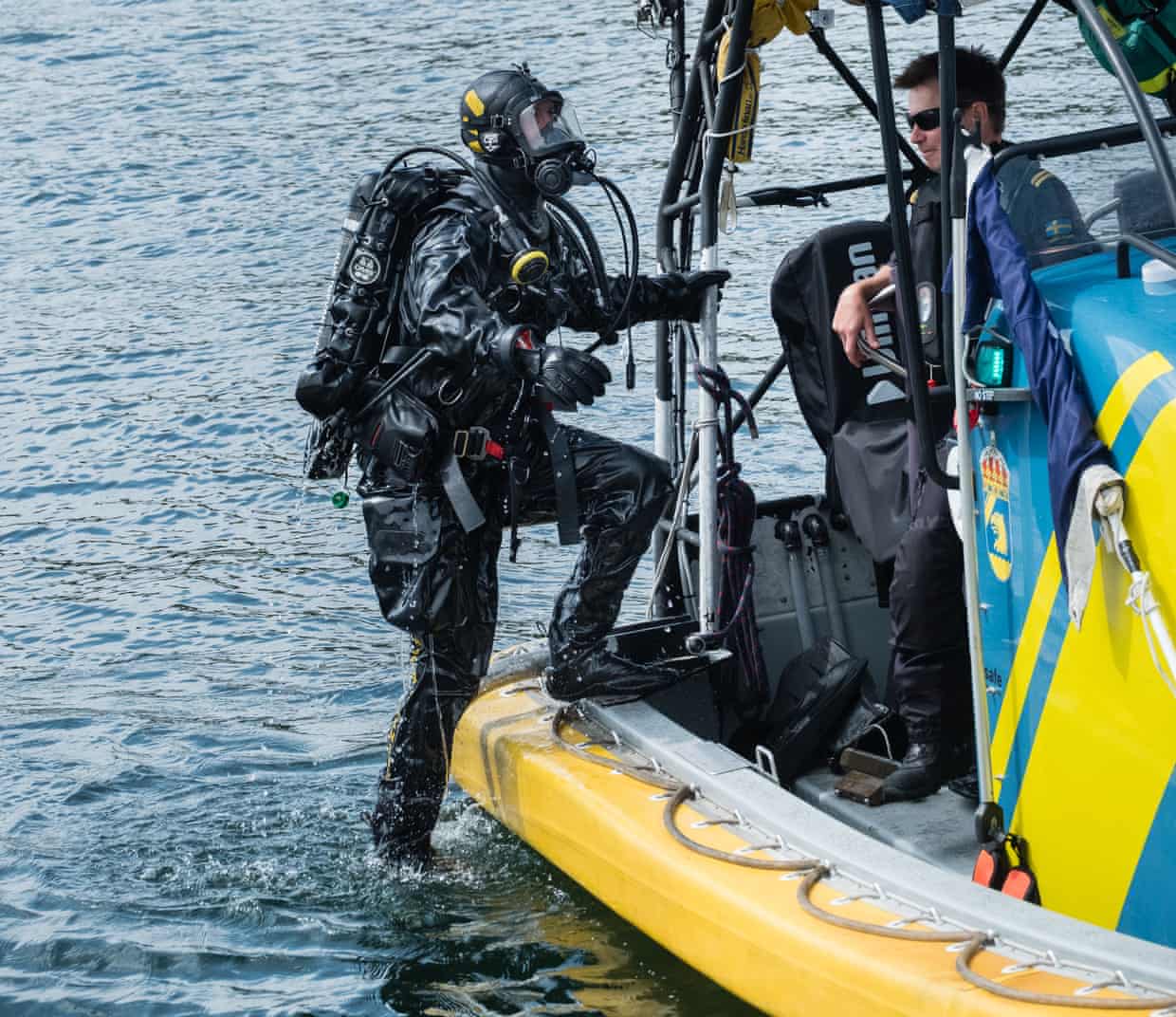
Photo: Rob Schoenbaum/The Guardian.
A Swedish coastguard diver exits the water after inspecting a wreck.

So many different kinds of work in the world! Today’s article, from the Guardian, describes an unusual job in Sweden. It involves going underwater to protect old shipwrecks from looters.

Miranda Bryant writes, “Among the rocky shores and wooden summerhouses of Dalarö, an exclusive Swedish summer retreat, there was little to indicate anything other than a typical summertime scene on the Stockholm archipelago.

“It was only as the coastguard boat reached a discreet yellow buoy that there was any suggestion of the 17th-century shipwreck lying, preserved, 30 metres beneath it. ‘STOP,’ read a sign. ‘Marine cultural reserve.’

“Bodekull, built by the English shipbuilder Thomas Day, is believed to have run aground in 1678 and sunk while transporting flour to the Swedish naval fleet in Kalmar, down the coast in south-east Sweden.

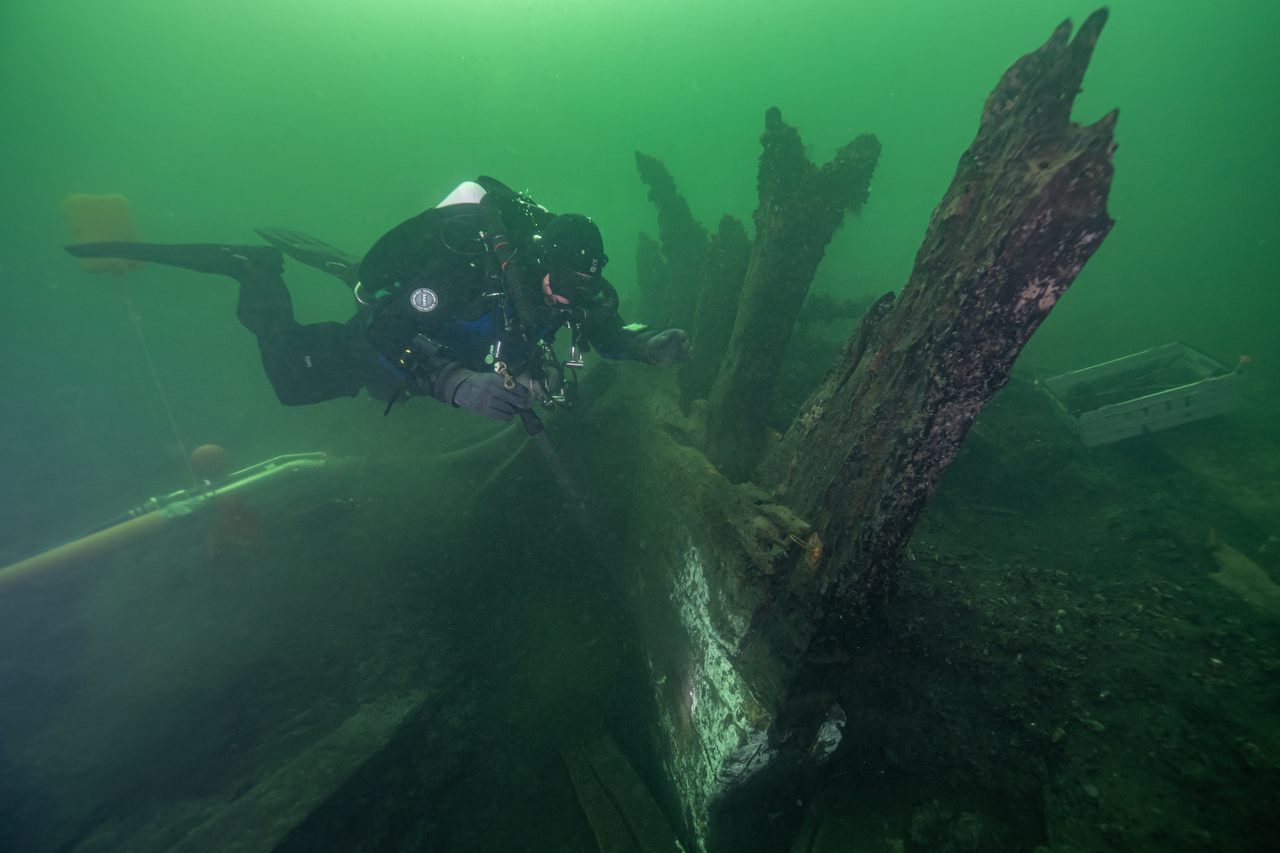
“Thanks to the Baltic’s brackish water protecting the wreck from shipworms, the 20-metre-long ship remains on the seabed, upright and largely intact, full of relics that are still being discovered. Two of its three masts poke up towards the sky in their original position.

“But now Bodekull faces a human threat to its existence. Authorities say that it is among thousands of historic wrecks across the Nordics that are at risk from plundering.

“On a monitoring operation last week, experts shared photographs with the Guardian that show that objects are vanishing from shipwrecks.

“Those responsible are believed to be a diverse array of offenders, from light-fingered sport divers in search of souvenirs to criminal gangs looking for high-value objects to sell. Such is the scale of the problem that the coastguard is now regularly sending divers down to monitor at-risk sites.

“ ‘The plundering problem isn’t just a Swedish problem, it’s a Baltic Sea problem,’ said Jim Hansson, a marine archaeologist at Vrak, the museum of wrecks, citing the sea’s low salinity and comparatively shallow average depth of 55 metres.

“These unique conditions, as well as the existence of an estimated 100,000 shipwrecks, make the Baltic a ‘mecca for marine archaeologists,’ he said. But it’s also increasingly attracting looters. Around Stockholm alone, Hansson knows of six wrecks that have been looted by international and Swedish divers. …

“ ‘Sweden has one of Europe’s longest coasts so it’s a lot of water to guard and it isn’t easy,’ said Hansson. …

” Coastguard divers normally work on environmental disasters, inspect ships for drugs and weapons and help police looking for murder weapons. ‘It is very unique for us to be part of this,’ [Patrick Dahlberg, a coastguard commander] said. …

“[On August 1] Coastguard diver Patrik Ågren said he didn’t see any evidence of tampering as he emerged from recording the contents of a tool drawer on the ship containing planes, sledgehammers, a basket and carpentry equipment. … Video footage he recorded during the dive will be compared with previous footage to check for changes.

“But on a later dive they discovered that a wheel on a cannon had been removed, a deck beam collapsed and a wine bottle moved since they last visited in January. While some of the changes may have been caused by nature, Hansson said it was difficult to see how the wheel and wine bottle could have been moved without human intervention. …

“Hansson said removing relics from wrecks prevented them from building a full picture of the type of ship, where it was going and what it was doing.

“ ‘We collect all the puzzle pieces just like a police or coastguard investigation,’ he said. ‘That’s why it is super important that objects are not moved because it is like ripping the pages from a book. In the end all you will have left is an empty shell.’

“Amid heightened tensions with Russia after its invasion of Ukraine, allegations of spying and Sweden’s hopes of imminently joining Nato, it is a critical time for the Baltic.

“But Hansson said that cultural monuments could also be used in war. ‘What happened with Nord Stream [gas pipeline bombings] could similarly happen with national cultural heritage monuments like shipwrecks. The first thing that happens with big conflicts is that you erase a nation’s integrity and history.’ ”

More at the Guardian, here.
Read Full Post »

Photo: Brett Seymour.
A trove of spices was found in the stern of the ship by Brendan Foley and a team of archaeologists. It had been there for centuries.

For those of us who hope that one day the lost island of Atlantis will be found, any story about underwater discoveries of ancient artifacts is thrilling.

Line Sidonie Talla Mafotsing writes at Atlas Obscura, “Built 1485, the Danish warship Gribshunden served as the flagship and mobile seat of government for King Hans of Denmark and Norway. In the summer of 1495, Hans set sail for Kalmar, Sweden, where he was set to negotiate with Swedish leader Sten Sture the Elder. The goal of the mission was to convince Sten Sture and the Swedish council to give up their sovereignty and rejoin the Kalmar Union, which had unified much of Scandinavia under a single ruler (and which Sweden had left a few decades before, despite the union being named for a Swedish town).

“The ship itself had a role to play: to show Hans’s authority to the Swedish council. It was also laden with goods — from gunpowder weapons to artwork to delicacies — to demonstrate his power.

“However, while anchored in the Baltic Sea near the port of Ronneby, Sweden, Gribshunden mysteriously caught fire. Though the king wasn’t on board at the time, many crewmen were, in addition to all those pricey goods. Although the exact number of deaths is unknown, many of the crew of 150 were on board when the ship sank to the bottom of the Baltic with its precious cargo. …

“In the 1970s, a local diving club came across a mysterious wooden wreck there, in 33 feet of water. It wasn’t until 2001 that the first archaeological excavations of the ship began, after one of the divers told local archaeologists about what they had found. It was another decade before the remains were identified as those of Gribshunden. All through the excavation of the wreck, remarkably preserved by the cold waters of the Baltic, amazing and sometimes odd artifacts have emerged and attracted media attention. In 2015, there was a nearly perfectly preserved wooden ‘sea monster’ figurehead. In 2019, archaeologists discovered a well-preserved rare Atlantic sturgeon. Further excavations in 2021 revealed something even more remarkable: a treasure trove of spices, plant material, fruits, nuts, and cereals, that somehow survived underwater for more than 500 years.

“In a study published in the journal PLoS ONE, Brendan Foley and Mikael Larsson, archaeologists at Lund University in Sweden, examined the finds for new insights into how nobility lived and ate during the Middle Ages, and shed light on how these organic materials survived so long underwater.

“Foley and a team had been excavating the stern when they made the finds. ‘We think, but we’re not sure, that the back part of the ship is probably where the highest ranking individuals were situated,’ says Foley. They sifted through the sand and silt and revealed almond shells and peppercorns. They recovered thin strands of saffron by hand. ‘We took four samples of botanical assemblage that included both local and exotic spices, fruits, and vegetables,’ says Larsson, including black mustard, dill, clove, ginger, cucumber, grape, and berries such as blackberry and raspberry. ‘The botanical remains that really stand out are the exotic spices,’ he says. Clove, ginger, and saffron had never been found before in the medieval Baltic.

Larsson says that their work is the first anywhere in the world to find saffron in such a setting. …

“Though the geographical origins of saffron are not completely understood, it is thought to have originated in the eastern Mediterranean, and been grown in Southwest Asia and the Mediterranean basin. Ginger is believed to have originated in Southeast Asia, and cloves are native to Indonesia. Black pepper comes from South India. Despite this time being known as the ‘Dark Ages’ in Europe, the finds show that Scandinavia wasn’t just a backwater of the world economy. …

“[One] question focuses on how these delicate organic remains were able to survive in the Baltic. ‘It’s a mystery,’ says Foley. ‘We don’t know, we didn’t find any containers.’ When they found the saffron, it was just in a lump in the sediment. ‘No glass jar around it, no ceramic jar, no wooden box, no silver box,’ he says. It may have been stored in some sort of fine textile bag that disintegrated over the years—but somehow the spice remained.

“ ‘The Baltic Sea is really weird,’ Foley says. For one, it has the lowest salinity found in the global oceans. This, combined with low temperatures and low dissolved oxygen to feed microbes, have given the Baltic a reputation for remarkable preservation of archaeological material, specifically wooden shipwrecks.”

More at Atlas Obscura, here. No firewall.

Read Full Post »

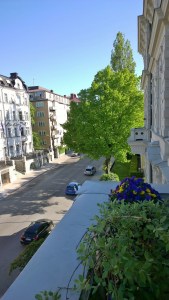
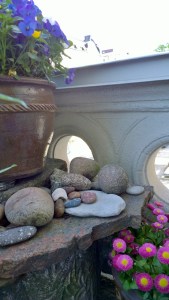
With the best Swedish tour guides imaginable, Erik’s folks, we saw many Stockholm highlights today, starting with a couple views from their balcony.

052817-view-of- Stockholm

052817-Stockholm-balcony


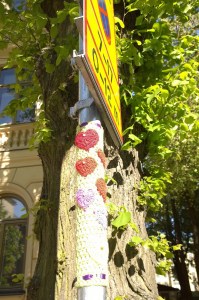
052717-knitting-on-sign-post

052817_6tag_Stockholm_chimneys


052817-Stockholm-from-a-hill

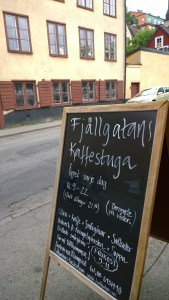
052817-Stockholm-cafe


052817-the-Baltic-Sea-Sweden


Read Full Post »

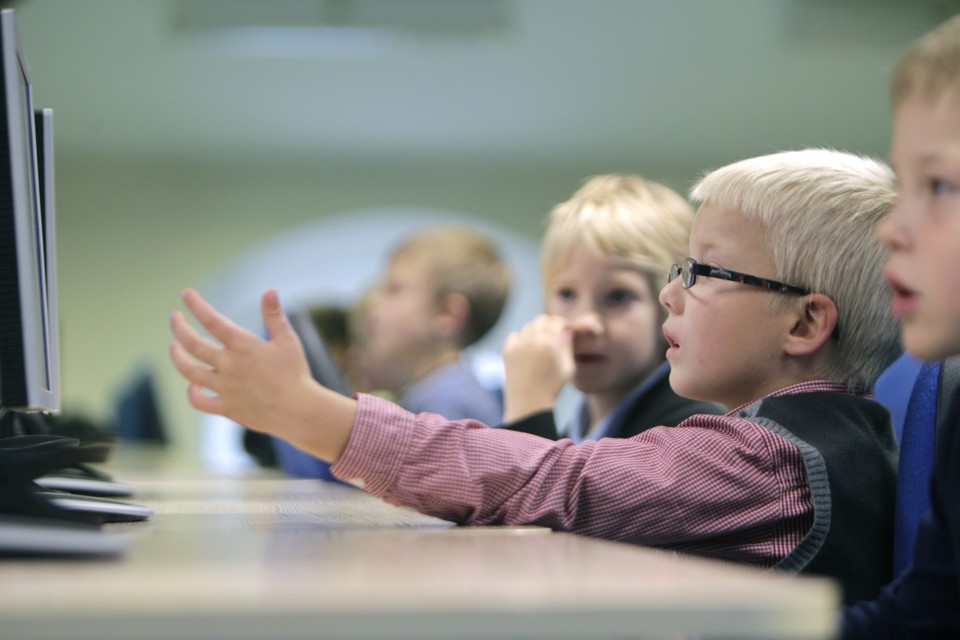
The Atlantic magazine says Estonia is the new Finland, meaning that it is doing a bang-up job with quality education for all. Educating the poor turns out to be a salient strength of the system.

Sarah Butrymowicz writes, “In 2012, Estonia’s 15-year-olds ranked 11th in math and reading and sixth in science out of the 65 countries that participated in an international test that compares educational systems from around the world (called the Programme for International Student Assessment, or PISA).

“In addition to beating out western nations such as France and Germany and essentially tying Finland in math and science, Estonia also had the smallest number of weak performers in all of Europe, about 10 percent in math and reading and 5 percent in science.”

In comparison, the United States hovers in the middle of the pack.

“While there is less income inequality in Estonia than in the United States—and, with 1.3 million people, the country is significantly smaller—the Baltic nation also has its share of cultural diversity.

“When it achieved independence from the Soviet Union 25 years ago, Estonian became the official language and the language of school instruction. Yet about a fifth of its students come from families that still speak Russian at home, and they have historically lagged behind their native speaking counterparts on tests such as PISA. …

“Marc Tucker, president of National Center on Education and the Economy in Washington, D.C., visited Estonia last year to find out what they’re doing right. He said that after the fall of the Iron Curtain other former Soviet satellites, such as Hungary and the Czech Republic, transitioned to a system preferentially suited to the needs of its elites. Estonia, however, kept giving equal opportunities to students of all backgrounds. …

“There are many factors that may contribute to Estonia’s success on PISA beyond their focus on equality. Education continues to be highly valued. Teacher autonomy is relatively high, which has been shown to be related to better test scores. Teachers stay with the same students in grades one to three – or sometimes even up to sixth grade – allowing deep relationships to develop.”

Maybe we could learn something from this small Baltic state. Read more here about why Estonian students are so successful on tests and whether they are happy with the system and why the country is trying to encourage more individuality and creativity without losing rigor.

Photo: Ints Kalnins / Reuters
First graders take a computer class in Tallinn, Estonia.

Read Full Post »