Feeds:
Posts
Comments

Posts Tagged ‘bikes’

Photo: Suzanne and John’s Mom.
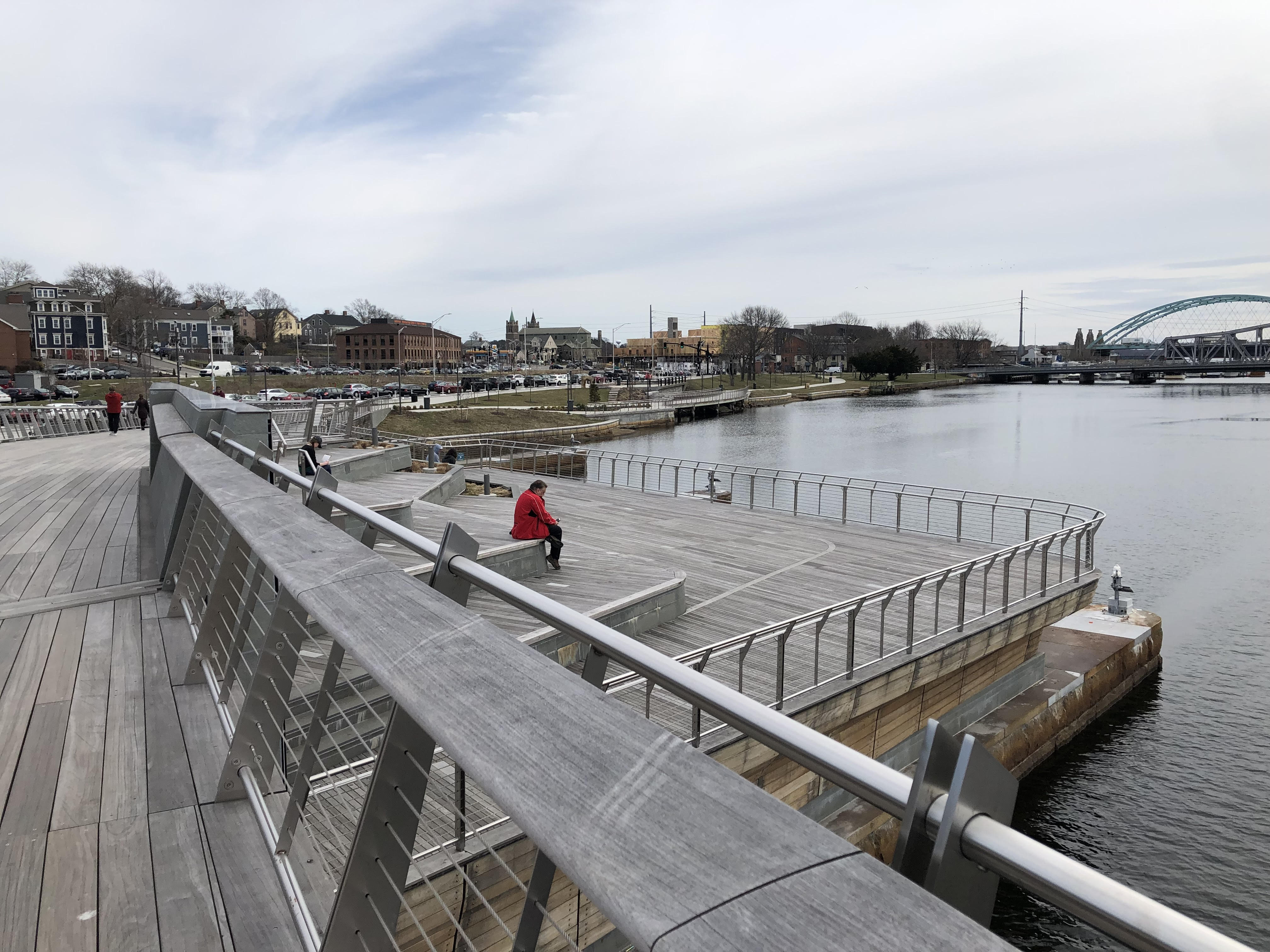
The beautiful pedestrian bridge over the Providence River in Rhode Island. This is a city that values free public space.

On Twitter and Mastodon, I follow a guy (@FortPointer) who is a voice in the wilderness for free public amenities in Boston. He himself may be able to afford the prices that have been slapped onto events that were once going to be accessible for all, but he is outraged for the sake of lower-income people — and for the world-class city Boston could have been. He may be Don Quixote, but there are those of us who believe in the mission.

For example, there used to be a pleasant footbridge that went over Fort Point Channel and connected two parts of the city. I loved to walk there on my lunch hour. Bikers biked it. When the old bridge wore out, the city — under cover of needing access for emergency vehicles — decided to replace it with a bridge for cars and trucks. The Fort Pointer was outraged. So was I!

Today’s article from the Guardian talks about footbridges that enhance life for pedestrians in London.

Rowan Moore writes, “All the world loves a bridge that moves. Usually, the point of a bridge is that it is fixed – when so much trouble has been taken to overcome gravity and tame nature, instability is the last thing that you want – so there is surprise and delight when it confounds its own rigidity. I give you as an example Tower Bridge.

“In an overlooked part of east London, weed-strewn and still industrial – a district un-steamrollered by the giant apartment blocks going up in much of the old docklands, close to where the River Lea joins the Thames – two curve-cornered squares of steel frame the view. They look like heavy metal sculptures. They are actually essential elements of the recently completed Cody Dock Rolling Bridge, designed by the architect Thomas Randall-Page and Tim Lucas of the engineers Price & Myers, which moves in a way that no bridge has done before. Its purpose is to make good a missing link in the Leaway, a ‘green corridor’ that runs from Hertfordshire then along the Olympic park towards the Thames. It also serves as an emblem for the Gasworks Dock Partnership, a charitable social enterprise that has created a ‘community-based arts and creative industries quarter’ on what was derelict land.

“As its name says, the bridge rolls. It crosses a channel that runs from the Lea to an adjoining dock, and most of the time it provides a flat steel deck, level with the ground, which pedestrians and cyclists can use to get from one side to the other.

When necessary, those squares can be turned through 180 degrees, such that the deck is raised in the air and turned upside down, which gives enough headroom for boats to pass underneath.

“It is operated by two manual winches, the tonnage of steel balanced in such a way that a bit of human muscle can shift it. The simplicity of its idea requires fiendish mathematics and precise construction. The squares roll along sinuous tracks, kept in place by interlocking teeth and sockets, the angles and forces of each one different from its neighbor. Cake Industries, the company that built it, employed furniture-makers to construct the moulds for the concrete elements of the structure. …

“Meanwhile, in a gentler place some distance up the Thames, another structure has been completed that is also in the nice-to-have rather than must-have category. It is a bridge under a bridge, a way of getting a riverside path to pass below the Victorian iron arches of Barnes Railway Bridge. Previously, users had to trek inland, through a menacing tunnel under the tracks, and back again to the riverbank. Now they can travel over a broad, winding deck, falling then rising again, that projects over the water with a mild frisson of peril.

Dukes Meadows Footbridge is designed by Moxon Architects, a practice based in London and Aberdeenshire with several other bridges to its name, and the structural engineers COWI. This, too, has required ingenuity, albeit less for the self-imposed reasons at Cody Dock: the deck has to just clear the high-water mark of the tidal river, while giving enough room beneath the arches, without obstructing access for maintenance for the old structure. It could impact neither on the many rowers who use this stretch (the Oxford and Cambridge boat race finishes nearby), nor on the endangered snails in a neighboring nature reserve, which meant that its route and its lighting were designed not to disturb them. …

“The result is faceted and intriguing, its irregularity driven by the imaginative response to circumstance. ‘It’s marvelous,’ says an elderly user, unsolicited. Funded by the London borough of Hounslow and the mayor of London’s Liveable Neighbourhoods scheme, it makes a striking contrast with the years-long, still-ongoing struggle to make Hammersmith Bridge, the next crossing downriver, safe for traffic. It’s easier, evidently, to build one that doesn’t actually cross a river than to repair one that does.

“Moxon is also working on a plan, long promoted by local citizens, to make a disused part of the old railway structure into a linear park – a small version of New York’s High Line, or a successful version of Boris Johnson’s doomed Garden Bridge. Like the new footbridge, this project is shaped more by quality-of-life considerations than the hard industrial imperatives that drove either the original railway bridge or the big old structures of docklands.”

What is your experience of footbridges?

More at the Guardian, here. No firewall. Great pictures.
Read Full Post »

Photo: Wikimedia.
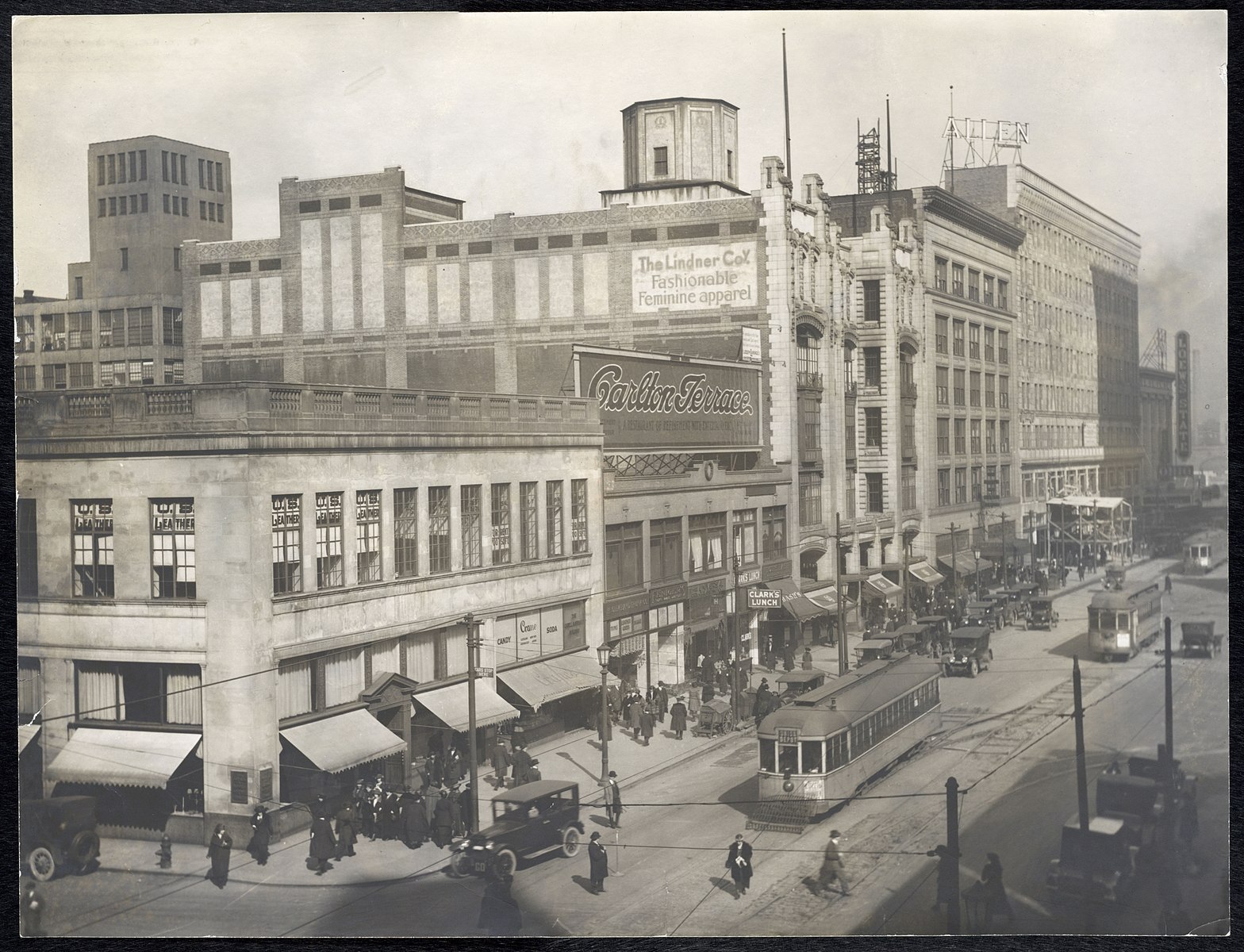
Cleveland in 1922, when the city was more walkable. Note the trolleys, which eventually succumbed to Americans’ love affair with the automobile.

For decades, cities were planned around cars and the convenience of people driving in from the suburbs. Now planners are giving more thought to urban quality of life and the “15-minute city” — even looking back to the Old Days for ideas. How lovely to live in a city and be able to do most of your daily errands within 15 minutes of your home!

Adele Peters writes at Fast Company, “When Paris mayor Anne Hidalgo touted the idea of becoming a 15-minute city — a place where it’s easy to reach work, school, stores, and other destinations on a short walk or bike ride — it didn’t have as far to go as many other cities. Hidalgo has pushed for multiple changes to help cut air pollution and improve quality of life, from making a highway car-free to adding so many bike lanes that the streets now look more like Copenhagen. But Paris was already compact, densely populated, and relatively easy to walk. …

“The goal is a bigger challenge in Cleveland, which currently has a Walk Score of 57 (Paris has a perfect score, 100 out of 100). Cleveland’s 35-year-old mayor [Justin Bibb], who took office earlier this year, still wants to move in the same direction.

“ ‘We’re working toward being the first city in North America to implement a 15-minute city planning framework, where people — not developers, but people — are at the center of urban revitalization, because regardless of where you live, you have access to a good grocery store, vibrant parks, and a job you can get to,’ Bibb said in his first State of the City speech in April. …

“The city was more walkable in the past, and more people lived a short distance from their jobs. ‘We had an industrial heritage, and we had housing very proximate to these plants and factories where people worked,’ says Jeff Epstein, the city’s chief development officer. Corner stores and other neighborhood retail shops were also within walking distance from homes. But as factories closed, and highways helped spawn the growth of suburbs, city neighborhoods became much less dense, and people had to travel farther. …

“Says Jason Kuhn, communications manager at the bike advocacy group Bike Cleveland, [‘You] ended up with this network of roads that are really built for car movement efficiency, and really not for people on bikes. There’s a potential, absolutely, to turn back to the other direction and really make the city work for the people who live there.’

“New protected bike lanes that run through the middle of the city and from east to west are already planned, though the overall bike network needs to improve. ‘You might have a road where there’s a bike lane for a mile, and then maybe it’s gone for two, so it’s kind of broken,’ he says. ‘So it’s still difficult to move around the city by bicycle just because the network is incomplete.’ A new ‘complete streets’ ordinance will help improve planning and deal with challenges like wide streets that are difficult for pedestrians to cross, he says.

The city is also starting to map out assets like parks and stores and identify which neighborhoods have the most potential now to be 15-minute neighborhoods. …

“Planners are also looking at where there are clusters of amenities near transit, and looking for ways to increase the number of people living in those areas. A neighborhood called Detroit Shoreway has the basic assets of a 15-minute city, but needs around 18,000 more housing units strategically located near public transit. There’s plenty of space, they say, to build new housing, from former industrial sites to closed fast-food restaurants, underused parking lots, and land owned by the city itself.

“On the riverfront — where the water was once so polluted that it famously caught on fire, but is now much cleaner — a new 35-acre development plans to add new park space, 2,000 housing units, and new office and retail space, all designed to encourage people to live downtown and easily walk where they need to go.

“ ‘We came in with that as a fundamental objective — planning to create 15-minute neighborhoods, and also to be an essential component of getting downtown Cleveland to be part of an 18-hour city, which in essence means that folks can come downtown and find something to do for at least 18 hours of the day,’ says Kofi Bonner, CEO of Bedrock, the real estate firm developing the site. The firm just completed a master plan for the area; the first steps for construction could begin in 2024, depending on the city permitting process, but the full project will take 15 to 20 years. The development will help connect the riverfront to the rest of downtown.”

My friend Mary Ann bikes Cleveland with her family. I love seeing her photos of nighttime group rides.

More at Fast Company, here.

Read Full Post »

merlin_141879969_eeff1f2b-bf6b-42a2-be3f-3bd75ef7ae51-superjumbo

Photo: Gabriela Bhaskar for the New York Times
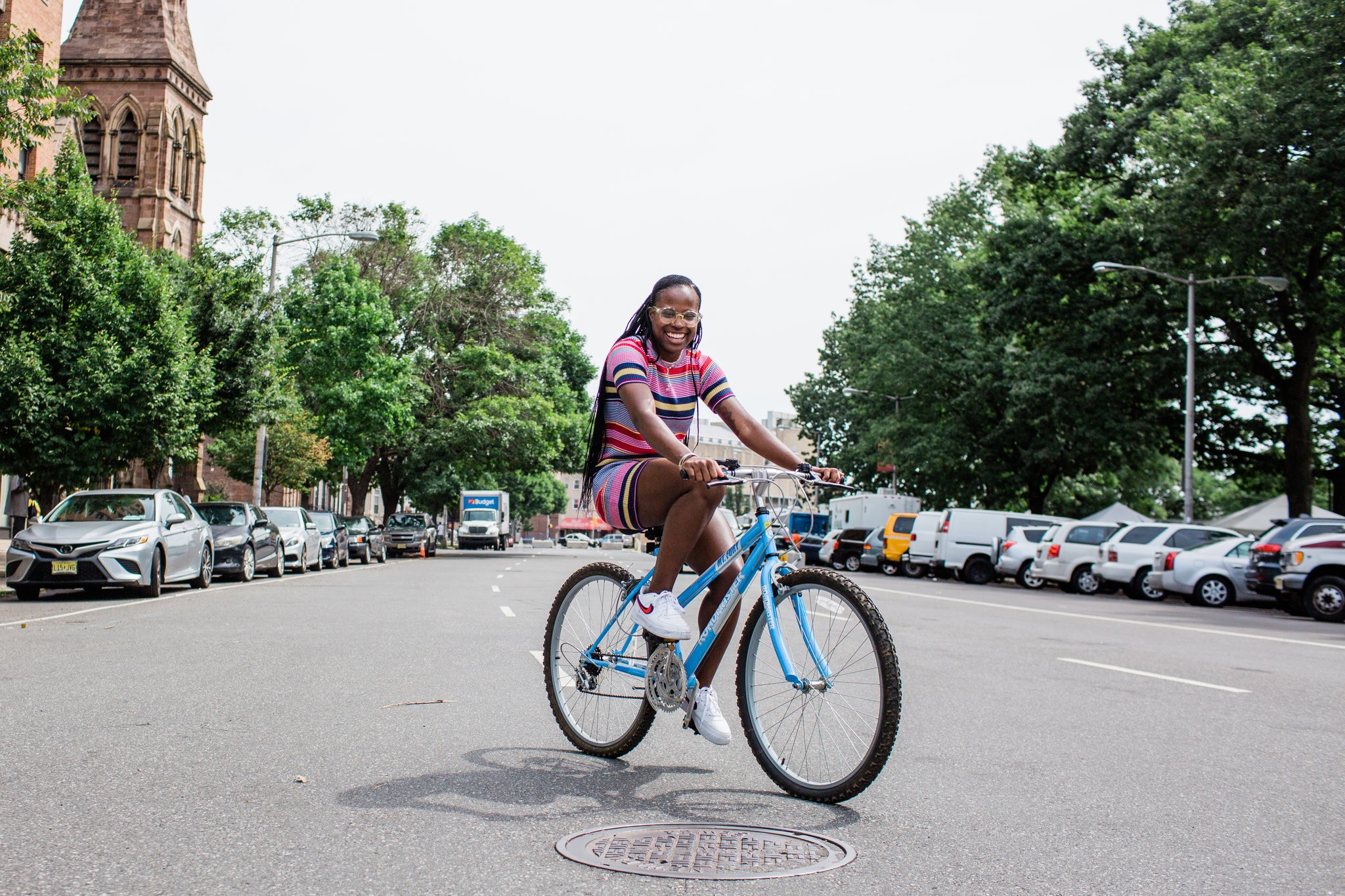
A graduate of Rutgers University in Newark is teaching girls to ride bicycles as part of a program run by the organization she founded, Girls on Bikes.

I love reading how a small gesture or comment can lead to something big in a person’s life. It’s all about the Power of One. In this story, a bystander said something upbeat to Kala La Fortune Reed when she was biking to class, and it led to a movement.

Liz Leyden writes at the New York Times, “The training wheels were off. The young woman with a bright smile and golden sunglasses told Kaneisha Marable she didn’t need them. The little girl believed her.

“Kaneisha pedaled a wobbly path up the block beside Lincoln Park. House music thumped from the stage to her left, a festival underway, but the 8-year-old girl paid it no mind. Her eyes darted between the pavement ahead and Kala La Fortune Reed, the woman jogging by her side.

“The bike tipped. Kaneisha teetered. Finally, the wheels began to spin. Ms. La Fortune Reed let go, watching girl and bike move farther away.

“ ‘Yes, she’s got it,’ she exhaled. ‘You got it!’

“The victory came on a [Sunday in August] at a learn-to-ride clinic run by Girls on Bikes, a community group aiming to achieve pedal equality for a new generation of girls and women in Newark.

“The effort began in 2016 when Ms. La Fortune Reed rediscovered her old bicycle and started riding everywhere: to classes at Rutgers University in Newark, thrift shops and parks throughout the city.

“One day, a man called out to her. Keep it up, he said. There aren’t enough girls on bikes.

“Ms. La Fortune Reed scanned the streets and realized he was right. … She recruited Maseera Subhani and Jenn Made, friends from Rutgers who shared her love of cycling and for Newark itself; the idea of using bicycles to spread empowerment resonated with each of them.

“The trio juggled full-time classes and part-time jobs to get the group going. Ms. La Fortune Reed interned with a local bike mechanic and learned how to repair bikes and build them from scratch. Ms. Made created a curriculum for school workshops. Ms. Subhani found graphic designers to make fliers and T-shirts, and reached out to other community groups to collaborate. …

” ‘We wanted to create a sisterhood,’ Ms. La Fortune Reed said. ‘We go really slow. We have fun. We’re doing this to build relationships, to build a movement.’ …

“Ms. La Fortune Reed said Girls on Bikes tries especially hard to reach girls in middle school.

“ ‘We try to catch them at that age, to build up bicycling and the idea of empowerment and leadership, before peer pressure hits,’ she said.

“In June, the group taught a four-week workshop for sixth- through eighth-grade girls at Marion P. Thomas Charter School. …

“ ‘Before, there was a negative connotation for a lot of them — this idea that if you rode a bike it meant you couldn’t afford a car, that you weren’t cool,’ [the teacher] said. ‘But having that reimagined by these strong, stylish young women, the students really bought into it.’ …

“More than 80 children, including 45 girls, participated throughout [the August bike] weekend. Some didn’t need any help, just a nudge to put on helmets. Simply watching them enjoy the bicycles made Ms. La Fortune Reed happy.

“But the moments when she saw girls growing in their confidence — testing out no-hands, standing on their pedals, letting go of training wheels — meant something more. ‘We’re leaving a memory in their lives that they can accomplish anything,’ she said.

“When Kaneisha Marable realized that she was riding on her own, she looked back at Ms. La Fortune Reed, astonished. She rode and rode and then ran off, returning a few minutes later with her mother. She climbed back on the bicycle.

“ ‘Look, Mommy, look! Look what I learned to do!’ ”

More at the New York Times, here.

Read Full Post »

Dan Holin, who used to run a Concord-Lowell volunteer partnership called the Jericho Road Project, is now director of special projects at UTEC in Lowell. (UTEC doesn’t use the longer title its youth founders originally came up with, but since people ask, it was United Teen Equality Center.)

UTEC describes itself as a nonprofit that “helps young people from Lowell and Lawrence, Mass., trade violence and poverty for social and economic success. It works to remove barriers that confront them when they want to turn their lives around and offers young people paid work experience through its social enterprises: mattress recycling, food services and woodworking.”

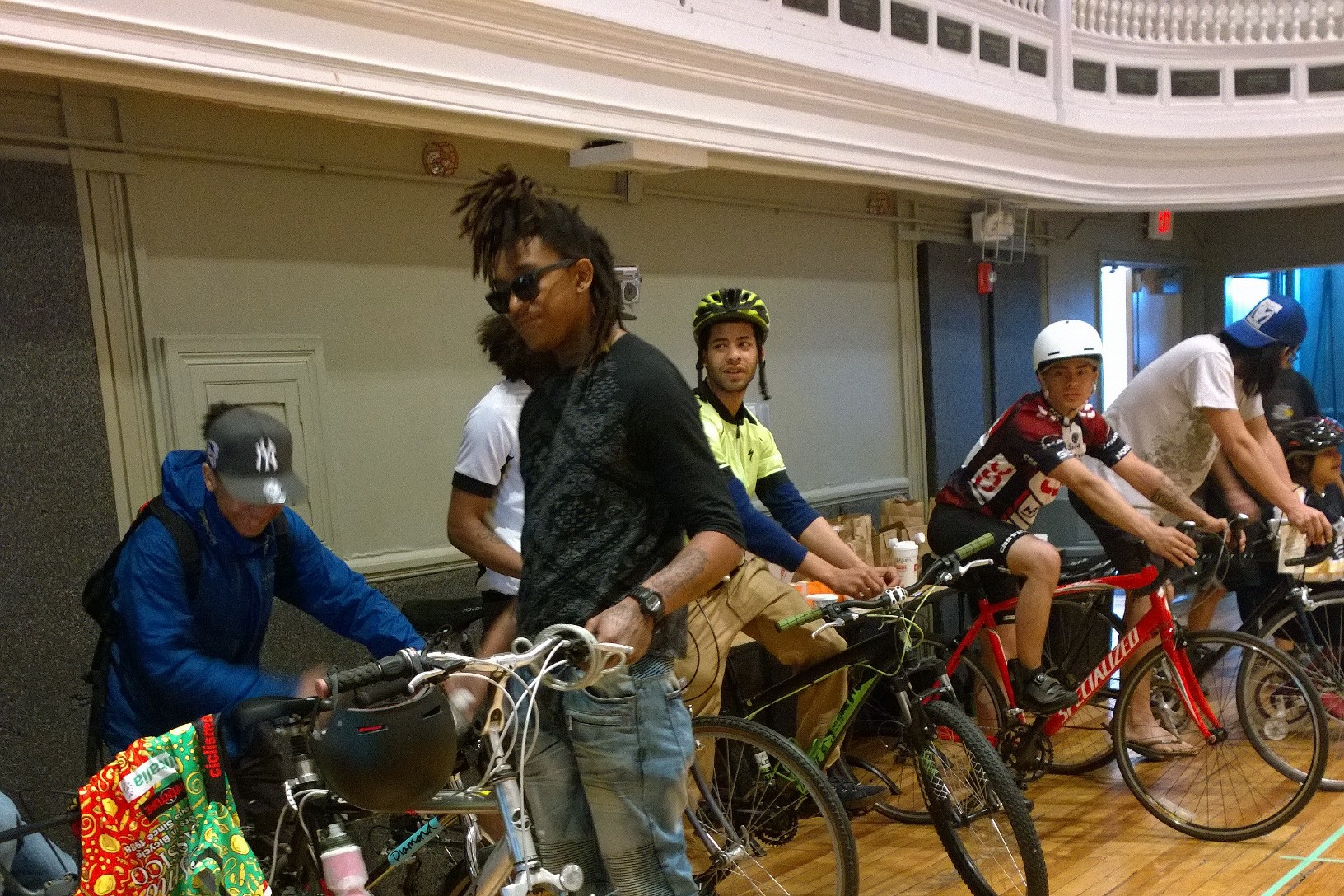
On May 15, Acton’s Pedal Power joined members of the Concord-based Monsters in the Basement bicycling club to share their bike-repair expertise with young people who wanted to acquire bikes and learn to maintain them. Holin, a serious biker himself, organized the event to give UTEC young people two things that he said they normally lack: transportation and fun.

At the event, one of them, Sav, recounted his story of change. Before UTEC I never talked to anyone,” he said. “I was a problem child on the streets. I was hanging around with gangs, selling drugs. I don’t do that now. Seven months ago, I moved from a place with nothing positive. Atlantic City. I let my family know I’m ready to live life. It was hard for me to get into something good: I’ve got a lot of tattoos and a record. But I’m in the culinary program here. It’s a family. They make you feel like you are somebody that has a chance. They give me love like a family. They changed my life for the better. There are so many new things to do here. Yesterday I went kayaking.”

More here.

Sav, in sunglasses, got a good bike at UTEC’s bike event in Lowell on May 15. The bike will provide transportation to his job at UTEC. It will also provide some much needed fun.

051516-UTEC-bike-clinic.jpg

Read Full Post »

Got this from SmallerCitiesUnite! on twitter.

Rachel Walker writes at PeopleForBikes.org, “How do you get more people on bikes? Go to where they are, open up a ‘shop,’ teach them to build and maintain a bike. Help them earn a bike. Repeat.

“This is the philosophy behind the myriad of community bike shops sprouting up in inner-city neighborhoods throughout the country. Non-profit organizations that cater to the underserved aim to destigmatize and popularize cycling among communities that have probably not heard of Strava or clipless pedals. In these neighborhoods, bicycle lanes, racks, and, most importantly, riders, are noticeably absent.

“And that, according to the forces behind community bike shops, must change—for multiple reasons.

“ ‘For our core constituents, getting a bike and learning how to maintain it is about economic mobility,’ says Ryan Schutz, executive director of Denver’s Bike Depot. ‘Owning a bike lets them travel farther to find work and spend their money on food, instead of on gas or bus fares.’

“Like the majority of community bike shops, Bike Depot puts bikes into the hands of people who otherwise couldn’t afford them or may not choose to buy them. The organization accomplishes this through earn-a-bike programs and by selling low-cost refurbished bikes. They also teach members bike safety and maintenance skills.” More here.

Sounds like a variation on Bike Not Bombs, which started in the Greater Boston area several decades ago, refurbishing donated bicycles and sending them to poor countries.

Here’s what Bikes Not Bombs says on the website: “Bikes Not Bombs uses the bicycle as a vehicle for social change. We reclaim thousands of bicycles each year. We create local and global programs that provide skill development, jobs, and sustainable transportation. Our programs mobilize youth and adults to be leaders in community transformation.”

All good stuff.

Photo: People For Bikes
The Community Cycling Center in Portland, Oregon, offers bike camps to local kids.

Read Full Post »