Feeds:
Posts
Comments

Posts Tagged ‘biodiversity’

Photo: North Carolina Arboretum
Plant physiologist Joe-Ann McCoy extracts seeds from black cohosh collected in western North Carolina.

A plant physiologist, worried about the future effects of global warming on biodiversity in Appalachia, is not only preserving seeds but working to attract preservation-based economic development. It would be almost like getting a sponsor for one of the plants there, a plant whose roots are used in popular herbal remedies.

At Yale Environment 360, Nancy Averett writes, “When she can spare the time — away from the grant applications, journal articles, and economic reports strewn across her desk — plant physiologist Joe-Ann McCoy laces up her hiking boots and heads to the Pisgah National Forest in western North Carolina.

“Dodging copperheads and black bears, she winds her way deep into the forest, her eyes scanning the lush understory for black cohosh, a native plant whose roots have been used in herbal remedies for centuries, primarily to treat symptoms related to menopause. When she spots her quarry, McCoy gently pulls the plant’s seed pods — tiny brown orbs that rattle when shaken — off the stem and slips them into a paper envelope.

“The seeds inside those pods — which will be cleaned, vacuum-packed, and then stored in a freezer at -20 degrees Fahrenheit — give McCoy hope. As the director of the North Carolina Arboretum’s Germplasm Repository, her job is to preserve native seeds in this highly biodiverse area in southern Appalachia before climate change makes it impossible for some native vegetation to survive there.

“But the black cohosh holds another promise, as well. The plant’s roots are used in top-selling herbal remedies, and, if someone could succeed in growing black cohosh as a crop and manufacturing supplements here [it] could help drive economic development in this job-scarce region. …

“North Carolina [is] special in terms of biodiversity. Studies have documented more than 4,000 species of plants, 2,000 species of fungi, and 500 species of mosses and lichens in the region. Unlike much of the U.S. East Coast, during the last three ice ages the ground in this region did not freeze, which means the plants here have a much longer genetic history and more diversity than in other areas.

‘If I had to pick one place in the entire U.S. for this project,’ McCoy says, ‘it would be here. This is the ultimate spot.’ …

“When she first came to the arboretum, she focused on black cohosh and creating a robust seed collection from the plant’s entire geographic range — she has 22 different strains — and then growing plants from each strain so she would have enough seeds to back up her collection in three different repositories. These include two federal storage sites — in Ames, Iowa and Fort Collins, Colo. — plus the Svalbard Global Seed Vault in Norway.”

After cataloging the seeds, McCoy turns her attention to the economic possibilities. Read here about her work with investors. The Yale article also describes her ginseng efforts and her assistance to Cherokees who value plants used in traditional medicine.

Read Full Post »

My friend Kristina is an artist with a long-time interest in shells. At a Harvard-based shell club that she frequents, she meets many interesting artists and scientists — including George Buckley, a Caribbean coral reef researcher who made the video below.

Buckley says, “Little did I know in 1976 that my first visit to Bonaire to study land snails … and dive with Captain Don Stewart would lead to a career interconnected with Bonaire and to some 100 more return trips!

“Bonaire became the focus of case study after case study of marine management and biodiversity in my Harvard University environmental management program. [Dozens] of research and study groups, students, magazine writers and photographers that I brought to the island all fell in love with the landscapes and the emerald sea of Bonaire.

“The early years of the Bonaire Marine Park [BMP] and STINAPA [Dutch acronym for national park] … were a great adventure and while my efforts with the Carco Project and Marecultura were not as successful as hoped, both helped to lay the groundwork for future efforts around the world as to best practices in that field.

“The BMP’s pioneering leadership in education, moorings, gloves policies, banning light sticks and spearfishing, creating the ‘Nature Fee’ and so much more led to Bonaire’s well-deserved world-wide recognition. The efforts to save Klein Bonaire were a testament to international collaboration and stand to this day as the Hallmark of what a committed group of concerned people can accomplish. It is indeed true that Bonaire is to conservation of nature as Greenwich is to time – with credit to Captain Don.”

If you are on Facebook, check out the rest of Buckley’s post.

Photo: Sand Dollar in Bonaire


Read Full Post »

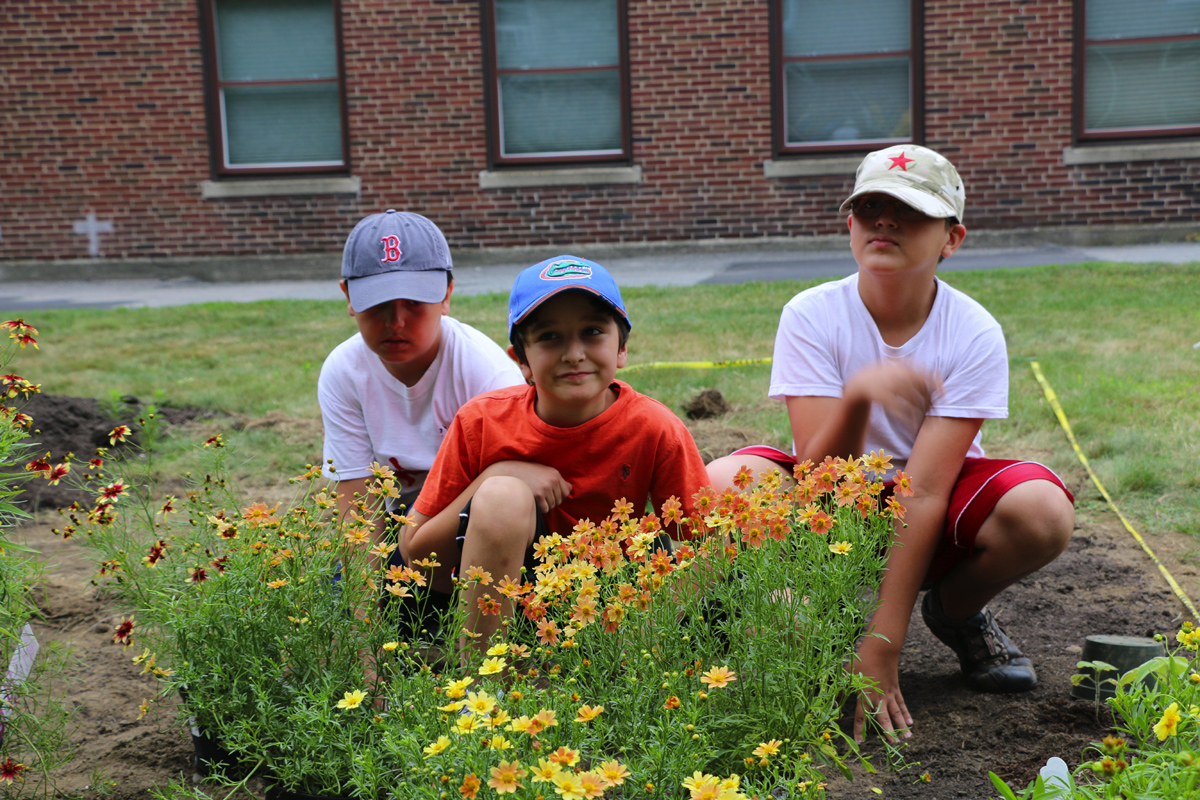
In June I wrote (here) about my friend Jean Devine’s latest venture, “Meadowscaping for Biodiversity.” Jean hoped to get middle-grade kids involved in creating a meadow where once there was lawn juiced with chemicals — and learning how meadows provide habitat for many small creatures. She conducted a pilot program over the summer with her collaborator Barbara Passero and an 8th grade science teacher, Steve Gordon.

Jean e-mails her friends and fans, “We’re delighted to announce that our 8-week summer pilot of “Meadowscaping for Biodiversity” in Waltham, MA, was a great success! The three of us, along with a strong soil turner and a landscape designer, worked with a few boy scouts (and their mothers) to repurpose a 400 square foot plot on the east lawn of Christ Church Episcopal (750 Main St. across from the Waltham Public Library) into a meadow filled with native plants.

“Why did we do this? To engage youth in fun, project-based, outdoor education, while providing native plants as habitat — especially food source — for bees, caterpillars, butterflies, birds, etc.

“The end result? An aesthetically pleasing product and proof that Meadowscaping for Biodiversity, a generative/environmental education program, pays a solution forward to the next generation by inspiring, engaging, and empowering students to be problem solvers and stewards of the Earth. All involved, including the vendors who supplied plants and garden materials, were able to see that this program helps heal the Earth and improve outdoor educational opportunities for youth ‘one meadow at a time.’ Now all we have to do is convince funders, teachers, city planners etc. of the benefits of this program!”

If you fit any of those categories or just want to learn more, contact information is here.

biodiversity-kids

Read Full Post »

My friend Jean Devine is always up to something interesting. A Brown U grad, with an MBA from Simmons, she used to work in investor relations but in recent years has been testing the waters of social entrepreneurship.

Her latest initiative, with Barbara Passero of Sandpiper Creative, is called meadowscaping and is intriguing on many levels.

With access to a Waltham church lawn for a summer youth program, Jean and Barbara will work with kids to convert the yard into a meadow that uses native species from Garden in the Woods and provides a habitat to the bugs and other small creatures that make a healthy environment.

From the Meadowscaping for Biodiversity website: Meadowscaping “is an outdoor, project-based, environmental education program that provides middle school youth with real-world experiences in STEAM learning (Science, Technology, Engineering, Arts and Math), while inspiring and empowering them to address challenges to the environment and our society.

“Today, few children spend time experiencing Nature and the benefits of outdoor recreation, education, and contemplation. Founder and former Director of the Children and Nature Network (C& NN) Richard Louv coined the phrase nature-deficit disorder to describe the negative effects of reduced outdoor time on children’s development. …

“Children who spend little time outdoors may value nature less than children who spend time outdoors in free play. Similarly, children who feel part of something bigger than themselves may … understand their dependence on a clean environment and know that they are responsible for caring for the Earth as their home.” More here.

The idea behind the meadowscaping summer program is that children, both at a young age and as they become adults, can actually do something about the environment.

Remember our post “The Doctor Is In” about the woman who sets up in a Providence park to listen to your worries about global warming (here)? Stop worrying and do something, say the meadowscape entrepreneurs. Give up lawn chemicals, plant a meadow, provide a home for tiny necessary critters, and work to make change.

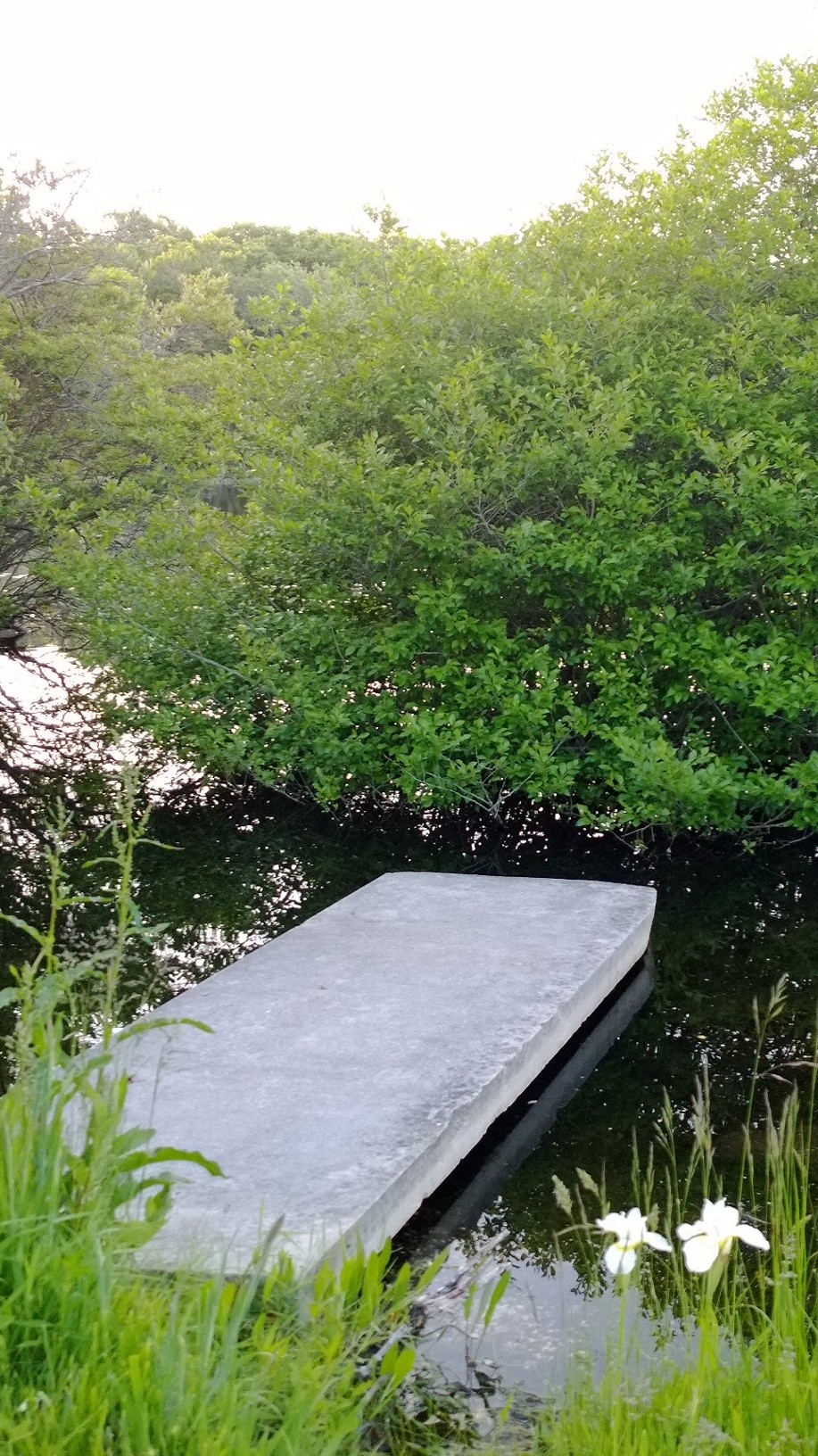
white-iris-in-morning

Read Full Post »

Cathryn J. Prince has a story in the Christian Science Monitor about a research ecologist who thinks we can have our cake and eat it too: that is, have a strong economy and a sustainable future.

Prince writes, “As head of the conservation biology department at Antioch University New England in Keene, NH, [Tom] Wessels isn’t against chopping down trees or clearing land to farm. He just wants to see more people embrace sustainable forest and land management practices.

“Wessels, trained as a research ecologist, says economics plays as much a role in protecting the environment as does saving energy. Think how the adoption of fair trade principles for growing and selling coffee have changed the economics of that industry. Forests can benefit in the same way.

“ ‘Adam Smith, the father of modern economic theory, wrote about this in Wealth of Nations,’ Wessels says. ‘People will act out of self-interest, but they can support each other doing it. …

“Market forces can help to conserve forests and farmlands, says Wessels, who also serves as chair of the Vermont-based Center for Whole Communities. …

“ ‘We are incredibly frivolous about our energy use,’ Wessels says. ‘Any organism or population that is energy wasteful gets selected out of the system.” Charles Darwin explained this when he wrote about survival of the fittest, he says. Survival of the fittest also means survival of the most adaptable, and the most energy efficient, he says. …

“Partnering with more than 400 organizations in 47 states, Whole Communities aims to help create communities where people rely on each other for their food and other needs.

“For example, Wessels would like to see Detroit become a different kind of urban jungle. The city has lost about 50 percent of its population since the late 1980s. Empty lots abound. But now community gardens have begun to fill these open tracts with food crops. The Detroit Food Policy Council and the city government want to make Detroit food secure by 2020 – meaning that everyone will have access to sufficient, safe, and nutritious food.

“ ‘A lot of our focus is around food security,’ Wessels says. ‘Detroit will become a model for other urban areas.’ ” More here.

Photograph: Cathryn J. Prince

Read Full Post »

« Newer Posts