Feeds:
Posts
Comments

Posts Tagged ‘cactus’

Photo: ItalianNotes.
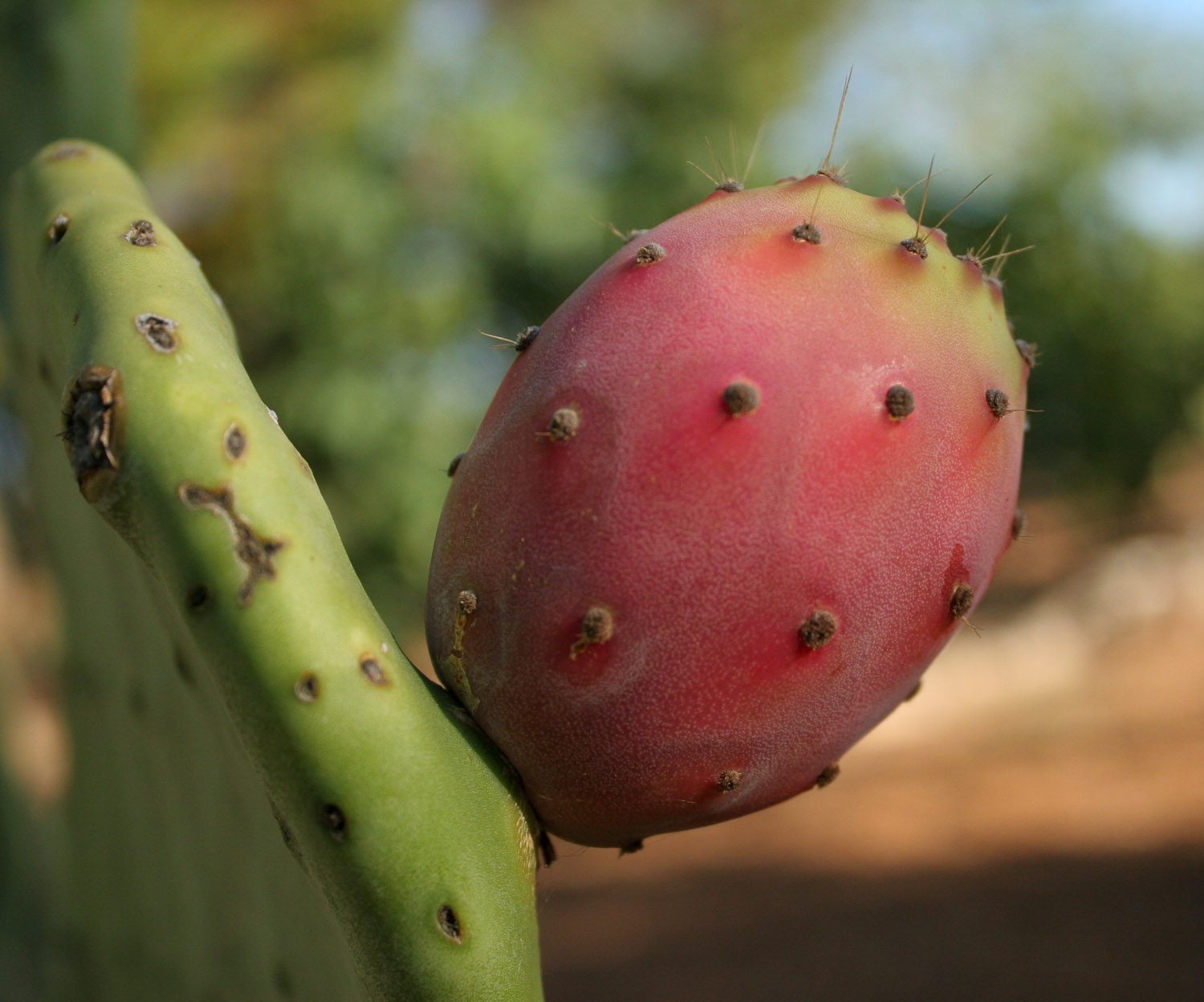
Prickly pear, or cactus pear. When Italy suffers from drought, some people turn to an edible cactus.

A while ago I posted photos I’d taken in New England and was surprised to see a cactus this far north. Hannah called it “prickly pear” and told me it was known for its versatility. It’s apparently the same cactus that Italy is looking to as a reliable food source.

Stefano Bernabei and Gavin Jones write at Reuters, “Global warming, drought and plant disease pose a growing threat to agriculture in Italy’s arid south, but a startup founded by a former telecoms manager believes it has found a solution: Opuntia Ficus, better known as the cactus pear.

“Andrea Ortenzi saw the plant’s potential 20 years ago when working for Telecom Italia in Brazil, where it is widely used as animal feed. On returning to Italy he began looking at ways to turn his intuition into a business opportunity.

“He and four friends founded their company, called Wakonda, in 2021, and began buying land to plant the crop in the southern Puglia region where the traditionally dominant olive trees had been ravaged by an insect-borne disease called Xylella.

“The damage from the plant disease has been compounded by recurring droughts and extreme weather in the last few years all over Italy’s southern mainland and islands, hitting crops from grapes to citrus fruits.

“Ortenzi is convinced the hardy and versatile cactus pear, otherwise called the prickly pear or, in Italy, the Indian fig, can be a highly profitable solution yielding a raft of products such as soft drinks, flour, animal feed and biofuel. …

” ‘As an industry, cactus pear production is growing rather quickly, especially for fodder use and as a source of biofuel,’ said Makiko Taguchi, agricultural officer at the United Nations’ Food and Agriculture Organization headquartered in Rome.

“The cactus produces a tasty fruit eaten in much of Latin America and the Mediterranean, while in Mexico the flat green pads that form the arms of the cactus, are used in cooking. In Tunisia, where it covers around 12% of cultivated land, second only to olive trees, the cactus pear is a major source of income for thousands, particularly women who harvest and sell the fruit.

“In Brazil, which has the world’s largest production, it is mainly cultivated in the north-east for fodder, while Peru and Chile use it to extract a red dye known as Cochineal, used in food and cosmetic production.

Sportswear group Adidas and carmaker Toyota have recently shown interest in using the cactus to produce plant-based leather sourced mainly from Mexico.

“The cactus pear is not yet included in the FAO’s agricultural output statistics, but Taguchi cited the rapid expansion of CactusNet, a contact network of cactus researchers and businesses worldwide which she coordinates. …

“The plant, native to desert areas of south and north America, thrives in the increasingly arid conditions of Italy’s south, and needs ten times less water than maize, a comparable crop whose byproducts also include animal feed and methane. …

“Of the roughly 100,000 hectares of olive trees destroyed by Xylella in southern Puglia, only 30,000 will be replanted in the same way, [Ortenzi] told Reuters in an interview. ‘Potentially 70,000 could be planted with prickly pears,’ he said. …

“Wakonda’s business model discards the fruit and focuses instead on the prickly pads, which are pressed to yield a juice used for a highly nutritious, low-calorie energy drink. The dried out pads are then processed to produce a light flour for the food industry or a high-protein animal feed.

“Wakonda’s circular, ecological production system also includes ‘biodigester’ tanks in which the waste from the output cycle is transformed into methane gas used as a bio-fuel either on site or sold. …

“Under Ortenzi’s business plan, rather than buying up land to plant the cactus, Wakonda aims to persuade farmers of its potential and then license out to them, in return for royalties, all the equipment and know-how required to exploit it.

” ‘The land remains yours, you convert it to prickly pears and I guarantee to buy all your output for at least 15 years,’ Ortenzi said.”

Hmmm. I have two issues. Throwing out the fruit seems super wasteful. And methane may be a biofuel, but it’s no better for the environment than fossil fuel. What do you think?

More at Reuters, here. No firewall.

Read Full Post »

Photo: Suzanne’s Mom.
One of my granddaughters made this gingerbread house from a kit. The idea for a carrot was her own.

Time for another photo round-up.

Sandra M. Kelly surprised us with a picture of Patrick making a mince pie for Thanksgiving. And, here, we thought Sandra was the only chef!

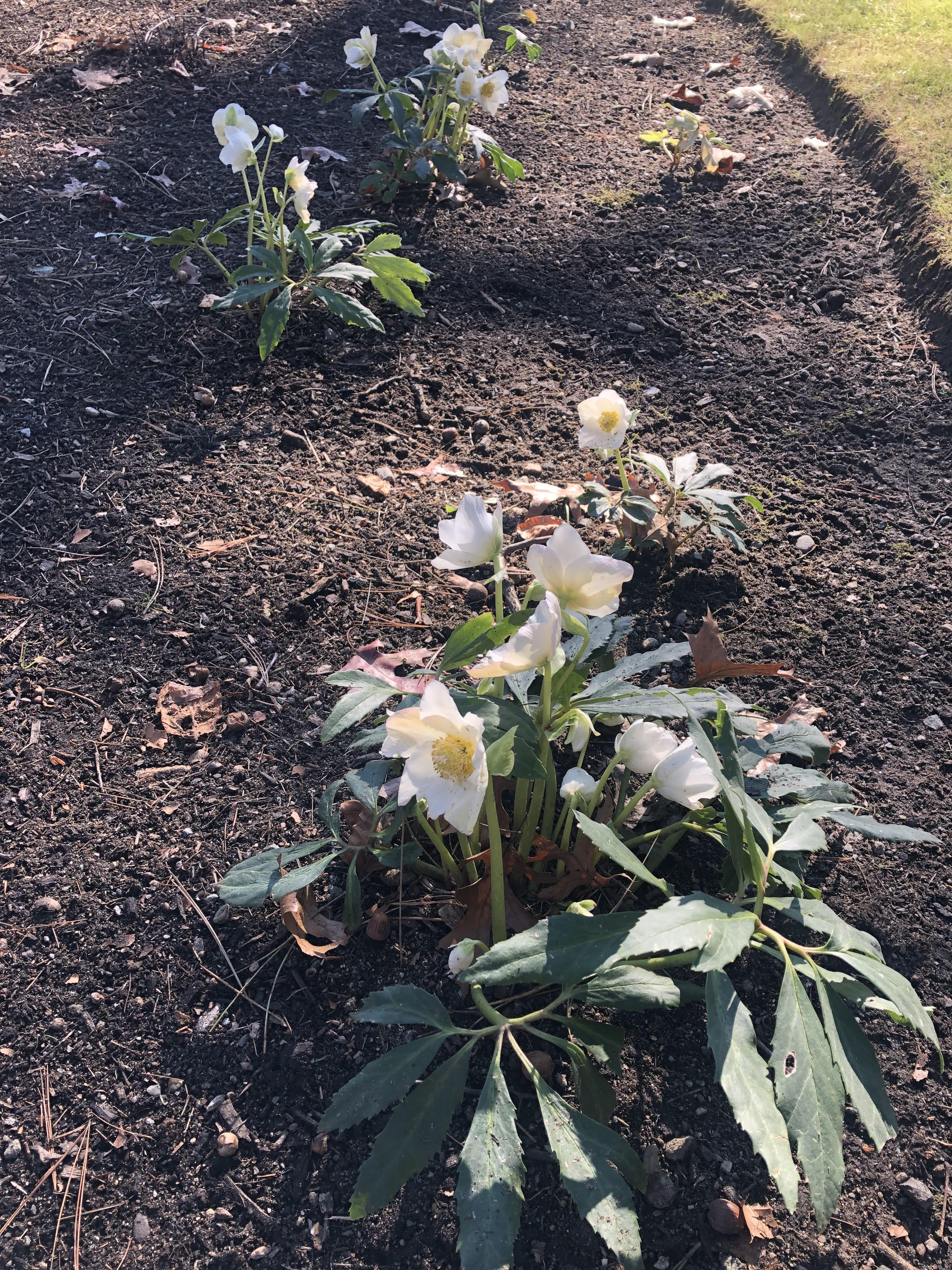
The hellabore below loves cold weather. You can understand why it’s sometimes called Christmas Rose.

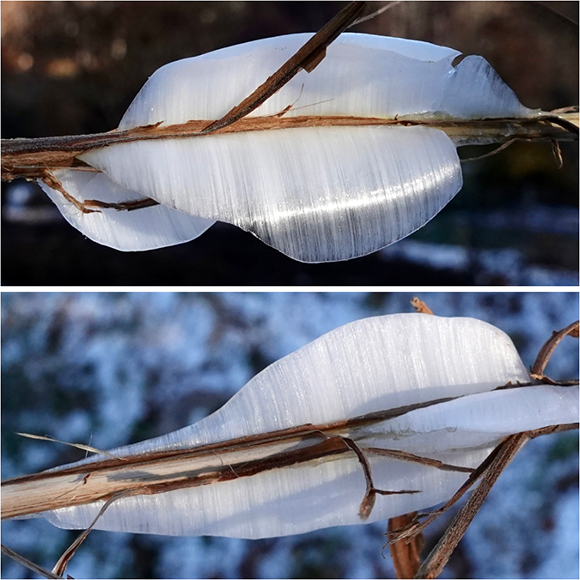
My husband sent me photos of mysterious “ice flowers,” taken by Ned Friedman, director of Harvard’s Arnold Arboretum. The flowers formed the other day on a herbaceous Chinese plant called Isodon henryi, and even Friedman doesn’t know for sure what conditions cause the phenomenon.

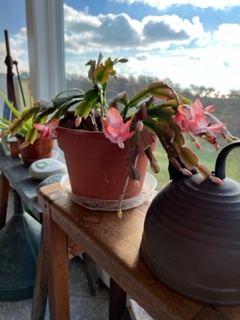
Sandra also sent the photograph of the Christmas cactus. She’s a genius at rescuing cacti that people like me can never get to bloom. I have her instructions if you want to try.

In the next picture, you see our niece, who’s a genius with youth orchestras in North Carolina. She gets pretty worn out with concerts at this time of year.

Stuga40’s snowy image was shot in Stockholm. She is now in New England for a visit with Erik, Suzanne, and our half-Swedish grandchildren. Maybe she’ll have other snowy photos after the family goes skiing in Vermont.

The next snow scene was shot in my own yard. Our first snow this year. The last two photos need no explanation.

PS. 12/22/22. I’m sharing the worn bench at Hannah’s church in Philadelphia, because I love worn benches. I wish I had photographed the really beat-up one I admired on a train platform yesterday.

Read Full Post »

Photo: Tini and Jacob Wijpkema.
Rare cactus, Copiapoa cinerascens, found in Chile. According to the NY Times, “Cactus traffickers are cleaning out the deserts.”

Today’s story, about an endangered cactus from Chile, demonstrates the role individuals’ tastes can play in the environment. Our individual choices add up to a force for right or wrong, whether we leave our engine running while we go shopping or we collect plants and animals because they are rare. “One and two and 50 make a million,” you know.

At the New York Times, Rachel Nuwer says some rare cactuses are getting too popular with unscrupulous collectors.

“Andrea Cattabriga has seen a lot of cactuses where they didn’t belong. But he’d never seen anything like Operation Atacama, a bust carried out last year in Italy. A cactus expert and president of the Association for Biodiversity and Conservation, Mr. Cattabriga often helps the police identify the odd specimen seized from tourists or intercepted in the post.

“This time, however, Mr. Cattabriga was confronted by a stunning display: more than 1,000 of some of the world’s rarest cactuses, valued at over $1.2 million on the black market.

“Almost all of the protected plants had come from Chile, which does not legally export them, and some were well over a century old. The operation — which occurred in February 2020, but is being made public now because of the cactuses’ recent return to Chile — was most likely the biggest international cactus seizure in nearly three decades. It also highlights how much money traffickers may be earning from the trade. …

‘Here is an organism that has evolved over millions of years to be able to survive in the harshest conditions you can find on the planet, but that finishes its life in this way — just as an object to be sold,’ [Mr. Cattabriga] said.

“As with the market for tiger bones, ivory, pangolin scales and rhino horn, a flourishing illegal global trade exists for plants. ‘Just about every plant you can probably think of is trafficked in some way,’ said Eric Jumper, a special agent with the Fish and Wildlife Service. Cactuses and other succulents are among the most sought after, along with orchids and, increasingly, carnivorous species.

“Trafficking can take a serious toll. Over 30 percent of the world’s nearly 1,500 cactus species are threatened with extinction. Unscrupulous collection is the primary driver of that decline, affecting almost half of imperiled species. Yet this realm of illegal trade is typically overlooked, a prime example of ‘plant blindness,’ or the human tendency to broadly ignore this important branch on the tree of life.

“ ‘The basic functioning of the planet would effectively grind to a halt without plants, but people care more about animals,’ said Jared Margulies, a geographer at the University of Alabama who studies plant trafficking. ‘A lot of plant species are not receiving the amount of attention they would be if they had eyes and faces.’

“Yet the size of Operation Atacama could be a notable exception. It is also the largest known example of cactuses stolen from the wild being repatriated for reintroduction into their native habitat.

“Experts also hope the case can be a turning point for how countries, collectors, conservationists and the industry deal with the thorny issue of international cactus trafficking.

“ ‘Society as a whole can no longer continue to have a naïve view of this problem,’ said Pablo Guerrero, a botanist at the University of Concepción in Chile. …

“Cactuses confiscated by the Italian authorities are normally destroyed or, if they are rare species, sent to botanical gardens. But with Operation Atacama, ‘it was very different,’ Mr. Cattabriga said. … At first, there was discussion of sending the plants to other botanical gardens in Italy and broader Europe. But Mr. Cattabriga, [Lt. Col. Simone Cecchini, chief of the wildlife division of the local police department] and Dr. Guerrero were adamant they be returned to Chile for both conservation and symbolic purposes.

“Working with [Bárbara Goettsch, co-chair of the Cactus and Succulent Plant Specialist Group at the International Union for Conservation of Nature] and several others, they spent much of 2020 navigating Italian, Chilean and international bureaucracy to secure permission to send the plants home. ‘It’s the first time this has happened, so no one was really clear on how to do this,’ Dr. Guerrero said.

“The authorities finally agreed to the transfer in late 2020. But neither Chile nor Italy would pay the approximately $3,600 shipping cost.

“Dr. Goettsch managed to secure about three-quarters of the funds from the International Union for Conservation of Nature, and the botanical garden in Milan pitched in as well. The rest was provided by Liz Vayda, owner of B. Willow, a plant shop in Baltimore that regularly donates to environmental groups.

“Finally, in late April, 844 cactuses made the return journey to Chile.”

Read about the homecoming at the Times, here.

Read Full Post »