Feeds:
Posts
Comments

Posts Tagged ‘costume’

Photo: John Tlumacki/Globe Staff.
Pencilito the Clown, aka Luis Myorga from Guatemala (right), leads a group of clowns as they romp around the lobby at Boston’s Revere Hotel.

Today’s story about a clown convention has made me think how many different roles clowns have served through the ages. There have been court jesters who entertained kings by making them laugh or knocking them down a peg with impunity. There have been clowns that served religious purposes. In fact, I have a brother who worked as a clown at his church for many years.

From an early March Boston Globe feature by Claire Thornton we learn that professional clowns from around the world recently “gathered for the World Clown Association’s annual convention, dubbed the ‘greatest clown confab on Earth.’

“More than 150 professional clowns converged Wednesday at the Revere Hotel on Stuart Street, where they attended workshops on everything from balloon art to puppeteering to make-up application. While the lectures were invariably interrupted by the sounds of clucking rubber chickens, honking horns, and guffaws, the gathering was no laughing matter.

“The five-day convention, which continues through Friday, has drawn attendees from around New England and the world. Renowned instructors and performers, including former Ringling Bros. circus clowns, have put the focus on traditional comedic and circus clowning.

“ ‘Our goal is to put smiles on people’s faces,’ said 79-year-old incoming WCA president Louise Carnesale, a former New York state government administrator who performs as ‘Lulu the Clown’ in Alabama and Florida.

“Though some circuses have struggled in recent years (Ringling Bros. folded up its tent in 2017 before restarting in 2023), groups like the WCA continue to find new avenues for clowning, attendees said. But whether they work under a big top or not, conference attendees said they remain inspired by clowning greats like Charlie Chaplin, not to mention memorable characters from The Carol Burnett Show and elsewhere back in the 1970s.

“Many attendees had backgrounds in nursing, social work, or the military. Their prior jobs, which often required tackling tough issues in staid professional settings, led them to clowning, because the craft allows them to spread joy, they said.

“ ‘I really found a need for it,’ said Carnesale, who was working at the Twin Towers in New York when the Sept. 11 terror attacks happened in 2001. …

“During the Iraq and Afghanistan wars and in the aftermath of Hurricane Katrina in 2005, Carnesale focused on performing for families who were struggling while separated from loved ones. …

“Not all clowns are beloved, of course. Pennywise, the terrifying killer clown in Stephen King’s It, Twisty from American Horror Story … have left more than one viewer with a paralyzing fear of clowns. (There’s even a name for the condition: Coulrophobia.)

“But people’s negative feelings don’t stem from traditional, comedic clowning, which takes place at parades and in hospital settings where patients benefit from the humor, said Bridgit Bruce, of New Bedford. … Bruce attended her first WCA conference this week, arriving via commuter rail in full costume, including oversized shoes. …

“Bruce was inspired to attend the convention after taking a clowning course with Elaine ‘Daisy D. Dots’ Vercellone, who has performed in a Disney World parade and studied with New York City’s Big Apple Circus clowns.

“Vercellone grew up writing and performing marionette shows for her family and at school.

“In 1987, when her 6-year-old son was undergoing monthslong treatment for leukemia, he asked his mom to dress up as a clown for the hospital’s Halloween party. After buying her first clown costume from Sears for $20, she’s been clowning, and teaching others, ever since, she said.

“ ‘It’s really important to me, not only for the kid patients, but for the families,’ Vercellone said. ‘You take their mind off the hospital for a few minutes.’ …

“Attendees described their role as roving theatrical performers, and said they thrive on connecting with impromptu audiences and seeing people’s reactions to skits. …

“Competitors traveled from as far away as Malaysia, Japan, Guatemala, and Mexico, according to Carnesale.

“In the Boston-area clown community, many professionals perform for patients at Shriners Children’s hospital, and their nonprofit clowning group is a hub for teaching, said 55-year-old Jami Schultz. Professional clowns go through background checks and other safety precautions before performing for children, she said.

“ ‘Charity clowning, you’re not doing it to make money, you’re just doing it for the love of the kids,’ said Schultz, who lives in Natick and works in wealth management.”

More at the Globe, here, with photos that will make you smile.

Read Full Post »

Photo: Rory Murphy.
Chemical dyes are often toxic for the environment and bad for human health, and that is why the National Theatre in London is planning to use natural dyes from a rooftop garden in its costumes.

My friend Ann is deep into using natural dyes for her textile art, and she even grows the plants that are used for those dyes. It is not just that she is concerned about all the synthetics in our environment, she loves the colors that nature produces.

In London, the National Theatre is on the same track.

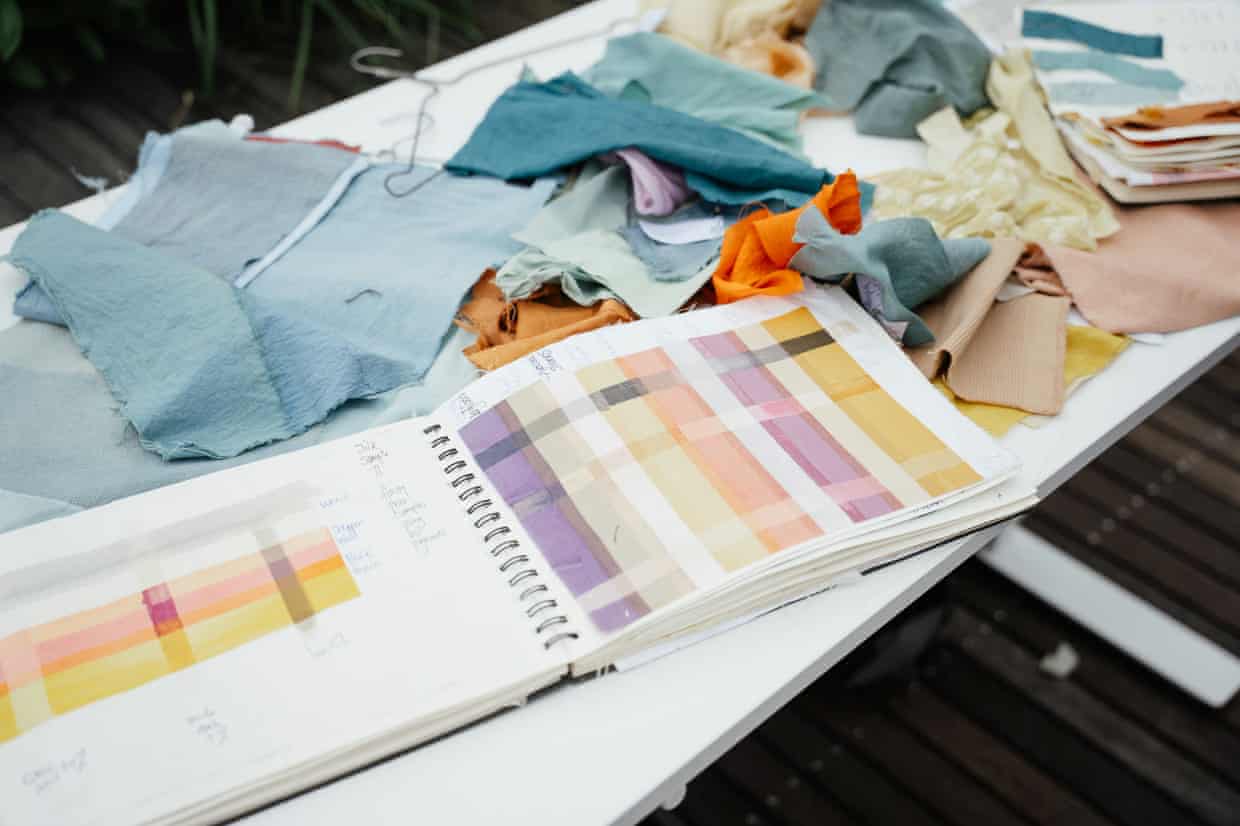
Helena Horton  writes at the Guardian, “Squint at the roof of the grey, brutalist National Theatre on London’s South Bank and you might be able to spy a riot of color spilling from the concrete. This is the theater’s new natural dye garden, from which flowers are being picked to create the colors for the costumes worn in the theater’s plays.

“Chemical dyes are often toxic for the environment and bad for human health, so the costume designers at the theater are experimenting with using flowers including indigo, dahlias, hollyhocks, camomile and wild fennel to create the vivid colors used in their productions.

“The textile artist, Liz Honeybone, is buzzing with excitement about the opportunities the new garden is bringing. … She has been very concerned about the health impacts of using harsh, synthetic chemical dyes, which require users to be swaddled in protective clothing. …

“ ‘There used to be a thing called dyer’s nose, which is basically when the aniline dyes came in,’ Honeybone said, ‘They used to destroy your nasal membrane.’ …

“The theater is planning to use natural dyes from the garden in every production at the South Bank going forward, starting with Playboy of the Western World, which is on this autumn and winter.

“Claire Wardroper, costume production supervisor at the theater, said it was ‘a beautiful early 19th century piece, with lots of nice woolly jumpers, because it’s set in rural Ireland, and we can certainly get some nice colors into them.’ …

“They are trying to bring a gentler, more environmentally friendly way of dyeing into the mainstream. ‘We are saying that if you want to use this horrible synthetic dye, you can do that, but you can achieve this beautiful look by using a natural dye, and we can do it a little bit slower and a bit more sort of organically,’ said Honeybone.

“Wardroper added: ‘It’s unfortunate to say, but the theatre and film and anything creative in one-shot opportunity entertainment has a history of being incredibly wasteful.’ …

“Honeybone said: ‘It’s been such a good harvest. My indigo is more than I can cope with. I’ve got three shows going on at the moment, so I’ve had to recruit people to help me.’

“People may imagine the colors extracted from flowers will be muted compared with synthetic dyes, but Honeybone said this could not be further from the truth and she has been able to create neon greens and yellows. ‘Our forefathers were drowning in color. They loved it, it wasn’t hard to get and all the tapestries that were up on the wall were a riot of color. What we’re seeing now is the sad, faded leftovers,’ she said.

“Honeybone says she has become ‘obsessed’ with natural dyeing. ‘My daughter gave me a bunch of flowers on Mother’s Day, and I noticed there was some golden rod in it, so whisked that out and dyed with it just to see what it yielded. And it was the most glorious, strong yellow.’

“The garden is not only used for dyes but also as a refuge from the hustle and bustle of the theatre. The pair said actors were frequently seen pacing among the flowers, or sitting down on benches to learn their lines.

“The space is also a haven for wildlife. The grey concrete of the South Bank does not have a huge amount to offer pollinators, and they have been swarming to the garden to sample the nectar from the varied dye plants.

“Wardroper said: ‘We’re seeing so much more wildlife, like hummingbird moths, and we’ve got bees on the National Theatre roof which produce honey for the National Theatre. And they’re loving the variety of plants that we’ve planted as well. These are a new stock of plants that they just haven’t had access to. So the bee person that comes in and caters to the bees is very happy.’

“The pair hope that most if not all of the costumes at the theatre can eventually be produced using natural methods. But for now, Honeybone is enjoying the opportunity to start using these dyes.

“She said: ‘This is such an all round sensory experience, totally engulfed in the smells and the feeling. … It is just wonderful.’ ”

More at the Guardian, here. (Gotta love that someone in this earthy-crunchy field has a name like Honeybone and that Wardroper oversees the wardrobe!)

Read Full Post »

What you need today — a day that even in the best of times can mean anxiety about travel or kitchen prep or argumentative relatives — is Pizza Rat.

Valentina Di Liscia and Hyperallergic explain what I mean. “The internet is squeaking with delight this week at a 23-second-long clip of a figure in a rat costume, complete with a long tail, whiskers, and mousy gray suit, dragging a life-sized pizza slice up the stairs in a New York City subway station.

“As surreal as it may be, the sight is intimately familiar to urban dwellers who remember video footage of a real rodent carrying an entire cheese slice up the platform steps a few years back. The strangely endearing, ubiquitous New Yorker became lovingly known as ‘Pizza Rat.’

“The man behind the very realistic mask in the more recent viral video [is] Jonothon Lyons, an accomplished dancer, theater artist, and puppeteer whose previous credits include the Blue Man Group, Sleep No More, and the Metropolitan Opera’s 2019 staging of Madame Butterfly. For his latest act, however, no tickets are needed. …

“Buddy the Rat, as Lyons has baptized his wiry-tailed character, brings the stage to the streets and the subway platforms: getting pets on the Brooklyn Bridge, showing off for Minnie Mouse in Times Square, and encouraging train riders to wear a mask.

“In an interview with Hyperallergic, below, Lyons tells us how Buddy was born and why he’s shaking up the performance art scene right now.

HyperallergicWhat’s the story of Buddy the Rat? How did the character originate?

Jonothon Lyons: Twelve years ago, I was working for a theater company in Portland, Oregon, called Imago Theater, and they have a show called Frogs, where we played big animal characters in masks. I played a frog, a polar bear, an anteater, and a penguin, but I never played a rat, and I always wanted to. In 2009, I made my own rat mask and went out in Times Square and ran around, put it up on YouTube, and it got around 70,000 views. It wasn’t gigantic, but it was enough that in the back of my mind I kept thinking, ‘I need to take this rat out again.’

H: I’ve just emerged from a rabbit hole of TikTok videos of you performing in the costume. They’re incredible, and they’re really resonating with people right now. How did Buddy go viral?

JL: I’m friends with this film director Todd Strauss-Schulson (Isn’t It Romantic, The Final Girls, A Very Harold and Kumar 3D Christmas). I told him I had this rat character I’ve been wanting to do more with it, so we conceived of a little three and a half minute-long film.

“We shot it the week leading up to the election, in abandoned SoHo, as the windows were being boarded up — a very surreal and uncommon vision of New York. After the first night of shooting, a stranger had posted a video of me that got 1.7 million views that day. We wrapped up the movie, and over the next few days I started going out on my own and posting the content to TikTok and Instagram, and it really took off.”

Folks, I’m thankful for a whole lot of things today, but at this particular moment, I’m thankful for anyone who says they always wanted to play a rat! More at Hyperallergic, here.

Read Full Post »

Photos: The Plié Project
Annalisa Cianci of Teatro dell’Opera di Roma models a paper tutu for a project highlighting diversity in dance.

Did you ever see the intriguing documentary by Vanessa Gould called Between the Folds? It’s about origami masters, and my husband and I heard about it because Vanessa’s parents lived in our town.

I have never advanced in origami myself — folded fortune-tellers are about as far as I go — but I have great admiration for artists practicing the craft. And not long ago I read an astonishing story about a project involving origami ballet costumes.

Leah Collins wrote at CBC Arts, “On paper, it’s a partnership that doesn’t immediately make sense. Pauline Loctin (a.k.a. Miss Cloudy) is an origami artist and self-described ‘folding warrior.’ Melika Dez is a photographer, one who specializes in capturing dancers in action. And around this time last year, the Montreal-based artists began collaborating on something they call the Plié Project: an ongoing series of photographs featuring dancers from internationally famed companies, all wearing original, hand-folded costumes by Loctin.

” ‘Paper is kind of fragile, but at the same time, it’s a very strong material,’ says Dez. Beauty and strength and fragility, all in one: that’s how you describe a dancer, right there. But who gets to be those things? …

” ‘In a world where the ballerina “has to look” a certain way, we decided to showcase the beauty of these unconventional but extremely talented dancers and break the boundaries of stereotypes.’

Amanda Smith, Daphne M. Lee and Yinet Fernandez Salisbury of Dance Theatre of Harlem and Dandara Amorim Veiga of Ballet Hispanico. 

“Both artists have personal ties to the ballet, which partly explains their interest in the message. Loctin’s previous career was in classical music. The ballet, she explains, was always connected to her work. Dez is a dancer herself, and as a photographer, she shoots companies around the world, including the Black Iris Project in New York City.

” ‘In my work, I’m used to working with diverse people,’ says Dez. ‘There’s a wave of change that is happening in the dance world and it was important to me to push it forward because I myself, I’m a mix.’ …

” ‘There is a paper colour for every girl. … It was just an important message for me to put out there. For little girls to know that anything is possible no matter if they’re Black, white, Asian, Latina — anything is possible. They can do whatever they want as long as they put their heart into it.’ ”

More at CBC, here. There’s a terrific array of photos at the site.

Mai Kono of Les Grands Ballets. 

Read Full Post »

Usually when I ask adults, “What are you going to be for Halloween?” they laugh, and really I am just joking.

But when I posed that question to a co-worker yesterday, he said, “A cereal killer.” He told me with some enthusiasm that he was going to paste the front panel of a cereal box on a red-splattered T-shirt.

I had to laugh. “Well, good for you, Nick!” I forgot to ask what killer cereal he was going to use. Probably one loaded with sugar.

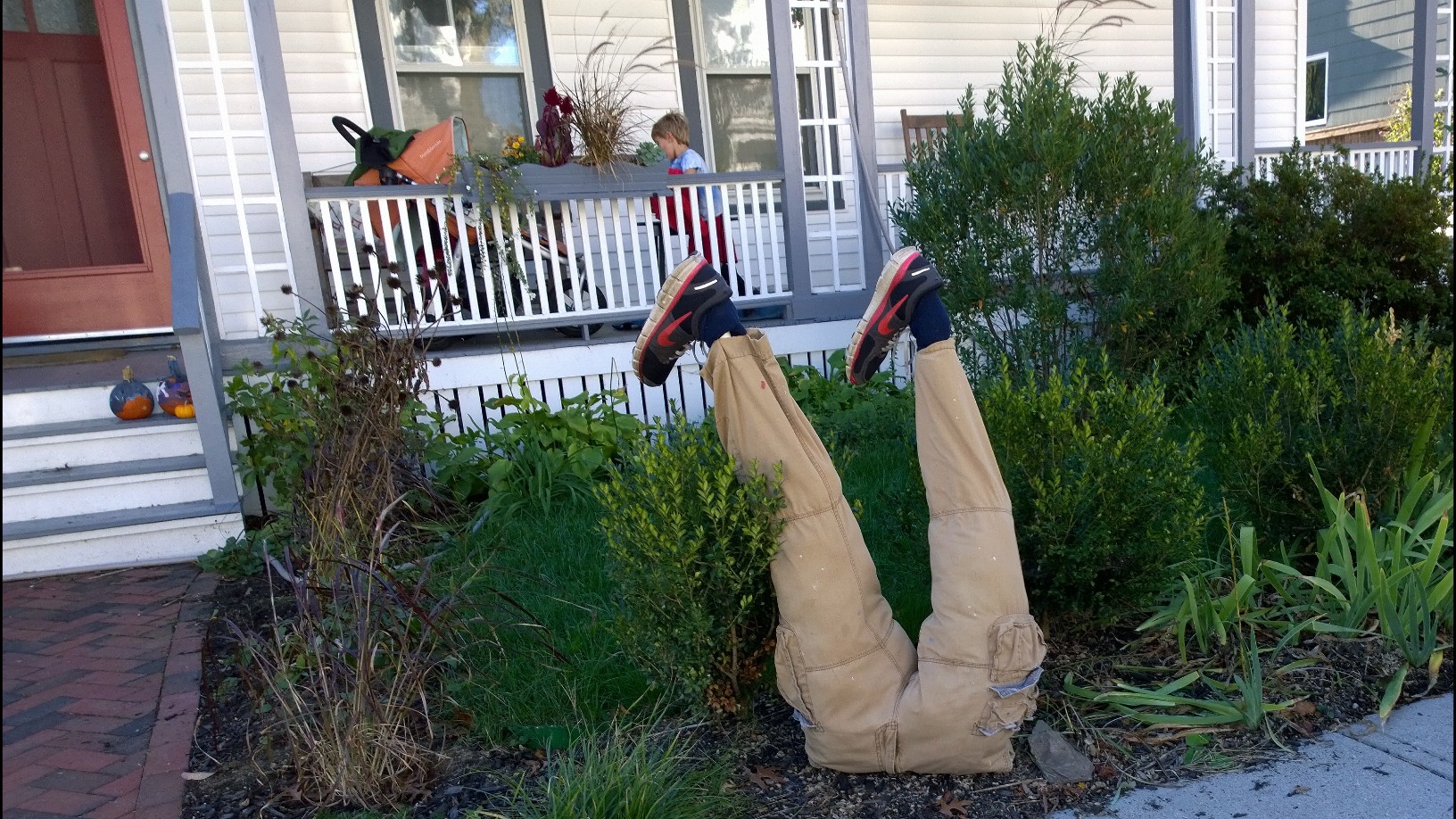
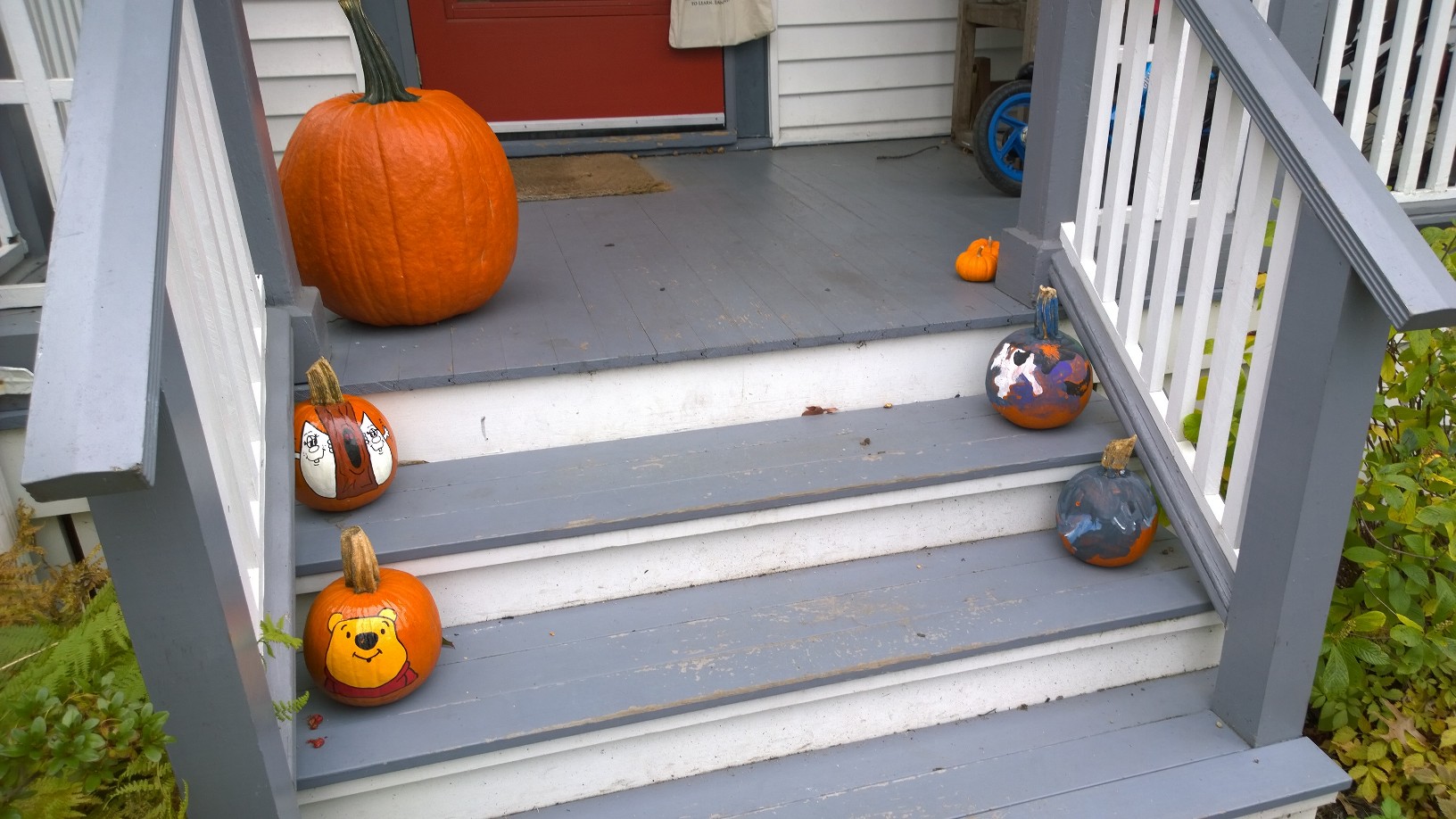
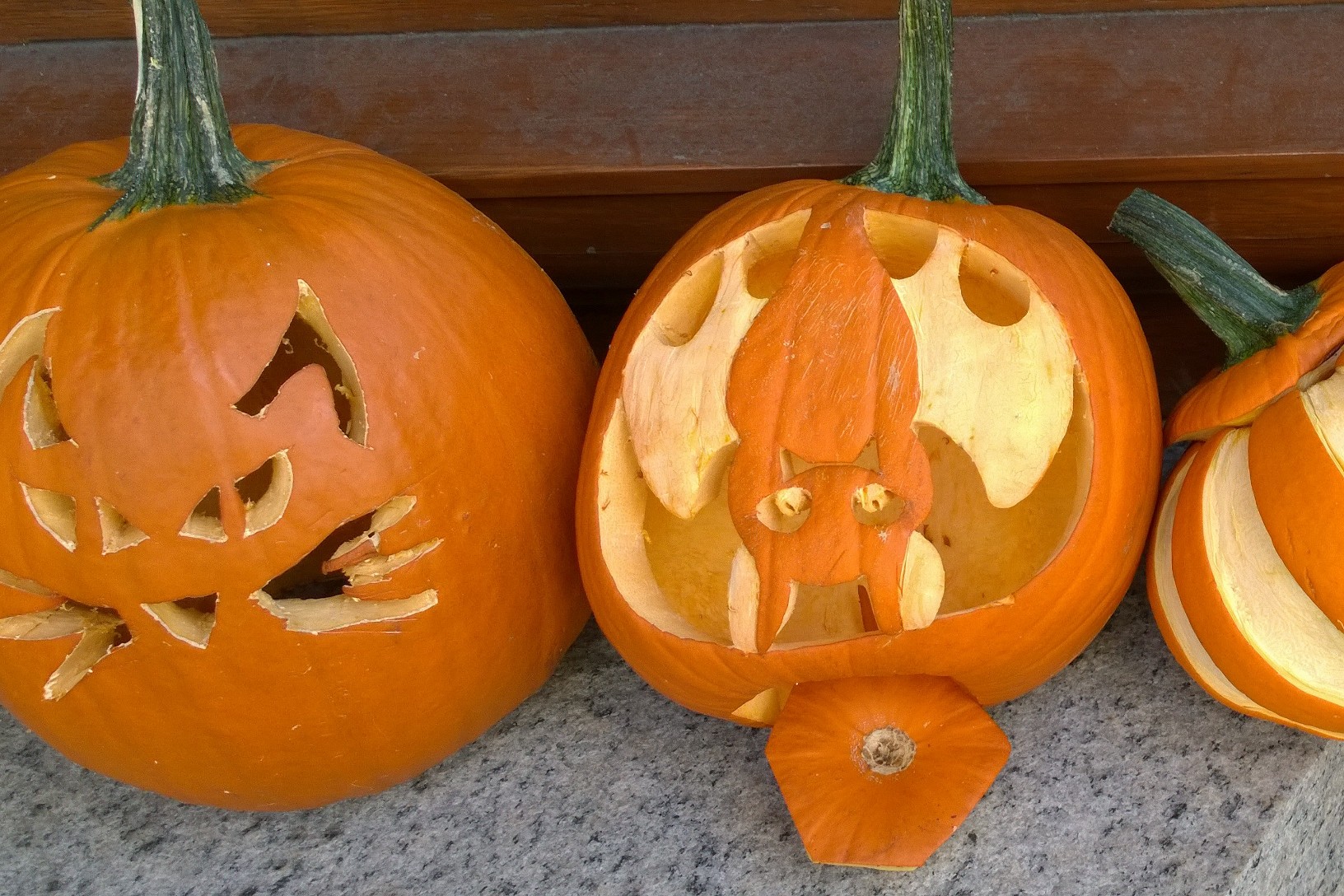
Although I don’t have a picture of my colleague the Cereal Killer, I can show you a zombie in John’s yard, decorated pumpkins on his steps, an upside-down bat carving at the the restaurant Trade, and a stormy sky that a witch just passed through. (You’ll have to take my word for that.)

101715-just-a-zombie

102415-front-stoop

103015-bat-carved-into-pumpkin

101815-fir-spooky-sky

Read Full Post »