
Photo: George E. Koronaios via Wikimedia Commons.
One of the oldest depictions of Jesus lying in a manger is on view at the Byzantine and Christian Museum of Athens.
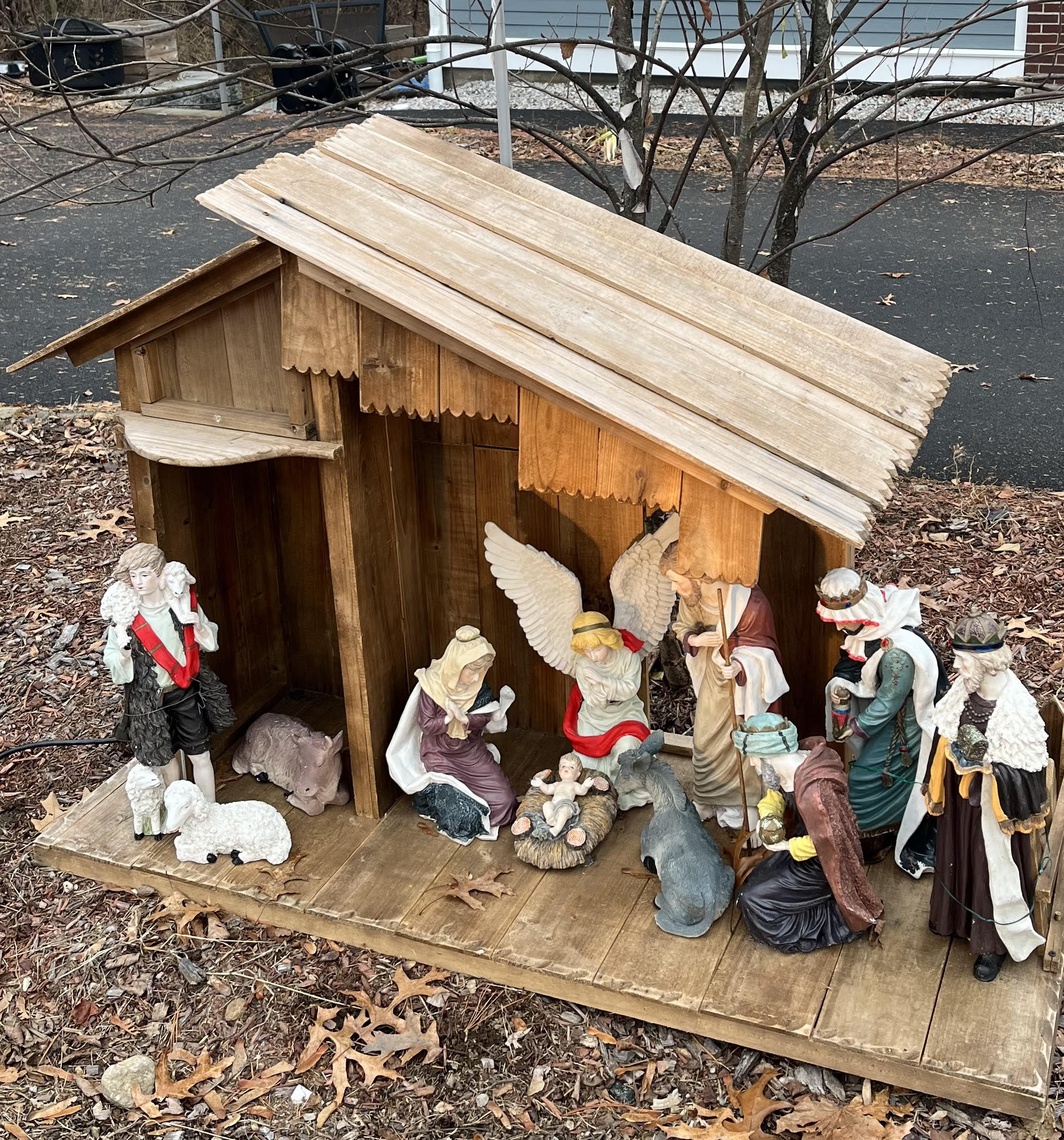
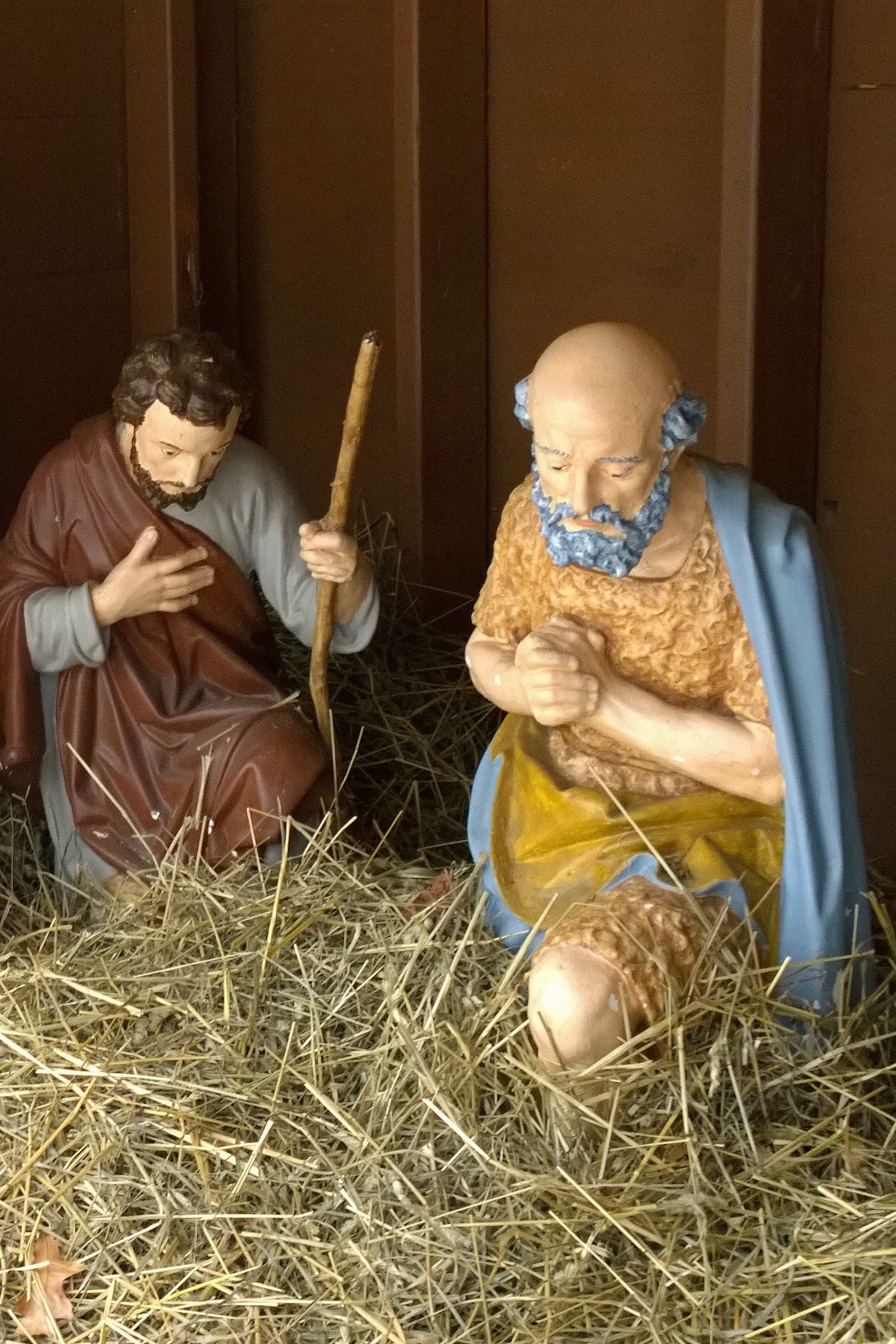
Today’s article is about the many ways nativity scenes have changed through the ages.
Maya Pontone reports at Hyperallergic, “With Christmas upon us, many observers of the Christian holiday commemorate the season with reconstructions of the famed Nativity scene, depicting the birth of Jesus Christ. From early two-dimensional renderings to elaborate Baroque sculptures, the practice has been adopted by numerous communities around the world and reinterpreted by various artists. In 2019, the elusive British street artist Banksy released ‘The Scar of Bethlehem‘ (2019) as a political statement against Israel’s concrete wall around the city of Bethlehem in the West Bank. That same year, a United Methodist Church community utilized the art form to call attention to the imprisonment of children in detention facilities along the United States-Mexico border.
“But long before the nativity became a protest symbol, the holiday staple can be traced back hundreds of years to the first visual depictions of the biblical story of Christ’s birth. Based on the Gospel of Matthew, these visual representations largely focused on the biblical visit from the three wise men, who brought gifts of gold, frankincense, and myrrh to the newborn Jesus, according to a 2016 essay by Yale professors Felicity Harley-McGowan and Andrew McGowan. The earliest surviving examples depicting this scene include the ancient ‘Adoration of the Magi‘ fresco in the catacombs of Priscilla in Rome, dating from the late 3rd or early 4th century, as well as early 5th-century carvings on a Roman marble sarcophagus, found during excavations of the cemetery of Saint Agnes.
“As the Yale historians point out, the Gospel of Luke narrative about Jesus Christ lying in a manger was not portrayed until the 4th century. One of the earliest surviving examples is a marble rendering on view at the Byzantine and Christian Museum in Athens, depicting Jesus Christ resting alone in a manger, accompanied by an ox and a mule on either side.
“Historians debate when exactly the first three-dimensional depictions of the birth of Jesus emerged. Some claim that papal documents prove that the practice came about in 432 CE when Pope Sixtus III commissioned the recreation of Bethlehem’s stable scene in the newly built Santa Maria Maggiore Basilica. According to this unconfirmed theory, this ‘cave of the Nativity’ was supposedly the first presepio (Italian for ‘nativity’), commemorated with a ‘festive celebration.’
“Despite the lack of conclusive evidence, the earliest surviving nativity scene figures sculpted by Arnolfo di Cambio during the late 13th century also indicate Santa Maria Maggiore as a birthplace for the Nativity tableau practice. The cluster of marble statues was displayed alongside a wooden manger structure, inspired by Saint Francis of Assisi’s living nativity in 1223 Greccio, which featured real people and animals.
“The Italian city of Naples is often credited with helping popularize presepios during the 15th-century Renaissance, as local artists began creating life-size statue displays for neighborhood chapels. Subsequently, in the 17th century, elaborate tableaus featuring detailed architectural structures and characters dressed like Neapolitans of the Baroque era helped inspire an entire movement of Nativity scenes that can still be viewed seasonally today at institutions like Pittsburgh’s Carnegie Museum of Art and New York’s Metropolitan Museum of Art.
“With the global expansion of Christianity, the practice of staging living and sculptural Nativities has been adopted by countless cultures and peoples, who reenact the scene often in ways that reflect their communities. In the Philippines, these crèches are referred to as beléns, introduced during the 16th century with Spanish colonization.
‘In Austin, Texas, the Mexic-Arte Museum stages an annual nacimiento (Spanish for nativity) that reflects both Indigenous Mexican culture and the historical impact of Spanish colonization. Featuring more than 600 pieces, the colorful display includes depictions of Mexico City, Tzintzunztan, and Michoacan, and is one of several nativity scenes from all over Mexico in the museum’s permanent collection.
“Year-round, audiences can view more than a hundred nativity scenes featuring over 2,000 figurines from various countries at the International Museum of Nativity Scene Art in Málaga, Spain. ‘My wife, Ana Caballero, and I noticed that every year after Christmas high-quality works were dismantled by their creators. However, they deserved to continue so that other people could enjoy them,’ museum co-founder Antonio Díaz, told Hyperallergic. ‘That’s why we decided to launch this museum.’ …
“The museum includes classic creches from Italy, Austria, and Spain, as well as contemporary interpretations based on popular culture and current events, including one in the style of the sci-fi Star Trek series and another display set in an unnamed neighborhood besieged by war, illustrating the boundless evolution of the art form.”
Wonderful photos at Hyperallergic, here. No paywall, but donations are encouraged.










 Suzanne's Mom's Blog