Feeds:
Posts
Comments

Posts Tagged ‘crossing’

Photo: Colorado Department of Transportation.
A black bear (black bears are sometimes brown) walks through a wildlife underpass at State Highway 9. 

In parts of the country where people really value their wildlife, there are increasing efforts to prevent roadkill by building safe crossings for animals. They’re expensive, but the passes also save humans from life-threatening collisions.

In an article at the New York Times, reporter Catrin Einhorn learns that the motivation to build pathways crosses political divides.

She writes, “The aim was to protect motorists and wildlife along an especially grisly stretch of highway. Now, it was time to see whether the investment would pay off.

“Aran Johnson, a wildlife biologist for the Southern Ute Indian Tribe in the southwestern part of Colorado, walked up a bank to a newly constructed overpass crossing Route 160. … It was a cool summer morning in 2022, with mist rising from the ground. Mr. Johnson carried trail cameras. Mule deer and elk wouldn’t be showing up in any numbers until later in the year, when they had to cross the highway to reach their wintering grounds. Still, he wanted the cameras ready to capture the earliest evidence possible of any animals using the structure.

“At the top of the overpass, he could barely believe what he saw: a line of hoof prints pressed deep into the fresh mud, stretching from one side to the other. An elk had already found its way across. …

“Since then, it’s been one successful year after another. Entire herds of mule deer and elk use the structures, as well as bears, mountain lions, bobcats, coyotes and foxes.

“Wildlife crossings are growing in popularity across the country, and in recent years, Colorado has emerged as a leader. Since 2015, it has built 28 new large game crossing structures, according to the state Transportation Department.

“The state is rich in wildlife, and many of its species travel from higher elevations in the summer to lower ones in the winter, oftentimes crossing highways at great peril. In 2022, the General Assembly passed a law creating a cash fund for the department to use for animal crossings. Colorado has also evaluated its highways to create a priority list for future projects.

“Wildlife crossings, when combined with long stretches of fencing to funnel animals to the right location, have been found to reduce vehicle collisions with large animals by more than 80 percent.

“They are expensive, but research has shown they can save money when installed on stretches of highway with at least an average of three collisions between motorists and deer per mile per year. For collisions with elk and moose, which are bigger and therefore cause more damage to vehicles and people, that threshold goes down to less than one collision per mile per year.

“Locals had long known they had to pay close attention when driving along that stretch of Route 160, near the Chimney Rock National Monument. … In the early 2000s, Mr. Johnson, the biologist for the Southern Ute, started collaring mule deer to better understand how they moved over the landscape around the reservation. He analyzed his data and superimposed them on state records of wildlife-vehicle collisions. …

“The Colorado Department of Transportation, which covers the vast majority of the cost for wildlife crossings, agreed to put in an underpass on the reservation. But the Southern Ute also wanted to install an overpass, since certain species, particularly elk, seem to greatly prefer them. The tribe came up with $1.3 million from the Bureau of Indian Affairs to make that happen.

“Additional funding for the $12 million project came from the state department of wildlife, nonprofit groups and even a private donor. …

“An added bonus of wildlife crossings is the photos that come from trail cameras, which help to bring attention to the programs, Mr. Lawler said. … [But with cuts in] federal spending, a grant program that helps states and tribes pay for wildlife crossings in collision hot spots is now in doubt, including grants that had already been promised. …

“Wildlife crossings transcend political divisions, said Patricia Cramer, an ecologist who consults with states on wildlife crossings. … Of the two states she sees as national leaders, Wyoming is red and Colorado is blue.”
More at the Times, here, and at Denver7.com, here.

Read Full Post »

Photo: Living Habitats and National Wildlife Federation.
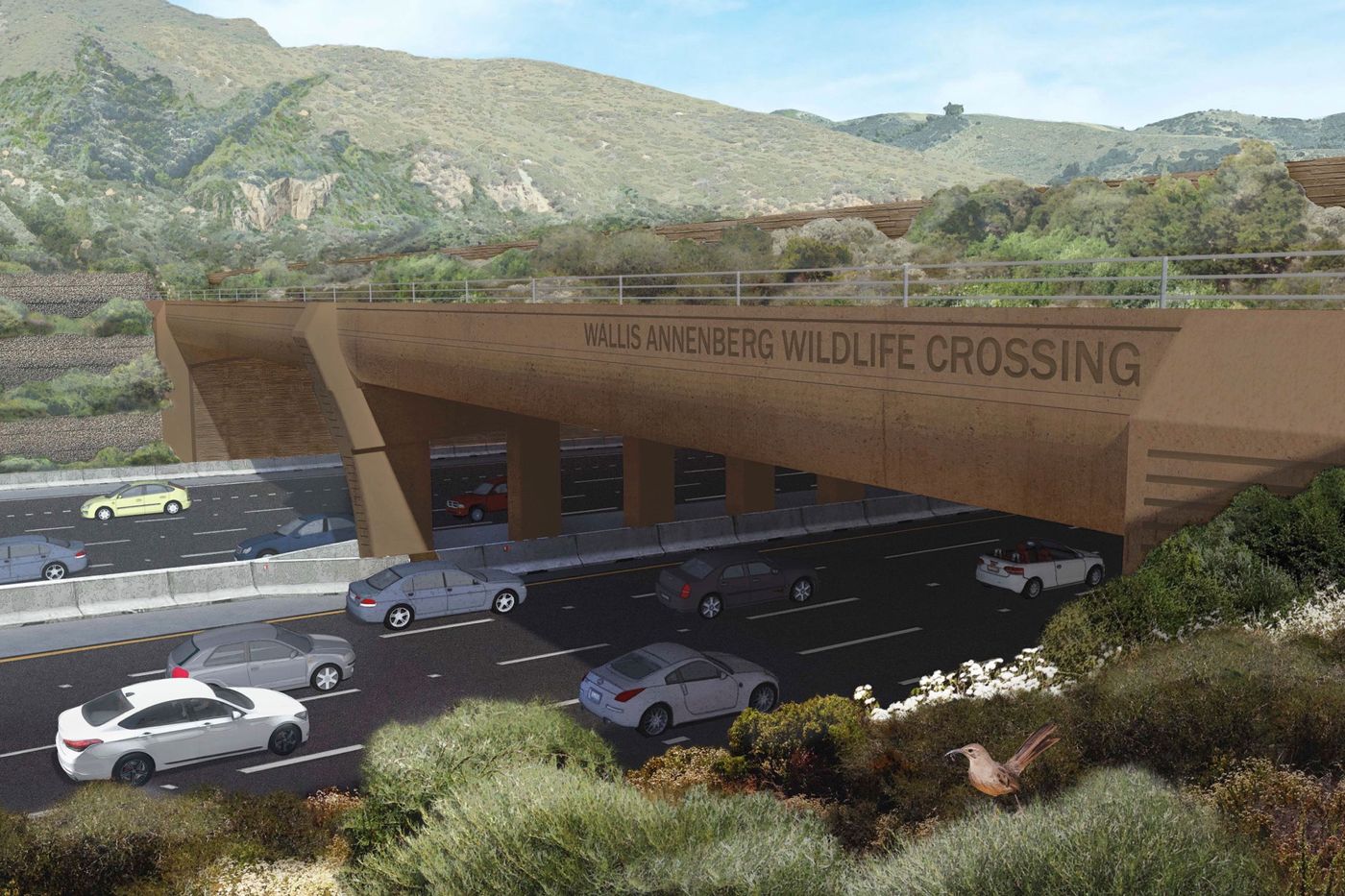
The Wallis Annenberg Wildlife Crossing should be completed over the Route 101 freeway on the western side of Los Angeles County by 2023, allowing mountain lions to easily cross eight lanes of traffic.

As the human species userps habitat from other species, there are at least a few efforts to mitigate the damage. At Curbed, Alissa Walker reports on California’s plans to build a freeway overpass that by 2023 should substantially expand the habitat of local mountain lions. It will be the largest animal crossing anywhere.

At the Guardian, Patrick Greenfield has an overview of safe passages around the world for elephants, tigers, sloths, and more.

Greenfield writes, “From a tiny railway bridge for dormice in the UK to elk, deer and bears benefiting from a slew of new animal crossings in Colorado, wildlife bridges are having a moment. …

“In January [2021], we reported on Sweden’s plans to build a series of ‘renoducts‘ to help reindeer traverse the country’s main roads. … In southern California, work is due to begin on the largest wildlife bridge in the world in 2022, to connect isolated mountain lion populations north of Los Angeles that are becoming dangerously inbred. [And there’s $350m of the] $1.2tn infrastructure package for wildlife bridges to lessen the multibillion annual cost of collisions.

” ‘Ten years ago, wildlife bridges were experimental. We didn’t know whether they would work or not. Now they’ve shown they get huge reductions in collisions. In some cases, 85% to 99% reductions,’ says Rob Ament, a road ecology expert at Montana State University. ‘You can design them for many species. Even out in the plains, we’re getting moose crossings in North Dakota.’

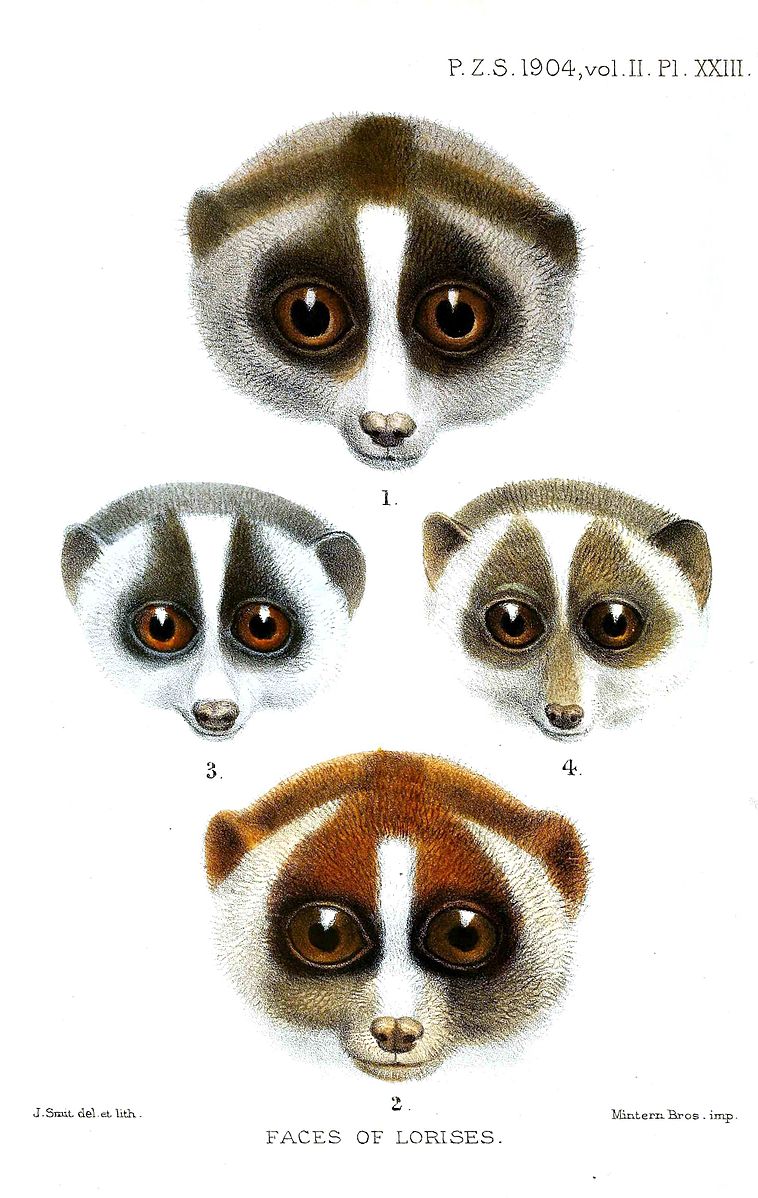
“Wildlife bridges are found on every continent: there is an elephant underpass near Mount Kenya; the Netherlands has a network of ecoducts that may help the country’s first wolf pack in more than 140 years gain a foothold across the densely populated country; suspended water pipes are helping Java’s endangered lorises; [below]; and a bison bridge may help the animals cross the Mississippi.

“Here are five projects from around the world helping animals make their way.

“Alligator Alley, Florida. The 129km (80-mile) stretch of road between Naples and Fort Lauderdale bisects the Everglades, an enormous wetland that is home to thousands of alligators, deer and the endangered Florida panther. … Dozens of underpasses and fencing help wildlife navigate the road.

A camera trapping exercise found panthers, black bears, skunks, deer, bats, birds and even fish use the crossings. …

” ‘Fencing is critical along Alligator Alley. It is a 10ft-high chain link fence with three-strand barbed wire on top. That’s to keep the wildlife off the roadway and on the crossing,’ says Brent Setchell, a design engineer at Florida Department of Transportation, who identifies potential crossing sites by monitoring road collisions with panthers and bears. ‘The fascinating thing is we just started monitoring the crossings four or five years ago. We found an abundance of wildlife.’

‘The tunnel of love’ on the Great Alpine Road, Australia. Stretching through the Victorian Alps in south-east Australia, the Great Alpine Road posed an existential threat to a colony of critically endangered mountain pygmy possums. Even though there are only about 150 of the marsupials on Mount Little Higginbotham, testing revealed genetic differences between sub-groups separated by the road, which are also threatened by fire, disappearing food sources and invasive species. Conservationists decided to build a ‘tunnel of love’ between the isolated groups to improve mixing and strengthen their chances of survival. …

“India’s tiger corridor. India’s first dedicated wildlife underpasses were a hard-fought victory for environmental campaigners. The nine crossings in the Pench tiger reserve were a court-ordered mitigation measure on the country’s longest road, the 4,112km National Highway 44, which runs down the middle of the country. Collisions with big cats still happen on the multi-lane motorway, but environmentalists say the underpasses have highlighted the need for more wildlife crossings on India’s road network. A 2019 camera trapping exercise found at least 18 species use the crossings, including tigers, wild dogs, sloth bears, civets and leopards. …

“Bhutan’s elephant crossing. Nearly 700 Asian elephants roam Bhutan’s forest on the eastern edge of the Himalayas. The small Buddhist country sandwiched between China and India is known for its dramatic landscapes and environmental leadership, as one of the few carbon negative countries in the world. On the 183km east-west motorway, Bhutan’s first elephant underpasses were constructed to help the threatened animals move through the landscape. Monitoring from 2015 to 2017 found that 70 groups of elephants were recorded near the passes, with three-quarters passing through the structures.

“Sloth bridges in Costa Rica. Wildlife passes are not always bridges or underpasses. In Costa Rica, canopy bridges are used to help sloths, monkeys and other wildlife cross roads to combat collisions, dog attacks and electrocutions on power lines. The rope bridges, which cost about [$200], are installed by the Sloth Conservation Foundation in areas where rainforest has been interrupted by human development on the country’s Caribbean coast. Crossing roads is often deadly for the slow-moving creatures and the canopy bridges also help combat inbreeding. ‘People look at them and think that they’re so poorly equipped to survive because you see them crossing roads and trying to move around and they look so awkward and useless,’ Rebecca Cliffe, head of the Sloth Conservation Foundation, told Bloomberg earlier this year. ‘But if you put them in a well-connected rainforest, then they are masters of survival.’ ”

Read the Guardian story here. Want more? The article at Curbed on the world’s longest animal bridge is here. Both of these publications are free although donations are encouraged.

Read Full Post »

Here is an annual spectacle I’d love to see.

“Shepherds led a flock of 2,000 sheep through the streets of Spain’s capital and largest city on Sunday, in defense of ancient grazing, droving and migration rights that have been increasingly threatened by urban sprawl and modern agricultural practices.

“Those urban settings were once open fields and woodlands, crisscrossed by droving routes. Since at least the year 1273, the country’s shepherds have had the legal right to use about 78,000 miles of droving routes around the country to move livestock seasonally between summer pastures in the cool highlands and more protected lowland grazing areas in the winter.

“Every year, a handful of shepherds defend that right in Spain’s capital city.”

I guess it’s use it or lose it. Plus it’s good to make people think about where their food and wool come from, and whether things have changed for the better.

More from the Associated Press.

Photo: Andres Kudacki/Associated Press
Shepherds led a flock of 2,000 sheep through some of Madrid’s most sophisticated settings on Sunday.

Read Full Post »