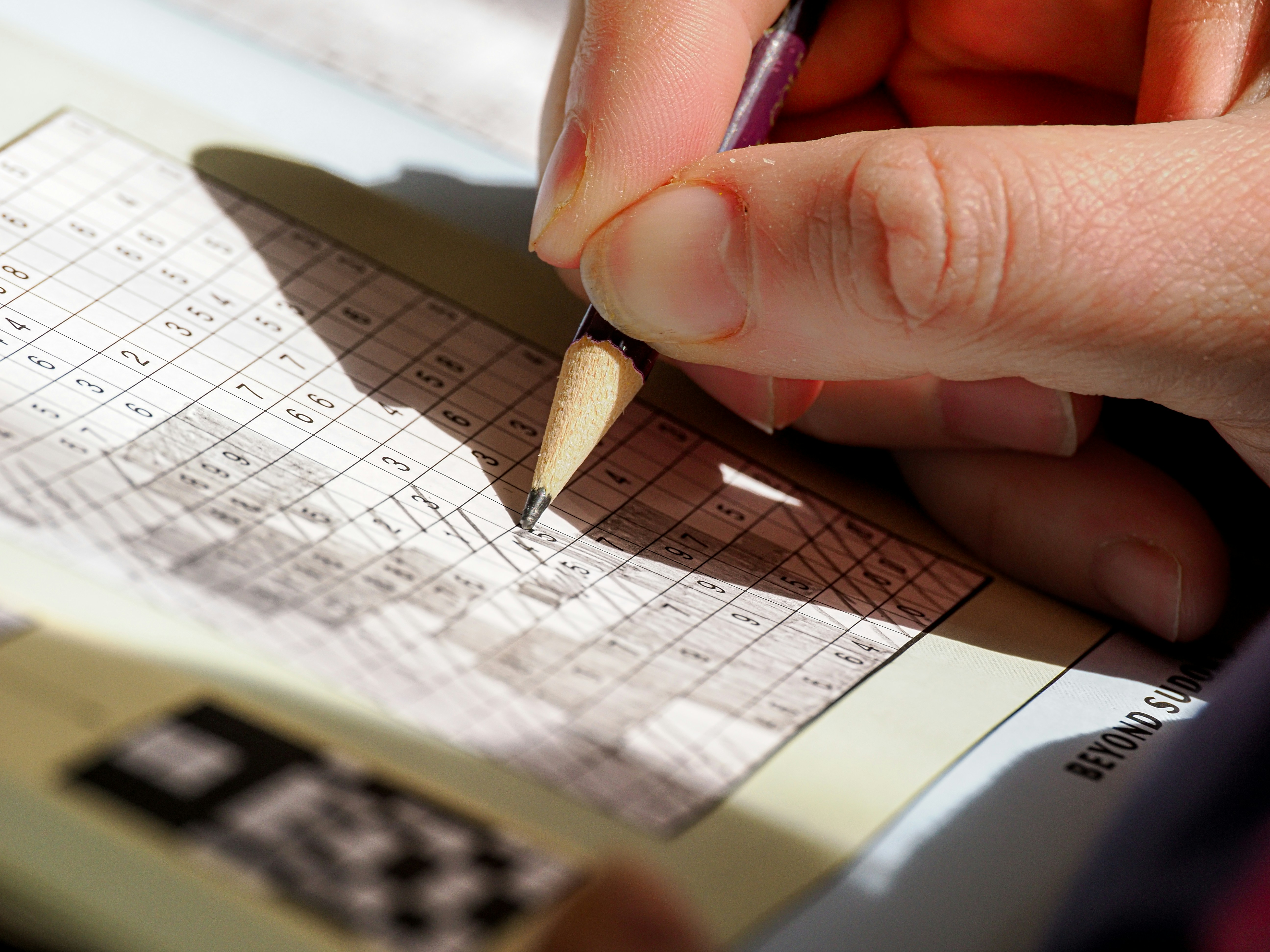
Photo: Mohamed Marey via Unsplash.
I know a lot of people who work a daily puzzle to maintain cognitive health — puzzles like Wordle, Sudoku, anagrams, and crosswords. These people are mostly over 50, so I find it interesting that younger people are getting into puzzles, too, especially crosswords.
Cameron Pugh writes at the Christian Science Monitor, “People are doing crossword puzzles everywhere these days. On the train. During a break at work. In bed before turning in. Crosswords have leapt from their traditional home in the newspaper and taken over phone and computer screens.
“And no generation is more thrilled about it than Gen Z. Fifty percent of Gen Zers say they do crosswords regularly, according to a poll by Unscrambled Words, a website that helps users solve anagrams. That’s the highest share of any generation surveyed, outstripping baby boomers at 38%, Gen Xers at 31%, and millennials at 15%.
“ ‘We are living in the golden age of puzzles,’ says Will Shortz, who has edited crosswords for the New York Times since 1993. He holds perhaps the world’s only degree in enigmatology, or the study of puzzles. … ‘They’re not just for old people anymore.’ …
“When Mr. Shortz started at the Times, which printed its first crossword in 1942, the paper had run puzzles created by teenagers six times. Today, Mr. Shortz says he has published puzzles by at least 75 teens. In 2021, Soleil Saint-Cyr, at 17 years of age, became the youngest woman to publish a crossword in the Times.
“Crosswords have also swept through student newspapers, demonstrating their growing appeal among younger audiences. The Cavalier Daily at the University of Virginia launched a puzzle section in 2024. Student Life, which covers Washington University in St. Louis, began publishing mini crosswords in 2022. …
“Crosswords saw an explosion in popularity during the COVID-19 pandemic, says Natan Last, who last year wrote Across the Universe, a book that charts the history of crossword puzzles. That includes Gen Zers such as Luke Schreiber, a rising junior at Princeton University in New Jersey.
“ ‘It started off as a bit of a pandemic hobby. My dad liked solving crosswords, and so that gave me the idea to try my hand at creating them,’ Mr. Schreiber says.
“Mr. Schreiber is one of two head puzzles editors at the Daily Princetonian, the school’s student newspaper. He has also published puzzles in the New York Times, the Los Angeles Times, and USA Today.
“Some of the crossword’s success with Gen Z traces back to news organizations, which during the pandemic began to see games as a way to grow their audiences. … By 2021, the Times Games section had 1 million subscribers; in 2024, a spokesperson for the Times told AdWeek that more than 10 million people played the paper’s digital games each day. …
“For students, Mr. Schreiber says, the crossword acts as a needed break from homework.
“ ‘Students are looking for something that isn’t work – you know, isn’t studying or homework or something like that – but also isn’t a video game,’ he says. A crossword is ‘considered a little more intellectual than a video game, but it still is fun and not quite work.’ …
“The now-defunct New York World is credited with publishing the first crossword on Dec. 21, 1913. Created by Arthur Wynne, the ‘Word-Cross’ took the shape of a diamond and lacked the now-familiar black squares. …
“Mr. Shortz sold his first puzzle at 14, springboarding his now-storied career as a cruciverbalist. (That’s the shorthand for a crossword aficionado.) When he started at the Times, he endeavored to draw in a wider audience. ‘I think the crossword should reflect the life, language, and culture of everybody who reads the Times, and that’s everybody from smart teens up to the oldest people,’ he told the New Yorker in 2023. …
“Young creators, Mr. Last says, have driven a cultural renaissance for a pastime that sometimes came off as stuffy and uptight. ‘They treat the puzzle like a mixtape, and they treat language as powerful and arbitrating,’ he says. ‘They are very, very focused on an inclusive puzzle – where inclusive is both political and cultural.’ ”
More at the Monitor, here.


