Feeds:
Posts
Comments

Posts Tagged ‘culture’

Photo: Scott Ball / San Antonio Report.
The SWISD mariachi band performs during a school event at Stinson Field, San Antonio, Texas, in February. 

When education programs unite with family culture and community culture, a unique energy is born, and students are more likely to stay in school. That can be seen in this story from south Texas.

Nicholas Frank writes at the San Antonio Report, “In 1969, educator Belle Ortiz introduced mariachi to a ballet folklórico class at Lanier High School, which soon added a dedicated mariachi class. 

“Over the next decades, Ortiz’s pioneering effort would grow into dozens of mariachi education programs in middle schools, high schools, colleges and universities throughout the San Antonio area, now serving more than 2,000 students in 17 schools in the San Antonio Independent School District (SAISD) alone. …

“Musician Juan Ortiz met Belle Ortiz in that Lanier folklórico class, and the pair would emerge as changemakers establishing mariachi as an educational mainstay in the region, building off of deep Mexican American cultural roots throughout South Texas.

“Belle Ortiz spearheaded the first collegiate-level mariachi education program in 1974 at San Antonio College, and Juan Ortiz and musician Pete Moreno are widely credited with creating the first university mariachi program at Texas A&M University at Kingsville, a program that still flourishes today

“Northside ISD Director of Fine Arts James Miculka said he’s regarded as a person who could sell a tree off of an asphalt lot, but more than salesmanship helped him secure his district’s first mariachi education programs in the 1990s.

“Belle Ortiz served as Miculka’s primary research contact for his music education degree studies at UTSA because he ‘was working on a middle school band curriculum that had more cultural pieces and connected to the Hispanic population’ in a way that his knowledge of jazz and classical music did not.

“A professional trumpeter, Miculka had experience performing in salsa bands and developed a special appreciation for the art form of mariachi when he witnessed firsthand the professional mariachi ensemble assembled by Juan Ortiz for Fiesta Texas.

“Seeing and hearing the array of trumpets, violins, guitars and vihuelas, Miculka said his ‘jaw hit the floor. When I heard that I thought, “Holy cow, this is what a mariachi group should really sound like.” ‘ …

“Miculka hired Roland Sandoval as music director of the program established in 1990 at John Jay High School. Miculka then expanded to start a program at Holmes High School and created ‘feeder’ programs at middle schools in the district. …

Both Miculka and Sandoval credit parents in their districts with establishing the importance of formalized mariachi education programs.

“ ‘It’s such a visible part of our culture,’ and when parents realized their children could access the traditional music through formal education, ‘they started advocating for that,’ said Sandoval. …

“Cynthia Muñoz has been working to bring visibility to the art form of mariachi for decades, starting the Mariachi Vargas Extravaganza competition in San Antonio in 1995.

“The annual competition invites high school mariachi groups from around the country to hone their skills toward winning recognition in the prestigious event, with groups from the Rio Grande Valley regularly winning top honors.  

“Muñoz credits Belle Ortiz with inspiring her own work to promote mariachi culture, having witnessed Ortiz’s first mariachi festival in San Antonio in 1979 featuring the world-renowned Mariachi Vargas de Tecalitlán

“ ‘This had a significant impact on me as a young teenager as I realized that our culture, music and history was way deeper and more beautiful than I ever could have imagined,’ Muñoz wrote in a Facebook memorial post commemorating Ortiz’s influence. …

“Education programs need certified teachers. Miculka said that as mariachi learning evolved from being passed along through families to professional apprenticeships and public school programs, musician John Lopez saw the demand and led the effort to establish a mariachi-focused degree-level program at Texas State University in San Marcos. …

“Lopez said the Kingsville program ‘was like lighting a match,’ with students going on to create ensembles at schools in their home communities throughout the Rio Grande Valley and South Texas, many of which have been formalized as programs as those former students rose into the ranks of school administrations. …

“Despite overall growth in mariachi education programs, Poe Middle School mariachi director Augustine Ortiz nearly lost his program in February, with SAISD facing declining enrollment, budgetary tightening and school closures. But Poe principal Elizabeth Castro was able to save the program through a special allocation, in part because hundreds of students prioritized their mariachi studies.

“Studying mariachi not only creates enthusiasm for his students to come to school, Ortiz said, but helps them excel overall. ‘The standard of the students’ education is rising when they’re in programs like these,’ he said. ‘What helps is that it’s culturally relevant to them since we do have a huge Mexican American population in our school.’

“Ortiz said he has been open with his students about the challenges faced by the programs. ‘They need to learn that we need to advocate for ourselves,’ he said. ‘That way we can get the best education [for] our students, not just currently but in the future as well.’ …

“ ‘There’s a supply and demand now for mariachi teachers,’ he said. ‘If you’re gonna go into music education right now, the place to be is mariachi education.’ ”

More at San Antonio Report, here.

Read Full Post »

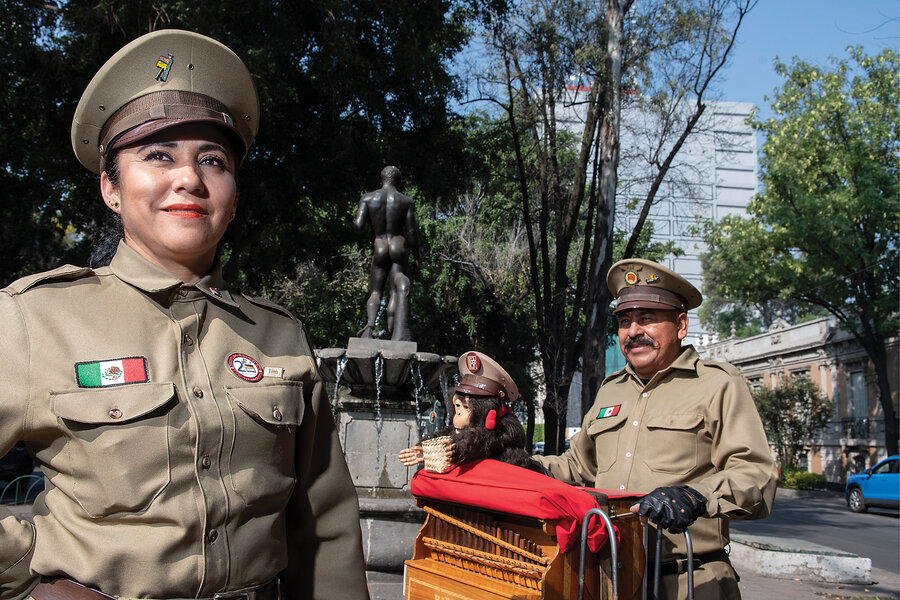
Photo: Alfredo Sosa/CSM Staff.
Elsi Sastre (left) and Cresencio Torres work as a team of organ-grinders in the Roma neighborhood of Mexico City.

Between the two of us, my husband and I can tell our grandchildren about having seen an ice-delivery man, a huckster selling vegetables door-to-door, a traveling knife-sharpening guy. Wouldn’t it be great to show such things in person once in a while, not just in historic villages with costumed interpreters?

Today’s article is about something we will need to hurry up to see before it fades into history: the traditional organ grinder in Mexico.

Whitney Eulich writes at the Christian Science Monitor, “Hunched over a weatherworn hand-crank organ in his repair shop, Roman Dichi explains why the work of Mexico’s organilleros has endured for a century and a half. 

“ ‘This music evokes happiness, tradition, and childhood memories of going out to a plaza with Mom and Dad – or of falling in love,’ says Mr. Dichi, president of the organ-grinders union in Mexico City. …

“Organ-grinders, especially ubiquitous in Mexico City’s historic center, date back to the presidential administration of Gen. Porfirio Díaz in the late 1800s. The dictator’s adoration of all things European inspired Mexico’s elite to import organs into their homes. Eventually, the instruments moved out of private parlors and onto the streets as public entertainment. They were used to draw customers to circuses, with the help of monkeys, and to keep soldiers in good spirits. Over time, the European songs inside the machines were replaced with revolutionary ballads and local classics, such as ‘Las Mañanitas,’ the Mexican birthday song.

“Despite these deep roots, today the tradition is at risk. Not everyone is charmed by the tip-seeking musicians. A crank organ’s sound – akin to the pitchy puff of air from a slide whistle – can be loud. In the wrong hands, an organ can be positively off-key, an assault against the ears. …

“The organs are also expensive, with many organilleros renting them from the small stock available locally. And upkeep gets costlier with each passing year. The heavy instruments can get damaged while being wheeled down crowded city streets or warped by weather and time. 

“Edgar Alberto Méndez Hernández has been slowly turning the crank on his organ in the capital’s historic center for some 15 years. He nets about 250 pesos (a little more than $15) on a good day after paying 250 pesos for his rental. …

“After several hours working along a bustling sidewalk near the Bellas Artes theater, he pushes his black-and-brown antique wooden organ on its dolly and heads several blocks toward the Zócalo square. When he shows up at this even busier – and potentially more lucrative – spot, the two young men already playing organs there take their cue, as if in a dance, and move to a side street. These shifts are imperceptible to the public but tediously negotiated with the union’s help. …

“They ‘live off of tips,’ notes Yuleina Carmona, the Mexico City coordinator for Women in Informal Employment: Globalizing and Organizing, an international nonprofit. Shoeshiners and strolling mariachi bands have fixed rates for their services, but organ-grinders churn out music whether they are paid or not. …

“In March, Mr. Dichi’s union submitted a proposal to Mexico City’s Congress to have organilleros’ work recognized as a cultural heritage. It was the fourth attempt – and this time it was approved.

“The legal recognition is expected to translate to better protection on the street from police harassment and greater support for organ-grinders in their disputes with residents and businesses. Ms. Carmona notes it will also give organ-grinders ‘a seat at the table’ – a say in how Mexico City uses funds for cultural activities in the center.”

More at the Monitor, here. Great pictures. No paywall.

Now, what is the coolest old-timey thing in your memory?

Read Full Post »

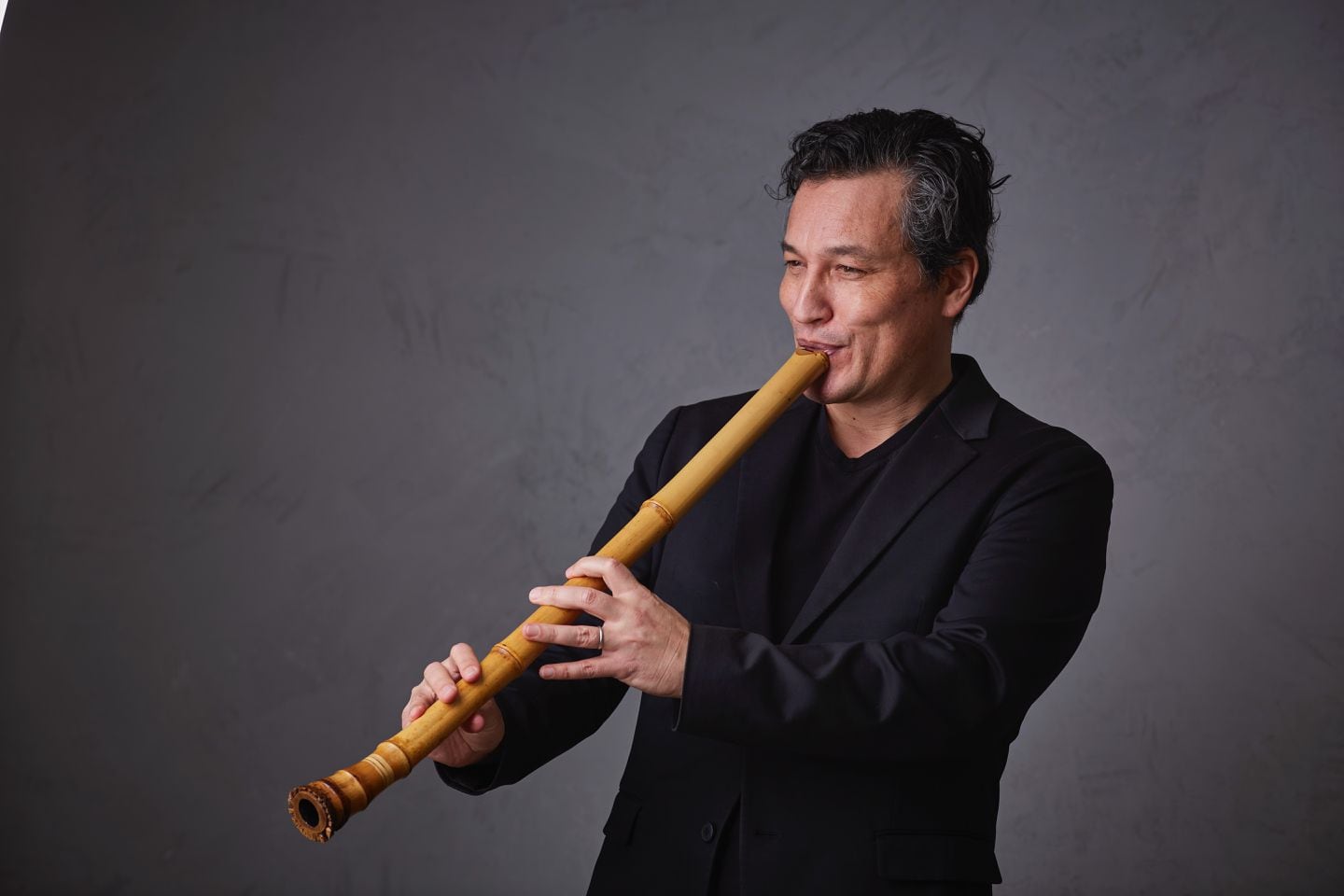
Photo: Anthony Mongiello via the Boston Globe.
Kojiro Umezaki plays the shakuhachi, a Japanese vertical bamboo flute.

In the same way different languages often express something about a culture that is not seen in other cultures, different musical instruments can do the same. A Japanese musical instrument called the shakuhachi is like that. And it can take hold of musical people in surprising ways.

A.Z. Madonna has the story at the Boston Globe. She writes, You have probably heard this sound before. This is the first thing that shakuhachi player Kojiro Umezaki tells people who aren’t familiar with his instrument.

“Maybe you’ve heard the vertical bamboo flute in movies when you see a scene of Japan, or you’ve heard one playing in the background at an Asian restaurant. Or you might have heard it in video games; if you’ve played ‘Ghost of Tsushima,’ the acclaimed action-adventure game from 2020, you didn’t just hear a shakuhachi, you heard Umezaki playing it.

“But there’s more to the instrument than its status as a symbol of Japanese music and Japan itself. …

“ ‘It is the sound of the earth,’ said shakuhachi player and maker Perry Yung in a phone interview. ‘The sound of the wind passing through a bamboo forest. It’s a sound that is constantly shifting tone colors, like light passing in the sky through clouds.’

“The shakuhachi was historically used as a solo instrument in Zen Buddhist meditation, specifically by wandering mendicant monks. It also sometimes appears in Japanese classical music, often with a koto (zither) and the three-stringed shamisen. Most modern shakuhachis have five tuning holes, with four in the front and one on the rear, and they’re tuned to the minor pentatonic scale. However, the player can partially cover holes and bend pitches to produce any pitch they want. …

“It somewhat resembles a recorder, but has no mouthpiece, so producing a sound is trickier. ‘You have to find the spot that sets up the vibration with your lips,’ said Umezaki … ‘My mother likes to tease me and say that when I first started playing it, it took me a year to make sound.’

“The child of a Japanese father and Danish mother, Umezaki grew up in Tokyo and attended an international high school. There his choir teacher was a student of famed shakuhachi player Goro Yamaguchi, and he suggested Umezaki try the instrument as well. …

‘As someone with a mixed Japanese background, you do start to wonder about the Japanese side of who you are,’ he said. For him, playing shakuhachi was ‘the simplest way to get in touch with something that is very much identified with Japanese culture.’

“The instrument found Yung in 1994, while he was acting in a play directed by Ellen Stewart at the New York experimental theater venue La MaMa. Shakuhachi player Yukio Tsuji was in the production’s band, playing the instrument in a ‘very experimental manner,’ he said. … ‘But at one point, the show was silent, and then there was the shakuhachi, and it changed my world.’ After the show, Yung rushed backstage to ask where he might get one. ‘[Tsuji] just looked at me wide-eyed, and said, “I see you’re bitten now.” ‘ …

“Yung took a DIY approach — he bought bamboo at a flower market, and copied flutes at Tsuji’s own workshop, he said. ‘I basically learned how to play and make at the same time.’

“Some time later, he studied in Japan with Kinya Sogawa, an established professional musician and craftsman. ‘He didn’t speak any English, and I didn’t speak any Japanese at the time,’ Yung said. ‘But in the traditional manner of study, you imitate the master and don’t ask questions.’ …

“Umezaki has played with Silkroad, the broad global music initiative founded by Yo-Yo Ma, for over 20 years. He considers what he’s learned there the closest thing he’s had to conservatory training. …

“Yung, whose workshop floats between New York and Rhode Island, has more recently started incorporating the instrument into activism, particularly at rallies against anti-Asian hate. ‘I start my talk with a shakuhachi offering, to others who have been affected by the violence that has been perpetrated upon the Asian-American community in recent years.’ “

More at the Globe, here.

Read Full Post »

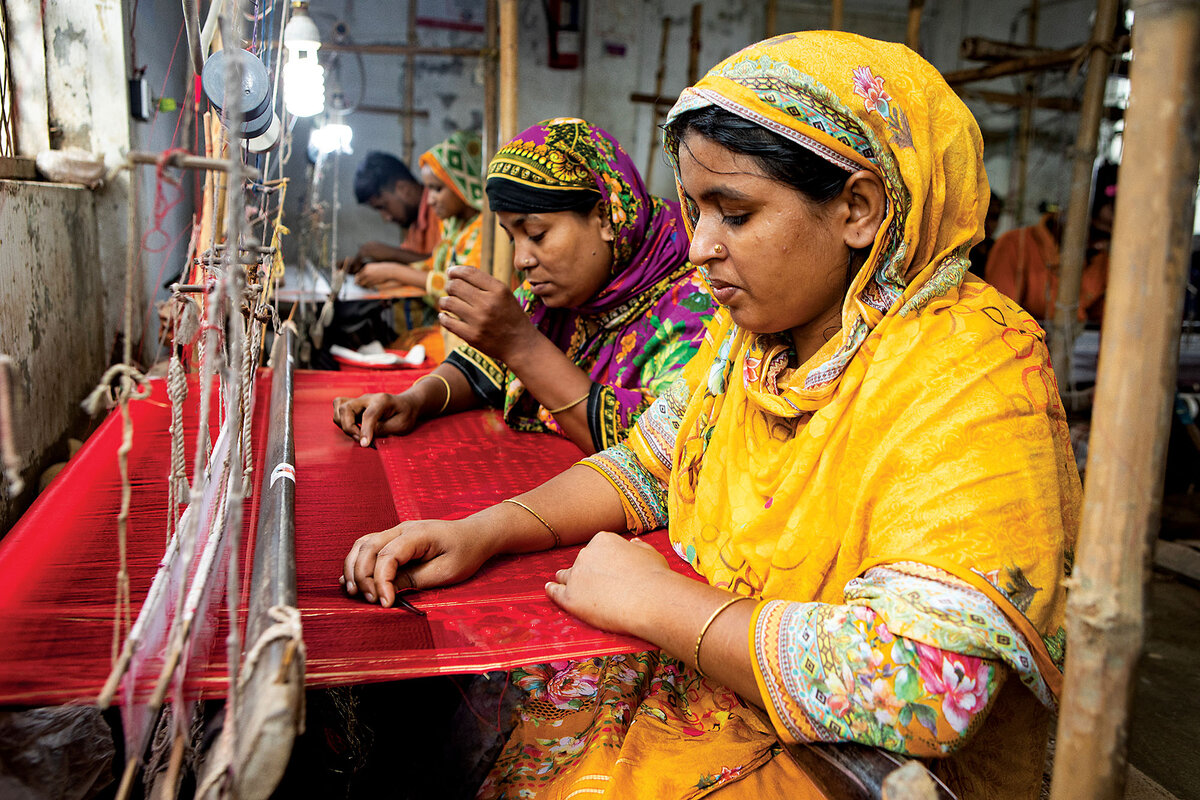
Photo: Melanie Stetson Freeman/CSM Staff.
Artisans do “respectful” work on jamdanis at Abul Kalam Jamdani Weaving Factory in Bangladesh.

Recently I wrote about the the Fuller Craft Museum’s exhibit of the Red Dress, an embroidered garment “worked on by 380 individuals from 51 countries, mostly female, many of whom were vulnerable and living in poverty” — women who felt uplifted by an art project that honored their skills.

Today’s post is also about women’s handcrafts.

Sara Miller Llana reports at the Christian Science Monitor, “Two dozen artisans crouch over hand looms threaded with bright-orange and sky-blue cottons. Their fingers nimbly create a jamdani, an intricately woven sari dating back to the [16th century] Mughal Empire. …

“Made of fine cotton or silk, the jamdani was a pinnacle of fashion centuries ago. But in the 19th century, British colonizers brought in their iteration of fast fashion, and the tradition nearly went extinct. …

“After Bangladesh became an independent nation in 1971, the nongovernmental organization BRAC set out to revitalize the weaving practice. It approached artisan families like that of Anwar Islam, owner of this shop. ‘I didn’t think it was feasible, but I was happy to be part of the solution,’ says Mr. Islam. 

“Today he employs 120 weavers at Abul Kalam Jamdani Weaving Factory. …

“But this is not just a business success story. … The jamdani is seen as a story of cultural success, too. It’s part of the championing and preservation of objects from sealskin parkas in the Arctic to duck decoys and quilts across the United States that otherwise may be forgotten.

” ‘People have been striving to decorate their lives to tell the world who they are for centuries,’ says Chris Gorman, a deputy director of the American Folk Art Museum in New York. … ‘Without people championing the study and preservation of objects like these, and others, there is the possibility that people will simply forget about them, and it is hard to revive them or prove their relevance.’

“About the time the jamdani was being revived, a women’s collective was coming to life at the northernmost tip of Canada, in the town of Taloyoak.  

“Begun in 1972, the group, called Arnaqarvik, garnered a burst of fame in its day with its Inuit parkas, mitts, and boots made from caribou, wolf, and seal and patterned with dyes from tundra lichen and flowers. The collective’s work — including, eventually, duffel-wool ‘packing dolls, or miniature stuffed animals carrying their babies in parkas as the Inuit do — was showcased in New York City and the 1974 Arctic Winter Games in Alaska.

“Yet today, just as the jamdani is enjoying global appeal, the work of Arnaqarvik has been largely forgotten. So the Kitikmeot Heritage Society in Cambridge Bay, in Canada’s Nunavut territory, has set out to restore its memory in a digital archive. 

“And to mark the 50th anniversary of the collective, about 250 items in 2021 were sent back to Taloyoak in an exhibition. It was the first time most in the community found out what Arnaqarvik even was. ‘Everybody was really surprised by what their parents did in those days,’ says Arnaoyok Alookee, Arnaqarvik’s co-founder.

“Brendan Griebel, an Arctic anthropologist and manager of collections and archives for the Kitikmeot Heritage Society, says this reconnection is about far more than just the production of goods. ‘Having that physical contact ignites something in the memory and in the senses,’ he says.

“When Arnaqarvik began, the semi-nomadic Inuit of Taloyoak had only gradually moved into this permanent settlement the decade prior. The collective helped the community bridge a gap — between its Indigenous traditions and the new wage economy into which it was settling. 

“Judy McGrath co-founded the collective with Ms. Alookee when her husband was posted for work in the Arctic community. She says she still recalls the sense of purpose that craft-making gave all of them. They collected flowers with their children in 24-hour sunlight; they’d use the 24-hour darkness of winter to boil their dyes on the stove. ‘I can still feel the confidence that the skills they had mattered, and the excitement over making new things from the old, from the land,’ Ms. McGrath says.

“In Bangladesh, the rise of the jamdani was also driven by economics, to help artisans whose enormous skills couldn’t find the market for livelihoods. BRAC, the country’s largest NGO, created the brand Aarong to distribute their products. …

“Making a jamdani, which derives from the Persian words jam (floral) and dani (vase), is what weaver Mohammed Monir calls a ‘respectful’ job. … ‘When I see someone famous wearing something I made, I feel proud,’ he adds.

“Today jamdani weaving is included on UNESCO’s Representative List of the Intangible Cultural Heritage of Humanity.”

More at the Monitor, here. No firewall. Reasonable subscription. You can also sign up for their free weekend updates.

Read Full Post »

Photo: Adeline Heymann/One Ocean Expeditions.
Candice Pedersen, a guide for One Ocean Expeditions in the Arctic, tells passengers that Inuit women feel empowered reclaiming traditional tattoos for themselves.

I love the radio show called The World because of the international focus. It always has a deeper take on mainstream media stories, and you can hear music you’re unlikely to be exposed to anywhere else. Recently, Joshua Coelda, Sejersdal Dreiager, and Shirsha Chakraborty reported about a tradition that is coming back from the brink: Inuit tattoo art.

“Najannguac Dalgård Christensen, 35, pulled back her sleeve on one forearm to reveal a pair of tattoos shaped like train tracks across her wrists. …

“These are traditional Inuit tattoo patterns that speak to her Indigenous Inuit heritage. The markings, she said, represent Sila, a word that carries many meanings, including ‘breath,’ ‘sky,’ ‘spirit’ and ‘universe.’

“To Christensen, who got the tattoo several years ago, it also means ‘the Greenlandic belief that we should be aware of who we are and what we can be, and that is attached to each other.’

“In precolonial times, Inuit women of Greenland, and across much of the Arctic, would have tattoos on both their bodies and faces, holding important pre-Christian spiritual meaning. Today, some Greenlandic Inuit like Christensen are reclaiming their identity through this long-lost art. 

“She said that she didn’t always embrace her Greenlander identity — because it is often associated with negative stereotypes about the Inuit diaspora living in Denmark, who colonized the North American island three centuries ago.  

“ ‘I felt empowered by getting the tattoos because it was like there was some kind of relief that I didn’t have to be embarrassed about being a Greenlander anymore,’ Christensen said. …

“The custom itself is far from new, but tattoos were some of the first traditions to be discouraged when Danish-Norwegian missionaries started colonizing the island at the beginning of the 18th century. The missionaries found tattooing incompatible with Christian faith, [Randi Sørensen Johansen, intangible cultural heritage curator at the Greenland National Museum and Archives] said. …

“As the custom disappeared, so did much of the knowledge about the tattoos’ meaning. ‘We didn’t have that tradition of writing down,’ Johansen said — Inuit passed knowledge through oral storytelling. …

“Inuit would use amulets to protect them from ‘unwelcome spirits,’ but also to help certain attributes or ensure a successful childbirth, among other things. It is likely, Johansen said, that Inuit tattoos were seen as a kind of amulet, giving strength, help or protection to the women or — in rarer cases — men who had gotten them.

“The tattoos were most often made as linear patterns across the brow and vertical lines on the chin made by using both a puncture or dot technique and a sewing technique. The latter technique consisted of pulling sinew dipped in soot under the skin with a needle made of animal bone, curator Johansen said.

“Maya Sialuk Jacobsen is one of about a dozen Inuit tattoo artists across the globe reviving this traditional art. … It was she who created Christensen’s tattoos. For over six years, she’s been helping Inuit like Christensen who live in Denmark connect with their culture through ink. Like Christensen, she is of both Danish and Greenlandic Inuit descent — a group she describes as an emerging ‘third culture’ in the Scandinavian country.

“The community is fairly small in Denmark and not well-defined demographically. According to StatBank Greenland, there are a little under 17,000 people born in Greenland currently living in Denmark. But community leaders, including from the Greenlandic House of Aalborg, aren’t even sure about the exact number of Inuit in Denmark. The number of self-identifying Inuit could be even higher, due to the presence of third-culture community members, who are partially Inuit. …

“Sialuk Jacobsen said, ‘It’s basically identity work all the time.’  Many come to her with a feeling of sadness, in search of a sense of belonging, she said. ‘They need to talk about these things, and to learn about the culture, they just want to learn.’ …

“While Sialuk Jacobsen said she uses inks and needles approved for tattooing on clients in Denmark, her research into the traditional techniques has included experimental tattooing on herself, and using her own right leg as her test area to reconstruct authentic methods of inking up.

“But in Denmark, finger, hand and face tattoos are prohibited (though it’s not illegal in Greenland). So, Sialuk Jacobsen is limited to tattooing the rest of the body. …

“The legacies of colonialism hang heavy over the community living in Denmark. Greenlanders are overrepresented among Denmark’s homeless population — accounting for 7% of people experiencing homelessness, according to VIVE.

“In recent years, Denmark’s colonial past came under public scrutiny.  For her master’s degree, Christensen looked into a form of ‘modern boarding schools.’ She found that Inuit children in Denmark are more likely than Danish children to be taken away from their families and placed in foster homes, which are almost always Danish families. 

“ ‘They learn to speak Danish, and there isn’t any focus on the Greenlandic language, so they lose their Greenlandic language. And when the parents only speak Greenlandic, they can’t talk to each other without an interpreter.’

“Christensen, who has become an activist through her research, believes the government should make it at least mandatory for Inuit children living in foster care to have lessons on Greenlandic.”

More at PRI’s The World, here, and CNN, here.

Read Full Post »

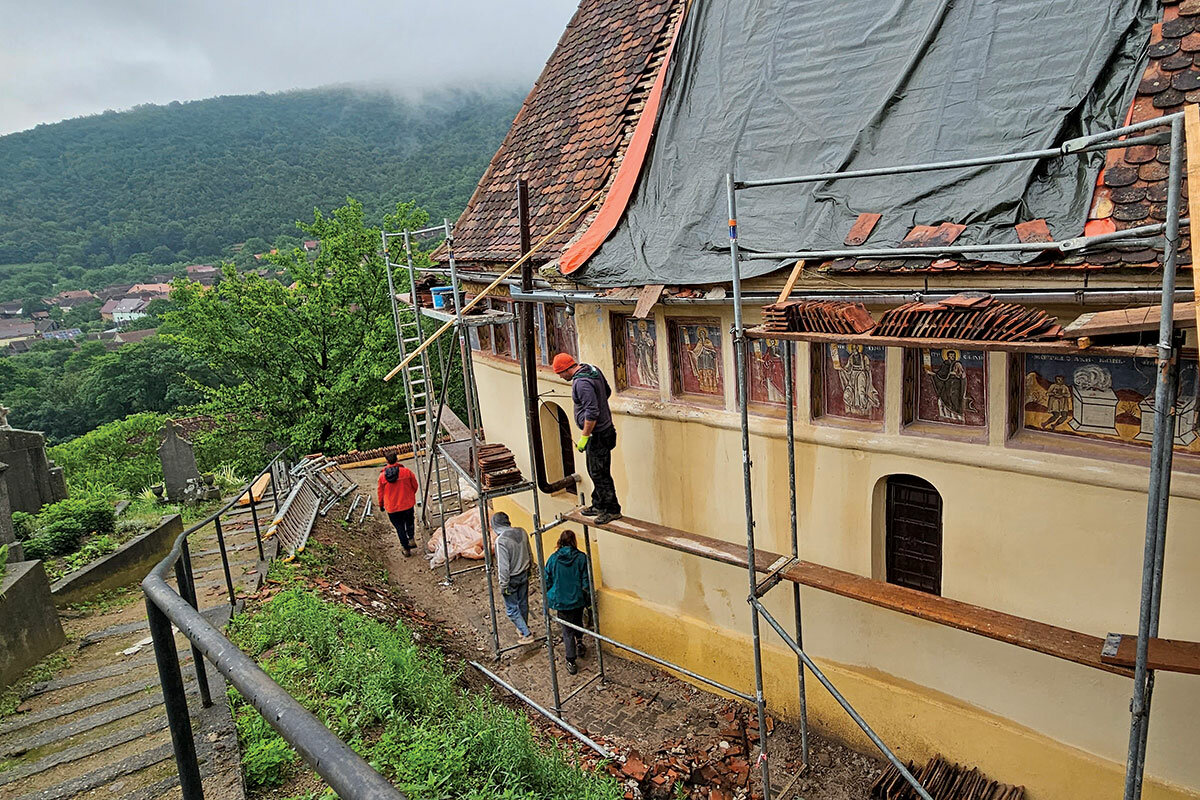
Photo: Isabelle de Pommereau.
Eugen Vaida and an Ambulance for Monuments team repair the Church of St. Nicholas the Hierarch in Fântânele, Romania.

Today’s story is all about the Power of One. That is, one who organizes many. The setting is a post-Communist country that is struggling to build its economy and has little left over for preserving cultural monuments.

Isabelle de Pommereau writes at the Christian Science Monitor, “It is midday on a damp Friday. Eugen Vaida guides his team into the final phase of re-tiling the roof of a church, at the crest of a forested hill in this mountainous Transylvanian village.

“Village craftspeople and students from the city meticulously lay tiles on the roof timbers of the 18th-century Romanian Orthodox Church of St. Nicholas of the Hierarch. From the scaffolding, students respectfully and attentively watch Nicolae Gabriel Lungu, who is descended from a Romani family who all knew this skill. Soon an older woman summons the crew to share in a platter of clătite, thin cheese-filled crepes.

“Once bustling with families and culture, Mr. Vaida’s home region had become a string of largely empty villages surrounding abandoned stone churches. But now, watching this group interact, he has newfound hope. The repair by his group, Ambulance for Monuments, will help safeguard the church’s stunning outer frescoes. And the impact will ripple far beyond the building itself. 

“ ‘People are starting to understand the value of heritage,’ Mr. Vaida says. For the past seven years, he’s been driving around the country with a van equipped with tools and volunteers in a race against time to rescue endangered historic buildings. He has helped save more than 55 historical structures on the verge of collapse, from medieval churches and fortification walls to old watermills and UNESCO World Heritage Sites. He does so by impressing preservation methods and mindsets onto local communities. 

“ ‘I wanted to reconnect the members of the community to their roots, make them aware that those buildings are part of their cultural identity, and show them how they can continue the work we do,’ he says.

“Mr. Vaida offers a ‘best-practice example of how, with not so much effort, you can save the identity of Romania as a country,’ says Ciprian Stefan, director of the ASTRA Museum, Europe’s largest open-air ethnographic museum, in Sibiu.

“Romania’s rich cultural legacy of painted churches and fortified villages was shaped over centuries. But close to 600 historic monuments are in an acute state of degradation, victims of years of dictatorship, poor legislation, and plain neglect, experts say.

“Mr. Vaida experienced the destruction in a very personal way. He grew up playing with Romani and Hungarian friends, as well as the German Saxons who had literally built the region. When the 1989 collapse of communist dictatorship flung Romania’s doors wide open, half a million people left. The mass exodus tore the Romanian soul apart – and fractured Mr. Vaida’s own identity. Ambulance for Monuments is an attempt to reclaim both his identity and that of his country. …

“He, too, left for the city, to get an education, and he became a successful architect in Bucharest. But six years into the job, he quit to return home. The big city was not his future; his home village was.

“He soon discovered that many village craftspeople who had passed on their know-how from generation to generation had left for Western Europe. … Mr. Vaida wanted to use his architectural skills to save his region’s extraordinary architectural and cultural heritage. He started by teaching children about local history. …

“In 2016, he launched Ambulance for Monuments in hopes of connecting architectural students, craftspeople, and communities around a new effort to restore decaying historic buildings. …

“Volunteer students get hands-on practice in historical restoration; local craftspeople get jobs; and communities help house and feed the teams, and donate the material. … ‘It’s going from grassroots up, from down to up,’ says Mr. Vaida. …

” ‘He doesn’t go to villagers to ask for anything, but he goes there to give something,’ says Mr. Stefan. ‘The community stays in the shadows at first. When they see Eugen comes with material and manpower to restore their church, they say, “Let’s help him,” and, little by little, they come and help with housing, with food.’ …

“The task of rescuing Romania’s cultural legacy is huge, but Mr. Vaida sees signs of progress. … ‘People are moving back to the villages of their grandparents, because they feel they belong there,’ he says. ‘They are rediscovering old houses, their heritage, their villages, and are getting involved in the preservation of this type of living.’ ”

More at the Monitor, here. No paywall. Subscriptions solicited.

Read Full Post »

Photo: Nicole Tung for NPR.
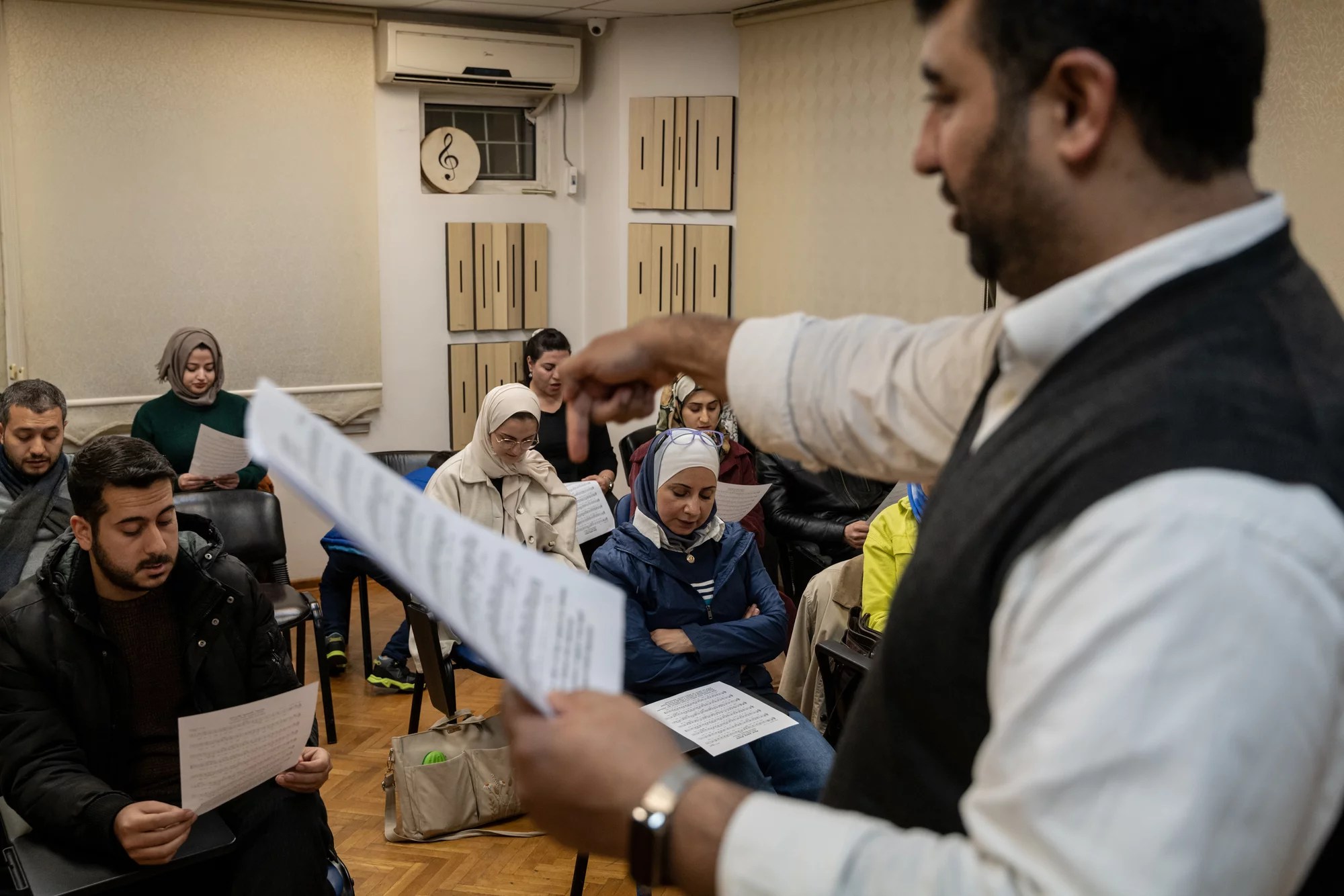
Ibrahim Muslimani, 30, speaks to a class about a piece of music blending different eras and languages at the Nefes Foundation for Arts and Culture, which he cofounded in 2016, in Gaziantep, Turkey.

Today’s story is about how the arts can help victims of disasters get their bearings again.

As Fatma Tanis reported recently at National Public Radio (NPR), “When the powerful earthquake rocked her home in early February, 18-year-old Sidra Mohammed Ali woke up and thought of one thing: her music school — was it OK?

“The next day, as survivors all over southern Turkey were taking stock of the destruction and checking on loved ones, Mohammed Ali rushed to the school, the Nefes Foundation for Arts and Culture, and took a deep breath of relief when she saw it was still standing, only having sustained some minor damage.

‘This school is my sanctuary from the stress of life as a Syrian refugee in Turkey,’ she said. ‘I couldn’t bear the thought of something happening to it.’

“The Nefes Foundation was created by Syrian and Turkish musicians in the city of Gaziantep in 2016. They have group classes where they try to revive forgotten Syrian classics and integrate Turkish and Syrian cultures with music that the two have shared for centuries.

“The school also offers private music lessons on the piano and Middle Eastern instruments like the oud (a pear-shaped string instrument), the kanun (a plucked zither) and the ney (an end-blown flute).

“But more than six weeks after the Feb. 6 disaster, life in the earthquake zone is far from back to normal. The magnitude 7.8 earthquake killed more than 55,000 people in Turkey and neighboring Syria. It damaged or destroyed hundreds of thousands of buildings and left 1.5 million people without a home in Turkey alone, according to the United Nations.

“The school had not been able to resume classes until [March 2023], when only three students, out of many dozens, showed up to sing and play.

“Before the earthquake, the school would be packed on weekday evenings, with students ranging from ages 6 to 50, mostly Syrian, but some Turks attended as well.

“The classes are bilingual — in Turkish and Arabic. And that was especially important, according to Ibrahim Muslimani, a Syrian classical musician from Aleppo, who is the brains behind the organization.

” ‘Because some of the young Syrian kids have spent most of their lives here in Turkey and are more fluent in Turkish,’ he told NPR in November 2022. ‘We’re trying to preserve our Syrian cultural identity but also getting to know the Turkish identity through art.’

“Turkey hosts 4 million refugees, the largest number of any country, according to the U.N. refugee agency. The vast majority are Syrians who fled the civil war.

“In the early years of the Syrian civil war, which started in 2011, Turkey had a generous open-door policy toward Syrian refugees. But without broad integration initiatives by the Turkish government, life for many of the refugees has been difficult.

“More recently, politicians in Turkey who oppose President Recep Tayyip Erdogan have scapegoated refugees for the country’s economic problems, leading to a rise in discrimination and hateful attacks. …

“Mohammed Ali, who studies medicine at university and the kanun at the music school, said last weekend the school has been a lifeline for her. She has a bleak outlook on her future, and doesn’t believe that the people in Turkey will ever accept her existence in the country.

” ‘But anytime I have an upsetting encounter, my Turkish teachers and friends here comfort me,’ she said. …

“Rafeef Saffaf Oflazoglu fled Aleppo in 2013 after a near-death encounter. She comes from a family that’s passionate about classical Arabic music. To be able to continue exploring her love of music in Gaziantep was priceless, she said.

“The school also introduced her to centuries-old Turkish songs from the Ottoman archives, and old tunes that traveled from Istanbul to Aleppo. Studying those shared melodies made her feel closer to the culture in her new home.

“Having to go without classes after the earthquake was harder than she expected. ‘After maybe 10 days, I just figured out, like the thing I miss most is art,’ she said, even though she was living in her car at the time. ‘People under trauma react in different ways. It’s not just about singing, you know? It’s spiritual.’

“For Muslimani, the earthquake was a triggering reminder of how he had lost everything a decade ago in Aleppo. … The civil war in Syria destroyed much of the country’s cultural output, along with the lives of millions of Syrians. Muslimani has a mission to keep Aleppo’s traditional form of music, al-Qudud al-Halabiya, alive from Gaziantep.

“He and other Syrian artists also record music at Nefes. ‘I promised my teacher that I would immortalize those precious pieces in the best form possible,’ he said. ‘With the proper orchestra and the glory that they deserve.’ …

“The Nefes Foundation, which survived on donations and fees for private lessons, is now at serious risk of closing down, said Muslimani. They don’t have the funds to pay for next month’s rent. …

” ‘The mere thought of losing this place… it’s unbearable.’ “

More at NPR, here.

Read Full Post »

Photo: National Research and Restoration Center.
The location of Russia’s attacks, says Richard Kurin at Smithsonian magazine, suggest they target “sites that are significant to Ukrainian history, culture and identity.” (Above, although many items in storage were already in fragile condition, the conservation task is now more difficult.)

Today I have a couple articles about efforts to protect Ukrainian culture since the full-scale Russian invasion.

Richard Kurin writes at the Smithsonian, “Russian leader Vladimir Putin has wrongly made culture both a justification and an object of war with Ukraine. As in other regions of Europe, the population of the geographic region of modern Ukraine reflects a diversity of ethnic migrations and cultural influences, as well as a succession of political rulers and changing boundaries over millennia.

“Putin, though, claims that Ukrainians lack the history, culture and identity worthy of a national state separate from Russia. While drawing on periods of the czarist Russian Empire and the Soviet era to make his case, Putin denies crucial cultural realities.

“The Ukrainian language, the country’s art and its history — including the Slavic-Christian state centered in Kyiv a thousand years ago, the 19th-century flowering of Ukrainian culture and nationalism, the post-World War I Ukrainian republic, the Ukrainian independence movement of the early 1990s and its reaffirming Orange Revolution in 2004 and the Euromaidan Revolution in 2013-2014 — all represent an undeniable Ukrainian identity that is centuries in the making. …

“We take a close look at the ongoing work of hundreds of professionals across a landscape of Ukrainian and international organizations to defend endangered cultural heritage.

“Crucial investigations are underway that will one day provide an accounting of Russia’s devastating war crimes. These attacks are not just random, nor do they represent collateral damage. Rather, they suggest a targeted attack on Ukrainian history, culture and identity, a means toward Putin’s ends — the destruction is a deliberate attempt to obliterate Ukrainian history and culture.

“To support Putin’s wrongful argument that Ukraine doesn’t have a culture and history independent of Russia, his forces figure they can simply bomb away the country’s cultural heritage.

“To date, almost 1,600 cases of potential damage to Ukrainian cultural heritage sites have been documented, including some 700 monuments and memorials, and more than 200 museums, archives and libraries. Notably, more than 500 are religious sites — places of worship and cemeteries — with those of the Ukrainian Orthodox Church specifically targeted. The greatest number of cases are associated with regions of the most aggressive Russian attacks: Kyiv, Kharkiv, Mariupol and Luhansk. And the work of organizations, including the Smithsonian, mobilized thanks to years of cultural heritage training efforts, is aiding the country in its effort to protect artifacts, books, documents and artworks from these insidious attacks. …

“[In 2010], the Smithsonian formally established [Smithsonian Cultural Rescue Initiative or] SCRI under the direction of curator and former U.S. Army  ‘monuments woman‘ Cori Wegener. … As part of SCRI’s expanding research and training activities, [Ihor Poshyvailo, now director of the Maidan Museum in Kyiv] became first a trainee and then an instructor for the program and stayed in close contact with Wegener. …

“Last year, with the Russian invasion of Ukraine on February 24, the lab ramped up its efforts employing [satellites], including some with specialized sensors that can detect heat signatures to record ‘kinetic’ activity. That enables the monitoring of bombings, missile strikes, artillery shelling and fires. Using that data, the lab’s analysts are able to see how closely the heat signatures align with cultural sites. If proximate, they call up satellite photographic imagery to examine possible damage. Given satellite coverage, they can reference images over a period of time to pinpoint when the damage occurred and how extensive it is.” More at the Smithsonian, here. No firewall.

Meanwhile at CNN, there’s a great story about one woman’s quiet campaign to get US museums to relabel Ukrainian art misidentified as Russian.

For example: “Repin, a renowned 19th century painter who was born in what is now Ukraine, has been relabeled on the Met’s catalog as ‘Ukrainian, born Russian Empire’ with the start of each description of his works now reading, ‘Repin was born in the rural Ukrainian town of Chuhuiv (Chuguev) when it was part of the Russian Empire.’ …

“One of Repin’s lesser-known contemporaries, Kuindzhi was born in Mariupol in 1842 when the Ukrainian city was also part of the Russian Empire, his nationality has also been updated. The text for Kuindzhi’s ‘Red Sunset’ at the Met has been updated to include that ‘in March 2022, the Kuindzhi Art Museum in Mariupol, Ukraine, was destroyed in a Russian airstrike.’

“In reference to the recent relabeling process, the Met told CNN in a statement that the institution, ‘continually researches and examines objects in its collection in order to determine the most appropriate and accurate way to catalogue and present them. The cataloguing of these works has been updated following research conducted in collaboration with scholars in the field.’ …

“Semenik told CNN that she channeled her anger about the Russian invasion into her efforts to identify and promote Ukraine’s art heritage, using her Twitter account [Ukrainian Art History, or @ukr_arthistory] to showcase Ukrainian art to the world.

“Semenik is herself lucky to be alive. She was trapped in the Kyiv suburb of Bucha for weeks as Russian forces laid waste to the area last March, hiding out in the basement of a kindergarten before eventually walking some 12 miles to safety with her husband and their cat in tow.

“She began her campaign after a visit to Rutgers University in New Jersey last year. While helping curators there, she was surprised to see artists she always considered as Ukrainian labeled as Russian.”

So interesting! Read more here. No firewall.

Read Full Post »

Photo: Teagan Ferraby/ Unsplash.
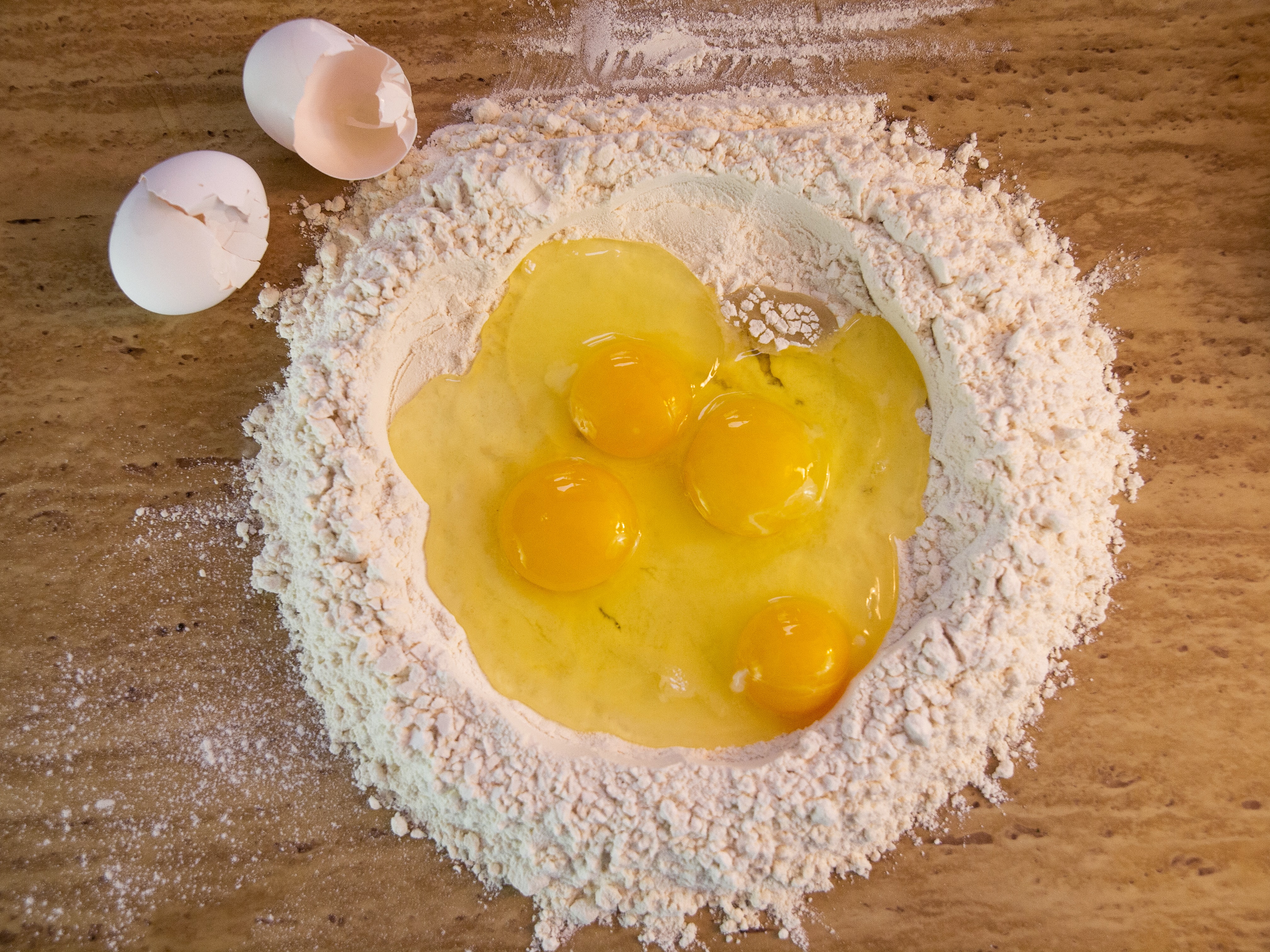
Making pasta from scratch.

This one is for my friend Sandra, who makes many Italian dishes the way her mother taught her. For example, she makes a labor-intensive pasta at Christmas in quantities that can feed a large extended family, including great great nephews.

Sydney Page writes at the Washington Post, “After all the food is served at this New York restaurant, customers clap for the grandmother who cooked it. It’s not scripted, but it happens every night.

“The Staten Island establishment, run by women known as ‘nonnas of the world,’ is as much a celebration of the people who toil in the kitchen as the places they hail from. …

“There are about a dozen women who cook regularly at Enoteca Maria, a casual 30-seat Italian eatery. Its menu is made and executed by a rotating group of international women, most of whom are matriarchs.

“The nonnas — the Italian word for grandmothers — include Maria Gialanella, 88. She has amassed such a following that some customers come only on nights they know she is in the kitchen. She even has her own Instagram page.

“Seeing strangers taste her culinary creations, she said, gives her immense pleasure and pride.

“ ‘Everybody likes it, so I’m very happy,’ said Gialanella, an Italian immigrant known for making ravioli by hand, rich ragus, soups and other family recipes she learned growing up near Naples.

“Gialanella, who moved to the United States in 1961 and worked as a seamstress, said that 10 years ago, her daughter heard about Enoteca Maria and encouraged her to become a cook there.

“ ‘It’s nice with the other nonnas,’ said Gialanella, who has six grandchildren. ‘I like every food.’

“Restaurant owner Joe Scaravella is a huge fan.

“ ‘She is not even 5 feet tall, but she’s a powerhouse,’ said Scaravella, who opened the eatery in 2007. ‘She goes around and does selfies. She spends the night hugging people.’

“Initially, you had to be an Italian grandmother like Gialanella to join the kitchen staff, but about nine years ago, Scaravella decided to broaden the cooking criteria.

” ‘They just have to be women that can bring their culture forward,’ he explained, adding that the cooks — all of whom are called ‘nonna’ by patrons, regardless of their background — range in age from 50 to 90, and possess a deep knowledge of their culture’s unique cuisine. While most are grandmothers, some are not. …

“In the beginning, the restaurant served only Italian fare — to reflect Scaravella’s roots. He opened the eatery after losing several family members, including his grandmother and his mother, both born in Italy, as well as his sister. They were all excellent cooks, he said. …

“At the time, Scaravella had spent more than 17 years working for the Metropolitan Transportation Authority and had no experience running a restaurant — let alone working in one.

“ ‘I had no idea what I was doing,’ he said. ‘No business plan or anything.’

“On a whim, he used the money his mother, Maria, had left behind to purchase a vacant storefront and decided to name his new restaurant after her. … Scaravella wanted his restaurant to serve the traditional Italian classics that he was desperately missing. It was the women in his family who dominated the kitchen.

“ ‘There were a lot of ladies at home that had all this information,’ said Scaravella. His mother and grandmother, for instance, knew ‘the secret to a good meat ball’ and ‘how to repurpose stale bread.’

“ ‘My whole life, I never wanted to go to an Italian restaurant, because it just never hit the spot,’ he continued. ‘These ladies, they’re the source. They are the vessels that carry this information forward.’

Given that his own matriarchs were gone, Scaravella embarked on a quest to find some nonnas who could prepare authentic, warming meals. …

“Before opening the restaurant, Scaravella put an advertisement in the local Italian American newspaper, seeking nonnas who could cook regional dishes from different parts of Italy. He was stunned by the response.

“ ‘I invited these ladies to my home. They showed up with plates of food,’ said Scaravella. ‘That was really the birthplace of the idea.’

“From there, he opened Enoteca Maria’s doors, staffing the kitchen with genuine nonnas who prepared everything from lasagna to chicken cacciatore. The concept, Scaravella said, was meant to mimic the experience of going to his nonna’s house for a meal.

“ ‘There’s a certain safeness when you go to your grandmother’s house, generally,’ he explained. ‘That is a strong memory and it’s very comforting, and I just really needed to be comforted.’

“The restaurant quickly took off. A few years later, Scaravella began inviting grandmothers from other cultures to cook their classics in his kitchen, and it got even busier.

“ ‘There are so many different people from so many different cultures,’ he said. ‘It just made sense to feature everybody’s grandmother.’ …

“Scaravella and the restaurant manager, Paola Vento, organize the weekly schedule and work with the nonnas to determine the menu. Typically, visiting nonnas are hired to cook at the restaurant about once a month, Scaravella said, though some come more often, and others come only once or twice a year.

“ ‘My favorite part of the job is getting to work with the grandmothers,’ said Vento, adding that the daily highlight is when customers clap for the visiting nonnas at the end of the evening. ‘You have to see the faces of the nonnas. They are so proud and so excited that they were able to share a part of their culture through food.’

“Many of the nonnas, Vento said, have become close friends. Although they speak different languages and come from different places, they have found ways to bond — mainly, through food.

“ ‘There’s a lot of love in the room,’ she said.

“To become a visiting nonna, there is one criteria: ‘They have to have a love for cooking, and that’s it,’ Vento said.

“While there is no required test, many prospective cooks attend a one-on-one free class offered at the restaurant called ‘nonnas in training.‘ …

“While Scaravella misses his own nonna, he said that his heart — and stomach — feel full again. What started as an effort to reconnect with his roots has allowed others to do the same.

“ ‘It’s hundreds of years of culture coming out of those fingertips,’ he said. ‘It’s beautiful stuff.’ ”

More at the Post, here. Can anyone share a picture of their grandmother in the kitchen? One of mine sold jellies, but I don’t have a photo.

Read Full Post »

Piñatas as Art

Photo: Henry Gass/Christian Science Monitor.
Piñata sculptor Alfonso Hernandez in his garage studio in Dallas. He is one of a growing group of piñata makers hoping to transform the industry and get recognition for the piñata as an art form.

When you think of piñatas, what do you picture? Kids’ birthday parties? Long cudgels? Here’s an article about people who want you to know that piñatas can be a serious art form.

Henry Gass asks at the Christian Science Monitor, “Would you take a sledgehammer to the David? A flamethrower to the Mona Lisa? A shredder to the latest Banksy? (Actually, scratch that last one.)

“Why then, some people are beginning to ask, would you want to pulverize a piñata? Alfonso Hernandez, for one, wants you to lower the bat and take off the blindfold and appreciate the artistry of a form that dates back hundreds of years.

“The Dallas-based artist has crafted life-size piñata sculptures of Mexican singer Vicente Fernández and Jack Skellington from The Nightmare Before Christmas. He wants the public to help turn an industry into art.

“ ‘Piñata makers never treated it like an art form,’ he says. ‘They’re taught to make it fast. It doesn’t matter what it looks like, just hurry up because they’re going to break it.’

“Unsatisfied with the generic mass production that has characterized their discipline for decades, piñata makers are pushing the artistic limits of the party pieces. These piñatas, bigger and more detailed, are made out of wood, foam, wire, and clay, and sculpted to look like beloved icons and life-size low-riders. Some move, some are political, and some even talk. Rihanna is a fan, as are, increasingly, art galleries.

“For generations, the real cost of bargain piñatas has typically been borne by the piñata makers themselves working long, arduous hours for less than minimum wage. By proving that piñatas can be more than just clubbable party pieces, people like Mr. Hernandez hope they can both create art and bring a wider respect and dignity to a craft long viewed as cheap and disposable.

“ ‘It’s been an underappreciated art form,’ says Emily Zaiden, director and lead curator of the Craft in America Center in Los Angeles. ‘Piñatas are so accessible. They speak to everybody,’ she adds. But there’s also a flip side. Piñatas ‘can be about appropriation, can be about, I think, the trivialization of a cultural tradition.’

“A new generation of Hispanic artists, she continues, ‘see how much metaphorical potential piñatas have, and how deeply it reflects their identities.’ …

“There are lots of questions around where piñatas come from. They may have emerged in Europe, or China, or the Aztec era – or in all three independently. There are few preserved, written historical records on the origins of piñatas – another sign of how underappreciated the craft has been, Ms. Zaiden believes.

“ ‘A lot of this work probably hasn’t been collected or preserved in ways that other types of art have been,’ she says. ‘It’s all speculation and oral history really,’ she adds, ‘but that goes hand in hand with the idea that these are ephemeral objects.’

“For centuries, piñatas were used for religious ceremonies in Mexico. Typically built to resemble a seven-pointed star, symbolizing the seven deadly sins, they would decorate homes – and be smashed – during the Christmas season.

“Their religious significance faded over time, and they became the popular children’s birthday party feature. But as the piñata industry commercialized, quality and craftsmanship became secondary to quantity.

“Yesenia Prieto grew up in that world. A third-generation piñata maker, she watched her mother and grandmother create in her grandmother’s house in south central Los Angeles, and when she was 19 she started helping herself. It was a constant struggle to survive, she says.

“ ‘I was tired of seeing how poor we were,’ she adds. ‘My grandma was about to lose her house. And we just needed to make more money. We needed to survive.’

“She describes a week in the life of a typical piñata maker. A four-person crew makes about 60 units out of paper, water, and glue a week. Selling wholesale, they make $600 and split it between the four of them. That’s about $150 for a full week of work. …

“ ‘What you’re seeing is an art form having to be mass produced and rushed because they’re getting sweatshop wages,’ she adds. …

“In 2012, Ms. Prieto went independent from her family, and independent from the mainstream piñata industry. She founded Piñata Design Studio and set to making custom, complex pieces that reflect the artistic potential of the craft.

“They’ve created pterodactyls and stormtroopers. They’ve made a giant Nike sneaker, and an 8-foot-tall donkey for the 2019 Coachella music festival. They made a piñata of singer Rihanna for her birthday. …

“But the need to hustle hasn’t abated, according to Ms. Prieto. They work longer on their piñatas than most makers do – up to 16 hours in some cases – but still struggle to sell them for more than $1 an hour. They’ve been leveraging the internet and social media – posting pictures of pieces as they’re being made, to illustrate the labor that’s involved – and they’re slowly raising their price point. …

“She’s also now reaching out to other piñata makers about forming a co-op. By working together, she hopes, piñata makers can get paid fairly, at least. Artistic quality could also improve. And as people see elaborate, custom piñatas more often, she believes, demand will grow, and pay will grow with it. …

“ ‘There is a shift taking place,’ she adds. She’s seeing piñatas in galleries more often. But ‘there’s [still] a need for us to push hard to survive.’ ”

More at the Monitor, here.

Read Full Post »

Photo: Suzanne and John’s Mom.
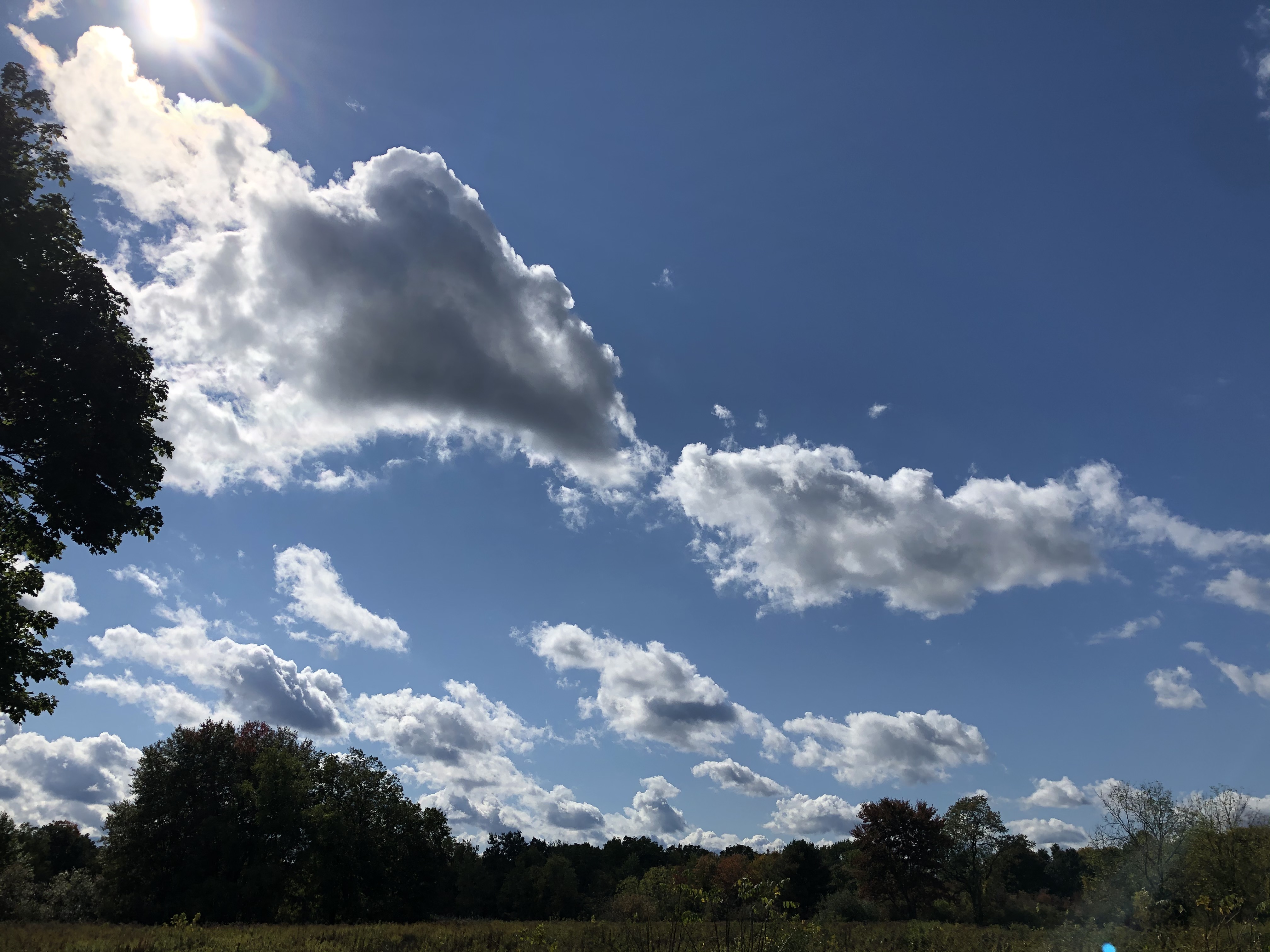
Blue skies over Concord.

Have you ever wondered about the blueness of skies and oceans? Maybe people from the dawn of time did, too. Or maybe not. Did they notice that the sky is “blue” before they had a word for the color?

Kevin Loria at Business Insider offers a story “about the way that humans see the world and how, until we have a way to describe something, even something so fundamental as a color, we may not even notice that it’s there.

“Until relatively recently in human history,” he reports, ” ‘blue’ didn’t exist, not in the way we think of it.

“As the delightful Radiolab episode ‘Colors’ describes, ancient languages didn’t have a word for blue — not Greek, not Chinese, not Japanese, not Hebrew. And without a word for the color, there is evidence that they may not have seen it at all.

“In the Odyssey, Homer famously describes the ‘wine-dark sea.’ But why ‘wine-dark’ and not deep blue or green?

“In 1858 a scholar named William Gladstone, who later became the prime minister of Great Britain, noticed that this wasn’t the only strange color description. Though the poet spends page after page describing the intricate details of clothing, armor, weaponry, facial features, animals, and more, his references to color are strange. Iron and sheep are violet; honey is green.

“So Gladstone decided to count the color references in the book. And while black is mentioned almost 200 times and white about 100, other colors are rare. Red is mentioned fewer than 15 times, and yellow and green fewer than 10. Gladstone started looking at other ancient Greek texts and noticed the same thing — there was never anything described as ‘blue.’ The word didn’t even exist. …

“Gladstone thought this was perhaps something unique to the Greeks, but a philologist named Lazarus Geiger followed up on his work and noticed this was true across cultures.

“He studied Icelandic sagas, the Koran, ancient Chinese stories, and an ancient Hebrew version of the Bible. Of Hindu Vedic hymns, he wrote: ‘These hymns, of more than ten thousand lines, are brimming with descriptions of the heavens. Scarcely any subject is evoked more frequently. The sun and reddening dawn’s play of color, day and night, cloud and lightning, the air and ether, all these are unfolded before us, again and again … but there is one thing no one would ever learn from these ancient songs … and that is that the sky is blue.’ …

“Every language first had a word for black and for white, or dark and light. The next word for a color to come into existence — in every language studied around the world — was red, the color of blood and wine. After red, historically, yellow appears, and later, green (though in a couple of languages, yellow and green switch places). The last of these colors to appear in every language is blue.

The only ancient culture to develop a word for blue was the Egyptians — and as it happens, they were also the only culture that had a way to produce a blue dye.

“If you think about it, blue doesn’t appear much in nature — there are almost no blue animals, blue eyes are rare, and blue flowers are mostly human creations. …

“We do not know exactly what was going through Homer’s brain when he described the wine-dark sea and the violet sheep — but we do know that ancient Greeks and others in the ancient world had the same biology and therefore same capability to see color that we do. But do you really see something if you don’t have a word for it?

“A researcher named Jules Davidoff traveled to Namibia to investigate this, where he conducted an experiment with the Himba tribe, which speaks a language that has no word for blue or distinction between blue and green.

“When shown a circle with 11 green squares and one blue, they could not pick out which one was different from the others — or those who could see a difference took much longer and made more mistakes than would make sense to us, who can clearly spot the blue square.

“But the Himba have more words for types of green than we do in English. When looking at a circle of green squares with only one slightly different shade, they could immediately spot the different one. Can you?”

Go to Business Insider, here. to see what is meant.

Loria continues, “Davidoff says that without a word for a color, without a way of identifying it as different, it is much harder for us to notice what is unique about it — even though our eyes are physically seeing the blocks it in the same way. …

“For more fascinating information about colors, including information on how some ‘super-seeing’ women may see colors in the sky that most of us have never dreamed of, check out the full Radiolab episode.”

What else don’t we see because we don’t have a word for it? Certain kinds of cloud or qualities of snow? Facial expressions? Clearly it depends on the culture in which we were raised.

Hat tip: Hannah. Thank you for realizing blog readers would like this!

More at Business Insider, here.

Read Full Post »

Photo: David L. Ryan/Boston Globe.
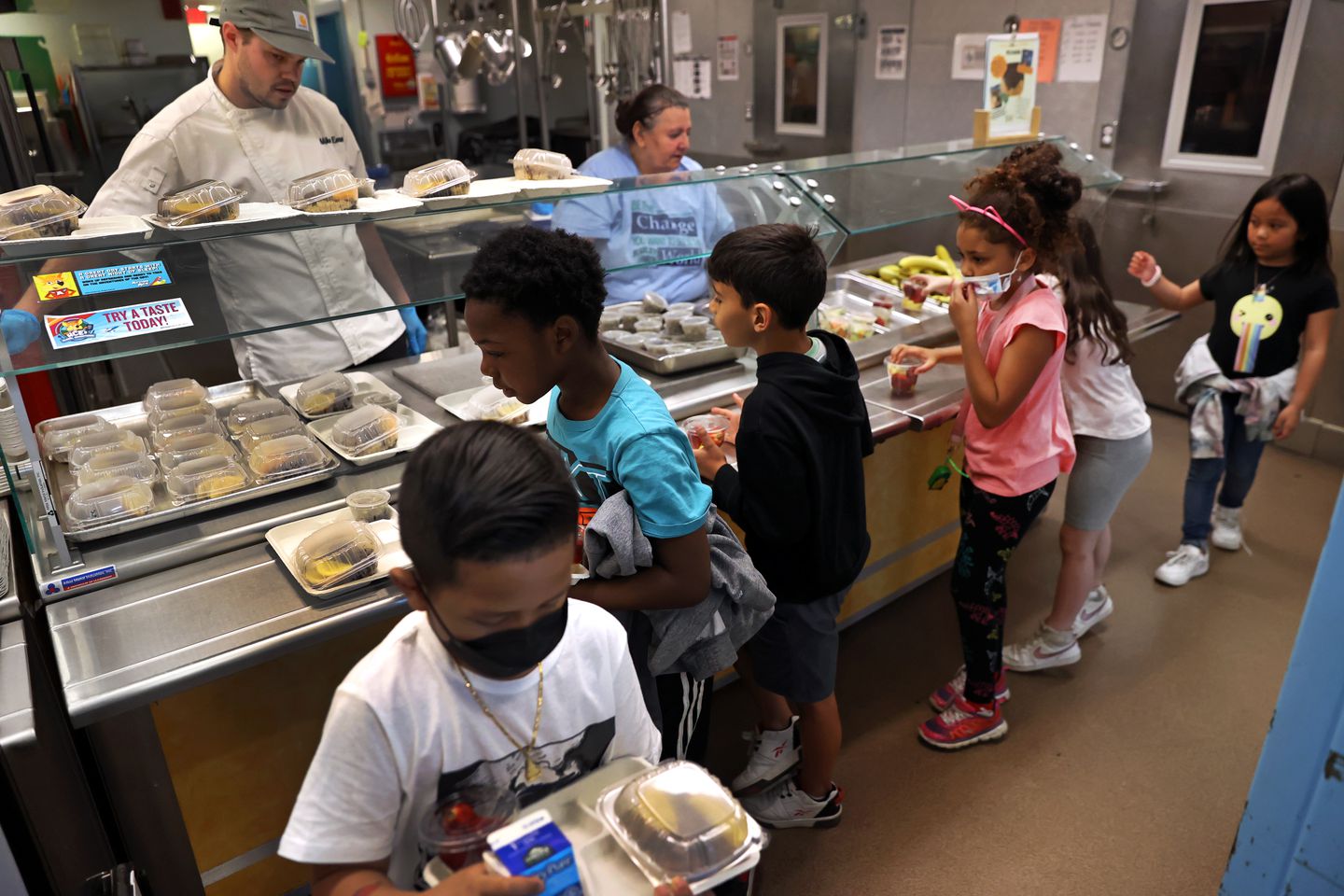
First-graders line up for lunch at McAuliffe Elementary School in Lowell.

The city of Lowell, Massachusetts, has been a “gateway city” at least since the Industrial Revolution. Located on two rivers that powered the early textile factories, it has attracted waves of immigrant workers looking for a foothold, or gateway, to America. Today its many nationalities continue to generate a multicultural energy.

Peggy Hernandez writes at the Boston Globe, “One day last fall, Umalkheeyr Cabdi Mahamed, 17, rose at 3 a.m. to make breakfast for her US history seminar at Lowell High School. The junior wanted to share canjeero iyo suugo, a spiced chicken stew with sweet thin pancakes, her mother’s favorite dish and a reminder of the home she left behind in Somaliland.

“Umalkheeyr was cooking out of more than goodwill; her dish was being sampled for this year’s edition of Tasting History, the seminar’s cookbook. She and her classmates — English learners and almost all immigrants — ultimately contributed 59 family recipes and stories about their journeys to the cookbook.

“Now in its fourth year, the Tasting History project has accomplished more than envisioned. In December, the 2020-2021 edition earned a Founders Award from The Readable Feast, an annual New England culinary book festival. That win led to a trial collaboration between the students and Lowell Public Schools Food and Nutrition Services.

Once a month, one recipe has been served as a lunchtime entree option to a student body of 14,387. The students are now teaching the adults.

” ‘I want people to know our culture because we have a lot of cultural diversity here in the United States. If you share your food, your culture, your experience, you’ll introduce them to your country,’ says senior Samantha Segura Marroquin of Guatemala, 19, who last year submitted a Christmas tamale recipe. …

“The trial [has] been a success, and the collaboration will continue in the fall. Some dishes were so popular Michael Emmons, the food service’s executive chef, hopes to include them into a regular lunch rotation. Dishes like lok lak, a glossy peppered beef served with salad from Cambodia, and feijoada, an inky black bean and pork stew served with white rice from Brazil.

“Lowell Public Schools is an ideal setting for this partnership. The student body is diverse: Hispanic (37.7 percent), Asian (27.5 percent), White (22.9 percent), Black (7.7 percent) and multi-race (4.1 percent). At least 50 languages are spoken in the high school. The four cookbooks reflect that range: 42 countries and one autonomous region are represented.

“The cookbooks are the brainchild of Jessica Lander, 34, a creative English Language history and civics teacher. … Lander arrived at Lowell High School in 2015 and, two years later, came up with the cookbook project while leading her ‘U.S. History 2 Seminar.’ The course covers the 1870s to the present, encompassing an era when 20 million immigrants arrived in the United States.

“While teaching immigration history, Lander recognized her students are, themselves, experts on being immigrants. She developed the cookbook as a means ‘to honor their stories and show their stories are valuable, just as important’ as those in US history books. ‘I wanted to use food as a story of migration,’ she says.

“Sometimes students have had to call relatives in their native countries for help with recipes. They learn to explain cooking techniques as well as ingredients others might find unfamiliar. Family tales introduce each dish. Edits go 15-20 rounds. Dishes are prepared at home and shared with the class. …

“When Alysia Spooner-Gomez, the district’s food service director, learned about the win last winter, she urged Emmons to tap into the cookbook because, she says, ‘it would be a waste to do nothing.’

“Emmons, known as ‘Chef Mike’ to students and faculty, joined the district last fall after a stint as a sous chef for Google in California. He was eager to pay homage to the students’ recipes. ‘We wanted to be culturally responsive and take a step into another world,’ he says.

“Once a recipe is selected, Emmons adapts it for scale and financial practicality. Then he takes it to Lander’s class for taste tests. The students are quick to tell Emmons if his early versions fail their expectations. ‘Letting the kids have a voice in the meal is the most rewarding part of this project,’ he says

“Spooner-Gomez prepares in-house marketing with fliers about the student and their dish then shares background on the meals with faculty. Lunch, like breakfast, is free of charge in Lowell’s public schools through a federal program for low-income districts.

“Lander’s students are awed by the results. ‘I’m so excited that a lot of people like it,’ says junior Nempisey Pout, 18, who submitted a lok lak recipe. ‘The important thing is that I share my culture and Khmer food with students from other countries.’

More at the Globe, here.

Read Full Post »

Photo: Omar Adel via Unsplash.
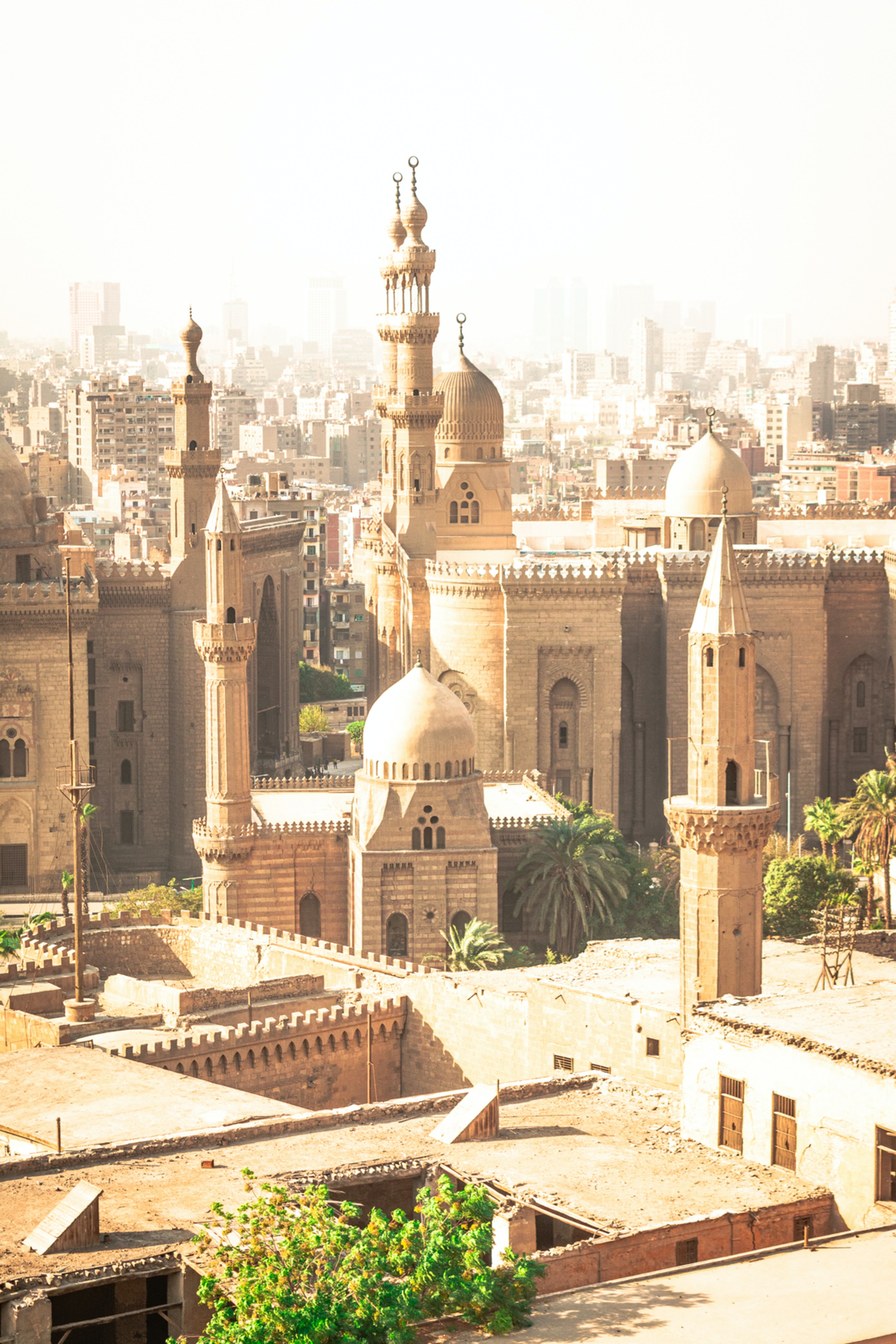
The Al-Rifa’i Mosque in Cairo. The city’s redevelopment highlights every kind of culture, from mosques to belly-dancers.

Members of my extended family were in Egypt recently, and judging from the videos and photos, they had a fantastic time. It made me think of an article I saw back in January about Cairo.

Donna Abu-Nasr at Bloomberg CityLab had a report on how the city’s “revival blends ancient Egypt with modern tastes.”

She wrote, “When Egyptian ballerina Amie Sultan decided to go into belly dancing, she raised eyebrows among her friends and fellow professionals. Why switch from an art form that’s highly respected to one that’s often scorned in her home country and the rest of the Arab world?

“Six years later, Sultan wants to elevate a dance focused on shaking hips and torsos in low-end cabarets to the theater. It’s just one of the ways Egyptians are trying to establish a contemporary cultural identity in Cairo that taps into their heritage.

“The renaissance of traditions spans everything from new museum exhibits to artisans integrating old crafts into modern furniture and designers selling handmade jewelry, bags and shoes online. There’s also the redevelopment of buildings to champion Egyptian identity. For her bit, Sultan says her goal is to preserve, document and revive the performing arts. Egypt is the spiritual home of belly-dancing, which traces its roots back to ancient times. …

“Perhaps the most striking example of the cultural resurrection was when 22 mummies were transported through central Cairo [in April 2021] to their latest resting place at the new National Museum of Egyptian Civilisation. The multi-million dollar spectacle was broadcast live on state television. …

“Some parts of the sprawling metropolis are being refurbished in an attempt to recapture more of the tourism market. … One of those areas is central Cairo, also known as Khedival Cairo in reference to Khedive Ismail, the ruler under whom downtown Cairo was built in the late 19th century. The country’s sovereign wealth fund plans to redevelop the mid-20th century Mogamma building, a hulking government office complex. …

“Private entrepreneurs, like Karim Shafei, 48, have also for years been actively working on restoring that part of town. … The vision that he and his partner, Aladdin Saba, an investment banker, have for downtown is to make it a real city center that reflects Egyptian identity: a meeting point for Cairenes from all walks of life and a platform for innovation and creativity.

“ ‘There’s nowhere in Cairo where tourists can go and experience the contemporary Egyptian lifestyle, unlike many other cities such as Beirut, Istanbul, Paris and New York,’ said Shafei. ‘Today, there’s a big portion of tourism that’s intended to experience a country in its modern form. You want to experience the way cuisine is, the way people live, how they dress.’ 

“One thing that Shafei has noticed is a change in the government’s attitude toward restoration. In the past, authorities would just focus on painting a wall or fixing a sidewalk. In the past year, the discussions have become deeper.

“Sultan, the dancer, has likewise found a sympathetic ear for her project, which she is doing through her company Tarab Collective. When she has approached government officials with her idea, ‘there’s some shock, but then as they listen they actually see that this is a serious project.’ . …

“Belly-dancing has been associated with smoky cabarets where alcohol is served. … It’s also informally performed by people at home, at picnics or celebrations. …

“Last year, Tarab Collective produced a tribute to the golden age of Egyptian cinema and the dance’s divas from 1940 to 1960. It featured 12 performers and premiered at the closing of the Gouna Film Festival in October.

“[Sultan’s] company is also working on setting up an institute to teach the dance, register it with UNESCO as intangible heritage and change its name from one that comes from the French danse du ventre to ‘Egyptian dance.’

“ ‘At the end of the day, this dance represents Egypt,’ she said. ‘It’s how we show ourselves to the world, just like we identify Spain with flamenco.’ “

More at Bloomberg CityLab, here. I know I’ve told you that there was a wonderful belly-dancer at our son’s wedding — with flaming candles in her hair, no less. If I can get into my old computer, I’ll post a picture.

Read Full Post »

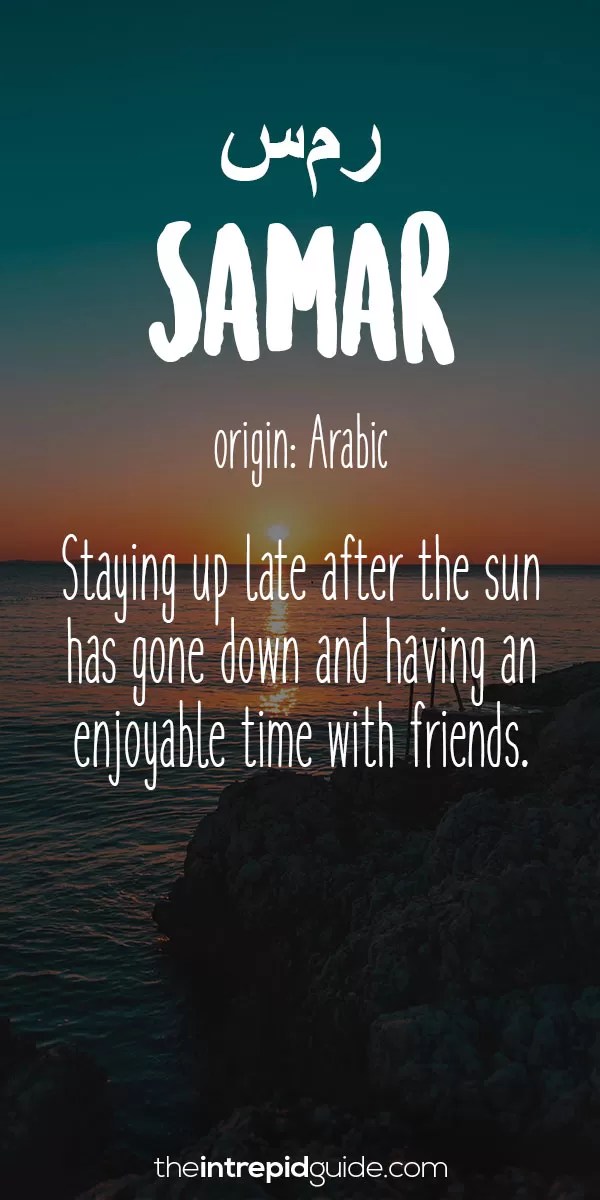
Photo: The Intrepid Guide.

Don’t you love the way quirky idioms reflect a whole culture? I’ve written about this a few times before. Today I’m sharing what the Intrepid Guide has to say on the subject.

Michelle, the founder, writes, “If you’ve ever tried to learn a language, then you’ll know that translating is not always an easy task. There are over 7,000 languages in the world and just as many words and ideas that get ‘lost in translation’ due to differences in grammar and semantics, or even linguistic complications. When a language fails to convey the essence of a word during translation, the word is considered to be ‘untranslatable.’

“There are many terms that … can give us a glimpse into different cultures and belief systems that help us to understand the people who speak these marvelous languages. 

“English is no stranger to borrowing words from other languages and even inventing new ones like hangry, a combination of anger and hunger because you need something to eat asap. Then there is nomophobia, an irrational fear or sense of panic felt when you’ve lost your phone or are unable to use it. … New words have entered English dictionaries at a fast pace, keeping up with the diversity of the English-speaking world. 

“In spite of this, the English language can’t explain everything so succinctly, and yet there are many other languages that have, in just one word. This comprehensive list looks at some of the most beautiful words in different languages that are simply untranslatable into English. …

“From Afrikaans to Zulu, here are 203 of the most beautiful untranslatable words from other languages.

“Afrikaans: Loskop – Used to describe someone who is forgetful, absent-minded and a bit air-headed. It’s literally means, ‘loose (los) head (kop).’

“Albanian: Besa –  An Albanian verb and pledge of honor that means to keep a promise by honoring your word. It’s usually translated as ‘faith”’ or ‘oath.’ …

“Arabic: Taarradhin  (تراض)Taarradhin is the act of coming to a happy compromise where everyone wins. It’s a way of reconciling without anyone losing face. …

“Bengali: Ghodar-dim (ঘোড়ার ডিম) – Pronounced [gho-rar-deem], this Bengali word is a sarcastic term for ‘nothing’ or false hope. It literally means ‘horse’s egg,’ therefore representing something that doesn’t exist. …

“Malay: pisan zapra – the time it takes to eat a banana. …

“Spanish: VacinlandoVacilando is a beautiful Spanish word which describes the journey or experience of travelling, is more important than reaching the specific destination.”

There’s a very long list of untranslatable Swedish. Here’s the first: “Badkruka – A person who feels somewhat hesitant or doesn’t like to swim in an open body of water due to its low temperature. …

“Tagalog (Philippines): GigilGigil is the overwhelming feeling that comes over you when you see something unbearably cute that you want to squeeze or pinch it. Kind of like when your grandma wanted to pinch your cheeks when you were a child. …

“Wagiman (Australia): Murr-ma – This beautiful word comes from Wagiman, an almost extinct Australian Aboriginal language spoken in Australia’s Northern Territory. It describes feeling around in water with your feet to find something. …

“Yaghan (Southern Argentina): Mamihlapinatapei – The word mamihlapinatapai (sometimes also spelled mamihlapinatapei) comes from the Yaghan language of Tierra del Fuego in Southern Argentina. Mamihlapinatapai is listed in the Guinness Book of World Records as the ‘most succinct word’ and is considered extremely difficult to translate. Mamihlapinatapai is a meaningful, but wordless, exchange between two people, who both desire to initiate something but are hesitant to act on it. It also can refer to a private but non-verbal exchange shared by two people, one where each knows that the other understands and agrees what is being expressed. …

“Yiddish: Trepverter – Literally, ‘staircase words,’ trepverter is a witty comeback you think of only after it’s too late. 

“Zulu: Ubuntu – The act of being kind to others because of one’s common humanity. Ubuntu is frequently translated as ‘I am because we are,’ or ‘humanity towards others.’ “

More at the Intrepid Guide, here. The selections are pretty amazing. Dip in anywhere. A couple of my previous posts on the topic are here and here.

Read Full Post »

Photo: Wikipedia.

The problem with crossword puzzles is like the problem with academic entrance exams: they assume a cultural knowledge common to the creators’ identity groups. An older woman who doesn’t read Harry Potter books is not going to know what a young crossword creator is hinting about owls. Recent Latin American immigrants may never have heard of John Paul, George, and Ringo. And it may depend on your family life if you know anything about Marian Anderson, W. E. B. Du Bois, or Bayard Rustin.

Read what African American crossword puzzle creator Portia Lundie has to say about that at the Washington Post.

“I’m a Black woman who creates crossword puzzles. That’s rare, but it shouldn’t be. … Margaret Farrar, who became the founding puzzle editor of the New York Times in 1942, is credited with popularizing daily crosswords. But despite the impressive distinction, she only published the work of a handful of women.

“That’s perhaps unsurprising in a world dominated by White men; when I published my debut 15-by-15 crossword in the New York Times during Black History Month last year, I didn’t know of any crosswords constructed by Black women in America’s crossword gold standard.

“Before last year, I’d made dozens of 9-by-9 grids, or ‘midis,’ for the New York Times crossword app. I knew that my pop culture-themed puzzles were among the most popular on that platform, but I didn’t know what publishing my first crossword on a major newspaper site would be like — that it would open me up to a wave of subculture criticism.

“When it was announced that the Times would feature a week of Black constructors for Black History Month, there were myriad opinions on popular crossword blogs: ‘I prefer puzzles to be fun, not dry activist treatises that promote political ideology,’ wrote one commenter in response to the word ‘REPARATIONS’ in a puzzle by Erik Agard. …

“Yet, finally, I found some relief. ‘Must admit to knowing very little about Marcus Garvey. … Thanks to crosswords … for leading me there,’ one enthusiast said. When it came to learning the name of a horse racing champion or their jockey, I was more like this last commenter — excited that a puzzle introduced me to something new. This attitude, while seemingly compatible with a love for testing your trivial knowledge, is actually rare in the world of crossword critics.

“The experience came with other revelations. My dad worked for his uncle’s newspaper in Guyana when he was a teen, reading submissions and judging the crossword competition. But he didn’t tell me about his experience with crosswords until after mine was published in the Times. He revealed he was ’embarrassed’ that he wasn’t as good at crosswords when he immigrated to America. Turns out, I was robbed of a chance to learn about crosswords at a young age in part because crossword culture does not encourage learning — rather, it rewards already knowing.

“I ended up being introduced to crosswords in my early 20s while dating a constructor. Of course, I had attempted them before, but no one ever walked me through the rules. [For example] studying words that are used much more in crosswords than real life — words like ‘ESTOP’ and ‘STE’ and ‘ERE,’ which are usually used for their vowel placements. …

“I ultimately used practice, dictionary obsession and occasional cheating to get better. Constructing and cluing my own crosswords made me even better at recognizing the patterns — not to mention, it allowed me to assert my particular voice and trivial knowledge of 1990s cartoon characters.

“But most crosswords, I’ve found, still reflect the majority of creators. Like so many other hallmarks of culture, crosswords as we know them were standardized by a profound woman, yet the authority on language still seems to be in the hands of a few White men. In my opinion, there’s no such thing as a view from nowhere, and I’m glad to play a small role in giving crossword enthusiasts a view from someone who isn’t White, and isn’t a man.”

More at the Post, here.

Read Full Post »

« Newer Posts - Older Posts »