Feeds:
Posts
Comments

Posts Tagged ‘dam’

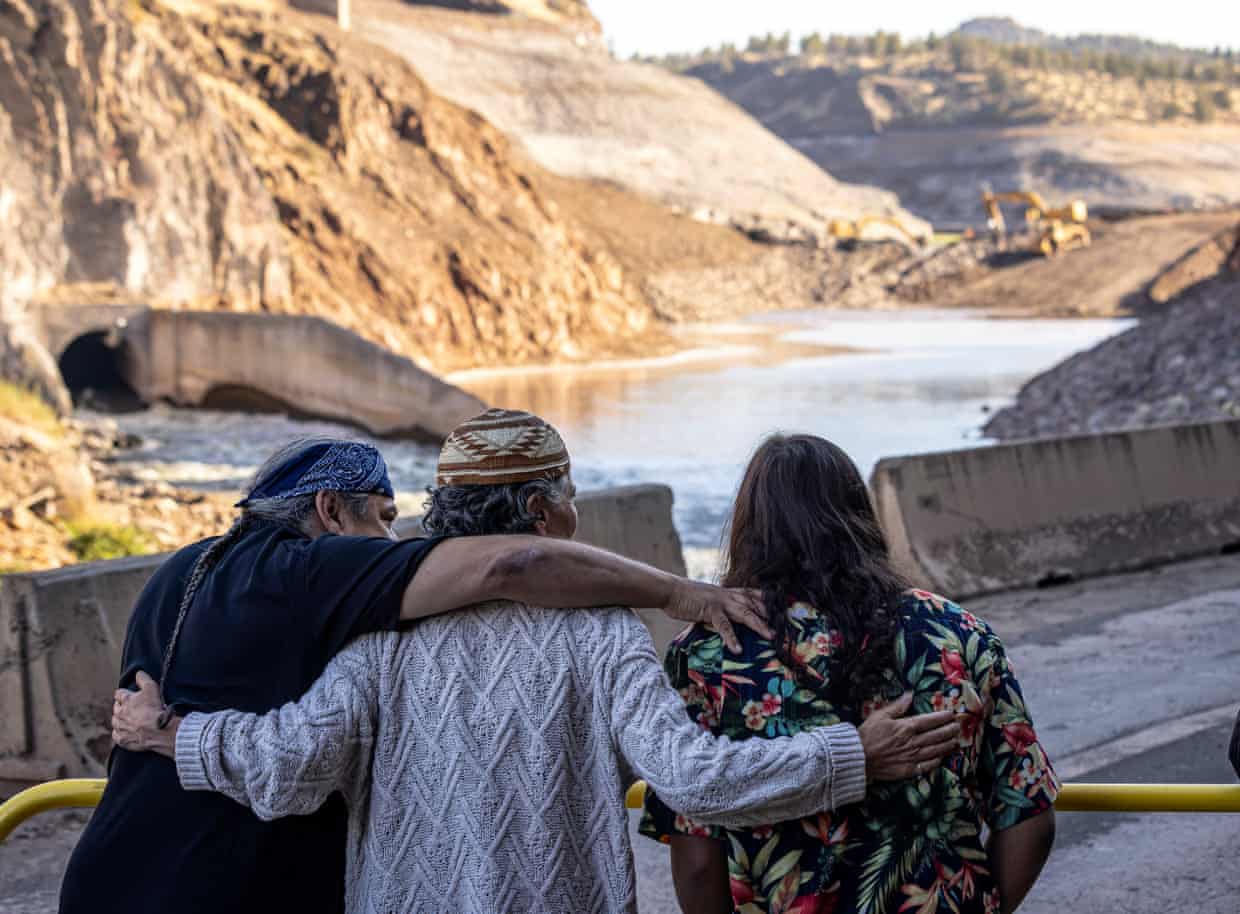
Photo: San Francisco Chronicle/Hearst Newspapers/Getty Images.
Leaf, Lisa and Chaas Hillman look on as construction crews allow the Klamath River to run freely for the first time in nearly a century, near Hornbrook, California, in August. 

Everything done to Nature for human convenience has a downside. We have dammed up many rivers over the years for water reservoirs and electricity, flooding whole ecosystems. In the last couple of decades, though, we’ve been trying our best to restore what was lost, often with the guidance of indigenous tribes that always knew better.

Gabrielle Canon has one story at the Guardian.

“Explosions roared through the canyons lining the Klamath River [in 2024], signaling a new chapter for the region that hugs the Oregon-California border. In October, the removal of four hydroelectric dams built on the river was completed – the largest project of its kind in US history.

“The blast of the final dam was just the beginning. The work to restore the river, which winds 263 miles (423km) from the volcanic Cascade mountain range in Oregon to the Pacific coast in northern California, is now under way. …

” ‘It has been more successful than we ever imagined,’ said Ren Brownell, the spokesperson for the Klamath River Renewal Corporation, a nonprofit created to oversee and implement the removal. …

“The Klamath River was once an ecological powerhouse – the third-largest salmon-producing river in the American west. Its basin covered more than 9.4m acres (3.8m hectares) and its network of wetlands was the largest in the region. The ecosystem was home to millions of migrating birds. Tribes, including the Hoopa, Karuk, Klamath, Modoc and Yurok, thrived in this bountiful and beautiful watershed for thousands of years, with the river providing both sustenance and ritual.

“Over the last hundred years, these landscapes have been drastically altered.

“After the first dam began operating in 1918 – one of four that would eventually be forged in the lower Klamath to provide hydroelectric power to communities nearby – the course of the river was changed. The dams obstructed the migration of salmon and other native species, which help carry nutrients into the systems from the ocean, to cascading effects.

“They also held on to huge stores of sediment that would otherwise have flowed downriver, and created shallow reservoirs that quickly heated when the weather warmed. Increased water temperatures in the river allowed toxic algal blooms to thrive.

“In recent decades, the climate crisis has turned up the dial, deepening droughts and fueling a rise in catastrophic fire as the region grows ever hotter. The impacts only increased as more water was diverted to support the farming and ranching in the region, and more habitat was altered by mining and logging.

“Twenty-eight types of salmon and steelhead trout, seen as indicator species that represent the health of the ecosystems they live in, have been listed as threatened or endangered.

“As the Klamath ecosystem deteriorated, there was growing recognition that removing the dams would be a crucial first step in helping the region recover and build resilience in a warming world.

“But, faced with a strong resistance to change in local communities tucked around the reservoirs and a long history of difficult battles over water in the parched landscapes in the west, dam removal seemed all but impossible. The land for the dams was taken from tribes during the throes of colonization and development and more recently supported energy corporations that had shareholders to answer to.

“Then, in 2002, disaster struck. Algae flourished in the shallow warming waters that year, exacerbated by the dams and decisions from the US Bureau of Reclamation to divert vital flows to farms, leaving little for fish. The event killed 70,000 salmon and thousands of other species, resulting in one of the worst die-offs ever to occur in the US.

“The layers of fish floating belly-up sent an important signal of the horrors that could continue into the future if the dams remained. Forming a coalition, tribes up and down the Klamath launched a fierce campaign to educate the public, inform the shareholders of the companies that owned and operated the dams, and petition their boards. They protested and attended public hearings, and engaged with state and federal officials.

“It took decades of advocacy to convince PacifiCorp, a subsidiary of Berkshire Hathaway Energy, to let go of the aging infrastructure straddling the Oregon-California border. But in the mid-aughts, assured by shifts in public opinion and incentivized by the steep costs to relicense the dams, the company agreed it was time to see them go.

“In November 2020, nearly 20 years after the die-off, an agreement was forged between a long list of stakeholders that included tribal and state governments and federal agencies. The Klamath River Renewal Corporation was created to oversee and implement the removal.

“The organization had to help bring residents near the reservoirs onboard, navigate dozens of species-management plans, and model how outdoor-recreation enthusiasts could continue to enjoy the river. Ranchers and fishers, environmentalists and farmers, and locals and visitors all had connections to the basin, and were eager to weigh in. …

“Brownell, who grew up along the riverbanks, was standing in the canyon as the blast of the first dam released flows and the river that had been held over the last hundred years found its way back to itself. …

“There were moments of trauma along the way. Over the 100 years the dams were standing, they had held back 15m cubic yards of sediment. When the dams were removed, the heavy dead organic matter had to run downriver, soaking up oxygen in the water. Extensive modeling had predicted a severe impact on aquatic life, but no one knew how bad it would get or how long it would take for the river to regain its health. Some models predicted the suffocating conditions could linger for up to a month.

“ ‘I was braced and prepared but it was still tremendously hard,’ said Brownell, recalling how the water, rid of oxygen, looked like oil as it cascaded through its banks. ‘You can easily compare a river’s health to an individual’s health,’ she said. ‘Often when someone is sick, they are going to get worse before they get better. … The whole time everyone was so excited because it felt like the start of something – I just felt sick,’ she said.

“Leaf Hillman, a Karuk tribal ceremonial leader who has dedicated decades to seeing this project come to fruition, helped keep hopes high with assurances that these were signs of healing.

“ ‘For me it was beautiful,’ he said, recalling how he felt even when the rushing waters became clouded by silt. ‘I could envision what it was going to look like – a restored river.’

“In the end, the river lacked oxygen for only two 24-hour periods, a far shorter time than scientists had feared.”

At the Guardian, here, you can read what happened next. No paywall.

Read Full Post »

Photo: Josh Miller via American Rivers.
Klamath River, California.

We have a lot of dams in this country that are now under consideration for removal, sometimes to restore land to tribes, sometimes to benefit wildlife, often for a combination of reasons.

Debra Utacia Krol of the Arizona Republic writes at AZCentral, “Tribes and environmentalists cheered last month as crews blasted out the concrete plugs holding water behind the JC Boyle and Copco I dams, the largest of four decommissioned dams on the Klamath River, allowing silt-filled water to flow down the ancient riverbed.

“Hope also flowed downstream alongside the muddy waters that the gigantic removal project supercharges the goal of restoring the environmental health of the river basin that traverses Northern California and southern Oregon.

“The water that once covered over 2,000 acres of land surrounding the river has begun to recede, revealing artifacts like old farm equipment, foundations and bridge pilings left over from pre-dam days. But local residents worry about the fate of local wildlife like deer and eagles that get stuck in the muddy grounds and mourn the loss of non-native fish that inhabited the reservoirs’ warm-water layers.

“The tribes, environmentalists and their allies celebrated the shrinking waters as an essential next step in what they say will be a decades-long process of restoring one of the West’s largest salmon fisheries and a region the size of West Virginia back to health.

“Yurok tribal member and fisheries director Barry McCovey was amazed at how fast the river and the lands surrounding the Copco dam were revealed. …

“The 6,500-member tribe’s lands span the Klamath’s final 44 miles to the Pacific Ocean, and the Yurok and other tribes that depend on the Klamath for subsistence and cultural activities have long advocated for the dams’ removal and for ecological restoration.

“Amid the largest-ever dam removal in the U.S., rumors and misunderstandings have spread through social media, in grange halls and in local establishments. In the meantime, public agencies and private firms race to correct misinformation by providing facts and real data on how the Klamath is recovering from what one official called ‘major heart surgery.’ …

“Residents and curious tourists were alarmed to see gray, sticky mud flats and masses of dead fish where the reservoirs once filled the canyons. They also were shocked to see brown, silty water running down the now-exposed river bed, miring deer in the mud. Social media feeds lamented the scene and claimed the ecosystem had been destroyed, possibly forever.

“But the people and organizations that had planned the removal had also forecast what would most likely happen after draining the reservoirs and said what looked like a gruesome scene was expected — and temporary.

” ‘Everything we’re seeing is exactly what has been predicted,’ said McCovey, adding that the large amounts of sediment moved by waters pouring out of two tunnels blasted underneath JC Boyle and Copco I dams were accounted for during the planning process. …

“The sediment now making its way to the Pacific was always destined to wind up in the ocean, he said, just as the fish convey nutrients upstream. McCovey likened the system to how the human body works.

” ‘The river is like the arteries of the earth, and the water would be the blood,'”‘ he said. And just as how a human body functions, blood transports vital elements throughout the body, McCovey added. When arteries are blocked, blood can’t convey nutrients or carry off waste, resulting in disease. ‘When you have such a blockage, you need to have surgery to have that blockage removed,’ McCovey said. …

” ‘After the river makes a full recovery, it’ll be much healthier,’ McCovey said.

“The Yurok Tribe also contracted with Resource Environmental Solutions to collect the billions of seeds from native plants needed to restore the denuded lands revealed when the waters subsided.

“The company, known to locals as RES, took a whole-ecological approach while planning the project. In addition to rehabbing about 2,200 acres of land exposed after the four shallow reservoirs finish draining, ‘we have obligations for a number of species, including eagles and Western pond turtles,’ said David Coffman, RES’ Northern California and Southern Oregon director.

“The plan included anticipating the effects removal and restoration could have on water quality and temperature, aquatic species and other species. … The company also plans to support important pollinators like native bumblebees and monarch butterflies and protect species of special concern like the willow flycatcher. And, Coffman said, removal of invasive plant species like star thistle is also underway. In some cases, he said, workers will pull any invasives out by hand if they notice them encroaching on newly planted areas.”

The long and interesting article at AZCentral, here, covers complaints by people who felt they were not in the loop and were adversely affected, what was done to compensate them and also rescue trapped wildlife, and goals for the future.

Read Full Post »

Photo: Hannah Wright via Unsplash.
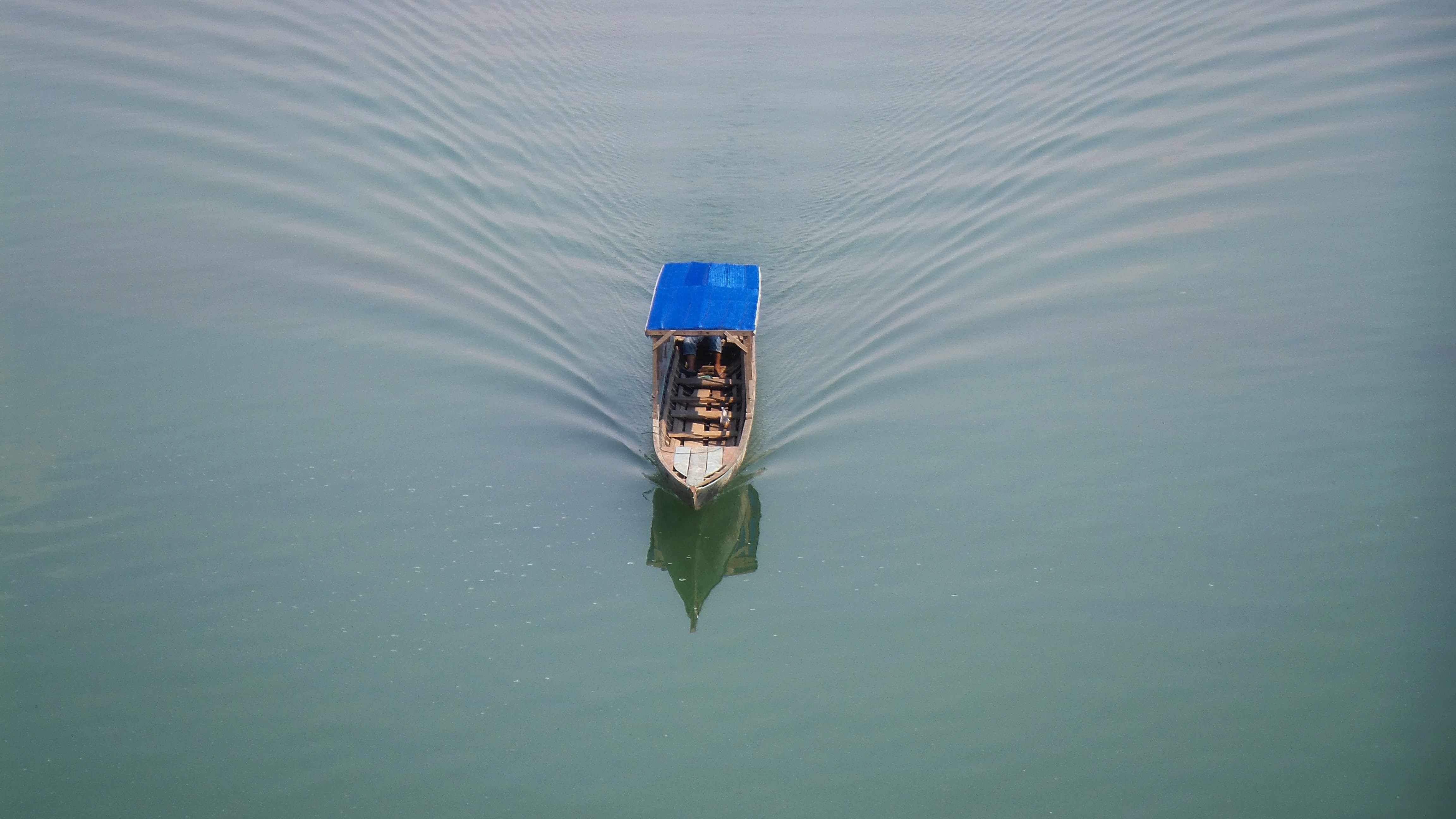
The Mekong River, where it passes through Cambodia.

You would think that because I was around in the 1960s, mention of the Mekong River would bring to mind only Vietnam War scenes from television. I do think of those but also of Colin Cotterrill’s Dr. Siri Paiboun mystery series, where the river is a character all its own, and where Laotian characters may cross secretly to Cambodia, Thailand, or Vietnam.

So naturally, research on the river’s improving quality caught my eye.

Stefan Lovgren has a report at YaleEnvironment360. “Among the many ailments plaguing Southeast Asia’s Mekong River, ‘hungry water’ stands out with particular clarity. In recent dry seasons, the Mekong has in places turned a pristine blue as upstream dams rob it of the nutritious particles that normally color the river a healthy mud brown. It’s a phenomenon that can be highly destructive, with the sediment-starved water eating away at unbuffered river banks — hence the ‘hungry’ epithet — and causing harmful erosion.

“It also encapsulates the troubled state of the Mekong, a river that may look healthy on the surface but has grown increasingly sick from a wide range of problems, including dam building, overfishing, deforestation, plastic pollution, and the insidious impacts of a changing climate. During El Niño-induced droughts in recent years, things got so bad that some people suggested the Mekong River was approaching an ecological tipping point beyond which it could not recover.

But events in the past year suggest such doomsday predictions may be premature, especially in Cambodia, which sits at the heart of the Mekong basin.

“Thanks to the last monsoon season, which delivered above-average rainfall to the region, and authorities cracking down on illegal fishing, fish stocks have increased. Fishers along the Mekong have discovered giant fish thought to have disappeared, and the Cambodian government, which has a mixed environmental record, has stepped up conservation efforts.

“Among them is a new government-backed proposal that seeks to turn a particularly bio-rich stretch of the river in northern Cambodia into a UNESCO World Heritage Site. Such a designation, reserved for sites of great scientific or cultural significance, means this part of the river should, at least on paper, enjoy protection from various forms of development, including dam building. …

“ ‘The Mekong is not dead,’ says Sudeep Chandra, director of the Global Water Center at the University of Nevada, Reno, who leads the USAID-funded Wonders of the Mekong research project. ‘We’ve seen huge environmental pressures causing the Mekong to dry up and fisheries to almost collapse. And yet we also see the incredible resilience of this river in the face of those threats.’

“Originating in the Tibetan highlands and winding its way through six countries before disgorging into the South China Sea, the 2,700-mile-long Mekong River is home to the world’s largest inland fishery, with about 1,000 species of fish. Many of the 70 million people living in the basin rely on the river for their livelihoods, whether that is farming, fishing, or other occupations.

” ‘A case could be made that the Mekong is the world’s most important river,’ says Chandra.

“The river’s extraordinary productivity is linked to a giant flood pulse that, in the wet season, can raise water levels 40 feet. With the increase comes sediment that’s essential to agriculture as well as vast numbers of young fish, which are swept into Cambodia’s vital Tonle Sap Lake and other floodplains where they feed and grow.

“But the river’s natural flow regime has been increasingly disrupted by dams, especially those that China began building in the early 1990s in the Upper Mekong and which the country has operated with little regard for downstream impacts. 

“A subsequent frenzy of dam building in Laos and elsewhere, mostly on tributaries to the Mekong, has greatly exacerbated the problem, with dams blocking fish from completing their natural migrations. Already under extreme pressure from overfishing, some fish populations have plummeted, especially large species like the critically endangered Mekong giant catfish, which can grow to 10 feet in length and more than 600 pounds, but is now on the brink of extinction.

“With climate change intensifying, monsoon rains have become more unpredictable. During droughts in 2019 and 2020, the flow of water from the Mekong into Tonle Sap, the largest lake in Southeast Asia, dried up. …

“Mass deaths of fish due to shallow and oxygen-poor water were reported in the lake, and many of the hundreds of thousands of fishers operating on the lake were forced to abandon their work. On the Tonle Sap River, which connects the Mekong and the lake, two thirds of the 60-something commercial ‘dai’ operators working stationary nets, which in years past could each catch several tons of fish in just an hour, had to shut down. …

“However, the river system caught a break with the most recent monsoon season, which runs roughly from June to November, delivering greater than average rainfall to the lower basin and the Tonle Sap Lake region. Although China continued to hold back water to counter its persisting drought, water levels in Tonle Sap rose more than one meter above recent-year averages. With the lake expanding into seasonally flooded forests, which provide excellent feeding grounds for fish, fish populations appear to have been boosted. …

“On a recent visit to the lake, Ngor noticed an increase in medium- and large-size carps, including Jullien’s golden carp, also known as the isok barb, a critically endangered species. There were spottings of other rare fish too, like the Laotian shad and clown featherback, along with increases of more common fish, like the climbing perch and snakehead. Several wallagos, a catfish that can grow up to 8 feet long, could be seen jumping from the open water.

More at YaleEnvironment360, here. No firewall.

Read Full Post »

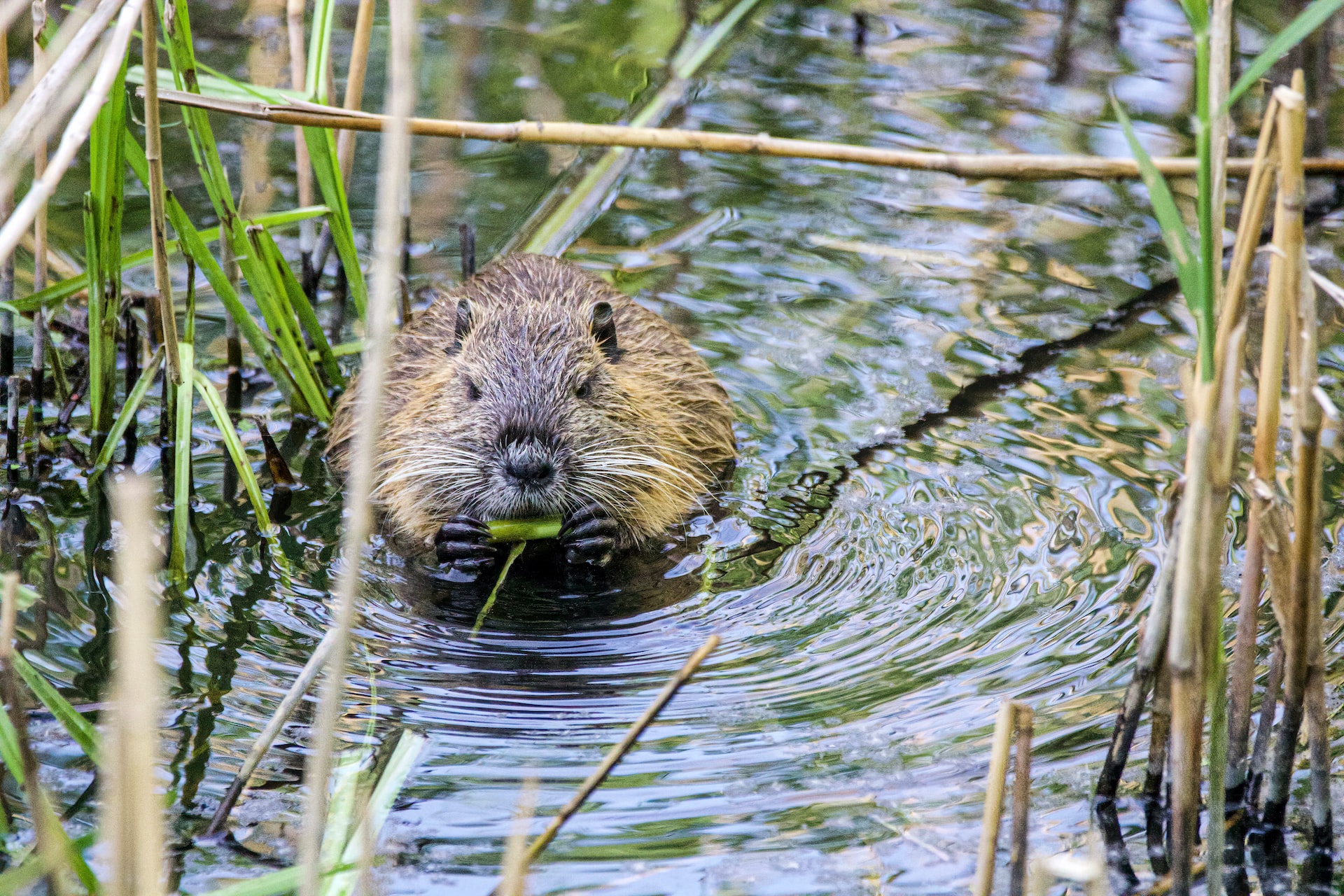
Photo: Svetozar Cenisev/ Unsplash.
When vegetation that beavers flood is dying, neighbors object to the smell. But often they like the lake that comes later.

There was a woman in my town who was up in arms about beavers flooding part of her property to build a dam. That is, she was angry until the odor of dying grasses dissipated and a beautiful lake appeared.

According to Catrin Einhorn at the New York Times, farmers out West are finding other reasons to appreciate the work of beavers.

She reports, “Horace Smith blew up a lot of beaver dams in his life. A rancher here in northeastern Nevada, he waged war against the animals, frequently with dynamite. Not from meanness or cruelty; it was a struggle over water. Mr. Smith blamed beavers for flooding some parts of his property, Cottonwood Ranch, and drying out others.

“But his son Agee, who eventually took over the ranch, is making peace. And he says welcoming beavers to work on the land is one of the best things he’s done.

“ ‘They’re very controversial still,’ said Mr. Smith, whose father died in 2014. ‘But it’s getting better. People are starting to wake up.’

“As global warming intensifies droughts, floods and wildfires, Mr. Smith has become one of a growing number of ranchers, scientists and other ‘beaver believers’ who see the creatures not only as helpers, but as furry weapons of climate resilience.

Last year, when Nevada suffered one of the worst droughts on record, beaver pools kept his cattle with enough water.

“When rains came strangely hard and fast, the vast network of dams slowed a torrent of water raging down the mountain, protecting his hay crop. And with the beavers’ help, creeks have widened into wetlands that run through the sagebrush desert, cleaning water, birthing new meadows and creating a buffer against wildfires.

“True, beavers can be complicated partners. They’re wild, swimming rodents the size of basset hounds with an obsession for building dams. When conflicts arise, and they probably will, you can’t talk it out.

“Beavers flood roads, fields, timber forests and other areas that people want dry. They fell trees without a thought as to whether humans would prefer them standing. In response to complaints, the federal government killed almost 25,000 beavers last year.

“But beavers also store lots of water for free, which is increasingly crucial in the parched West. And they don’t just help with drought. Their engineering subdues torrential floods from heavy rains or snowmelt by slowing water. It reduces erosion and recharges groundwater. And the wetlands beavers create may have the extra benefit of stashing carbon out of the atmosphere.

“In addition to all that, the rodents do environmental double duty, because they also tackle another crisis unleashed by humans: rampant biodiversity loss. Their wetlands are increasingly recognized for creating habitat for myriad species, from salmon to sage grouse.

“Beavers, you might say, are having a moment. In Colorado, Idaho, Montana, Nevada, Oregon, Utah and Wyoming, the Bureau of Land Management is working with partners to build beaver-like dams that they hope real beavers will claim and expand. In California, the new state budget designates about $1.5 million a year to restoring the animals for climate resiliency and biodiversity benefits.

“ ‘We need to get beavers back to work,’ Wade Crowfoot, California’s secretary of natural resources, said in a webinar this year. ‘Full employment for beavers.’ (Beaver believers like to note that the animals work for free.) …

“Instead of killing beavers, the federal government should be embracing them as an important component of federal climate adaptation, according to two scientists who study beavers and hydrology, Chris Jordan of National Oceanic and Atmospheric Administration Fisheries, and Emily Fairfax of California State University Channel Islands.

“ ‘It may seem trite to say that beavers are a key part of a national climate action plan, but the reality is that they are a force of 15-40 million highly skilled environmental engineers,’ Dr. Jordan and Dr. Fairfax wrote this year in a perspective article in the research journal WIREs Water. …

“When human-beaver conflicts arise, they can be addressed without killing the animals, experts say. Paint and fencing can protect trees from gnawing. Systems like the Beaver Deceiver secretly undo their handiwork with pipes that drain water from beaver settlements even when the animals keep building. Such measures are actually a more effective solution than removing the animals, according to advocates, because new beavers tend to move into empty habitat.

“If coexistence is impossible, a growing number of groups and private businesses are seeking to relocate, rather than kill, nuisance beavers.

“ ‘We put the nuisance in air quotes,’ said Molly Alves, a wildlife biologist with the Tulalip Tribes, a federally recognized tribal organization just north of Seattle that moves unwanted beavers to land managed by the United States Forest Service.

“The group’s impetus was a desire to expand the extraordinary habitat that beavers offer salmon, a culturally and economically important species. When they started in 2014, the Tulalip Tribes had to invoke their sovereign treaty rights to relocate beavers because doing so was illegal in their area under Washington State law. After a lobbying push, beaver relocation is now legal statewide and the tribes are advising state officials on a program to train others in best practices.”

More at the Times, here. Hat tip: John.

Read Full Post »

“How will the world find the water to feed a growing population in an era of droughts and water shortages?” asks Fred Pearce of Yale Environment 360 by way of the Christian Science Monitor.

“The answer, a growing number of water experts are saying, is to forget big government-run irrigation projects with their mega-dams, giant canals, and often corrupt and indolent management.

“Farmers across the poor world, they say, are solving their water problems far more effectively with cheap Chinese-made pumps and other low-tech and off-the-shelf equipment. Researchers are concluding that small is both beautiful and productive.

“ ‘Cheap pumps and new ways of powering them are transforming farming and boosting income all over Africa and Asia,’ says Meredith Giordano, lead author of a three-year research project looking at how smallholder farmers are turning their backs on governments and finding their own solutions to water problems. …

“Such innovations are becoming a major driver of economic growth, poverty reduction, and food security, says her report, “Water for Wealth and Food Security,” published by the International Water Management Institute (IWMI), a research center based in Sri Lanka.

“The report says better support for this hidden farmer-led revolution could increase crop yields threefold in some places …

“But such help could be a while coming, because much of the revolution is happening out of sight of governments and international organizations. In Ghana, the study found, small private irrigation schemes cover 185,000 hectares – 25 times more land than public irrigation projects. ‘Yet when I asked the agriculture minister there about these schemes, he hadn’t even heard of them,’ says Colin Chartres, director of IWMI.”

Read more.

Photograph: Noor Khamis/Reuters/File
Boys from Nalepo Primary School draw water using a manual pumping machine in a semi-arid region south of Kenya’s capital, Nairobi.

Read Full Post »