Feeds:
Posts
Comments

Posts Tagged ‘dumont’

Photo: Open Mind.
Alexander Heffner.

I’m surprised I never heard of this 70-year old tv show. It sounds like the kind of thing my parents would have loved, and we had an early tv they could have watched it on. (My father was writing about the Dumont company for Fortune, so we got a Dumont in 1948. )

The Open Mind, now celebrating its 70th year “defies all the odds — by keeping its conversation serious, civil and gloriously egg-headed.”

So says Benjamin Svetkey at the Hollywood Reporter.

Sesame Street got rezoned for pay TV a decade ago. Reading Rainbow relocated to YouTube last year. Even American Experience — winner of 30 Emmys over its 37-year history — was recently swept into the dustbin of history (or at least suspended production for nine months).

“These are, to be sure, dark, dark days for PBS, with the Corporation for Public Broadcasting dissolving itself in January — after Congress shut off its funding — sending devastating budget cuts rippling through the entire public broadcasting network, forcing some stations, like New Jersey’s WNJN, to shut down entirely.

“And yet, despite it all, one modest little cathode-tube relic that’s been beaming into households since the dawn of educational TV — Richard Heffner’s The Open Mind, the gleefully eggheaded talk show on which Martin Luther King Jr gave his first sit-down televised interview — continues to soldier on. …

“ ‘My grandfather wanted to bring intellectual firepower to discussions of public policy,’ notes Alexander Heffner, who took over as host after Richard’s death in 2013. ‘He wanted there to be a platform on early television that offered something other than bandits and robbers.’

“The elder Heffner, a history professor at Rutgers University, began his no-drama interview show on radio in 1953 (his first guest was Eleanor Roosevelt). But in 1956, as Heffner watched television assert a growing dominance over the culture, he began broadcasting from a local NBC affiliate, doing his 30-minute talk show on live TV. A decade later, in 1966, he’d moved The Open Mind to Channel 13, a New York public TV station he’d helped to launch five years earlier, which by 1970 would become a flagship for the newly launched National Educational Television network, precursor to PBS.

“Wherever he was broadcasting it from, though, the vibe was always the same — aggressively intellectual. Every week guests like Thurgood Marshall, Malcolm X, Jonas Salk, Elie Wiesel, Henry Kissinger, Norman Mailer and Margaret Mead, among many others, would settle into the austere round-table set and engage in the sort of esoteric, deep-dive political and sociological conversations that seemed, even back in TV’s early days, defiantly antithetical to the medium.

” ‘There was no answer that was too complex or too long,’ says Alexander. ‘He always gave his guests time.’

“Amazingly, Heffner’s reputation for dispassionate civil discourse got him noticed in, of all places, Hollywood. In the mid 1970s, MPAA president Jack Valenti, looking for a way to add some cerebral heft to his organization, convinced Heffner to join and chair its ratings board. It was not a perfect fit. [But] he was responsible for giving 1983’s Scarface its initial X rating (for violence) and, later, in 1990, for launching the MPAA’s NC-17 rating.

“Still, his TV show, as well as his teaching, was always his main focus, and he continued to conduct his low-key highbrow interviews until his death — indeed, even after his death. ‘He always had episodes in the can, notes his grandson, ‘so there were episodes that aired posthumously.’

“Alexander, who had some experience himself with broadcasting — during college, at Harvard, he covered the 2008 presidential elections as one of CNN’s ‘youth correspondents’— took over The Open Mind in 2014. And he’s been very much following in his grandfather’s footsteps ever since. To celebrate the show’s 70th anniversary this year, for instance, he’s assembled a series of resolutely un-viral interviews with city mayors from around the world (currently airing on PBS’ World Channel).”

Stream via pbs.org or the PBS app. More at the Hollywood Reporter, here.
Read Full Post »

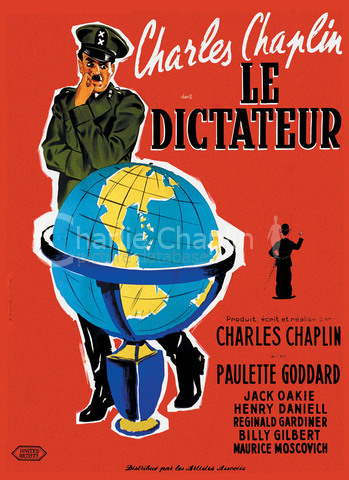
Image: Cineteca di Bologna as part of Progetto Chaplin.  

We had one of the first televisions because my father was writing a story for Fortune on Dumont. It was a little black & white screen in a huge wooden box.

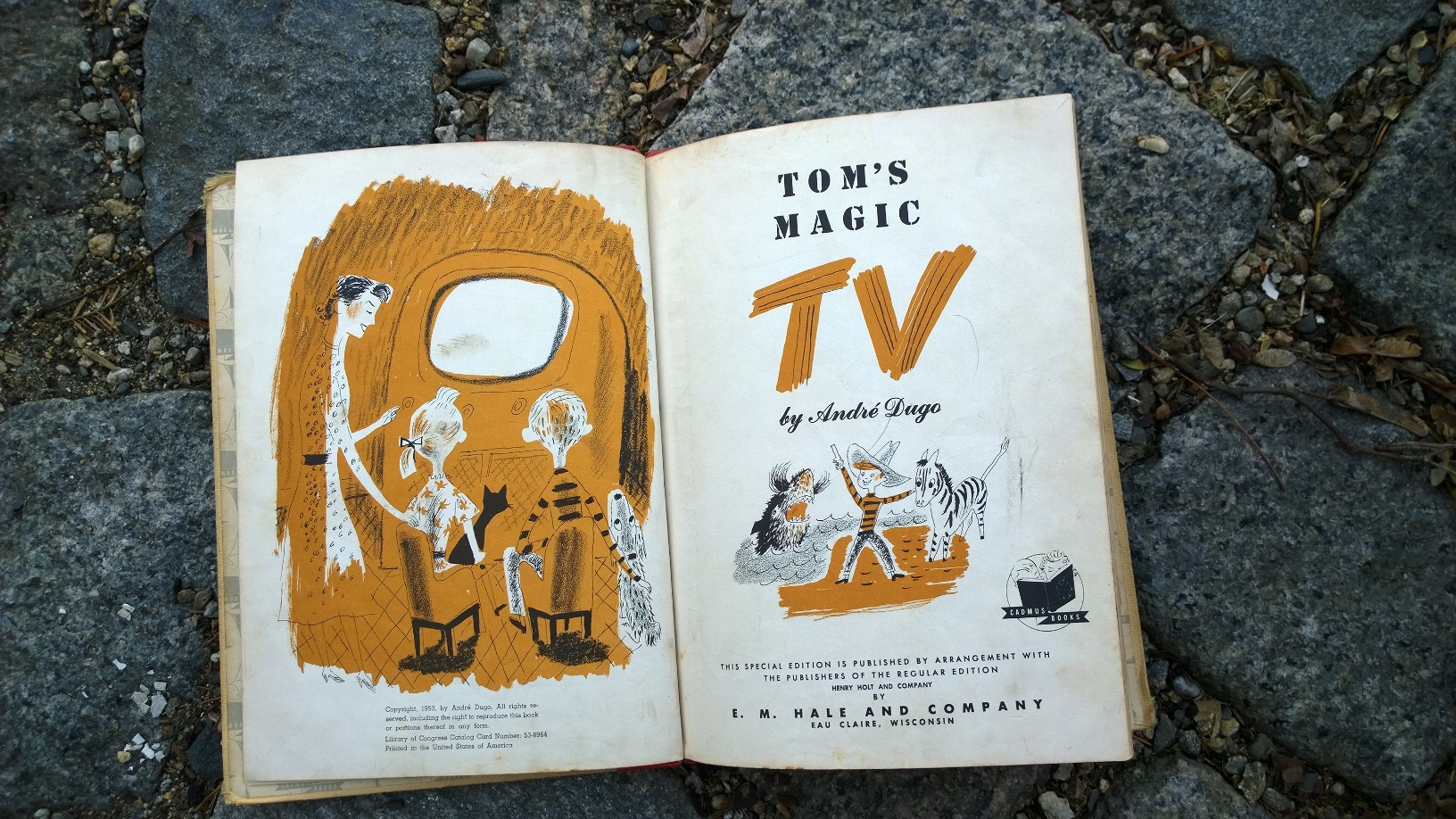
There really wasn’t much on in the beginning. We watched endless silent movies like Charlie Chaplin, and some with sound like The Tons of Fun, featuring big, heavyset guys, or Laurel & Hardy. The Lone Ranger was considered a huge advancement and even in black & white Disney was pure magic. Artist AndreÌ Dugo came over to watch what we were watching because he was writing Tom’s Magic TV.

But that was later.

Today I am remembering those hours of watching silent movies because the radio show the World tells me that silent movies are still being shown.

Theo Merz writes at the World, “On a recent Saturday evening, an audience ranging from teenagers to the retired, gathered at the film institute in Brussels, Belgium, to watch Isn’t Life Wonderful, a 1924 movie by the American director D.W. Griffith.

“It’s one of Griffith’s lesser-known works telling the story of a couple of Polish refugees who fall in love despite the hardships they face in Germany following World War I.

“ ‘We have an amazing collection of silent films in the Cinematek,’ said Christophe Piette, who chooses which films to screen. …

“The Cinematek — the only remaining cinema in the world with a regular schedule of silent films (along with live piano accompaniment) — is thriving.

“ ‘It is a museum, like, you could say; Paris has the Louvre Museum.’ …

“Piette said that around 80% of silent movies have been lost forever — at the time they were being made, the industry just wasn’t very interested in preserving its output. But Piette’s predecessors tasked themselves with collecting every single silent film that remained. Now, the cinematheque has about 10,000 such movies.

“ ‘[The Cinematek] really wanted to share it with the audience and with younger people who are used to younger films — to recent films — and to show them where cinema was coming from. It is our mission.’ …

“The silent film program has been going since the 1980s, and Piette said it’s as popular as ever. But he complained about a lack of funding from the Belgian government, especially given the program’s unique status and the broad audience it attracts.

“Lucas Vienne is 17 years old. He comes to the Cinematek most days and was in the audience for Isn’t Life Wonderful.

“ ‘I started to come here to see very popular movies, the Shining and stuff like that,’ he said. ‘But then, I started to check out films I’d never heard of.’

“Now, Vienne said that he doesn’t see much difference between silent films and more recent movies — for him, it’s all cinema. ‘I’m also interested in the history of cinema — so, coming back to silent film, it’s interesting to see how film evolved.’

“For the price of a ticket, audiences not only get to see a movie  — they also get a live concert.

“Hughes Marachel is one of a roster of pianists who accompany every single film. He’s 59 and has been working at the Cinematek part-time for more than three decades.

“Marachel is a professional performer and composer. But when he’s playing there, his main aim is to blend into the background.

“ ‘You are not to be the star,’ he said. ‘The star is the movie. The best compliment you can make to a silent movie pianist is: “Wow, I forgot you were there.” ‘

“Often, pianists are seeing the film for the first time, and everything they play is entirely improvised. ‘You just let the picture on the screen, the movie, impress you, and the impression comes in your body and in your fingers. And you play.’

‘Marachel said that interest in the screenings dipped when film on demand became widely available at home. Now, the movies are picking up again as audiences seek out something different. …

“ ‘For young people, it’s very interesting.’

“Many of the films he accompanies are a hundred years old — if not more. But the Cinematek hopes it’ll still be attracting an audience a hundred years into the future.

More at the World, here.

I looked for a bit more on Hughes Maréchal.

The website Screen Composers says, “Hughes Marachel composed more than 80 film original soundtracks, with inspiration reflecting his interest and passion for a large spectrum of music. His long experience as a silent movie pianist allows him to quickly adapt to and grasp a film’s rhythm and emotional intensity.

“He can also rely on his extended experience with multiple instruments and time as a studio musician.

“With a vivid interest in acoustic music, he enjoys the hypnotic power of atmospheric music, the lyricism and poetry that music can convey. Since the beginning of his career, Hughes has always viewed the job as a dialogue between the musician and the director (as well as the movie editor and sound engineer and designer) working together to serve the film. Music only has meaning if it brings an additional dimension to the visual one.”

Read Full Post »

Photo: Richard Vogel/AP
A statue of Gene Autry and Champion at the entrance to the Autry Museum of the American West in Los Angeles. The museum opened in 1988
.

My family had one of the early televisions because my father was writing a story about Dumont for Fortune. It was a clunky little thing, showing black and white only, of course, but we loved it, and all the kids in the neighborhood came to watch.

My hero was Gene Autry, the singing cowboy. (Want me to sing the opening number for you, the one Autry sang when he rode Champion up close to the camera and reined him in with a little bounce?)

Recently I learned that in 1988, Autry founded a museum in Los Angeles about the American West. Here’s an Associated Press report by John Rogers at US News on the museum’s 2016 expansion.

“The Autry Museum of the American West [is expanding] to include a garden of native Western flora, as well as new galleries showcasing hundreds of Native American works, some from present day, others centuries old, many never seen publicly.

“The expansion, named California Continued, adds 20,000 square feet of gallery and garden space to the museum that, with its red-tiled courtyard and distinctive beige bell tower, evokes images of an 18th century, Spanish-styled California mission . …

“Museum officials say visitors will now see one of the largest collections of Native American artifacts found anywhere. Also included will be more than 70 plants native to California — many medicinal and some endangered — as well as new displays that include Western mixed-media paintings and interactive works showing such sights as California from the highest point in the continental United States (Mount Whitney in the state’s midsection) to its lowest (Death Valley on the Nevada border).

“Because it’s the Autry Museum, visitors also will still see such venerable Hollywood artifacts as the Singin’ Cowboy’s Martin guitar, TV Lone Ranger Clayton Moore’s mask and a wealth of silent cowboy star Tom Mix memorabilia. …

“[Autry] died at age 91 in 1998, just a few years before … its 2003 merger with Los Angeles’ Southwest Museum of the American Indian. …

” ‘This collection that is now in the Autry Museum is a native collection of the very same rank, and in some quarters even better, than the Smithsonian’s,’ said [the museum’s president, W. Richard West Jr.,] who was founding director of the Smithsonian’s National Museum of the American Indian.

“Some of the best of the collection on display is contained in the exhibition ‘The Life and Work of Mabel McKay,’ a Pomo Indian basket weaver, healer, civil rights activist and person believed to be the last speaker of her tribal language when she died in 1993. Her intricately woven, often colorful baskets are accompanied by a recreation of her workroom, narration by her son and other works. …

“The garden contains native plants that caretaker Nicholas Hummingbird hopes will make people realize there is more to Western flora than cactus and sagebrush.”

More at US News, here.

Read Full Post »

When I was growing up in Rockland County, New York, my parents liked to buy art from artist friends and, when possible, offer other kinds of support. They hired the Hungarian-American artist André Dugo, for example, to paint a portrait of my brother Bo and me sitting in an armchair and reading one of the artist’s children’s books. We often read his book Pete the Crow or the books featuring a cardinal and a blue jay, or the one about the calf that ate the wrong kind of grass and puffed up like a balloon.

One day, Mr. Dugo came to our house to watch television with us. (We had one of the first TVs because my father was writing a story on Dumont for Fortune magazine.) We kept asking Mr. Dugo what he would like to see, and he kept saying he just wanted to see whatever we ordinarily watched.

As we worked our way through several programs, Mr. Dugo noted our reactions, sometimes asking questions.

Not many months after, a children’s book came out. It was called Tom’s Magic TV, and its premise was that a boy traveled through the TV screen and into adventures with sharks, circus clowns, puppets, cowboys and spacemen. Bo and I were not mentioned. The mother didn’t look like my mother. This was an early exposure to children’s-literature research — or poetic license.

I’m pretty sure that Gene Autry was the model for the cowboy adventure.

030916-Toms-Magic-TV-Dugo

Read Full Post »