Feeds:
Posts
Comments

Posts Tagged ‘earthquake’

Photo: Soren Ryesgaard.
A boat looks tiny cruising by the rockslide gully of a destroyed glacier in Greenland recently. Rockslide plus global warming equals a surprise.

I don’t remember reading about this mysterious rumble at the time, but I’m always interested when scientists are stumped. I like how they approach figuring out a new phenomenon. Here’s hoping that science will continue to guide us the future. For one thing, unlike business or politics, it is usually collaborative, as seen in this story.

Kasha Patel wrote at the Washington Post, “The strange rumble was detected mid-September last year. An odd seismic signal appeared at scientific stations around the globe, but it didn’t look like the busy squiggles of an earthquake. A day passed, and the slow tremor still reverberated. When it continued for a third day, scientists worldwide began assembling to discuss what was causing the grumble in the ground.

“Some initially thought the seismic instruments recording the signal were broken, but that was quickly nixed. Maybe it was a new volcano emerging before their eyes, others said. …

“ ‘No one had ever seen this. We have nothing to compare it with,’ said Kristian Svennevig, a geologist at the Geological Survey of Denmark and Greenland.

“Nine days later, the vibrations greatly dissipated. But the mystery of the USO [Unidentified Seismic Object] lasted much longer. A year later, the puzzle has been solved, according to a study published in the journal Science [in September 2024]. It took about 70 people from 15 different countries and more than 8,000 exchanged messages (long enough for a 900-page detective novel) to crack the case.

“The short answer: A mega-tsunami created waves that sloshed back and forth in a fjord in Greenland, creating vibrations that traveled around the world.

“The long answer begins in the atmosphere. As greenhouse gas concentrations increase due to climate change, those heat-trapping gases accelerate ice melt particularly around Earth’s poles. On Sept. 16 last year, that extra heat thinned a glacier in eastern Greenland over time so much that it could no longer support the mountain rock above it.

“A 500-foot-thick piece of metamorphic rock, about a third of a mile wide and long, fell and triggered a massive landslide. Rock and ice, enough to fill 10,000 Olympic-size swimming pools, let loose as fast as 47 meters per second and ran for more than a mile. The avalanche plunged into the Dickson Fjord, triggering a 650-foot-high tsunami — one of the highest seen in recent history.

“Farther away from the fjord, tsunami waves reaching 13 feet high damaged an unoccupied research station and destroyed cultural and archaeological heritage sites, including an old trapper hut that had never been affected by tsunamis during its century-old history. …

“Meanwhile, in the fjord, the mega-tsunami wave traveled back and forth in the inlet and created a standing wave called a seiche. We often see small-scale seiches — this rhythmic oscillation in water — in a swimming pool or bathtub. This tsunami source was so energetic that the seiche radiated seismic waves globally, shaking the planet for nine days before it petered out.

“Members of the Danish military sailed into the fjord only days after the event to collect drone imagery of the collapsed mountain face and glacier front and scars left by the tsunami.

“Of course, Svennevig and many of his close colleagues didn’t fully know of the connection between the tsunamigenic landslide and the seiche as the events unfolded, which is detailed in the study.

“At the time, they were scratching their heads about the data at the seismograph stations. The seiche appeared as a single slow vibration, like a monotonous-sounding hum, as opposed to the frantic lines of a typical earthquake reading. The wave peaked every 92 seconds, which is slow compared with an earthquake. …

“ ‘When we started doing this research, nobody had any ideas about what was the root cause,’ said Carl Ebeling, a co-author of the study and a seismologist at the Scripps Institution of Oceanography at the University of California at San Diego. ‘Even for a large landslide under normal circumstances, it would be hard to see that on a global scale, so something special is going on here.’

“As some scientists investigated the peculiar seismic data, another group of authorities and researchers had heard of a large tsunami in a remote fjord in eastern Greenland. The two teams, among others, joined forces, quickly growing into a 24/7 international collaboration via a messaging system. The group brought a variety of local field data and remote, global-scale observations.

“ ‘We knew there was a landslide and a tsunami. You could pull the seismic signal of those,’ Svennevig said. ‘But then there was this other seismic signal that continued for nine days, and they were taken from roughly the same area, so they must be associated somehow.’ …

“The breakthrough came when they received new bathymetry data of the fjord, similar to a topographic map, from the Danish military, which allowed them to better map the seabed in the computer models. Once incorporated, the team used an unprecedentedly high resolution model to show how the landslide direction, along with the uniquely narrow and bendy fjord channel, led to the nine-day seiche.”

More at the Post, here.

Read Full Post »

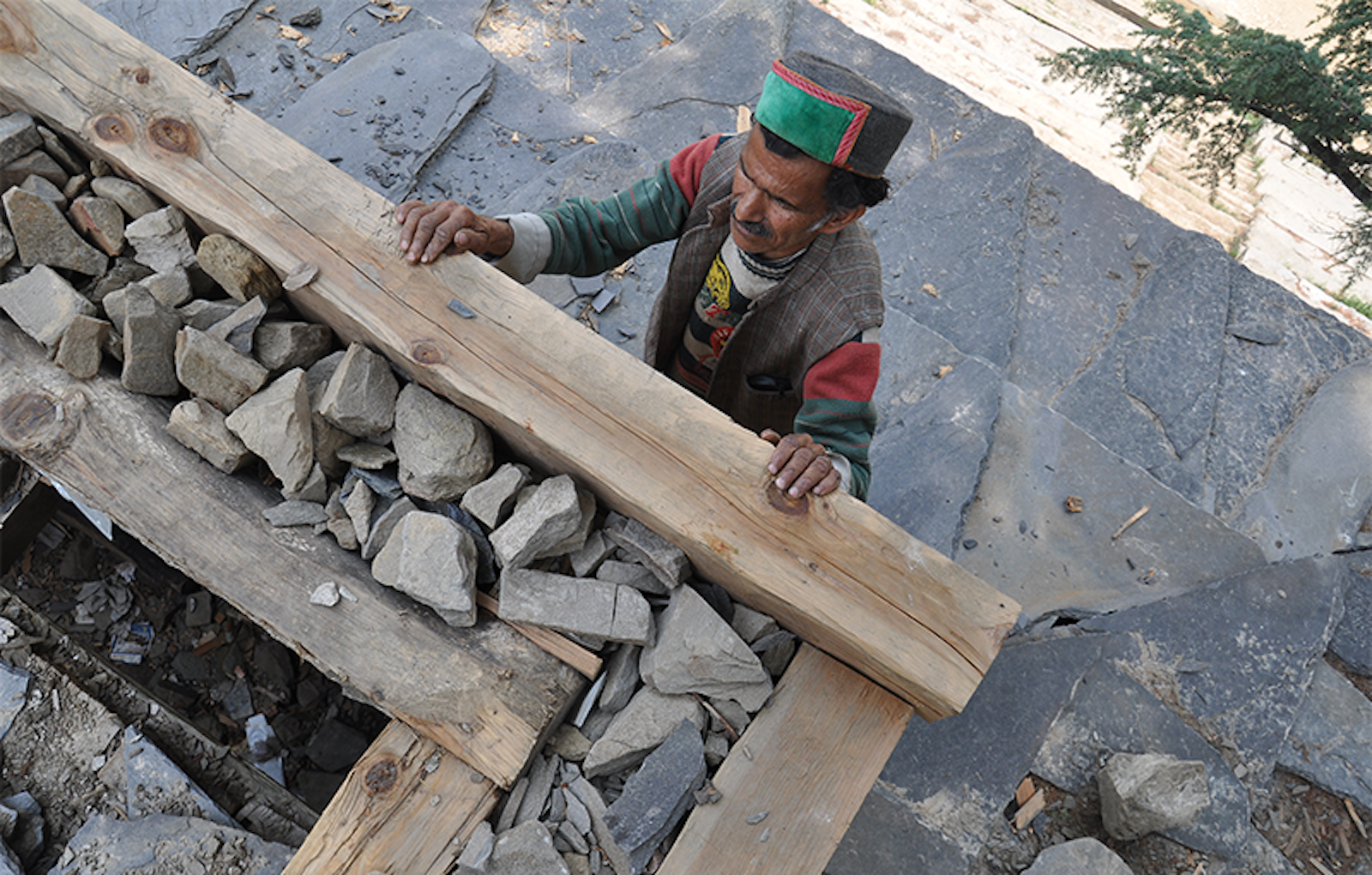
Photo: Jay Thakkar.
A worker examines a wooden beam in a traditional Indian kath kuni building. These earthquake-resistant structures lack metal and mortar, allowing them to flex as needed during a tremor.

I keep learning about ancient construction techniques that beat modern ones. Remember the post about self-healing concrete, here? That was in Rome. Today’s story explains why some buildings in Turkey and Syria withstood the earthquakes in February and points to ancient buildings in northern India.

Shoma Abhyankar writes at Nautilus, “The powerful 7.8 magnitude earthquake that struck Turkey and Syria on February 6 killed almost 50,000 people, most of whom died under rubble.

“The tragedy falls in a decades-long history of outsized death and destruction from recent earthquakes: The 1999 İzmit earthquake near Istanbul killed at least 17,000 people. … The immediate cause of the human tragedies was not the shaking ground itself, but the buildings people were in, most of which were constructed of reinforced cement concrete, a relatively quick and cheap building method.

“Earthquakes don’t have to be so deadly, say scholars who study this issue. Many traditional buildings have stood the test of time in regions that have endured high seismic activity for centuries.

“In Japan, people had long built earthquake-resistant structures mostly from wood. But a different tradition shows that even stone buildings can withstand vigorous shaking — if they are built with clever physics and architectural adaptations, honed over the centuries.

“In the mountainous region of Himachal Pradesh in India, near where the Indian Plate is colliding with the Eurasian Plate, many structures built in the kath kuni style have survived at least a century of earthquakes. In this traditional building method, the name, which translates to ‘wood corner,’ in part explains the method: Wood is laced with layers of stone, resulting in improbably sturdy multi-story buildings.

“It is one of several ancient techniques that trace fault lines across Asia. The foundations for the timber lacing system of architecture may have originally been laid in Istanbul around the fifth century. … Despite their ancient origins, this model of construction has mostly fared better over centuries than much of the contemporary building across the continent’s many active seismic zones.

“Built along the natural contours of the hills, kath kuni buildings typically get their signature corners from giant deodar cedars, which grow upward of 150 feet tall and 9 feet across in the Himalayas. These wooden beams layer between dry stones, which create walls. A single wooden ‘nail’ joins the beams where they come together.

“As the ponderous-looking structures rise vertically, usually up to two to three stories, the heavy stone masonry reduces, giving way to more wood. The overhanging roof typically has slate shingles resting on wooden beams. ‘The structure is like a body with heavy base, the projecting wooden balconies are limbs, and the heavy slate roof is like a head adding stability to the structure,’ says Jay Thakkar, a faculty member at the Centre for Environmental Planning and Technology University in Ahmedabad, India, who co-authored the book Prathaa: Kath-kuni Architecture of Himachal Pradesh

“The buildings stand free of any mortar or metal, which makes them more capable of shifting and flexing along with torques in the ground. This brilliance of mobility even continues underground. They are built over a trench at least a few feet deep filled with loose stone pieces that works as a flexible plinth. While a building constructed out of what seems almost like rubble to begin with might seem a strange defense against earthquake damage, it works. The gravitational force of the structure itself holds the stones in place.

“ ‘Unlike the cement brick wall, which becomes a single solid mass, the dry stone masonry is flexible,’ Thakkar says. ‘Staggered joints allow the external forces like tremors of earthquakes to be dispersed through the masonry thus preventing cracks in walls.’ He adds, ‘The wooden pin at the corner joint of two beams also allows movement. So when an earthquake hits, the structure sways and shakes but doesn’t collapse.’ ”

More at Nautilus, here. No firewall.

Read Full Post »

Photo: Nicole Tung for NPR.
Ibrahim Muslimani, 30, speaks to a class about a piece of music blending different eras and languages at the Nefes Foundation for Arts and Culture, which he cofounded in 2016, in Gaziantep, Turkey.

Today’s story is about how the arts can help victims of disasters get their bearings again.

As Fatma Tanis reported recently at National Public Radio (NPR), “When the powerful earthquake rocked her home in early February, 18-year-old Sidra Mohammed Ali woke up and thought of one thing: her music school — was it OK?

“The next day, as survivors all over southern Turkey were taking stock of the destruction and checking on loved ones, Mohammed Ali rushed to the school, the Nefes Foundation for Arts and Culture, and took a deep breath of relief when she saw it was still standing, only having sustained some minor damage.

‘This school is my sanctuary from the stress of life as a Syrian refugee in Turkey,’ she said. ‘I couldn’t bear the thought of something happening to it.’

“The Nefes Foundation was created by Syrian and Turkish musicians in the city of Gaziantep in 2016. They have group classes where they try to revive forgotten Syrian classics and integrate Turkish and Syrian cultures with music that the two have shared for centuries.

“The school also offers private music lessons on the piano and Middle Eastern instruments like the oud (a pear-shaped string instrument), the kanun (a plucked zither) and the ney (an end-blown flute).

“But more than six weeks after the Feb. 6 disaster, life in the earthquake zone is far from back to normal. The magnitude 7.8 earthquake killed more than 55,000 people in Turkey and neighboring Syria. It damaged or destroyed hundreds of thousands of buildings and left 1.5 million people without a home in Turkey alone, according to the United Nations.

“The school had not been able to resume classes until [March 2023], when only three students, out of many dozens, showed up to sing and play.

“Before the earthquake, the school would be packed on weekday evenings, with students ranging from ages 6 to 50, mostly Syrian, but some Turks attended as well.

“The classes are bilingual — in Turkish and Arabic. And that was especially important, according to Ibrahim Muslimani, a Syrian classical musician from Aleppo, who is the brains behind the organization.

” ‘Because some of the young Syrian kids have spent most of their lives here in Turkey and are more fluent in Turkish,’ he told NPR in November 2022. ‘We’re trying to preserve our Syrian cultural identity but also getting to know the Turkish identity through art.’

“Turkey hosts 4 million refugees, the largest number of any country, according to the U.N. refugee agency. The vast majority are Syrians who fled the civil war.

“In the early years of the Syrian civil war, which started in 2011, Turkey had a generous open-door policy toward Syrian refugees. But without broad integration initiatives by the Turkish government, life for many of the refugees has been difficult.

“More recently, politicians in Turkey who oppose President Recep Tayyip Erdogan have scapegoated refugees for the country’s economic problems, leading to a rise in discrimination and hateful attacks. …

“Mohammed Ali, who studies medicine at university and the kanun at the music school, said last weekend the school has been a lifeline for her. She has a bleak outlook on her future, and doesn’t believe that the people in Turkey will ever accept her existence in the country.

” ‘But anytime I have an upsetting encounter, my Turkish teachers and friends here comfort me,’ she said. …

“Rafeef Saffaf Oflazoglu fled Aleppo in 2013 after a near-death encounter. She comes from a family that’s passionate about classical Arabic music. To be able to continue exploring her love of music in Gaziantep was priceless, she said.

“The school also introduced her to centuries-old Turkish songs from the Ottoman archives, and old tunes that traveled from Istanbul to Aleppo. Studying those shared melodies made her feel closer to the culture in her new home.

“Having to go without classes after the earthquake was harder than she expected. ‘After maybe 10 days, I just figured out, like the thing I miss most is art,’ she said, even though she was living in her car at the time. ‘People under trauma react in different ways. It’s not just about singing, you know? It’s spiritual.’

“For Muslimani, the earthquake was a triggering reminder of how he had lost everything a decade ago in Aleppo. … The civil war in Syria destroyed much of the country’s cultural output, along with the lives of millions of Syrians. Muslimani has a mission to keep Aleppo’s traditional form of music, al-Qudud al-Halabiya, alive from Gaziantep.

“He and other Syrian artists also record music at Nefes. ‘I promised my teacher that I would immortalize those precious pieces in the best form possible,’ he said. ‘With the proper orchestra and the glory that they deserve.’ …

“The Nefes Foundation, which survived on donations and fees for private lessons, is now at serious risk of closing down, said Muslimani. They don’t have the funds to pay for next month’s rent. …

” ‘The mere thought of losing this place… it’s unbearable.’ “

More at NPR, here.

Read Full Post »

untitled1-768x513

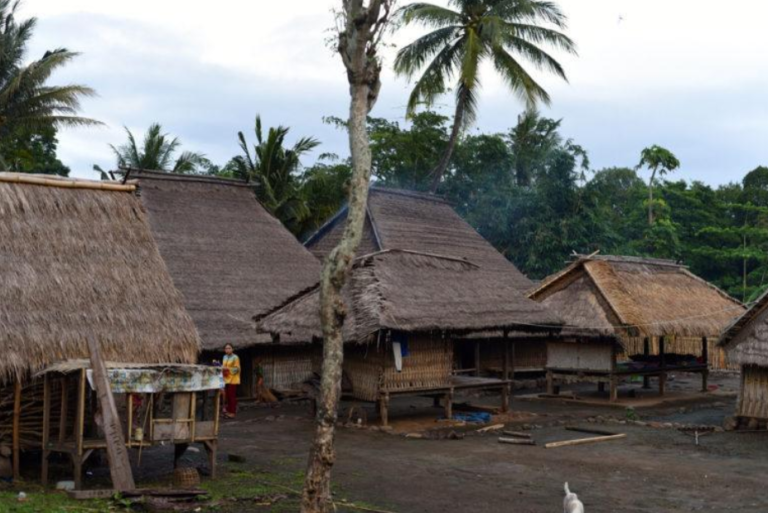
Photo: Fathul Rakhman/Mongabay-Indonesia
The traditional homes on the island of Lombok have survived several earthquakes over the years. Concrete homes crumble.

Often there is wisdom in the old ways. That’s what residents of an Indonesian island in the Ring of Fire learned after a series of earthquakes created havoc with modern concrete structures.

Fathul Rakhman has a report at Mongabay.

“Jumayar’s house fell early on Aug. 5, as the second of four large earthquakes in the span of three weeks ripped through the Indonesian island of Lombok, clobbering his village of Beleq in the process. …

“Although Lombok, which is next to Bali, sits squarely on the quake-prone Ring of Fire, heavy, concrete homebuilding is the norm. These rigid structures became death traps during the earthquakes. Only the handful of wooden traditional houses in Beleq, with their lightweight, flexible designs, emerged unscathed. …

“Though elements like floor height or wall width may vary in different parts of the island, all traditional Sasak homes employ the same basic design: Thatched bamboo walls enclose dirt floors, connecting them to roofs of woven reeds. … Wooden homes can sway, or ‘breathe’ when earthquakes strike, concrete houses cannot; they have no flex and topple easily.

“In North Lombok, the epicenter of the damage, 70 percent of the houses collapsed or were severely damaged. Rebuilding will require hundreds of millions of dollars, according to government estimates.

“In Beleq, families in traditional houses ran outside like everyone else, fearing for their lives. Not a single one of their traditional structures fell, even as the concrete homes around them crumbled.

‘If the government offers to rebuild here, we will reject the [construction of] concrete homes,’ said Sahirman, the Beleq village head. ‘We want to go back to our ancestral homes.’ …

“ ‘The ancestors bequeathed to us an architecture that is in harmony with nature,’ said Lalu Satriawangsa, chairperson of the provincial AMAN [the country’s largest indigenous rights nongovernmental organization] chapter. …

“The Indonesian government has typically looked upon the traditional houses as ‘slum dwellings,’ an indicator of poverty. But Lalu says the government should support the construction of traditional houses. Not only are they cheaper, but as the recent disasters proved, they are infinitely safer.

“For too long traditional homes have been seen to mark the persistence of poverty rather than the preservation of culture, ignoring their instrumental value, Lalu said.

“ ‘Now is the time for us to campaign for [the rebuilding of] homes that are more in tune with nature,’ he said. …

“As rebuilding plans take form, Sahir, the Beteq village head, believes the community should look to the past for inspiration.

“ ‘I don’t want to sleep in a concrete house ever again,’ he said.”

More at Mongabay, here.

Read Full Post »

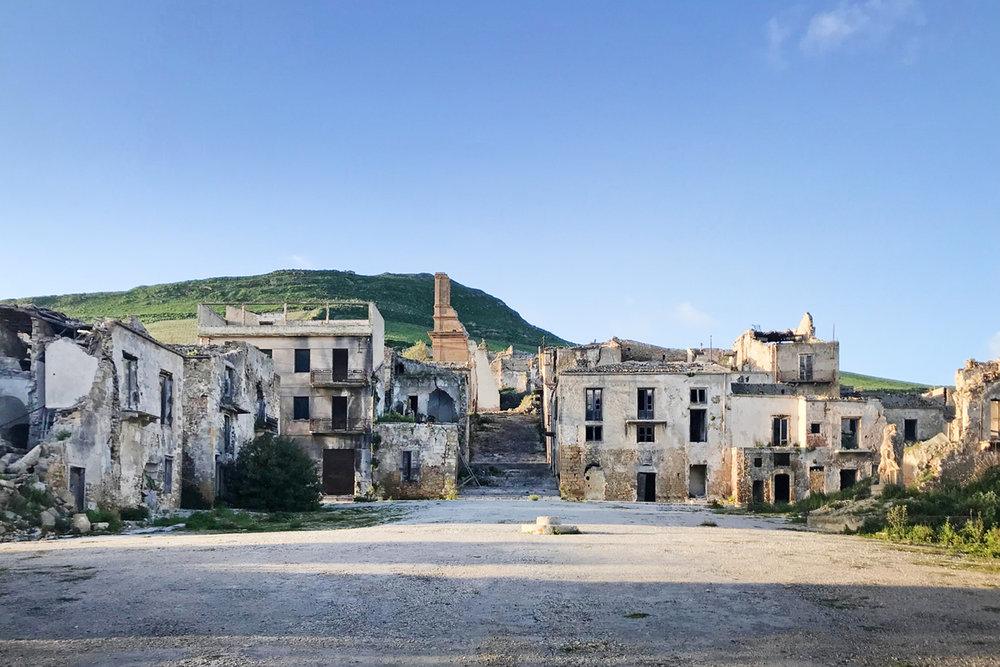
6Photo: Fondazione Manifesto
Poggioreale, Sicily, one of the towns destroyed by a 1968 earthquake. A public art project has helped to heal the region’s survivors, many of whom were still suffering from depression decades later.

I’ve blogged a lot about the healing power of various arts in various contexts, but I think this is the first post about what art can do for a traumatized region after a natural disaster. The story takes place in Sicily, where a 1968 earthquake flattened an already impoverished region.

Patricia Zohn writes at artnet news, “On a recent day this summer, I [descended] into the rural, arid Belice Valley. I was accompanied by Zeno Franchini of the Fondazione Manifesto, an advocacy group that leads tours of the region, which was devastated by the 1968 earthquake in Sicily. …

“More than the number of people who died (approximately 400), or the number rendered homeless (approximately 100,000), the earthquake exposed grave fissures in the socioeconomic and political fabric of one of Italy’s poorest regions — disparities that linger to this day.

“While thousands of earthquake victims lived outside Gibellina, an isolated agricultural community, in two shanty towns with barebones infrastructure, in 1970, the National Institute of Social Housing in Rome, determined, after numerous plans for reconstruction were abandoned, to build an entirely new city, a Gibellina ‘Nuova’ for the victims at a site 11 miles from the ruins. …

“By 1979, scant progress had been made due to government corruption, the Mafia influence, and red tape, and victims were still living in dire conditions. That’s when Gibellina’s flamboyant, powerful gay Mayor, Ludovico Corrao, invited a number of leading Italian and German artists and architects to participate in a rescue mission. …

“Though there was no budget for art or culture, Corrao had already begged and borrowed to found the Orestiadi performance festival, just outside the ruins of Gibellina, with the help of performers like John Cage and Philip Glass. Emilio Isgrò, an artist and dramatist, described a wind-chilled night of 1983

‘where artisans, sheep farmers, housewives, anti-Mafia judges and theater directors and personalities from all over Europe sat together to watch’ his performance in the festival. …

“The concrete Utopian city of Gibellina Nuova [became] an open-air laboratory for assessing the healing capabilities of public art. Today, 50 years since the earthquake struck, many look back on Corrao’s radical experiment in civic engagement, rehabilitation, and unification as a cautionary tale. But new efforts are now underway to realize a more pragmatic version of [his] utopian dream.

“ ‘The city needs to really become an Art Town,’ says Alessandro La Grassa, president of the Center for Social and Economic Research of Southern Italy, the organizational heir to the early activist efforts. He envisions it as a place ‘where artists live or stay and where empty buildings and spaces start to find a new function.’ …

“Today the region is a symbol of hope. A newly revitalized combination of social activists, municipal agencies, educational institutions, and private support is finally bringing the unique art interventions of more than five decades in the Belice Valley — and especially the city of Gibellina — to the attention of a wider public. …

“Tours of Poggioreale, Burri’s Cretto, and Gibellina Nuova are available until November 14 through fondazionemanifesto.org.” More here.

I wonder how public art might by employed to rebuild after a hurricane like Michael. Something for art leaders in Florida to think about.

Read Full Post »

teletubis-7

Photo: Safira’s Journey
Safira, an Indonesian blogger, visits the Teletubbies village to learn about earthquake-resistant housing.

I like the WordPress blog Safira’s Journey, by a young woman from Indonesia. In a July post, she visits an unusual village and takes pictures.

“My sister needs to make a report about Teletubbies Village in Yogyakarta. So, she asks me to take her to the place as I’m more familiar with Yogyakarta. It’s one of unique village or kampong in Yogyakarta.

“It is made for replacing the public’s house which ruined because of the earthquake in 2006. It was big earthquake and the victims about 6.234 people. It’s occurred at 5.55 in the morning for 57 seconds with moment magnitude of 6,2.

“Teletubbies domes village is from Domes For The World Foundation. It’s unique house and it can resist the earthquake. My sisters interviewed the people who living in one of the domes. She said, it’s comfortable and people are happy to live there. The domes village is one of the memorial from the earthquake.

“They even have annual even to memorizing the earthquake. They make the Teletubbies figures as the icons as you can see from my pictures. Who is that in the costumes? LOL”

More photos at Safira’s Journey.

Read Full Post »

For architecture buffs everywhere, an article on a collaboration between Hariri Pontarini Architects and Gartner Steel and Glass that has led to an unusual place of worship in South America.

Lisa Rochon writes in Toronto’s Globe and Mail that starting last September “at the Gartner Steel and Glass testing facility in Bavaria, Germany, translucent panels of cast glass [were] mocked up. Artisans at Toronto’s Jeff Goodman Studio, working in close collaboration with Toronto’s Hariri Pontarini Architects, produced the thick, milky glass for a Baha’i temple on the edge of metropolitan Santiago, Chile.

“The protective embrace of the domed temple, to be defined by nine petals (or veils), will be fabricated of myriad shapes in cast glass, with 25 per cent of them noticeably curved. Luminous and white is what design lead Siamak Hariri had in mind; seen up close, they look like streams of milk frozen in place.

“It took years of testing and the rejection of hundreds of samples at the acclaimed Goodman Studio (which typically makes chandeliers or small-scale screens of glass) to arrive at the 32-millimetre-thick cast glass with matte finish. ‘That the design is finally being mocked up in Germany represents a major milestone,’ says Hariri. …

“The project is unique in the world, says Gartner’s managing director, Armin Franke, from his office in Germany. Hariri’s exacting specifications have presented many challenges. For one thing, the architects want only the most minimal silicon joints between the heavy cast-glass panels. The panels – made from countless glass rods laid on a sheet and baked at Goodman Studio – are stronger than stone, according to tests, to satisfy a Baha’i requirement that the building endure for 400 years, and to survive one of the most active earthquake zones in the world.”

I love how many players around the world are collaborating on the innovations behind this project.

Lots more on the project here and at the Baha’i website, here.

Photograph: Hariri Pontarini Architects. A computer-generated rendition of the Baha’i House of Worship under construction in Santiago, Chile.

Read Full Post »

Being in the middle of an earthquake just now (a baby one), I got the urge to post about a cemetery.

Peter DeMarco wrote in the Boston Globe a while back about a lovely dance performance in the famed Mount Auburn Cemetery.

“The 100-member cast of ‘A Glimpse Beyond: A Unique Celebration of Life and Death’ leaves no one out: dancers, musicians, poets, puppeteers, sopranos, jazz singers, gospel choirs, and actors — some garbed as masked ‘spirit owls,’ others portraying the recently departed — join to make audiences ponder what lies ahead in the great beyond.”

According to DeMarco, the show was designed so that audience members could walk along, following the narrative as it unfolded “across the various graves, groves, and lush contours of America’s first garden cemetery.”

Bree Harvey, the cemetery’s vice president of external affairs, told the reporter that the performance was suited to Mount Auburn because “ ‘it’s a place of peace and tranquility, a place to commemorate the dead and console the bereaved and celebrate the lives of those buried here.’ ” More.

“Glimpse” reminds me of “When the Saints Go Marching in” and the New Orleans jazz parades that commemorate a life.

Back to the earthquake: John retweeted  prompt info from @NewEarthquake on twitter: “4.5 earthquake, 6km SSW of Lake Arrowhead, Maine. Oct 16 19:12 at epicenter.” It took NewEarthquake only four minutes to report. In case you haven’t gotten into twitter yet, it is truly the place to go for breaking news.

Photograph: Pamela Joye
“A Glimpse Beyond: A Unique Celebration of Life and Death” brought a 100-member cast onto the grounds of Mount Auburn Cemetery

Read Full Post »

I went to the concert of an oboe-playing friend Sunday. The 3 p.m. event coincided with the anniversary of the earthquake and tsunami that took place a year ago in Japan. My friend, of Japanese heritage, was moved by the music he was playing, and so was I. The modern pieces really sounded like an earthquake to me. I had visions of Poseidon, the Bull from the Sea, rising up in anger against humankind, and later of hope dawning.

The Charles River Wind Ensemble, where my friend plays, has a new conductor. I liked Matthew Marsit’s energetic style and his explanations of the pieces. Marsit, a clarinetist himself, is also a conductor at Dartmouth College, where he practices his belief in music outreach to lower-income communities.

“An advocate for the use of music as a vehicle for service, Matthew has led ensembles on service missions in Costa Rica and Philadelphia, Pennsylvania, collecting instruments for donation to schools, performing charity benefit concerts and offering workshops to benefit arts programs in struggling schools.  His current work at Dartmouth allows for outreach projects in the rural schools of New Hampshire and Vermont, working to stimulate interest in school performing arts programs.” Read more.

I think musicians can be very giving people. Indian Hill Music in Littleton, Massachusetts, offers scholarships and more. Someone I know on the board tells me that Indian Hill has “a program to bring music instruction to schools in the region that have cut out music due to budgetary constraints. They also offer free concerts, a Threshold choir (music for dying patients), and a number of other outreach efforts.”

In Providence, Rhode Island, Community MusicWorks demonstrates how music builds community and teaches social responsibility. You can read about this and other innovations in Rhode Island’s creative economy here.

Read Full Post »

Back in the day, I was a great fan of Mary Renault. I took her every word as gospel, down to the conversations Theseus had with Ariadne, because the stories generally meshed with what I knew from studying ancient Greek.

The Bull from the Sea was about the sea god Poseidon, who also is the god of earthquakes. I remember Renault’s description of the eerie stillness in the air before an earthquake and the strange behavior of the creatures.

So I am not at all surprised to read in the Washington Post that animals at the National Zoo knew before this week’s earthquake actually quaked that something was about to happen.

“The zoo documented a broad range of animal behavior before, during and after the tremor … . For example, a gorilla, Mandara, shrieked and grabbed her baby, Kibibi, racing to the top of a climbing structure just seconds before the ground began to shake dramatically. Two other apes — an orangutan, Kyle, and a gorilla, Kojo — already had dropped their food and skedaddled to higher turf. The 64 flamingos seemed to sense the tumult a number of seconds in advance as well, clustering together in a nervous huddle before the quake hit. One of the zoo’s elephants made a low-pitched noise as if to communicate with two other elephants. And red-ruffed lemurs emitted an alarm cry a full 15 minutes before the temblor, the zoo said.

“During the quake, the zoo grounds were filled with howls and cries. The snakes, normally inert in the middle of the day, writhed and slithered. Beavers stood on their hind legs and then jumped into a pond. Murphy the Komodo dragon ran for cover. Lions resting outside suddenly stood up and stared at their building as the walls shook. Damai, a Sumatran tiger, leaped as if startled but quickly settled down. Some animals remained agitated for the rest of the day, wouldn’t eat and didn’t go to sleep on their usual schedule.” Read the full story.

And while we’re on the subject, please read about 96 percent of a certain kind of male toad abandoning their breeding ground five days before the 2009 L’Aquila, Italy, earthquake! (That lead came via Andrew Sullivan’s blog.)


Read Full Post »