Feeds:
Posts
Comments

Posts Tagged ‘eggs’

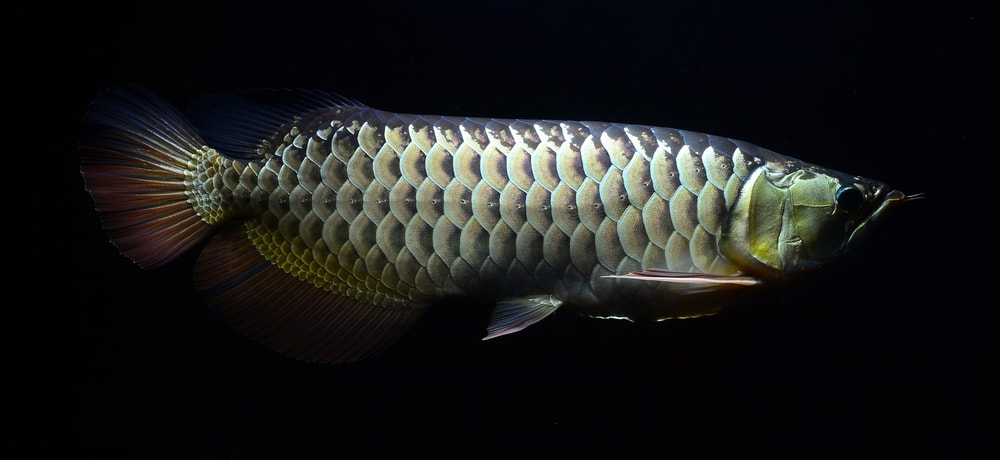
Photo: The Aquarium Guide.
The silver arowana, a mouthbrooding fish. The dads incubate eggs in their mouths.

Here’s another dad story in time for Father’s Day — this one from the animal kingdom.

New York Times reporter Elizabeth Preston wrote about research on male fish that carry eggs in their mouth until they hatch.

“Lurking among the underwater plants in Australia’s ponds and streams is a fish called the mouth almighty. The species is named for its impressive jaws, which snap up passing prey. But the males also use their almighty mouths to gently carry as many as hundreds of babies.

“The dads do this oral caretaking, called mouthbrooding, for two or three weeks at a time. Like other mouthbrooding fish, they do so at great personal cost. Yet, according to a study published [in] the journal Biology Letters, mouth almighty fathers sometimes carry babies that aren’t their own.

“The study’s lead author, Janine Abecia, is a Ph.D. candidate at Charles Darwin University in Northern Territory, Australia, where she’s been studying the mouth almighty, or Glossamia aprion, as well as the blue catfish Neoarius graeffei. Both live in the freshwater environments of Australia. Fathers of both species scoop fertilized eggs into their mouths and carry them until after the young have hatched.

“Her research has suggested that these two species don’t eat at all when they’re on dad duty. … Research in other kinds of mouthbrooders — which can be fathers or mothers, depending on the species — has shown that they don’t eat, either. Having a mouth stuffed with offspring may also make it difficult to breathe. And it seems to slow down the parent, potentially making it harder to escape predators, Mrs. Abecia said. …

“[It makes] sense that fish parents would only engage in oral caretaking for babies they’re certain are their own. Yet scientists don’t know how often this is true. ‘It’s actually a question I’ve long been interested in,’ [Tony Wilson, a biologist at Brooklyn College who studies reproduction in fish and wasn’t involved in the research] said.

“Mrs. Abecia collected mouthbrooding fathers of both the mouth almighty and blue catfish from rivers in the Northern Territory. She collected additional adult fish, with no young in their mouths, for genetic comparison. Then she selected about 10 eggs or babies from each father’s mouth and analyzed their DNA to figure out where they’d come from.

“With the blue catfish, things were as expected. All nine dads seemed to be carrying their own young, and those baby fish all had the same mother.

“Inside the powerful jaws of the mouth almighty, though, things were a little weird. The mouth almighty species forms seemingly faithful pairs in the lab, Mrs. Abecia said. Yet … two batches of young had multiple mothers, suggesting that the male had courted a female while he already had eggs in his mouth. One batch had multiple fathers. … And in one batch, the young were totally unrelated to the fish that was carrying them.

“ ‘It’s a very small study,’ Dr. Wilson said, so it would be ‘premature’ to draw conclusions. … But, he added, the genetic techniques used in this study are making it easier for scientists to ask [questions]. …

“Scientists have already discovered other mouthbrooding fish carrying the wrong babies. In one type of cardinalfish, about 8 percent of broods included a second dad’s young. A study of fish called silver arowanas found that out of 14 brooding dads, two had mouths full of offspring that were totally unrelated.

“For their efforts, these dads will pass down none of their genes. Why? … ‘Some female fishes in other species are attracted to males that are already caring for their young,’ Mrs. Abecia said. Males that get stuck with the wrong babies now could make up for it later.” More at the Times, here.

I know I will have a use for the name of one of these guys. How about you? Why limit the resonance of “mouth almighty” to the fish kingdom?
Read Full Post »

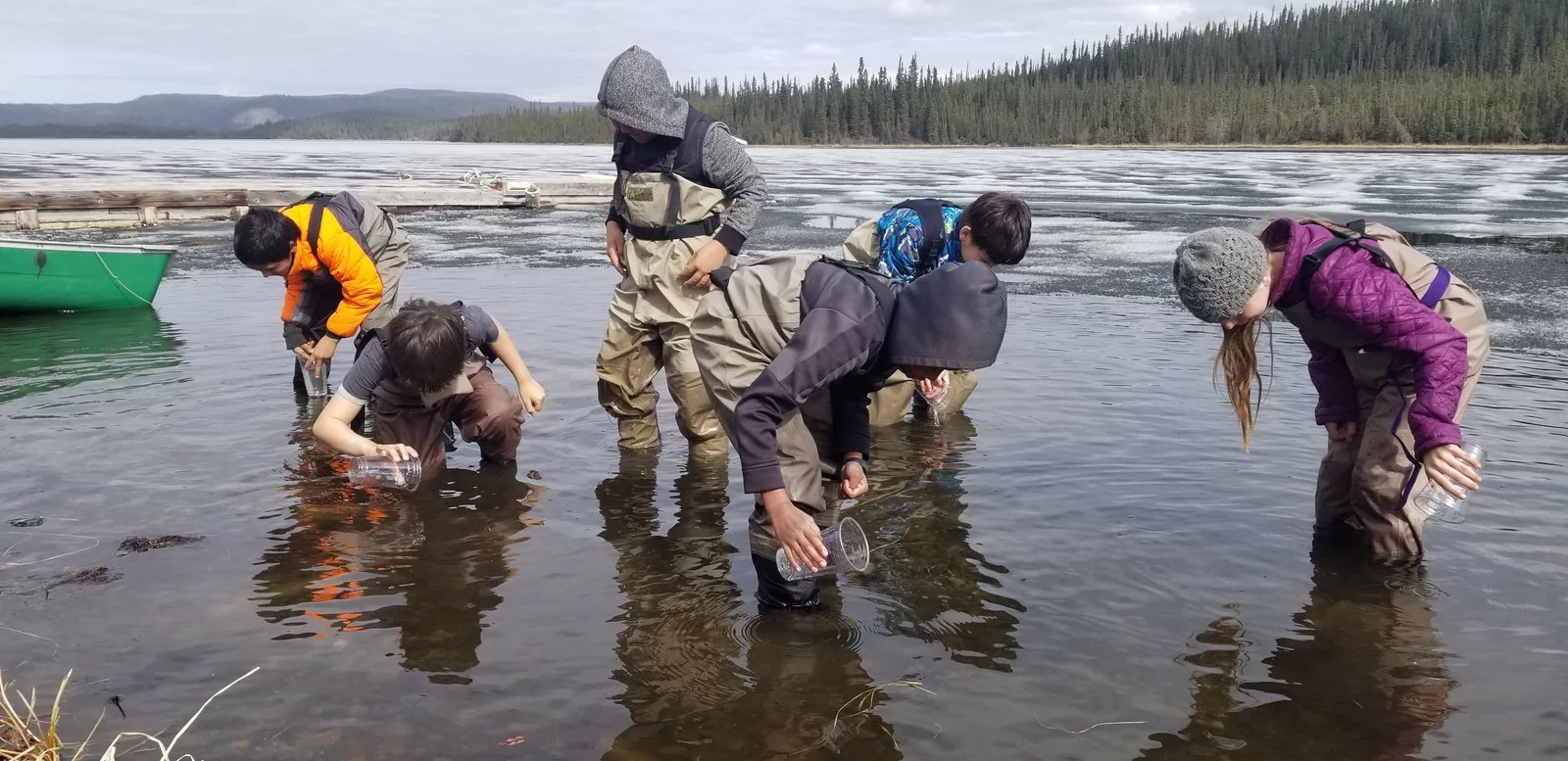
Photo: Jennifer Hodges.
Students releasing salmon into the lake on the Salmon Field Trip in Alaska.

Much of our hope for protecting the planet relies on the education of young children. That’s why this story from Alaska about getting up close and personal with the salmon life cycle is so interesting.

Claire Murashima reports for National Public Radio (NPR), “Kenny Lake School in Copper Center, Alaska, is small, with about 60 students from kindergarten to high school seniors. It’s even smaller in winter when some parents homeschool their children because of the long drives and slick roads.

“Jennifer Hodges is a third, fourth and fifth grade teacher. She says her three-grade class sits only at desks for 20 minutes a day. They do a lot of practical learning, such as raising Coho salmon from egg to Alevin to fry then releasing them into a lake.

“It’s through a program called Salmon in the Classroom, established by the Alaska Department of Fish and Game. Kate Morse, program director for the Copper River Watershed Project, is in charge of implementing the program in six schools throughout Alaska’s Copper River watershed.

“Coho salmon lay eggs in the fall, when many schools start. The eggs remain in the classroom about six months before they are released into lakes. After that, they live for two to four years before they spawn and then die shortly afterwards.

“Every day, about a third of Hodges’ students ride the bus 45 minutes from the Native Village of Chitina. Many students already have experience fishing salmon, which is a staple in Native Alaskan communities.

‘It’s really a delicate balance because we are dealing with traditions and culture of the Native people,’ Hodges says. ‘This is their land, this is their salmon. And so we have to really be part of that.’

“Ahtna, a local tribal association, helped donate the tank in her classroom.

“Though many of her students grow up fishing salmon for food, few have raised them as pets.

” ‘The salmon have turned from being just fish in their backyard that they catch to eat, to fish that they are connecting to,’ says Hodges. ‘With this project, they have a whole different perspective because they know what it takes to actually go through the stages of a salmon.’

“Learning about climate change is more crucial now than ever. In 2022, the Arctic had its sixth-warmest year on record. But these lessons are made concrete to them in raising salmon, which require cold water to survive.

‘We had a failure in our equipment and it brought the temperature up about five degrees,’ says Hodges. ‘Just warming it that much just wiped out our eggs.’

“During the months that the salmon are in the classroom, students like to sit by the tank to observe. ‘When the eggs hatch they have sacs that carry their food,’ says Addy, a student. ‘That way they can hide still and don’t have to look for food. It’s funny because when they try to swim they just end up in circles.’ …

” ‘Putting hand sanitizer on your hands and then putting your fingers in the tank – you’ve polluted the tank,’ Hodges says. ‘That has happened to us before. That year we had seven make it. Normally we have about 180 that make it.’

“Students like to calculate when the salmon will turn from eggs to Alevin to fry based on the temperature of the tank. To them, it’s not practicing math problems: it’s predicting the future. …

“Since Hodges and her students live in such a rural area, there aren’t many field trips. But each year in May, she takes her students on the Salmon Field Trip, where they get to release the salmon they’ve raised in class. …

” ‘The best part is getting to release them after watching them hatch from eggs, grow into fry and take care of them,’ says Fisher, a student. ‘You get to say goodbye.’

“The student put the salmon in a bucket and then secured it with a seatbelt. Students suit up in chest waders, rubber bodysuits to keep them dry when they go into lakes, and then each gets a cup of about ten fish. They put the cup under water and let the fish swim out.”

More at NPR, here. No firewall.

Read Full Post »

Photo: AllAboutBirds.org

Not being ashamed to admit that I’m one of the birdwatchers in the family — and being attached to all things Rhode Island — I was concerned to read about the disappearance of the herons that used to frequent Rose Island.

According to the Associated Press, “No one is quite sure why the herons have disappeared from Rhode Island’s Rose Island, but one group wants them back. The Rose Island Lighthouse Foundation has started a $100,000 campaign to restore the habitat for herons and other shoreline birds on the 17-acre island in Narragansett Bay. The executive director of the foundation, David McCurdy, told the Newport Daily News that there were about 300 pairs of herons laying eggs on the island a decade ago, but now there are none. Some experts believe the disappearance has to do with the impact of humans, but others say it could be changes in the food supply or an overgrowth of brush on the island. The foundation plans to clear out specific areas and plant cedar trees to attract the birds.”

Read more at the website for the Rose Island Lighthouse, which, by the way, is an operating lighthouse where you can spend a night or a week if you want to investigate the heron situation yourself. Here’s what the lighthouse website says about overnights:

“not an inn — not a b&b — but an operating lighthouse where you can become the keeper.  you have two options.

“1. stay over night in the museum on the 1st floor or

“2. become keeper for a week or a night and stay on the 2nd floor

On second thought, you may not have time to investigate the heron situation.


Read Full Post »