Feeds:
Posts
Comments

Posts Tagged ‘entrepreneur’

I came across a nonprofit organization called BUILD on the website of the accelerator incubator MassChallenge (where Erik is among 26 finalists who will be honored at Tuesday’s awards). BUILD helps inspire students to graduate from high school by getting them engaged in an entrepreneurship project.

“MassChallenge Partner BUILD Greater Boston is gathering a select group of entrepreneurs to mentor student business teams in some of the city’s lowest performing high schools.

“BUILD is an exciting 4-year college success program that uses entrepreneurship to motivate disengaged students to excel academically, graduate from high school, and succeed in college. …

“To help students become college-eligible, BUILD also provides tutoring, test prep, mentoring, and college planning advice. Entrepreneurship is the hook — but college is the goal. Over the past 13 years, 95% of BUILD seniors nationally have been accepted to college, with 88% accepted to 4 year colleges and universities.

A student team calling itself “the Dream Team and their mentors, including MassChallenge Alumni Shonak Patel, won 1st place at the Youth Business Plan Competition at Northeastern University on June 2, 2012, receiving $1,500 to start their business.”

According to the Bay State Banner, the Dream Team’s product is an “inspirational iPhone case, made of bamboo and customizable to have the purchaser’s own dream etched into it.” More here.

See video highlights of the competition from the Boston Business Journal.

Being a BUILD mentor gave me the opportunity to use my passion for entrepreneurship to inspire greatness in others.— Shonak Patel, Charlestown Mentor and MassChallenge Alumni. 

Read Full Post »

Fun time at Mass Challenge!​

Mass Challenge is an incubator “accelerator” for entrepreneurial companies, perhaps the biggest worldwide. I’ve blogged about it before.

Of the 125 finalists in this year’s challenge, 48 gave one-minute pitches last night to an audience of about 200 friends, family, and investors at 1 Marina Park on the Boston waterfront.

Besides being entertaining, it was inspiring. So many people working hard on so many great ideas!

A couple noteworthy presentations were from MIT people. Helmet_Hub tapped the skills of MIT materials science students to create a helmet-vending machine. They have already partnered with the City of Boston’s Hubway, which lends bikes point to point. Another MIT-based organization, Global Research Innovation & Technology (GRIT), uses bicycle parts to make inexpensive wheelchairs for Third World patients. Very impressive. (More on GRIT here.)

I also wrote down that soundfest has a better kind of hearing aid. Prime Student Loan screens students so banks can make a safe loan even if graduates have no FICO score.

Wanderu was one of the few female-run companies. It does for ground travel what kayak and others do for air. Zoomtilt creates ads that are said to be so funny and entertaining, people actually want to watch them. Guided Surgery Solutions helps oral surgeons drill into the right place.

Roameo helps you find out what’s going on near where you are right now. Newartlove helps artists sell their work. Social Made Simple helps small businesses with social networking. (Check it out, Luna & Stella.) CellanyxDiagnostics has a more precise test for prostate cancer than the PSA.

I will likely follow up on a worthy-cause business called Bootstrap Compost. They teach you to compost, give you the bucket, pick it up, deliver it to farms, and give leftover compost to schools. You can have some, too. Bootstrap is very low-tech, doing most travel on bikes. It is proud of keeping tons of food scraps out of landfills.

I was also impressed at the Mass Challenge diversity — men, women (OK, not many women), old, young, scientists, artists, business types, different races, different nationalities, humorous, solemn.

No need to worry about the economy long term. Not with the joy of invention alive and well.

Read Full Post »

Meet Matthew Slipper, “just 18, a founding member of the Paly Entrepreneurs Club, an extracurricular group at [a Palo Alto] high school that sprang into existence last September — the brainchild of about a dozen students committed to inventing the future. …

“While budding moguls in high school clubs like the Future Business Leaders of America invest make-believe money in the stock market or study the principles of accounting, the Entrepreneurs Club members have a distinctly Silicon Valley flavor: they want to create start-ups,” writes Quentin Hardy in the NY Times.

“They have met weekly during the school year to discuss their ventures and ideas, explore matters like money-raising strategies and new markets, and host guest speakers. Once, they held a Skype chat with a software engineer in Sweden who described the intricacies of running an online music business.” More here.

The kids sound incredibly intense, glad to have more time for business when they get their gym requirement out of the way.

I envision this generation’s counterculture emerging — probably in California, probably soon. With three entrepreneurs in my family, I know starting a business takes a lot of time and energy. Can’t help wondering if high school is too early. Focus is not bad, but by definition it means shutting other things out.

Photograph of Paly Entrepreneurs Club: Peter DaSilva for the NY Times

Read Full Post »

John pointed me to an article on the kinds of work environments that encourage innovation.

Aimee Groth at Business Insider writes, “In his article, Groupthink, the New Yorker‘s Jonah Lehrer says there are two types of brainstorming — a free-for-all exchange of ideas in a structured environment, and a random, unplanned debate. Only the second type really works.

“He says M.I.T.’s famous Building 20 … became one of the most innovative spaces in the country because it fostered the best kind of brainstorming.

“The building was created to provide extra room for scientists during WW II, reports Lehrer, and ‘violated the Cambridge fire code, but it was granted an exemption because of its temporary status. … The walls were thin, the roof leaked, and the building was broiling in the summer and freezing in the winter. Nevertheless Building 20 quickly became a center of groundbreaking research, the Los Alamos of the East Coast.’

“It wasn’t demolished after the war because there were too many students and too little space on campus. So the building became a hodgepodge of offices, with professors and students from all different departments squeezed in small spaces and long corridors. …

” ‘Walls were torn down without permission; equipment was stored in the courtyards and bolted to the roof. … The space also forced solitary scientists to mix and mingle.’ ”

More.

Makes me think of the layout at Mass Challenge, the accelerator incubator for entrepreneurs that I blogged about here. (Did I mention that a family member read that post, sent in an application under the wire, powered through layers of screening, and is now working away as part of the class of 2012?)

The Mass Challenge space is not dangerous like Building 20, but the founders probably heard about the benefits of Building 20’s layout through their connection to MIT. The Mass Challenge work space is an unfinished floor in an upscale office building on the waterfront, 1 Marina Park. Everything is open and interactive.

The harbor views are a bonus unknown at Building 20.


Read Full Post »

Here’s another nice lead from the Christian Science Monitor, which highlights a cool story by Rachel Signer of Dowser.org (a media organization that reports on social innovation).

The article is about Ethikus, which “provides vouchers for small businesses whose practices embody principles of sustainability.”

Writes Signer, “From May 3-10, hundreds of New Yorkers will participate in the first Shop Your Values Week, a project of the New York City-based startup Ethikus. The aim of Ethikus is to generate more business for small enterprises whose practices embody certain principles of sustainability in the realms of product-sourcing, employee relations, community engagement, and environmental impact or mitigation efforts. By looking at those four criteria, Ethikus identifies businesses they want to invite into their network, which functions as a sort of ethics-focused Groupon by providing consumers with vouchers to use in those businesses.” Read more.

Even though small businesses have all they can do to keep their heads above water right now, I think this idea has legs. Should be a great way for those already incorporating the Ethikus ideals to get visibility with the customers they want to reach. I’m spreading the word.

Read Full Post »

Connecticut seems to be doing quite a lot for entrepreneurs — even rather young ones. So thanks to an annual competition for young inventors in the state, Mallory Kievman is getting her hiccup-suppressing lollipop patented and marketed by experts.

Writing for the NY Times, Jessica Bruder quotes one of Mallory’s benefactors.

“ ‘It’s very rare, when you’re evaluating businesses, that you can envision a company or product being around 100 years from now,’ said Danny Briere, a serial entrepreneur and the founder of Startup Connecticut, which nurtures new companies, including Hiccupops, and is a regional affiliate of the Startup America Partnership. ‘Hiccupops is one of those things. It solves a very simple, basic need.’

“Mallory met Mr. Briere last spring at the Connecticut Invention Convention, an annual competition for kids. ‘I went there, and I knew it would either be a hit or a miss project,’ she said. ‘People would either like it, or they would think I was crazy.’ ” Read more.

I love reading about simple but valuable solutions to everyday challenges. Think paper clip. Think Post-it note. It takes a special kind of imagination. Nowadays, given the valuation of apps, you would think solving everyday challenges was too uncool for the inventive mind. But Hiccupops will likely bring Mallory checks in the mail long after Instagram is forgotten.

Photograph: Andrew Sullivan for the NY Times

Read Full Post »

I’m learning about cash mobs and how they are used to help small businesses and promote economic development.

I like that it’s kind of a surprise for the business. The town selects a shop for some policy reason like wanting to revitalize a particular part of town or to encourage a promising entrepreneur. It promotes the business for a cash-mob day and encourages local folks to spend some money. People do because it’s fun, and because they, too, want to help.

“A cash mob works like this,” writes the Globe. “City officials, civic groups, or individuals use social media, blogs, and e-mail to spread the word about the event. As @Lowellcashmob tweeted this week, ‘Infusing revenue into Lowell businesses, you never know where the cash mob will strike!’ …

“Merchants do not run them, but are selected for a ‘hit.’ Participants are encouraged to spend $10 to $20. There often aren’t any discounts or incentives — it’s less about nabbing a Black Friday bargain and more about sharing the wealth.” More here.

Got me thinking. How else could this work? Could the town choose a local blood bank for a cash-mob day? How about a “paint the youth center” day? Or a day to buy something at the Pirate Supply Store to support the tutoring program? Would people think that was fun, too?


Read Full Post »

I went to Manchester, New Hampshire, today for an event designed to bring bankers together with community and economic development people.

The panelists were pretty interesting. A woman from the NH Small Business Development Center talked about what it takes to put together a financing package and what sorts of entrepreneurs are a good investment. For example, people like Richard Tango-Lowy, who do their homework.

Tango-Lowy kept his IT job while he researched everything about fine chocolate, traveling extensively in France and Italy. Almost as soon as he opened Dancing Lion Chocolate, he was successful. He got a great review in the Boston Globe. He has no cash-flow problems. His only problem is keeping up with demand.

“The entrepreneur’s Mayan-style drinking chocolate, made with milk or water, is served in large painted bowls,” writes Kathleen Pierce in the Globe. “This driven chocolatier and Manchester resident is more than a little obsessed with cacao. He works with chocolate maker Alan McClure of Patric Chocolate in Columbia, Mo., to create a house-blend derived from Madagascar beans.

“Like a vintner, Tango-Lowy selects the chocolates that go into his tasting squares, bars, and candies, paying close attention to flavor profiles and how a particular bean enhances the moment. ‘I think about how long will it linger in your mouth. There are ones that hit the fragrant front and each piece evolves as you eat it,’ he says.

“When you discover that Tango-Lowy is a physicist, his approach to chocolate begins to make sense.” Read more.

Read Full Post »

Went to see a new play at the Lyric Stage, Superior Donuts. Liked it very much.

Will Lebow was affecting as a disillusioned Chicago donut maker who gets a different perspective on life when a young African American with big ideas applies for work (Omar Robinson). Funny and touching production.

This post is not a review. Rather it is “What I did on Saturday when not doing work I brought home from the office.”

In the morning I was editing an article about Venturing Out, a program that helps ex-offenders tap their street skills to set up legitimate microenterprises. Watching the play, I had a shock of recognition, thinking at first that the story would be about an ex-offender. It wasn’t.

There certainly are plays about such topics. Venturing Out produced one of its own in December, The Castle. And my friend Mary from playwriting class is gearing up for a similar production: “Generational Legacy integrates music and dance and centers around the life of one woman  and her son, both of whom have been incarcerated for non-violent  offenses, … and the challenges and barriers they face as they re-enter their communities.”

I haven’t seen the plays, so I don’t know if they are didactic. Superior Donuts wasn’t. Here’s a scene from it.

Photograph: Mark S. Howard, Boston Globe

Read Full Post »

When Suzanne started the birthstone-jewelry business Luna & Stella a few years ago, I didn’t make the connection right away.

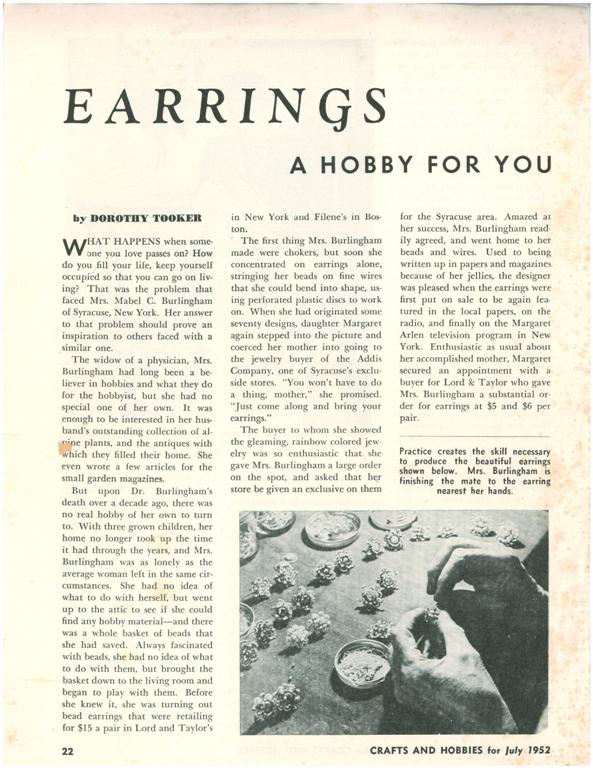
Suzanne never knew my grandmother Mabel, but Mabel (the woman I called Garkie from an early age) was also an entrepreneur, best known for jellies like Cinnama-Tang and for jewelry. I remember seeing her on black & white daytime television in New York when she was interviewed about her ventures.

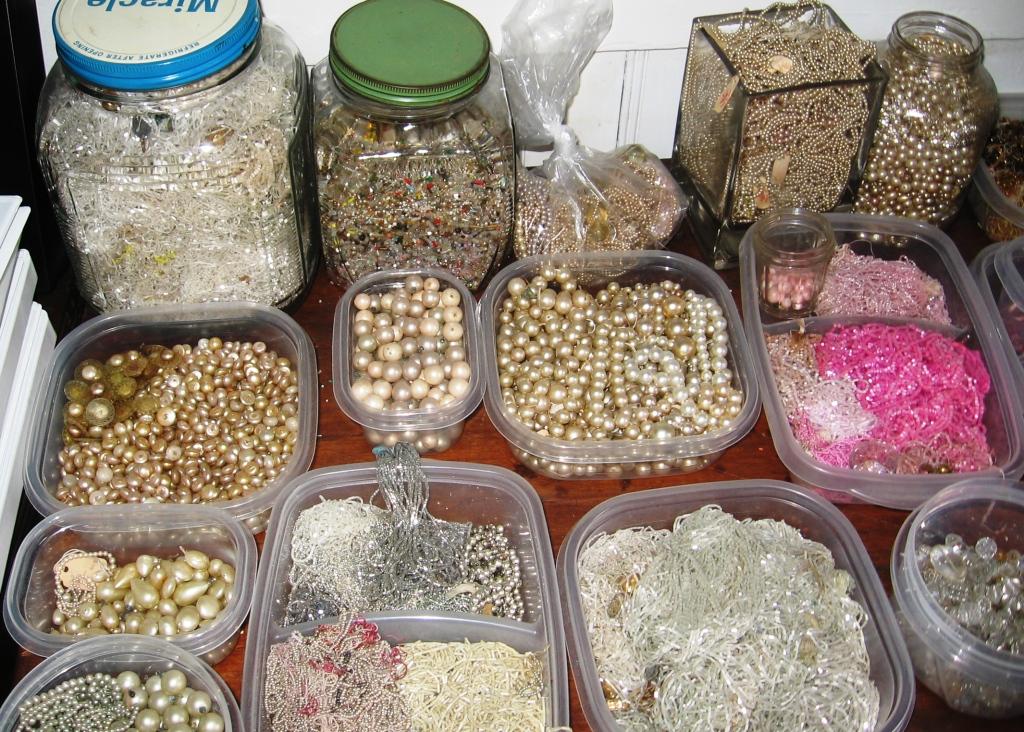
My cousin Margot was going through the personal items of my late Aunt Maggie (Margot’s mother and Garkie’s daughter) and unearthed articles and artifacts. Here are samples. Styles have changed, but the urge to sell something creative has not.

The angel wing is Suzanne’s.

Read Full Post »

Suzanne and Erik went to grad school with David O’Halloran, whose consulting company was recently cited in The Irish Times for its focus on sustainable business ventures in Africa.

“For Irish entrepreneur David O’Halloran, adhering to a sustainable business model that helps develop and protect local communities and their environment is the key to enjoying long-term success in Africa’s emerging markets. In late 2006, the Galway man, along with three former colleagues, rejuvenated a business development consultancy called BusinessMinds by turning it into an incubator company that develops, finances and operates sustainable commercial ventures in Africa.

“The idea behind the enterprise is to offer investors a socially responsible approach to doing business on the continent, while also making a profit. ‘Historically, many investors in Africa have used a more short-term, exploitative business model, one which has existed since the days of colonialism,’ O’Halloran says. ‘Unfortunately, for some investors this remains the modus operandi even today. As in, they take what resources they can and then get out without giving much back to the local economies.’

“However, O’Halloran says he believes people are starting to realise that such an approach is inherently unstable and increases risk.” His organization is called BusinessMinds, Africa.

Bill Corcoran wrote the Irish Times article. Read more here.

Read Full Post »

« Newer Posts