Feeds:
Posts
Comments

Posts Tagged ‘Estonia’

Photos: Avedis Hadjian.
Estonian canoe maker Mr. Ruukel works on his latest dugout canoe outside his barn in Tohera.

Today I want to share a lovely photo essay from the Christian Science Monitor about a canoe maker in Estonia. Be sure to click through and see all the pictures at the Monitor.

Avedis Hadjian writes, “Aivar Ruukel is one of the last five masters in Estonia who make the Baltic country’s traditional dugout canoe, known as a haabjas. Until the 1960s, it was the conventional means of transportation in the Soomaa, or ‘land of bogs,’ region during the spring floods, locally called the fifth season.

“Mr. Ruukel and Priit-Kalev Parts, another haabjas maker, are the most vocal advocates for preserving the tradition, which is threatened by the making of fiberglass or other modern – often motorized – boats.

“Both Mr. Ruukel and Mr. Parts learned their craft from older masters in the early 1990s, shortly after Estonia gained its independence from the Soviet Union, and are now trying to engage the new generation, training young apprentices in haabjas building. …

“On a gray morning, Aivar Ruukel is scouting for the ideal aspen in the Soomaa, a vast wilderness area in southwestern Estonia. The aspen is the preferred tree for making [the] traditional dugout canoe – an art that is now endangered.

“ ‘The ideal tree should have the shape of a pencil, but every tree is perfect in its own way,’ even if only a few can be used to build the boat, says Mr. Ruukel.

“Some of the trees are covered with black canker, a fungal infection. ‘You can’t make a haabjas out of them, but they are used by woodpeckers to make their nests, so they serve a higher purpose,’ he says.

“Mr. Ruukel is one of the last five masters in the Baltic country who make the canoes. Until the 1960s, it was the conventional means of transportation in the Soomaa [during] the spring floods. …

“Both Mr. Ruukel and Mr. Parts [train] apprentices in haabjas building. A skillful wielding of the axe to hollow out the tree is only part of the required expertise and techniques, which also involve expanding the trunk by filling it with water and then hanging it above a carefully controlled fire.

“What was a necessary means of transportation in the past has now become an Estonian identity marker. In 2021, haabjas building was inscribed on UNESCO’s List of Intangible Cultural Heritage in Need of Urgent Safeguarding.”

More at the Monitor, here.

In the “search” box at this blog, you can find several posts about Estonia, a country that’s interesting in more ways than one. (For example here, here, and here.)

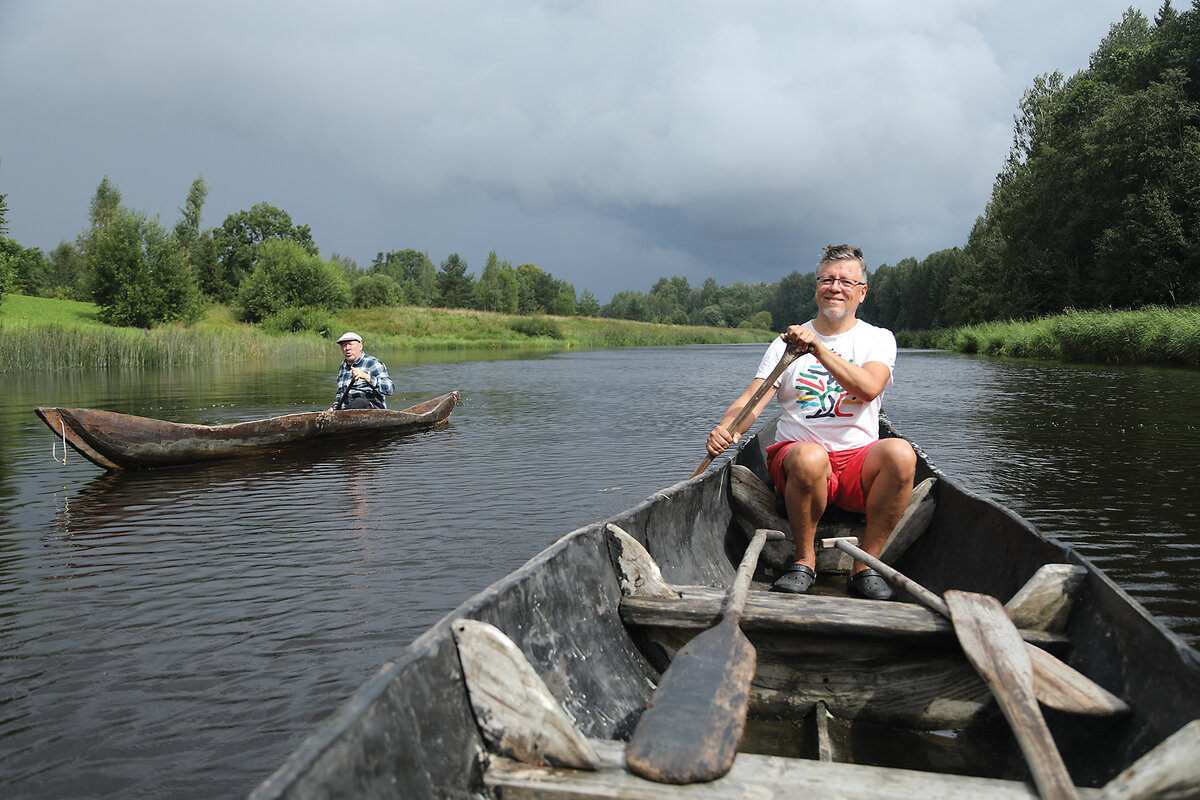
Mr. Ruukel (left) and Jari Hyvönen, his brother-in-law visiting from Finland, paddle in canoes on the Pärnu River.
Read Full Post »

Photo: Mindaugas Kulbis/AP.
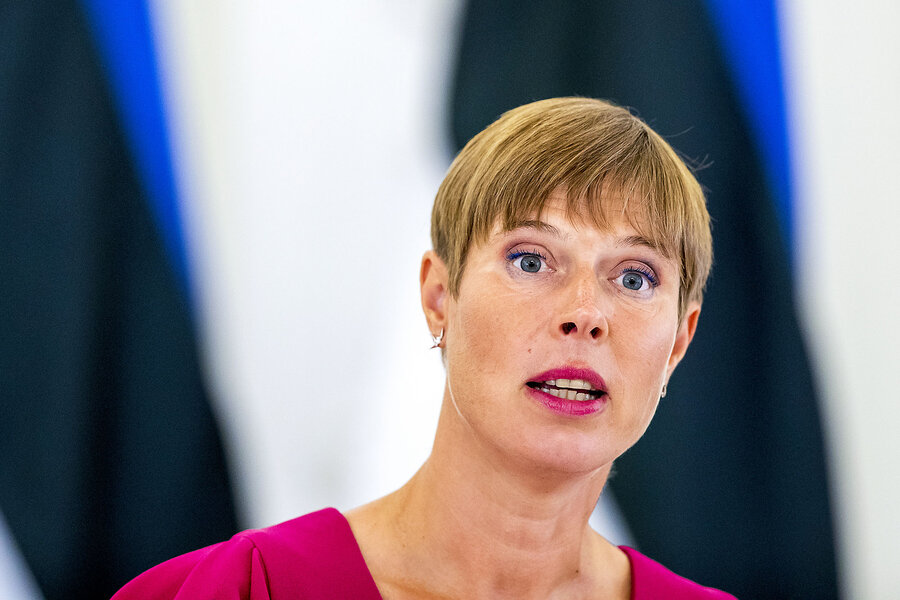
Estonian President Kersti Kaljulaid speaks during a news conference in Lithuania, Aug. 14, 2020.

Americans these days do not have much trust in government. It’s unfortunate because government does many good things. But a suspicious attitude has gained hold over the American mindset in the last few years. That’s why I look with envy at an Eastern European country that’s working really well because of a high level of trust — plus the efficient use of technology.

Lenora Chu explains at the Christian Science Monitor.

“Getting married is now one appointment easier in Estonia. The world’s most digitally integrated country launched the sacred union into the e-governance stratosphere last year – where it joined nearly every other government service you can imagine.

“Estonian citizens were already able to file taxes online, vote online, and access digital prescriptions. All of this digital activity hinges upon the Estonian smart identification system – which allows for state-recognized digital signatures – and a public trust in digital governance that’s been hard to replicate in other countries.

“ ‘I actually own my data – I can always track when someone looks at my data,’ says Kristiina Veerde-Toompalu. ‘I trust [my government].’ …

“Ms. Veerde-Toompalu got married in July, and applying online for the certificate saved her and her fiancé a special trip to her hometown’s city registrar. ‘We don’t have to go somewhere and announce our intention to get married,’ she says. …

“To deploy digital services successfully requires Estonians to trust the act of offering up to the cloud everything from birthdate and birthplace to tax information, salary, and medical diagnoses. That public trust took decades to cultivate, and ultimately relies on Estonia’s tight and transparent system of regulation.

“ ‘Paper files are not safer, because you cannot tell who looked at an analog file,’ says Kersti Kaljulaid, who served as president of Estonia from 2016 to 2021. ‘Estonian e-governance is a tightly regulated environment. … The data belongs to citizens, and you have control over who looks at your data, and you can ask them why they did. This is a luxury compared to an analog world, and I believe this is why we have this in-built trust.’

“It takes decades to build up the kind of comfort Estonia has with digitization, says Linnar Viik, a leading Estonian information technology scientist and government adviser since 1995.

‘Trust in digital channels didn’t happen overnight. It was kind of word of mouth and private and personal experience.’ …

“Trust also had to flow from leadership to the tech industry, and it did. ‘That is another layer of trust, whether you as a leader trust the experts on something you don’t understand. The politicians started to listen to the technology people and gave them space,’ says Mr. Viik.

“One such example: In 2000, Mr. Viik was allowed to convert Cabinet meetings from paper-based – at the time, they required knee-high stacks of printouts – to completely digital after one conversation with the prime minister.

“ ‘He asked, “Do we have any other examples around the world of paperless government?” ‘ recounts Mr. Viik. ‘I said, “No.” He said, “Cool, OK, do we have money for that?” ‘

“The Cabinet budget had $85,000 left for printing in that fiscal year, and Mr. Viik spent it on hardware, software, and training for Cabinet ministers and staff. What resulted was the paperless e-Cabinet: a fully wired room that drew global media attention. …

“Now Estonians not only vote and pay taxes online, but also buy property, register cars, sign job and rental contracts, and apply for unemployment benefits digitally. Nearly every service linked with a government office can be done digitally. And for many services,  citizens need not even apply, as certain entitlements are automated. That includes parental allowances and child support. Digitization also extends to health care, with every provider required to submit patient information to a centralized digital health authority. …

“ ‘The connotations [around trust] are different in different countries,’ says Mr. Viik. … ‘Other European Union governments – particularly Germany, which has a long history with government surveillance – want to mitigate all risk before digitizing. In Estonia, we would rather say, “Let’s start doing things,” and only then we can find out what are the problems we need to mitigate,’ he says.

“The paradox is that people already offer up enormous amounts of personal data to Google, Facebook, and other companies that are not only foreign but also governed independently, Mr. Viik says. ‘The institution you can control and govern is your own government – but you don’t trust? Why you don’t trust your government who is under your control?’ “

More at the Monitor, here. No firewall.

Read Full Post »

song-celebration-sven-zacek-ii-1024x683

Photo: estonianworld.com
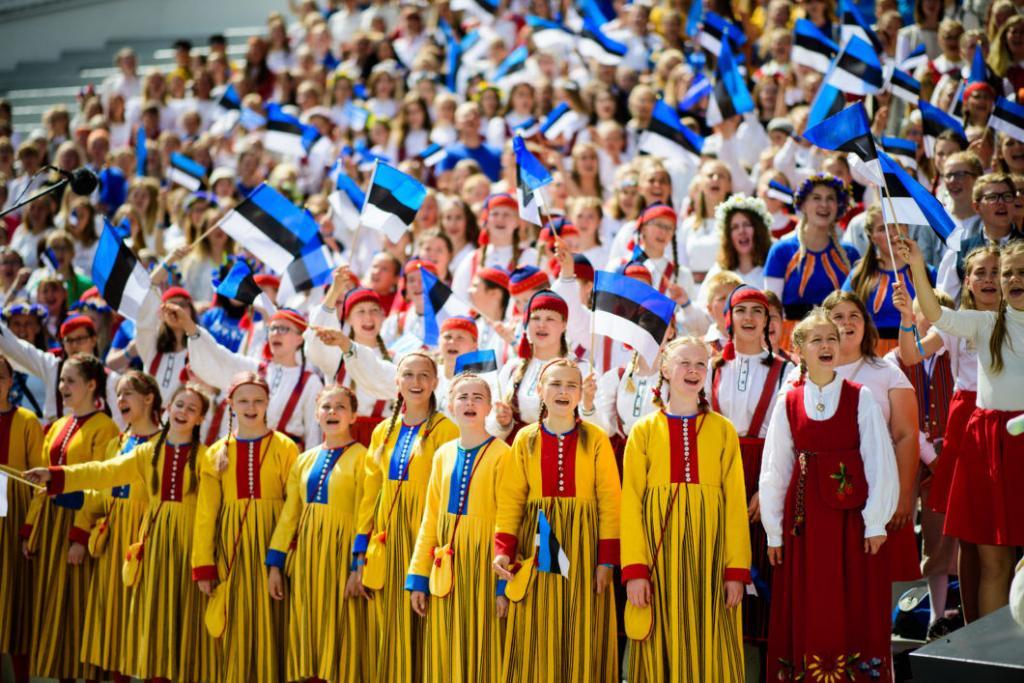
The Estonian Song Celebration every five years brings together a huge choir of up to 30,000 people for a weekend in July.

How do you get 30,000 people to sing together and hit the same note at the same time? It’s not easy. But if any group of people can do it, it’s the Estonians. They’ve had a lot of practice.

Writes Estonian World, “The Estonian Song Celebration is a unique event, which every five years brings together a huge choir of up to 30,000 people for a weekend in July. Approximately 100,000 spectators enjoy the concerts and sing along to the most popular songs.

“The first Song Celebration was initiated in 1869 by newspaper publisher Johann Voldemar Jannsen and celebrated freedom and the 50th anniversary of the end of Estonian serfdom at the hands of the Russian tsar in 1819. The first singing event was held in Tartu, with 878 male singers and brass musicians. All the songs were in Estonian and Estonians – mostly peasants and farmers at the time – discovered the value of their own language and cultural heritage through singing. …

“After the Second World War, during the Soviet occupation of Estonia, the song celebrations again helped keep the national identity alive. In the summer of 1988, several hundred thousand people gathered at the Tallinn Song Festival Grounds and sang for freedom for many days and nights. Dubbed ‘The Singing Revolution,’ it indirectly led to Estonia’s independence once again in 1991.

“The 27th Song Celebration [features] 1,020 choirs, which include over 35,000 singers. The youngest participant is Emma Kannik (5) from Musamari Koorikool (Tallinn) and the oldest is Aino (90) from the New York Estonian Choir.

“The smallest choir of 12 singers is Kauksi Primary School Choir and the largest is the European Estonian Choir, with 123 singers. The latter is not the only expat choir – 25 Estonian choirs from abroad and 17 foreign choirs are performing at the celebration.

“The emotional celebration kicked off with a traditional parade on 6 July, during which the performers walked along a five-kilometre route from the Tallinn city centre to the Song Festival Grounds, where 82,000 people later watched them perform old and new Estonian choral songs and other classical pieces. …

“Tickets sold out on Sunday as 95,000 people came to Tallinn’s Song Festival Grounds for the second day of the 150th anniversary of the Song Celebration, Minu Arm (My Love). … There were more singers, more choirs, more tickets sold, and there had been more dancers than ever before at dance festival earlier in the week. The festival organisers said there were 1,020 choirs, 35,000 singers, and 11,500 dancers. …

“[Song Celebration’s artistic director, Peeter Perens] noted his ideas for the song celebration had been built on the Finno-Ugric culture, which the Estonia language comes from, and the European culture which brought the singing festivals to Estonia more than 150 years ago. The programme was created three years ago and since then more than 300 rehearsals took place. …

“[Marju Lauristin, professor emeritus at the University of Tartu,] discussed her research that shows that 48% of the Estonian population has, at some time in their lives, taken part in the song celebration and is one of the remaining activities that is enjoyed by the whole of society.

“Discussing the history of the song celebration, she said, ‘Through 150 years these people have the same memories, coming together in winter, through snow, in times when there were no cars, no internet, walking 10-15 kilometres to school or place where they would gather and have a singing society, all over the country.’ …

“Lauristin added that the atmosphere of the song celebration had changed over the years from one of bitterness during the Soviet occupation, to one of joy today.

“[Composer Riho Esko Maimets said] that the experience of being at the celebration felt ‘very selfless, [like you are] existing as one little particle in a great mass of your nation.’  More here.

I’m impressed that so many people can sing together. I gave up on our town’s Christmas tree carol singing because the people on one side of the tree were always at a different place in the song than the people on the other side. And that leader was trying to keep together fewer than 100 people, not 30,000!

Read Full Post »

The Atlantic magazine says Estonia is the new Finland, meaning that it is doing a bang-up job with quality education for all. Educating the poor turns out to be a salient strength of the system.

Sarah Butrymowicz writes, “In 2012, Estonia’s 15-year-olds ranked 11th in math and reading and sixth in science out of the 65 countries that participated in an international test that compares educational systems from around the world (called the Programme for International Student Assessment, or PISA).

“In addition to beating out western nations such as France and Germany and essentially tying Finland in math and science, Estonia also had the smallest number of weak performers in all of Europe, about 10 percent in math and reading and 5 percent in science.”

In comparison, the United States hovers in the middle of the pack.

“While there is less income inequality in Estonia than in the United States—and, with 1.3 million people, the country is significantly smaller—the Baltic nation also has its share of cultural diversity.

“When it achieved independence from the Soviet Union 25 years ago, Estonian became the official language and the language of school instruction. Yet about a fifth of its students come from families that still speak Russian at home, and they have historically lagged behind their native speaking counterparts on tests such as PISA. …

“Marc Tucker, president of National Center on Education and the Economy in Washington, D.C., visited Estonia last year to find out what they’re doing right. He said that after the fall of the Iron Curtain other former Soviet satellites, such as Hungary and the Czech Republic, transitioned to a system preferentially suited to the needs of its elites. Estonia, however, kept giving equal opportunities to students of all backgrounds. …

“There are many factors that may contribute to Estonia’s success on PISA beyond their focus on equality. Education continues to be highly valued. Teacher autonomy is relatively high, which has been shown to be related to better test scores. Teachers stay with the same students in grades one to three – or sometimes even up to sixth grade – allowing deep relationships to develop.”

Maybe we could learn something from this small Baltic state. Read more here about why Estonian students are so successful on tests and whether they are happy with the system and why the country is trying to encourage more individuality and creativity without losing rigor.

Photo: Ints Kalnins / Reuters
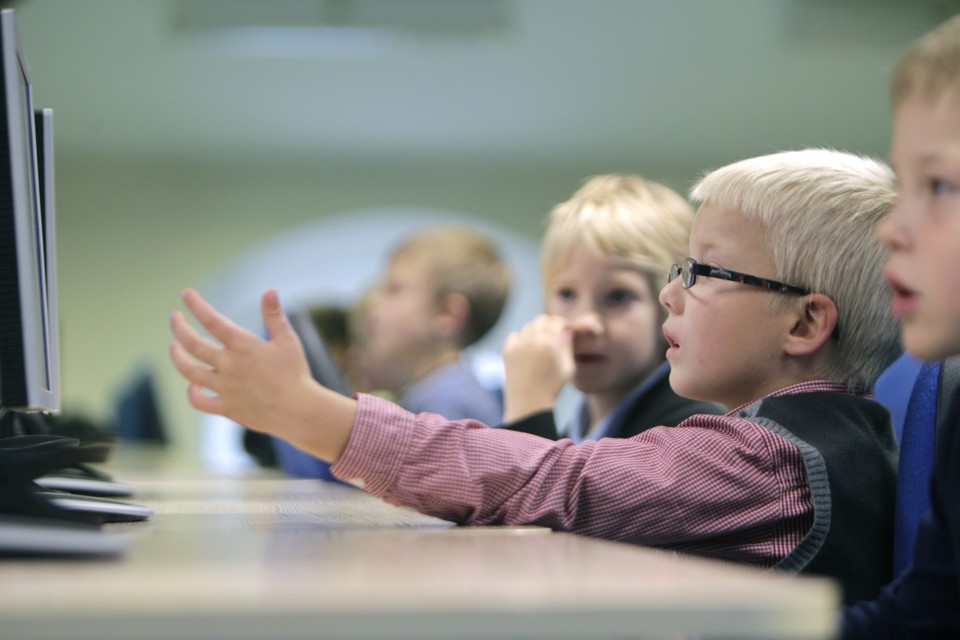
First graders take a computer class in Tallinn, Estonia.

Read Full Post »

As usual, John has a pretty good idea of the kind of story that really floats my boat. Mysterious green balls washing up on the beaches of Australia, Anyone?

The Science Alert website reports that on the weekend of September 20, “thousands of peculiar green balls appeared on Dee Why Beach near Sydney in Australia. About 6 centimetres in diameter, these squishy little spheres are living organisms – seaweed balls known as ‘marimo’.

” ‘They’re actually a really unusual growth form of seaweed, because seaweeds mostly grow on the rocks but occasionally they get knocked off and rolled around in the ocean forming these beautiful little balls,’ Alistair Poore from the University of New South Wales explained to 7News.’It’s quite an unusual phenomenon, it’s only been seen a handful of times around the world.’

“First discovered in the 1820s by Austrian botanist Anton Eleutherius Sauter, and named by Japanese botanist Tatsuhiko Kawakami in 1898 (‘marimo’ roughly means ‘bouncy play ball’ in Japanese), colonies of these little balls have only been seen off the coast of Iceland, Scotland, Japan, Estonia and now Australia.”

See videos at Science Alert, here.

More on the green balls at Wikipedia and at Smithsonian.

Read Full Post »