Feeds:
Posts
Comments

Posts Tagged ‘freedom’

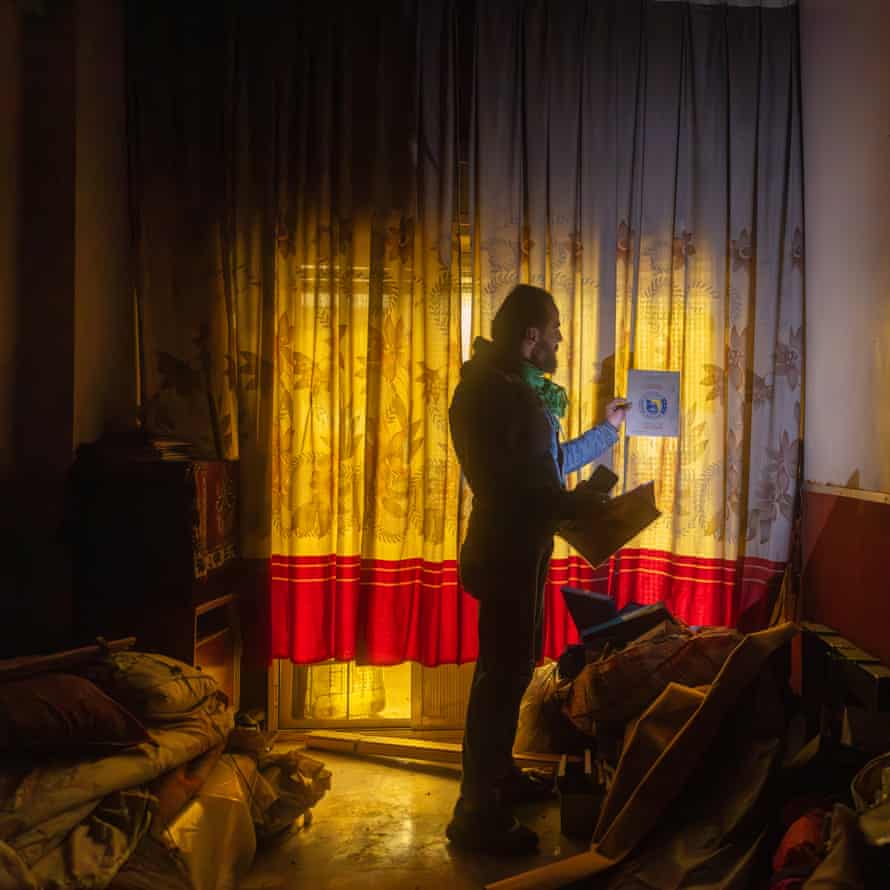
Photo: Taylor Luck.
“The Fardous Bookstore, once under restrictions imposed by the former Assad regime,” says Taylor Luck of the Christian Science Monitor, “now sells previously banned books to eager readers.”

Books are stronger than tyrants. We hold onto that thought. We know from both history and the belief of poets that the time of tyrants has an end. I think Shelley says it best.

“My name is Ozymandias, King of Kings;
“Look on my Works, ye Mighty, and despair!
“Nothing beside remains.”

If you don’t see the downfall of the pedestal in your own country at the moment, look toward Syria. Syrians have reason to believe that new tyrants won’t be replacing the hated Assad anytime soon.

After all, books are not being banned by the revolutionary government.

“Post-revolution Syria is becoming a page-turner’s paradise,” wrote Taylor Luck at the Christian Science Monitor recently.

“After years of being banned by the former regime, dozens of long sought-after books are flooding stores across Syria, literally spilling onto the streets. An epicenter of this new literary freedom is the so-called ‘bookshop alley’ in the Halbouni neighborhood of Damascus, a leafy street lined by two dozen bookshops and printers, big and small.

“It is here that Radwan Sharqawi runs the Fardous Bookstore, a small corner shop that his family has owned since 1920. The contrast between today’s Syria and the long period of Assad family rule is like night and day, he says.

“ ‘Before, we had daily interrogations by the security services,’ Mr. Sharqawi says. ‘Now everything is permitted, nothing is banned. Now is a golden era for books!’

For decades, any book written by an intellectual or an artist who had expressed opposition to the Assad regime – or who simply did not vocally toe the official line – was banned.

“So, too, were books that touched on Syrian history from any perspective other than the ruling Baath Party’s revisionist version. Titles on the history of the Israeli-Arab conflict, or anything on the 2011 Arab Spring uprisings, were contraband.

“Islamic thinkers such as Ibn Taymiyya, the influential medieval Sunni jurist and scholar, were banned. So, too, were books by Brotherhood-aligned clerics. … Even a book as basic as a tafsīr, an annotated Quran with explanations and context, was banned, for fear it might contradict the Assad government’s tightly controlled Islamic authorities.

“ ‘These are texts about religion and God, not politics,’ says Abdulkader al-Sarooji, owner of the Ibn Al Qayem bookshop, as a customer browses shelves of leather-bound Islamic books, their titles engraved in decorative golden calligraphy. …

“As soon as the regime fell, Mr. Sarooji began importing books from Turkey and northern Syria to Damascus. Syrians are rushing to snatch up banned titles. …

“ ‘There is demand for banned books because people feel there is a gap in their knowledge, even in their religious knowledge,’ says Mr. Sarooji.

“The most dangerous texts during the Assad era – and the books in highest demand now – are works of literary fiction, titles that draw on the real experiences of Syrians who spent time in jail and suffered abuse at the hands of the regime. The most fiercely banned book was Bayt Khalti, by Ahmed al-Amri, which details the horrors faced by women in the notorious Sednaya prison.

“Now Bayt Khalti is prominently displayed on bookshelves and vendors’ roadside stands across Damascus – in both legitimate editions and blurry knockoffs that feed the high demand.

“ ‘This book was the most dangerous one,’ street-side book vendor Hussein Mohammed says as he waves a copy of Bayt Khalti. ‘If they caught you with this, you were a goner.’

“Another popular banned text, Al Qoqaa, or The Cochlea, details a Christian Syrian’s time in Mr. Assad’s prisons.

“Eyad, a young Damascene, purchased a book of fiction from Mr. Mohammed after spending an hour browsing in the bookshop alley. ‘There are a lot of books that I have wanted to read for years,’ he says.”

More at the Monitor, here.

Read Full Post »

Photo: Ghiath AlHaddad Ayoub/The World.
Comedy is having a moment in Syria as a new wave of artists tests the limits of expression under a new government.

Syria suffered many years of extreme oppression, so the recent overthrow of the Assad government brought hope for change. That doesn’t mean everything is fine, as recent fighting with the Druze ethnic group has shown. Still, it’s time to celebrate any encouraging baby steps.

Shirin Jaafari reports at PRI‘s The World about something that hasn’t been heard in Syria for a long time.

“As the sun set over central Damascus, laughter spilled out from the Karma Café. Inside, a young crowd gathered — some in headscarves, others without. But all were ready to experience stand-up comedy in a free Syria.

“Comedy is having a moment in the country.

“With the fall of the Assad regime, a new wave of artists is testing the limits of expression. Among them is Styria, a stand-up troupe whose name fuses Syria with hysteria, a nod to the absurdity and pain of living under dictatorship. …

“Sharif Homsi, founder of the group, [started] writing comedy long before it was safe. Living under a regime that silenced dissent, he described the past as a kind of suspended state: ‘You’re not allowed to die, but you’re not allowed to live.’

“In 2016, he left for Dubai, trained with Arab comedians, and later returned to his homeland to form Styria. Even then, performing comedy felt dangerous.

“ ‘One wrong word and someone could report you,’ Homsi recalled. ‘You could disappear in a blink.’

“So, the group played it smart, he said, avoiding politics, tiptoeing around religion and carefully crafting jokes about sex and social taboos. But now, with the old red lines shifting, they’re pushing the envelope further.

“At the cafe in Damascus, Homsi took the mic, greeting the audience with humor and ease. His jokes, often about his own frugality or his dad’s job as a dog walker, sparked laughter and a sense of connection. But he didn’t shy away from sharper edges, even referencing the extremist past of Syria’s new leader, Ahmad al-Sharaa. …

“Fellow comedian Ammar Daba, who returned after the regime fell, said the challenge now is not just legal limits, but social ones.

“ ‘It’s exciting and confusing. I don’t know where the lines are,’ he said. 

But Daba thinks comedians have a role to play in this new environment.

“ ‘It is our time, as stand-up comedians, to be the pioneers,’ he said, ‘to tell people that “yeah, you can talk about that! You can talk about that outside of your private rooms and homes. You can say whatever you want even on the streets.” ‘

“The night’s only woman performer, Mary Obaid (aka Meme), steered away from politics, instead poking fun at her own life and body image.

“ ‘Every problem, when spoken out loud, becomes smaller,’ Obaid said. ‘Comedy helps us do that.’

“After the show, a man who only gave his first name, Ibrahim, reflected on the performance.

“ ‘This is what we need here. We need to communicate our fears, our taboos, in a healthy way,’ he said. ‘And this is the best way to discuss those really difficult issues.’

“The crowd spilled into the Damascus night, still laughing and exchanging numbers.

“For Sharif Homsi, the founder of Styria, this is the power of comedy. It can create moments of relief and respite, and it can start conversations that otherwise would not take place.

“ ‘Fifty, sixty people to a hundred sharing a room, laughing about similar things. … If they can laugh together, they can live together.’

“Syrians have been divided for so long, he added. ‘It’s time for that to end.’ ”

More at The World, here.

Read Full Post »

Photo: Alexandra Corcode.
Mohamad searching for memories in a suitcase in Damascus. Their apartment was a stage — until the Assad government arrested them.

In today’s post, we learn more about how people living under repressive regimes keep culture and freedom going.

Andrei Popoviciu writes at the Guardian, “Thick layers of dust shimmer in sunlight as Mohamad and Ahmad Malas sift through old belongings in their Damascus apartment, abandoned for 14 years. …

“On one of the walls portraits of their father and one of their brothers, who have died, hang frozen in time. There’s no electricity so they use their phone torches to light their way as they collect personal artifacts they long forgot about.

“ ‘Looking around brings back so many memories,’ Mohamad says. ‘It’s painful.’

“For the 41-year-old brothers, returning to their flat is bittersweet. Their apartment was more than just a home. It was once a stage, a space where they performed original theatre plays away from the watchful eye of the Bashar al-Assad regime, which tightly controlled and censored artistic expression. In the two years before they left Syria, they performed more than 200 plays in their home.

“But their lives changed in 2011 when they were arrested for participating in the popular movement that started on the heels of the Arab spring and sought to remove Assad from power. Ahmad was wanted by the political police for sharing a revolutionary magazine with a friend, so the day security forces came knocking he fled immediately. Mohamad stayed behind to gather a few belongings before they escaped to Lebanon.

“Life there was uncertain, with Syrians facing the constant threat of deportation. Egypt offered brief stability, despite them feeling they could not continue their work as actors. Europe was where they felt they could freely perform with no censorship or threat. In 2013, they arrived in France as asylum seekers and speaking no French.

“Their first year in France was a struggle, spent moving from city to city, unable to work and battling to learn the language. Eventually, they were granted asylum and settled in Reims, in the country’s north-east. There, they rebuilt their acting careers, landing roles in theatre plays, films, and television.

“As they found their footing, they wrote and performed a play, The Two Refugees, chronicling the experience of refugees in France and inspired by their story. The production was a success and gained international recognition, taking them from Iraq to Japan and Jordan, often with the support of French cultural institutions.

“ ‘France gave us security and a chance to continue our art in a free world,’ said Ahmad. …

“They never imagined they would return to Syria. But as rebel forces were taking city by city, advancing toward Damascus in late 2024, they closely followed events from afar. Mohamad was at a film festival in Jordan; Ahmad was in France.

“On the morning of 8 December, Mohamad sent Ahmad a video. It showed people celebrating in a Damascus square, waving the revolution’s green flag and singing slogans against Assad. Ahmad could hardly believe his eyes. A deep longing stirred within them both. Soon after, Mohamad traveled from Jordan, and Ahmad followed from France.

“ ‘It felt like a dream come true,’ said Mohamad of the moment they entered Syria. ‘We felt like we could fly, it was surreal to walk through the streets and not see Assad’s photos everywhere.’ …

“The brothers knew they had to bring their play home, so they started performing it across the country, from Aleppo in the north to the coastal city of Tartus. They were unsure how an audience that had never left would react to a story of exile.

“ ‘Everyone understood it,’ Mohamad said. ‘I get it now – because even though they never left, they felt trapped in their own country.’ “

More at the Guardian, here. No paywall. Nice pictures.

Read Full Post »

Photo via WDBJ7.
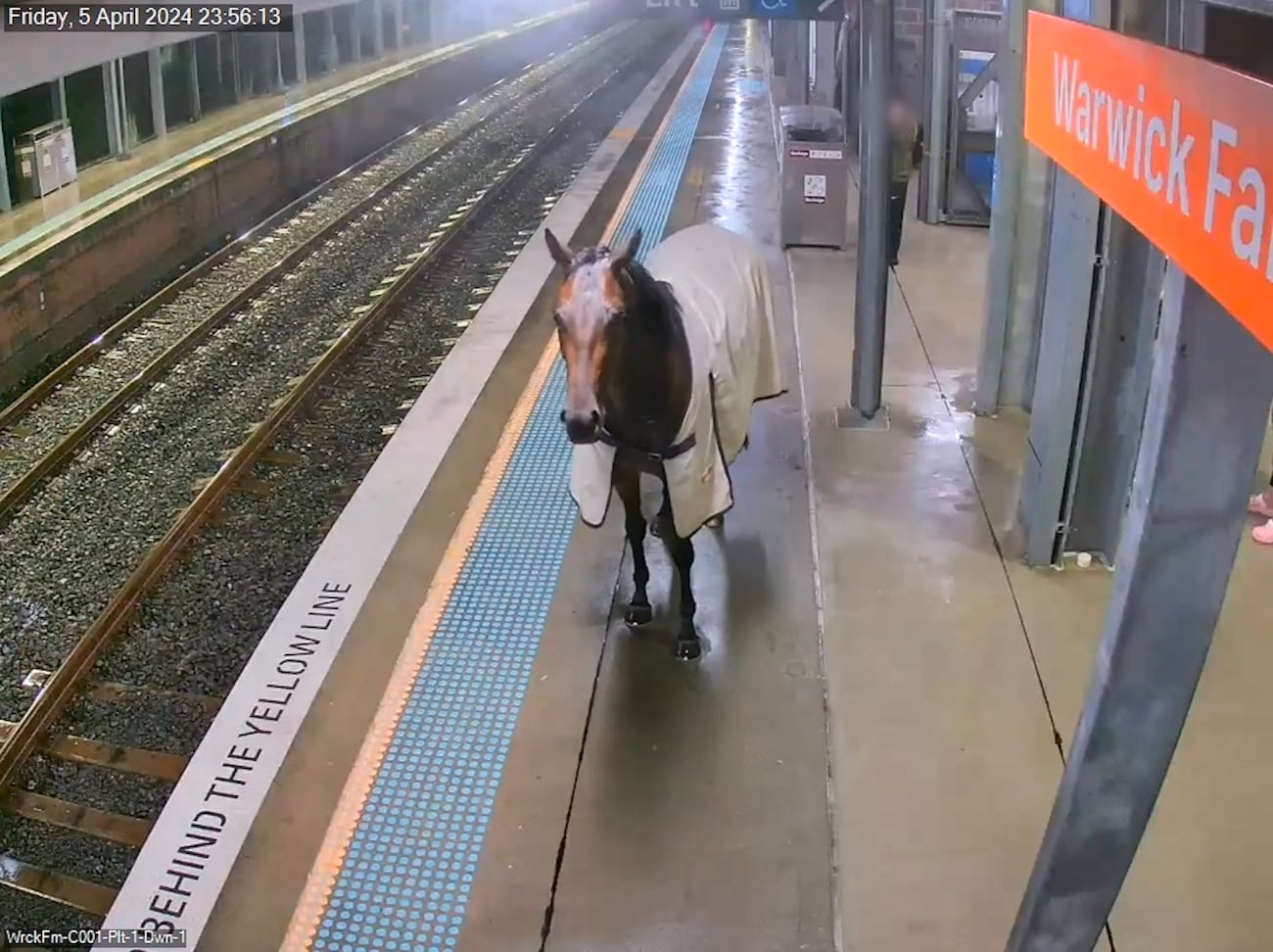
An escaped horse in Australia.

During the years that I took the commuter train to work, I saw some unusual things, but nothing as unusual as this.

Annabelle Timsit writes at the Washington Post about a thoroughbred horse in Australia who tasted a moment of freedom in an environment that to other travelers feels like anything but freedom.

“This commuter was one of the worst kinds,” writes Timsit. “Didn’t pay a fare, took up space on the platform, and caused a ruckus that slowed down trains and called security agents to the station. This particular commuter was also a horse.

“The equine traveler was captured by CCTV cameras wandering into Warwick Farm Station west of Sydney just before midnight on Friday, trotting up and down the platform, prompting other (human) commuters to jump out of its path. …

“ ‘Didn’t realize I needed to say but — horses aren’t allowed on our trains, sorry folks,’ tweeted Chris Minns, premier of Australia’s New South Wales state. …

“Footage shows that after horsing around for a while, it had a choice to make as the train pulled into the station: In or out? Yea or neigh? After staring at the train for a few seconds, the horse turned around and trotted back down the platform … or, as Transport for NSW put it: ‘The horse had planned its journey but got colt feet and decided to hoof it.’

“Security agents from Sydney Trains were alerted, ‘and trains in the vicinity were warned to run at reduced speeds,’ Transport for NSW said. …

“It later emerged that the horse had escaped from the stables of Annabel Neasham Racing, close to Warwick Farm Station, the Sydney Morning Herald reported.

“It’s not clear how it escaped, but Steve Railton, chief steward of Racing NSW, cited Annabel Neasham, a trainer and the owner of the racecourse, as saying that ‘an unknown person released three racehorses and a stable pony from one of her stables on Friday night.’

“ ‘One of the racehorses left the vicinity of the stable complex, while the others were captured,’ said Railton, according to the Herald. …

“ ‘I can confirm the horse has returned home, safe and sound,’ Minns said.

“Though it is not an everyday occurrence, ‘from time to time, we do find animals on tracks, particularly cows,’ said Sydney Trains chief executive Matt Longland, according to the Herald. … Longland said the horse may have gravitated toward the station because of its bright lighting. …

“ ‘Thankfully, we were able to warn our train drivers to look out for animals on the tracks,’ he said. ‘We were able to catch the horse not long after that.’

“Transport for NSW confirmed that the horse ‘was safely reined in and is in a “stable” condition.’ ”

Ouch! People really cannot resist terrible puns whenever there’s a quirky animal story to wrap puns around.

More at the Post, here.

Video: CityNews.
What do you suppose this taste of freedom felt like to the horse? Did it feel good? Scary?
Note the reaction to the train pulling in.

Read Full Post »

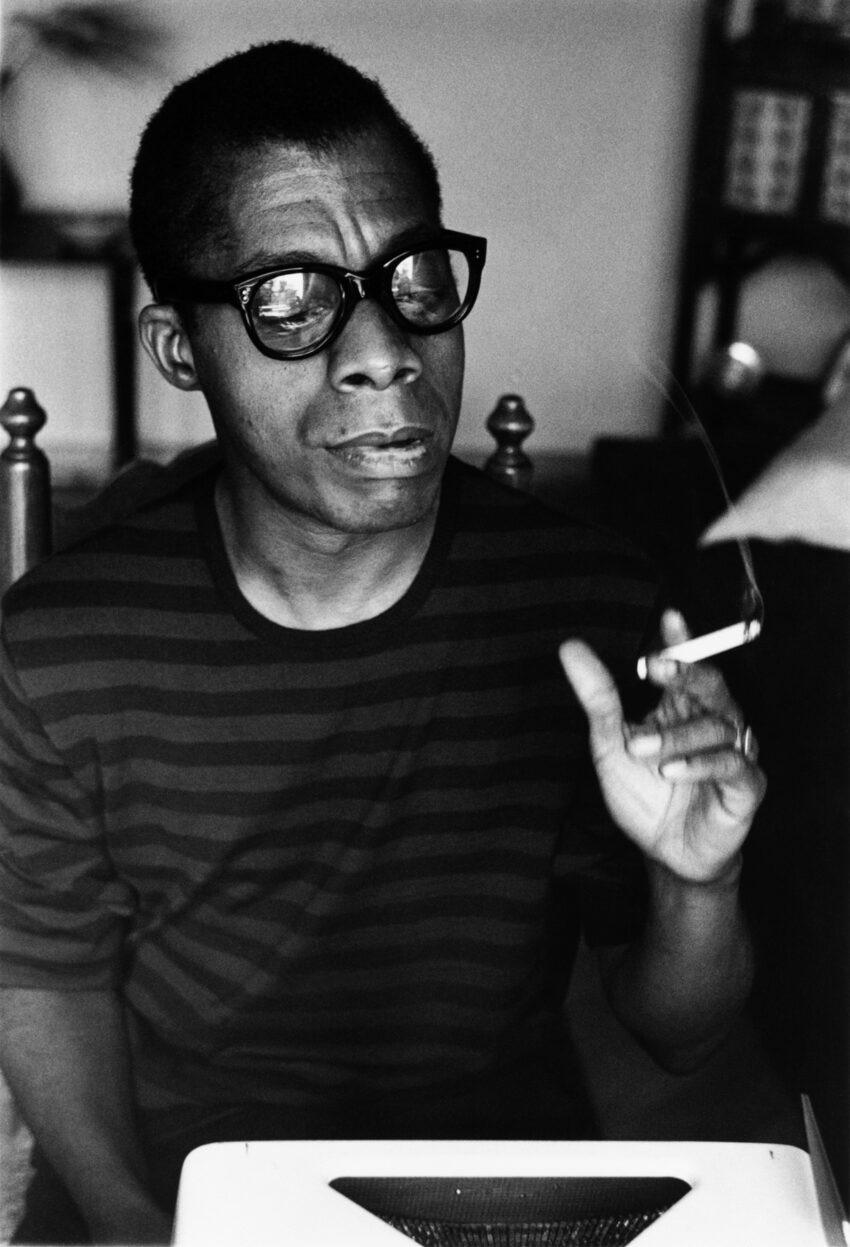
Photo: Sedat Pakay, Hudson Film Works II.
James Baldwin in Istanbul in 1966.

James Baldwin didn’t kid himself about life in America for a gay Black man in the 1960s. He traveled widely and lived for long stretches in countries he found more hospitable. (A 2016 post, here, addresses an effort to preserve a house he bought on the Côte d’Azur.)

I knew about France but not Turkey, which Azareen Van der Vliet Oloomi writes about in the Yale Review.

At the beginning of the “11-minute black and white documentary, James Baldwin: From Another Place, directed by Sedat Pakay and filmed in Istanbul in May 1970, … he turns his back to the cam­era and opens the curtains. A sharp Mediterranean light floods in. Baldwin scratches the small of his back, and we hear him say in voiceover: ‘I suppose that many people do blame me for being out of the States as often as I am, but one can’t afford to worry about that because one does, you know, you do what you have to do the way you have to do it. And as someone who is outside of the States you realize that it’s impossible to get out, the American powers are everywhere.’

“The camera pans over the glittering Bosphorus Strait as American ships glide silently through the passage connecting Asia and Europe.

“Pakay’s film has long been almost impossible to see in the United States, aside from a short clip on YouTube. But in February, it began streaming on the Criterion Channel, and its reappearance is a useful occasion to re-examine one of the most important, and yet relatively unknown, aspects of Baldwin’s career: his time in Turkey.

“At the time Pakay made his film, Baldwin had been living in Istanbul intermittently for almost a decade. He first arrived there in 1961, broke, emotionally spent, and struggling to complete his third novel, Another Country. The Turkish actor Engin Cezzar, who had met Baldwin in New York in 1957 when he was cast as Giovanni in the Actors Studio adaptation of Giovanni’s Room (Baldwin’s sec­ond novel), had given him an open invitation to visit, and follow­ing a demoralizing trip to Israel, Baldwin showed up on Cezzar’s doorstep.

“He quickly made himself at home, and over the next ten years lived irregularly in Istanbul, Erdek, and Bodrum, socializing with the Turkish intelligentsia and a small circle of Black artists and activists who were living in Turkey or passing through.

“Istanbul offered Baldwin a refuge during the tumultuous decade of the 1960s. In a 1970 conversation with Ida Lewis for Essence mag­azine, Baldwin said of his decision to move to the city, ‘It was very useful for me to go to a place like Istanbul at that point in my life, because it was so far out of the way from what I called home and the pressures.’ …

“Baldwin had first left the United States, for Paris, in 1948, and had lived out of the United States for years prior to his arrival in Istanbul. But the clarity and safety afforded by his time there allowed him to more sharply articulate America’s assaultive realities and to give expression to the connections between his personal wounds and the scars of racialized political history. …

“[His] layered inner landscape mir­ror the city’s multifaceted character, with its refusal of neat distinc­tions between tradition and modernity, East and West, Christianity and Islam.

“Istanbul was a liminal space of healing for Baldwin, a writing haven that he saw as having saved his life. As [Magdalena Zaborowska, author of James Baldwin’s Turkish Decade] notes, this may explain why the Baldwin we see in Pakay’s documentary is far more relaxed and at ease than the Baldwin we are accustomed to seeing in American media from that era.

“And yet, Baldwin’s decade in Turkey remains an enigma and a lacuna in our collective imagi­nation. Zaborowska’s is the only book-length treatment of Baldwin’s time there, and even people familiar with Baldwin’s writing are often unaware he ever lived in Istanbul. … What does the warm, vul­nerable, and playful Baldwin captured on film by Pakay tell us about his need to leave America time and again in search of safety?

“The respite Turkey offered Baldwin, combined with Istanbul’s vibrancy and the warmth with which he was received, sparked one of the most prolific periods of his artistic life. In 1961, when he first arrived, he was haggard and exhausted. 

“His trip to Israel had deep­ened his disillusionment with Christianity, and he was still mourn­ing Eugene Worth, a Black socialist and dear friend, who, in 1946, had killed himself by jumping off the George Washington Bridge. In addition, Baldwin had been trying without success to complete Another Country, his courageous and groundbreaking exploration of bisexuality and interracial love.

“Worth’s death, which Baldwin memorializes in Another Country, had devastated Baldwin for years, and he had tried and failed again and again to finish the novel until he was delivered from the strain of severe writer’s block in Istanbul. Baldwin wrote the book’s final sentence while at a party at Cezzar’s house in what he described as ‘the city which the people from heaven had made their home.’ …

“The years Baldwin spent off and on in Turkey coincided with one of the country’s most vibrant and expansive periods. The 1950s in Turkey had been a period of economic decline, ruthless author­itarianism, and iron-fisted censorship, a confluence of negative forces that gave rise to mass mobilization and to student-led pop­ular protests. …

“By 1965, free elections had been restored, and liberal constitutional reform had significantly expanded freedom of speech. The nation’s position as a strategic U.S. ally had been salvaged, but its cultural flowering continued, along with anti-imperialist and anti-capitalist move­ments similar to those that were emerging elsewhere around the world. Baldwin’s work and lived experience spoke directly to the political and aesthetic debates of the time. In Turkey, in a context of cultural ferment, Baldwin was revered as a major American and transnational writer, rather than being put in a position of having to prove his legitimacy over and over.

“Still, even in Turkey, Baldwin could not fully escape America. During the Cold War, relations between the United States and Turkey were founded on military collaboration and cooperation; the United States sent ships to Turkish waters to counter the threat of Soviet expansion, making Turkey a source of anti-Soviet mil­itary aid. As Baldwin said to Sedat Pakay, ‘American powers are everywhere.’ His feelings fluctuated between entrapment, the sense that no matter how far he traveled from the violence in the United States he could not, existentially speaking, ‘get out,’ and the feelings of transcendence and revival that Cezzar’s warm hos­pitality and Turkey itself afforded him.”

More at the Yale Review, here. No firewall.

Read Full Post »

song-celebration-sven-zacek-ii-1024x683

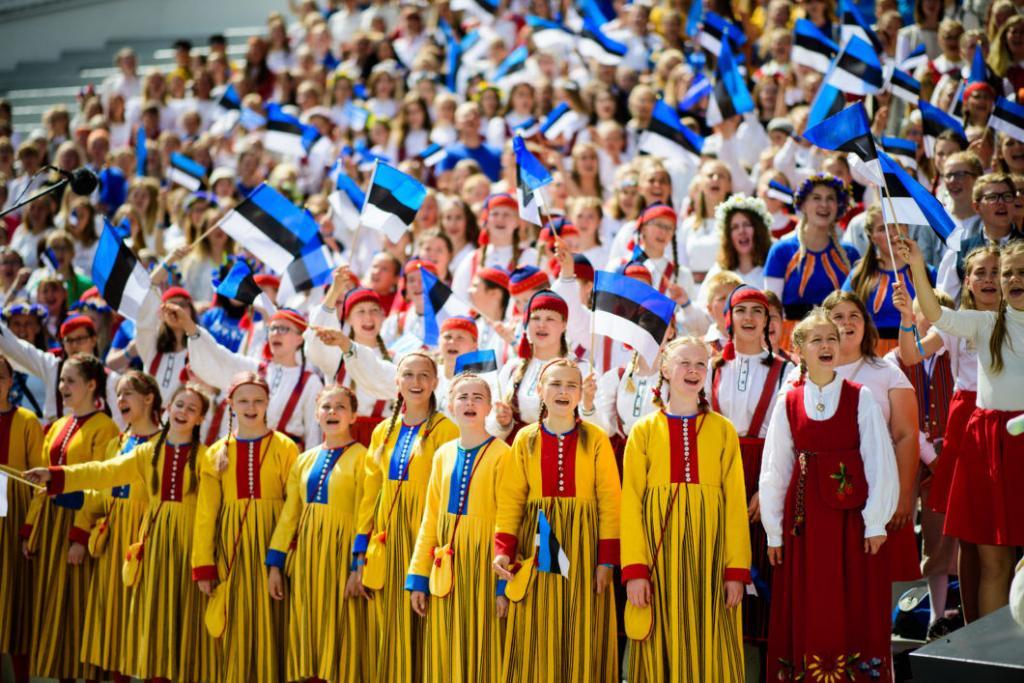
Photo: estonianworld.com
The Estonian Song Celebration every five years brings together a huge choir of up to 30,000 people for a weekend in July.

How do you get 30,000 people to sing together and hit the same note at the same time? It’s not easy. But if any group of people can do it, it’s the Estonians. They’ve had a lot of practice.

Writes Estonian World, “The Estonian Song Celebration is a unique event, which every five years brings together a huge choir of up to 30,000 people for a weekend in July. Approximately 100,000 spectators enjoy the concerts and sing along to the most popular songs.

“The first Song Celebration was initiated in 1869 by newspaper publisher Johann Voldemar Jannsen and celebrated freedom and the 50th anniversary of the end of Estonian serfdom at the hands of the Russian tsar in 1819. The first singing event was held in Tartu, with 878 male singers and brass musicians. All the songs were in Estonian and Estonians – mostly peasants and farmers at the time – discovered the value of their own language and cultural heritage through singing. …

“After the Second World War, during the Soviet occupation of Estonia, the song celebrations again helped keep the national identity alive. In the summer of 1988, several hundred thousand people gathered at the Tallinn Song Festival Grounds and sang for freedom for many days and nights. Dubbed ‘The Singing Revolution,’ it indirectly led to Estonia’s independence once again in 1991.

“The 27th Song Celebration [features] 1,020 choirs, which include over 35,000 singers. The youngest participant is Emma Kannik (5) from Musamari Koorikool (Tallinn) and the oldest is Aino (90) from the New York Estonian Choir.

“The smallest choir of 12 singers is Kauksi Primary School Choir and the largest is the European Estonian Choir, with 123 singers. The latter is not the only expat choir – 25 Estonian choirs from abroad and 17 foreign choirs are performing at the celebration.

“The emotional celebration kicked off with a traditional parade on 6 July, during which the performers walked along a five-kilometre route from the Tallinn city centre to the Song Festival Grounds, where 82,000 people later watched them perform old and new Estonian choral songs and other classical pieces. …

“Tickets sold out on Sunday as 95,000 people came to Tallinn’s Song Festival Grounds for the second day of the 150th anniversary of the Song Celebration, Minu Arm (My Love). … There were more singers, more choirs, more tickets sold, and there had been more dancers than ever before at dance festival earlier in the week. The festival organisers said there were 1,020 choirs, 35,000 singers, and 11,500 dancers. …

“[Song Celebration’s artistic director, Peeter Perens] noted his ideas for the song celebration had been built on the Finno-Ugric culture, which the Estonia language comes from, and the European culture which brought the singing festivals to Estonia more than 150 years ago. The programme was created three years ago and since then more than 300 rehearsals took place. …

“[Marju Lauristin, professor emeritus at the University of Tartu,] discussed her research that shows that 48% of the Estonian population has, at some time in their lives, taken part in the song celebration and is one of the remaining activities that is enjoyed by the whole of society.

“Discussing the history of the song celebration, she said, ‘Through 150 years these people have the same memories, coming together in winter, through snow, in times when there were no cars, no internet, walking 10-15 kilometres to school or place where they would gather and have a singing society, all over the country.’ …

“Lauristin added that the atmosphere of the song celebration had changed over the years from one of bitterness during the Soviet occupation, to one of joy today.

“[Composer Riho Esko Maimets said] that the experience of being at the celebration felt ‘very selfless, [like you are] existing as one little particle in a great mass of your nation.’  More here.

I’m impressed that so many people can sing together. I gave up on our town’s Christmas tree carol singing because the people on one side of the tree were always at a different place in the song than the people on the other side. And that leader was trying to keep together fewer than 100 people, not 30,000!

Read Full Post »

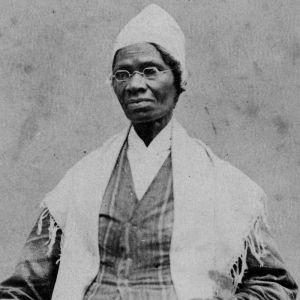
Today let’s hear from Sojourner Truth (1797-1883), who gave this speech extemporaneously at the 1851 Women’s Convention in Akron, Ohio. She begins by addressing two parallel causes: the fight for freedom of “the negroes of the South and the women at the North.” Then she goes on to say that as a black woman, women’s rights are her cause, too.

“That man over there says that women need to be helped into carriages, and lifted over ditches, and to have the best place everywhere. Nobody ever helps me into carriages, or over mud-puddles, or gives me any best place! And ain’t I a woman? Look at me! Look at my arm! I have ploughed and planted, and gathered into barns, and no man could head me! And ain’t I a woman? I could work as much and eat as much as a man — when I could get it — and bear the lash as well! And ain’t I a woman? I have borne thirteen children, and seen most all sold off to slavery, and when I cried out with my mother’s grief, none but Jesus heard me! And ain’t I a woman? …

“Then that little man in black there, he says women can’t have as much rights as men, ’cause Christ wasn’t a woman! Where did your Christ come from? Where did your Christ come from? From God and a woman! Man had nothing to do with Him.

“If the first woman God ever made was strong enough to turn the world upside down all alone, these women together ought to be able to turn it back , and get it right side up again! And now they is asking to do it, the men better let them.

“Obliged to you for hearing me, and now old Sojourner ain’t got nothing more to say.” Except she’s still saying it: that the rights of one group are inseparable from the rights of all.

More here.

Photo: Biography.com

mtm1otk1mzmyodiynji2mjc0


Read Full Post »

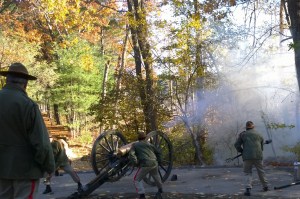
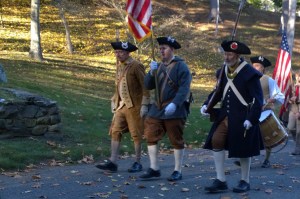
Kristina and I set out for a walk yesterday morning, taking a leaf-covered bike trail and then an offshoot that goes through the cemetery. A loud boom when we were yet a great way off failed to alert me to what might be going on in the cemetery on Veterans Day. But as we got closer we could see cannon, and then it dawned us that we had stumbled onto Concord’s annual flag-retirement ceremony.

After getting a bit of history from costumed representatives of the Concord Independent Battery, we walked over to where retired flags were being burned. Kristina’s church choir led the assembled veterans and supporters in “God Bless America.” The song seemed to take on added weight this Veterans Day, as many of us held in our hearts an America built on the Bill of Rights and the wish to see justice for all.

May our military continue to be asked to defend the bedrock of the American experiment as they always have.

111116-veterans-day-parade-concord

111116-concord-indepedent-battery-canon


Read Full Post »

Art: Maurice Sendak
From
Kenny’s Window, Sendak’s first children’s book

Maria Popova recently posted about the importance of play, commencing her review of Diane Ackerman’s book Deep Play with an anecdote from her own life.

“One July morning during a research trip to the small New England island of Nantucket, home to pioneering astronomer Maria Mitchell, I had a most unusual experience.

“Midway through my daily swim in the ocean, my peripheral vision was drawn to what at first appeared to be a snorkel. But as I looked directly at the curious protrusion, I realized it was the long glistening neck of a stately bird, gliding over the nearly waveless surface a few away.

“By some irresistible instinct, I began swimming gently toward the bird, assuming it would fly away whenever my proximity became too uncomfortable.

“But it didn’t. Instead, it allowed my approach — for it was deliberate permission that this majestic bird gave me, first assessing me with a calm but cautious eye, then choosing not to lift off or even change course as this large ungraceful mammal drew near. I came so close that I could see my own reflection in the bird’s eye, now regarding me with what I took to be — or, perhaps, projected to be — a silent benevolence. …

“In this small act ablaze with absolute presence, I felt I had been granted access to something enormous and eternal.

“The experience was so intensely invigorating in part because it was wholly new to me, but it is far from uncommon. It belongs to the spectrum of experience which Diane Ackerman, one of the greatest science storytellers of our time, describes in Deep Play … a bewitching inquiry into those moods colored by ‘a combination of clarity, wild enthusiasm, saturation in the moment, and wonder,’ which render us in a state of ‘waking trance.’ …

The more an animal needs to learn in order to survive, the more it needs to play … What we call intelligence … may not be life’s pinnacle at all, but simply one mode of knowing, one we happen to master and cherish. Play is widespread among animals because it invites problem-solving, allowing a creature to test its limits and develop strategies. In a dangerous world, where dramas change daily, survival belongs to the agile not the idle. We may think of play as optional, a casual activity. But play is fundamental to evolution. Without play, humans and many other animals would perish. …

“It is hardly happenstance,” adds Popova, “that the word ‘play’ was central to how Einstein thought of the secret to his genius — he used the term ‘combinatory play’ to describe how his mind works. Ackerman considers what it is that makes play so psychologically fruitful and alluring to us …

Above all, play requires freedom. One chooses to play. Play’s rules may be enforced, but play is not like life’s other dramas. It happens outside ordinary life, and it requires freedom.

More.

Read Full Post »

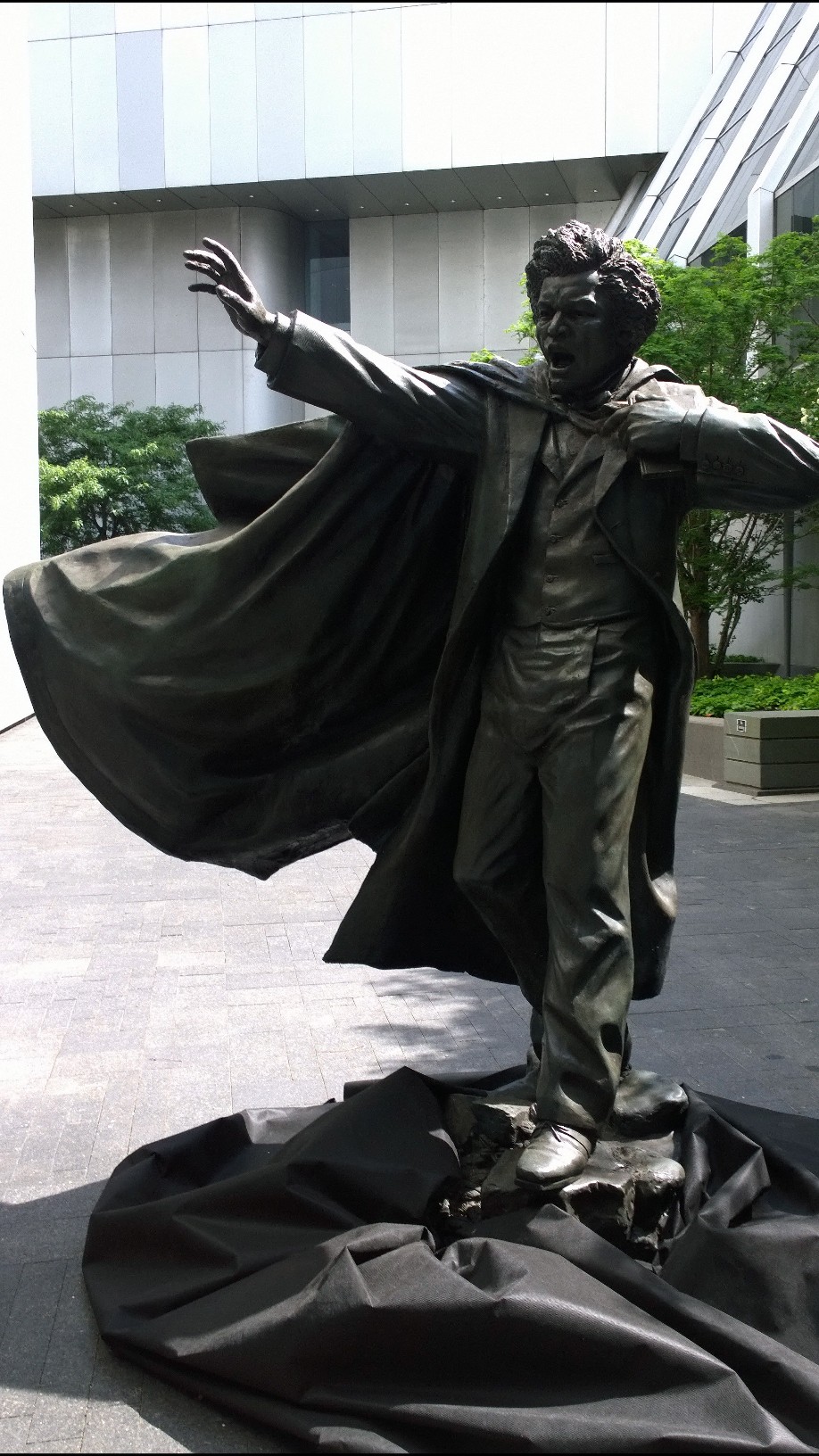
Irish-statue-Frederick-Douglass

I probably wouldn’t have known that Frederick Douglass spent time in Ireland if I hadn’t read the Colum McCann novel TransAtlantic. McCann likes to take historical events of different time periods and imagine the parts we can’t really know. In TransAtlantic, he wove together a historic 1919 flight from Canada to Ireland, the Douglass lecture tour of Ireland and his horrified witness to the famine there, a servant girl’s emigration to the United States and her role in the Civil War, and the rather thrilling negotiations to bring resolution to the Troubles between Protestants in Northern Ireland and Catholics.

According to an initiative called the Douglass/O’Connell Project, “Douglass was greeted in Dublin, Belfast, and Cork by enthusiastic crowds and formed many friendships on his trip, most significantly with Daniel O’Connell, a figure still revered in Ireland today for his role in Catholic emancipation and his fierce opposition to slavery. O’Connell and Douglass shared the stage just once, in September 1845 at a rally in Dublin, but retained a mutual respect and affection until O’Connell’s death less than two years later — and Douglass acknowledged O’Connell’s influence on his philosophy and worldview for the rest of his life.

“The Frederick Douglass/Daniel O’Connell Project is a living legacy to the leadership of these two men and the causes they championed by strengthening the bonds of friendship between Ireland and the United States, encouraging greater understanding between the diasporas of Africa and Ireland in America, and fighting injustice and human rights abuses throughout the world.”

Which brings me to how I happened to be able to take a photo of the Irish statue of Douglass today. The Center for Race Amity in Boston is partnering with the Douglass/O’Connell Project on a celebration this weekend, before the statue goes on tour. Isn’t it magnificent? Andrew Edwards is the sculptor.

There will be a preview of the public television film Douglass and O’Connell Saturday at the Museum of African American History at 7 pm, followed by a lecture by Don Mullen, the author of Bloody Sunday. On Sunday there will be festivities in the Greenway from 1 pm to 5 pm.

Read Full Post »

Siblings

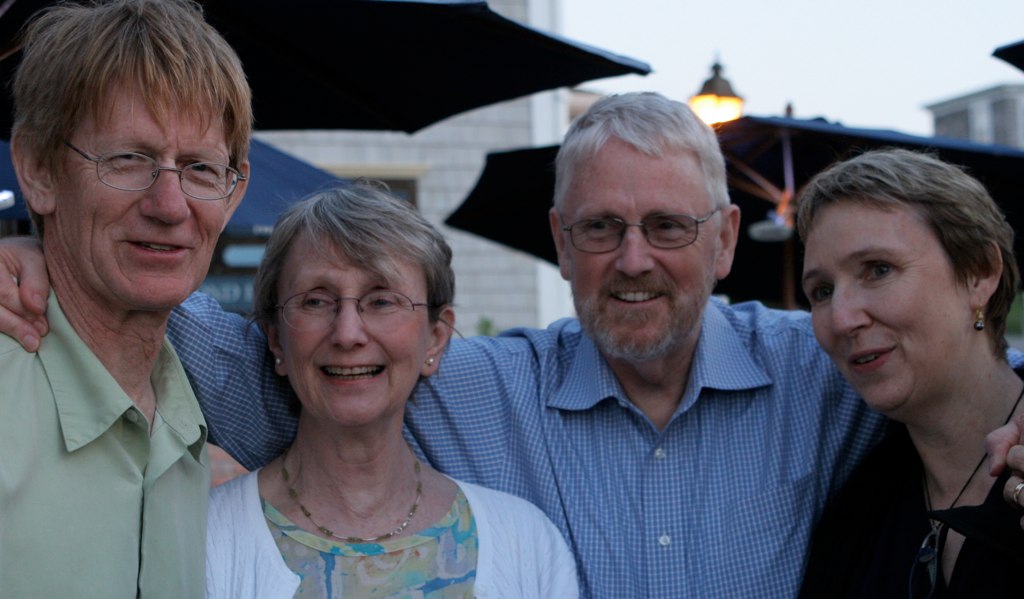
When Suzanne and Erik got married, it was a great occasion for photographs of family members who are seldom all in the same place at the same time. My sisters-in-law are especially good at seizing these opportunities, and Lisa made sure I lined up with my siblings at the rehearsal dinner. Here we are.

The brother on the left is usually found in Wisconsin, where he does research on retention of organ transplants. I’m the short one. The next brother lives in California and writes business books. My sister is an MD in New York City. I can’t remember when was the previous time we were all together.

I used to tell stories about one Sammy Seal to the boys. (They were older than my sister. She got other stories.) For reasons that have become clearer over the years, the stories were mostly about Sammy escaping from his pen at night and having adventures and then coming home. Recently, I saw a cute video that reminded me of those stories. I call this short clip “Freedom? Freedom!”


Read Full Post »