Feeds:
Posts
Comments

Posts Tagged ‘hotel’

Photo: Girl Scout Troop 6000.
Girl Scouts of Greater New York’s Troop 6000 is a first-of-its-kind program designed to serve families living in temporary housing in the New York City shelter system.

Kindness and compassion are not dead. You just need to know where to find them.

Consider New York’s Girl Scout Troop 6000, which reaches out to migrant children.

Sara Herschander reports for the Chronicle of Philanthropy, “Once a week in a midtown Manhattan hotel, dozens of Girl Scouts gather in a spare room made homey by string lights and children’s drawings. They earn badges, go on field trips to the Statue of Liberty, and learn how to navigate the subway in a city most have just begun to call home.

“They are the newest members of New York City’s largest Girl Scout troop. And they live in an emergency shelter where 170,000 asylum seekers and migrants, including tens of thousands of children, have arrived from the southern border since the spring of 2022.

“As government officials debate how to handle the influx of new arrivals, the Girl Scouts — whose Troop 6000 has served kids who live in the shelter system since 2017 — are quietly welcoming hundreds of the city’s youngest new residents with the support of donations. Most of the girls have fled dire conditions in South and Central America and endured an arduous journey to the U.S.

“Not everybody is happy about the evolution of Troop 6000. With anti-immigrant rhetoric on the rise and a contentious election ahead, some donors see the Girl Scouts as wading too readily into politically controversial waters. That hasn’t fazed the group — or their small army of philanthropic supporters. Amid city budget cuts and a growing need for services, they are among dozens of charities that say their support for all New Yorkers, including newcomers, is more important than ever.

“ ‘If it has to do with young girls in New York City, then it’s not political,’ said Meridith Maskara, CEO of the Girl Scouts of Greater New York. ‘It’s our job.’ …

“Last year, Troop 6000 opened its newest branch at a hotel-turned-shelter in Midtown Manhattan, one of several city-funded relief centers for migrants. Though hundreds of families sleep at the shelter every night, the Girl Scouts is the only children’s program offered. …

“Last January, the group began recruiting at the shelter and rolled out a bilingual curriculum to help scouts learn more about New York City through its monuments, subway system, and political borders. …

“With few other after-school opportunities available, the girls are ‘so hungry for more’ ways to get involved, says Giselle Burgess, senior director of the Girl Scouts of New York’s Troop 6000.

“Seven years ago, Burgess, a single mother of six, built Troop 6000 from the ground up after losing her rental home to developers. While living in a hotel-turned-shelter, she got the idea of creating a troop for girls like her daughters. It was the height of ‘NIMBYism,’ she says, the not-in-my-backyard movement opposed to local homeless shelters.

“At the time, she asked: ‘Who’s gonna give us a chance?’

“As it turns out, ‘the donations started pouring in,’ she says. A New York Times profile lead to a groundswell of philanthropy. … So, when the mayor’s office floated the idea of starting a troop at the Midtown shelter, the Girl Scouts were ready. …

“Troop 6000 employs bilingual social workers and a transition specialist versed in supporting children who’ve experienced trauma. But otherwise, it operates much like any other Girl Scout troop. Most importantly, says Maskara, the troop offers a glimmer of consistency to children who often must pack up, move homes, and switch schools in the middle of the academic year. Scouts are encouraged to continue participating even when their families move. …

“ ‘Keeping the girls connected is what matters the most for us right now,’ says Burgess. ‘There’s a lot of emotion, frustration, and hurt.’ Around 50 scouts who have left the shelter participate in a virtual troop. ‘We want to be able to encourage the girls and let them know it’s not over,’ she says. ‘We’re still here.’ “

More here.

Read Full Post »

Photo:CHHA.

I’ve always thought that housekeepers, whether in an office building, a home, or a hotel, know more about clients than almost anyone. In their quiet efficiency, they are practically invisible to other people, which is why mystery writers and movie makers have noticed they are perfect for providing some surprise clue.

Housekeepers don’t give themselves away. There is no public competition in the realm of intelligence gathering. But there is one in another realm.

At the Washington Post, Dan Michalski wrote in November about big hotel chains’ annual Housekeeping Olympics.

“The arena was bouncing. Screams, clappers and vuvuzela horns echoed from all directions as competitors below scrambled around six queen beds, vigorously flapping white sheets and stuffing pillowcases as the clock ticked.

“The Housekeeping Olympics, held [at] the Michelob Ultra Arena at Mandalay Bay, were back for the first time since before the pandemic. The event was hosted by the Indoor Environmental Healthcare and Hospitality Association.

“Febe Rodriguez was competing for the Bellagio in bed-making.

She faced off against teams from six other Las Vegas hotels, as well as a housekeeping team from the Defense Department and two groups of hospitality workers from Canada. …

“The race was watched by clipboard-carrying judges who assessed time penalties for imperfect hospital corners and ill-measured bedspread fold-overs.

“Her co-workers and their families started chanting ‘Fe-be! Fe-be!’ as she made final tucks and thrust her arms in the air at the finish of what would turn out to be a gold-medal-winning performance. …

“The 33rd running of the Housekeeping Olympics consisted of six events: bed-making, a mop race, vacuuming, a buffer pad toss, a spirit dance and the executive challenge, where hospitality team bosses navigated a slalom course driving floor scrubbers.

“But this year’s competition almost didn’t happen. After three years of coronavirus-related cancellations, this previously annual event put on by the Ohio-based IEHA ran into the possibility of a casino workers strike, potentially the largest in history, just days ahead of the 2023 opening ceremonies.

“The hotel housekeeping landscape has also changed since the last time the event was held. Hotels have dealt with labor shortages and have cut back on daily housekeepingHousekeepers have been hit by a cashless economy that has chipped away at tipping. …

“Just weeks earlier, many of these same housekeeping workers picketed outside Mandalay Bay, Luxor, Park MGM, Bellagio and other casino properties. The Culinary Workers Union, which represents some 53,000 Las Vegas casino workers, was coordinating a potential walkout ahead of the city’s F1 Las Vegas Grand Prix.

“But the casinos and union came to a deal [that] included significant pay increases, better job security and improved working conditions. …

“ ‘Last week, we were angry,’ Rodriguez said. ‘But now we have the contract, so that makes the spirit wake up.’ ”

More at the Post, here.

Read Full Post »

There’s something about elegant hotel atriums that carries one back to times gone by. Their ideal temperature must be horrendous to maintain, but they do give a traveler a feeling of being special.

Our family’s all-time favorite atrium was in a Sheraton Hotel in notably unspecial Cheektowaga, New York. The rooms gave onto a warm, landscaped pool area where ducklings and bunnies were added at Easter. Maintaining the trees so that they stayed the right size for the space was challenging, I imagine.

Anthony Paletta at Bloomberg CityLab has more about that.

“If you’re craning your neck as severely when you step inside a building as you did outside it, you might be in an atrium hotel, an intensely American structure for sleep, conferences, cocktails, and much more. These are facilities built around a massive central chamber stretching a dozen or several dozen stories into the sky; at the lobby level, you’ll find bars, restaurants, gardens, live birds, and maybe even a boat or two.

“We don’t build them much anymore, but Americans invented, perfected and exported this unique building style to the world (where it continues to prosper). Birthed in brash excess, atrium hotels were first seen as too gaudy by the modernist architectural establishment and as too profligate by penny-pinching chain hoteliers. To varying observers, they suggest everything from Disney to dystopia. But in their heyday, these buildings promised — and delivered — a spectacle like no other. 

“Real estate developer Trammell Crow, the man with the most Dallas-sounding name you’ve ever heard, provided early inspiration for the form with his Dallas Trade Mart atrium, built in 1958. But it was Atlanta architect-developer John Portman, his occasional partner, who adapted and built the form into a colossus. Portman’s Hyatt Recency Atlanta opened in 1967, and was an immediate sensation. Atriums became a signature of the Hyatt Regency brand, and Portman went on to work for a variety of other chains, including Marriott and Westin.

“Portman wasn’t taking half measures with his hotels. Consider their majestic heights: his first, the Hyatt Regency Atlanta: 22 stories; Marriott Marquis in New York City: 37 stories; Marriott Marquis Atlanta: 50 stories. Only Dubai’s Burj Al Arab, which opened in 1999, eventually topped Portman’s tallest atrium.  …

“The atrium is an ancient architectural feature. It’s fairly rare in skyscrapers, however, as it inevitably involves a waste of leasable space. There are a few direct hospitality antecedents: The Brown Palace Hotel in Denver, built in 1892, boasts a seven-story atrium topped with stained glass, and the West Baden Springs Hotel in French Lick, Indiana, which opened in 1902, features a 200-foot diameter atrium.

“Portman’s first atrium wasn’t in a hotel at all, but in the now-demolished Antoine Graves public housing tower in Atlanta, built in 1965. The idea was simple, says Mickey Steinberg, a structural engineer on many of Portman’s early projects. The architect was just trying to provide some sociable space and ventilation to tenants. (The building was not air conditioned.)

‘If I had a hole down the center of the building,’ Steinberg recalls Portman saying, ‘people could come out and talk to each other and I might be able to get some air through the building.’

“That notion recurred to Portman two years later for the Hyatt Regency. ‘It wasn’t any grand philosophy about a style of architecture,’ Steinberg says. ‘He was designing for people to want to be there.’

“He was also designing for people who might not have wanted to be in Atlanta, whose central business district was in decline. Steinberg recalled Portman’s intention: ‘I’m going to create a space for them to want to be in, because downtown Atlanta doesn’t have it anymore.’ …

“The atrium concept didn’t initially enthrall the moneymen, Steinberg says. …

“[But] a then-unknown savior turned up in the form of Don Pritzker, whose nascent Hyatt chain then had only three locations. That bet paid off once the Hyatt Regency Atlanta opened: Visits to the hotel in the first four months of operation exceeded their expectation of the first five years. Guests lined up just to go up and down in the glass elevators. …

“Sheer space was a vast lure, opening up the typical dark double-loaded urban hotel corridor, Steinberg says. ‘It was different than having a little bitty lobby where you enter and then you take an elevator to where you’re shelved.’ …

“As new construction, you are now likelier to see atrium hotels in the Middle East or Asia. Still, the company that pioneered the form remains enthusiastic about its virtues. ‘This concept changed the idea of what a hotel experience could be by converting lobbies from transactional spaces that guests passed through on their way to check in or check out,’ Sarah Klymson, vice-president of product and brand development at Hyatt, wrote in a statement. ‘The architectural form of atrium hotels acts as a stage that can evolve.’ “

More at CityLab, here.

Read Full Post »

Photo: Terrence Antonio James/Chicago Tribune, via Associated Press
Candice Payne, “a regular person,” rented hotel rooms for more than 100 homeless people in Chicago — and strangers followed her lead — as temperatures headed way below freezing.

A Chicago real estate broker, a self-styled “little black girl from the South Side,” had a moment when she just couldn’t bear to see a particular bad thing happen.

The temperature in Chicago was about to go way below zero last week, and Candice Payne started thinking about the people in the city’s homeless camp. Here’s what can result when “a regular person” realizes that empathizing while doing nothing is not an option.

Sandra E. Garcia has the story at the New York Times.

“As temperatures plunged to life-threatening lows this week, more than 100 homeless people in Chicago unexpectedly found themselves with food, fresh clothes and a place to stay after a local real estate broker intervened.

“The broker, Candice Payne, 34, said it was a ‘spur-of-the-moment’ decision to help. ‘It was 50 below, and I knew they were going to be sleeping on ice and I had to do something,’ she said on Saturday.

“Ms. Payne contacted hotels and found 30 rooms available at the Amber Inn for Wednesday night at $70 per room. …

“After Ms. Payne paid for the rooms on a credit card, she asked on her Instagram account for anyone who could help transport the homeless people. Soon she had a caravan of cars, S.U.V.s and vans with volunteer drivers.

“ ‘We met at tent city, where all the homeless people set up tents and live on the side of the expressway,’ Ms. Payne said. … She asked as many people as she could to go with her to the Amber Inn as donations were pouring in to her Cash App account. …

“ ‘We had to accommodate everyone. It was really overwhelming,’ Ms. Payne said. ‘They were so appreciative. They couldn’t wait to get in a bath and lay in a bed.’

“Ms. Payne bought toiletries, food, prenatal vitamins, lotions, deodorants and snacks and made care packages to help make the people feel comfortable. Restaurants donated trays of food, and many people called the inn. …

“ ‘People from the community, they all piggyback off Candice,’ said Robyn Smith, the manager of the Amber Inn. ‘Other people started calling and anonymously paying for rooms,’ she added, and Ms. Smith lowered the price to accommodate more people. What started out as 30 rooms doubled to 60, Ms. Smith said. …

‘I am a regular person,’ Ms. Payne said. ‘It all sounded like a rich person did this, but I’m just a little black girl from the South Side. I thought it was unattainable, but after seeing this and seeing people from all around the world, that just tells me that it’s not that unattainable. We can all do this together. …

“ ‘This was a temporary fix, and it has inspired me to come up with more of a permanent solution.’ ”

Talk about the Power of One! Here’s hoping that the state’s wealthy governor, who called Payne to offer his praise, gets on board with a permanent solution.

More at the New York Times, here.

Read Full Post »

Photo: Book and Bed Tokyo

As you may know, there are hotels made of ice and vacation accommodations in tree houses and tiny houses, but have you heard that in Tokyo, you can bed down in a bookshelf?

As Dominique Mosbergen reports at the Huffington Post, “There’s nothing better than cozying up in bed with a good book … or, as in the case of this Japanese hostel, a few thousand of them.

“Book and Bed is a small, 30-bed hostel in Tokyo where guests sleep in snug little cubbies hidden behind library shelves laden with books. (The word ‘snug’ may even be generous here, as the larger of the two room offerings measures just 6 by 4 feet).”

The hostel’s website is honest, Mosbergen reports. “ ‘The perfect setting for a good night’s sleep is something you will not find here. There are no comfortable mattresses, fluffy pillows nor lightweight and warm down duvets,’ the establishment warns. …

” ‘What we do offer is an experience while reading a book (or comic book). An experience shared by everyone at least once — the blissful “instant of falling asleep.” It is already 2 a.m. but you think just a little more … with heavy drooping eyelids you continue reading’ …

“It costs upwards of $34 a night to stay at Book and Bed. Each room comes with a simple mattress and reading light. There’s also free Wi-Fi.” More here.

As much as I love to read, I’m not sure I’m adventurous enough to sleep in a bookshelf. If I ever go to Japan, a traditional ryokan would probably have more appeal.

Read Full Post »

Washington-Sq-is-where-I-came-inWashington Square, New York City

Random photos from my travels.

My husband going into the Public Theater to see classmate Ted Shen’s musical, A Second Chance. The Playbill for the show. A delightful chandelier at the Public, with paddles that illuminate changing phrases.

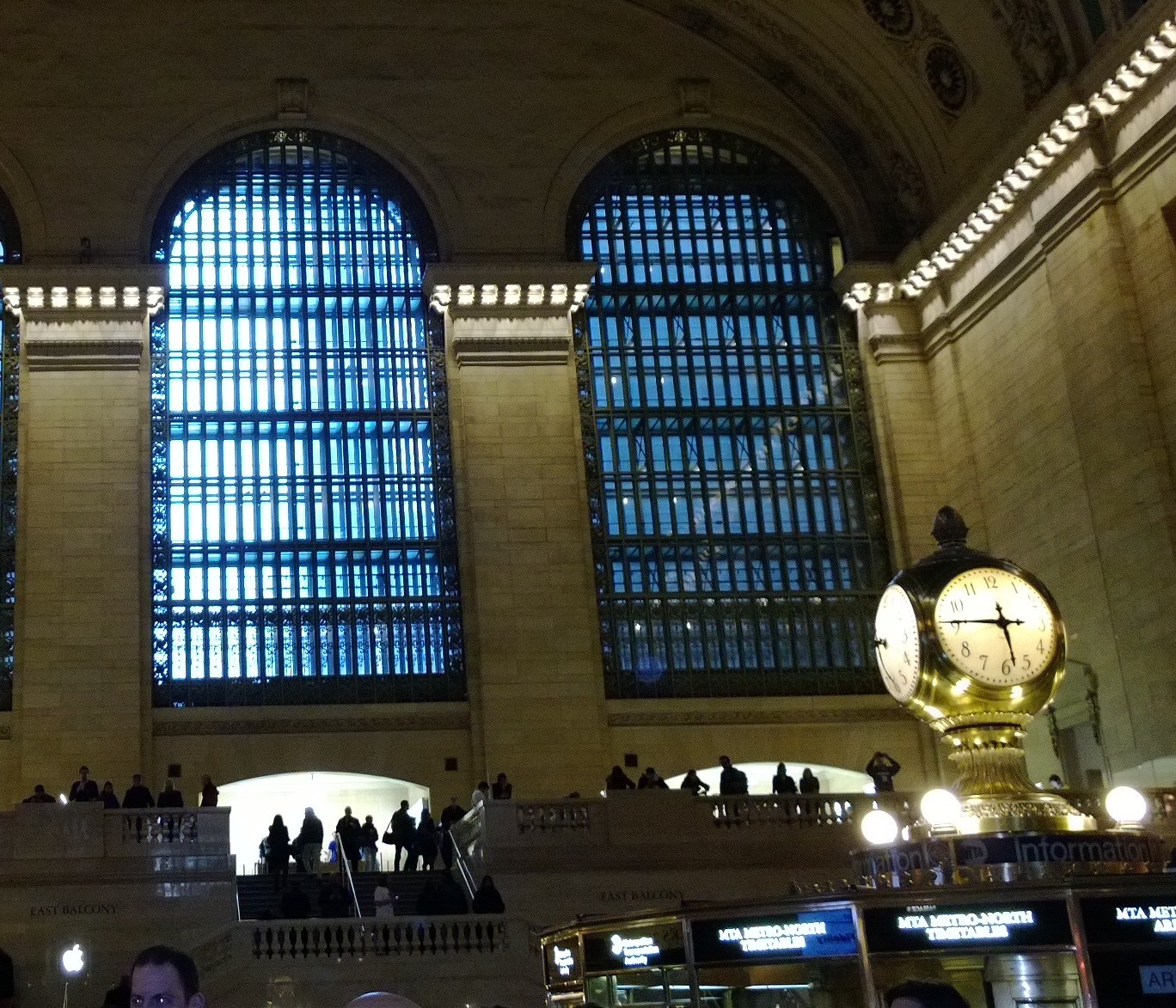
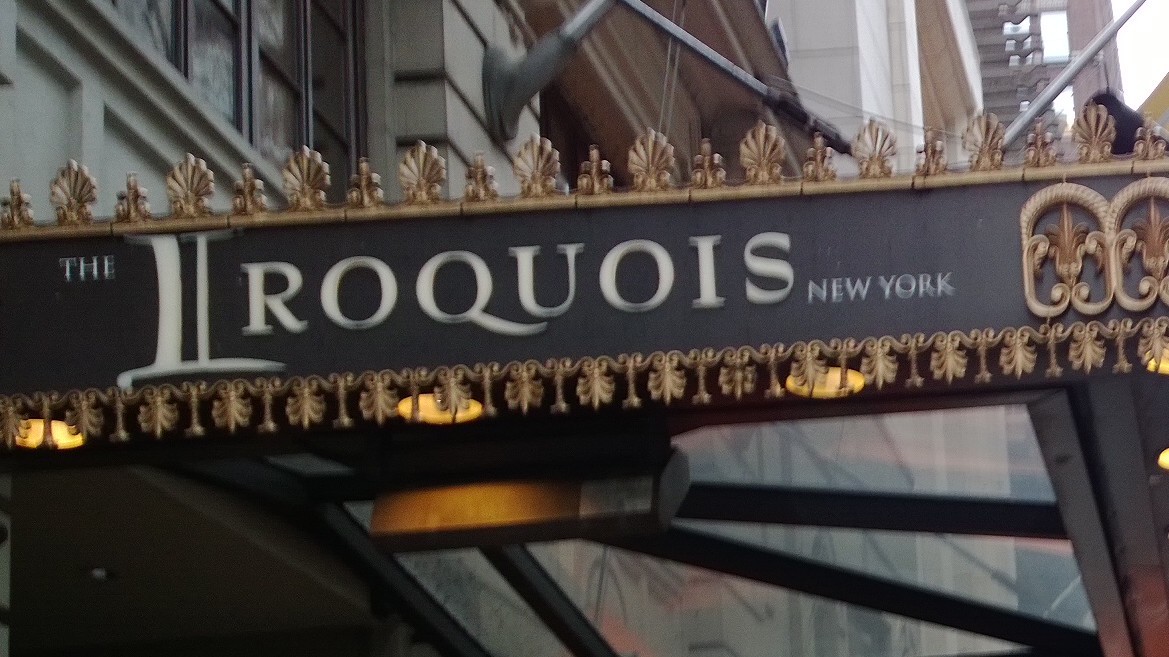
Subway buskers playing a grandson’s favorite song, “When the Saints Go Marchin’ In.” Grand Central Station. The charming Iroquois Hotel. A flower-themed mosaic in the Lexington Ave. subway.

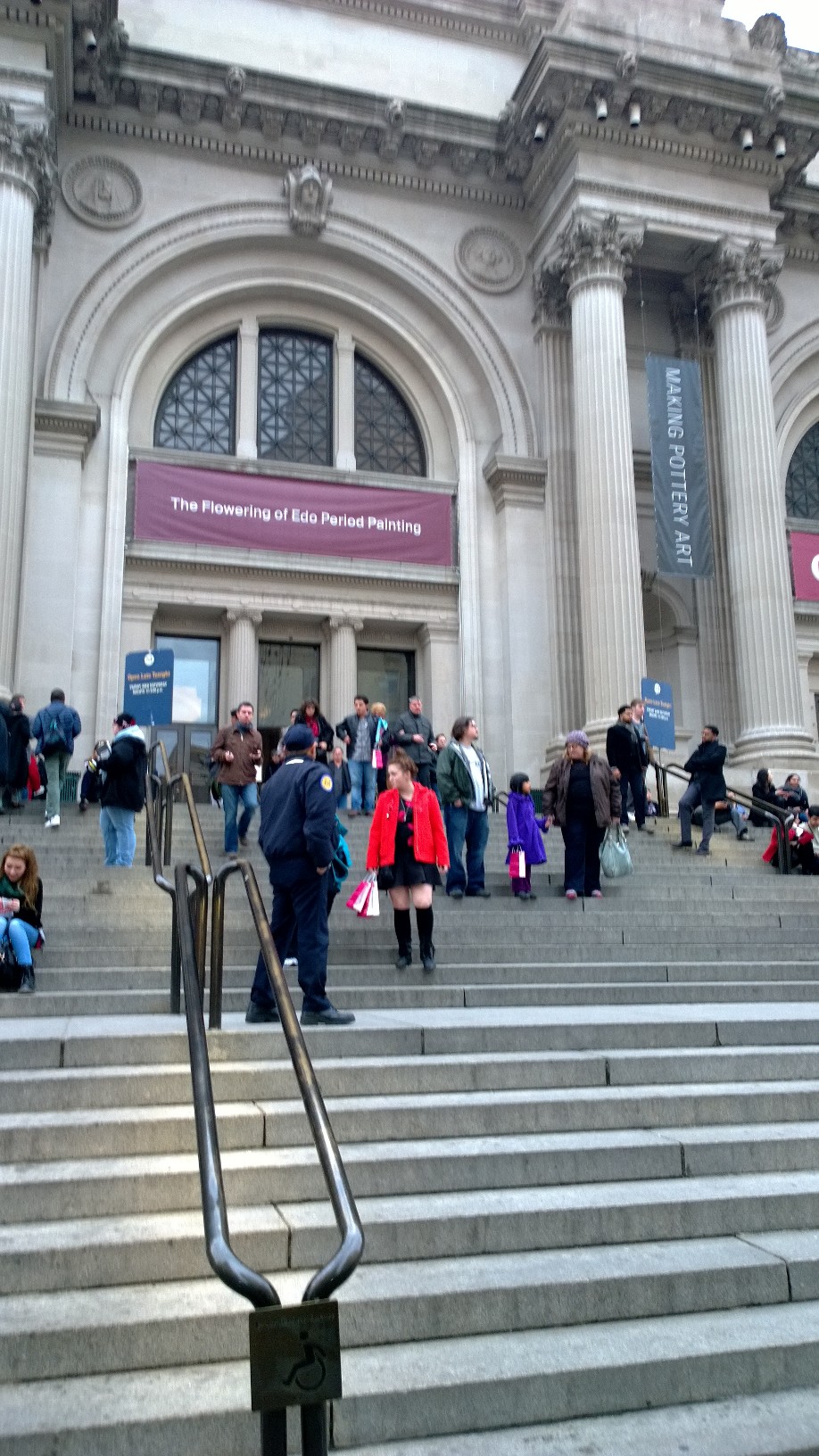
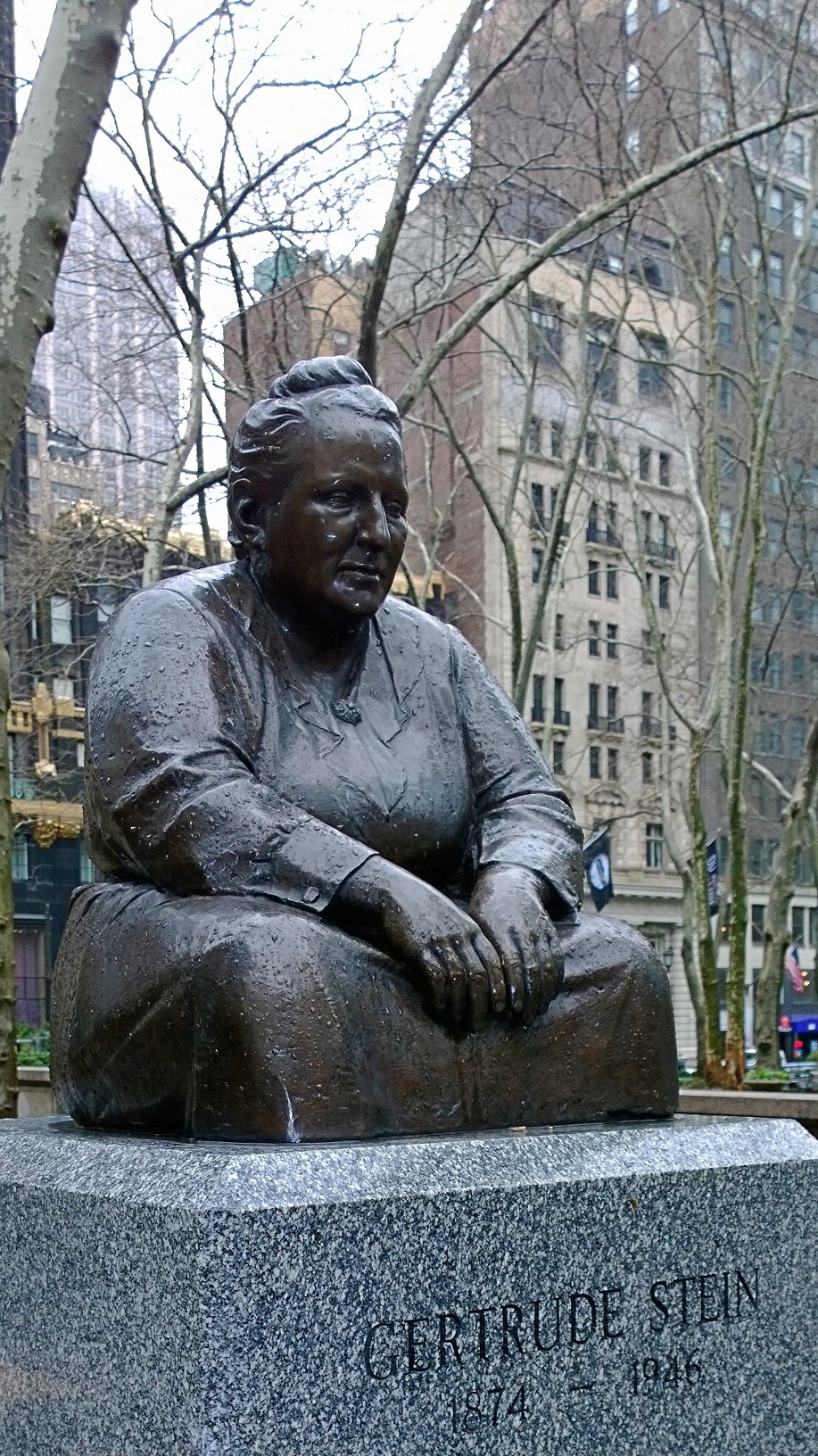
Gertrude Stein looking like herself in Bryant Park. And the Metropolitan Museum, where we saw a great photography show with my sister and brother-in-law. More on that later.

(Be watching for the relaunch of the Luna & Stella website, where one of the family pictures is of my sister at age 3, pictured with Suzanne’s maternal grandfather. … Did I mention this is a blog for Suzanne’s birthstone-jewelry company Luna & Stella?)

Public-Theater_NYC

Ted-Shen-Second-Chance-Playbill


The-Public_has-cool-chandelier

When-the-saints-go-marching-in


Grand-Central-NYC

Iroquois-hotel-treats-guests-right


Lex-Av-Subway-NYC

Met-Museum-NYC


Gertrude-Stein-Bryant-Park


Read Full Post »