Feeds:
Posts
Comments

Posts Tagged ‘human rights’

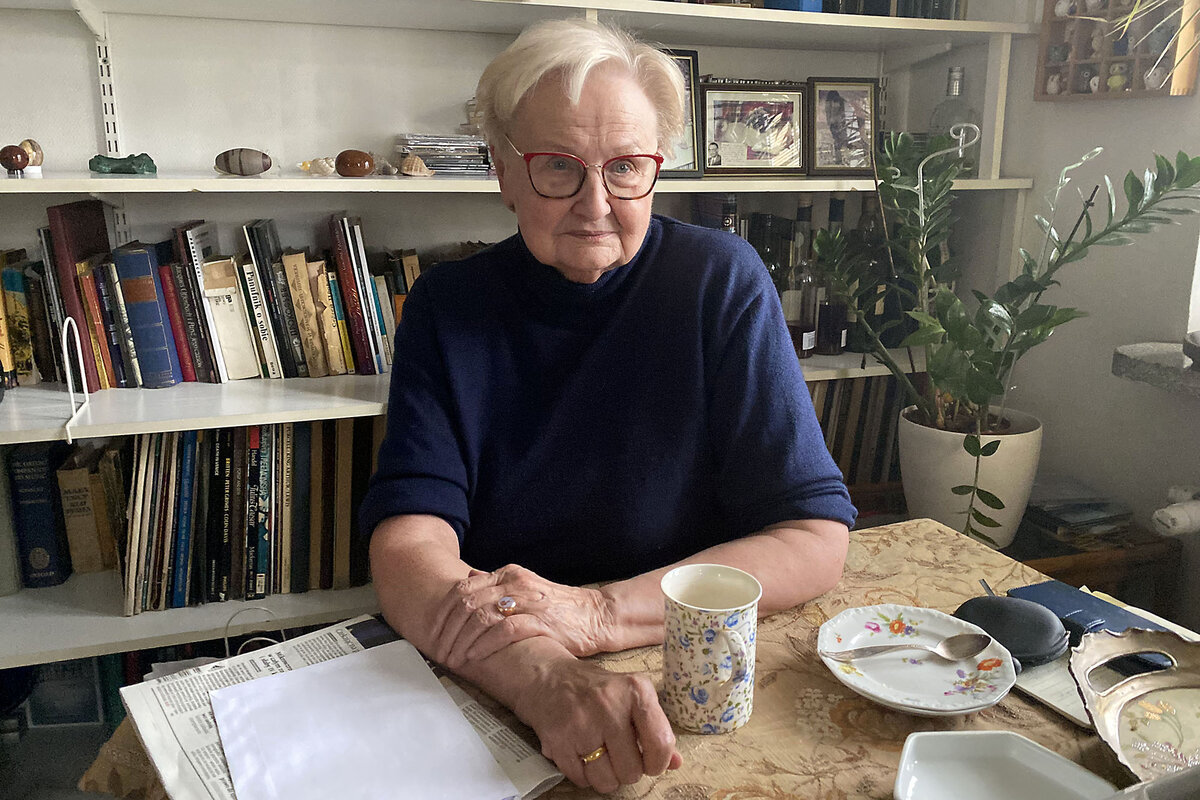
Photo: Lenora Chu.
Ewa Łętowska, the elder stateswoman who helped build the legal framework of democratic Poland after communism, sits in her Warsaw flat last February.

Never underestimate the power of a woman. It may be under the radar, but woe to those who think they can always manipulate the quiet ones.

Lenora Chu of the Christian Science Monitor recalls, “It was late fall of 1987 in Poland, and the economic and social forces here were fueling tremors that would eventually fell communism across the Soviet bloc.

“Among a group of influential men – law professors – at a dinner party one evening was a Communist Party member brainstorming how to throw a bone to pro-democracy activists. The group was tasked with floating a name for a human rights ombudsman; that of legal scholar Ewa Łętowska kept surfacing. A devoted academic who had pumped out two decades of legal research on topics as benign as consumer protections and contract law, she was a respectable but safe choice.

“ ‘They said, “We want a woman, because women might be easier to manipulate,” ‘ Ms. Łętowska says in an interview in her Warsaw flat, lined floor to ceiling with books and opera records. She laughs at this memory that she possesses only because her lawyer husband was among the men feasting on schnitzel at that monthly table for regulars.

“If it was a wallflower they wanted, it turned out to be a miscalculation of historic proportion: They launched a stateswoman.

“Her trajectory as Poland’s top human rights thinker, she says, started ‘loudly, and with a bang’ when she was named the country’s human rights ombudsman soon after the dinner party, pioneering the balance between the state and the individual in the waning days of communism.

“She was an accidental influencer who, four decades later, now in her 80s, is a sought-after talking head, issuing viral social media posts about democracy. And when voters sent their right-wing government packing last October, a coalition of progressives turned to the wisdom and experience of Ms. Łętowska and her contemporaries.

“They’re looking for help to fix Poland’s institutions after the populists turned the country away from the European Union, rolled back civil rights such as abortion, took over the media and judiciary, and questioned the country’s humanitarian aid duties.

” ‘Ms. Łętowska’s value to Polish society cannot be overstated, says Helena Chmielewska-Szlajfer, a sociologist and assistant professor at Koźmiński University. ‘She’s a living legend, and she has the authority of this wise, powerful woman who set the institutions right in the beginning. She worked on this at a time it was the hardest – the intermediary stage between communism and democracy. And she still has much to say.’

“In 1980, the world saw burly Solidarity unionist Lech Wałęsa leading a revolt against communist authorities for worker rights – and eventually winning a Nobel Prize for it. But it was the progressive technocrats quietly blooming in that politically fertile time who did the less spectacular but essential work of building a democratic legal framework.

“Until then, Ms. Łętowska had forged her career as an impartial civil law professor, neither courting the communist regime nor joining the opposition. [She] now confidently says she … ‘was a state official to society, who brought more dialogue, more transparency. At the same time, I didn’t want a political future.’

“In an era when one didn’t easily trust one’s neighbor, there was little subversive in her ‘good girl’ youth to suggest she would emerge a strong voice for human rights and democracy. … On rare study trips abroad — few Polish scholars were trusted to leave the country — she might use German colleagues’ photocopiers to reproduce expensive legal tomes, like handbooks and casebooks on human rights law. …

“After law school in the 1960s, she published articles about civic law issues, rising through the ranks as a professor at the Polish Academy of Sciences’ Institute of Law Studies.

“A trip to the West – Hamburg, Germany – in the early 1980s was a turning point. She happened upon a demonstration by feminists. … From the other side of the street, she could see citizens hurling insults at the women.

“ ‘And in between you could see a line of police, with stone faces making sure no one gets hurt, being completely indifferent, and providing this space for demonstrating,’ says Ms. Łętowska. ‘It was the first time in my life I saw police not beating demonstrators – but rather protecting them. This is how I finally understood how things should be.’

‘The people of Hamburg would never know how much credit they should take, quite by accident, in my education,’ she says.

“Half a decade after that trip, she was named Poland’s first human rights official, judging the conduct of the state toward its citizens. … Should political parties have to register with the state? No, she famously wrote in 1988, when Poland was still under communist rule: ‘The constitution stated clearly: if parties want to form, let them form. Registration is required only for associations.’ …

“After the communist regime fell in 1989, she found herself among the legal scholars helping to modernize the Polish Constitution.”

More at the Monitor, here. Piotr Żakowiecki contributed to this report.

Read Full Post »

People from the Maasai community, one of the oldest tribes in East Africa, live in a semi-nomadic state and have had to go to the UN to try to preserve a pastoral way of life.

I love reading about other cultures. Today’s article is about Maasai people living in Tanzania. It is unfortunately a worrisome story, the only upbeat aspect being that forums exist where indigenous people can fight for rights and that they are starting to use those resources.

Joseph Lee’s Grist article was reprinted at Salon.

“In Tanzania, the Indigenous Maasai face an ongoing, violent campaign to evict them from their lands and make way for protected conservation areas and hunting reserves. [In April, several were] in New York to ask the U.N. Permanent Forum on Indigenous Issues, or UNPFII, to tell Tanzania to stop taking their cattle, remove its security forces, establish a commission to investigate disputed lands and displaced people, and allow international human rights monitors to visit without restrictions. 

” ‘We, the Maasai people of Loliondo and Ngorongoro in Tanzania, are fighting against the Tanzanian government and wildlife trophy hunters who are threatening our livelihood, culture, ancestral wisdom, legacy, and basic human rights,’ Edward Porokwa, executive director of the Pastoralists Indigenous Non Governmental Organization’s Forum, said. …

“The Maasai land conflict in Tanzania is focused on two main areas: the Ngorongoro Conservation Area and Loliondo. The Ngorongoro Conservation Area is a UNESCO World Heritage Site that attracts over half a million visitors every year for safaris to see the park’s ‘Big 5’ game — elephants, lions, leopards, buffalo, and rhinoceros. Around 80,000 Indigenous Maasai call the park home, but have faced decades of government efforts to push them off their land.

“In a statement delivered at the Permanent Forum, Porokwa said that, since June 2022, the government has closed four nursery schools, nine water sources, and six mobile health clinics. The government says that Maasai are voluntarily leaving the area for resettlement sites, but the Maasai say that they are essentially being forced out. ‘It is a forceful relocation by ensuring that people don’t get the basics,’ Porokwa said. ‘They are there to die.’ 

“And in Loliondo, which is legally demarcated Maasai village land, state security forces shot at Maasai in a violent campaign to drive them from their lands [in June 2022]. In the attack, dozens of Maasai were injured and many fled across the nearby border to Kenya for medical attention. At least two dozen others were arrested, while some were not permitted to leave their homes. 

“[Nine] United Nations experts raised concern about forced evictions and resettlement plans, but the Maasai representatives at the United Nations say that the government has not changed its approach. … Tanzania has taken or killed over 600,000 of their cows and demanded over $2.5 million in fines for grazing. This is all part of what Maasai say is a massive campaign to destroy their pastoralist way of life. 

“At the Permanent Forum, a representative from the Tanzanian government pushed back on the Maasai’s claims, pointing to the East African Court of Justice’s 2022 dismissal of an eviction case brought by the Maasai, stating that the Maasai could not prove their claims about violent evictions. …

“In January, the African Commission on Human and Peoples’ Rights conducted a monitoring visit to investigate the situation. But Maasai community organizations say that at every step, the visit was controlled by the government. Commission representatives were shepherded around by state security forces who intimidated Maasai and excluded them from some meetings. Some Maasai waited for hours to speak with the Commission, only for them to never show up. While the Commission’s final report on the visit did express concern about the situation, it also commended Tanzania’s commitment to protecting human rights. The Commission also recommended starting new consultations with the Maasai, as well as addressing their concerns about the resettlement program. 

“In December, José Francisco Calí Tzay, the United Nations Special Rapporteur on the rights of indigenous peoples was scheduled for a week-long visit to Tanzania, but the visit was indefinitely postponed. Maasai leaders believe that the visit was scuttled out of concern that the Special Rapporteur would not be given full access to investigate. …

“With few options remaining, the Maasai have turned to the Permanent Forum to raise their concerns. Briane Keane is the director of Land is Life, an international organization that works with Indigenous peoples, including providing travel funding, medical assistance, and security assessments to the Maasai. Keane says that the United Nations is an important platform for the Maasai. ‘It’s a place where they can be heard. The government of Tanzania is not listening,’ he said. 

“The Maasai hope that international pressure may convince the government to finally listen to their concerns. But speaking out on the international level also comes with risks for the Maasai. Several leaders who spoke out against government abuses were forced to flee the country for their safety

” ‘Indigenous peoples are the most among the most criminalized peoples of the world,’ said Keane. ‘There’s people being thrown in jail. There are threats. So it’s very dangerous work sticking up for your rights when you’re as marginalized as the Maasai are in Tanzania.’ “

Man, if your gripe is against the government, you really don’t want the government’s security forces leading the tour for the human rights inspectors! That should be a given. More at Grist, here. No firewall.

Read Full Post »

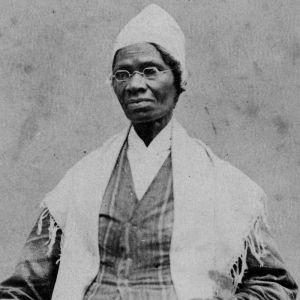
Today let’s hear from Sojourner Truth (1797-1883), who gave this speech extemporaneously at the 1851 Women’s Convention in Akron, Ohio. She begins by addressing two parallel causes: the fight for freedom of “the negroes of the South and the women at the North.” Then she goes on to say that as a black woman, women’s rights are her cause, too.

“That man over there says that women need to be helped into carriages, and lifted over ditches, and to have the best place everywhere. Nobody ever helps me into carriages, or over mud-puddles, or gives me any best place! And ain’t I a woman? Look at me! Look at my arm! I have ploughed and planted, and gathered into barns, and no man could head me! And ain’t I a woman? I could work as much and eat as much as a man — when I could get it — and bear the lash as well! And ain’t I a woman? I have borne thirteen children, and seen most all sold off to slavery, and when I cried out with my mother’s grief, none but Jesus heard me! And ain’t I a woman? …

“Then that little man in black there, he says women can’t have as much rights as men, ’cause Christ wasn’t a woman! Where did your Christ come from? Where did your Christ come from? From God and a woman! Man had nothing to do with Him.

“If the first woman God ever made was strong enough to turn the world upside down all alone, these women together ought to be able to turn it back , and get it right side up again! And now they is asking to do it, the men better let them.

“Obliged to you for hearing me, and now old Sojourner ain’t got nothing more to say.” Except she’s still saying it: that the rights of one group are inseparable from the rights of all.

More here.

Photo: Biography.com

mtm1otk1mzmyodiynji2mjc0


Read Full Post »

Photo: Boston Globe
Al Filipov died on Sept. 11. He was on the plane from Boston.

After September 11, 2001, good works sprouted around the country, launched by people from all walks of life who were determined that goodness should have the last say.  The Huffington Post collected a bunch of these initiatives for one anniversary of the tragedy, here, but you can find examples in nearly every community.

In Concord, Al Filipov, who was on one of the planes, is honored in several ways, including by the Filipov Peace and Justice Forum.

Al’s son, Boston Globe reporter David Filipov, once recalled his father as “engineer, inventor, sailor, deacon, coach, husband, dad, raconteur.” The Filipov forum website adds that he was a painter and a human rights activist, noting,

“He sought out the best in people and cared passionately about the world in its beauty and pain. He earnestly believed in the power of an individual to make a difference in the world.”

The 2016 Al Filipov Peace & Justice Forum will take place on September 25 at the Trinity Congregational Church on Walden Street in Concord. Representatives from the Parents Circle-Families Forum are the featured guests. The Parents Circle is made up of bereaved Palestinian and Israeli families that have come together to support “peace, reconciliation and tolerance.”

As one member says in the video below, people from different sides of a conflict need to get to know one another as individuals and share commonalities in order to let go of “being right” all the time instead of creating peace. Otherwise any future agreement is just a cease fire.

The presentation will be from 4 p.m. to 6 p.m.

Read Full Post »