Feeds:
Posts
Comments

Posts Tagged ‘humane’

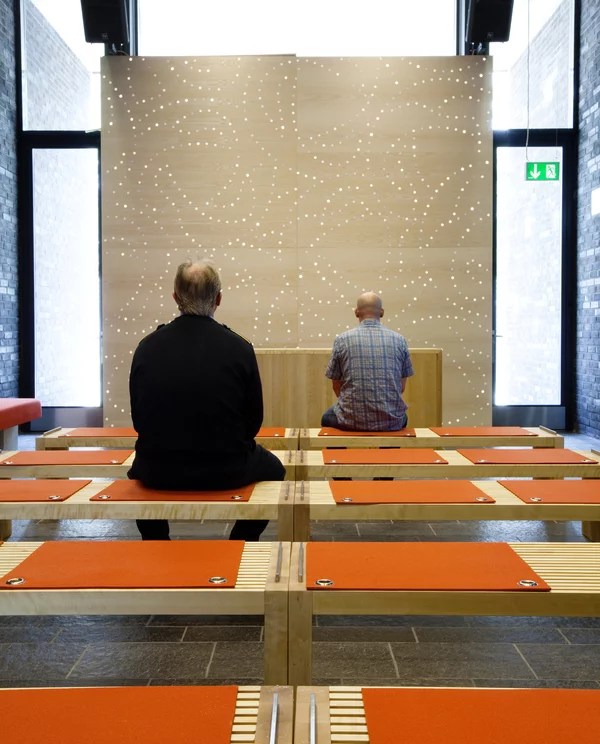
Photo: STR/Reuters/Landov.
Two men sit inside the chapel at Halden prison in far southeast Norway in this picture taken in 2010. Prisoners here spend 12 hours a day in their cells, compared to many U.S. prisons where inmates spend all but one hour in their cell. NPR’s 2015 story is here.

Some years ago (2016), I wrote about research on Norway’s humane prisons. In a December 2023 Christian Science Monitor article, Troy Aidan Sambajon shows that some US prisons are moving in the same direction. Or at least testing the concept.

“Earlier this year,” he reports, “California Gov. Gavin Newsom announced a new vision for the San Quentin State Penitentiary, centered on rehabilitation and job training, inspired by another prison system that has halved its recidivism rate – in Norway. …

“About 2 out of 3 Americans released from jails and prisons per year are arrested again, and 50% are re-incarcerated, according to the Harvard Political Review. In Norway, that rate is as low as 20%. 

‘It has everything to do with your social safety net, your network, your support structure, and your job opportunities.’

“As more U.S. states seek to improve their correctional systems, the Norwegian model could prove key. It aims to create a less hostile environment, both for people serving time and for prison staff, with the goal of more successfully helping incarcerated people reintegrate into society. …

“ ‘Overcrowding, violence, and long sentences are common in U.S. prisons, often creating a climate of hopelessness for incarcerated people, as well as people who work there,’ says Jordan Hyatt, associate professor of criminology and justice studies at Drexel University. Correctional employees experience some of the highest rates of mental illness, sleep disorders, and physical health issues of all U.S. workers, a 2018 Lexipol report found. …

“Making a prison environment more humane will translate to a more efficient prison system overall, experts say. And the Norwegian model prioritizes rehabilitation and reintegration over punishment. Safety, transparency, and innovation are considered fundamental to its approach. Core practices aim to create a feeling that life as part of a community continues even behind walls and bars, says Synøve Andersen, postdoctoral research criminologist at the University of Oslo. 

“In some Norwegian prisons, incarcerated people wear their own clothes, cook their own meals, and work in jobs that prepare them for employment, says Dr. Andersen. They have their own space, too, since single-unit cells are the norm. …

“While they are separated from society, incarcerated people should experience normal, daily routines so they can have increased opportunities to reform without being preoccupied with fear of violence from other inmates, she argues.

“The principle of dynamic security means correctional officers also must have more complex social duties besides safety and security, including actively observing and engaging with the prison population, understanding individuals’ unique needs, calculating flight risks. …

“Washington state’s Lt. Lance Graham works within restricted housing and solitary confinement units, an environment he says lacks empathy and connection with those incarcerated. ‘We never had the opportunity to connect with the people in our care.’ 

“But when visiting Norway’s isolation units, he saw [that] their staff was much more engaged with the prison population and was much happier. 

“ ‘This program really promotes staff wellness, changing the relationship that you have with the people in your care,’ says Lieutenant Graham. ‘So you’re not going to have as many instances of fight or flight syndrome in your daily work. You reach common ground and talk like normal folks.’

“ ‘If you actually want to change the prison environment, invest in staff,’ says Dr. Andersen. ‘They’re there all the time. They’re doing the work.’

Amend, a nonprofit from the University of California, San Francisco, partnered with four states – California, South Dakota, Oregon, and Washington – to introduce resources inspired by Norwegian principles and sponsor educational trips to Norway for U.S. correctional leaders. 

“At California’s San Quentin, Governor Newsom hopes to emphasize inmate job training for high-paying trades such as plumbers, electricians, or truck drivers. … In Washington state, prison staff began developing supportive working relationships with the incarcerated in their care by developing individual rehabilitation plans. … In North Dakota, former Director of Corrections Leann Bertsch says after revamping the training and responsibilities of prison officers, interactions between staff and inmates felt respectful and calmer. …

“The Pennsylvania Department of Corrections collaborated with the Norwegian Correctional Services to pilot Little Scandinavia, a transformed housing unit operated at half the regular capacity to allow for individual cells. The on-duty officers at Little Scandinavia have reported enjoying their work much more now and there haven’t been any reports of violence since its opening in May 2022, says Dr. Andersen.

“Norway receives much attention for its low rate of recidivism, but some experts disagree on the measure as a rate of success. ‘[Recidivism] is not just a product of the correctional system. It has everything to do with your social safety net, your network, your support structure, and your job opportunities,’ said Dr. Andersen.”

More at the Monitor, here.
Read Full Post »

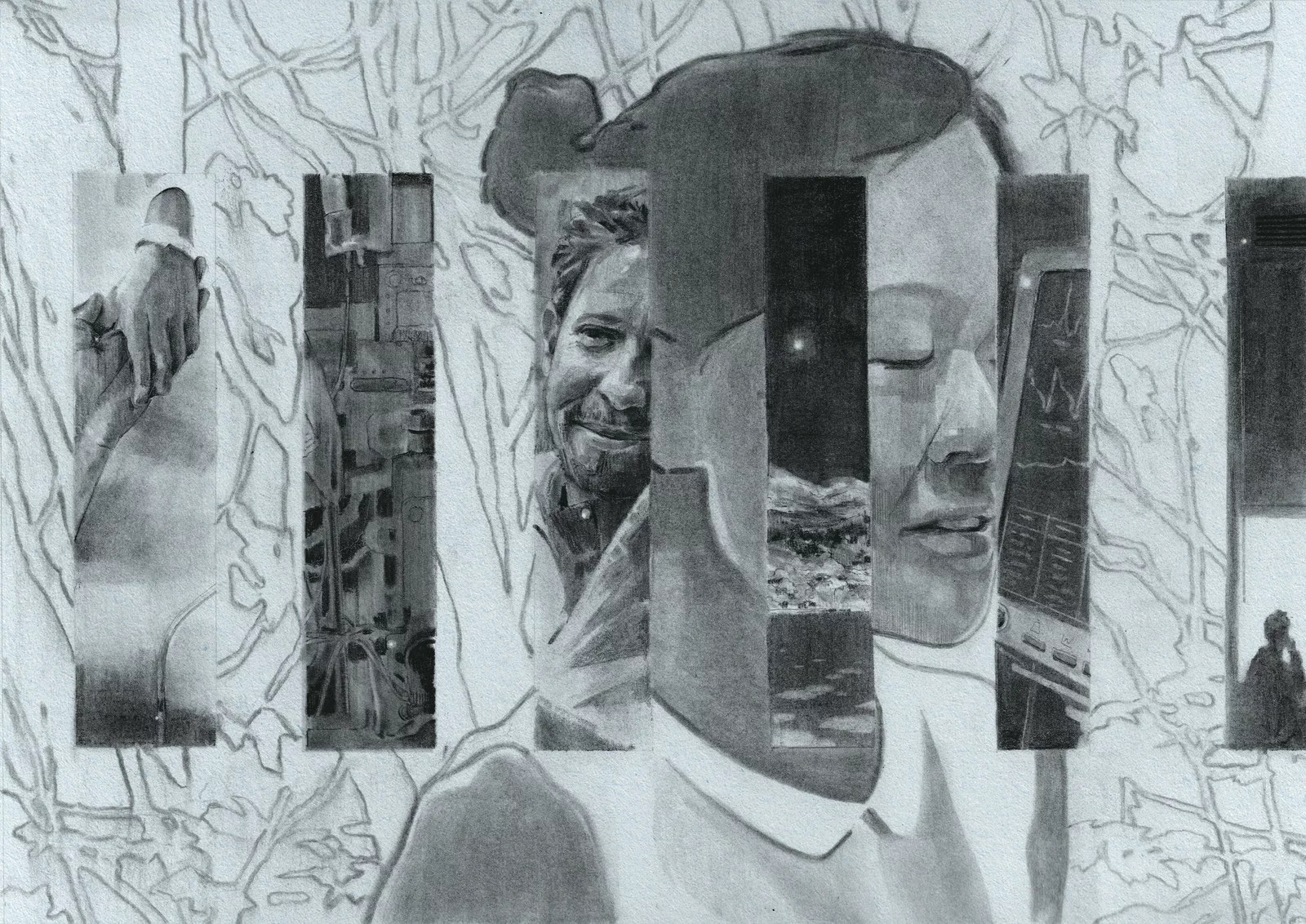
Photo: James Lee Chiahan/Procedure Press.
“Tone Shift,” by James Lee Chiahan. depicts musician Yoko Sen’s journey from being patient in the hospital to working to improve the sounds of ICU alarms around the world. Chiahan is a Taiwanese-Canadian artist currently working out of Montreal, Canada.

Those of us who have ever had a hospital stay know how difficult it is to get any sleep. Part of the reason is noise. Today’s article suggests that since artists started applying their creativity to the challenge, hospitals have new ways they could improve sounds and doctors have new ways to improve patient interactions.

Mara Gordon at NPR (National Public Radio) begins her story with Emily Peters, who had a rough time with the health care system when her daughter was born. “Peters, who works as a health care brand strategist, decided to work to fix some of what’s broken in the American health care system. Her approach is provocative: she believes art can be a tool to transform medicine.

“Medicine has a ‘creativity problem,’ she says, and too many people working in health care are resigned to the status quo, the dehumanizing bureaucracy. That’s why it’s time to call in the artists, she argues, the people with the skills to envision a radically better future.

“In her new book, Artists Remaking Medicine, Peters collaborated with artists, writers and musicians, including some doctors and public health professionals, to share [ideas] about how creativity might make health care more humane. …

“For example, the book profiles electronic musician and sound designer Yoko Sen, who has created new, gentler sounds for medical monitoring devices in the ICU, where patients are often subjected to endless, harsh beeping.

“It also features an avant-garde art collective called MSCHF (pronounced ‘mischief’). The group produced oil paintings made from medical bills, thousands and thousands of sheets of paper charging patients for things like blood draws and laxatives. They sold the paintings and raised over $73,000 to pay off three people’s medical bills.

“It’s similar to a recent performance art project not profiled in the book: A group of self-described ‘gutter-punk pagans, mostly queer dirt bags’ in Philadelphia burned a giant effigy of a medical billing statement and raised money to cancel $1.6 million in medical debt. …

“There’s very little in the way of policy prescription in this book, but that’s part of the point. The artists’ goal is to inject humanity and creativity into a field mired in apparently intractable systemic problems and plagued by financial toxicity. They turn to puppetry, painting, color theory, and music, seeking to start a much-needed dialogue that could spur deeper change.

Mara Gordon: What made you want to create this book?
Emily Peters: I think I’m always very curious why so many people – really the majority of everybody in any way involved in the health care system – feel so powerless. … And so the book came about as thinking about power and change. And then I realized that artists have this unique intersection where they are very powerful, they bring a lot of the things that were missing in health care, trying to build a better future.

MG: What is it about art that feels like a tool to challenge that feeling of powerlessness?
EP: The very first person I interviewed for the book was a photographer, Kathleen [Sheffer], who was a heart-lung transplant survivor. She used her camera in the hospital to try to be seen as more powerful, to be seen as a full person by these very fancy transplant surgeons who are whisking in and out of her room, viewing her as just a body. I saw that she had gained that power through being an artist.

“I had another conversation with a physician out of New York, Dr. [Stella] Safo. … She really highlighted that there’s this crisis of imagination. Everybody feels so demoralized that we can’t even imagine what we want to ask for to make it better.

“That’s a creativity problem. And the people who are creative are artists. They are really good at sitting in complexity and paradox, and not wanting everything to be perfect, but being able to imagine. And so that was the hypothesis: Oh, there’s something really interesting at this intersection between art and medicine. …

“MG: My favorite part of the book was the section where there’s a color palette, named for different medical phenomena: pill bottle orange, Viagra blue.… I think a lot of people in health care worry that too much color somehow distracts from the seriousness of medicine.
EP: So many of these things, somebody chose, and they didn’t do a huge amount of research on it. They just chose it, and we take it as gospel now.

“The white coat ceremony. [I had thought it must have started in] medieval Florence: they were putting white coats on medical students and welcoming them into the guild, it just feels like this ancient tradition. And it’s something that was invented in Chicago in 1989. A professor was complaining that the students weren’t dressing professionally enough. …

We surveyed a couple hundred people [and published the results online]: ‘What colors would you want to see in the hospital?’ I was expecting those soothing pastel tones. And it was totally different: it was neon purples and oranges and reds. Don’t assume what people want. We have the technology and the capability now to build in systems that give people some control and some agency over things like color. …

MG: Has anyone told you that they think that health care is too important for art?
EP: I’ve heard the criticism that this is just about wallpaper on a pig: ‘You’re talking about adding more sculpture gardens and increasing the cost of health care.’

“I did not want it to be a book about creating more luxurious hospitals. We have a crisis of financial toxicity, we have a crisis of outcomes. It’s specifically a book about fighting those things. …

“MG: Do you think medicine takes itself too seriously? Do we need more humor in health care?
“EP: You’re holding somebody’s heart in your hand – this is a very intense job. You’re trying to convince somebody to enter hospice – that is not easy. This is not an easy job. But that seriousness can feel almost like play acting and really inauthentic to people. …

“And that’s such a waste to me, because it is such a beautiful, incredible profession. We, as patients, also want you guys to be humans. We’re on your side.”

More at NPR, here. No paywall.

Read Full Post »