Feeds:
Posts
Comments

Posts Tagged ‘ice’

Photo: Julie Van Stappen, National Park Service
Apostle Islands sea caves

Winter seems to be hanging on, so it’s not too late to blog about the Apostle Islands and the sea caves in winter.

My husband and I visited the Apostle Islands 16 years ago, almost to the day. We stayed in a pleasant B&B that had a waitress who, my husband recalls, acted like one’s sojourn there “was the experience you had been waiting for your whole life.” We drove around and tried to keep warm. I’m looking at a pottery pitcher with an apple on it that we bought in a little shop.

At the New Yorker, Siobhan Bohnacker introduces a slide show on the sea caves, calling them “Cathedrals of Ice.”

“This past February, thanks to an unusually cold winter, the sea caves along the Apostle Islands National Lakeshore, in northern Wisconsin, were accessible by foot for the first time in five years. Visitors were able to walk two miles over the thick ice of Lake Superior to see the ice formations that run up the coastline. Erin Brethauer, a photographer living in North Carolina, visited …

“Describing the trek to the caves, Brethauer told me, ‘A steady stream of people cut a colorful line on the horizon. More than a hundred and thirty-eight thousand people visited the ice caves this winter, up from twelve thousand seven hundred in 2009.’ …

“The shorelines along the Apostle Islands have been slowly shaped by the movement of the water of Lake Superior, and by its annual freezing and thawing. Sea caves, which resemble honeycombs, are sculpted in the course of centuries by waves breaking onto cliffs. This impact creates what are called reëntrants, or angular cavities that tunnel into cliffs. When reëntrants join behind the cliff face, sea caves result. When water is trapped in the caves and cavities, and freezes, dramatic ice formations occur.

“Brethauer said, ‘We were struck by the size and coloring of the ice along the coastline. Some ice was a pale blue, while other formations were yellow or reddish, depending on the sediment the water collected when it was freezing. … I loved watching how people interacted with the caves and ice, climbing or taking pictures. They provided such scale and added to your feeling of wonder. And then, stepping inside one of the caves, looking up, and listening to the silence or the ricochet of sound, it felt like being in a cathedral.’ ”

Check out the slide show at the New Yorker, here.

Read Full Post »

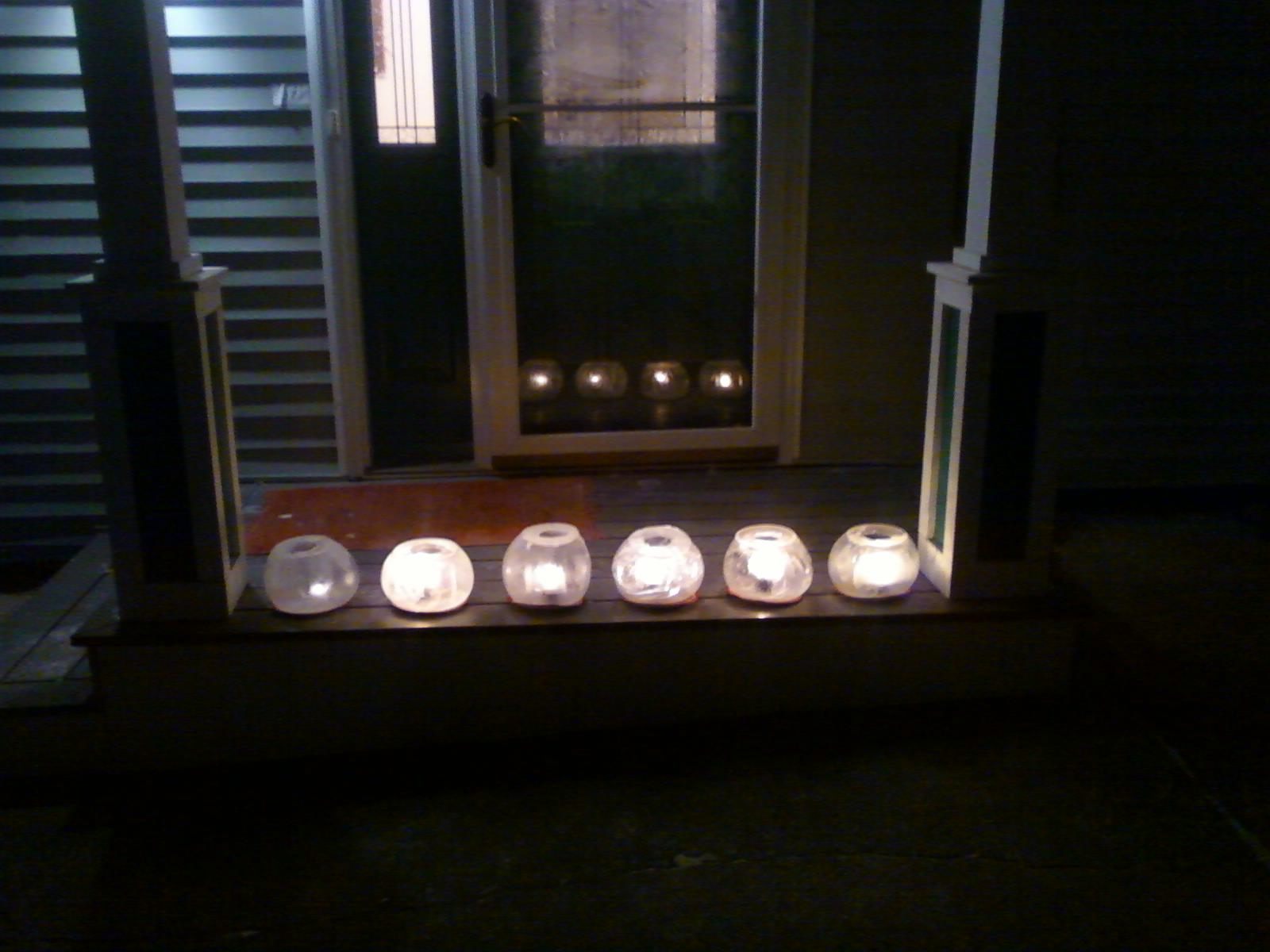
Ice Lanterns on front stoop


My scientist brother makes ice lanterns, a useful skill for lighting friends to your door in a cold Wisconsin winter.

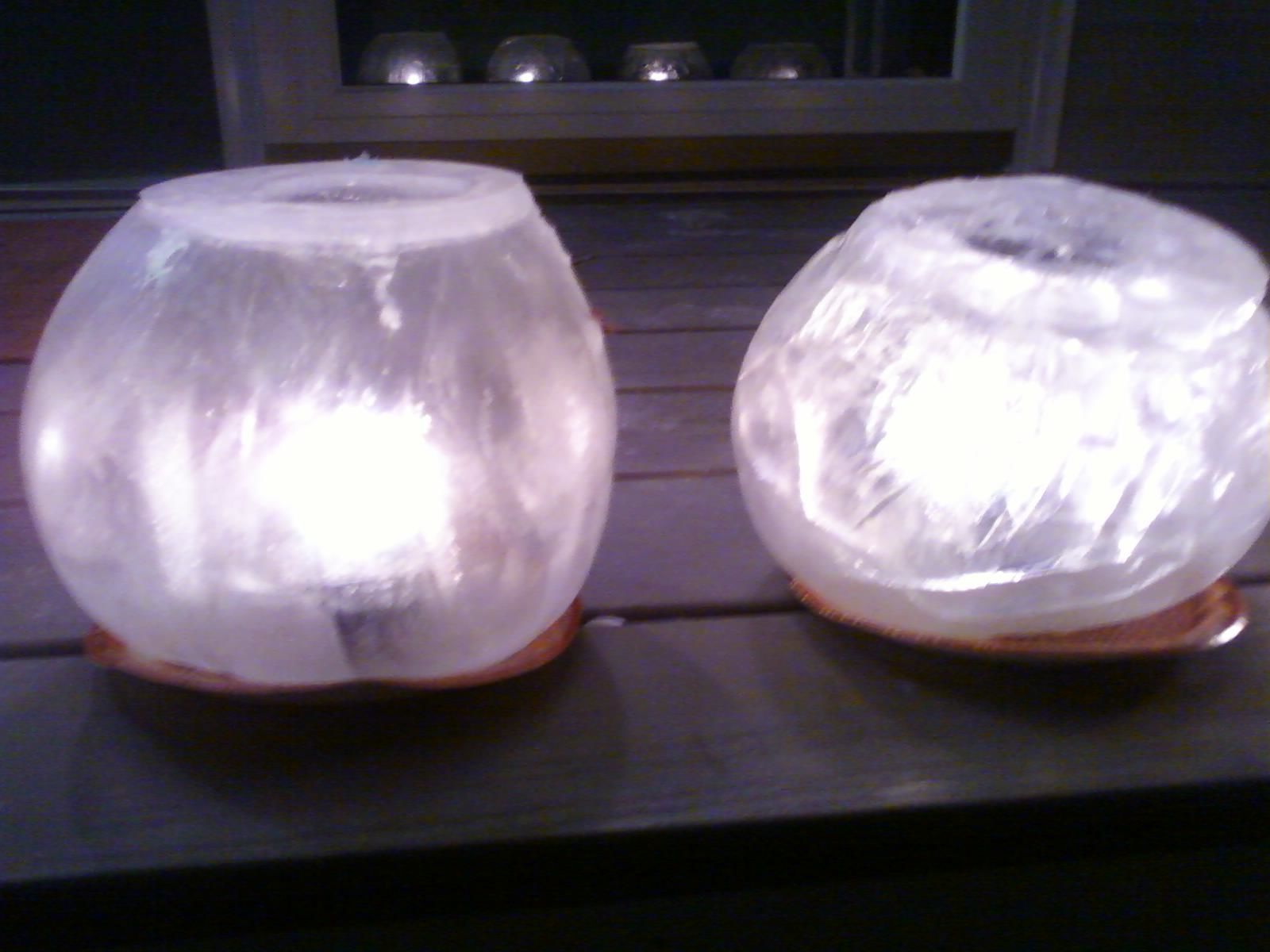
Here’s how. “Large 9” water balloons are frozen out on my deck, then emptied of liquid water, candled, & lit.

“The only tricky part is knowing when they are ‘done.’ Ice should be not too thin, and not too thick. Also, you need to blow air into the balloon after you fill it with H2O, so there will be a nice flat surface on top. That’s where you punch a hole in the ice to empty the liquid H2O & place the candle.”

You gotta grab all the gusto and try to enjoy the cold weather we have been having. I remember that when we lived in Minneapolis, it was a hoot to pour water off the balcony and watch it freeze in flight.

You might also want to check out how Asakiyume makes her frozen soap bubbles, here.

Closeup Ice Lanterns

Read Full Post »

In the current heat wave, I want to blog about something cool. I thought about using today’s Globe story on the Boston bar that will be made entirely of ice, but I am not into bars and the entry fee is $19.

So here is one about a tiny kingdom in the Himalayas that is cut off from the world until the river freezes. The only problem is — the river isn’t freezing as much as it used to.

“About 1,000 years ago, the Buddhists there broke away from the Tibetan Empire [and founded a kingdom] in the very north of India, in the state of Jammu and Kashmir.

“The Kingdom is isolated other than two months a year when the river freezes over and people can cross over to India.” It’s called Zanskar.

Hear more at the Public Radio International show “The World,” where guest Daniel Grushkin describes a lucky escape he had near Zanskar when a piece of ice he was stepping on broke off.

And be sure to check out the adventurer’s other excursions at his blog “Roads and Kingdoms, here.


Photo: Sumit Dayal
Trekking over the frozen Zanskar River.

Read Full Post »

« Newer Posts