Feeds:
Posts
Comments

Posts Tagged ‘indie’

Photo: Melanie Stetson Freeman/CSM Staff.
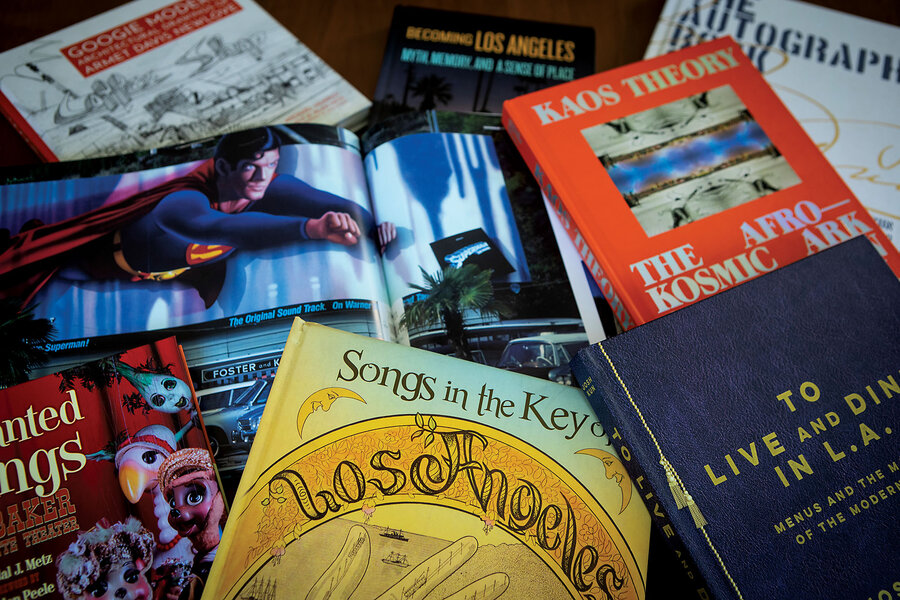
An assortment of books published by Angel City Press. The press’s owners donated the indie publishing operation to the Los Angeles Public Library in December 2023.

Libraries are under pressure because, you know, they offer people books. One library is taking the general outrageousness of book culture a step further by getting into publishing.

Ali Martin writes at the Christian Science Monitor, “The City of Angels is known for glitz … but Angelenos recognize a deeper creative spirit, found in its eclectic and diverse neighborhoods, where stories of resilience are illuminated with quirky, indelible characters. 

“ ‘There’s something really valuable in trying to reflect a true portrait of the city, not just to the people who live here, but [to people] everywhere,’ says Terri Accomazzo, editorial director for Angel City Press. …

“For more than 30 years, the small independent Angel City Press has published nonfiction by local authors. Now, the company’s founders are handing it all over to the Los Angeles Public Library (LAPL) in an arrangement unprecedented in scope — forging what the city’s top librarian describes as a natural alliance. ‘The library is about collecting stories, we’re about preserving stories, and we’re certainly about telling stories,’ says City Librarian John Szabo. …

“With e-books and self-publishing, getting a book to market has never been easier, says Andrea Fleck-Nisbet, CEO of the Independent Book Publishers Association. The hard part is connecting with an audience. 

“ ‘By taking a small indie publisher and then being able to continue its life through a nonprofit like a library that’s already serving that market, you have that built-in community,’ she says. …

“Angel City’s donation includes its catalog of published books — titles that might be retired if acquired by a company focused solely on profits, says Ms. Accomazzo, who will keep her position after the transition. It also ensures that the press ‘continues to operate with an eye toward storytelling and a focus on telling things that matter.’ …

“One of those stories is A Handful of Earth, A Handful of Sky: The World of Octavia E. Butler, by Lynell George, about the life of the celebrated science fiction writer. Ms. Butler, a Black woman, grew up poor in Pasadena during the 1950s and ’60s, finding refuge in her journals and sanctuary in the area’s libraries. 

“Ms. George, a well-published author, says Angel City’s local focus allows for a ‘much more rich conversation about shaping and sharing stories.’ Publishers from outside California often want LA stories to fit a preconceived narrative, she says. But in working with local publishers, ‘you’re just writing about what you see, what you love, what you have complicated feelings about. You’re not writing in response or retort to … a cliché.’

“In KAOS Theory: The Afrokosmic Ark of Ben Caldwell, author Robeson Taj Frazier brings to life the far-reaching cultural impact of a multimedia arts pioneer. By tracing Mr. Caldwell’s journey from his childhood in the American Southwest to filmmaking at UCLA and the establishment of his media arts center in LA’s Leimert Park neighborhood, Dr. Frazier shines light on civil rights and the Black experience in America. 

“The self-described ‘latchkey kid’ who spent much of his childhood in public libraries now runs the University of Southern California’s Institute for Diversity and Empowerment at Annenberg. …

“The LAPL is the nation’s second-largest public library by population served, with the largest digital circulation — more than 10 million e-books, audio books, podcasts, and other electronic media. That kind of reach combined with publishing can have a profound impact, says Sonia Alcántara-Antoine, president of the Public Library Association. …

“The Angel City collaboration builds on an evolution of libraries as maker spaces, where anyone can access resources to build, fix, or create things. ‘This is very much part of where we are in libraries,’ says Ms. Alcántara-Antoine, who heads Baltimore County Public Library, ‘which is not only providing access to content, but facilitating the creation of it.’ …

“Angel City’s 135-plus titles are eclectic, diverse, weird, fun, and beautiful, says Mr. Szabo. As the library picks up that mantle, ‘it’s about telling stories that might not otherwise be told.’ ”

More at the Monitor, here. No paywall.
Read Full Post »

Photo: Suzanne and John’s Mom.
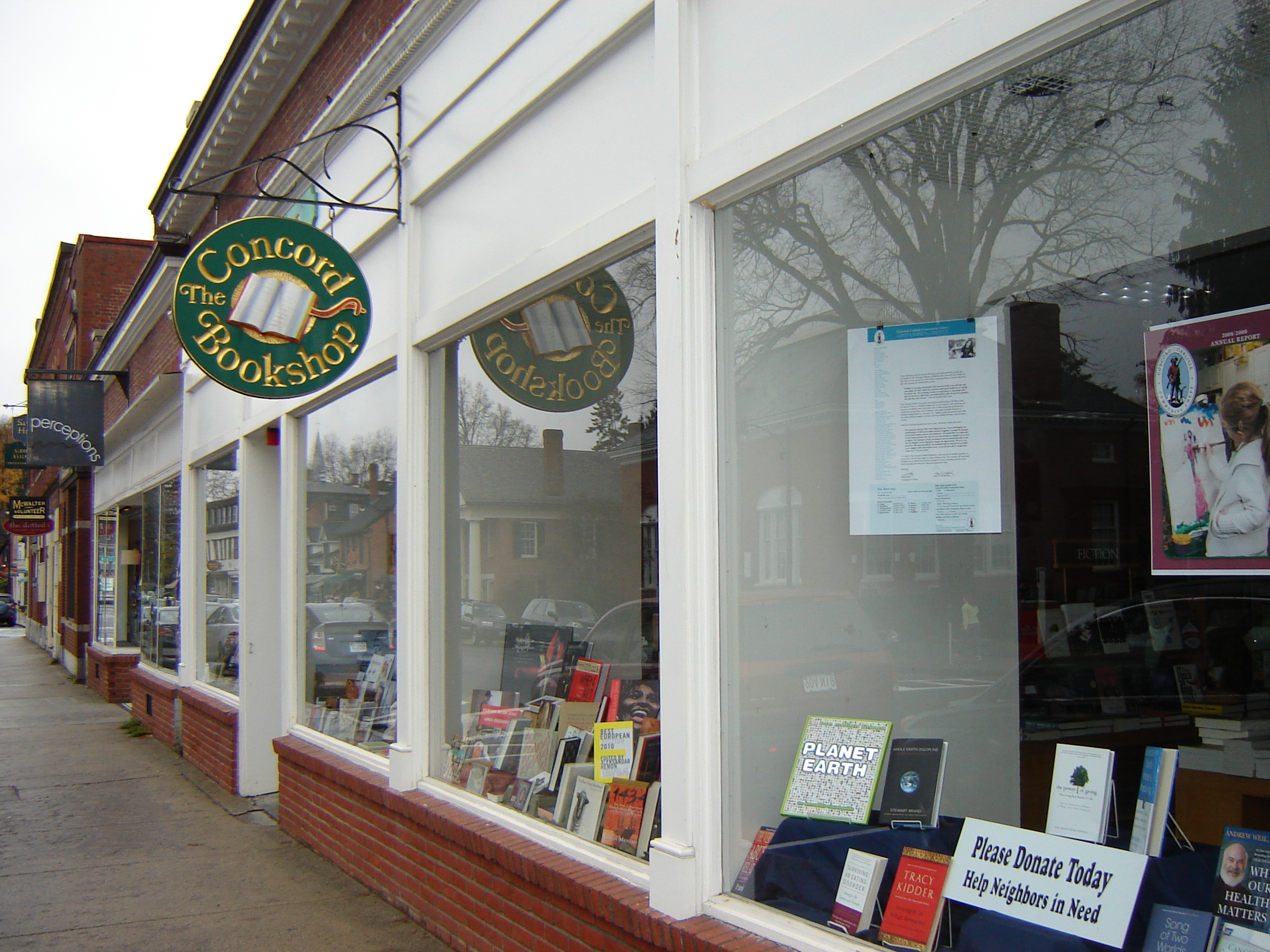
In a rebellion against online behemoths, bookworms are ensuring that local shops survive and even grow.

Do you like to browse in bookshops? Pretty hard to do that online. That’s one reason book lovers have been supporting independent stores, not to mention the unique assistance and advice that shop staff can provide.

Dana Gerber investigated the topic for the Boston Globe last month.

“On the weekends, the line outside the new Beacon Hill Books sometimes snakes out the door. Brookline Booksmith has expanded twice since the pandemic. Later this year, Harvard Book Store will open at the Prudential Center. …

“Indeed, these are optimistic times for independent bookstores in Greater Boston, with four new shops sprouting up in and around Boston since 2020, and more on the way. And what variety bibliophiles have to choose from: There’s a feminist bookstore at Somerville’s Assembly Row, an outpost of a Provincetown favorite coming to the Seaport, and that five-story spectacle on Charles Street.

“ ‘There was a period where there were more stores closing in Boston than were opening,’ said Allison Hill, the CEO of the American Booksellers Association. ‘Now we’re seeing Boston return to being a bookstore town.’ …

“Interviews with more than a dozen local independent bookstore proprietors and experts describe an industry entering a new chapter.

“The pandemic, far from a death knell, galvanized customers to read more, shop locally, and, as the world reopened, indulge a bit more in offline experiences. Federal funds and other investments helped owners stay afloat, or even expand. And for developers and landlords looking to lure people back to brick-and-mortar shopping, bookstores old and new became model tenants. …

“So, how exactly did independent bookstores change their story? [Harvard Business School professor Ryan Raffaelli] says bookstores tend to knit themselves into a neighborhood, offer customers a unique selection of books and ‘sidelines’ (gifts or other products, which tend to have higher margins), and act as a ‘third space,’ away from home and work, where people can gather.

“These are attributes, said Raffaelli, that no algorithm can match. ‘As Boston continues to expand, and reconfigure itself, people are moving into new parts of the city and looking for those similar types of experiences,’ he said. …

“Just take the newest addition to Boston’s bookstore scene: Rozzie Bound Co-op in Roslindale, a neighborhood that has gone without a full-service bookstore for more than a decade. Roy Karp, along with four other worker-owners, opened the 200-square-foot nook in January with the help of more than 150 ‘consumer-owners’ — members of the community who purchased $100 shares in the business.

“ ‘They’re buying the shares because they want to see the bookstore in their community,’ said Karp. …

“In Fields Corner, too, a forthcoming bookstore was willed into reality. Words as Worlds — helmed by Boston poet laureate Porsha Olayiwola and Bing Broderick, the longtime head of the nonprofit Haley House — is slated to open this fall on the ground floor of a new Dorchester Avenue apartment building. The goal, the pair said, is for the store to act as a community hub in a neighborhood that tends to go dark early.

“And it’s clear that sort of space is in demand. The building’s developer collected community feedback and held a vote to help decide what to put on the ground floor. The bookstore prevailed. ‘People want it,’ said Olayiwola. …

“Other bookstores have found success by carving out niches. At Hummingbird Books in Chestnut Hill, which opened last spring, a giant, climbable tree welcomes children to the space. In Assembly Row, readers come from near and far to shop at All She Wrote, a bookstore that carries queer and feminist texts. …

“ ‘People showed up for us and were like, “We need this. We need this type of bookstore in Boston,” ‘ said owner Christina Pascucci Ciampa. ‘Our curation is what makes us who we are.’

“Even at established bookstores, owners are noticing renewed enthusiasm from shoppers that has allowed them to widen their footprints. People are returning in person to Harvard Book Store’s big-name author readings, which make up a sizable chunk of its business and are expected to draw crowds to the new Pru location. ‘They see us as bringing a lot of business to the building,’ said general manager Rachel Cass.

“Meanwhile, Brookline Booksmith has taken over two neighboring storefronts since the pandemic — first to expand their gift section and next to broaden their art and design stacks. The store now takes up nearly half the block. Sales are up ‘double-digit percentage points’ from pre-pandemic, said co-owner Lisa Gozashti.

“ ‘There’s something about it that’s changed,’ said Gozashti. ‘It’s not just browsing. I feel like people are making a day of it.’ “

More at the Globe, here.

If you lack a local bookshop. consider buying online at Bookshop.org, which gives a percentage of sales to indie shops. When my local shop can’t get a certain book, I have found that Bookshop.org has everything I ask for and delivers fast. So even if you are not getting the browsing experience, you are providing it for others in other towns — towns you might someday visit.

Read Full Post »

Photo: Robert Klose.
This shop in a low-income neighborhood of Bangor, Maine, has had the same owner since 1980.

People in my town love our independent bookstore, which seems to have been able to weather the pandemic so far. If I bought a book there before I was vaccinated, the staff would either mail it or offer curbside pickup. Now at last I feel comfortable going inside. Does your town have an indie?

Robert Klose wrote recently for the Christian Science Monitor about an indie bookshop in Maine. “The Dutch Renaissance humanist Erasmus of Rotterdam once wrote, ‘When I have a little money, I buy books; and if I have any left, I buy food and clothes.’

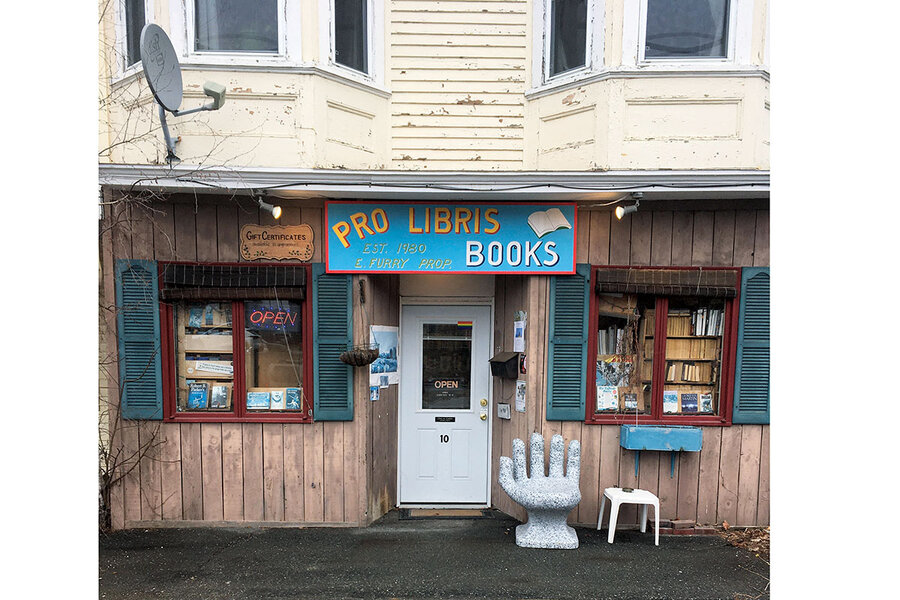
“This thought came to mind as I drove through one of Bangor, Maine’s poorest neighborhoods en route to a small, offbeat, secondhand bookstore that distinguishes an otherwise careworn street and bears the lofty moniker Pro Libris Books. …

“What a wonderful, wonderful thing to have a bookstore in one’s midst, especially in a place where other needs may incessantly intercede, and in an electronic age when so many bookstores – whether of the small, independent, mom and pop variety, or mega-outfits like Borders – have evaporated from our communities, seemingly overnight.

“Pro Libris Books is an unassuming but well-ordered cave of a shop occupying the ground floor of a peeling-paint clapboard building. … The owner, Eric Furry (is there a more appealing name for a bookseller?), has plied his trade since 1980 and, happily, still turns a profit.

“Mr. Furry, a small septuagenarian with an outsize crop of salt-and-pepper hair, touts his business as ‘A Reader’s Paradise.’ This seems to be enough to attract the rich variety of types I have observed there. …

“As I wander the stacks, dividing my time between titles and observing the other visitors, I note the interplay between patron and proprietor. Not everyone is there to buy. If I’m not mistaken in my interpretation of body language, my impression is that many are there to be – and I choose this word carefully – comforted. The familiar titles, the affordability of the volumes, the quirky touches (a coffin-turned-bookcase from the set of a Stephen King movie; a bumper sticker announcing, ‘Maybe the hokey-pokey is what it’s all about’; Mr. Furry’s roaming cat) return me to the consideration of what we need, of what is indeed essential. When I am visiting Pro Libris Books, I find myself siding with celebrated author John Updike, who once said, ‘Bookstores are lonely forts, spilling light onto the sidewalk. They civilize their neighborhoods.’ …

“When I broached the topic of necessity [of bookshops] with him, he recalled a woman who gave him a $20 bill for a $9.50 sale and told him to keep the change, remarking, ‘I just don’t want you to ever go away.’ And then there was the man who sent him $80 out of the blue because he was worried about how Mr. Furry was faring during the pandemic-induced lockdown. I asked about his survival secret. The answer: ‘Low overhead. And a loyal clientele.’ More here.

By the way, I never lose an opportunity to tell book lovers that https://bookshop.org/ has everything. Plus it gives a portion of sales to indies. Unless you think Amazon needs more money, please check it out.

Read Full Post »

merlin_163865472_330a0776-0a88-4fa0-bbca-c08b12292a1c-jumbo

Photo: Bryan Anselm for the New York Times
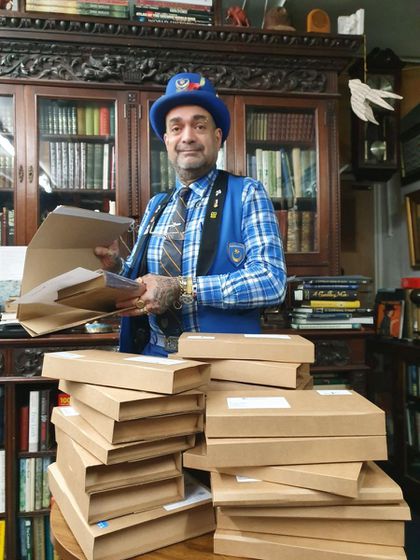
Co-managers Maureen Disimile and John D. Ynsua at the employee-owned Montclair Book Center in New Jersey innovate to keep the magic going.

Who doesn’t find a bookstore magical — especially an independent bookstore? It takes a certain amount of flexibility and creativity to keep one going and not get plowed under by a certain online billionaire. If we all look for books first at our local indy, we can help keep the magic alive.

In New Jersey, Montclair Book Center has found that employee ownership, ability to improvise, and independent-minded customers are critical.

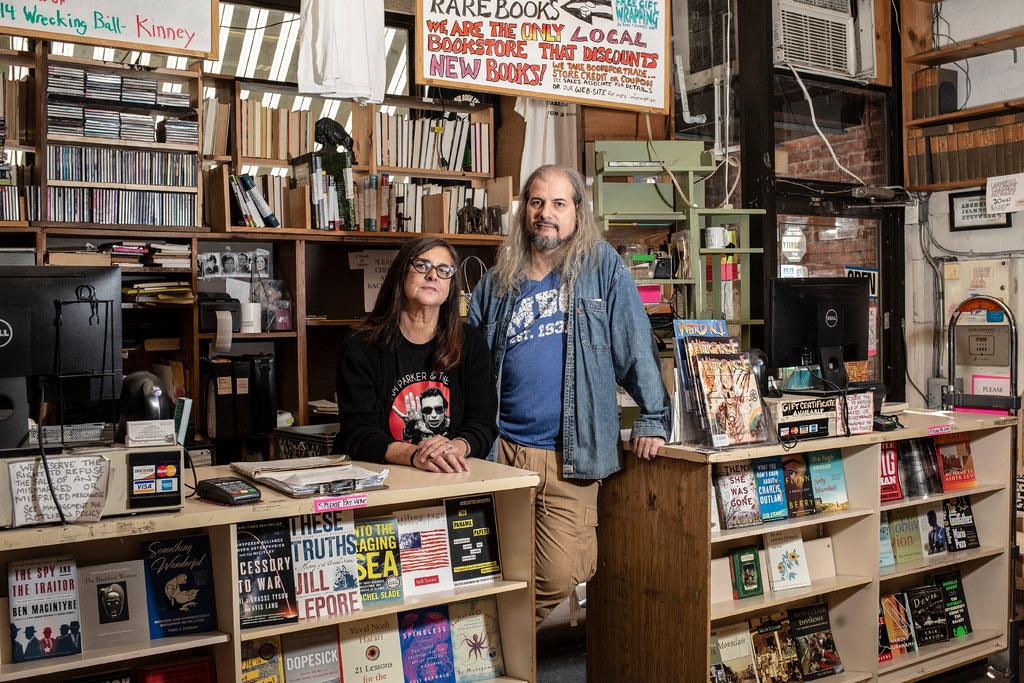
Dana Jennings writes at the New York Times, “Montclair Book Center is 35 years old, going on eternity. A ramshackle throwback to a funkier, more literary time, the store has shelves handmade from raw lumber. And its customers and clerks are often just as eccentric as the shelves.

“I’ve been shopping and snooping there since 1995 and still haven’t exhausted all of this biblioscape’s labyrinths and warrens — some of which, I suspect, lead to C.S. Lewis’s Narnia or Mervyn Peake’s Gormenghast. …

“I’ve stumbled across Italo Calvino limited editions, a hardcover of William Burroughs’s ‘Naked Lunch,’ and a stash of musty, black-and-white comics magazines from the 1960s and ’70s that included ‘Eerie, Creepy and Savage Tales.’ …

“The place is suffused with the sweet reek of ink, decaying pulp and vintage book dust — seductive scents that are like pheromones to book lovers.

“ ‘Unless you work at a bakery, you don’t get many customers talking about how good your store smells,’ said Pete Ryby, who has worked there since it opened in 1984 and is now the store’s primary owner. (Other employees own smaller stakes.)

“The pre-World War I building itself is so cockeyed that it looks set to pratfall down the street, as in some silent Buster Keaton two-reeler. … Still, the store is orderly if not antiseptic. Signs are hand-lettered; there are plenty of chairs for contemplation and ladders for climbing; and, whether by accident or puckish design, the crime section stops short at a fittingly dead end. …

“When I tell people about Montclair Book Center, I almost always mention Ynsua, a friendly 56-year-old filigreed with tattoos and earrings who started there in 1999 and who embodies its eclectic vibe. He owns five kilts and hundreds of vintage T-shirts — Count Chocula, the Emma Peel and John Steed ‘Avengers’ — and his passions as a bibliophile include comics, science fiction and pre-Renaissance European history. He’s also the store’s resident carpenter and a talented cartoonist who once studied at Joe Kubert’s cartooning school in Dover, N.J.

‘I’ve tried not to work for corporations,’ Ynsua said. ‘I like bosses who own their businesses. I like jobs where I can improvise.’

“There’s plenty of that at the Book Center. Indeed, improvisation has helped the store stay in business. Since it started selling used vinyl in 2014, for example, the records ‘have brought in a lot of new customers and increased foot traffic,’ said the co-owner Maureen Disimile, who manages the music side of the business. …

“A quick look at the records revealed a healthy infestation of Beatles; ‘Together,’ by Marvin Gaye and Mary Wells; the musical ‘Hair,’ in the ‘version originale française”’; and even the 1960s British blues rockers Blodwyn Pig. There was also a strong dose of 45s.

“Still, the store comes down to what employees call ‘book people.’ ‘I like being around literature, art and music, and the people who like that stuff,’ said Ynsua, who doesn’t own a computer or subscribe to cable TV. ‘My brain isn’t calcifying here.’

“Lucas McGuffie, a clerk since 2014, added:

‘The attraction is the books, and the book people. They aren’t stupid. They’re more open-minded. They’re smart enough to know that they don’t know all there is to know.’ “

More at the New York Times, here. By the way, if you love vintage vinyl records like the ones at the Montclair Book Center, check out a great R&B collection on my nephew’s site, here. For listening only.

Read Full Post »

tknsbpcqfei6viwqd7pvru32sa

Photo: Robert Sansom
Employees at a small bookshop in England were inundated with orders last week after a day with no sales was reported on Twitter. Pictured here is John Westwood, one of the shop’s owners.

For better or worse, the thing about Twitter is it can reach a lot of people very fast. Some people reached by tweets are not so nice. In this story, though, kindly Twitter users decided to give strangers a helping hand. Of course, it helped that one person with millions of followers took an interest.

“After more than 100 years in business,” writes Cathy Free, “the Petersfield Bookshop in Hampshire County, England, had perhaps never seen a day quite like Jan. 14.

“For the first time that anyone could remember, the independent shop on Petersfield’s Chapel Street did not have a single sale, saddening bookseller Robert Sansom so deeply he decided to tweet about his ‘tumbleweed’ day.
‘Not a single book sold today. . . £0.00,’ he wrote. …

After closing up shop that day, Sansom, 48, went home, thinking the 102-year-old secondhand shop specializing in antique and collectible books might have to close permanently, he said.

“But overnight, something unexpected happened. Sansom’s tweet went viral and was retweeted by author Neil Gaiman to his 2.8 million followers, prompting thousands of people to inundate the shop’s website with orders.

“The worst day ever quickly turned into the best day ever, said Sansom, who works at the bookstore with owners Ann Westwood, her son, John Westwood, and sales clerk Barbara Kelsey.

‘‘ ‘Just reading the messages we have received has brought tears,’ he said. ‘This was a lightning strike. …

‘’We’re now actively looking for ways to pay it forward.’’

“For the past two weeks, Sansom, his co-workers and a small band of volunteers in Petersfield — population 14,372 — have spent 14 hours a day frantically filling hundreds of orders and mailing them to customers around the world. …

‘‘ ‘One lady, recently back home in the States after a UK holiday, sent us her leftover UK currency,’ he said. ‘One couple drove 460 miles, round trip, to visit us, and many drove at least an hour or two.’ …

“On the afternoon he tweeted about his lonely day, he said, a storm had swept into town, bringing steady rain and putting a damper on customers.

‘‘ ‘There wasn’t a single penny in the till — not a book was sold to a flesh-and-blood customer,’ he said. ‘Of course we have slow days — everyone does. But that particular week, the shop was facing one of its worse crises ever. Even on a slow day, we would expect to sell 20, 30, or 50 books. We were wondering if we would have to announce the closure of the shop by the end of the week.’ …

“Now that the shop has 21,000 Twitter followers, ‘We have a voice we didn’t have before,’’ Sansom added. ‘Please, go and find your local indie bookshops, new and secondhand, and buy real books from them. If you don’t, they will just close and disappear. … You won’t even notice to start with,’ he said, ‘and then you will. And it will be too late.’ ”

How lovely that the shop is looking for ways to “pay it forward”! I wonder what they will decide to do. Encouraging followers to shop at indie bookstores is a good place to start. Personally, I avoid Amazon for books, food (Whole Foods), and other items unless I have tried and failed to get the thing somewhere else. Too much power in one pair of hands.

Although I read this story in Boston’s Sunday Globe, the article originally appeared in the Washington Post. More here.

Read Full Post »

3-nocrop-w1024-h2147483647

Photo: Michelle Groskopf
Scenes from the fifth annual Write On Song Camp at Atlantic Records in Los Angeles. From left, Federico Vindver, Angel Lopez, Oscarcito, Sam Derosa, and Adriel Favela.

I know almost nothing about popular music these days or the names of current stars, but I thought this article about songwriting camps was interesting. The artists’ collaborative process might be fun for creatives in other arts to try once in a while.

Steve Knopper writes at Vulture, “At a studio in 2016, Dave Longstreth was working by himself on a chord progression, as he usually does when writing for his band, Dirty Projectors.

” ‘It’s normally a pretty solitary process,’ he says now. But that time, Solange was there, as were Sampha, a British songwriter and producer; Blue, Solange’s engineer; and a bunch of other creative people, all part of what Longstreth calls ‘the camps,’ to make Solange’s 2016 album, ‘A Seat at the Table.’

“ ‘I’d have a melody from her, and would be just harmonizing on it, and she would come over and say, “Ooh, I really love this chord and that chord, but this one is too dissonant,” ‘ he recalls. ‘To be just a spoke on the wheel was a novel experience, and to be thinking in a collective way was just really fresh for me.’

“As long as there has been indie rock, songwriters have worked in their own band bubbles. … But over the past decade, the genre’s biggest names … have substantively contributed to albums by Beyoncé, Rihanna, Kanye West, Lady Gaga, and others. Many of these connections happen by serendipity — Beyoncé’s ‘They don’t love you like I love you’ hook in ‘Hold Up,’ [was] the result of Koenig tweeting a slightly misremembered line from Yeah Yeah Yeahs’ 2003 single ‘Maps,’ then recording it with Diplo. …

“When I walked into a room at the Lakehouse Recording Studios in Asbury Park, New Jersey, in late June,” reporter Knopper continues, “my eyes took a few seconds to adjust from the fluorescent hallway lighting. Through flickering candles, I made out Chelsea Jade, a New Zealand singer-songwriter, dressed in black, singing in a high, glassy pitch; Danny Mercer, a Colombian-American guitarist and singer, tapping out a Depeche Mode–style riff on a keyboard; and Randy Class, a Bronx producer, capturing everything on a laptop and looping it back. This was the BMI songwriters’ camp, which split up ten top writers into groups of three or more with the hope of regurgitating multiple daily songs. … Jade improvised: ‘I’m a psychopath.’ Class quickly discerned a double meaning about a ‘psycho’s path.’ Mercer fleshed out the melody with Spanish-guitar runs. …

“Ben Dickey, manager of Future Islands, Washed Out, and other indie-rock stars, believes the trend begins with hip-hop, in which artists are more experimental and willing to take chances than those in any other genre. Whereas a songwriter in a rock band can be stuck in a routine, collaborating with the same people in the same configurations, West, Drake, and Beyoncé pick the best material from whoever inspires them at the time. ‘You come up with what can be a really interesting song that has way more diverse influences than what one singular singer-songwriter would come up with — then you have Kanye or Drake come in and rap over it,’ Dickey says.” Read more at Vulture, here.

Read Full Post »

The American Booksellers Association has a surprise for anyone who thinks that independent bookstores are a dying breed.

According to their website, “In 2014, the American Booksellers Association welcomed 59 indie bookstores that opened in 25 states, the District of Columbia, and the U.S. Virgin Islands. This is the largest number of new stores joining ABA in a single year since the start of the Great Recession in 2008.

“The new stores include nine branches or satellites of existing businesses and five stores selling primarily used books. In another sign of the health of independent bookstores, 29 established ABA member businesses were bought by new owners. …

“Bookends and Beginnings, which was opened by spouses Jeff Garrett and Nina Barrett in June in Evanston, Illinois, has succeeded despite the presence of what some might assume to be obstacles: potential competition from an enormous Barnes & Noble a few blocks away, campus bookstores associated with Northwestern University and the University of Chicago, and multiple small, used bookstores throughout the neighborhood.

“The general bookstore offering new, used, and bargain books is in the former location of the well-known antiquarian bookstore Bookman’s Alley. …

“It was Garrett, a rare library collections expert, who introduced one of the store’s surprise top sellers: a carefully curated selection of international children’s books in 26 different languages. Barrett said the success of these books makes sense because of the surrounding area’s diverse demographics, including Skokie, which Barrett described as ‘the biggest melting pot you can imagine.’ ”

The Booksellers Association offers more shop profiles and a complete list of new stores, branches, and satellites joining the association in 2014, here.

While we’re on the subject, you might enjoy a WordPress blog by Wendy Welch, Little Bookstore of Big Stone Gap, in Virginia, here. In addition to writing book reviews, she has many stories about life in her town and about the book trade in general.

Read Full Post »