Feeds:
Posts
Comments

Posts Tagged ‘israeli’

Photo: FeelBeit.
FeelBeit is a cultural center for Israelis and Palestinians on the border of East and West Jerusalem.

Today’s story, published at Public Radio International’s The World on April 12, 2024, is one of those beauties one hopes is still true two months later. It’s about a group of Jewish and Palestinian artists who have provided a safe space for different cultures to be together in Jerusalem. It’s called FeelBeit.

Host Marco Werman reported, “For years, isolated pockets of quiet resistance in Jerusalem have tried to bring together people from both sides of the conflict, but the Oct. 7 attacks seem to have put a lot of that resistance on indefinite hold.

“But since then, one place is trying again to establish common ground between Israelis and Palestinians: FeelBeit, an event space and bar in Jerusalem.

“Located on the seam line between east and west Jerusalem, FeelBeit is an Israeli-Palestinian arts house and incubator, according to one of its managers, Karen Brunwasser. Each Wednesday night, the venue gives audiences a few hours of escape from the latest news engulfing the lives of Israelis and Palestinians.

“The venue intentionally sits on the line that divides Arab East Jerusalem and Israeli West Jerusalem. In both Arabic and Hebrew, bayt or beit means ‘home,’ so ‘FeelBeit’ literally means ‘feel at home.’ …

“ ‘This is our sort of sacred refuge,’ Brunwasser said.

“FeelBeit is an offshoot of Jerusalem Season of Culture, another organization that runs a summer festival in the city. The festival calls itself a laboratory for connection between people of different backgrounds, but it has struggled in the past against deeply entrenched opinions about the conflict.

“But Brunwasser and [Riman Barakat, a fellow manager] felt like they had a responsibility to continue hosting events amid the increased tension after Oct. 7.

“ ‘We understood how scared people are because we, ourselves, were afraid in the beginning,’ Brunwasser said. … ‘We understood that people were terrified to talk.’

That’s where they got the idea to call this evening of the arts ‘No Words,’ a stealth tool to bring people together.

“There have been eight or nine ‘No Words’ shows since the Israel-Hamas war began.

“According to Barakat, the audience every week is a mix of Israelis, Palestinians and people from other international backgrounds. And every show features Israeli and Palestinian artists alongside one another on stage. In fact, Barakat said it has actually been easier to coordinate joint performances with Israeli and Palestinian artists since the war began.

“ ‘And that’s something that has blown our mind,’ she said. …

“Zudhi Naguib is another FeelBeit member who started working on communications for the group about five years ago. He said he felt instantly at ease, partly because of the violence experienced growing up as a Palestinian in Jerusalem.

“He described the nature of this violence: ‘Eh, getting attacked by extremist Jewish Israelis, by being attacked by extremist Palestinians. Like I was attacked from both sides.’ Naguib said FeelBeit gave him a home.

“ ‘It actually shows me that Jerusalem is really much bigger than what I thought before. It shows me that there’s space for everyone. It was the trust that we succeeded to build with the people who come to FeelBeit, it really was what rescued us after the seventh of October,’ he said.

“After Oct. 7, Naguib felt too scared to leave his house. He didn’t speak to anyone for five days. It was the FeelBeit community that finally helped him. Naguib drove to the home of his boss at FeelBeit, who wanted him to join her at a kibbutz — an Israeli commune — where the parents of their mutual friend Oz had been killed in the attacks. … Naguib recounted Oz’s response to his condolences: ‘It’s not my sorry, it’s ours.’

“ ‘And he told me, “I don’t want anyone to use my mom and dad’s blood for revenge,” ‘ Naguib added.”

More at The World, here. No firewall. Donations encouraged.
Read Full Post »

Today I wanted to share several links on the power of getting to know those with views that are opposed to yours. It’s not something I’m especially good at, but I’m sure there are few things more important.

ArtsJournal posted a New York Magazine/”Science of Us” link about “the contact hypothesis” recently.

Jesse Singal wrote, “In the last few months I’ve found a bit of solace and much-needed solidity in a social-psychological idea that has been developed for the better part of the last century: the contact hypothesis.

“It’s the simple, inspiring idea that when members of different groups — even groups that historically dislike one another — interact in meaningful ways, trust and compassion bloom naturally as a result, and prejudice falls by the wayside.

“The contact hypothesis, or contact theory as it’s sometimes known, is a really powerful, promising idea for a country like the United States — one that is big and diverse and whose national conversation on a host of subjects ranging from poverty to crime is veined through with implicit and explicit racism. …

“[For example,] if you could get more non-Muslims to interact with Muslims, whether as neighbors or business partners or in a host of other contexts, [the percentage of those with bias] would likely drop. And while this idea sounds idealistic, there’s solid evidence behind it — significantly more than there is behind other ideas, like corporate diversity trainings for reducing prejudice that focus more on information and awareness than personal relationships. …

“As I read about [the work of LindaTropp, a social psychologist and contact-theory expert at the University of Massachusetts Amherst] and spoke with Tropp, I kept thinking about the airport protests [this year].

“Suffice it to say that many of the protesters were simply there because they thought it was the right thing to do, because they were motivated by politics or religion or their social networks or whatever else. But think about how much more potent that drive is when you know and value and worry about people who could be personally affected: Think about the difference between I am protesting this policy because it is wrong and I am protesting this policy because it is wrong and could hurt people I care about.

“That’s the ultimate promise of the contact hypothesis: You don’t need fancy educating or lecturing or anything else to get people to treat one another better. To a certain extent, you just need to get them to interact on the same level, and progress will follow.”

Two favorite examples of the power of human contact: Parents Circle, in which Israelis and Palestinians who’ve lost loved ones to the conflict come together, and Kids4Peace, summer camps for Jewish, Muslim, and Christian youth to get to know one another.

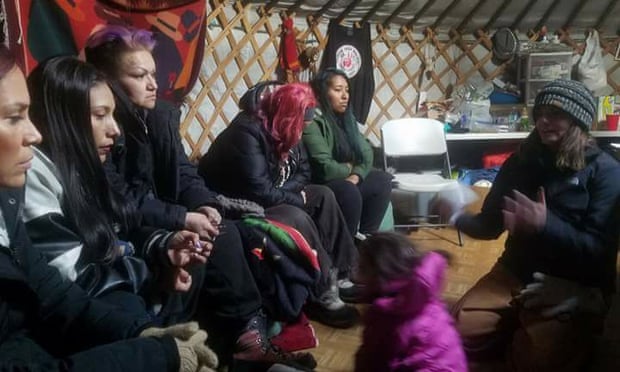
Also note this Guardian story about a descendant of General Custer reaching out to the Dakota Access Pipeline tribes!

Photo: David Valdez 
Alisha Custer – whose lineage traces back to the US army commander who led the 19th century wars against Lakota Sioux and Cheyenne warriors – meets with Standing Rock members.

Read Full Post »

Photo: Boston Globe
Al Filipov died on Sept. 11. He was on the plane from Boston.

After September 11, 2001, good works sprouted around the country, launched by people from all walks of life who were determined that goodness should have the last say.  The Huffington Post collected a bunch of these initiatives for one anniversary of the tragedy, here, but you can find examples in nearly every community.

In Concord, Al Filipov, who was on one of the planes, is honored in several ways, including by the Filipov Peace and Justice Forum.

Al’s son, Boston Globe reporter David Filipov, once recalled his father as “engineer, inventor, sailor, deacon, coach, husband, dad, raconteur.” The Filipov forum website adds that he was a painter and a human rights activist, noting,

“He sought out the best in people and cared passionately about the world in its beauty and pain. He earnestly believed in the power of an individual to make a difference in the world.”

The 2016 Al Filipov Peace & Justice Forum will take place on September 25 at the Trinity Congregational Church on Walden Street in Concord. Representatives from the Parents Circle-Families Forum are the featured guests. The Parents Circle is made up of bereaved Palestinian and Israeli families that have come together to support “peace, reconciliation and tolerance.”

As one member says in the video below, people from different sides of a conflict need to get to know one another as individuals and share commonalities in order to let go of “being right” all the time instead of creating peace. Otherwise any future agreement is just a cease fire.

The presentation will be from 4 p.m. to 6 p.m.

Read Full Post »

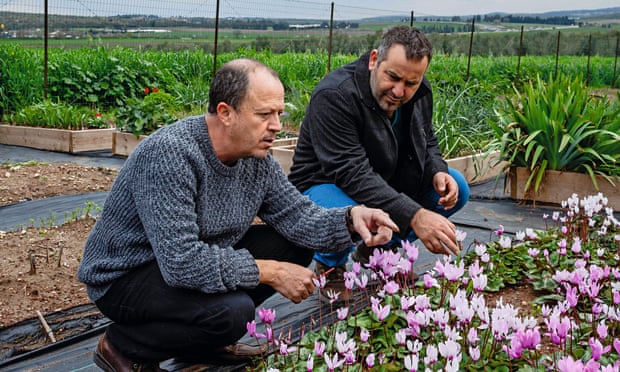
Shared interests can bridge cultures. The Guardian‘s Jim Cable offers up a nice example in his report on “two plantsmen in Israel – one Jewish, the other Muslim – [and their] mission to save their region’s rare native species.”

He writes that Oron Peri, a Jewish garden designer who lives halfway between Haifa and Nazareth, has long partnered with Mansour Yassin, a Muslim, on landscape work. Now they are collaborating to share a large collection of Eastern Mediterranean native species with other plant enthusiasts. He says their affiliation is perfectly natural in the part of Israel where they live.

“Yassin adds, ‘We have the same ideas about relationships between Christians, Jews and Muslim people. We don’t hold to stereotypes about where you come from.’

“Peri realised the time had come to formalise the way he shared plants with other enthusiasts. So Seeds of Peace was born; a scheme where seed sales of garden-worthy bulbous plants support conservation of rare species. Yassin is gradually matching up botanic names with the Hebrew he naturally uses for plants he has known since playing in the mountains as a boy. …

“For Peri, the collection represents 20 years of travel and botanising, specialising in plants from the Mediterranean and Middle East. Indigenous populations have suffered due to tourism (particularly on the Greek islands and Cyprus) and illegal harvesting for the bulb market. Some plants are endangered in the wild, with no conservation scheme to protect them in their native country. They give these refugees, as Peri refers to them, a place to thrive and set seed.” Read about the work here.

Photo: Yadid Levy
Oron Peri, left, is Jewish and his Seeds of Peace partner, Mansour Yassin, is Muslim. Here they examine cyclamen in their beds in Kiryat Tiv’on.

Read Full Post »

My sister buys a subscription to the Utne Reader even though you can read much of it online. She loves the variety of articles it reprints and thinks she should support the effort.

At Thanksgiving she told us about an article Rachel Kadish wrote that originally appeared in The Good Men Project Magazine. It’s about Kadish’s Israeli cousin, Noam Galai, and a photo he took of himself screaming up at the sky. It’s about how the photo struck a chord with Iranians and with Arabs working to overthrow oppressive regimes and how they used the photo widely, knowing nothing about the photographer.

Rachel Kadish writes that people originally lifted the photo from Flickr, and soon it went viral. “Shortly after Noam began investigating the spread of his scream photograph around the globe, he discovered something completely unexpected. Images of his face were turning up graffitied on walls in Tehran. In Tabriz City.

“His portrait, it turned out, had been picked up by some antigovernment protesters in Iran. In the year following the Green Movement’s first open clashes with Ahmadinejad’s government—a violent [June 2009] confrontation watched anxiously by the world—images of Noam’s face were reproduced by activist graffiti artists, sometimes veiled in red-painted blood. His anonymous face was rendered by anonymous Iranians on metal fuse-boxes and walls, alone or amid a crowd of other spray-painted images: part of a mute but vociferous message dangerous to utter aloud. …

“When Noam learned that his self-portrait was being used by anti-Ahmadinejad protesters, he emailed some of the Iranian graffiti artists through Flickr, where they’d posted images of their work under aliases.

“ ‘I told them, “It’s me. It’s cool. I’ll be happy to see more of what you do.’ ” ‘

“One of the Iranian graffiti artists wrote back. It was a two-line exchange.

“ ‘He was cool,’ Noam said. ‘He was “Nice to meet you, I like your picture.” I didn’t tell him I’m from Jerusalem.’ ”

Read Full Post »