Feeds:
Posts
Comments

Posts Tagged ‘jan hoffman’

I have to say, I found this new research fascinating as I had been experiencing something similar to the contrast sensitivity described. And I was delighted to see you could train your eyes to counteract the perceptions that can cause a stumble.

Jan Hoffman writes at the NY Times, “As adults age, vision deteriorates. One common type of decline is in contrast sensitivity, the ability to distinguish gradations of light to dark, making it possible to discern where one object ends and another begins.

“When an older adult descends a flight of stairs, for example, she may not tell the edge of one step from the next, so she stumbles. At night, an older driver may squint to see the edge of white road stripes on blacktop. Caught in the glare of headlights, he swerves.

“But new research suggests that contrast sensitivity can be improved with brain-training exercises. In a study published [in March] in Psychological Science, researchers at the University of California, Riverside, and Brown University showed that after just five sessions of behavioral exercises, the vision of 16 people in their 60s and 70s significantly improved.”

Read more at the NY Times, here, or go straight to “Improving Vision Among Older Adults: Behavioral Training to Improve Sight,” here. Authors Denton J. DeLoss and George J. Andersen are from the University of California, and Takeo Watanabe is at Brown.
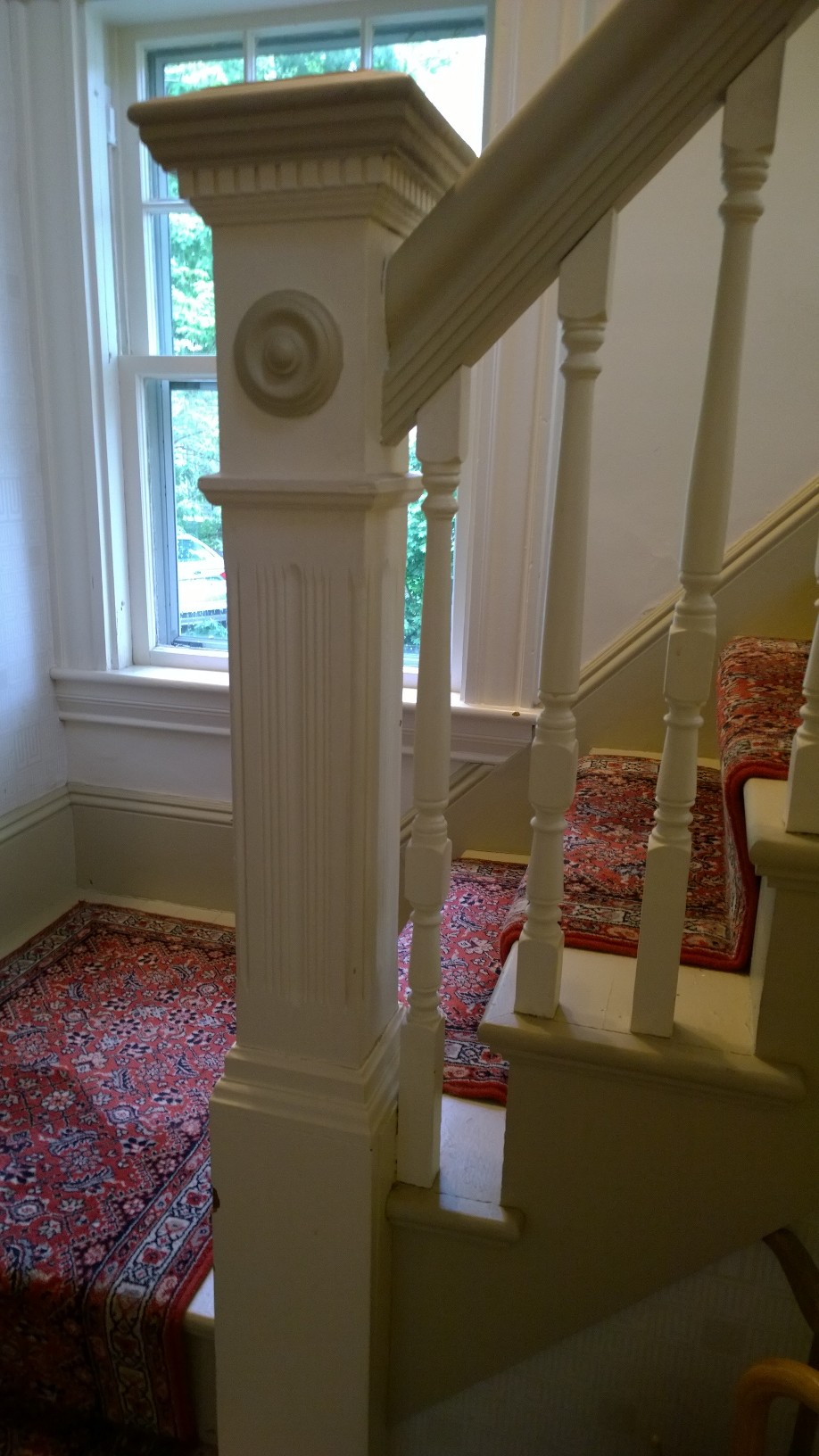
stairs

Read Full Post »

When I was a teacher in Pennsylvania hoping to get accreditation, a supervisor from the teachers college where I took classes came to observe me at work. It was quite a long time ago, and the only thing I recall is that he remarked that I needed to do more with my classroom bulletin boards.

There I was, trying to do creative things with 11-year-olds in language arts (the play within the play from A Midsummer Night’s Dream springs to mind), but his checklist required him to observe the bulletin boards.

So imagine my delight when I saw an article today about a study suggesting teachers may be putting too much emphasis on bulletin boards and wall decorations.

Jan Hoffman writes at the NY Times, “That bright, cheery look has become a familiar sight in classrooms across the country, one that has only grown over the last few decades, fed by the proliferation of educational supply stores. But to what effect?

“A new study looked at whether such classrooms encourage, or actually distract from, learning. The study … found that when kindergartners were taught in a highly decorated classroom, they were more distracted … than when they were taught in a room that was comparatively spartan.

“The researchers, from Carnegie Mellon University, did not conclude that kindergartners, who spend most of the day in one room, should be taught in an austere environment. But they urged educators to establish standards.

“ ‘So many things affect academic outcomes that are not under our control,’ said Anna V. Fisher, an associate professor of psychology at Carnegie Mellon and the lead author of the study, which was published in Psychological Science. ‘But the classroom’s visual environment is under the direct control of the teachers. They’re trying their best in the absence of empirically validated guidelines.’ ”  Hence the impetus for the study. Read more here.

Photo: Psychological Science
In a new study, 24 kindergartners were taught in two classroom settings: one unadorned, the other decorated with posters and artwork.

Read Full Post »