Feeds:
Posts
Comments

Posts Tagged ‘Kyiv’

Photo: Johanna-Maria Fritz for the New York Times.
“When I went to the Balanchine Trust,” said Alexei Ratmansky in Ukraine, ” I asked for a ballet that didn’t have a huge cast, not too long. And it had to be uplifting. And of course, no Russian music.”

I never tire of articles about the brave Ukrainian people and how they continue to “carry on” in wartime. They keep daily activities as normal as possible. People help people.

Today’s story is from Marina Harss at the New York Times.

“The eminent ballet choreographer Alexei Ratmansky has been a vocal supporter of the Ukrainian cause since the Russian invasion in 2022. …

“Both he and his wife, Tatiana, spent the early years of their careers in Kyiv, dancing for the national ballet company at the Kyiv Opera House, and both have family in and around the city. But until this August, neither had been back since the war began.

“Ratmansky, who is artist in residence at New York City Ballet, and who was the director of the Bolshoi Ballet in Moscow for five years, has often wanted to go to Kyiv, he said in a recent video interview from their hotel in central Kyiv. It never felt like the right time. But their desire to work with the dancers of the national ballet company won out over fear.

“The Ratmanskys’ arrival coincided with one of the worst periods of the war, a time of constant attacks on the capital that sent them and others scurrying to bomb shelters multiple times a day. ‘It is difficult in every sense,’ Tatiana said, ‘mental, physical.’ …

“The immediate reason for their return was to stage a work by the great 20th-century choreographer George Balanchine, whose ballets are in the repertory of top companies around the world. Now the National Ballet of Ukraine, too, will have a Balanchine ballet, ‘Donizetti Variations,‘ a lighthearted work packed with witty steps danced at high velocity.

“ ‘It’s exhausting and really difficult,’ the dancer Mykyta Sukhorukov said in an interview, ‘but he understands that the theater needs this kind of repertory.’

“Conditions at the company, as in the rest of the city, are hard. The troupe is down to 95 dancers from 176 before the war. Many have left to dance abroad. Twice-yearly the male dancers must sign papers exempting them from military service. These days performances are often interrupted by alarms warning of incoming fire.

“On those occasions the performers, crew and audience — kept to no more than 600 in a theater with capacity for 1,300 — head to a shelter underground. But during the day dancers often stay put during alarms. ‘Otherwise,’ Sukhorukov said, ‘we’d have to live in the shelter.’

“A few days before the Sept. 10 premiere of ‘Donizetti,’ the Ratmanskys sat down for a WhatsApp interview from their hotel. The interview was interrupted twice by sirens. Distant explosions were audible. …

Marina Harss
“How did you get to Kyiv?

Alexei Ratmansky
“There is a train from Vienna to Kyiv. Actually, it’s just two cars attached to another train. But in Vienna, the train never arrived, so we took a different train to Budapest and then got on the car going to Kyiv. There was this big group of Ukrainians running from one track to the other, up and down the stairs with their suitcases.

Harss
“What did it feel like to realize you were finally in Ukraine again?

Alexei
“You feel at home — there’s an ease to it, you understand it. But then you realize: this is not a fairy tale. It’s real. People are dying every day. We hear explosions around us. …

Tatiana Ratmansky
“One night we tried to go to the shelter each time we received an alert. You get up, dress, go to the shelter, come back, undress, go to bed, and then do it all over again, many times a night. So we stopped doing it.

“But when it’s quiet for too long, it’s also scary, because you feel like the Russians must be preparing something. It’s like the myth of the Minotaur. Every night, it has to take someone. Except it’s real. In the morning you hear the news: 2 people killed, 17 people killed, 38. It’s like that every night and every day.

Harss
“What is the feeling in the city? How does it look?

Alexei
“Beautiful, I have to say. There are people in the streets. The cafes, restaurants, and stores are open. The arts are flourishing. Everyone is so caring, so alive, so warm. People are taking care of each other.

Harss
“What is the atmosphere at the theater?

Alexei
“Everyone does their job. There is a feeling of normalcy. For example: In addition to setting Balanchine’s ‘Donizetti Variations,’ I’ve been teaching morning ballet class every day. After that first sleepless night, when we kept going back and forth to the shelter — I don’t think anyone in Kyiv slept that night — I had a class to teach at 10 a.m. I came in, not sure what I would find. Would anyone be there? But when I got there the whole class was there, waiting. They greeted us, smiling. That made me cry.

“Some of them live across the river; the metro doesn’t run, or they close the bridges. One of the pianists told me she has to travel two hours to get to the theater on time. And there she is, every day, on time. No matter what happened the night before, the next morning people go and do their job, quietly.”

More at the Times, here. Since my four months working with Ukrainians after the Russian invasion, I’ve been struck by the sense of unity among them. This week I can understand how comforting that can feel. Even when groups of people in a country have very different needs and wishes, if there’s a threatening outside force, they can at least unite to reject it.
Read Full Post »

They Stayed in Kyiv

Photos: Iryna Dobryakova.
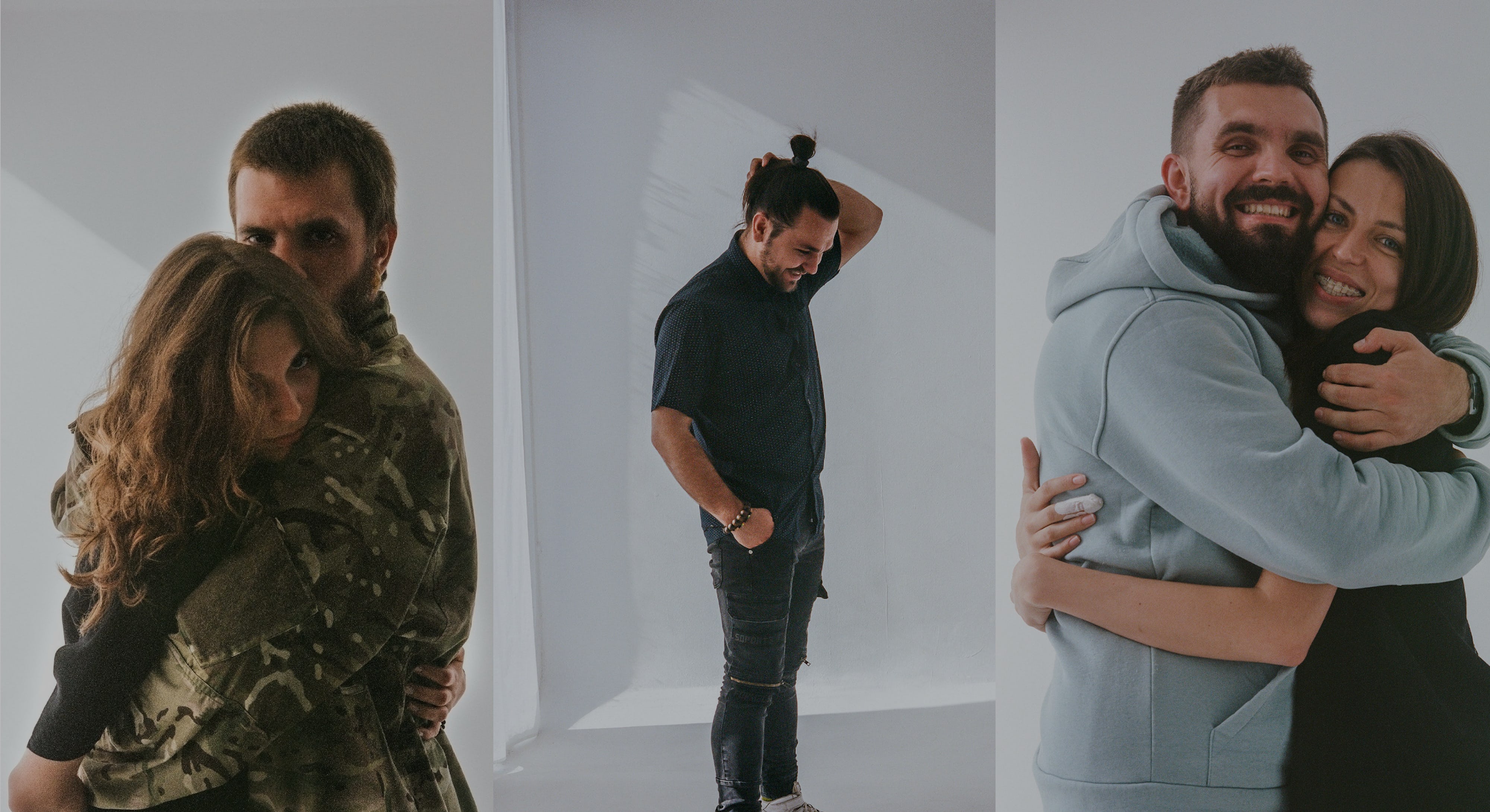
Young creatives who stayed behind in war-torn Ukraine.

Blog readers know that Asakiyume and I spent a few months helping media people in Ukraine with their English social-media outreach. (See this post.)

It’s not the same, but the native English speakers and Ukrainians on the team do keep in touch via Facebook. And we donate to former colleague Vitali’s work to help children traumatized by war in Rivne. Vitali has not seen his little daughter since the war started, which makes me sad. At least he knows she’s safe outside the country. And while he stays behind, he volunteers to help other children.

Shelby Wilder writes at Mic about some others who stayed behind.

“Russia’s war on Ukraine has disrupted the lives of millions. Many people fled their homes when mounting evidence of the impending ‘special military operation’ surfaced. As the country’s economy nosedived and the possibilities of work and earning a living wage evaporated, Ukrainians have pivoted their careers and reinvented themselves for the sake of survival. … It’s young people — the future of the country — who are leading the charge. History has shown that wars are not just fought with guns; they are fought with art and stories by creatives with the capability to fortify hearts and minds.”

MICHAEL FOSTIK | МИХАЙЛО ФОСТИК Profession: Director, Cinematographer, age 32

“Michael Fostik, a director and cinematographer by trade, resides in London but returned to Ukraine during the COVID pandemic to be closer to family. He was shooting commercial and creative projects while in his home country, but just as the pandemic began to wind down, news of a potential war with Russia started to spread. At the beginning of February, Michael relocated his mother and grandmother from Kyiv’s northern suburbs to his hometown in Transcarpathia, a remote region in western Ukraine. His family initially resisted immediate evacuation, but in time, Michael’s insistence would prove vital. Russia’s invasion began on Feb. 24, 2022, and within a matter of days the Russian military was within reach of the family’s by-then-vacant home.

“Once Michael moved his family to safety, he had planned to return to the U.K. ‘My life was in London,’ he tells Mic. ‘I have an apartment there, I had jobs lined up, everything was waiting for me, and then overnight it suddenly stopped.’ Less than 24 hours after Russia invaded, Ukrainian President Volodymyr Zelensky signed a decree of martial law that banned male citizens ages 18 to 60 from leaving the country, in case they were needed to defend their homeland. So Michael stayed in Kyiv. …

“Beyond being physically constrained within his country’s borders, Michael’s creativity was restricted by the conflict too. ‘The digital and creative content being produced in the country is centered around war,’ he says. ‘There isn’t capacity to create in other genres or to cover anything else; it’s not relevant. As a result, there’s currently an undeniable heaviness in our culture.’

“So, Michael pivoted to journalism, covering the unfolding conflict in order to make ends meet. He visited the front lines as Russia’s army made advances on the capital. Ukraine’s Armed Forces required that individuals reporting to the war zone have their own body armor, but Michael knew that it would be nearly impossible to acquire a bulletproof vest during the chaos. He tried to be resourceful and ordered a flak jacket on Amazon. But when it arrived, the vest was empty; the essential Kevlar was not included.

“In true Ukrainian spirit, Michael filled the lining of the vest with books instead and headed towards combat. Michael says he deliberately selected the books that would serve as makeshift armor: ‘I chose carefully. I couldn’t just fill it with any random book! I chose books that meant something to me.’ The literature ended up coming in handy when he was forced to retreat to a bunker for several days. He passed the time by removing and reading the books one by one. When he emerged from the bunker, he says, someone remarked that his vest looked different.

“ ‘I’d finished all the books by that time and left them behind,’ Michael says.”

VIKTORIIA PETROVA | ПЕТРОВА ВІКТОРІЯ, choreographer, age 23, and OLEKSII STEPANKOV | СТЕПАНКОВ ОЛЕКСІЙ, artist, age 30

“Viktoriia Petrova and Oleksii Stepankov are a husband and wife who have been separated by the war. A trained dancer, Viktoriia has worked as a choreographer in independent theater productions, specializing in modern dance with a focus on free form. ‘Improvisation is imagination,’ she says. Oleksii is an artist and director of photography who works in theater, cinema, and sculpture. He works with materials in their natural surroundings to combine textures and light, allowing the imaginations of viewers to interpret their own stories. Oleksii comes from a legendary family of artists: His grandmother is the famous theater and cinema figure Ada Rogovtseva.

“Since Feb. 24, the lives of Oleksii and Viktoriia have completely changed. On the second day of Russia’s invasion, Oleksii joined the Ukrainian Volunteer Corps for the defense of Kyiv. After Russia’s military retreated, he joined the Armed Forces of Ukraine and was deployed to the Donbas region in eastern Ukraine, while Viktoriia has remained in the capital city.

“Viktoriia describes how their priorities shifted: ‘Men fight, and the volunteer movement rests on the women left behind. The theater that our family is involved in has become a volunteer center. Instead of rehearsals, we’re coordinating humanitarian aid.’ On March 27, the International Day of Theatre, Viktoriia, along with others from her theater troupe, helped organize an evening of poetry for Ukraine’s military. ‘We continue to hold theatre performances and film screenings whenever possible to support the Armed Forces,’ Viktoriia shared. She has held dance workshops since Russia’s invasion, and she sends all the proceeds to her husband’s unit in the military.

“Facing long periods of separation, the couple is never sure exactly when they’ll be able to see each other. So they communicate through art. Viktoriia sends videos of her improvisational dances, and Oleksii sends back photo collages from the front lines. Viktoriia insists that the ‘four days of vacation with him once every few months is still a gift.’ Of course, even when Oleksii is on ‘vacation,’ he continues to check in with his unit and deal with internal military affairs, ‘We know what we are sacrificing and fighting for,’ he says. ‘We dream of a free Ukraine and of love. This is our salvation.’ “

Also at Mic, here, you can read about BOGDAN ZHDANOV | БОГДАН ЖДАНОВ, actor, age 28 —  “We all cry these days. It’s okay. We cry and then we carry on” — and VLADYSLAVA SHLIAMINA | ВЛАДИСЛАВА ШЛЯМІНА, line producer, age 31 — “We are united as a nation, and we are not giving up.”

At the New York Times, here, you can find out more about the publication Mic, which was new to me.

Read Full Post »