Feeds:
Posts
Comments

Posts Tagged ‘land’

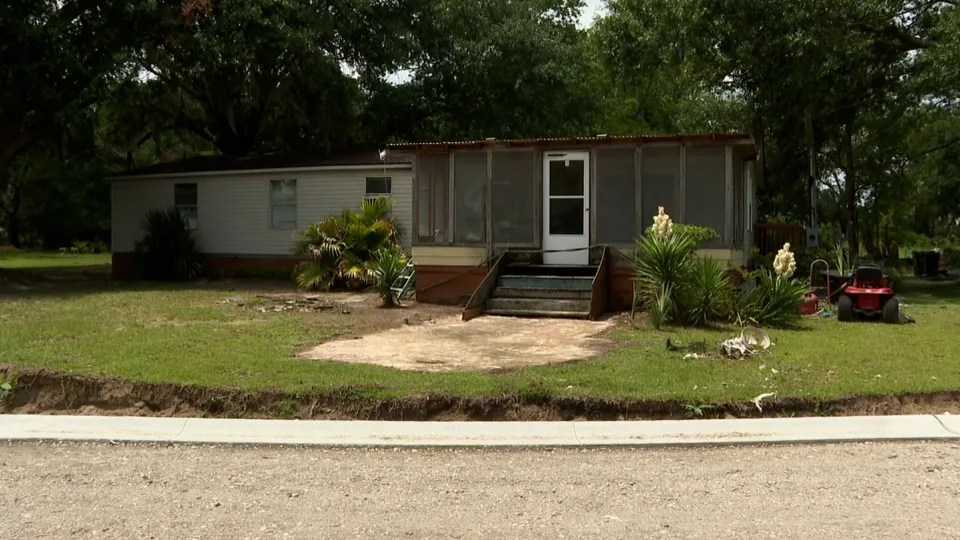
Photo: WJCL via CNN.
The home of Josephine Wright, 93, on Hilton Head Island, where resort development has encroached on the rights of Gullah Geechee people for generations.

We often read about how in “the old days” the powerful usurped the rights of minorities and paid expensive lawyers to take their land. Alas, it’s still going on.

Nicquel Terry Ellis reports at CNN, “Josephine Wright and her late husband, Samuel Wright Sr., moved from New York to Hilton Head Island, South Carolina, nearly 30 years ago to seek peace and relaxation on a family-owned property.

“The 1.8-acre parcel of land had been in her husband’s family since the Civil War and it was there that they carried on family traditions, hosted Thanksgiving and Christmas gatherings, planted trees and bushes and built a porch, Wright said.

“Wright, who is 93, acquired the deed to the land in 2012 after her husband died in 1998, her granddaughter, Tracey Love Graves, said. Now, Wright’s beloved land is at the center of a legal battle with a property developer looking to build a residential development next door. According to the Post and Courier, Georgia-based Bailey Point Investment, LLC is planning to construct 147 homes.

“Graves said Bailey Point had previously showed up at her grandmother’s house and offered $30,000 for Wright’s land, which she declined.

“The developer later filed a lawsuit in February 2023 against Wright claiming that her satellite dish, shed, and screened-in porch were encroaching on the developer’s land and delaying the construction of new homes.

“The lawsuit asked for the removal of the structures and sought ‘just and adequate compensation for its loss of the use and enjoyment’ of their property, and expenses related to delays in development.

“Wright and Graves said they have since removed the shed and satellite dish and were preparing to downsize the screened porch when Wright decided to file a counterclaim. …

“Wright’s counterclaim, filed April 25 and amended in June, accused Bailey Point of a ‘constant barrage of tactics of intimidation, harassment, trespass, to include this litigation in an effort to force her to sell her property.’

“The counterclaim also accused the developer of ‘trashing her property, going onto her property cutting brush and shrubs, littering, causing dirt and debris to cover her automobile, house and contents.’ The claim said Wright had been ‘deprived of the peaceful enjoyment of her property.’ …

“The legal battle is drawing renewed attention to the historic expropriation of Black-owned land. Wright told CNN she is concerned the developer is using well-known pressure tactics to get her to give in and sell her land. …

“Bakari Sellers, a civil rights attorney and CNN political commentator who is advocating for Wright, said land battles with developers have historically been an issue for the Gullah Geechee people – descendants of Africans who were enslaved along the lower Atlantic coast and forced to work on rice, indigo and Sea Island cotton plantations. Wright’s late husband was Gullah Geechee.

“ ‘Their land is so valuable,’ Sellers said. ‘They (developers) have been doing this for years. This is not new.’

“Wright says she hopes that her fight will inspire other Black landowners in Hilton Head Island to defend their property. …

“Wright’s land fight has garnered the attention of celebrities, including NBA star Kyrie Irving who donated $40,000 to a GoFundMe created to raise money for her legal fees. Filmmaker Tyler Perry also shared Wright’s story on Instagram saying, ‘Please tell where to show up and what you need to help you fight.’ “

Rebecca Carballo and Amanda Holpuch add at the New York Times, “Ms. Wright’s granddaughter Charise Graves, who lives on the property, said that loud construction has sometimes begun around 6:30 a.m. and that she and other family members have often dealt with noise and construction workers. An aunt who had also been living there, and is a defendant in the lawsuit, moved to Florida in February because she couldn’t handle the noise and stress of the situation, Ms. Graves said.

“Ms. Graves estimated that she has spent $6,000 to cover the costs of responding to the developer’s complaints and to hire a lawyer. The family created a GoFundMe to help pay for the legal battle and property taxes. Snoop Dogg donated $10,000 to the fund-raiser. …

“Ms. Graves said she planned to use some of the more than $300,000 raised so far to create a foundation in her grandmother’s name that aims to support other families who are trying to keep their property.”
More at CNN, here, and at the Times, here.

Read Full Post »

070120alaska_women_farmers

Photo: Thomas Newman
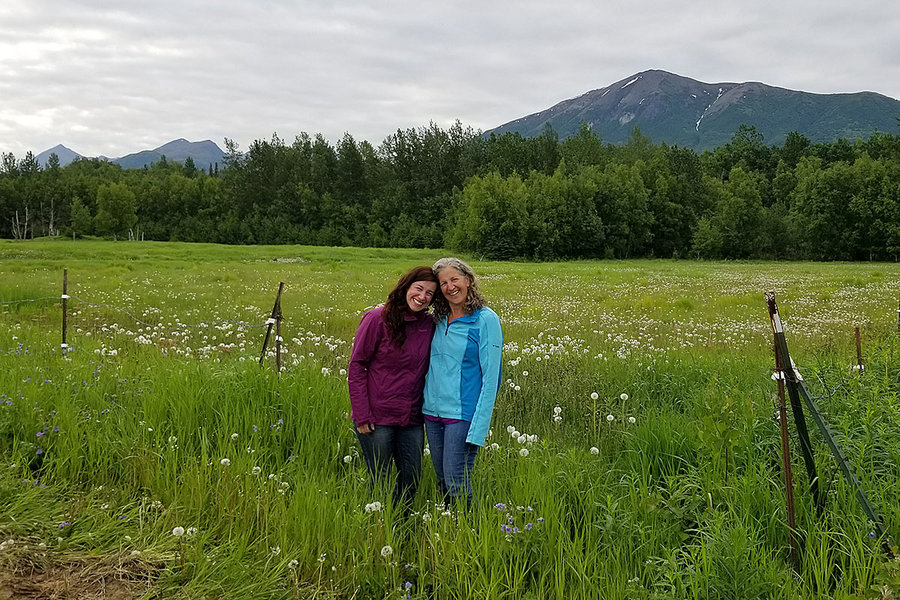
Jennifer Sharrock, left, is a beginning farmer in Palmer, Alaska. When she needed land to expand, she was matched with land owner Jan Newman through the Alaska Farmland Trust.

I’ve posted a few times about beginning farmers and, in particular, Letterbox Farm in rural Hudson, New York (here). Sandra’s niece and her partners at Letterbox Farm are perfect examples of a hopeful trend in farming: young people getting serious about agriculture and bringing in new and sustainable approaches. It’s incredibly hard work, but they love it.

Today’s post is also about young people getting into farming and is part of a Christian Science Monitor series on the topic. Reporter Sarah Matusek addresses young farmers’ need for land and creative ways older farmers can provide it.

“Jan Newman became an accidental alpaca farmer. She took up knitting in the 1990s at home in Palmer, Alaska, to supply her first child with natural-fiber clothing, and one thing led to another. She innovated again in 2013 when she founded Grow Palmer, a public food program that plants edible gardens around town. These days, Ms. Newman is pondering retirement. …

“Jennifer T. Sharrock is just starting out. She left an insurance career this year to pursue market farming and permaculture full time through her Seeds and Soil Farm. The beginning farmer began teaching permaculture design three years ago, but her popular classes quickly outgrew her space. Buying more land wasn’t financially feasible.

“So she placed an ad in Alaska Farmland Trust’s FarmLink program, a kind of ‘dating service’ for land seekers and owners. When Ms. Sharrock received an answer to her ad, her heart skipped a beat. She saw it was from Ms. Newman, whom she’d met through Grow Palmer. They also turned out to be neighbors.

“ ‘It’s a match made in heaven,’ said Ms. Sharrock, who has started on four acres of Ms. Newman’s property.”

The two women’s agreement is unlike other FarmLink arrangements.

” ‘There’s actually no money changing hands,’ says Ms. Newman, who calls the younger farmer’s regenerative agriculture plan ‘the best stewardship possible.’ …

“Land-link pairings like the one in Palmer represent one possible step toward solving a nationwide puzzle – how to help experienced farmers exit out of agriculture while building an on-ramp for new producers.

” ‘I get a sense there are more young people who don’t necessarily have farm backgrounds, who are taking agriculture entrepreneur courses, and they are starting to jump into farming,’ says Jim MacDonald, an economist at the U.S. Department of Agriculture.

“Along with access to capital, access to land is one of the greatest hurdles faced by beginning producers in the United States. One sign of the barriers to entry: The average U.S. farmer’s age has taken a long-term climb over the past several decades, now reaching 57.5, according to the USDA’s latest census figures. While there has been some increase in the number of producers under age 35 – partly due to how the census now defines them – this group remains vastly outnumbered. …

” ‘As someone retires, that’s an opportunity for two or three other young people. There’s no shortage of people that want to farm,’ says Michael Langemeier, an agricultural economics professor at Purdue University in Indiana. …

“In Alaska, 46% of the state’s producers are beginners – the largest share of any state. Amy Pettit, executive director of Alaska Farmland Trust, says the demand for more locally grown food is one of the factors pulling new farmers north. …

“But buying land for many new farmers remains out of reach. … Land availability is another concern. ..

“ ‘There is a sense of urgency,’ says Tim Biello, who coordinates the Hudson Valley Farmlink Network in New York. ‘The history of our use of agricultural lands suggests that we’re not getting more.’ …

“Launched by the American Farmland Trust, Hudson Valley Farmlink Network is among the most active, with 175 matches since 2014. Mr. Biello, the network’s coordinator, attributes the success to individual attention and relying on the localized expertise of 17 partner organizations. …

“Mr. Biello says that matches shouldn’t be the only metric for measuring a land-link program’s impact. He points instead to the trainings, events, and one-on-one assistance that have reached more than 10,000 farmers and farmland owners. …

“Ms. Newman hopes the new farmer will remain on the land long term.

“ ‘I just can’t wait to see this evolve,’ says Ms. Newman. ‘It’s the most exciting thing that’s happened on the property since our alpacas left.’ ”

More here.

Read Full Post »

Photos: Nichole Sobecki for the New York Times
Samuel Lagu set aside five acres of his land in Mireyi, Uganda, for a rice venture in which South Sudanese refugees and Ugandans work side by side.

Sometimes it’s the poor who do the best job of helping the poor. That is also true of nations. Uganda is no utopia, as those who have been oppressed by the government know firsthand, but it’s doing a better job of helping Sudanese refugees than many richer countries. Officials understand that refugees can build the economy, and individual Ugandans have not forgotten when they were in need and Sudanese people helped them.

Joseph Goldstein writes at the New York Times, “Solomon Osakan has a very different approach in this era of rising xenophobia. From his uncluttered desk in northwest Uganda, he manages one of the largest concentrations of refugees anywhere in the world: more than 400,000 people scattered across his rural district.

“He explained what he does with them: Refugees are allotted some land — enough to build a little house, do a little farming and ‘be self-sufficient,’ said Mr. Osakan, a Ugandan civil servant. Here, he added, the refugees live in settlements, not camps — with no barbed wire, and no guards in sight. …

“In all, Uganda has as many as 1.25 million refugees on its soil, perhaps more, making it one of the most welcoming countries in the world, according to the United Nations.

“And while Uganda’s government has made hosting refugees a core national policy, it works only because of the willingness of rural Ugandans to accept an influx of foreigners on their land and shoulder a big part of the burden.

“Uganda is not doing this without help. About $200 million in humanitarian aid to the country [in 2018] will largely pay to feed and care for the refugees. But they need places to live and small plots to farm, so villages across the nation’s north have agreed to carve up their communally owned land and share it with the refugees, often for many years at a time.

“ ‘Our population was very few and our community agreed to loan the land,’ said Charles Azamuke, 27, of his village’s decision in 2016 to accept refugees from South Sudan, which has been torn apart by civil war. ‘We are happy to have these people. We call them our brothers.’ …

“As the sun began to set one recent afternoon, a group of men on the Ugandan side began to pass around a large plastic bottle of waragi, a home brew. On the South Sudanese side, the men were sober, gathered around a card game.

“On both sides, the men had nothing but tolerant words for one another. … As the men lounged, the women and girls were still at work, preparing dinner, tending children, fetching water and gathering firewood. They explained that disputes did arise, especially as the two groups competed for limited resources like firewood. …

“Recent polls show that Ugandans are more likely than their neighbors in Kenya or Tanzania to support land assistance or the right to work for refugees. Part of the reason is that Ugandans have fled their homes as well, first during the murderous reign of [Idi] Amin, then during the period of retribution after his overthrow, and again during the 1990s and 2000s. …

“Many Ugandans found refuge in what is today South Sudan. Mark Idraku, 57, was a teenager when he fled with his mother to the area. They received two acres of farmland, which helped support them until they returned home six years later.

‘When we were in exile in Sudan, they also helped us,’ Mr. Idraku said. ‘Nobody ever asked for a single coin.’

More at the New York Times, here.

A goat shelter on the land that Ugandans such as Mark Idraku lent to a refugee from Sudan. Queen Chandia, who cares for 22 children, some of whom lost their families in Sudan’s civil war, said the donated land has made all the difference.

Read Full Post »

I have mentioned the Block Island Poetry Project in past years, and I wanted to let you know that I just got the scoop on this year’s theme.

Nancy writes, “The Block Island Poetry Project weekend will be April 16-19 and will focus on Poetry of the Wild, a project of Ana Flores, who visited just a few days ago to show us examples of what she’s been doing around the country for the last twelve years. … I’m in the process of developing my Poetry of the Wild poetry box project for the school.”

The Poetry of the Wild website explains, “Poetry of the Wild invites the public out for a walk to see their world anew through the keenly felt perspectives of poets and artists. Using a unique presentation of ‘poetry boxes’ that combine art and poetry, the project serves as a catalyst for exploring our towns and considering how place informs mindfulness. The public becomes engaged by finding the boxes which are sited as a network on mapped trails, reading the poems, and responding in the public journals contained in each.

“The sculptor Ana Flores created Poetry of the Wild in 2003 while she was the first artist in residence for the Wood-Pawcatuck Watershed Association in Southern Rhode Island. Her mission was to use the arts to foster public awareness and stewardship of the land and waterways protected by the Association. That first project had a dozen boxes created by students from area schools, members of the environmental group and other artists. The public response was overwhelming during its three month tenure. It turned out that many people roaming the trails were poetic– but they had had no place to express themselves. Journals were replaced three times and the trails leading to boxes also became less littered.”

For more about Ana’s work, see earthinform.com. And for more about the Block Island Poetry Project (founded by 2008-2013 Rhode Island poet laureate Lisa Starr), click here.

Ana Flores

Read Full Post »