Feeds:
Posts
Comments

Posts Tagged ‘loan’

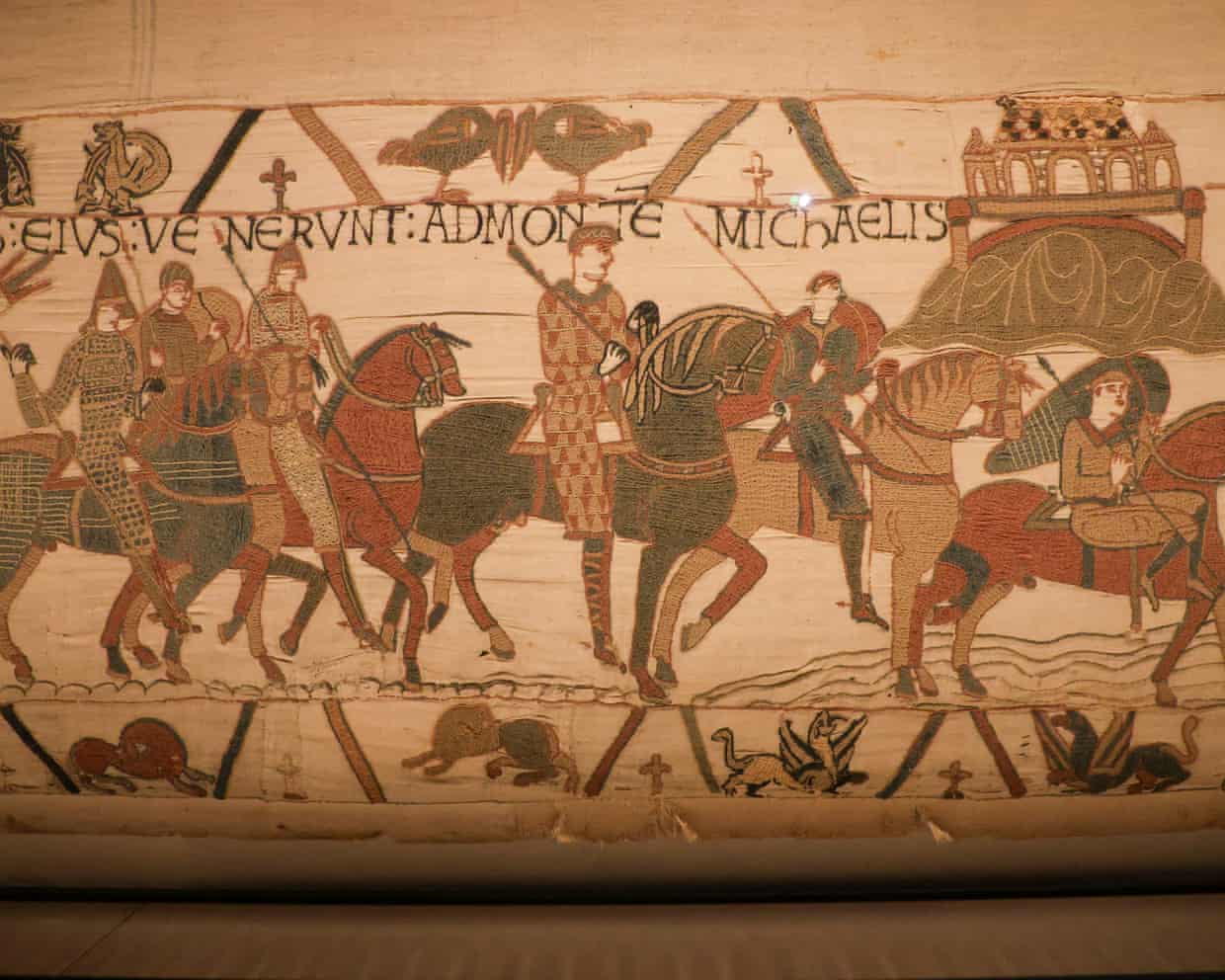
Photo: Ardee Napolitano/Reuters.
The Bayeux tapestry will be on display in London from this September until July 2027.

Is there any event you would want tickets to badly enough to wait nine hours online? I’m wondering how the ticket buyers in today’s story filled that time. Did they just sit and wait? Try to read a book or attend a work meeting? Clean the house?

Lanre Bakare wrote at the Guardian, “People keen to see the Bayeux tapestry faced online queues of up to nine hours when tickets went on sale for the first time on Wednesday morning. …

“There were reports of 40,000 people queueing by mid-morning, with that figure ballooning to almost 80,000 by mid-afternoon. Those queueing online were told: ‘We’re currently experiencing high levels of demand. Booking online is still recommended however wait times may extend up to nine hours.’ …

“Ticket sales were for slots between September and December. Two other releases will follow in October and January for the remainder of the tapestry’s historic stay in Britain, which runs until July 2027.

“Tickets are priced at £33 [~$45] during peak times, which is more than triple the [charge] where it is normally on display in Normandy. … The museum’s director, Dr Nicholas Cullinan, defended the ticket prices in advance of the sale. He told BBC Radio 4’s Today program … ‘The majority of tickets are off-peak, so they’re less, and all children under 16 will see it for free. We felt it was very important to make this something that all young people have access to.’

“The tapestry’s arrival in Britain is one of the most anticipated cultural moments of the year and is closely tied to the soft-power agendas of Britain and France.

“In exchange for allowing the British Museum to show the tapestry – which is almost 1,000 years old and depicts William the Conqueror’s victory over King Harold II of England at Hastings in 1066 – the Lewis chessmen, the Sutton Hoo helmet, the Mold gold cape and the Dunaverney flesh hook will travel to Normandy.

“The 70-meter-long [~230-foot] cloth has not been seen in England since it was created in the 11th century, and has been insured for [more than $1 billion] before the British Museum exhibition. …

“The French president, Emmanuel Macron, has faced a backlash for allowing the loan to go ahead, with critics saying he ignored expert advice that said the artifact was too fragile to be transported to the UK. French campaigners sought to block the loan by taking their case to the Conseil d’État, France’s highest court for determining the legitimacy of executive power.

“Despite those efforts, the tapestry joins France’s 1963 loan of the Mona Lisa to the Metropolitan Museum of Art in New York as one of the most high-profile loans ever.

“It will be transported in a specially designed container made to absorb any shocks and vibrations from potholes, and humidity levels will be closely monitored. …

“The first release of tickets have now sold out.”

More at the Guardian, here.
Read Full Post »

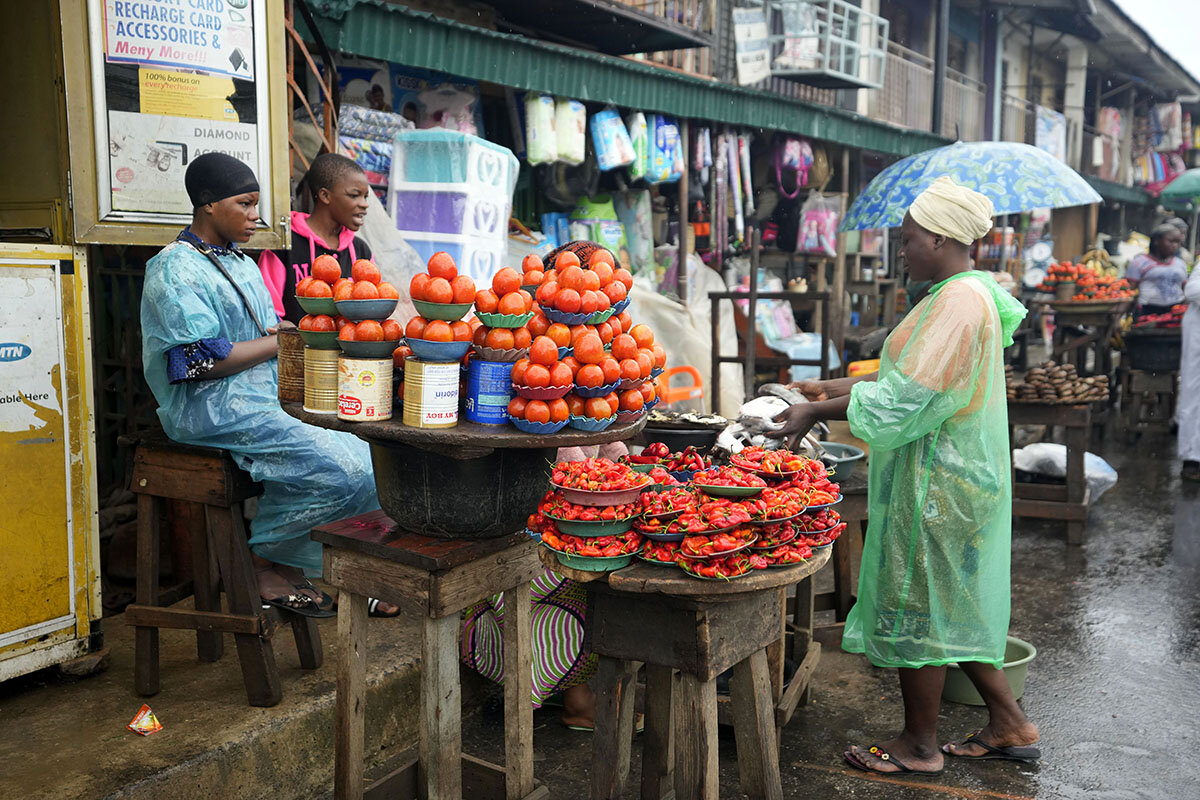
Photo: Sunday Alamba/AP.
Nigerian women find it hard to secure the bank loans needed to start a business, but social media platforms are providing alternative credit lines.

Do you know about lending circles? I learned about them when I worked at the Fed. Immigrants in the US sometimes use them to save money, waiting for their turn to get the whole pot. The circles can be risky, but they are needed.

Ogar Monday wrote for the Christian Science Monitor about a What’sApp lending circle in Africa.

“When Pricilla Yaor found a dream job that meant moving to the Nigerian capital, Abuja, there was just one hitch: There was no way she could afford rent in the country’s most expensive city. For the supermarket cashier, it was a struggle to raise the 300,000 naira ($390) she needed for a single-room flat on the outskirts of the city. Like most renters, she was expected to pay her entire annual rent in one lump sum – a typical practice among Nigerian landlords.

“Still, armed with a new job, Ms. Yaor thought she could get a loan from the bank. ‘I was given plenty of forms to fill, asked to bring two sureties, and I was asked if I had any property that I could use as collateral,’ she recalls. 

“None of this was surprising. In Nigeria, 98% of women have no access to formal credit, limiting their ability to run businesses, pay for studies, or buy a home. Ms. Yaor never returned to the bank. Even if she had met its criteria, she could not afford the 18.75% interest on a bank loan, a typical charge.

“Instead, her saving grace – and a lifeline for a growing number of women in Africa’s most populous nation – came in the form of a women-only WhatsApp group that she was invited to by a cousin. Members of the group each pool in an equal sum every month and rotate who receives the payout. …

“There were no processing charges, and a trusted member of the group was appointed as an admin. A month after joining, Ms. Yaor received 400,000 naira ($506).Soon, she joined another group to raise funds for her younger brother’s school fees. The groups also helped her buy a fridge for her apartment and later a generator to keep the lights on during daily blackouts.

Rotating saving programs, as they’re officially called, provide a safety net across much of Africa. … The use of these programs has skyrocketed in Nigeria recently – aided by technology such as WhatsApp and boosted by inflation that has soared to its highest level in two decades. 

“In the past year, some 4 million Nigerians have been pushed into poverty by inflation that has caused eye-watering price rises for everything from food staples to transport. Women have borne the brunt of the country’s debt crisis. …

“Opportunities for women lag in many fields ranging from education to income; on average, their wages are 22% lower than those of men. Meanwhile, culture and tradition have subjected women to the role of caregiver at home, for which they are not paid. What’s more, women face historical biases embedded in the formal banking system, says Okpetoritse Akperi, a financial expert with a multinational company based in Nigeria.

“As in many other developing countries, Nigerian women struggle to get loans because “creditworthiness is typically judged by the ability to repay. … Even when banking services are available, they are not accessible to half of the women who run businesses, who have to rely on cash for all transactions. 

“But that is slowly changing. Mobile credit companies such as Branch and FairMoney, boasting a combined 20 million downloads on the Google Play Store, are gaining popularity due to their lenient lending regulations.

“ ‘Technology now allows alternative credit assessments, helping women to access financial services without traditional barriers,’ says Iyonuluwa Pikuda, a financial analyst with Lagos-based Money Africa. Using WhatsApp lending groups, though, allows users to bypass any kind of formal structure altogether. …

“While the program has few overall downsides, the risks that do exist are not negligible. ‘We have had cause to report the admin of a group to the police because she refused to release the funds after everyone had sent in theirs,’ Ms. Yaor says of one such experience. But because everyone in the group is known to at least one other person, such matters are usually quickly resolved. … Members are united by their shared interest in helping each other raise funds, she points out. And the alternative is the banking sector’s bureaucracy and high interest rates.”

More at the Monitor, here.

Read Full Post »

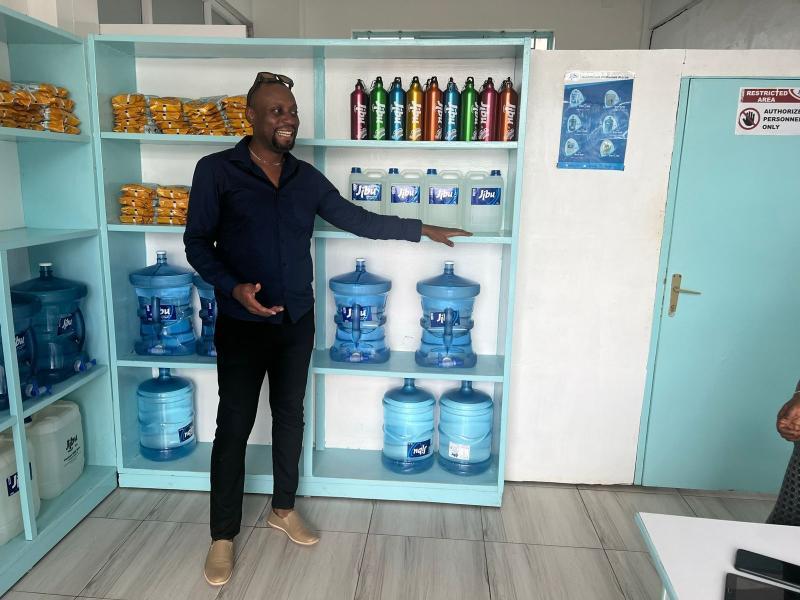
Photo: Kiva.org.
Ivan provides safe, affordable drinking water to people in Uganda, a country where, according to my grandson, 38 million people are without safe water. Ivan has applied for a loan from Kiva.org.

I was visiting Suzanne’s family yesterday and heard from my grandson about a worthy cause he’s donating some savings to. Actually, not donating. He is lending what he can to an entrepreneur called Ivan to help people in a country he has studied get access to safe drinking water.

How did this interest come about?

My grandson’s sixth-grade class’s research on the UN Global Goal of Eradicating Extreme Poverty involved choosing someone from a poor country who had applied to the lending nonprofit Kiva — and making a loan. After studying the poverty issue, screening a living-on-$1.98-cents-a-day experiment, and researching some of the Kiva offerings, the class voted.

My grandson was disappointed when the majority chose to support a grandmother in Thailand who was selling hammocks to help her care for a sick grandchild. He says that Uganda is a poorer country than Thailand — and he maintains that hammock accidents kill people. (He Googled it.) He also says that the annual income in Thailand is 8 times higher than in Uganda.

I asked him what the class majority’s reasoning was. He said (a) there was no way his favorite would get the extra $10,000 he still needed in the 8 days left in his application and (b) the grandmother still had 30 days left and was doing this for family. (He talks that way — “a and b.”)

He is not taking his defeat lying down, lending some of his own savings to Ivan’s cause, posting the link about Ivan in all the many chat rooms of his chess groups, sending Suzanne to twitter to promote Ivan’s application, and talking to me about a blog post.

Now here’s what Kiva says about Ivan: “Ivan is an experienced and seasoned entrepreneur in the safe water production and distribution sector. He has owned and run a Jibu water franchise for over five years and still counting. With the opportunity to open up a water production in the Munyonyo neighborhood, Ivan is excited at the opportunity to take safe and affordable drinking water to the residents of Munyonyo and also subsequently provide jobs for the youth who will be involved in the production and distribution value chain.

“Ivan is seeking a Kiva loan to open the Munyonyo operations. The loan will facilitate the launch of a water production and storefront facility, ensuring that every corner of Munyonyo has access to clean and affordable water. Please support Ivan so he can provide safe and affordable drinking water closer to the Munyonyo neighborhood.”

Interested? Please go to https://www.kiva.org/lend/2688341. Click on “technology.” Then click on the photo of Ivan and his water bottles. If you like the concept, maybe you or someone you know on social media will be up for helping. The Kiva rule is that Ivan has to get the total amount he applied for within the time allotted.

My grandson admits that this kind of lending is not a money-making proposition. He will get paid back in 39 months — in other words, when he is nearly 15 — without interest. (And I guess Kiva will reach him through Erik’s email, as Papa used a charge card when my grandson handed him the cash.)

But look, my grandson says, water is important — every 10 seconds someone in the world dies of water-borne disease, and 38 million Ugandans are without safe water.

Not a guy to argue with.

For more background on the nonprofit (“100% of every dollar you lend on Kiva goes to funding loans”) click here. It has a very good rating from Charity Navigator.

Read Full Post »

The Providence-based Capital Good Fund, which helps low-income folks get on their feet financially, has been testing an interesting fund-raising idea. Participating artists donate to the Capital Good Fund half the proceeds of a work that they sell through the fund’s platform. The art offerings change every few weeks. I include one example below, and there are more at https://squareup.com/market/cgfund. The selections feature a range of styles. Some works are representational, others impressionistic or abstract.

The organization’s website explains its mission: “Capital Good Fund is a nonprofit, certified Community Development Financial Institution that takes a holistic approach to fighting poverty. We offer small loans and one-on-one Financial & Health Coaching to hard-working families in America. Our mission is to provide equitable financial services that create pathways out of poverty.” More here and here.

The Rhode Island Foundation posts at its own blog about its latest partnership with the Capital Good Fund, an initiative designed to overcome the incentives that drive people to costly payday lenders. Read about that here.

Art: Carol C. Young
Barn on Robin Hill, 11″ x 11″ Giclée, limited edition signed print

Read Full Post »

Public banks can be helpful in emergencies, and what with hurricanes, tornadoes, and all, we sure seem to have a lot of emergencies.

Grand Forks, North Dakota, figured this out after one of their floods. Most banks have to make sure their loans meet the tough safety and soundness requirements of regulators, so they may not come through fast enough for people trying to rebuild after a disaster. Grand Forks isn’t relying on them.

Kelly McCartney at Shareable (by way of the Christian Science Monitor) says that the Public Banking Institute blog at WordPress “cites a powerful example of how a public bank can help a city bounce back from a devastating natural disaster. As Hurricane Sandy recovery efforts unfold, there’s a lesson from history about the role of strong local financial institutions in increasing urban resilience.

“In April of 1997, Grand Forks, North Dakota, was hit by record flooding and major fires that put the city’s future in jeopardy. One of the first economic responders was the Bank of North Dakota (BND), currently the only public bank in the United States.

“What’s a public bank, you ask? Public banks are owned by citizens through their government. They have a public interest mission, are dedicated to funding local development, and plow profits back into the state treasury to fund social programs and cover deficits. Rather than competing with private banks, BND partners with them to meet the needs of North Dakotans. …

“As a public bank, BND was able to respond to the ’97 flood in ways that a privately owned bank could not …

“Right after the flood, the Bank of North Dakota got to work, established a disaster relief loan fund, set aside $5 million to assist flood victims, and set up additional credit lines of around $70 million.” More.

Photograph: Reuters/File
Residents of Grand Forks, N.D., carry their pet dog to safety in the shovel of a frontloader April 20, 1997. The more than 50,000 residents of the city were forced to evacuate as the Red River reached 25 feet above flood level. A public bank, owned by citizens, was a key player in the city’s recovery.

Read Full Post »