Feeds:
Posts
Comments

Posts Tagged ‘looted’

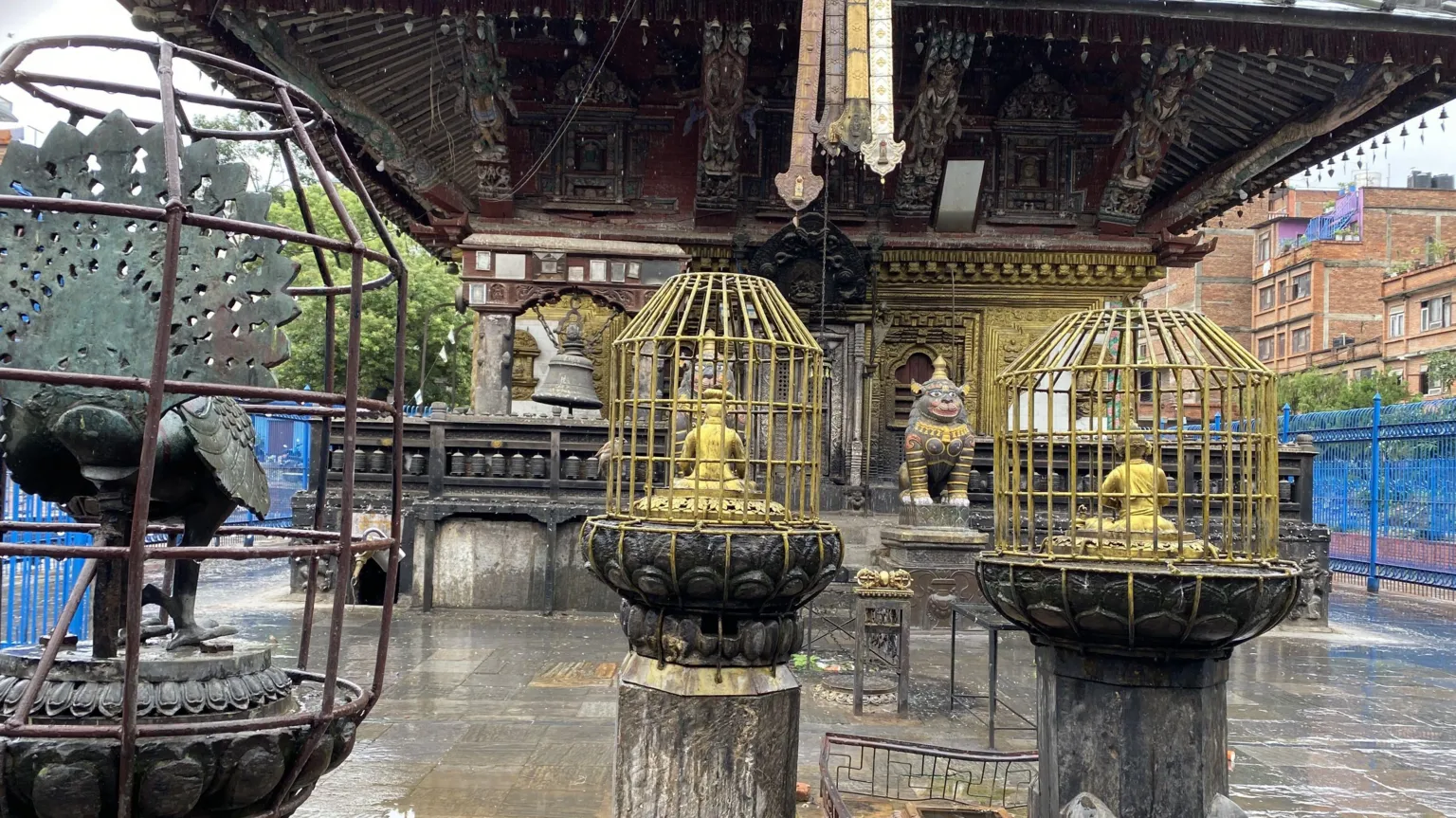
Photo: Sanjaya Dhakal/BBC Nepali.
In Nepal, some communities have put their recovered idols in iron cages for security.

Who does art belong to? For centuries, looters have justified their thefts by asserting that they aim to protect the stolen art for posterity. That no longer holds up, and now art is getting returned to the plundered countries.

And if you play nice and return Nepali idols, you may be given an accurate replica.

Sanjaya Dhakal writes at The Guardian, “Along a small street in Nepal’s Bhaktapur city stands an unassuming building with a strange name — the Museum of Stolen Art. Inside it are rooms filled with statues of Nepal’s sacred gods and goddesses.

“Among them is the Saraswati sculpture. Sitting atop a lotus, the Hindu goddess of wisdom holds a book, prayer beads and a classical instrument called a veena in her four hands.

“But like all the other sculptures in the room, the statue is a fake. The Saraswati is one of 45 replicas in the museum, which will have an official site in Panauti, set to open to the public in 2026.

“The museum is the brainchild of Nepalese conservationist Rabindra Puri, who is spearheading a mission to secure the return of dozens of Nepal’s stolen artifacts, many of which are scattered across museums, auction houses or private collections in countries like the US, UK and France.

“In the past five years, he has hired half a dozen craftsmen to create replicas of these statues, each taking between three months and a year to finish. The museum has not received any government funding. His mission is to secure the return of these stolen artifacts – in exchange for the replicas he has created.

“In Nepal, such statues reside in temples all across the country and are regarded as part of the country’s ‘living culture,’ rather than mere showpieces, says Sanjay Adhikari, the secretary of the Nepal Heritage Recovery Campaign. Many are worshipped by locals every day, with some followers offering food and flowers to the gods. …

“It is also common for followers to touch these statues for blessings — meaning they are also rarely guarded — leaving them wide open for thieves.

“Nepal has categorized more than 400 artifacts missing from temples and monasteries across the country, but the number is highly likely to be an underestimate, says Saubhagya Pradhananga, who heads the official Department of Archaeology.

“From the 1960s to the 1980s, hundreds of artifacts were looted from Nepal as the isolated country was opening up to the outside world. Many of the country’s most powerful administrators back then were believed to have been behind some of these thefts — responsible for smuggling them abroad to art collectors and pocketing the proceeds.

“For decades, Nepalis were largely unaware about their missing art and where it had gone, but that has been changing, especially since the founding of the National Heritage Recovery Campaign in 2021 – a movement led by citizen activists to reclaim lost treasures. …

“There are many hurdles. The Taleju Necklace, dating back to the 17th century, is a case in point. …

“It’s still unclear how it might have been stolen and many in Nepal had no idea where it might have gone until three years ago, when it was seen in an unlikely place – the Art Institute of Chicago.

“It was spotted by Dr Sweta Gyanu Baniya, a Nepali academic based in the US who said she fell to her knees and started to cry when she saw the necklace.

“According to the Art Institute of Chicago, the necklace is a gift from the Alsdorf Foundation — a private US foundation. The museum told the BBC it has communicated with the Nepali government and is awaiting additional information.

“It’s not just a necklace, it’s a part of our goddess who we worship. I felt like it shouldn’t be here. It’s sacred,” she told the US university Virginia Tech. …

“But [Saubhagya Pradhananga, who heads the official Department of Archaeology] said Nepal’s Department of Archaeology had provided enough evidence, including archival records. On top of that, an inscription on the necklace says it was specifically made for the Goddess of Taleju by King Pratap Malla.

“It’s these ‘tactics of delay’ that often ‘wear down campaigners,’ says one activist, Kanak Mani Dixit. ‘They like to use the word “provenance” whereby they ask for evidence from us. The onus is put on us to prove that it belongs to Nepal, rather than on themselves on how they got hold of them.’ …

“Many worshippers are now a lot more paranoid — putting these idols in iron cages to protect them from going missing.

“Mr Puri however hopes his museum will eventually have its shelves wiped bare.”

More at the BBC, here. No paywall.
Read Full Post »

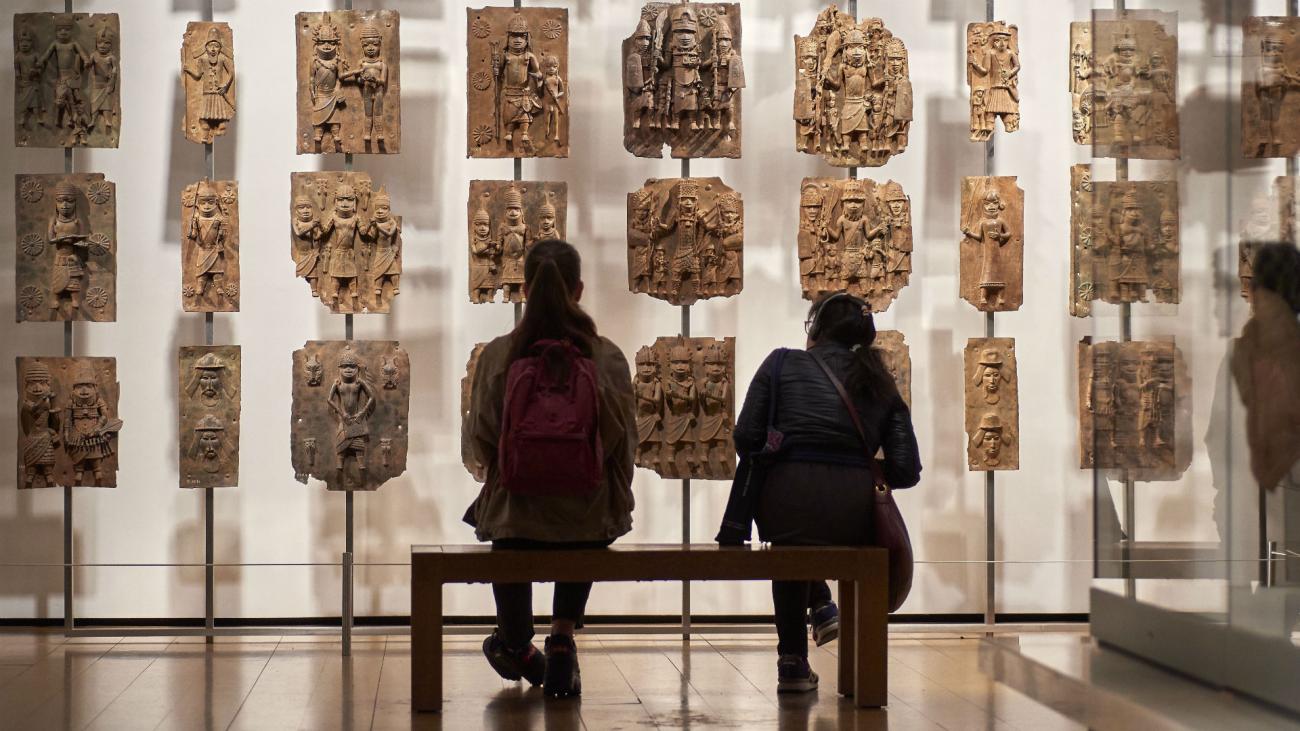
Photo: British Museum.
Benin bronzes.

Around the world, looted national treasures are beginning to return home. Among the most famous are the bronze plaques made in Benin, Africa. Now that country is building museums to protect its returning bronzes — and all its art.

Chinma Johnson-Nwosu writes at the Arts Newspaper, “The Republic of Benin, which is making its debut appearance at the Venice Biennale this year, is turning to culture as part of a strategy to spur economic growth. Its government is building four new museums in a range of locations and a cultural quarter in the largest city, Cotonou, in addition to boosting investment in arts education.

“A museum in the coastal city of Ouidah, from where the last recorded shipment of slaves to the US departed in 1860, will explore the history of slavery. It is scheduled to be completed at the end of this year, the first of the four new museums slated to open over the next five years in Benin. Maison de la Mémoire et de l’Esclavage aims to tell the history of slavery from African, American and Caribbean and European perspectives, says Alain Godonou, the director of museums for the national agency of heritage and tourism.

“Between 2016 and 2026, the Benin government plans to invest €250m [more than $5 million], with the goal of making culture the economy’s second pillar after agriculture. In addition to building museums, the government’s focus is on preserving non-material heritage, increasing cultural tourism and offering financial incentives to private investors.

“Promoting the arts goes beyond fostering a sense of national identity, says Babalola Jean-Michel Abimbola, the country’s minister of culture. ‘It’s a fight against poverty, allowing us to create jobs and build a better economy.’

“Construction began last year on a new cultural quarter in the centre of Cotonou [Le Quartier Culturel et Créatif] which is to host a contemporary art museum, a sculpture garden, a Franco-Beninese cultural institute, a concert arena, commercial galleries and a crafts village showing local crafts and heritage. …

“Further plans include the Musée des Rois et des Amazones du Danhomè in Abomey, where visitors will in future be able to explore the 300-year history of the kingdom of Dahomey. Musée International du Vodun, located in the capital, Porto-Novo, aims to rehabilitate the image of a much-maligned and globally poorly understood Indigenous religion, also known as Voodoo.

“The government hopes that the new museums will build on the success of a 2022 exhibition, where 26 recently repatriated royal artefacts went on display in the presidential office. These were shown alongside the contemporary exhibition, Art of Benin From Yesterday and Today: From Restitution to Revelation.

“The show drew more than 230,000 visitors in the three months it ran, 90% of whom were citizens of Benin, Godonou says. … While he concedes it may be too ambitious to expect to replicate the 2022 success annually, he believes a target of 100,000 would be sustainable.

“Last year, the government launched an Agency for the Development of Art and Culture. The ministries of tourism and finance are also seeking to introduce tax relief policies for the cultural industries.

“The kind of publicly funded, government-led major museum projects Benin is undertaking have little precedent in Africa. … The Benin government’s plan does, however, envisage involving the private sector. By showing entrepreneurs that people in the country are interested in art, Abimbola hopes to spark business interest. In some parts of Cotonou that is already happening. Septième Gallery, which already had a space in Paris, launched in Cotonou in 2022. …

“Investment in arts education and professional training is also increasing. Sèmè City, a government-backed development project, has revealed plans for a new Africa Design School campus located in Ouidah. The school launched in Cotonou in 2019 in partnership with L’École de Design Nantes Atlantique and has since added a masters programme and an exchange programme, in which 11 French students participated in 2023. …

“Last year, the École du Patrimoine Africain, which trains heritage professionals, celebrated its 25th anniversary. When it began, only 5% of the people working in Beninese museums were trained in heritage preservation. Now the figure is 80%.”

More at the Art Newspaper, here. Can you guess what country was the colonizer? Consider the names of the museums.

Read Full Post »

Photo: Laura Young via LiveAuctioneers.
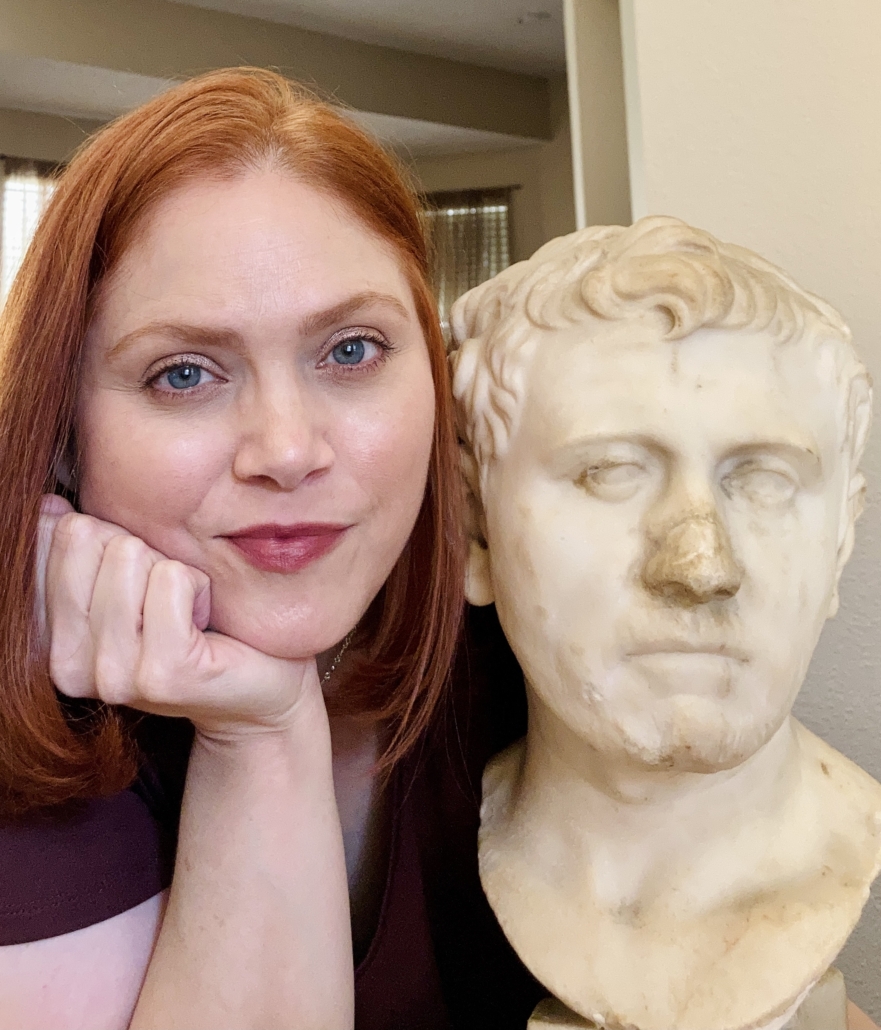
Laura Young with the Roman sculpture she found at a Goodwill in Austin, Texas.

Here’s a fun story. You may have heard it before as it was all over the media for a while. This version is by Matt Largey, reporting for KUT, an NPR station in Austin, Texas.

“When Laura Young found a human head under a table at the Goodwill store on Far West Boulevard in 2018, she had no idea what she was getting herself into.

“The price tag said $34.99. Seemed like a deal. It was all white. Made of marble. Weighed about 50 pounds.

“ ‘Clearly antique — clearly old,’ said Young, who runs her own business as an antiques dealer and goes to a lot of thrift stores looking for treasures.

“So she bought the head and lugged it out to her car, buckled it into the passenger seat and took it home.

“Young wanted to figure out what the sculpture was, so she did some Googling and she started to piece things together. She contacted an auction house in London that confirmed it was really old — like first century old. Another auction house managed to find the head in a catalog of items from a German museum in the 1920s and 1930s.

“It was listed as a portrait bust of a man named Drusus Germanicus.

“And so began Young’s four-year ordeal trying to get rid of a 2,000-year-old sculpture.

“How did a 2,000-year-old sculpture of a Roman general’s head wind up in a Goodwill in Austin, Texas?

“ ‘There are plenty of Roman portrait sculptures in the world. There’s a lot of them around. They’re generally not in Goodwills,’ joked Stephennie Mulder, an art history professor at UT Austin. ‘So the object itself is not terribly unusual, but the presence of it here is what makes it extraordinary.’ …

“The marble bust was cataloged at a museum called Pompejanum in the German city of Aschaffenburg. The museum was a replica of a villa in Pompeii, which was buried in volcanic ash in the first century. The German king, Ludwig the First, had something of an obsession with Pompeii, so he built this villa in the 1840s to house a bunch of Roman art. Germanicus was among the collection.

“Almost 100 years later, World War II was raging. In spring of 1945, Aschaffenburg was the site of a battle between the Nazis and the U.S. Army. …

“ ‘We know that many of the objects [in the museum] were either destroyed in the Allied bombing campaign or looted afterward,’ Mulder said. ‘So unfortunately in this case, it might have been a U.S. soldier who either looted it himself or purchased it from someone who had looted the object.’ …

“Perhaps the person who took it died or perhaps they gave it away. But somehow, someone decided they didn’t want it anymore and dropped it off at Goodwill. Workers slapped a price tag for $34.99 on it and put it out for sale. …

“Back at home, Young had a problem: She was in possession of a looted piece of ancient art. She couldn’t keep it. She couldn’t sell it. And giving it back to its rightful owners was a lot harder than it sounds.

“ ‘At that point, I realized I was probably going to need some help,’ Young says. ‘I was probably going to need an attorney.’

“So she hired a lawyer in New York who specializes in international art law, Leila Amineddoleh.

“Negotiations began. It was complicated. It takes a long time to figure out all this stuff — even in the best of times. But the pandemic complicated things even further. It was slow going and in the meantime, she was stuck with this 2,000-year-old head on display at her house. …

“It looked great in the house, she says. In a weird way, Young started to get attached. She named him — half-jokingly — after Dennis Reynolds, a narcissist character from the TV show It’s Always Sunny in Philadelphia.

“ ‘He was attractive, he was cold, he was aloof. I couldn’t really have him. He was difficult,’ she says. ‘So, yeah, my nickname for him was Dennis.’ …

“Finally, they got a deal: The Germans would take Dennis back. The exact terms of the deal are confidential, but the head will stay in Texas — on display — for about a year. Last month, the movers came to get him. …

“Young says, ‘It’ll be a little bittersweet to see him in the museum, but he needs to go home. He wasn’t supposed to be here.’

“[You] can see Dennis at the San Antonio Museum of Art, which already has a significant Roman antiquities collection.

“ ‘It actually ended up being a really, really good fit. He’s just right down the road,’ Young says. …

“In a way, Dennis will always be with Young. Before she let him go, she had a half-size copy of him 3D-printed. ‘I do have a collection of busts at home,’ she says. ‘So he’s with my other heads.’ “

More at station KUT, here.

Read Full Post »

2251

Photos: British Museum
Tello in Iraq is the site of one of the oldest cities on earth. After the fall of Saddam, looted treasures ended up in London and, thanks to archaeological detective work, have been returned. Today the site is protected by both Iraqi archaeological police and a local tribe.

When you think something is lost forever, hold on to hope. If looted archaeological fragments that have been smuggled to another country can be identified and returned, you can find the family heirloom you put in a too-safe place. You can find the delight you once took in simple things back when you were too young to read the news.

Maev Kennedy reported for the Guardian in August, “A collection of 5,000-year-old antiquities looted from a site in Iraq in 2003 after the fall of Saddam Hussein, and then seized by the Metropolitan police from a dealer in London, will be returned to Baghdad this week.

“It comes after experts at the British Museum identified not just the site they came from but the temple wall they were stolen from.

The eight small pieces had no documentation of any kind to help the police, but the museum experts could literally read their origin.

“They included cone-shaped ceramics with cuneiform inscriptions identifying the site as Tello, ancient Girsu in southern Iraq, one of the oldest cities on earth recorded in the earliest form of true written language.

“The inscriptions named the Sumerian king who had them made almost 5,000 years ago, the god they were dedicated to, and the temple. And by an extraordinary coincidence the museum had an archaeologist, Sebastian Rey, leading a team of Iraqi archaeologists at the site, uncovering the holes in the mudbrick walls of the temple they were torn from, and the broken pieces the looters had discarded. …

“Iraqi ambassador Salih Husain Ali [said] the protection of antiquities was an international responsibility and praised the British Museum and its staff ‘for their exceptional efforts in the process of identifying and returning looted antiquities to Iraq.’ …

“St John Simpson, the assistant keeper at the Middle East department of the museum, said: ‘Uniquely we could trace them not just to the site but to within inches of where they were stolen from. This is a very happy outcome, nothing like this has happened for a very, very long time if ever.’ …

“The site of the Eninnu temple at Tello is now protected, not just by the reformed Iraqi archaeological police, but by a local tribe. …

“With no apparent way of tracing their origin, they sat in police stores until some of the antiquities cold cases were reopened with the reforming of the Met’s art and antiquities squad, and brought to the museum earlier this year. …

“The museum experts hope their methodology could be used to create maps of specific sites and types of antiquities, making the work of looters much more difficult.”

More at the Guardian, here. Wouldn’t you like to reach across time and tell the craftsman of the sweet little bull below that people in 2018 are still enjoying it?

Treasures looted from the site of an ancient city in Iraq include a tiny marble amulet of a bull.

1793

Read Full Post »