Feeds:
Posts
Comments

Posts Tagged ‘lunar new year’

Photo: Gilles Sabrié for the Washington Post.
Members of the Xiaohexi Tongyi stilt-walking club in 2025.

According to the traditional Chinese calendar, this Lunar New Year, (also called Spring Festival) is the Year of the Horse, the Water Horse, to be exact.

Lunar New Year traditions go back hundreds of years, although in China they were forbidden during the Cultural Revolution. Nowadays the Chinese government loves them so much it has asked UNESCO to protect them as “intangible heritage.”

At the Washington Post, we learn about a newly revived aspect of the celebrations.

Last year at this time, Christian Shepherd reported, “The once-endangered folk tradition of stilt walking has staged a dramatic comeback in China, where it is being embraced by young performers eager to find community and preserve their heritage. …

“Its revival has also been helped along by Beijing’s efforts to encourage — and control — traditional art forms and spiritual practices as part of Chinese leader Xi Jinping’s push for ‘cultural confidence.’

“ ‘I have loved folk culture since I was a child,’ said Guo Wenmiao, a 20-year-old engineering undergraduate who is a big fan of the NBA and Nike kicks — and stilt walking. …

“Stilt walking is part of a folk tradition of performances, rooted in ancient Chinese belief systems such as Confucianism and Taoism, that have been used to mark festivals and celebrate local deities for hundreds of years.

“But these rituals of pilgrimage and prayer were effectively banned in China during the Cultural Revolution of the 1960s and 70s, when the first leader of the People’s Republic of China, Mao Zedong, encouraged militant student ‘red guards’ to eradicate ‘old culture’ and superstition.

“Volunteer-run cultural associations are now reviving many of these suppressed traditions and passing them on to a new generation.

“Here in the countryside of northern China, people born this century are performing folk arts that date back at least 400 years — not least to provide distraction from economic uncertainties.

“Traditional theater, music and acrobatic performances are becoming popular at local ‘temple fairs’ and during national holidays such as Lunar New Year.

“At one festival last year on the outskirts of Tianjin to mark the birthday of Mazu, the sea goddess in Chinese folklore, crowds were wowed by fire breathers, cymbal jugglers and leaping kung fu fighters. … It was the stilt walkers, however, who stood out.

“Perched on meter-high wooden platforms in colorful outfits, wearing face paint and elaborate headdresses, they acted out folk tales to rhythmic drums and clashing gongs.

“The performers are amateurs, but they know how to put on a show. In one act, Guo … played a foppish princeling who becomes obsessed with catching an evasive butterfly.

“Before the Tianjin celebration, Guo and the other members of the Xiaohexi Tongyi stilt-walking club prepared to perform in their hometown of Shengfang, a small town an hour’s drive east of Tianjin.

“They play-fought one minute and applied makeup the next. A used-car salesman smoked a cigarette and complained about business before transforming himself into a rosy-cheeked matron — a comedic cross-gender role known as the ‘foolish mother.’

“All the performers were male, between age 10 and 35, and came from a variety of backgrounds. But all of them considered dressing up in elaborate costumes and dancing on stilts a perfectly unremarkable hobby.

“ ‘Joining the troupe is something that’s ingrained in everyone’ [said] Guo Tongkai, the 23-year-old lead performer, no relation to the butterfly chaser.

“Many of the performers began stilt walking when in primary school and regard themselves as ‘disciples’ of the art form.

“ ‘It’s a tradition passed down from our ancestors,’ said Guo Tongkai, who started learning to walk on stilts at the age of 5. ‘Everyone progresses and learns together.’ ”

More at the Post, here, where you can see some amazing photos and videos. And check out a Business Insider story on the dancing stilt-like robots in Beijing, here.

Photo: CCTV Spring Festival Gala.
Dancers — robot and human — performed in Beijing for last year’s spring festival. 

Read Full Post »

Photo: Suzanne and John’s Mom.
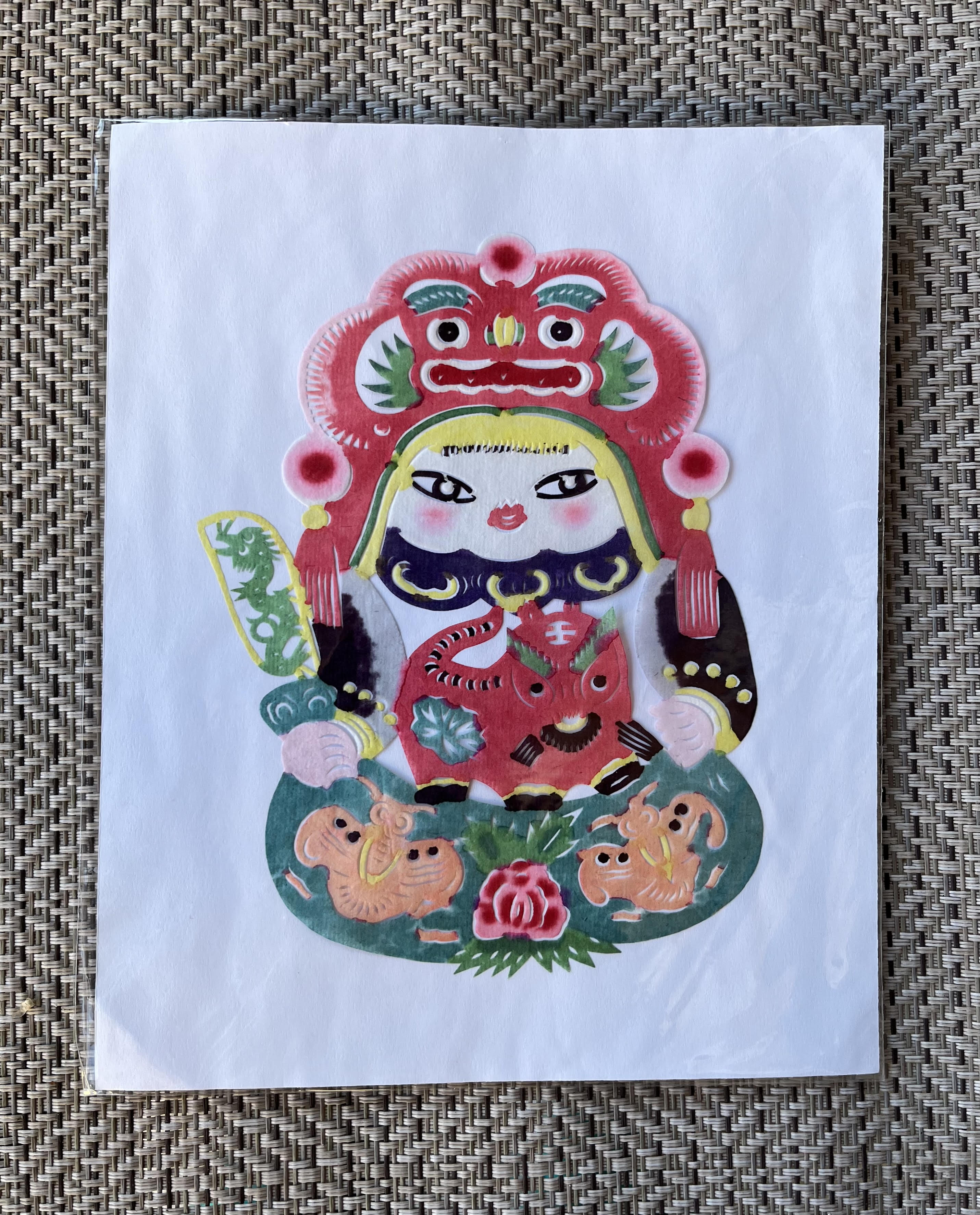
I’ve had this Chinese paper cut-out for years. I no longer remember where it came from.

Happy Year of the Dragon! The Wood Dragon to be specific. (In case you’re wondering, the other Chinese zodiac dragons are Water, Metal, Earth, and Fire.)

As China and much of the world celebrate the traditions of Lunar New Year, I want to share an article about a woman in China who is keeping another ancient tradition alive — paper cutting.

Ann Scott Tyson reports at the Christian Science Monitor, “With uncanny precision and attention to form, Yu Zeling snips away at the thin red paper. Her scissors seem to glide magically into place. After several minutes, she unfolds her creation: a bold and smiling Chinese zodiac pig.

“An award-winning master of the ancient Chinese folk art of paper cutting, Ms. Yu fills her studio with cutouts of animals, people, and scenes so vivid that they seem to leap from the walls. Rich with symbolism, her art embodies village life in Ansai, a rural district in Shaanxi province on China’s rugged Loess Plateau. Ansai is a center of paper cutting – recognized in 2009 by UNESCO as an Intangible Cultural Heritage of Humanity. …

“Ms. Yu and others are working to keep the folk art alive, even as it evolves away from its roots as adornment for farmhouses and local celebrations. Indeed, the Ansai native is serving as a rare bridge between the most skilled paper-cut artists of the 1980s – a golden era in paper cutting – and a new generation of heirs. …

“Growing up in a hamlet deep in an Ansai valley, surrounded by terraced fields, Ms. Yu came to paper cutting in the late 1970s as naturally as she breathed the earthy air. ‘We were very poor, and when it was time to celebrate the [Lunar] New Year, we all put paper-cuts in the windows,’ she says, recalling the holiday at her childhood home – a cave dug from a hillside – where her family of 10 eked out a living growing corn, beans, and sorghum. …

“The art originated in China in the centuries after paper was invented in A.D. 105. … Full of auspicious symbols from peasant life, the decorations heralded good weather, many offspring, long life, wealth, and happiness. …

“Just as Ms. Yu was beginning to learn paper cutting, after she left elementary school in 1978 at the age of 12, China’s shift toward market economics and social opening began allowing for a revival of traditional culture. Using discarded newspaper, Ms. Yu first practiced cutting the image of a Chinese national flag that she saw in a school textbook. She says she ‘cut it 100 times’ before she was satisfied. Then her aunt took over, introducing her to increasingly complicated traditional motifs. …

“Meanwhile, a research scholar named Chen Shanqiao began trekking from Ansai’s county seat into the hills and valleys to rural villages, rediscovering the true meanings embedded in the paper-cuts. Their power astonished him. In the mid-1980s, he recruited a few older village women who were masters in the craft to come teach at Ansai’s Cultural Center.

“Ms. Yu married farmer Jiang Zhicheng, who admired her passion and skill. Inspired, Mr. Jiang took a few of his wife’s works to the local market in 1987, but he couldn’t sell them. So he went farther, riding his bicycle more than 25 miles to Ansai’s Cultural Center. Seeing the fine pieces, Mr. Chen immediately bought the paper-cuts and invited Ms. Yu to come train with the master artists. …

“After years of training, Ms. Yu became a master in her own right, winning one award after another. Her works are on display in museums. But she’s humble about her achievements. ‘I was, and still am, a farmer,’ she says with a smile. … ‘I make paper-cuts based on life,’ she says. ‘Here in northern Shaanxi, we feed the pigs and till the land and care for the children.’

“Hoping to carry on and grow the folk art, Ms. Yu volunteers to teach at free community training sessions. Paper cutting is also taught in Ansai’s public schools. … As Chinese villages empty out and rural rituals fade, Ms. Yu is aware of the need to go beyond perpetuating traditions and embrace new paper-cut experiments. …

“The most elaborate paper-cut in her studio is a large and ornate circular design that weaves together layer upon layer of significance: In the center, a snake (man) encircles a rabbit (woman), symbolizing marriage. Surrounding them is a ring of pomegranates (the seeds of which represent many children), peaches (the Chinese name for ‘peach’ is also the word for ‘longevity’), and Buddha’s hands (a kind of citrus fruit representing bliss). A final outer rim, resembling a woven flower basket, also signifies longevity.”

More at the Monitor, here. Check out photos of the cutting process. No firewall.

Read Full Post »

It’s back to the Book of Holidays Around the World to see what Alice van Straalen has to say about Lunar New Year (also called Spring Festival or Chinese New Year).

“A huge dragon — a symbol of good luck — leads the Chinese New Year processions. It’s made of bamboo covered in paper or silk, and more than 50 people may support it underneath, making it weave and wind though the streets. Dancers, acrobats, clowns, and stilt walkers accompany the dragon, and firecrackers go off to scare away evil spirits. In Chinese homes families hang red scrolls printed with wishes for good luck and prosperity, and children receive coins inside little red packets.”

When my husband was working in Shanghai, I went to visit at Lunar New Year and have never seen — or heard — so many fireworks in my life. More recently, at Water Fire in Providence, a summer event, I got to see a fun dragon dance.

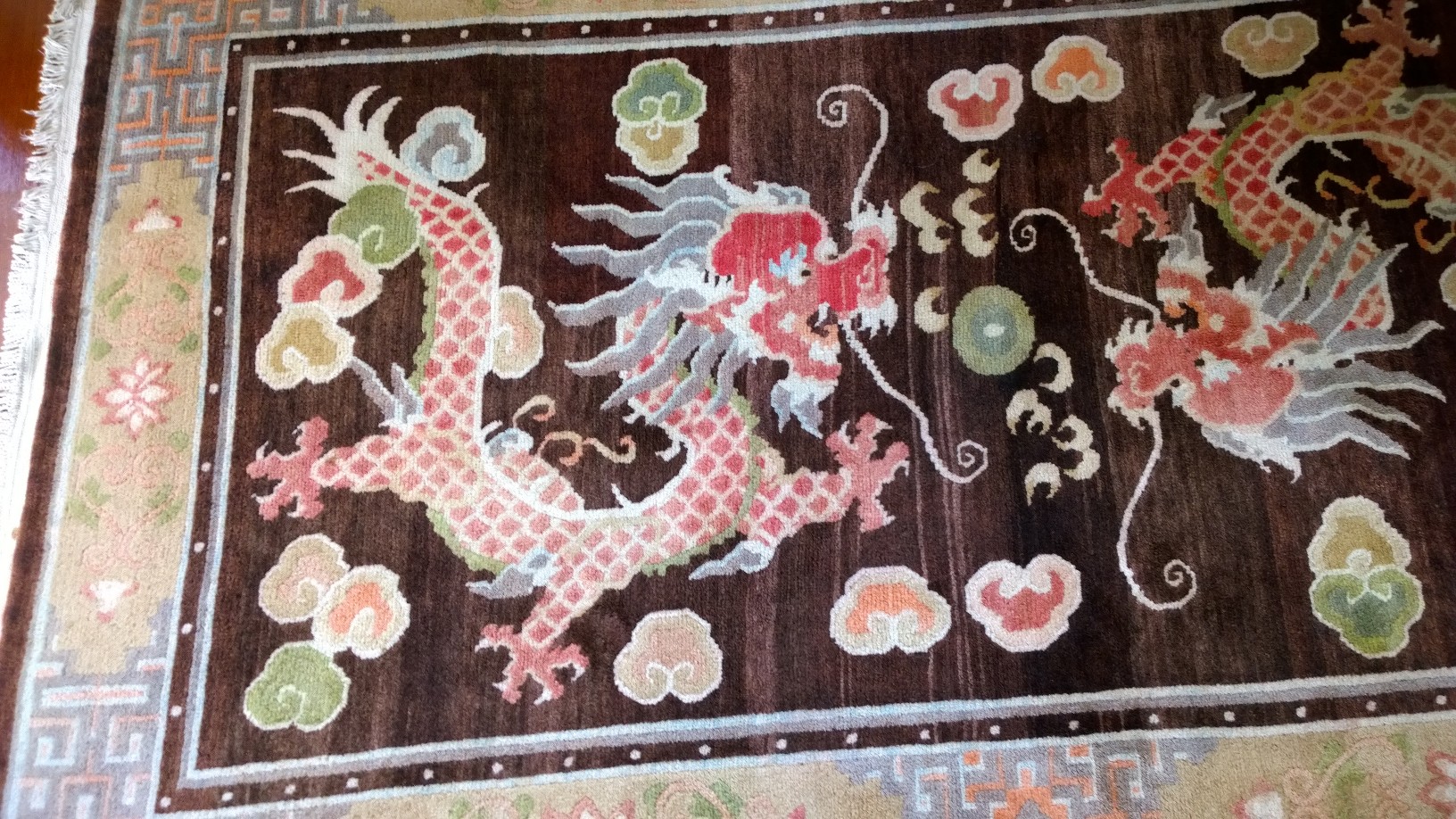
(Hmmm, just remembered I had a dragon rug I could use to illustrate this post. Happy Year of the Monkey!)

021316-dragon-rug

Read Full Post »

Happy Lunar New Year, Spring Festival, and Year of the Horse!

I love any excuse to celebrate a holiday and went over to Chinatown at lunch in hopes of seeing a dragon dance or something.

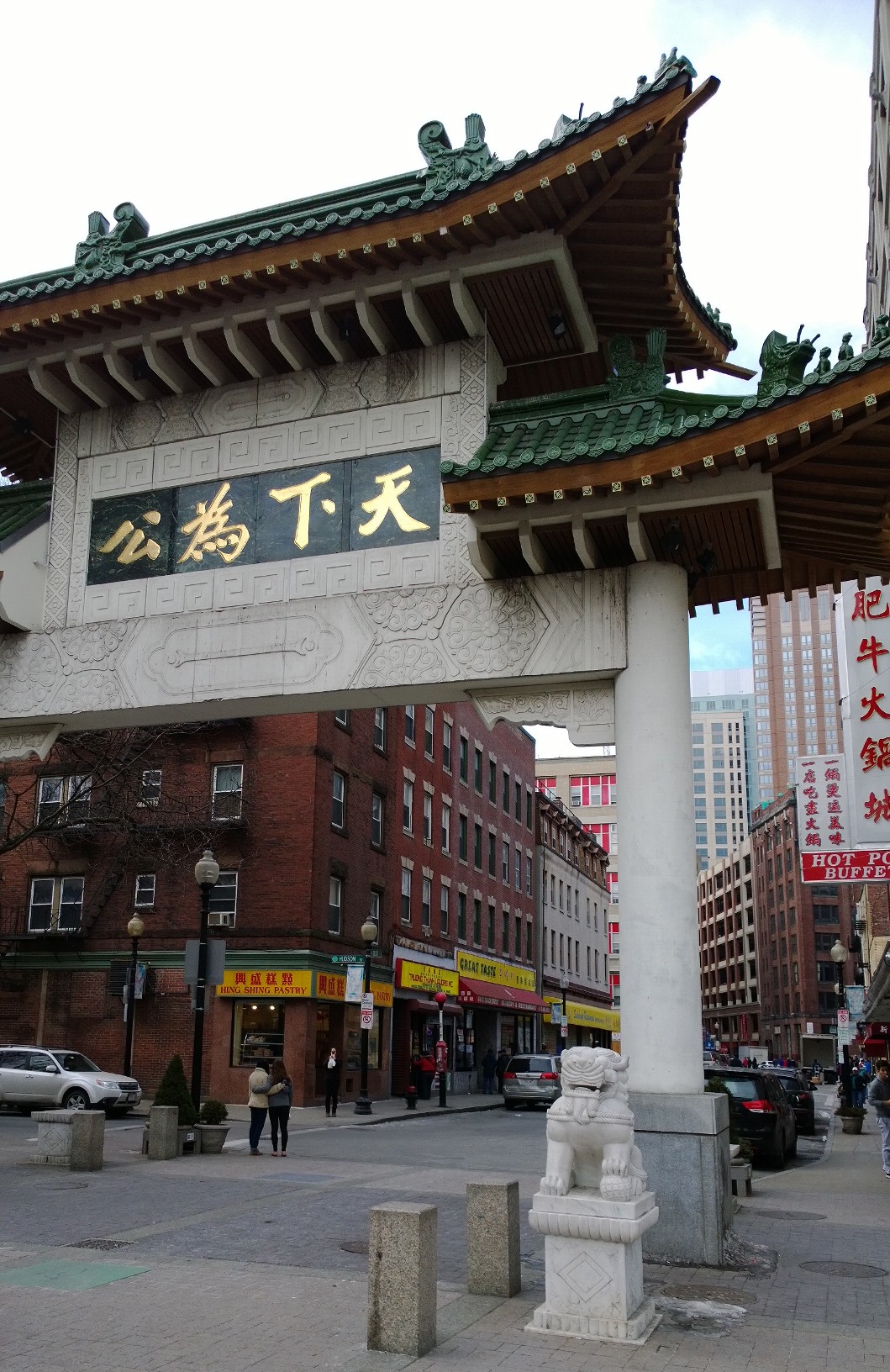
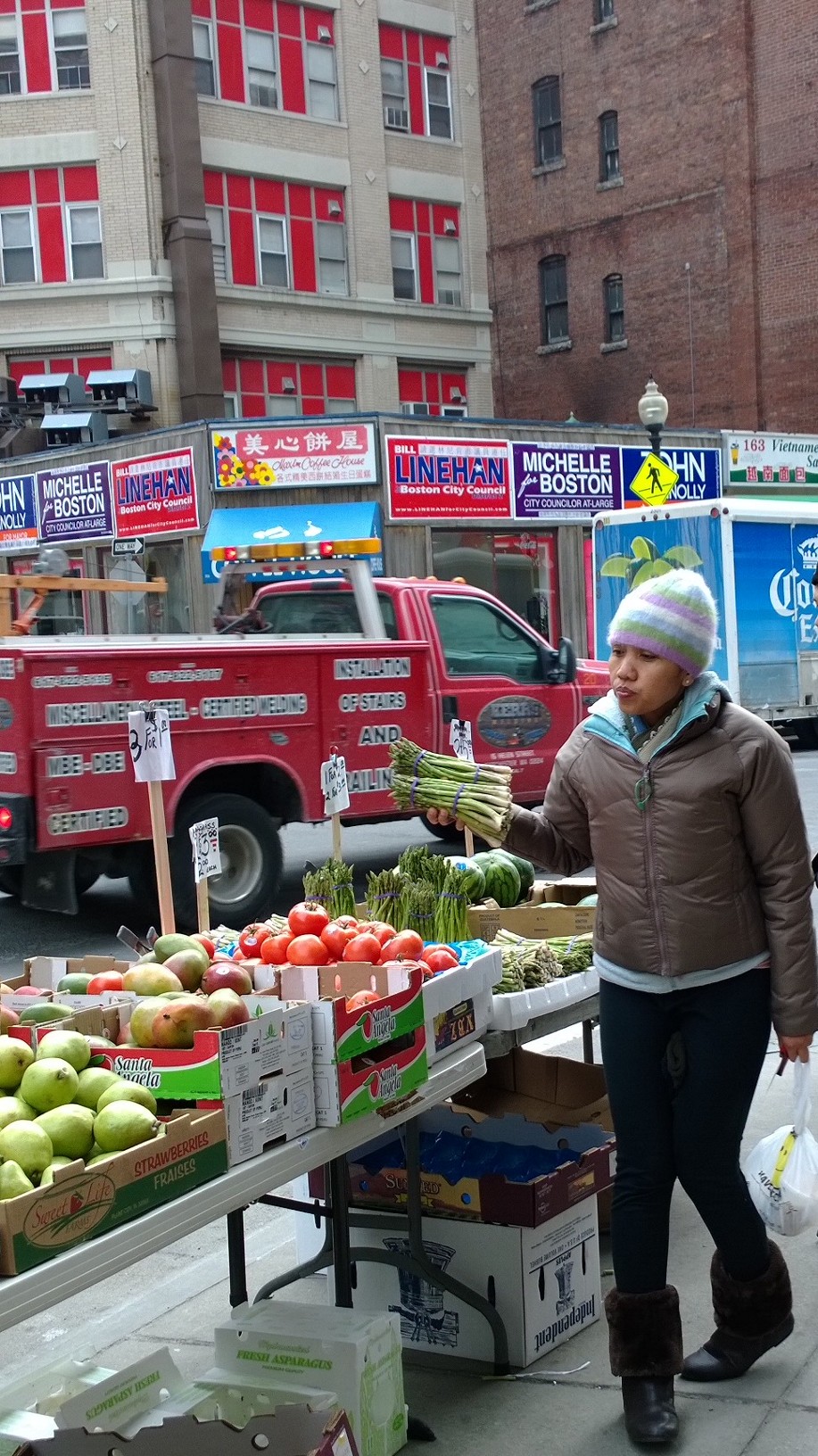
As early as 11:30, the restaurant Bubor Cha Cha, here, was packed. I was the only non-Asian. I ordered spring rolls to go. At the Chinatown gate, a young couple (husband American, wife Chinese) asked me to photograph them with their baby. On Harrison Ave., someone was selling fresh produce.

My husband is the Year of the Horse. He says he’s a Water Horse, whereas this is the Year of the Wooden Horse.

Hmmm. Wooden Horse? Wherever you are this year, Beware of Greeks bearing gifts.

Jan2014-Chinatown-gate

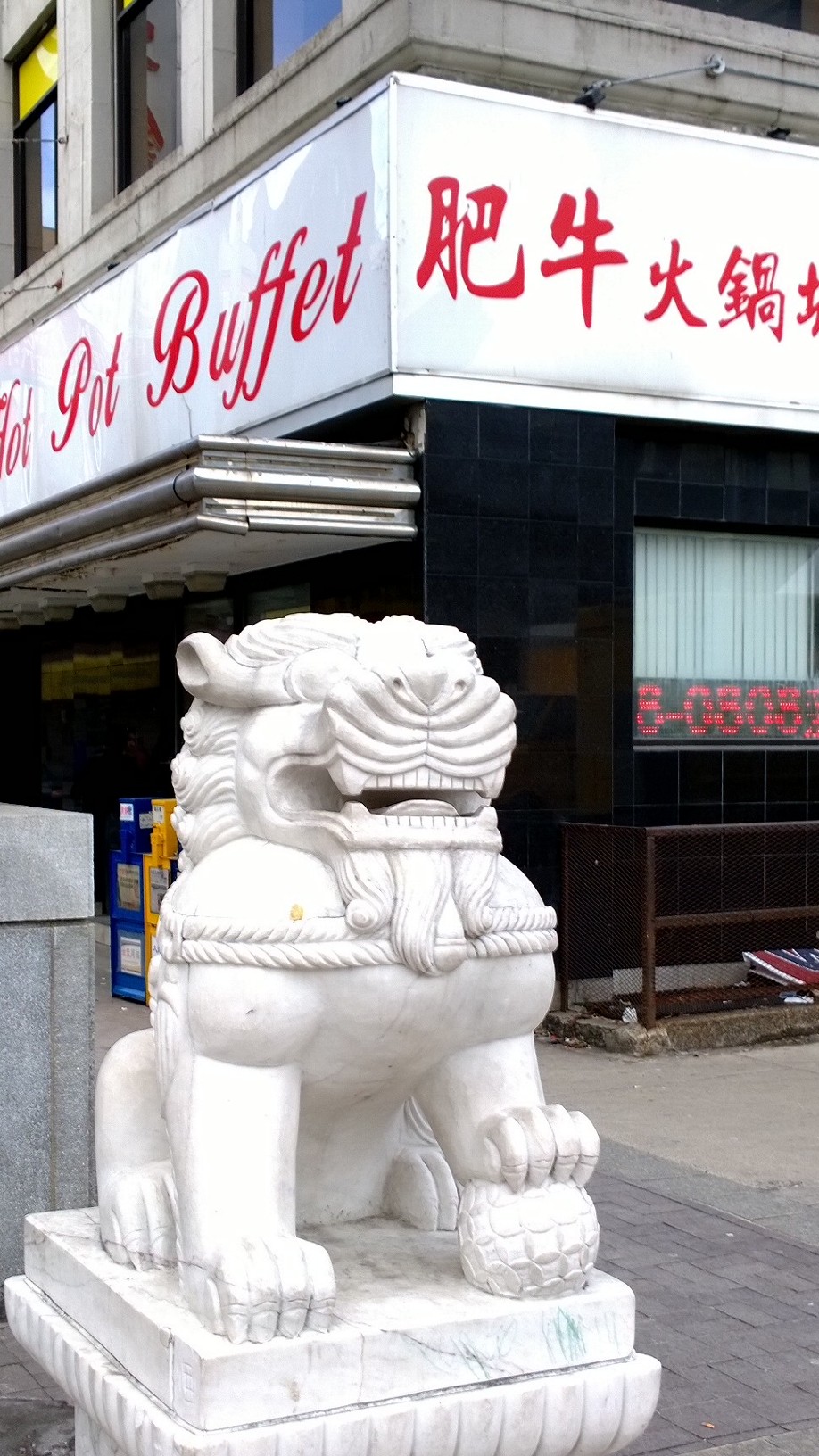
013114-welcome-lion


winter-market-in-Chinatown


Read Full Post »